
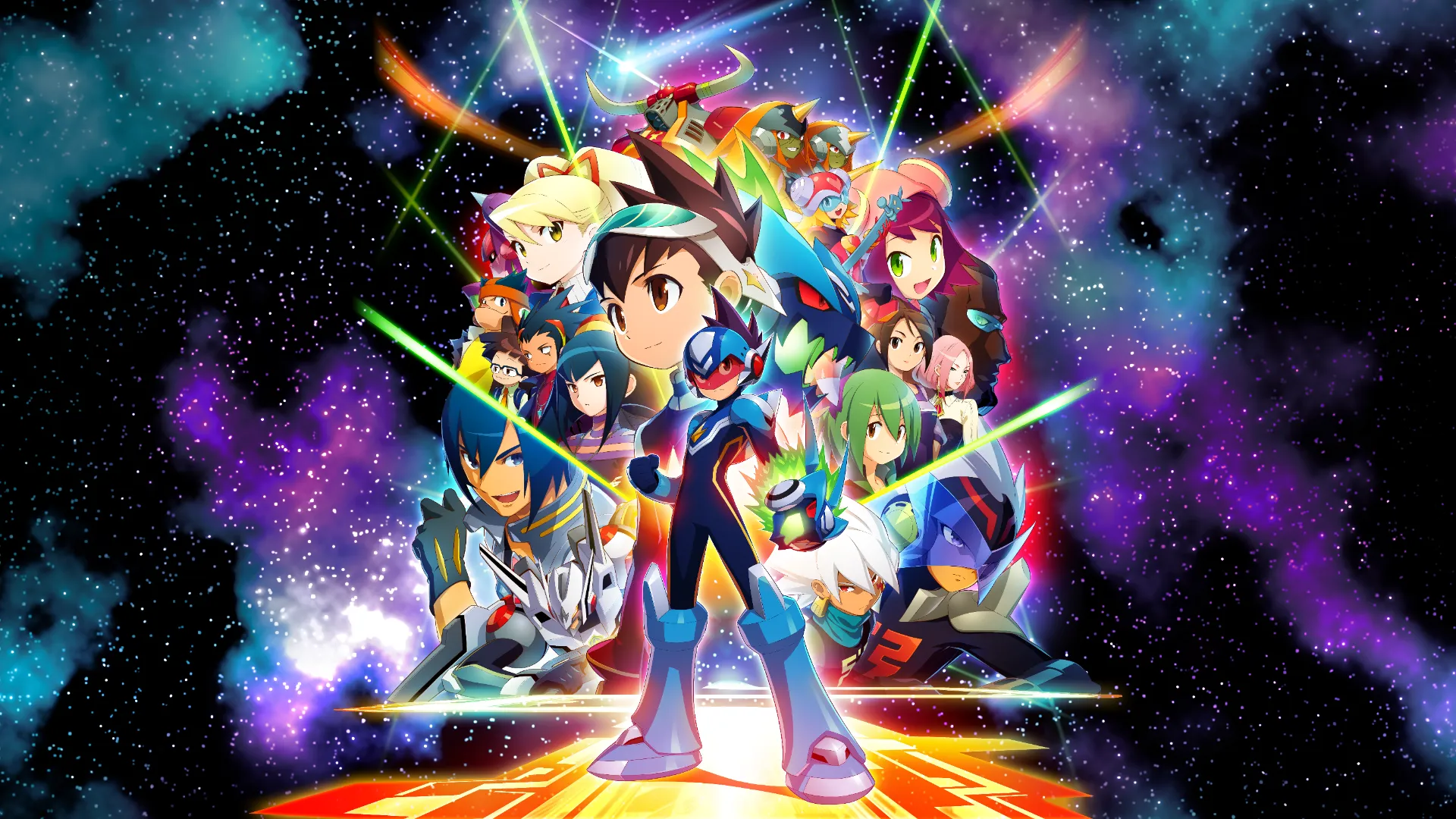
Thanks to the wonderful team at Capcom, I had the opportunity to go hands-on with the upcoming Mega Man Star Force Legacy Collection. This is actually my first time playing through these games, and I’m coming in with plenty of questions about how well this Nintendo DS era of Mega Man RPGs holds up.
At first glance, Mega Man Star Force Legacy Collection looks much bigger than it actually is. There are technically seven titles here, but functionally it’s three games with multiple versions: Pegasus, Leo, and Dragon for the first; Zerker x Ninja and Zerker x Saurian for the second; Black Ace and Red Joker for the third. The differences exist, though they don’t fundamentally change the experience. They’re mostly just alternate transformations, some exclusive battle cards, occasional boss variations, and minor tuning. The core story beats, progression, and overall feel remain largely intact across versions. If you’re familiar with the Pokémon series’ parallel versions, it’s the same idea.
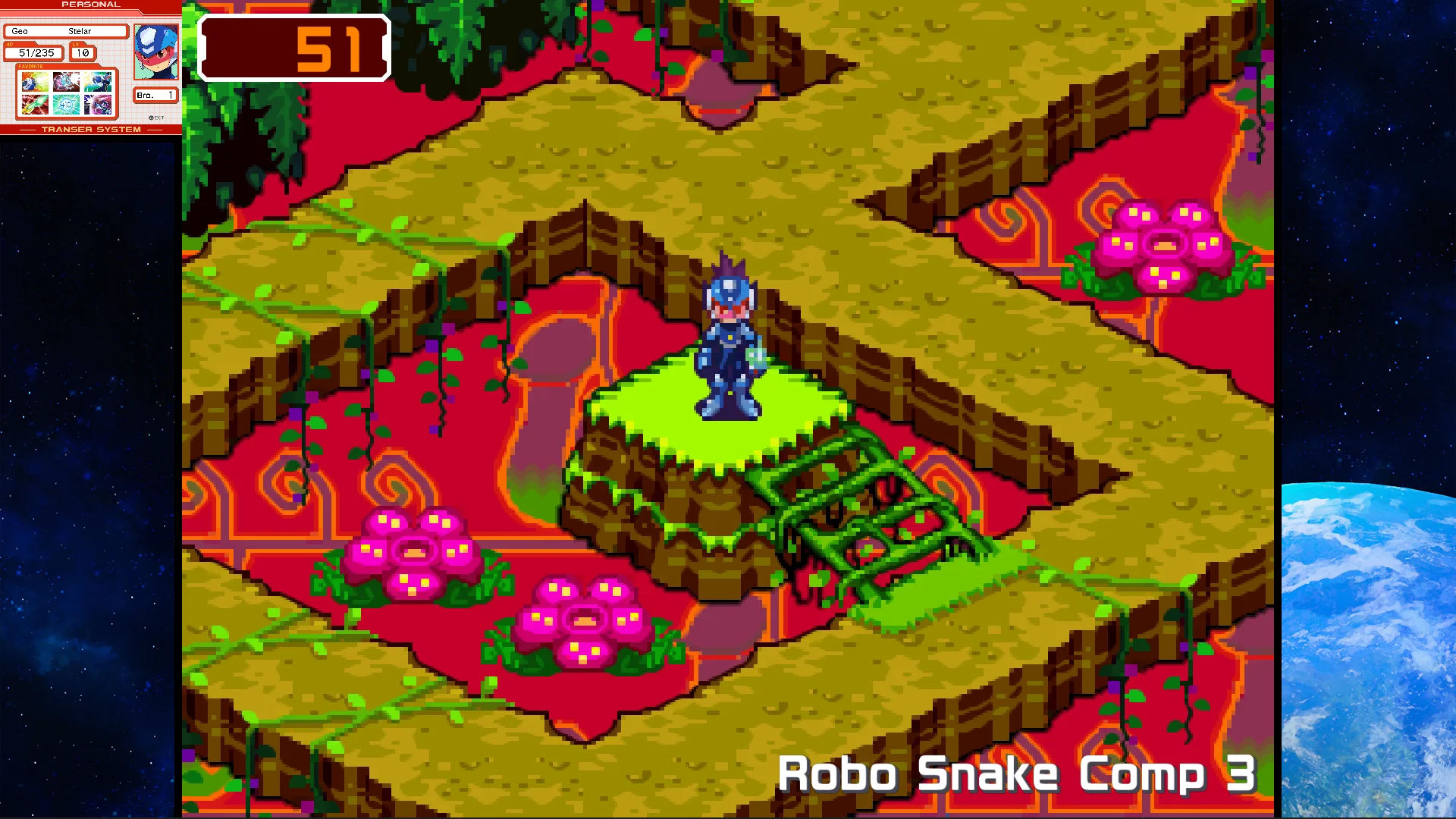
Star Force quickly establishes a gameplay loop built around exploration, encounters, and deck-driven combat. Outside of battle, progression follows a light RPG structure. You move between real-world locations and a parallel digital “wave” layer overlaying the environment, talking to characters, solving small objectives, and triggering story events. It is straightforward, but occasionally opaque in that mid-2000s handheld-RPG way where the next objective is not always clearly signposted.
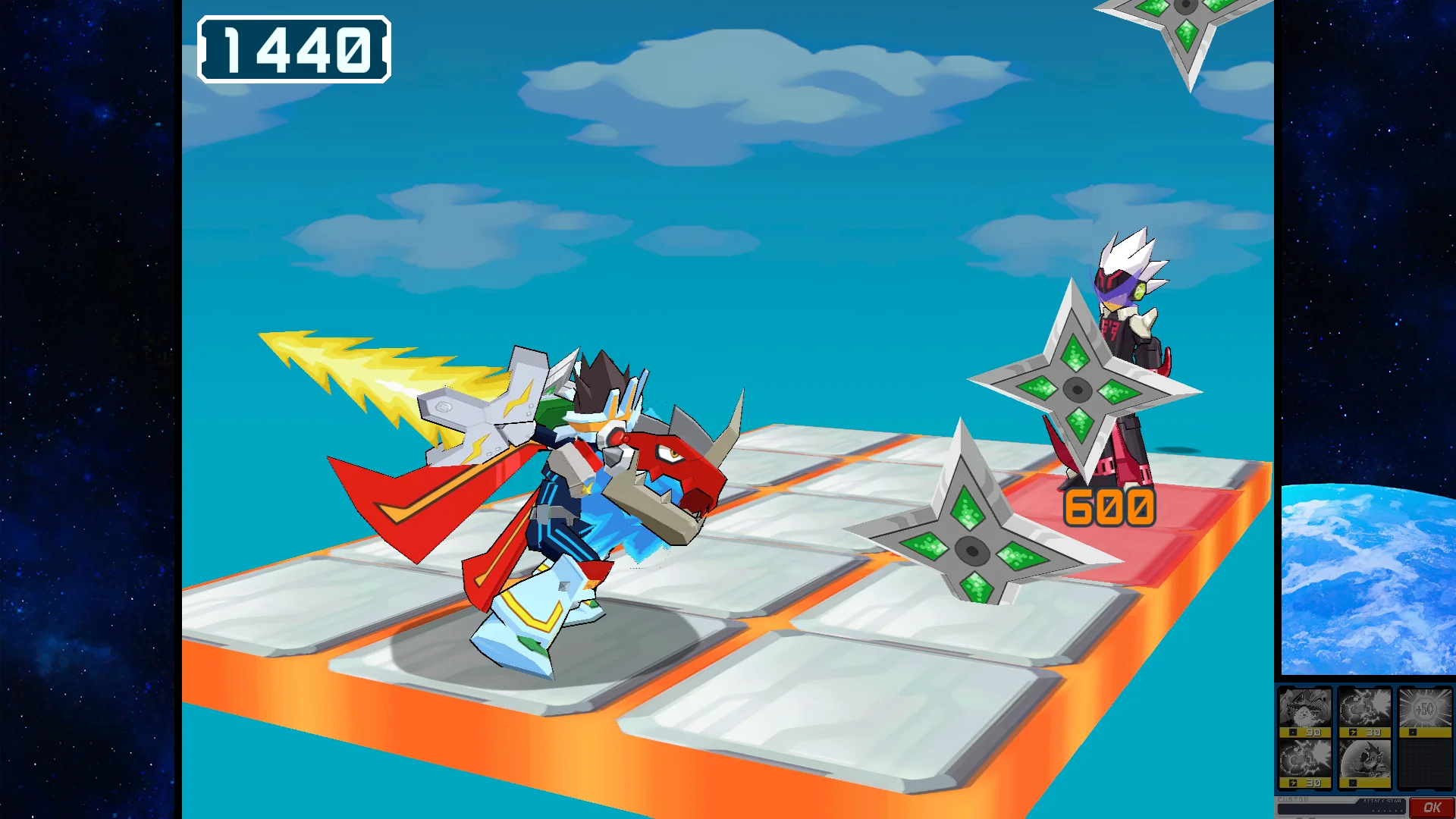
Battles happen on a small grid viewed from behind Mega Man, with movement limited to three horizontal panels. Enemies occupy the space directly ahead, attacking in patterns that you learn to read over time. The restricted movement initially feels unusual, but it shifts the focus toward timing and positioning rather than constant motion.
The central mechanic is the Battle Card system. You build a deck, called a Folder, using cards collected from defeated enemies, shops, and exploration. Each card represents an action such as firing a cannon, swinging a sword, activating an elemental attack, or triggering a defensive effect. During combat, a gauge gradually fills. When it fills, the action pauses, and you draw a small hand of cards from your Folder. You can select cards that share a column or match by name, then return to real-time combat to execute them.
This creates an interesting rhythm. Dodge incoming attacks, wait for the gauge, pick a set of cards, unleash them, then reset your position and repeat. The Mega Buster provides a constant baseline attack, but most encounters are decided by how well you manage your card draws and how thoughtfully you build your Folder ahead of time.
The version differences between each Star Force game play into this structure. Pegasus, Leo, and Dragon, for example, primarily shift elemental affinities and transformations. Zerker’s combinations in Star Force 2 introduce mechanical wrinkles tied to the Tribe system. Black Ace and Red Joker tweak abilities and available builds in Star Force 3. None of this radically changes how you move through the story or engage with the world; instead, they act more like alternate toolkits layered on top of the same foundation.
So far, I’ve found that Star Force leans hard into its sci-fi identity, framing its world through wave technology and digital spaces that feel abstract compared to typical RPG settings. Whether the story lands is something I’m still figuring out, but it gives the experience a different texture than I expected going in.
As a first-time player, I’m also feeling the friction of design decisions that clearly come from their era. Navigation can feel clumsy. Encounters sometimes blur together. Systems are introduced quickly and not always designed to encourage experimentation. At the same time, there’s a density to the mechanics that keeps pulling me back in. Folder building, transformations, and the gradual expansion of combat options suggest there’s more lurking beneath the surface.
And that’s where I am right now. I’m approaching the collection with curiosity and caution, still trying to figure out what the games are attempting and how well they succeed. I plan to spend much more time with it before drawing any firm conclusions. For me, the important part is how the underlying design holds up when revisited today, especially for someone playing for the first time.
Mega Man Star Force Legacy Collection releases on March 27, 2025 for PlayStation 4 and 5, Xbox One and Xbox Series X|S, Nintendo Switch 1 & 2, and PC via Steam. Learn more on the game’s official website.


Leave a Reply
You must be logged in to post a comment.