
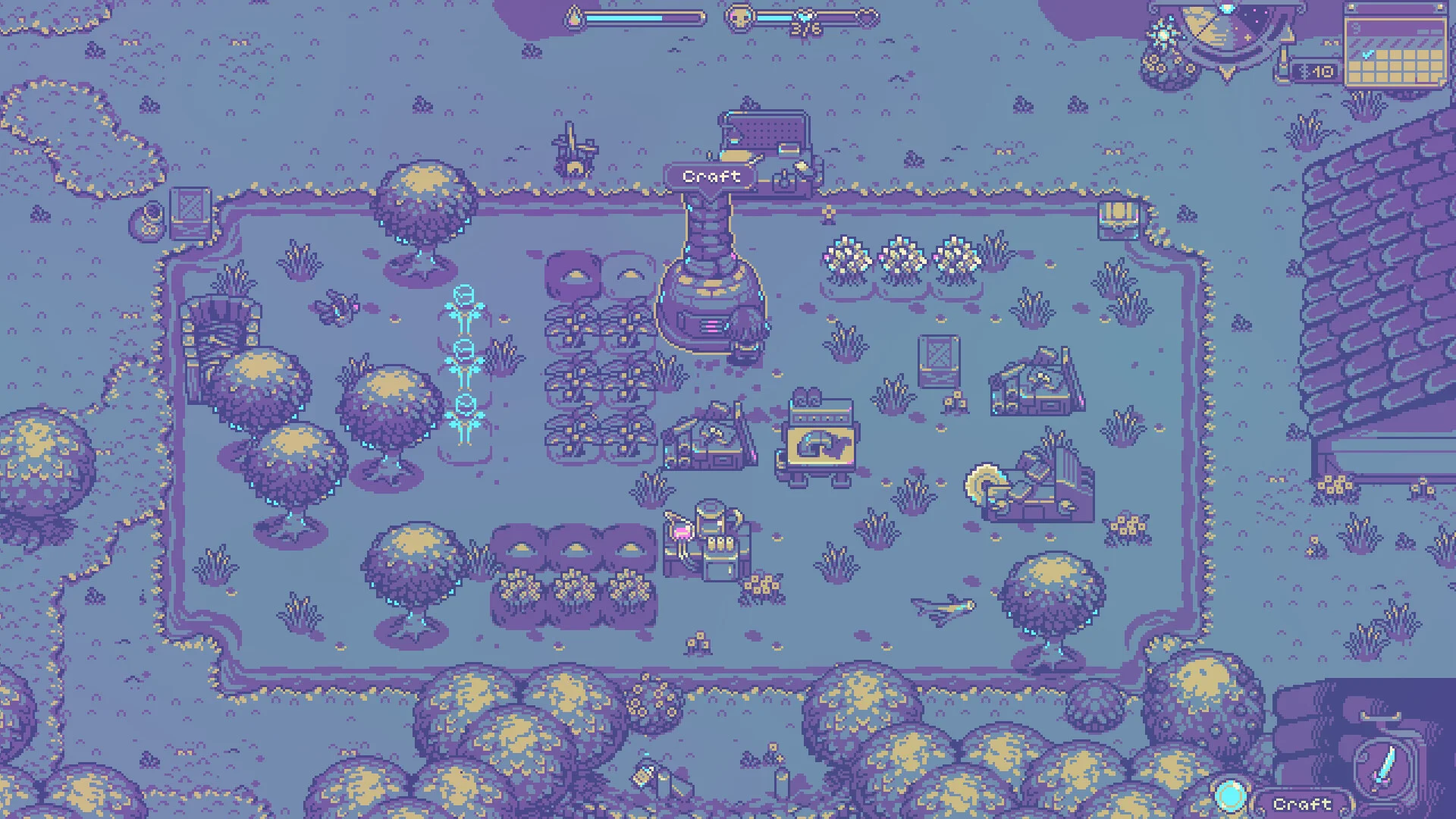
Farming RPGs have never been more en vogue, with an entire new wave of indie farming life-sims cresting off the success of Stardew Valley and the revitalization of the Story of Seasons series. While many of these titles iterate on that standard farming RPG formula first established by Harvest Moon and Rune Factory, a handful of titles have branched out into even more esoteric genres, like horror. Although Neverway is not the only pending entry into the newly established farming RPG/horror subgenre (both Grave Seasons and Village in the Shade were recently announced), it is the first of these mashups to catch my eye when it was announced last summer. I had the (mis?)fortune of playing a prologue demo courtesy of developer Coldblood, Inc., and although I only experienced a short segment of the game, what I played left me intrigued by the dark, oppressive world of Neverway.
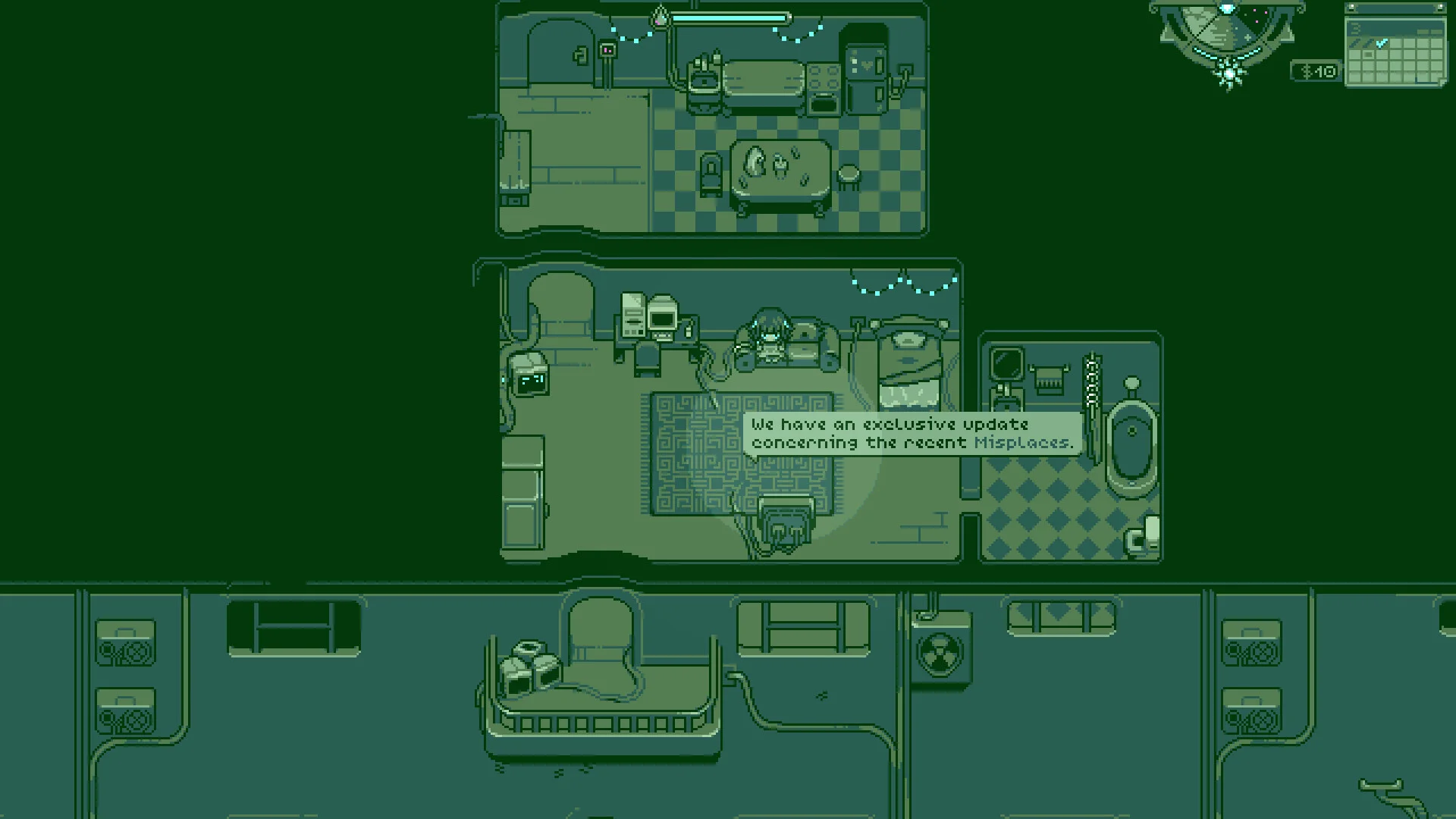
The demo begins with protagonist Fiona in her bathtub, reflecting on how much her life has gone awry and fantasizing about leaving her unfulfilling life behind for a fresh start in a new place. Her depression-fueled musings are abruptly interrupted by a knock at the door; yet another food delivery is waiting for her since she can’t bring herself to leave the house. A glance at Fiona’s computer reveals a pile of unread emails, most of which are from her job, notifying her that repeated absences are not tolerated and that she’s been terminated. In stark contrast to the cold, impersonal admonitions of her former employer’s human resources department are a pair of emails from someone close to her, perhaps a friend or lover, reminding her she left her hoodie at their place and can come pick it up whenever. Fiona is clearly someone struggling with depression, the last remnants of stability in her life slipping through her fingers.
The last email is the least personal but perhaps the most curious, a spam email from an insurance company advising residents how to respond to a Misplace, an unexplained anomalous event. Turning on the TV to watch the news report contradicts this warning, stating that there haven’t been any reports of Misplace events in six months. Even from these initial moments, unease begins to set in about the state of the world Fiona inhabits. What is a Misplace, and why would an insurance company warn people if the authorities have the situation under control? It brings to mind our own government’s denial of climate change impacts, all while insurance companies drop clients in droves from floodplains and fire-prone areas: those in power may attempt deception to maintain stability and prevent panic, but the market reacts to the material reality all the same. This attention to detail in the worldbuilding lends Neverway authenticity while also establishing the underlying danger. Something sinister is brewing, even if Fiona is too trapped in her cycle of depression to recognize it.
The threat of having her belongings thrown away in that last HR email serves as enough motivation for Fiona to finally brave the journey out of her apartment and into the grimy city outside her building. This is where the pixel art of Pedro Medeiros (of Celeste fame) really soars. Although character sprites are rendered with squat, chibi proportions, the environments are lovingly crafted with nice visual flourishes like the reflective, moving surfaces of the puddles Fiona passes by, or the smooth animations as the subway train eases to a stop. Fiona makes it to her office, retrieves her discarded belongings, then heads back to the subway platform to return home.
This is where things really start to get weird, as every time the train passes through a tunnel, encased in darkness, shadowy figures surround the only other occupant. She asks Fiona if she can see them too, then wanders off to the next train car. Following her, a trippy visual sequence begins in which the train cars slowly break down, transitioning from mechanical to organic. The other passenger jumps into a cavernous abyss, and a giant eyeball emerges, its shadowy tendrils reaching out to grab hold of Fiona until she wakes up, back in her apartment. The friend who was emailing her is at her door and returns her hoodie. The moment is thick with tension, evidence of the deep history between the two. This person is Fiona’s partner, though they gently attempt to end things before Fiona storms off and slams the door in their face as they try to finish this breakup conversation. We cut to Fiona on a boat, this last bit of rejection the final push she needs to leave her old life behind and start anew.
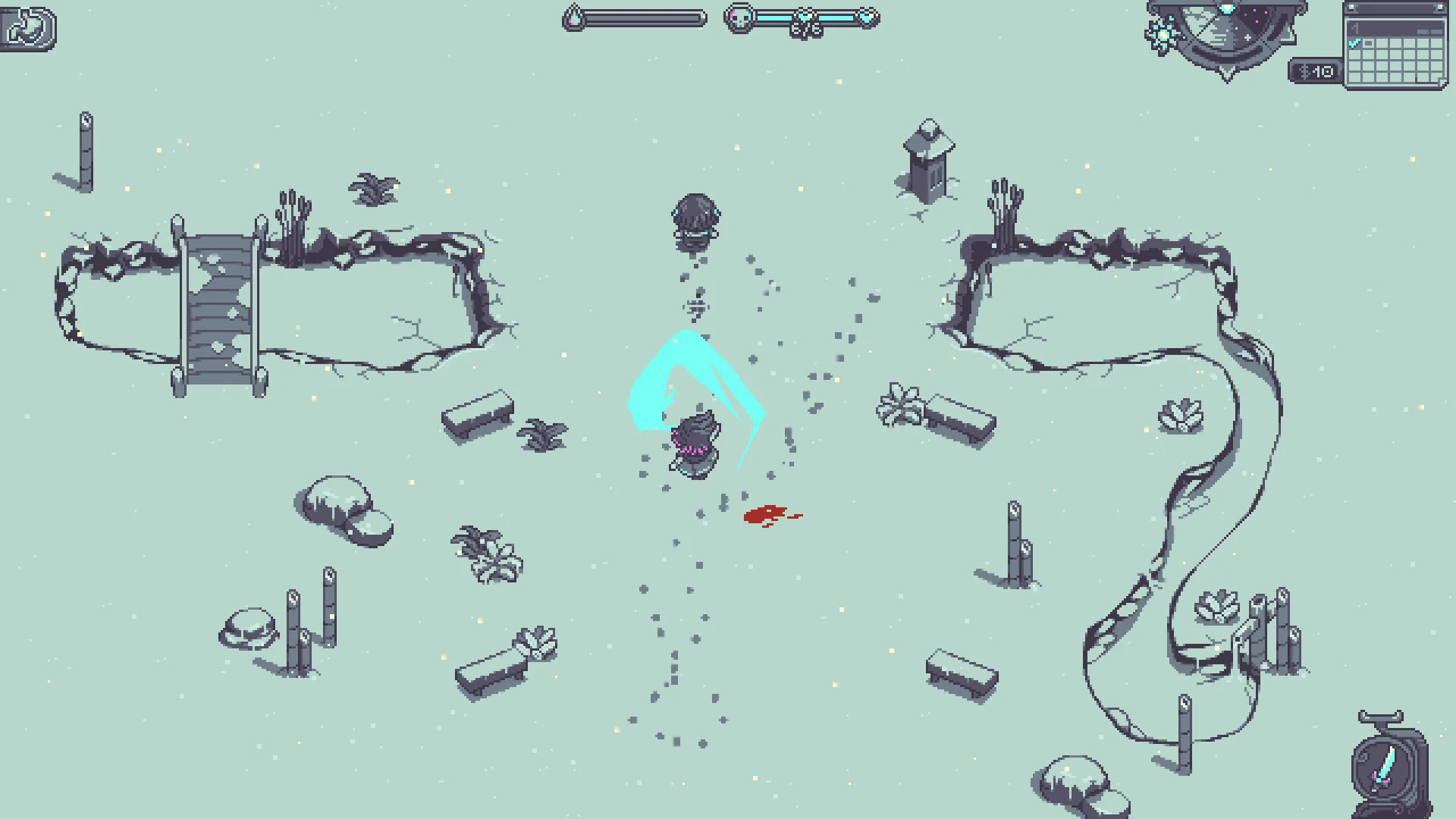
She steps off the boat and, after a brief interaction with the guard at the town gate, she arrives at her new home. Exhausted, she passes out, and the second demo phase begins. Suddenly, Fiona is thrust into a computer simulation that serves as a tutorial for Neverway’s mechanics. Combat consists of a simple three-hit combo and a dash move, with both options affecting her stamina bar. That stamina is the same well of strength she must draw from to complete farming chores and crafting tasks, so the simulation introduces Fiona to farming and crafting basics as she fends off enemies and interacts with her digital companion, Fang.
There are a few unique wrinkles to combat in Neverway, such as the Soulbound ability that leaves behind a hologram of Fang when Fiona dashes. This apparition strikes in a radius after a few seconds, allowing Fiona to get a few extra hits in while dodging. The simulation also introduces a combat and traversal tool in the form of the hookshot, which can aid in moving across gaps and pulling enemies within range of Fiona’s sword strikes. I was pleased to see indications of depth in the combat system, suggesting that Neverway can avoid the simplistic doldrums of Stardew Valley’s superfluous combat.
Gathering and crafting function most similarly to the Rune Factory series, with each action drawing from Fiona’s limited stamina pool and contributing experience points to individual skill levels, such as industry or scavenging. Unfortunately, I wasn’t able to fully experience the day-to-day gameplay loop in the demo; the menu does show a calendar system and the passage of time through three major stages (morning, afternoon, and evening), so the flow of day-by-day scheduling and time management should be familiar to anyone with farming RPG or life-sim experience.
After an hour with Neverway, I’m eager to play more. Although the demo doesn’t fully convey what the core gameplay loop will be like, it does showcase the game’s unique selling points: an oppressive horror atmosphere backed by lush pixel art visuals and a robust combat system. I do wonder if the repetition inherent to the life-sim genre will undermine the tension and unease integral to a good horror experience. For now, I remain cautiously optimistic that Neverway will be a scary good time when it releases on Steam and Nintendo Switch later this year.


Leave a Reply
You must be logged in to post a comment.