
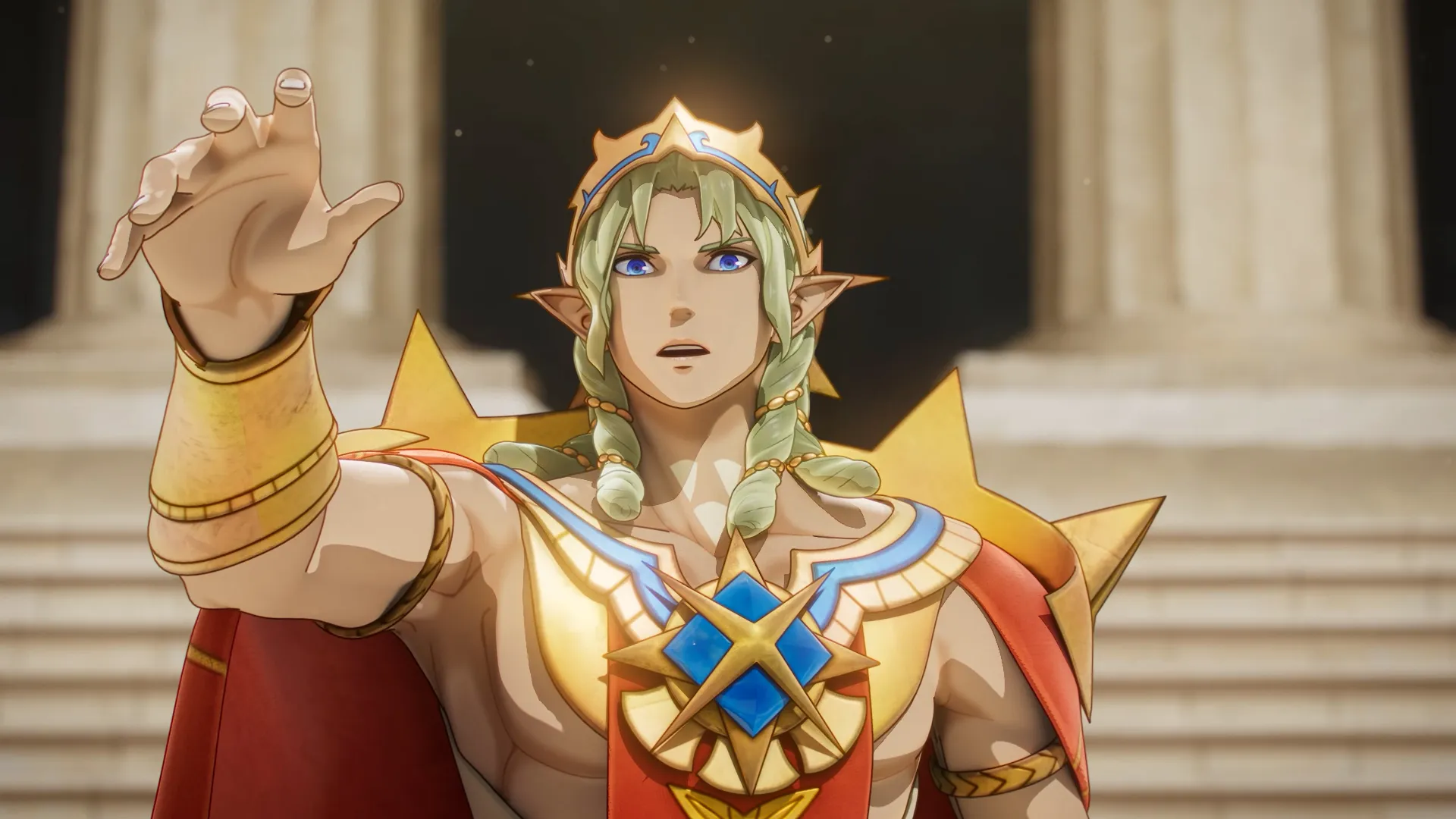
Nintendo finally gave Fire Emblem fans a deep-dive into the narrative, mechanics, and structure of the newest entry in the long-running strategy RPG franchise, Fire Emblem: Fortune’s Weave. The Direct presentation contains over 20 minutes of details on the title:
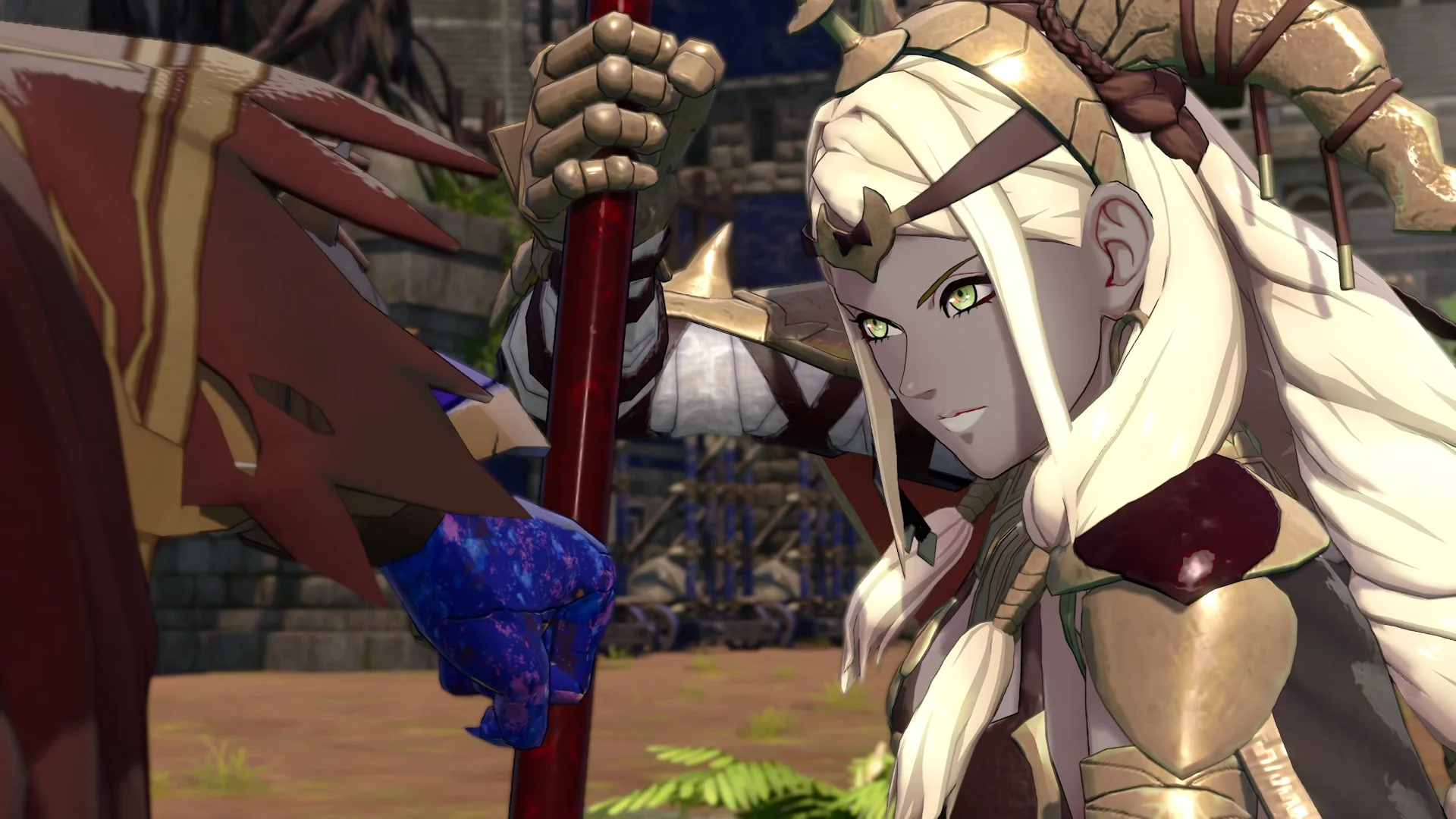
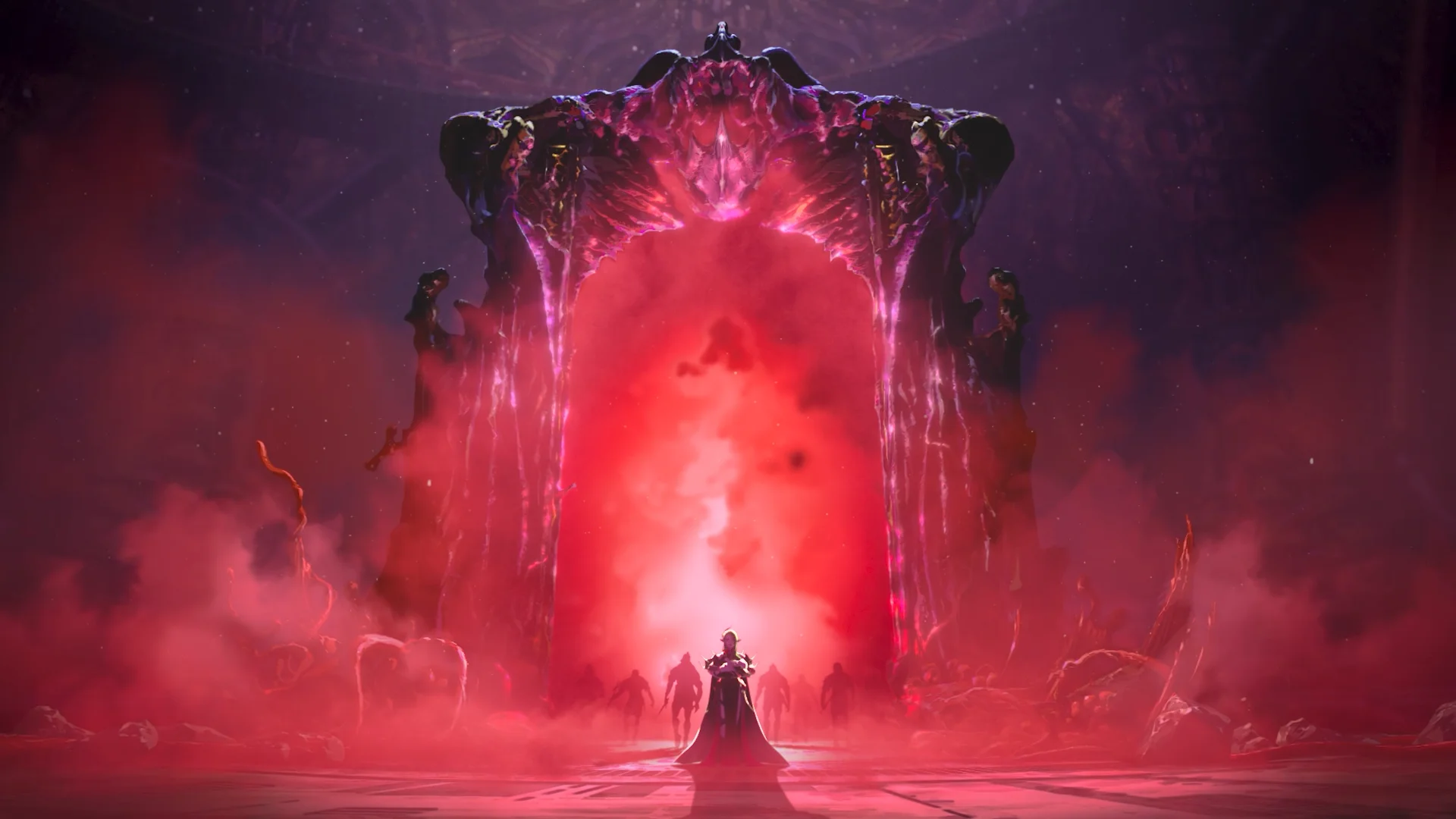
The Fire Emblem: Fortune’s Weave Direct begins with a green haired woman opening a portal and calling forth a host of monsters, speaking ominously about the world’s true ruler. A scene of four statues of the protagonists are shown, and a mysterious figure clad in white appears to fend off the invading army.
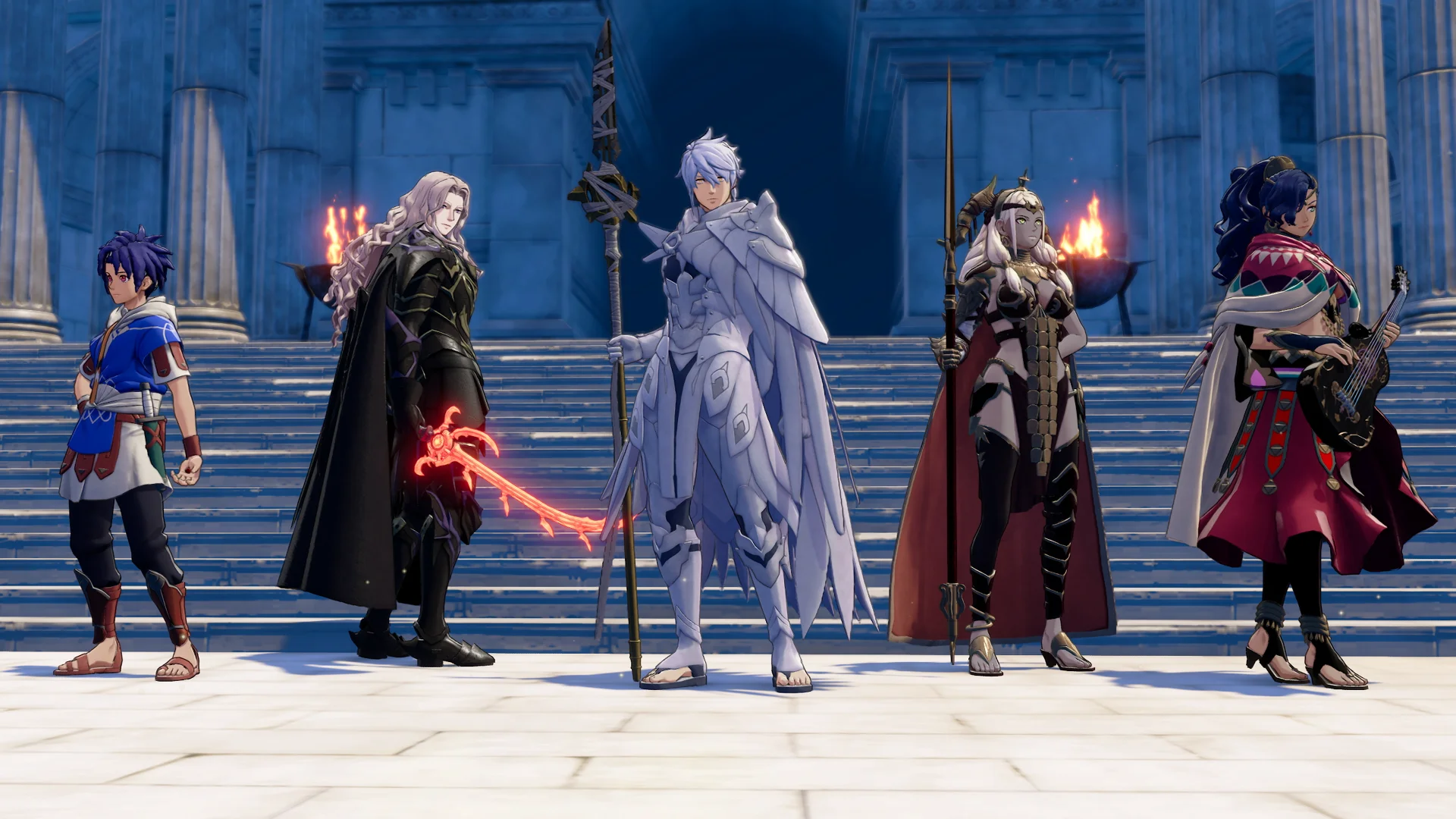
The presentation shifts to Dagda in 1449 and the capital city of Dagsion, the host city for Dagda’s Heroic Games. The Heroic Games are held in honor of the Dagdan Empire’s founding, and the Divine Sovereign, Solel, is offering to grant a wish to the winner of the games. Enter the game’s four protagonists (Cai, Dietrich, Theodora, and Leda) and a deeper glimpse into their background and motivations than prior showcases.
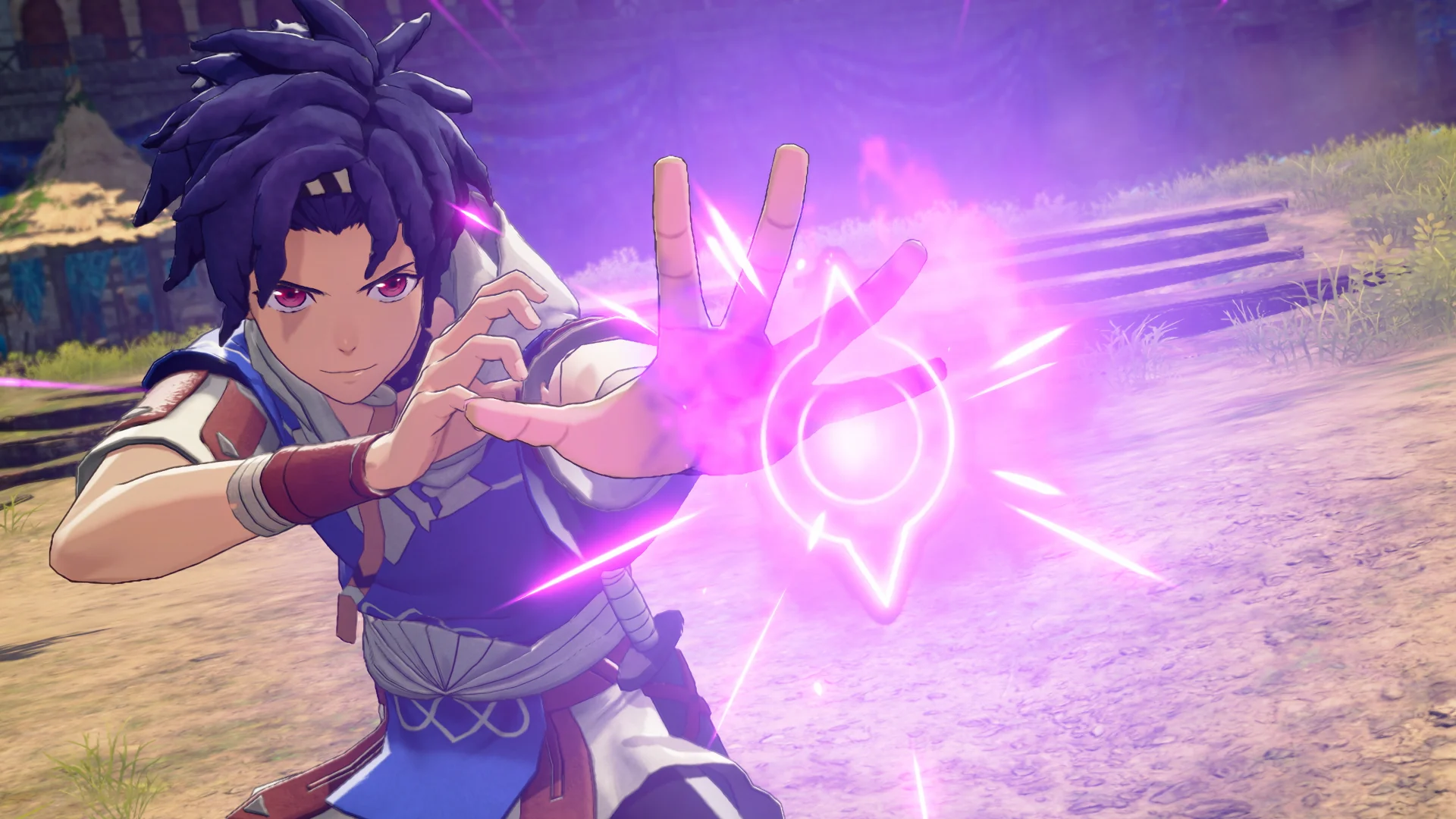
Fire Emblem: Fortune’s Weave Character Storylines
Cai’s Story
Cai hails from the peaceful village of Rivera, where he lives with his father Castor. On his 15th birthday, Castor is charged with unspecified crimes and imprisoned in a dungeon beneath Dagsion. Cai joins the Heroic Games alongside his childhood friends, hoping to emerge victorious and secure his father’s release.
Dietrich’s Story
Dietrich, who hails from Fodlan, embarks on a seafaring voyage in search of ever stronger opponents. His boat his attacked by a sea monster, leaving him shipwrecked to wash up onto Dagda’s shores. After some time spent battling bandits and beasts, he meets Fabio who tells Dietrich of the Heroic Games. Dietrich resolves to travel to Dagsion and compete in the Heroic Games to test his strength against powerful opponents from across the land.
Theodora’s Story
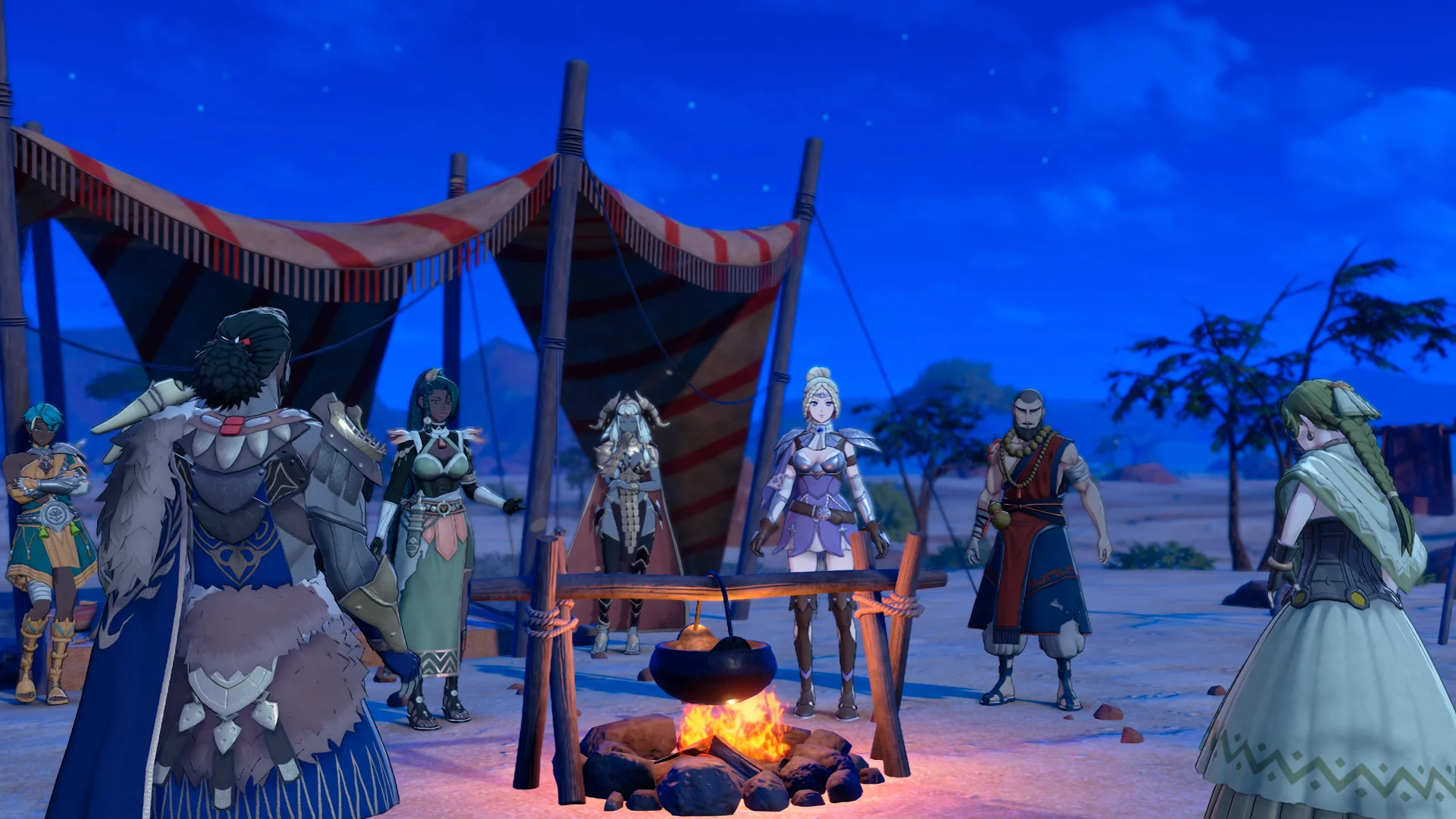
Theodora hails from the Kingdom of Saramis in Sothern Dagda, where her culture worships the goddess of death and the night, loathed by the people of the other regions. To prevent further conflict with the neighboring people of Mosa and restore the reputation of their goddess, Theodora takes her retinue of knights and enters the Heroic Games.
Leda’s Story
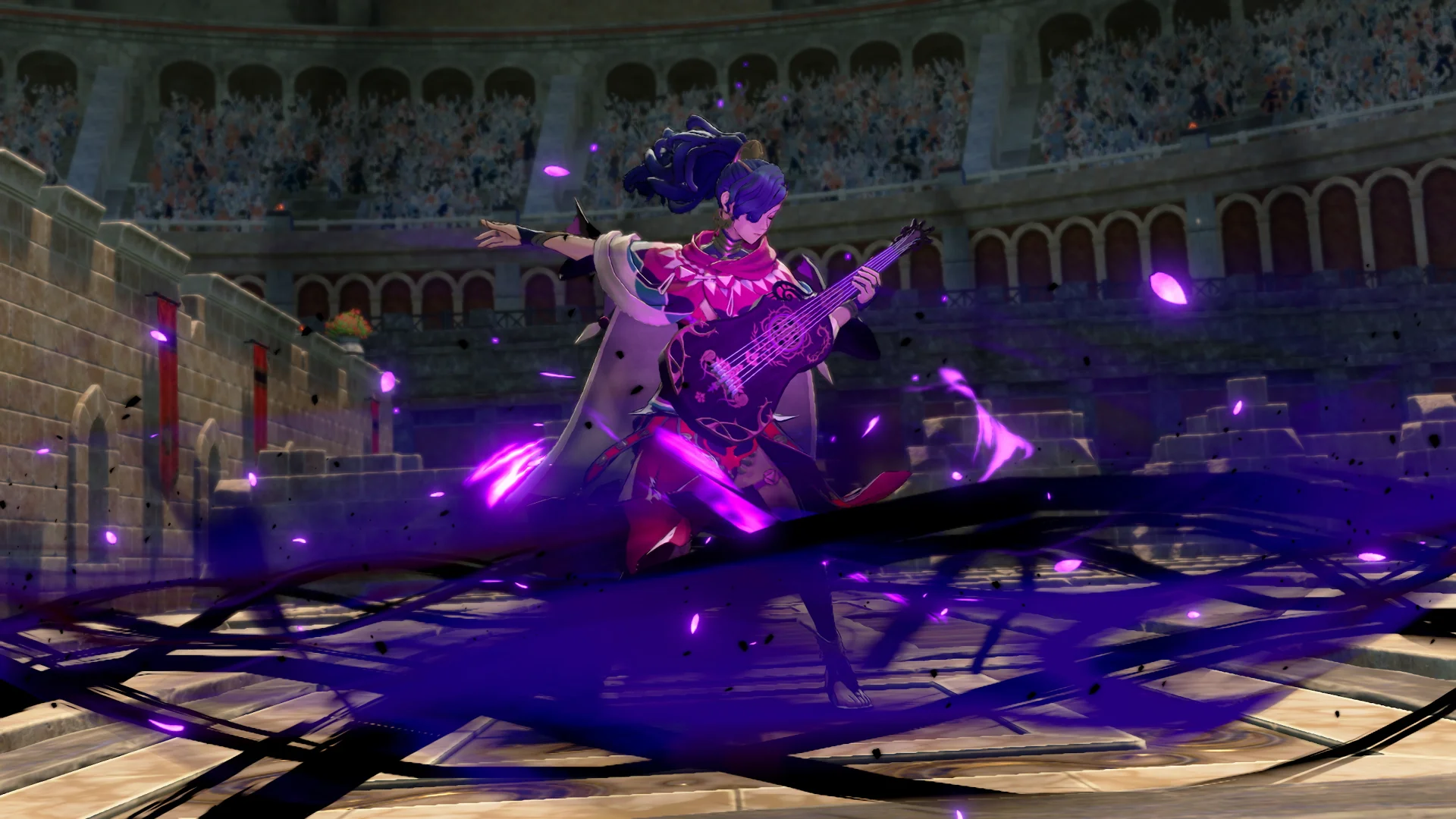
Leda is a talented musician, looking for revenge against the man who killed her father when she was a young girl. Leda learns that her father’s killer, known as the White-Maned Demon, plans to participate in the Heroic Games. She travels to Dagsion with her companions to join the Heroic Games for the chance to face him in battle.
The Direct shows brief glimpses of the four protagonists squaring off against one another in the arena, suggesting that your path through the Heroic Games will involve conflict between the various companies led by each protagonist.
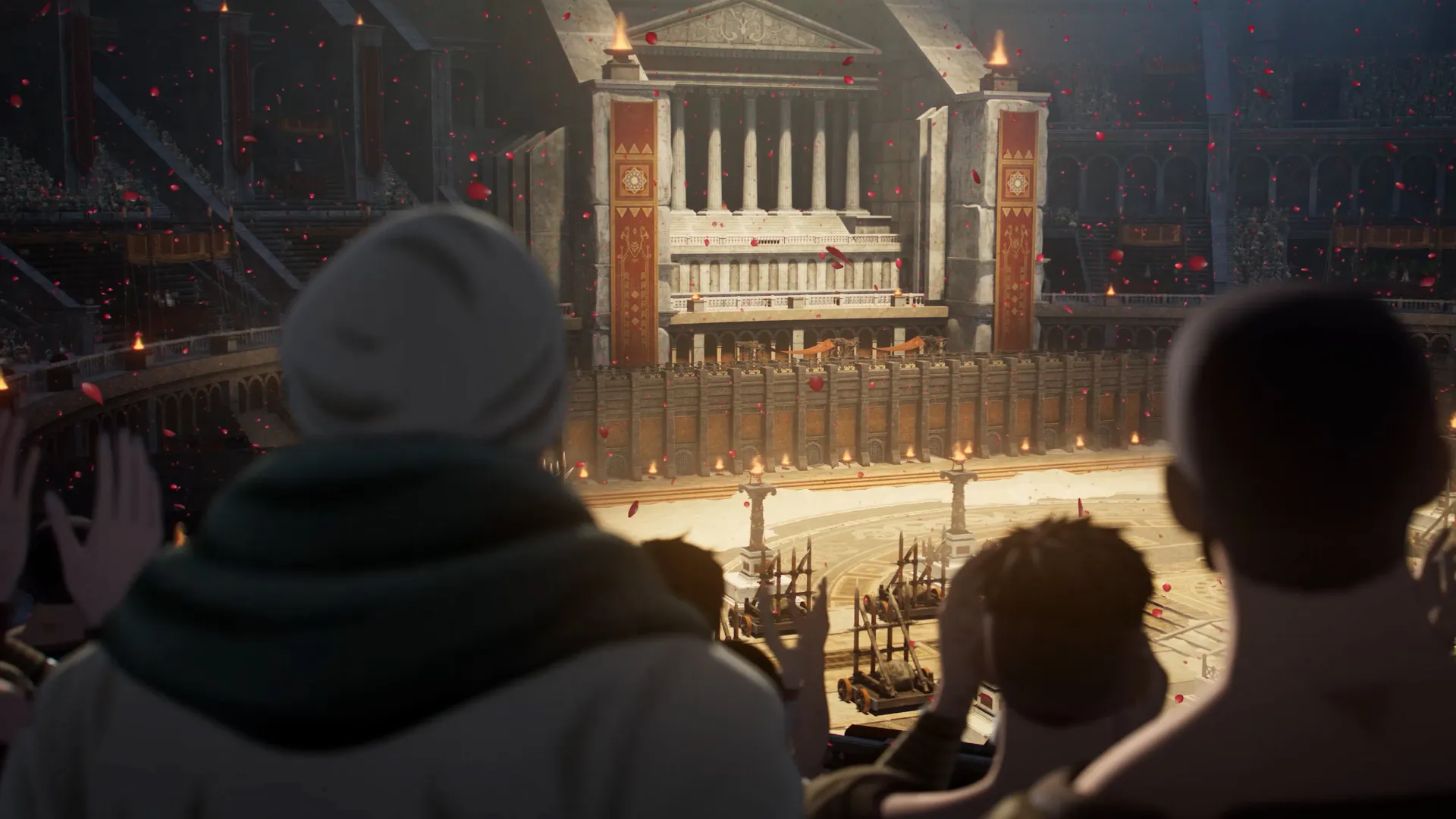
The Heroic Games
The Heroic Games are the central unifying factor between the various protagonists, and also serve as the foundation for the structure and progression of Fire Emblem: Fortune’s Weave.
Matches in the Heroic Games
- Matches take the place of the traditional chapter structure in Fire Emblem, serving as the main story battles where you deploy your chosen units against an opposing force.
- Battle preparations are shown off, showcasing the ability to place units within the arena, choose between available units in your army, and change their items and parameters before battle.
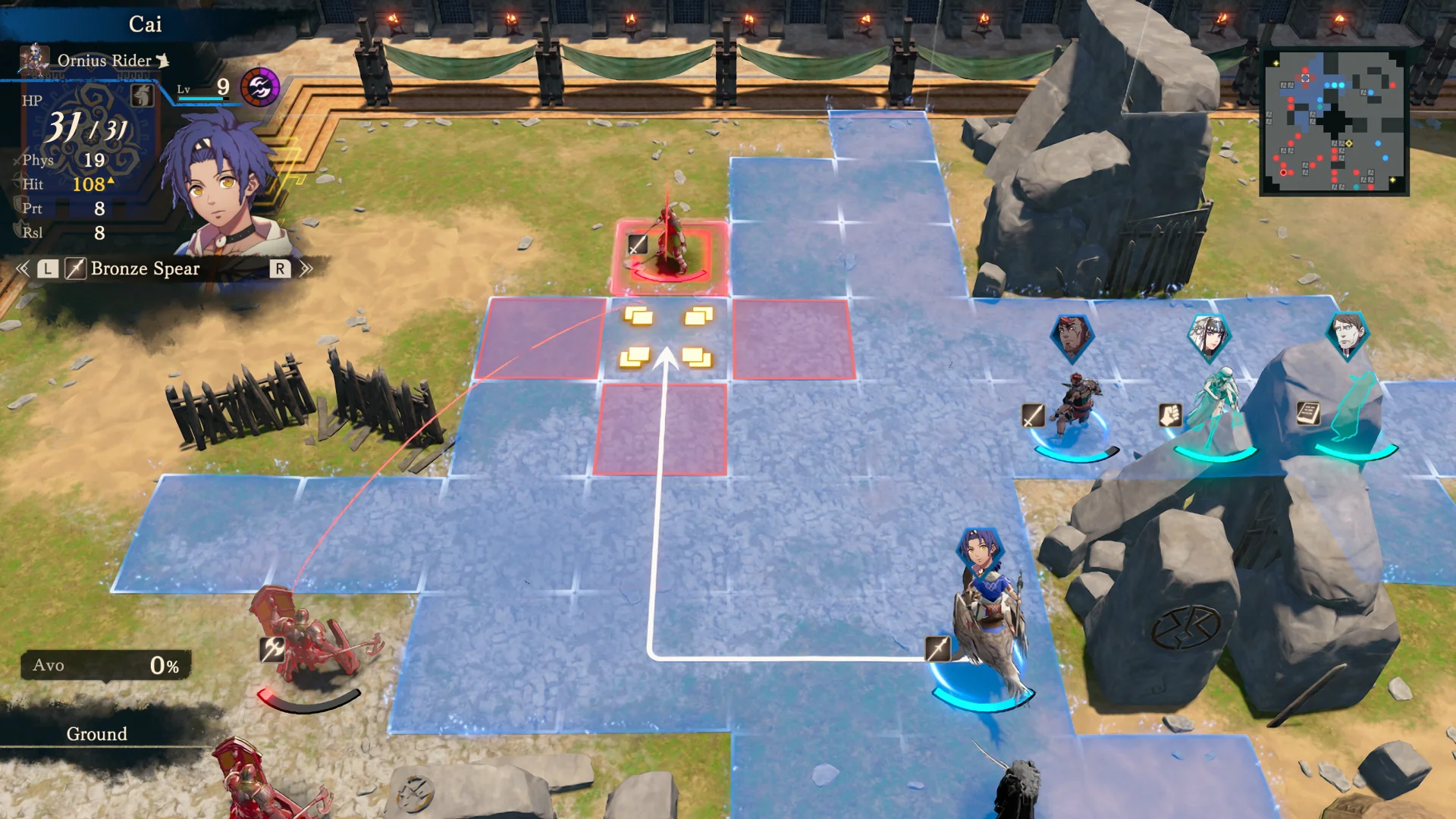
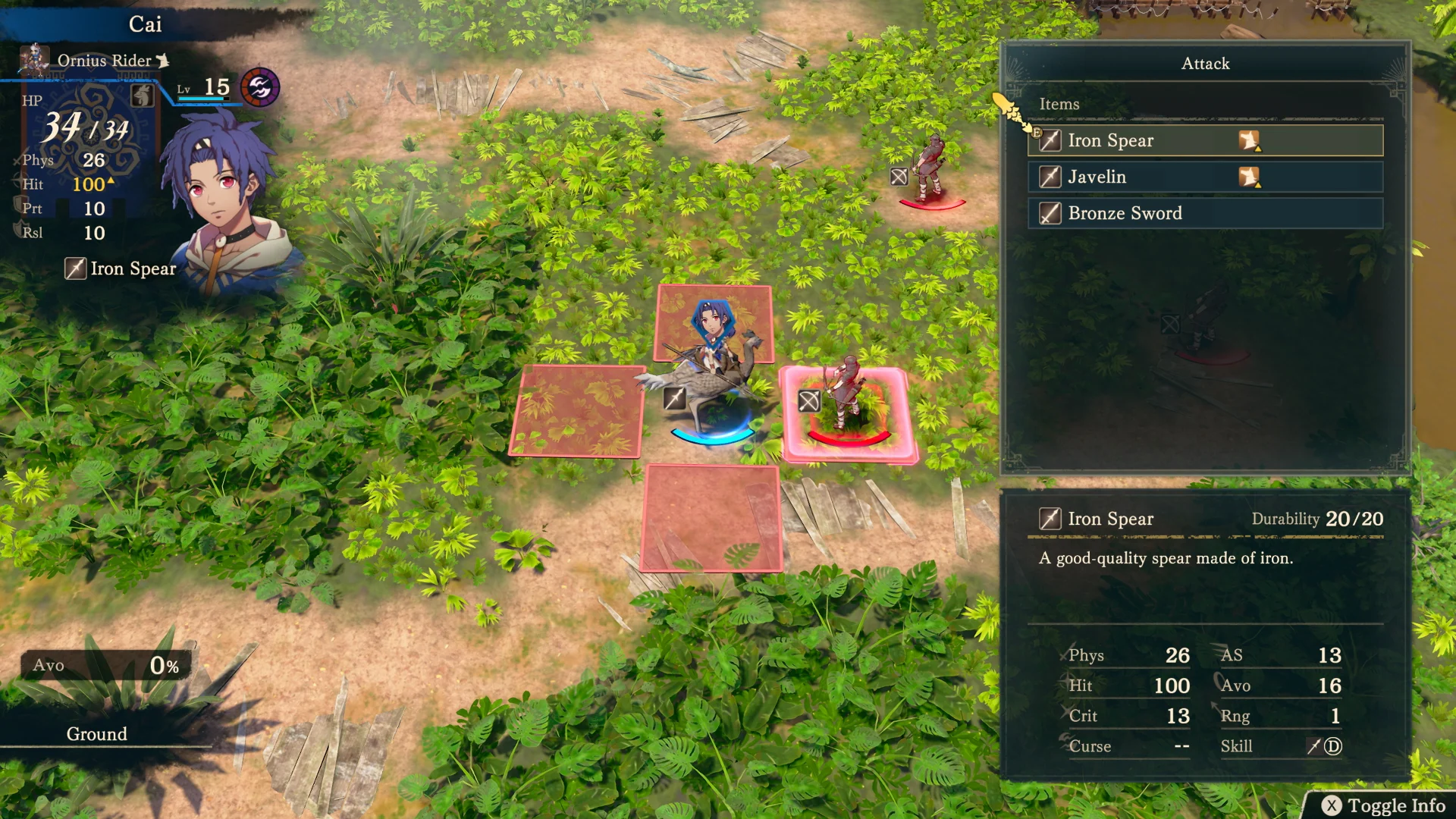
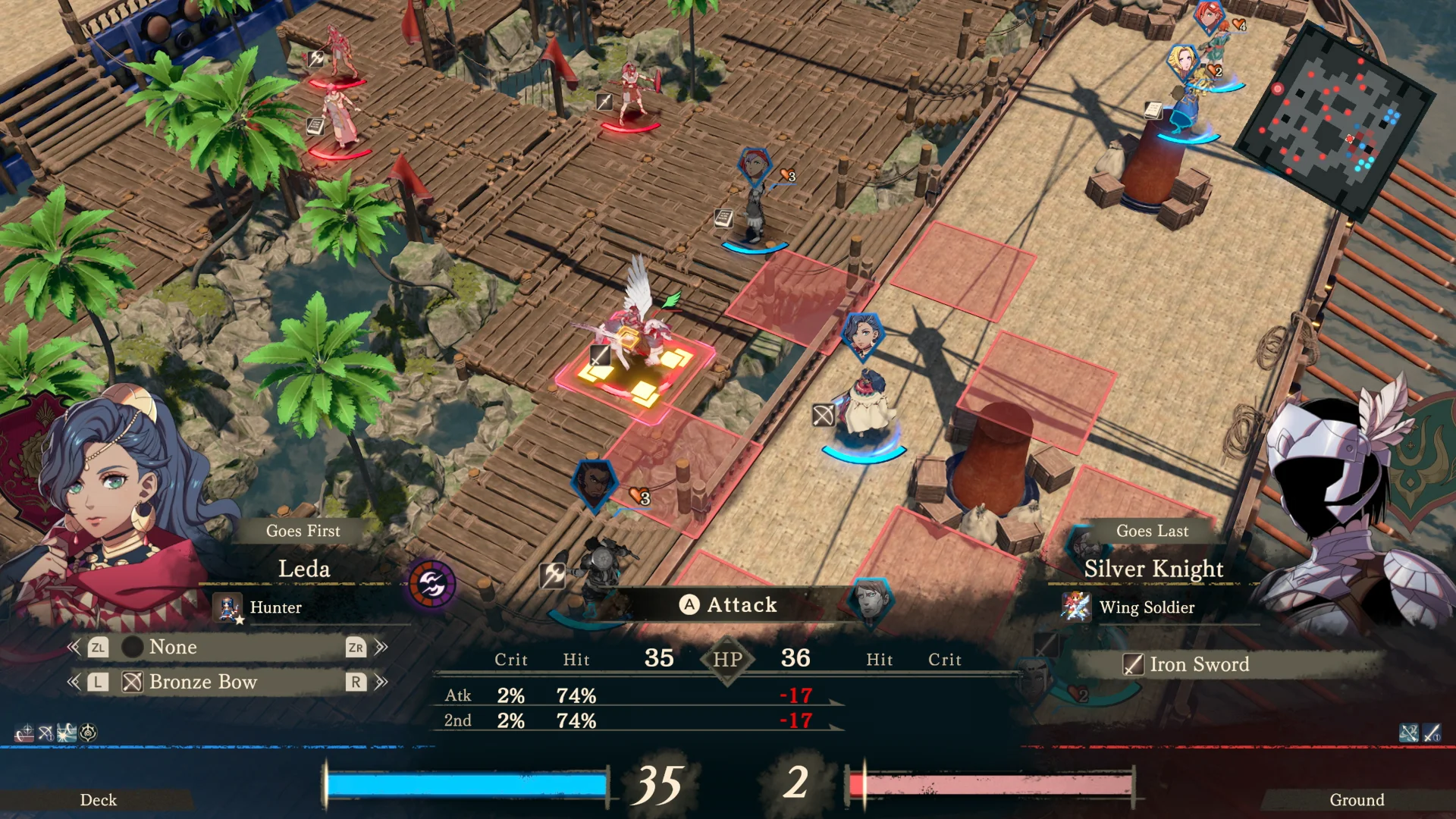
- Battlefields are grid-based like previous titles, with player movement range represented by blue tiles and attack range represented by red tiles.
- Battles remain divided between the Player Phase, where the player has the opportunity to move and attack with their units, and the Enemy Phase, where the opponent can move and attack with their units.
- While alternative victory conditions beyond defeating the enemy commander are not shown, the voiceover confirms there may be other victory conditions in certain matches.
Combat System
While the core turn-based strategy system remains in Fire Emblem: Fortune’s Weave, the game makes major alterations to combat:
Farewell, Weapon Triangle?
Fire Emblem: Fortune’s Weave seems to have removed the familiar weapon triangle, replaced by a weapon effectiveness system based on unit type rather than weapon proficiencies.
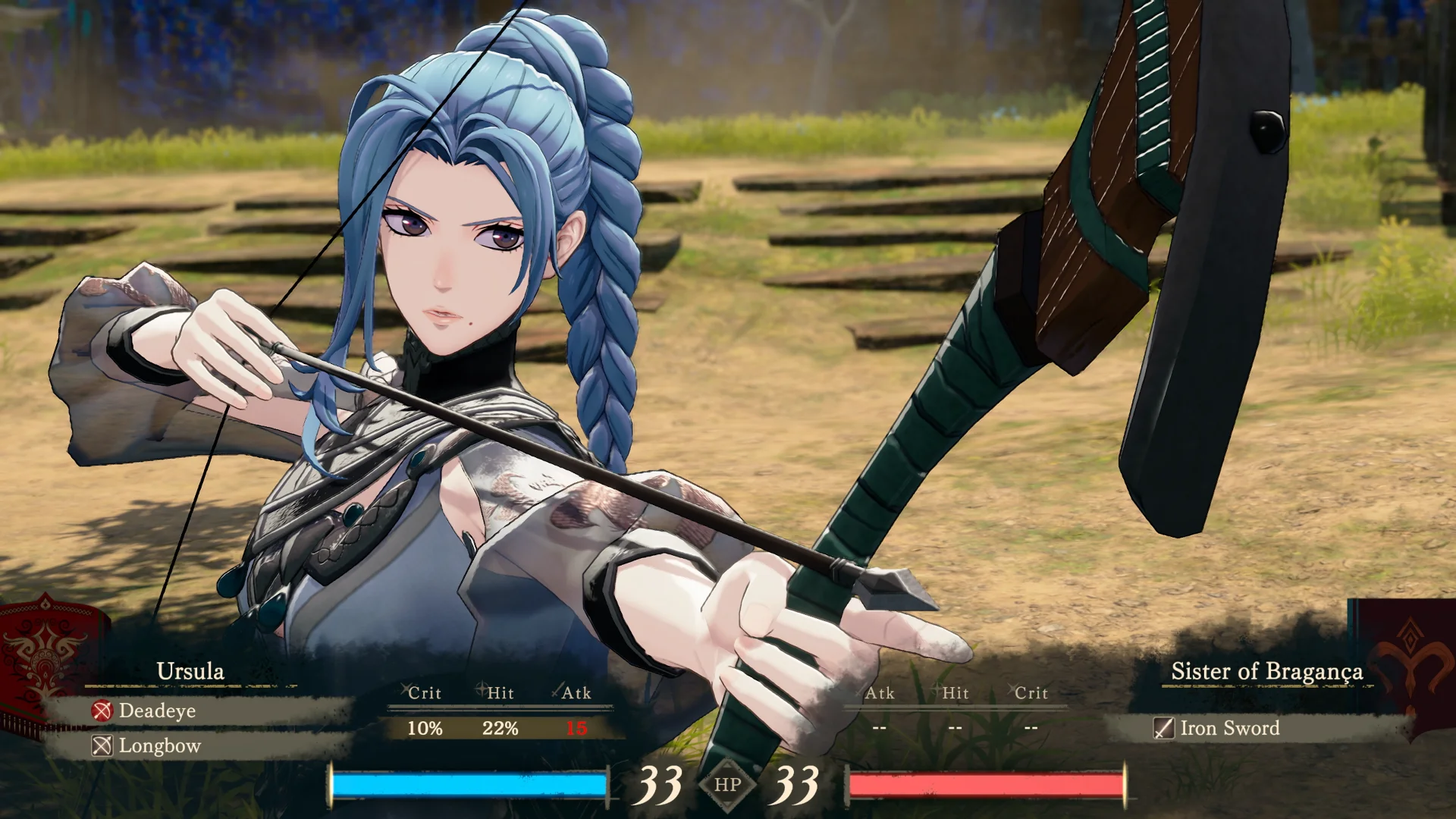
For example, spears deal increased damage to mounted units, and magic is stated to be more effective against armored units. Swords are well rounded weapons, Gauntlets are weaker but grant higher evade, and Axes are more powerful but have decreased accuracy. Bows still strike from a distance and maintain their effectiveness against flying units just like in previous titles.
Prior games in the series have included these mechanics, but usually tied to specific weapons (such as a Horseslayer or Armorslayer) rather than applying to all weapons, and vulnerabilities were generally governed by stat spread (Armor Knights generally having lower magic resistance stats) rather than across the board effectiveness depending on the class (magic being effective against all armored classes). This represents a significant change in mechanics while maintaining the importance of varied weapon proficiencies across your army.
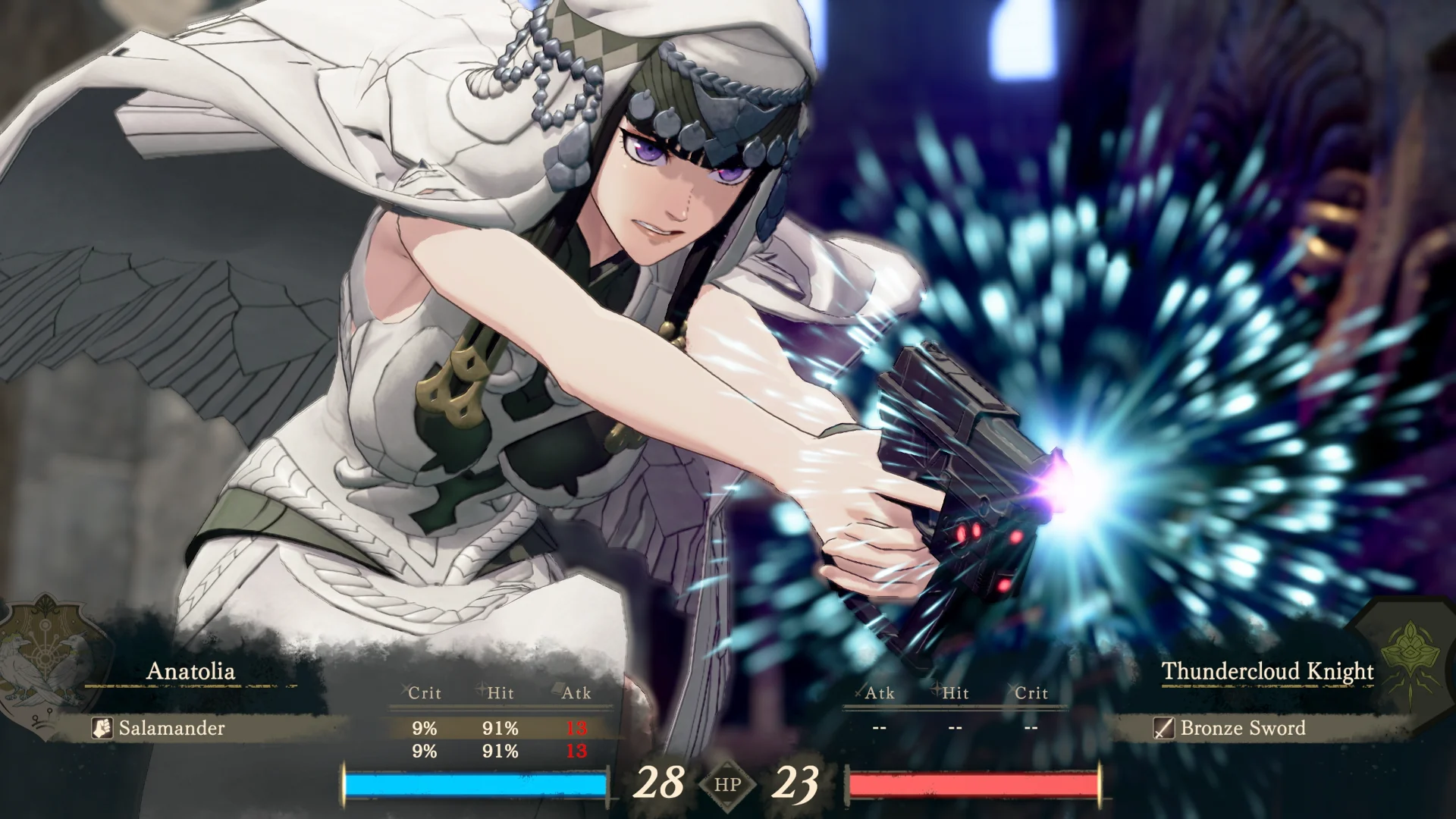
Unique weapons still exist, such as those imbued with magic (a Levin Sword is shown) to deal magic damage from a distance, as well as gauntlets that function as firearms (a first for the series).
Combat Arts
Combat Arts return in Fire Emblem: Fortune’s Weave, drawing from a weapon’s durability to unleash powerful attacks with increase range, damage, or other effects. Weapon durability figures are shown repeatedly in character inventories, with much lower number of uses per weapon than in previous Fire Emblem titles that feature weapon durability.
This change, combined with Combat Arts specifically called out as using weapon durability but not normal attacks, suggests that weapon durability only applies to the use of Combat Arms rather than normal combat as in previous titles with durability mechanics.
Blaze Arts
New to Fire Emblem: Fortune’s Weave are Blaze Arts, a new form of combat skill exclusive to specific characters that cost HP to use. Each of the four main protagonists is shown to possess a unique Blaze Art:
- Cai can shoot a purple fireball from the conspicuous gem in his hand to create a powerful blast that hits all enemies in a wide area.
- Dietrich’s cloak allows him to warp after moving to reach otherwise inaccessible locations or bypass barriers and obstacles on the map.
- Theodora can manipulate the ground beneath her feet to conjure up boulders and fling them long distances to attack enemies.
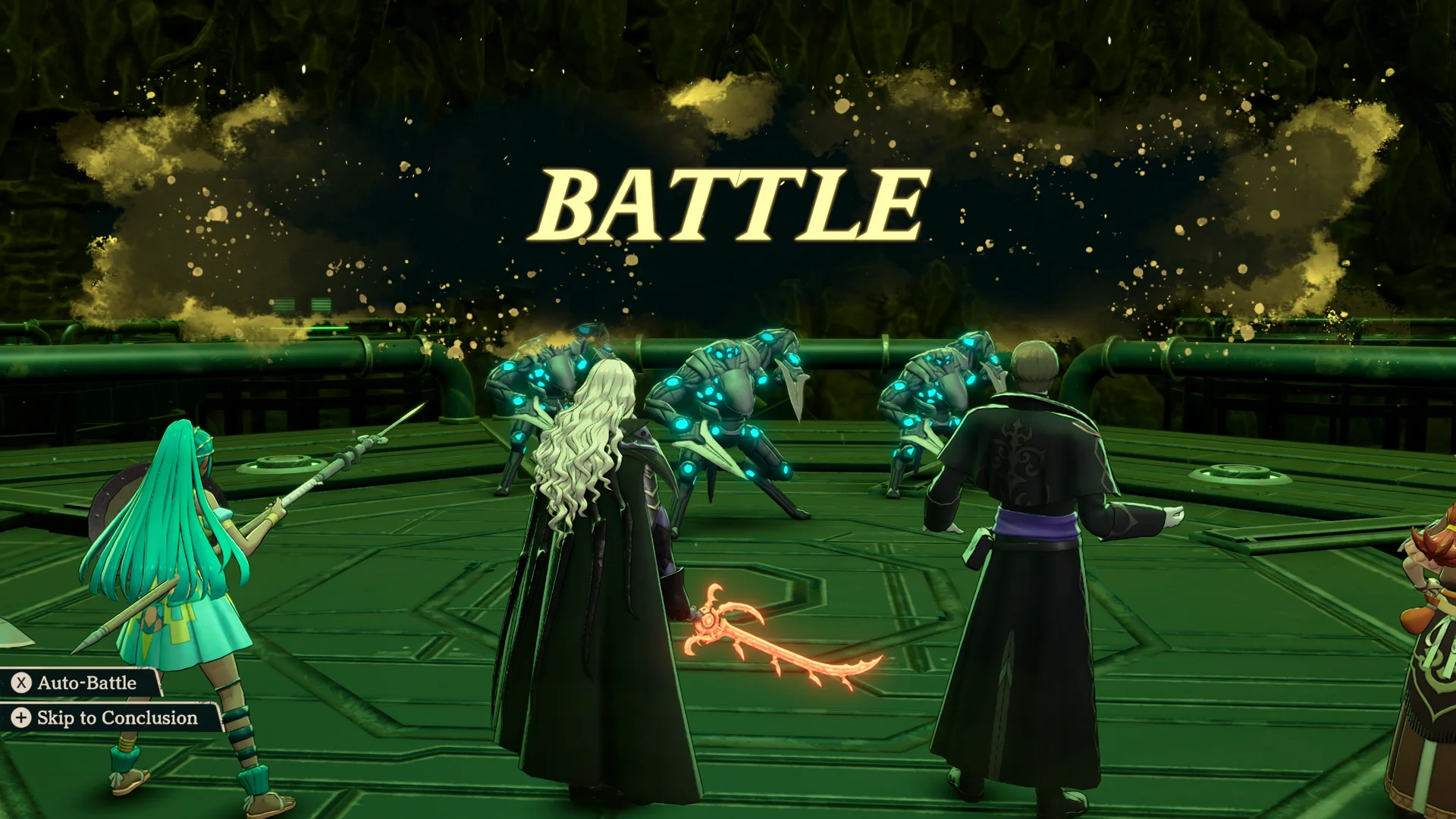
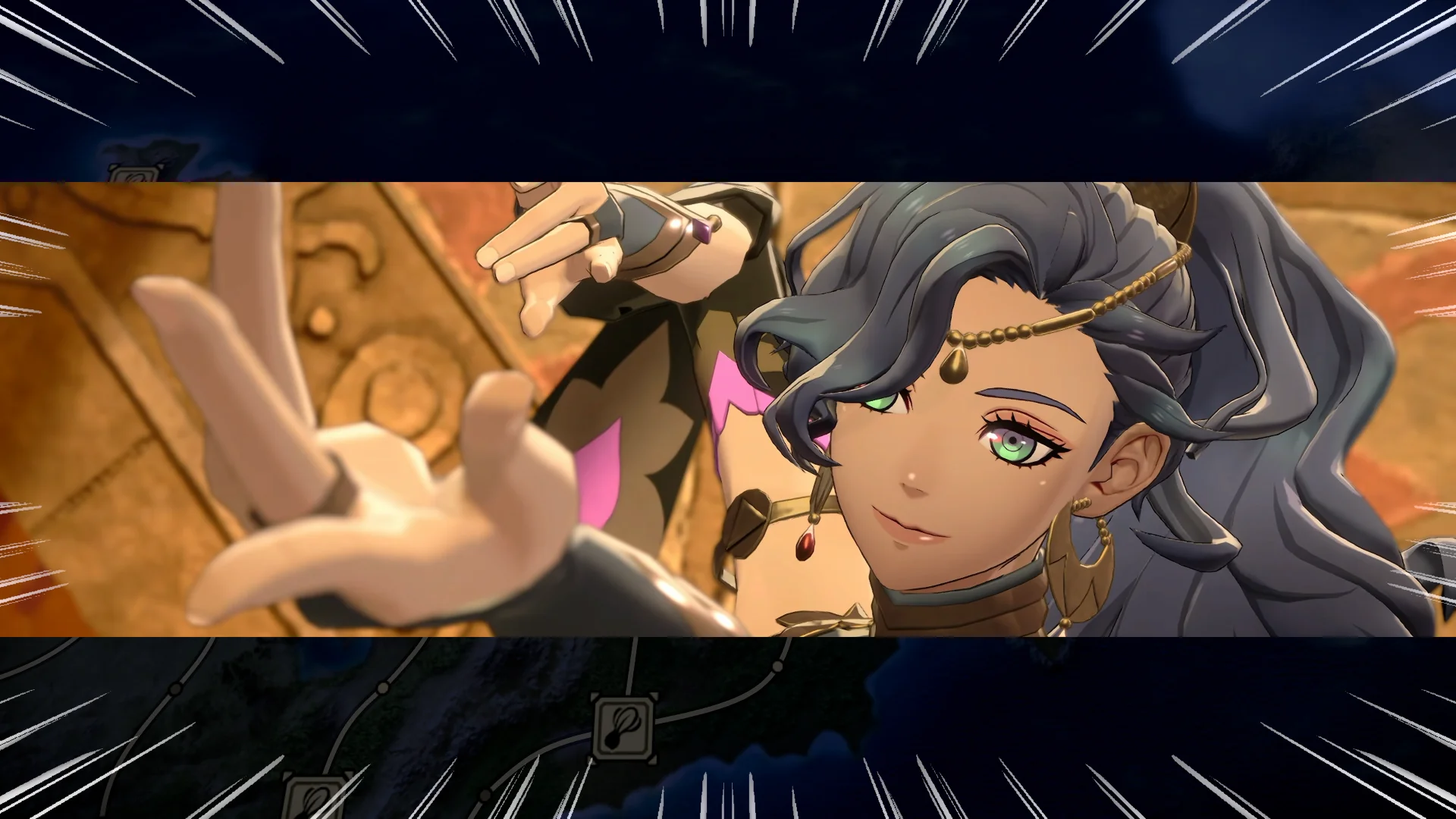
- Leda can use her instrument to play songs that buff allies, summon powerful monsters to fight for her, and more.
More Combat Notes
- Magic is shown to be used for offensive purposes and support purposes (such as healing), suggesting that certain forms of magic may be replacing the functions typically reserved for staves in past Fire Emblem titles (staves are not shown in this presentation at all).
- Terrain bonuses, counterattacks, and attack ranges remain integral to combat as in all previous Fire Emblem titles.
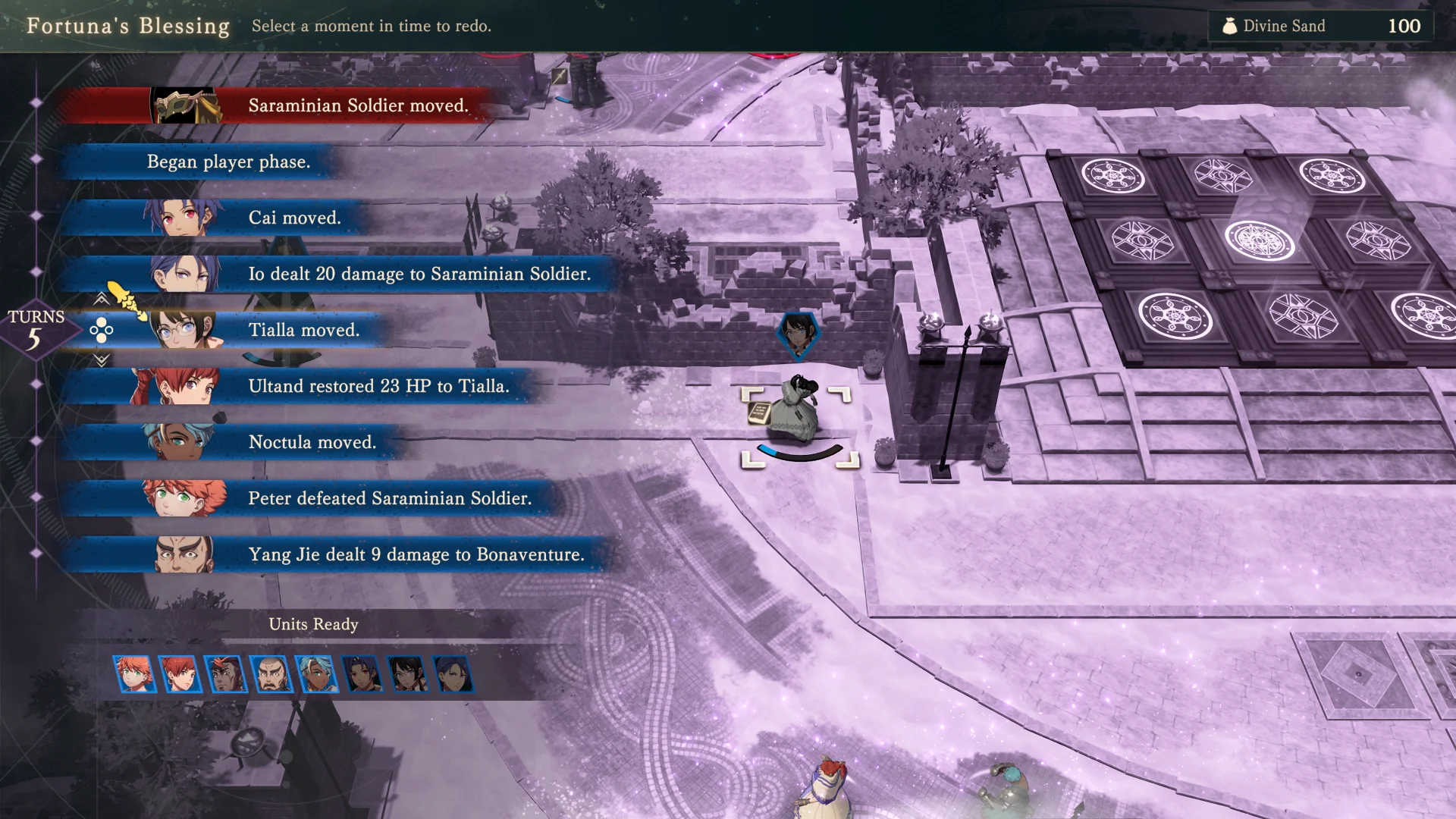
- The ability to rewind turns (first introduced in Fire Emblem Echoes: Shadows of Valentia as Mila’s Turnwheel) returns in Fortune’s Weave, allowing the player to undo costly mistakes without completely restarting a battle.
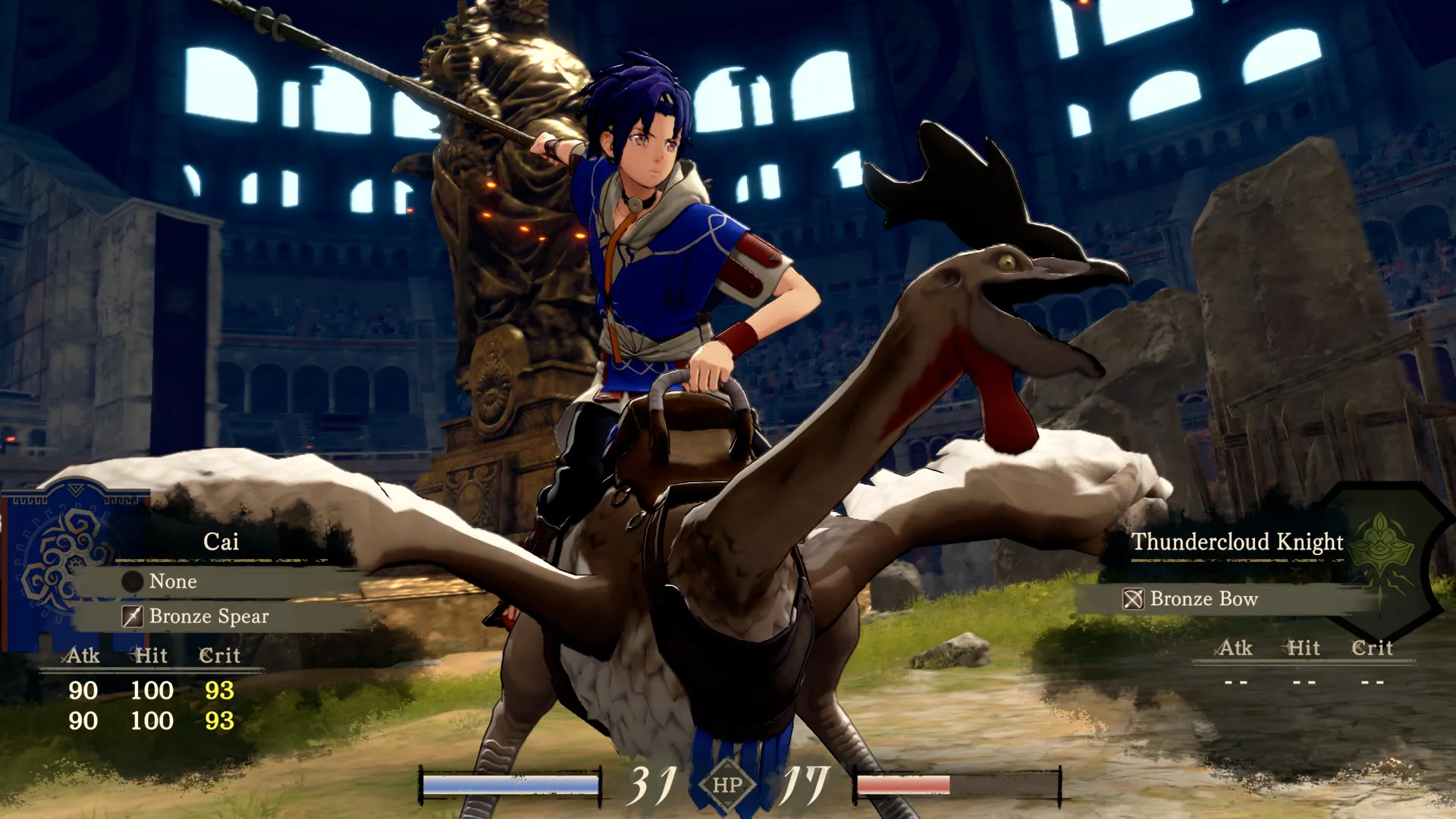
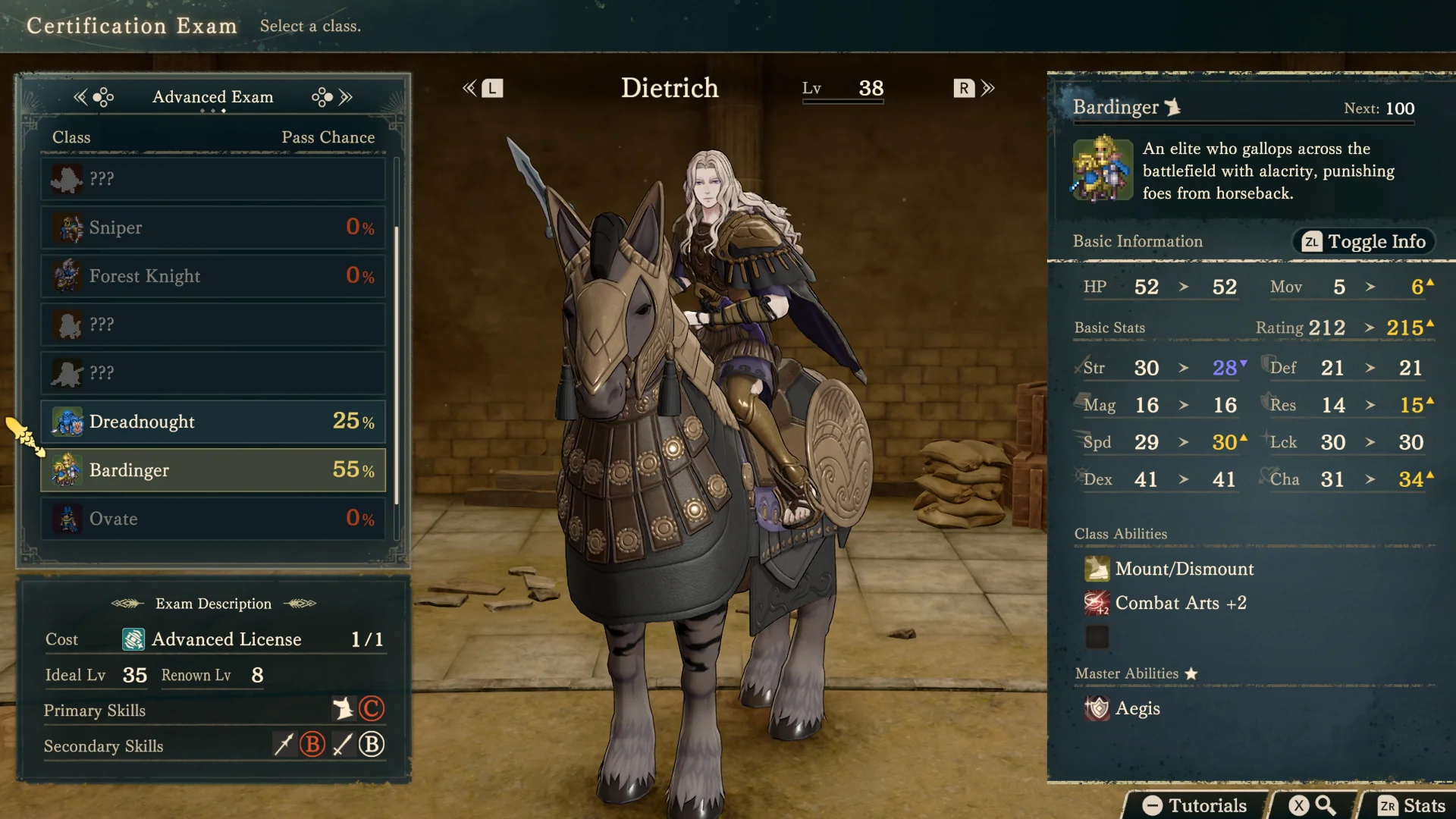
Classes in Fire Emblem: Fortune’s Weave
Fire Emblem: Fortune’s Weave features a whole host of new classes to fit the new setting, some that mirror the role of previous series classes, and others that are entirely new.
Classes are now divided into three tiers: Beginner, Specialty, and Advanced.
- The game’s five beginner classes are the traditional, basic unpromoted classes that most characters start their journey using.
- Specialty classes are medium tier classes with more specialized roles, with over ten to master.
- Advanced classes are the highest tier of classes, typically the most powerful and featuring hybrid elements from multiple Specialty classes. The presentation did not provide an idea of how many Advanced classes are in the game.
Below is a list of the classes shown off for Fire Emblem: Fortune’s Weave and some general details for each:
- Armored Knight: One of the few returning classes without a name change, these armored units specialize in defense and wield axes.
- Bardinger: A horse-mounted class that wields swords and spears, akin to the traditional Cavalier class.
- Bishop: A magic class that uses white magic for attack and support purposes.
- Cataphract: Mounted armor units that combine mobility with high defenses, similar to Great Knights in past titles.
- Charioteer: One of the most interesting new classes, the Charioteer can travel long distances in a straight line and damage all enemies in their path.
- Diviner: A beginner class that specializes in magic.
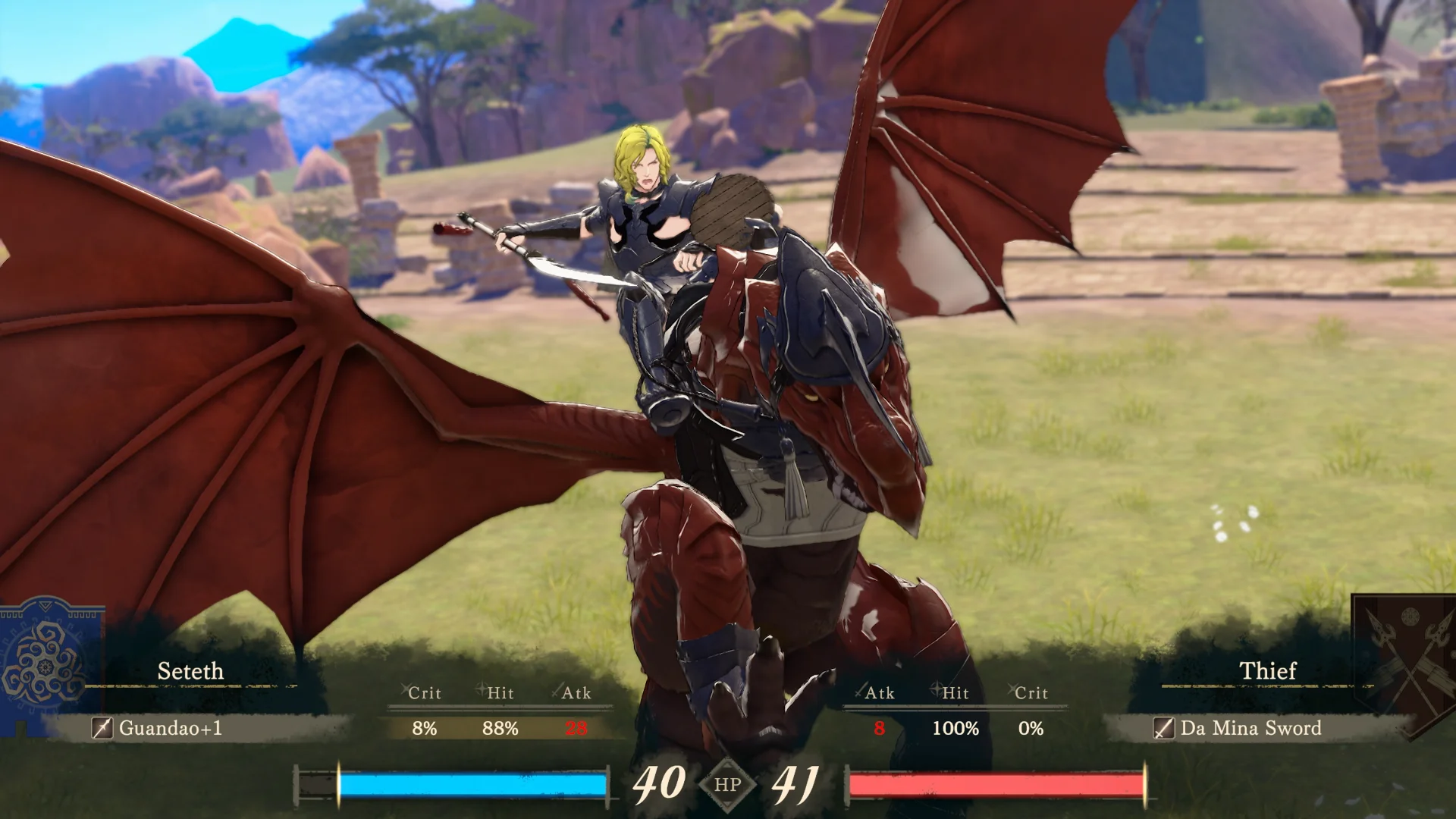
- Dragoon: A wyvern-mounted flying unit that wields spears.
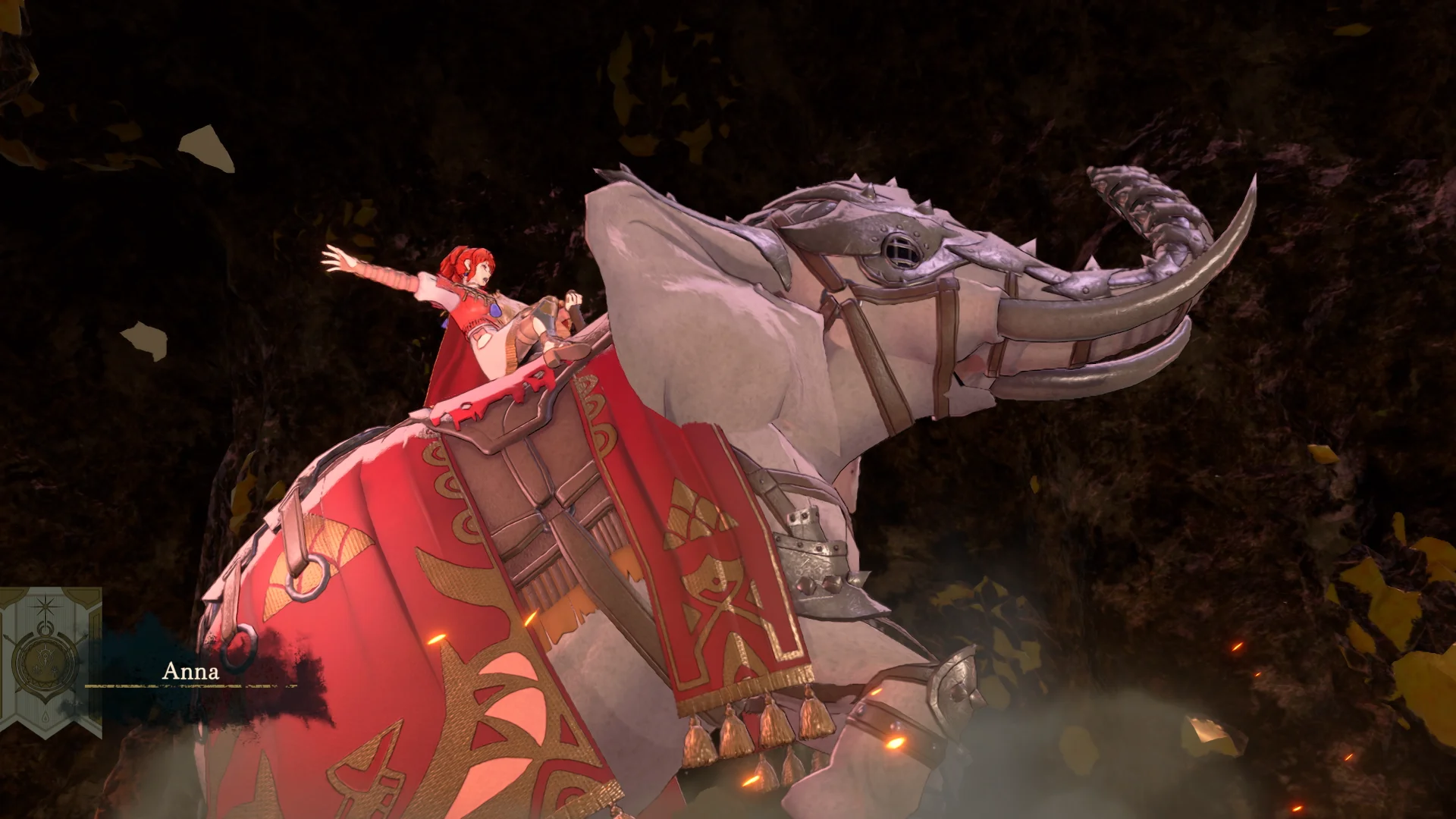
- Elephant Rider: A soldier who rides an elephant into battle. Has a charging attack similar to Charioteers, but appears to wield magic.
- Gladiator: A beginner class that specializes in melee weapons.
- Guardians: Spear wielding infantry who can also use white magic to attack foes or support allies.
- Ornius Riders: A beginner mounted class that wields spears and rides an ostrich-like Ornius instead of a horse.
- Shido: This class seems to be a new version of the Swordmaster class from past titles. It wields swords and focuses on speed for evasion and dealing multiple strikes in battle.
- Wind Soldiers: A spear-wielding class mounted on a winged horse that can fly long distances and over obstacles.
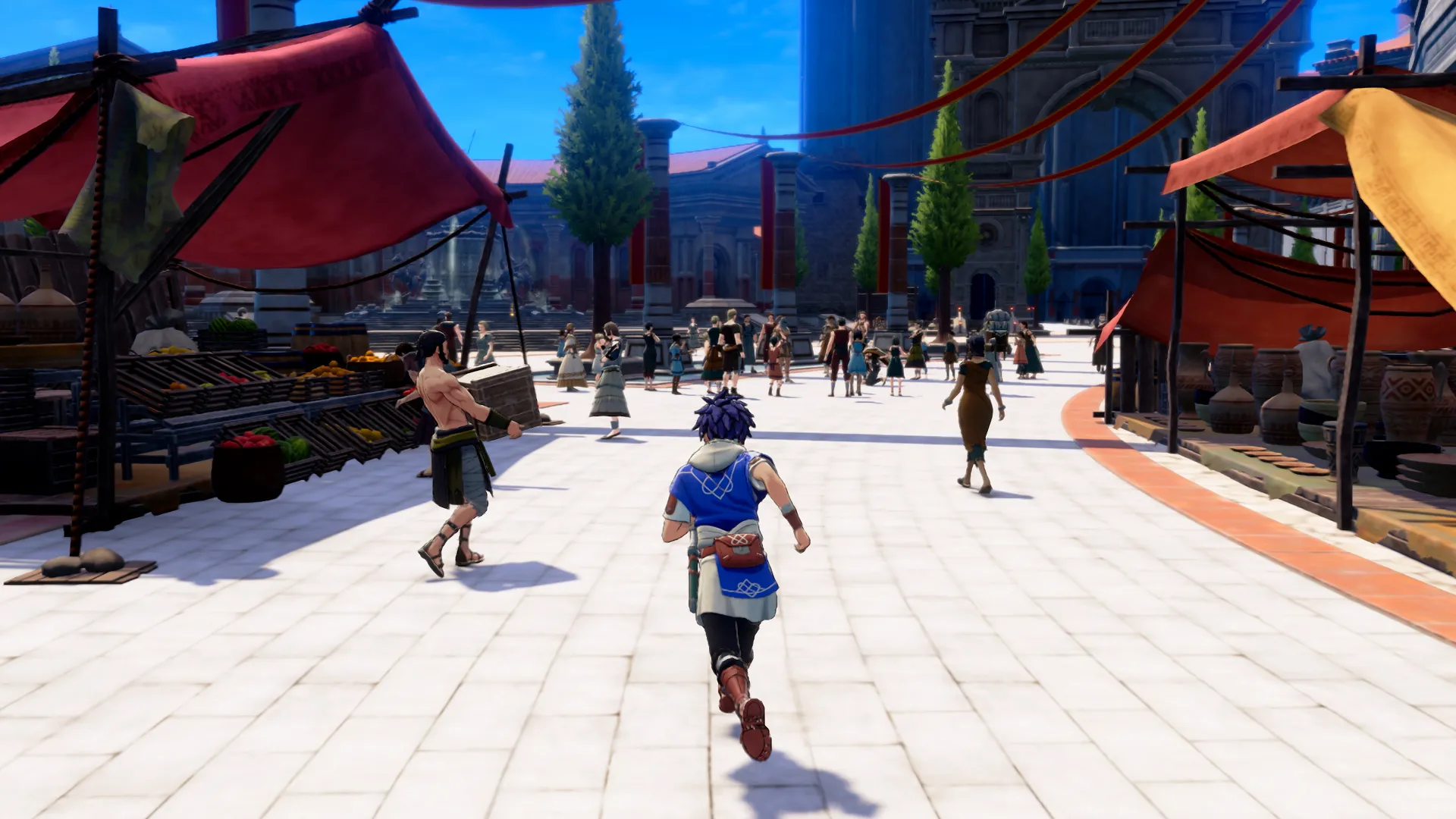
Prepare for Battle
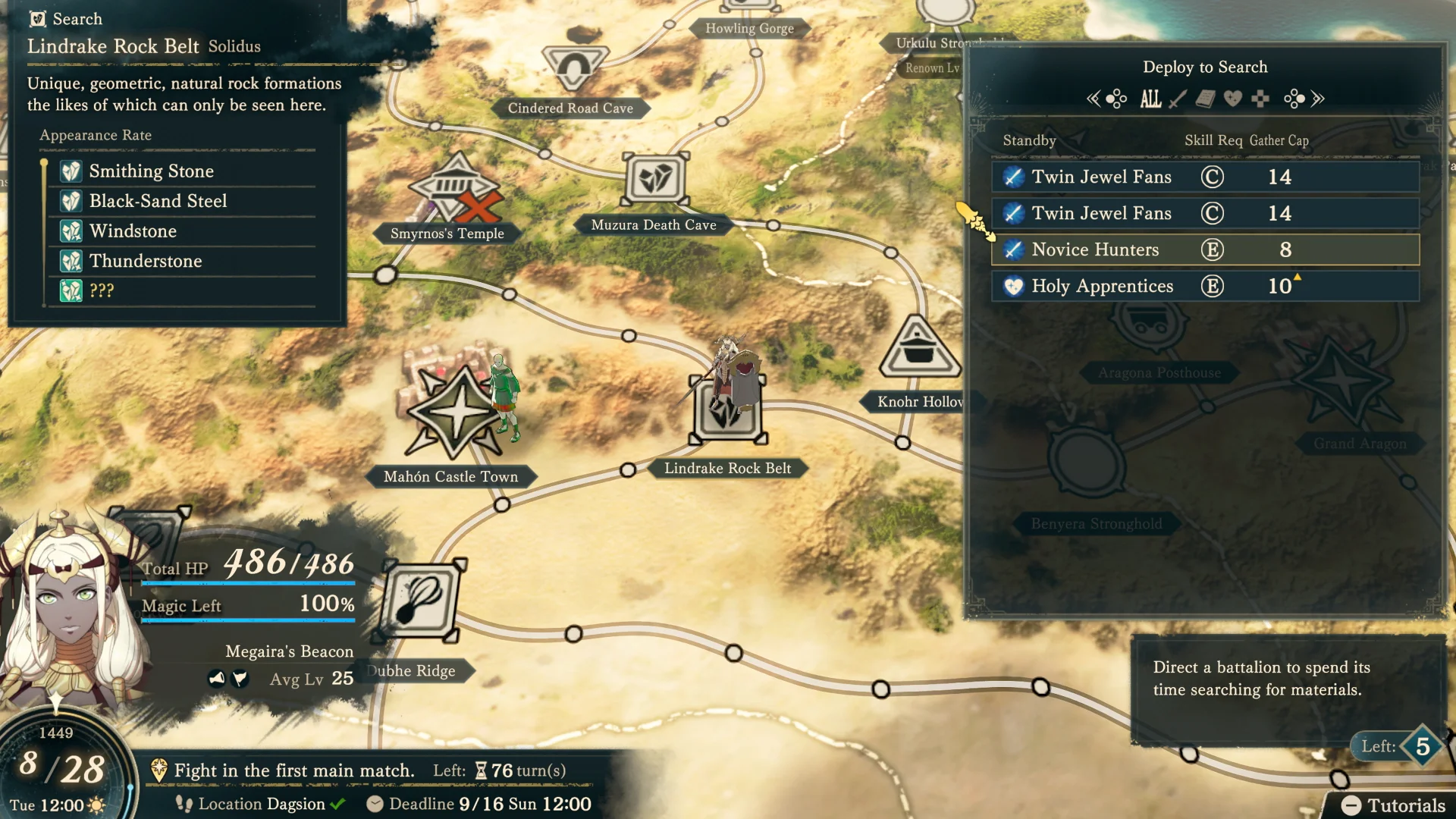
This portion of the Fire Emblem: Fortune’s Weave Direct detailed the game’s general structure between Heroic Games matches, where the player will strengthen their army, forge bonds with their characters & recruit new allies, and embark on quests throughout the expansive world map.
Time between matches is governed by turns, with each activity costing a certain number of turns. The player is shown to have 172 turns to spend before the first match in the Heroic Games, so there is a high degree of freedom in how a player may choose to spend their time. This is in contrast to Fire Emblem: Three Houses, which utilized a rigid school calendar system. Players can preview the next match during their free time, so you can plan how to use your free time according to the demands of the next match.
Activities are split between the hub location of Dagsion and the larger world map that encompasses Dagda. In Dagison, you’ll find:
- Arena: The player can receive additional training once per week for their units in the Arena. These training sessions set two characters against each other, and each will increase their proficiencies.
- Spectate: You can spectate battles between rival armies to get an idea of their tactics.
- Shopping Arcade: This is where you will buy new weapons or upgrade existing weapons using resources gathered from quests, battle, or world map exploration.
- Temple Row: There are seven temples you can visit in Dagsion, each conferring its own blessings on your army in exchange for time spent volunteering. These blessings will grant bonuses in combat, like stat increases or halving damage taken.
- Certification Exams: Proctors associated with the Heroic Games administer exams to allow characters to change classes. A character’s likelihood to pass depends on their stats and proficiencies relevant to the target class.
- NPCs in town will offer quests for the player to complete within a certain timeframe, such as acquiring items or killing bandits. Some quests are tied to character recruitment or important story characters.
- Dagsion is full of many warriors looking to take part in the Heoric Games. You can recruit these characters just by going up and asking, or you can ply them with gifts or shared meals to increase the chances they will join your army.
- Inns allow you to pass time instantaneously while automatically completing assigned activities in exchange for turns.
- Support conversations also occur in Inns when character relationships are high enough.
- The Pale Raven’s Perch allows the player to switch between the four protagonists at any time, allowing players to experience all four storylines in tandem without needing to start a new playthrough of the game. A huge improvement over the repetition inherent in Three Houses‘ route structure.
Meanwhile, there are several activities available on the World Map:
- You can leave the walls of Dagsion and explore the rest of Dagda, with new nodes on the world map opening up as you progress.
- Time passes with each node you travel on the world map, so you’ll need to plan out your exploration.
- The player can visit separate towns, with fully modeled locations to explore, buy goods, or find new quests.
- Groups of enemies may randomly appear on nodes of the map, and they can be fought in grid-based skirmishes for additional experience.
- There are dungeons to explore on foot, with chests to open for unique loot and monsters to fight. In dungeons, battles take the form of traditional turn-based, party-based combat ala Final Fantasy or Dragon Quest, rather than the normal grid-based strategy RPG battles.
- Each of Fire Emblem: Fortune’s Weave‘s protagonists have unique abilities they can utilize on the world map:
- Dietrich can flush out hidden enemy ambushes.
- Theodora can recruit battalions of soldiers (a mechanic returning from Three Houses, though seemingly exclusive to Theodora) from various towns.
- Cai is shown recruiting animal companions to serve as mounts.
- Leda is shown performing music at towns to earn resources and currency.
From 1449 to 1454
Much like Three Houses, Fire Emblem: Fortune’s Weave narrative revolves around a major time skip. In 1454, five years after the conclusion of the Heroic Games, Dagda lies in ruins due to the revival of the demon god. Progenitor God Sothis (the same Sothis from Three Houses, though she appears significantly older) calls upon a soul to fight back the darkness.
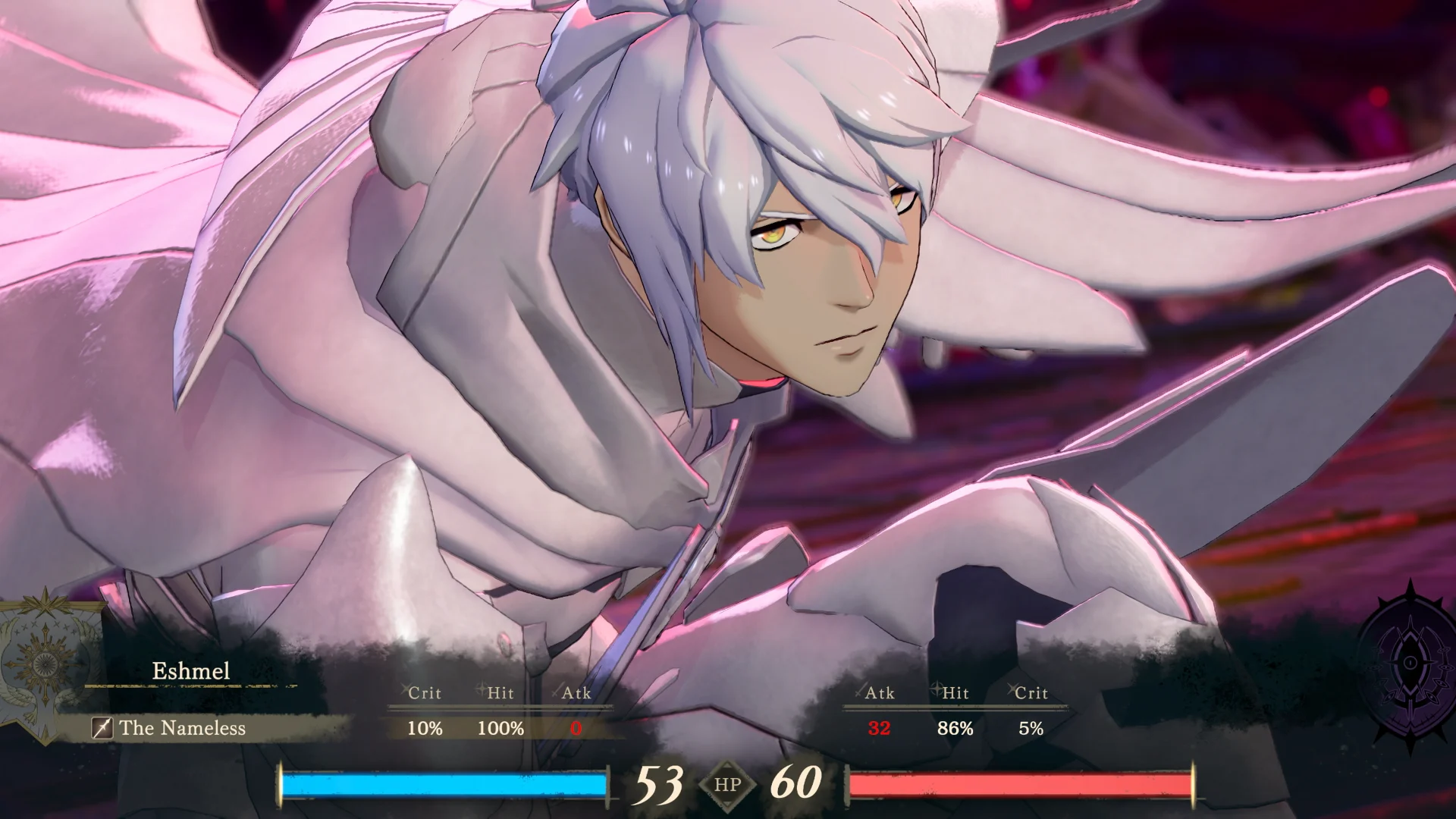
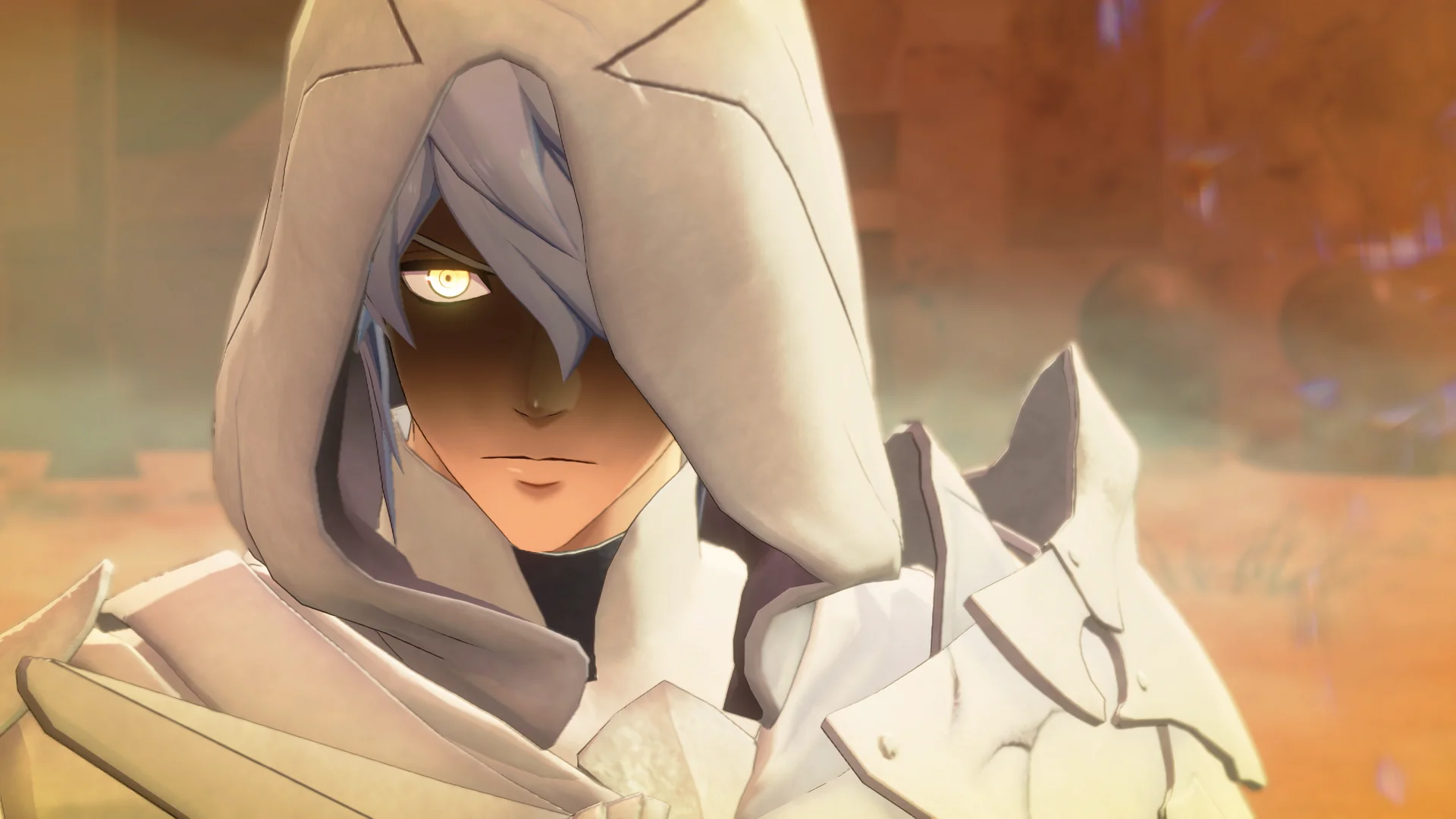
This soul is Eshmel, the figure clad in white seen at the beginning of the presentation, the new Player Avatar character. Eshmel must work with the time goddess Fortuna to travel back in time and change the fates of the four protagonists from the Heroic Games, allying with them to save Dagda from ruin.
This setup calls back to Fire Emblem: Radiant Dawn, which was divided into three parts with three separate armies that united in the endgame.
Fire Emblem: Fortune’s Weave New Screenshots
Fire Emblem: Fortune’s Weave – The Dagdan Collection
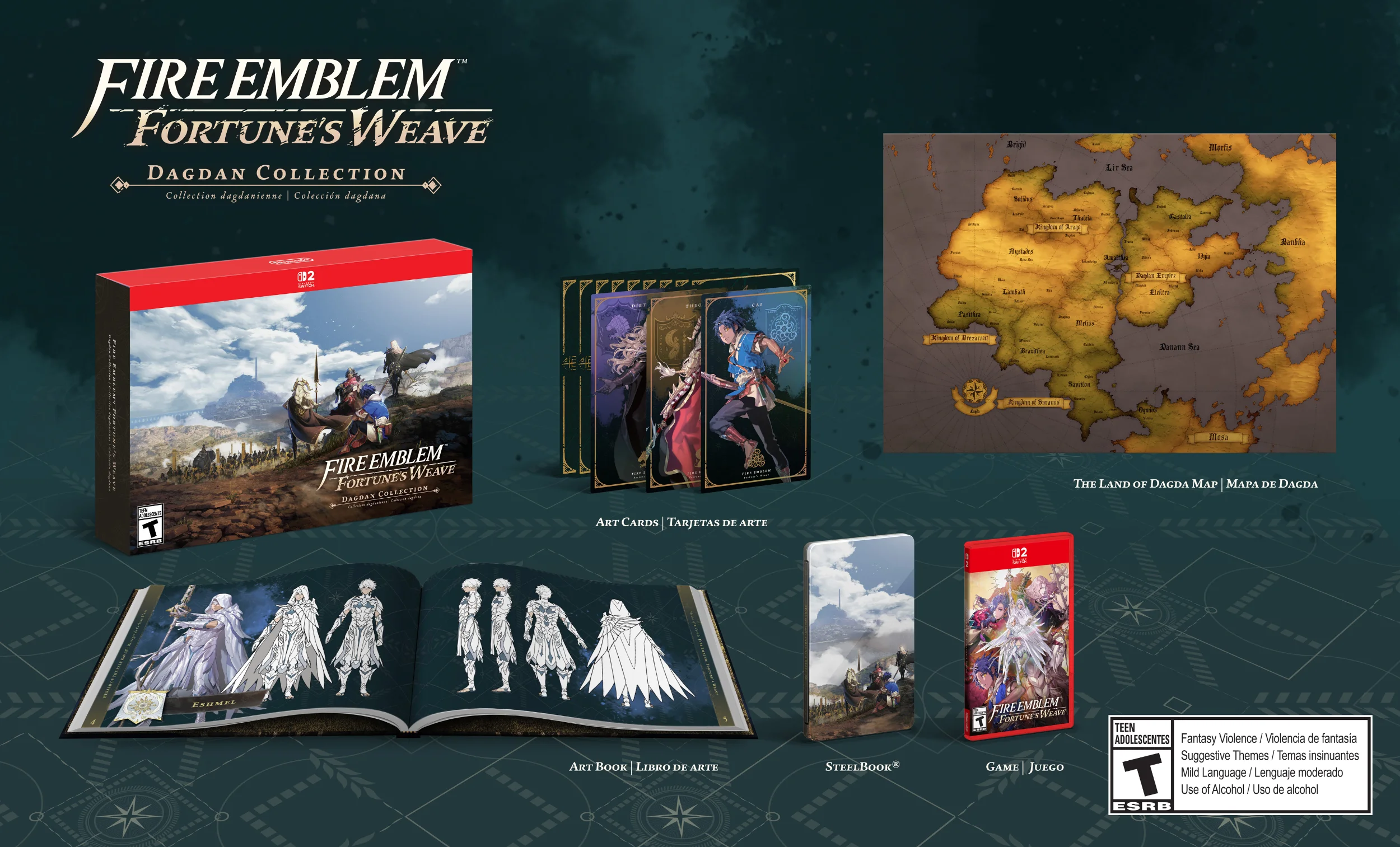
Finally, the Direct also detailed the Dagdan Collection, a special edition containing a physical copy of Fire Emblem: Fortune’s Weave for the Nintendo Switch 2, a Steelbook case, character art cards featuring the protagonists, a map of Dagda, and artbook with illustrations, concept art, and additional details about the world of Dagda. This collector’s edition is currently available to preorder directly from Nintendo and other retailers, and will release alongside the standard edition of the game at retail and on the Nintendo Switch 2 eShop on September 17th, 2026.
Fire Emblem: Fortune’s Weave isn’t too far off, but it is long enough that you have time to read our Fire Emblem series primer in the meantime!



Leave a Reply
You must be logged in to post a comment.