
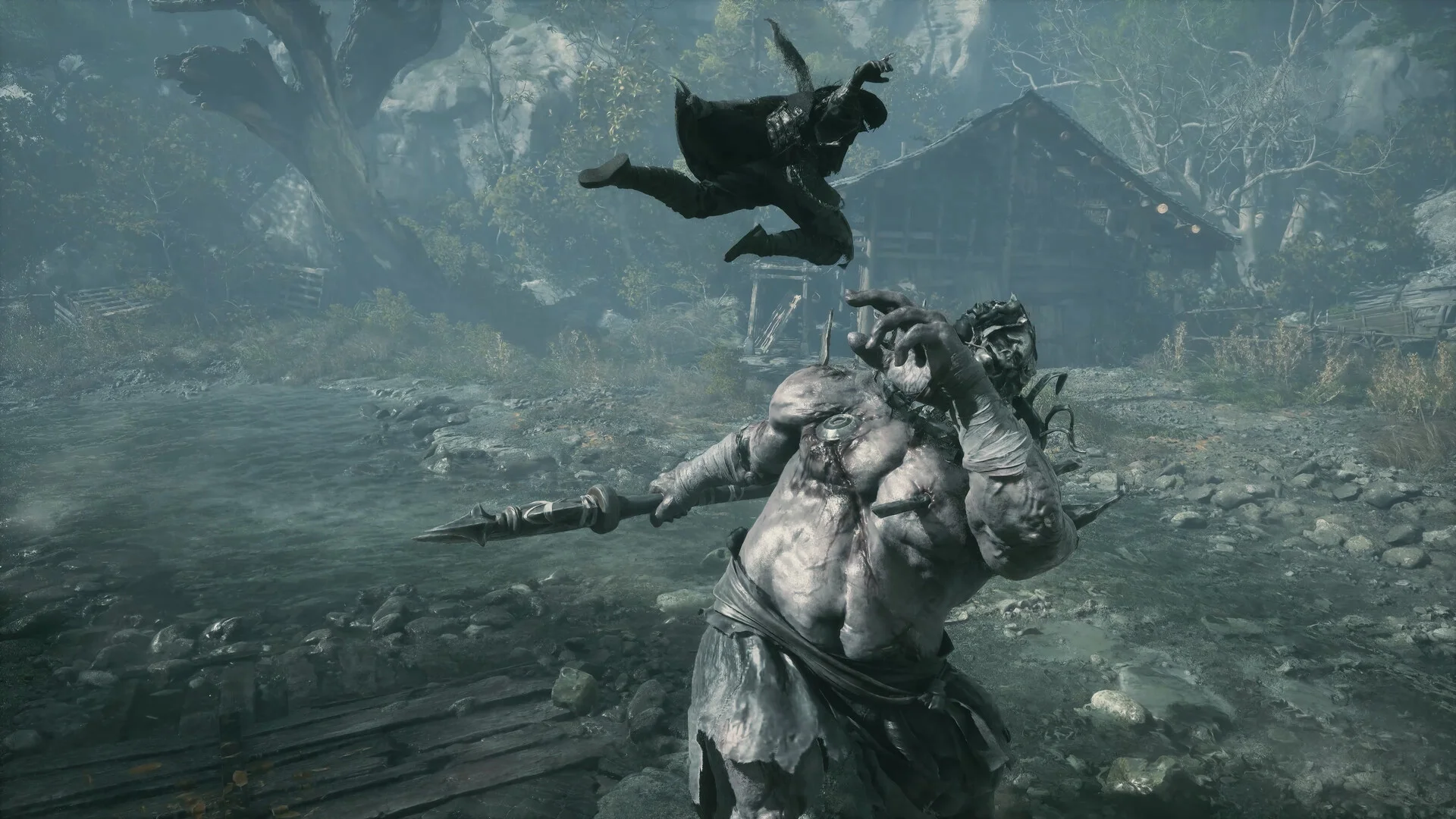
When Phantom Blade Zero took up a notable spot at The Game Awards last year, I had the same thought I had the first time I saw Black Myth: Wukong, that this is a fake video game. You know how a game can look too good to be true? The closest comparison I can make isn’t the made-up game the little brother plays in the background of a Disney Channel Original Movie. It’s more like those over-the-top, high-production-value gameplay clips used to advertise a mobile game that, once you download it, turns out to be an isometric city builder that looks and plays nothing like the ad.
I was wrong about Black Myth: Wukong. When it came out, I was morbidly curious, and I ended up completely blown away by not just its ambition but its execution. I was wrong about Phantom Blade Zero, too. I found that out after getting six hours of hands-on time with it during a trip to Los Angeles, where I played the entire first chapter, most of the second, and a selection of bosses curated by developer S-Game ahead of the game’s October 29th, 2026, release.
For transparency’s sake, know that S-Game was very accommodating for this preview event, covering my flight, lodging, and meals. That said, none of this influences my perception of the game itself. What it speaks to is the studio’s high level of confidence in its project, as well as the capital behind it, since the press seldom gets unfettered access to a game’s build. Typically, preview events feature curated sessions focused on a specific vertical slice, designed to leave the best possible impression.
That wasn’t the case here. Once I entered the event, I was promptly seated at a PC, handed a controller, and told to simply “enjoy your time.” I then spent six hours (with short breaks for coffee and water, of course) plowing through the first chapter, learning a couple of the weapons, fully exploring what was accessible in the early game, completing a variety of side quests, and tackling both the progression bosses and a handful of optional ones.
It genuinely felt like I had just purchased the game and was playing it at home in my apartment. That kind of access is rare and, once again, reflects how much faith S-Game has in its product.
“Okay, but how is the game?” you’re probably asking by now. I’ll cut to the chase. I thought it was pretty damn good! With a few caveats that come down to my own taste, I think it’s something the majority of players will absolutely adore. Personally, I’m a bit fatigued by what I and others have taken to calling “parryslop,” that is, games whose central combat mechanic revolves around parrying. It has become the norm for action games in the wake of Dark Souls and Sekiro: Shadows Die Twice, in particular, and Phantom Blade Zero is unquestionably a parry-focused game. However, what I noticed during the intro, which throws you in media res into a fight with what is presumably the final boss, is that while parrying is a central pillar, so too are more hack-and-slash-oriented combo chains.
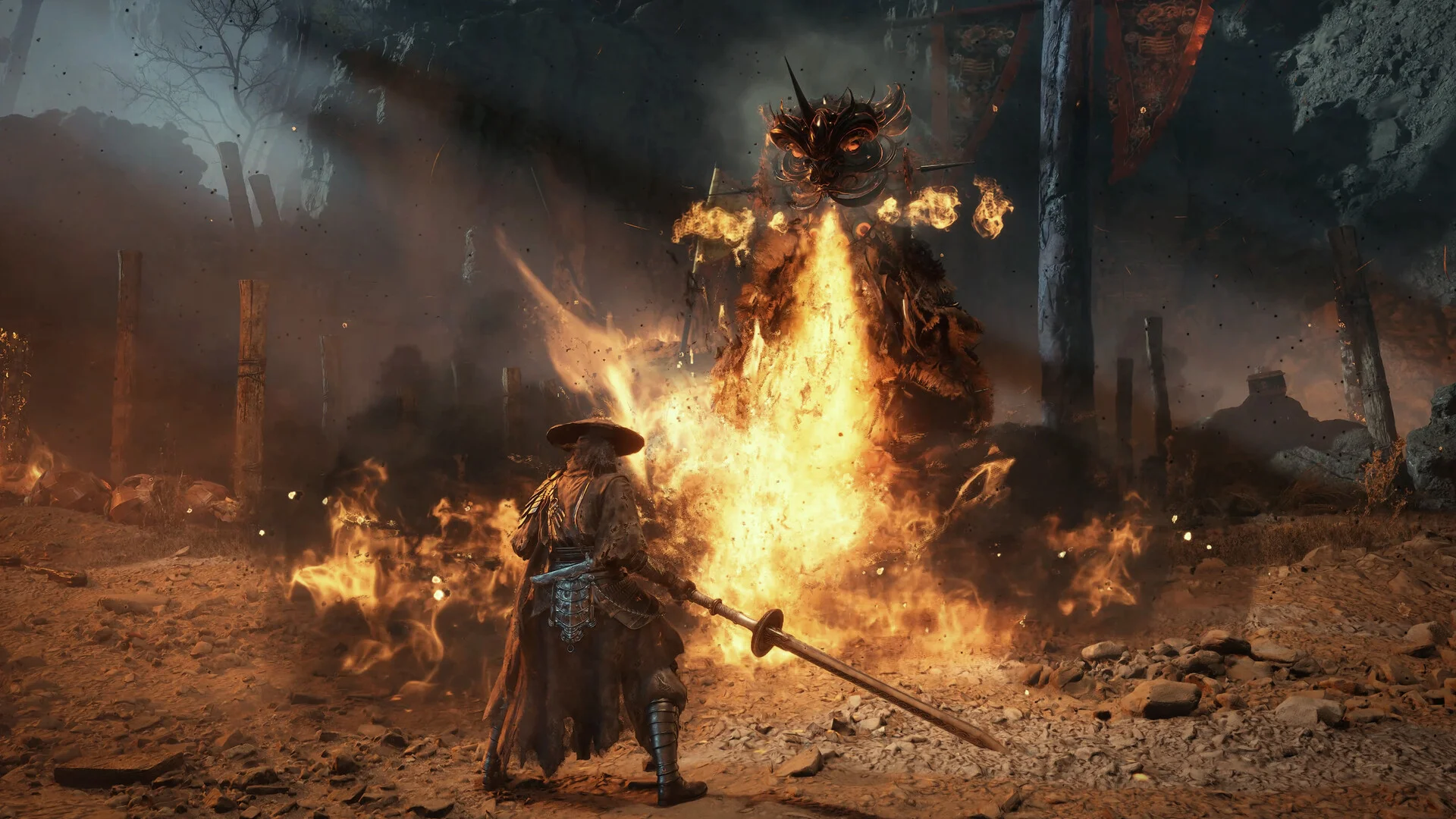
There aren’t air combos à la Devil May Cry, but there are multiple combo strings, and each weapon (of which there are dozens) has its own moveset. Coupled with an emphasis on dodging, this system creates a smooth ebb and flow that sets the combat apart from other parry-heavy games, since you’ll be committing to combos, managing spacing, and animation canceling to dispatch foes.
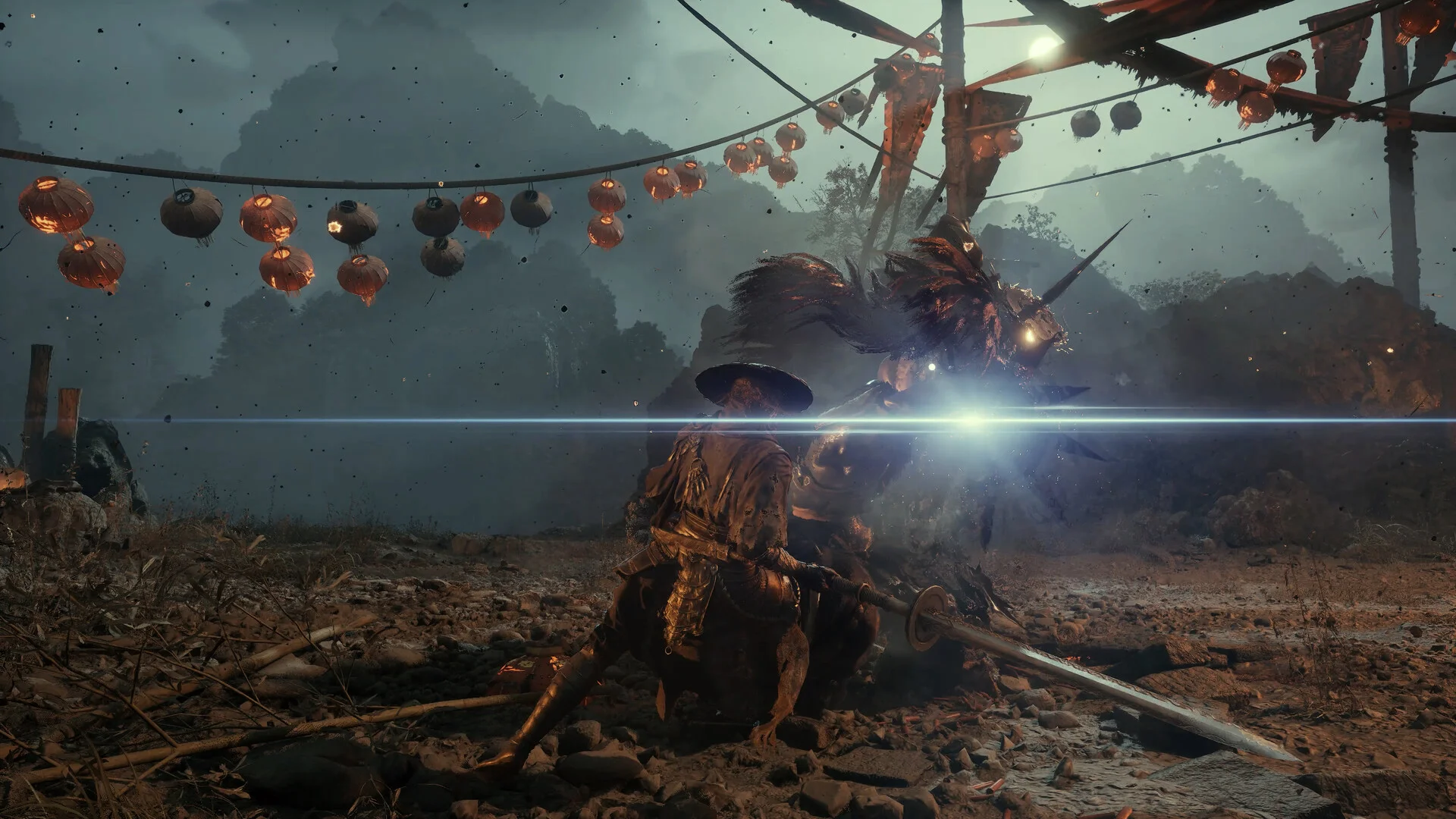
Notably, parry is mapped to the left bumper by default, while dodge sits on the right, and each has a “super” variant that enemies telegraph with a blue light for parrying (Brutal Moves) and a red light for dodging (Killer Moves). Phantom Blade Zero doesn’t penalize you much for being mid-combo when these appear, as you can easily animation cancel straight into one for a cinematic flourish, unleashing a rebuttal attack that deals significantly more damage.
This rhythm captures the feel of wuxia and the kung fu movies it influenced, which director and S-Game founder Qiwei Liang, aka S, has said was one of the game’s main goals, bringing wuxia to the rest of the world. I think that so far, Phantom Blade Zero absolutely succeeds at this, as it offers an extremely fluid and satisfying combat system with the perfect amount of audio and visual feedback to make the player feel empowered while still leaving room for player expression through its combos and weapons. It mostly succeeds at providing that fantasy while ensuring that the game is challenging enough to give the player something to chew on. While I found that most of the fodder enemies were extremely easy to dispatch, the bosses felt significantly more tuned to let the combat system shine as they are grand and powerful in ways that Elden Ring bosses often are, but provide a more “one-on-one,” “human vs human” combat style that mostly occurred in Sekiro. My issue with the rank-and-file Zenemies posing such little threat was that they slightly sapped the momentum of exploring this world. They may well ramp up later in the game, but for most of my time with it, the foes standing between the next boss and me felt less like adversaries and more like combo dummies.
During a Q&A session in which Liang also fielded questions from a panel, he noted that the involvement of Donnie Yen, best known for the Ip Man films, was instrumental in helping the studio choreograph the animations in Phantom Blade Zero, which in turn contribute to the excellent feel of its combat. Liang explained that the team wanted to “showcase the special charm of Chinese Kung Fu and Chinese swordplay as much as possible,” so having a grandmaster like Yen on board allowed them to be extremely meticulous and methodical with their motion capture. Liang stated that each weapon took almost a month to really nail and properly motion capture. And you feel all of that dedication and attention to detail in the game.
Phantom Blade Zero is not an open-world game, at least not in the two chapters I played. Instead, it offers a nonlinear structure with linear progression through open zones. This gives you a clear path forward, but both areas were also packed with nooks and crannies to explore off the beaten path for additional resources, boss fights, weapons, side quests, and more. Liang also explicitly cited a Metroidvania influence on the world design, explaining that you’ll unlock tools that let you return to earlier levels and reach areas that were previously inaccessible, and that this backtracking is a key part of Phantom Blade Zero‘s structure.
I thought the level design was more than competent at delivering on this. I found it satisfying to use the axe, the bow, and a pair of axes on ropes not only in combat but also to break down walls, shoot down loot caches, and grapple up to otherwise unreachable spots. It scratched the same itch that a good Metroidvania or something like Batman: Arkham Asylum does. If I hadn’t been limited on time and simply wanted to see as much as possible, I probably could have spent all six hours in the first chapter, chipping away at the environment and its quests. But I wanted to get a good mix of story progression and side content.
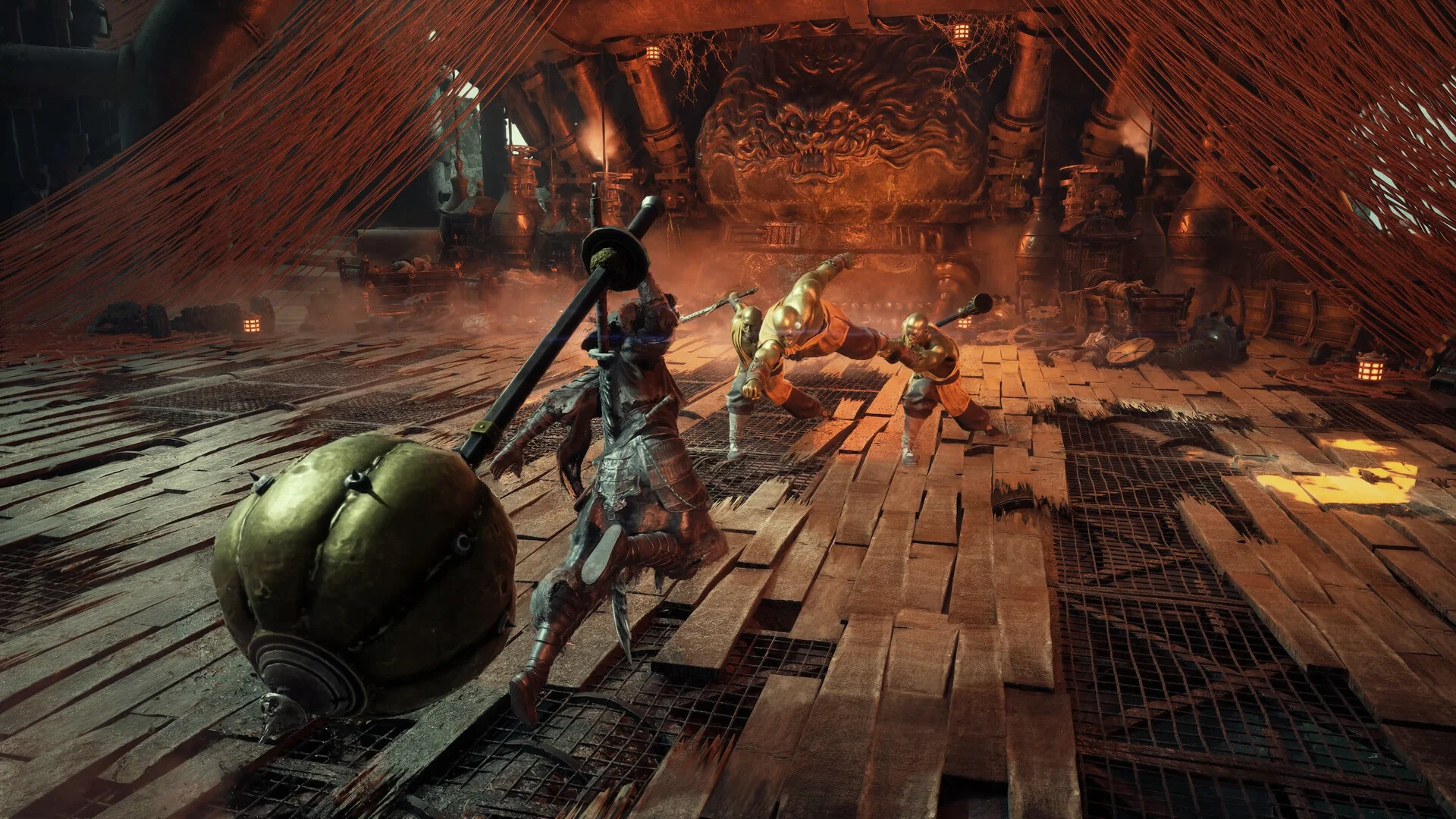
The exploration also helped keep Phantom Blade Zero from feeling like a boss-rush simulator, since the regular enemies rarely put up much of a fight (with one notable exception). The stretches between bosses could have easily felt like filler, but hunting down shortcuts, hidden caches, and areas I’d need to revisit later kept me engaged. As for that exception, I ran into a group of monks that attacked in threes and, rather than politely lining up in front of you the way enemies in Souls-likes tend to, deliberately split off to different sides to flank me. They kept me on my toes and actually gave me some trouble. If there are more enemies like this in the full game, my one big complaint with what I played will be moot.
On the narrative side, Phantom Blade Zero feels like an older kung fu movie, just on a grander scale, since you’re controlling Soul, who is capable of mythical feats and battles fantastical foes. Soul is a lethal assassin working for an organization simply called “The Order,” and after being framed for the murder of its leader, he finds himself actively hunted by its ranks. The in media res opening ties into this, as you face off against his former blood brother, Zuoshang, and lose the duel when Zuoshang deals a fatal blow to Soul’s heart. On his deathbed, Soul is approached by a mysterious sorcerer known as the Flesh Sculptor, who offers him the chance to live on with a tainted heart, with the catch that he’ll have only 66 days left. So Soul sets out not only to clear his name in the murder of his patriarch but also to find a way to heal his heart before time runs out.
It’s an intriguing premise. I asked Liang whether the 66 days would factor into the gameplay as a time constraint, but he was quick to clarify that it’s purely narrative framing and won’t affect your initial playthrough. He did, however, tease a roguelike mode that unlocks after you finish the game, giving Soul (and the player) 66 lives to complete it before a permanent game over.
I also found Phantom Blade Zero‘s English dub to be very good, though I suspect some people may come away thinking it’s a bit cheesy. What I mean is that it deliberately evokes the over-the-top, dramatic dubbing of older kung fu movies, and it succeeds in being a little campy while remaining gripping enough to pull you into the narrative. I personally loved it.
Later in the day, once many of the other media members and I had progressed beyond Chapter 1, a few aides came around to ask whether we wanted to see some late-game bosses. Of course, I said yes, and they booted up two of them: one that was good and another that was utterly phenomenal. I won’t spoil anything, but for that second fight I had what appeared to be most, if not all, of Soul’s arsenal (at least a couple dozen weapons), and I was left gobsmacked not just by the mechanics of the encounter but by the sheer scope of the spectacle.
As for performance, the first thing I did when I sat down was check the settings, because the game was running shockingly well for both an early build and an Unreal Engine 5 title. By default, it was set to 4K max settings with DLSS Performance mode and 2x frame generation. I switched over to Quality mode with frame gen turned off and still found it ran buttery smooth for the most part. The rigs were equipped with RTX 5080s, though I couldn’t see which CPUs they were using. It’s possible the hardware was simply brute-forcing it, but by and large, it struck me as exceptionally well optimized for an Unreal Engine 5 game.
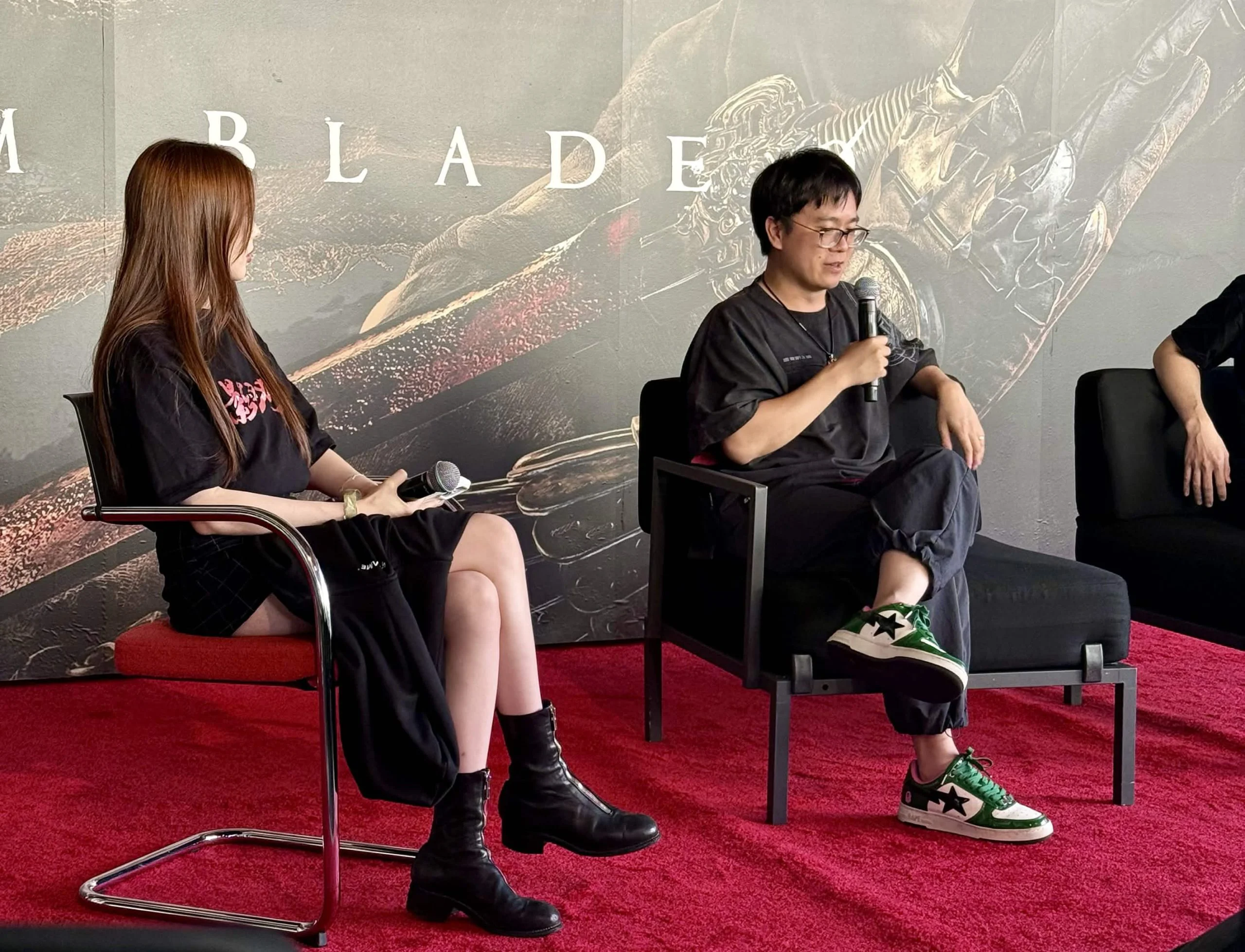
During the Q&A session, I asked Liang about this, since so many Unreal Engine 5 games are plagued by hiccups and stutters that players feel across the board, even on cutting-edge hardware. When asked how he and the team got Phantom Blade Zero running so well, he explained that they started by establishing a baseline on more common hardware.
“This is a very important thing [performance], especially for us, as a lot of players are on PC with multiple configurations, and we also have to tune for consoles. Optimization and performance were the first priority in our technical development. One way to work this out is to have a very early playable demo and ensure it performs well on base PlayStation 5 and medium-performance PCs, beginning in 2024,” Liang said.
He elaborated that ensuring the game ran well on more than only high-end configurations was paramount to scaling it for as many players as possible, with 60 FPS treated as a baseline rather than a stretch goal. It’s also worth noting that Phantom Blade Zero‘s most recent delay was meant to give the studio more time for polish and optimization, so the final build players get their hands on later this month may run even better.
All in all, I thoroughly enjoyed my time with Phantom Blade Zero. I think it should be right up most players’ alleys, especially fans of action RPGs or character action games, and it offers as much substance as it does flash. It wasn’t really on my radar before this event, but I can say I’ll likely be tearing through Soul’s foes when it releases later this month.
Phantom Blade Zero launches October 29th for PC and PS5. We’d like to thank S-Game for inviting us to this opportunity and allowing us to take a look at this game ahead of its launch.


Leave a Reply
You must be logged in to post a comment.