
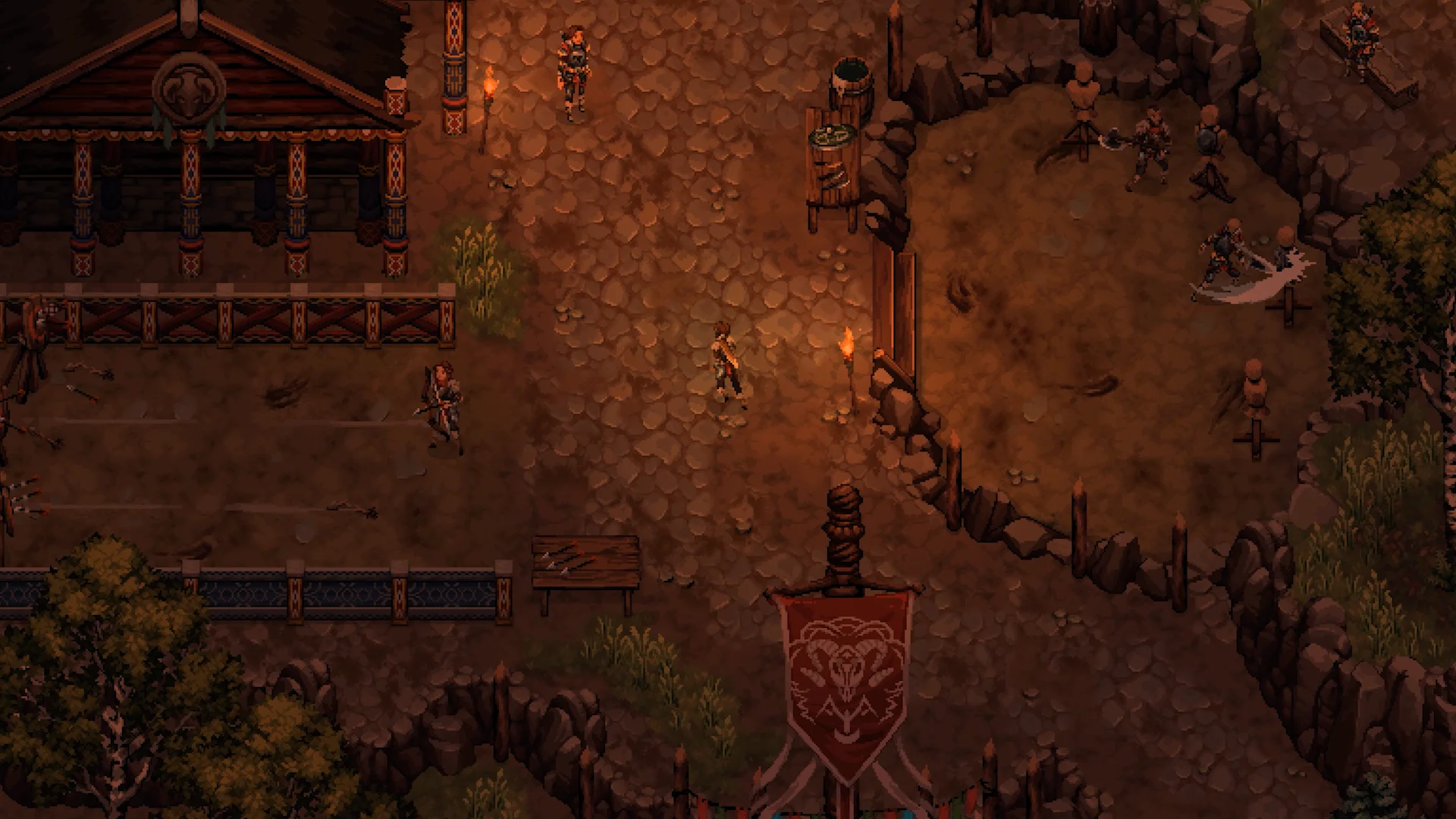
For many reasons, the original Drova – Forsaken Kin passed me by. Perhaps because I don’t play so many Western RPGs anymore, I wasn’t aware of the title and its critical and commercial success. Strange then that I found myself travelling to Magdeburg in Germany for a mystery game reveal, having been invited by the developers of Drova, Just2D, and their publishers, Deck 13.
It is an interesting city, with a mixture of post-war buildings such as the quirky Green Citadel of Magdeburg, interspersed with historic architecture, like the imposingly gothic Magdeburg Cathedral. It’s exactly the place you would expect to be the home of the creative team behind Drova. The event itself took place in Festung Mark, formerly the army barracks of a Prussian Fortress.
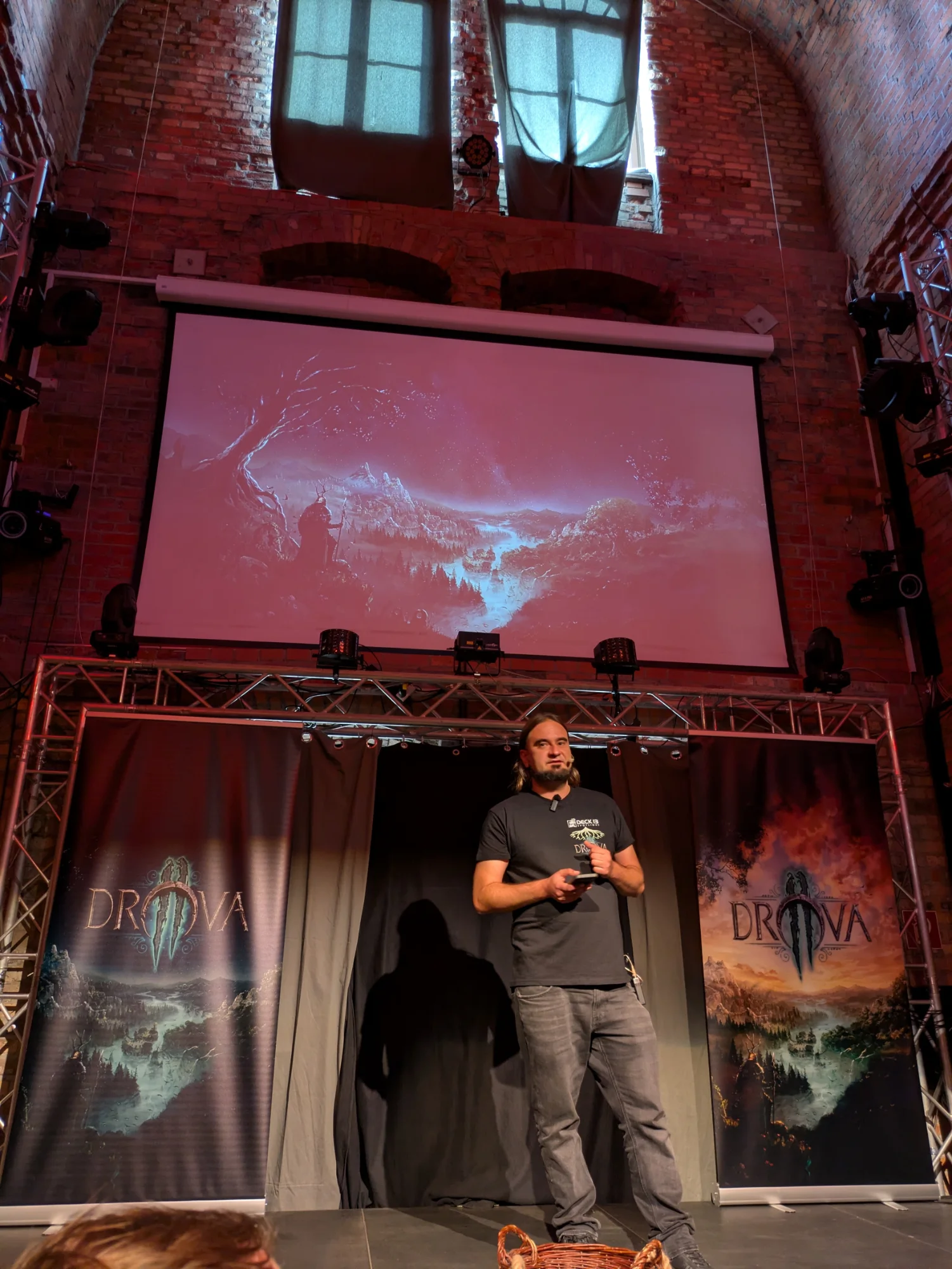
Inside, the venue was appropriately eerie, with sweeping stone arches and evocative lighting draping the corners of the room. I walked past multiple posters for Drova as I entered, but it was only whilst sitting down to hear the opening speech that it hit me: there was a distinct Roman numeral II behind the logo. Finally it sank in: the announcement we were here for had effectively already been announced. We were then treated to a trailer for Drova II, which is available for you to view right now.
The Head of Product for Deck 13, Michael Hoss, proceeded to describe how the original Drova broke even much earlier than expected, and was a runaway hit for them. This led to the production of Drova II – Torn Lands, which Hoss stated was more of an evolution of the original game than a reimagining of it. He wasn’t finished there though, as Deck 13 announced another new title, Lair of the Leviathan, which looks very much like a classical fantasy RPG featuring traditional DnD style classes—Hoss further confirmed Ultima as a key inspiration for the game. As a fan of the original Baldur’s Gate, this looks fantastic, so I will be watching this title eagerly.
Without further ado, we were led to our gaming stations. What better way to spend a sunny German October afternoon than locked in a dark basement, playing games?
The Drova II demo I was fortunate enough to play was an early Alpha build, and accordingly some aspects, such as the character creator, seem underdeveloped at present. Drova II has a classic pixel-art style and the options available within that constraint are actually pretty good, with a nice selection of tattoos, beard styles, and ornamentations. It could do with more gender expression options in the future though, which would still fit the world-building of Drova II. It doesn’t have the self-imposed narrative constraints of something like Gothic, with its lack of female agency, although that game is a seeming inspiration for the Drova series.
A brief tutorial followed, illustrating the basic attack and dodge moves. Drova II offered me a choice from a selection of weapons, from a slow and heavy axe to fast but short-ranged daggers. If I’d chosen a one-handed weapon, I could have taken a shield. However, I also had the option of picking up a “seal” that allowed me to use magical attacks. A couple of seconds being pummelled by the training enemies convinced me that I should give the shamanic powers a try in my starter build.
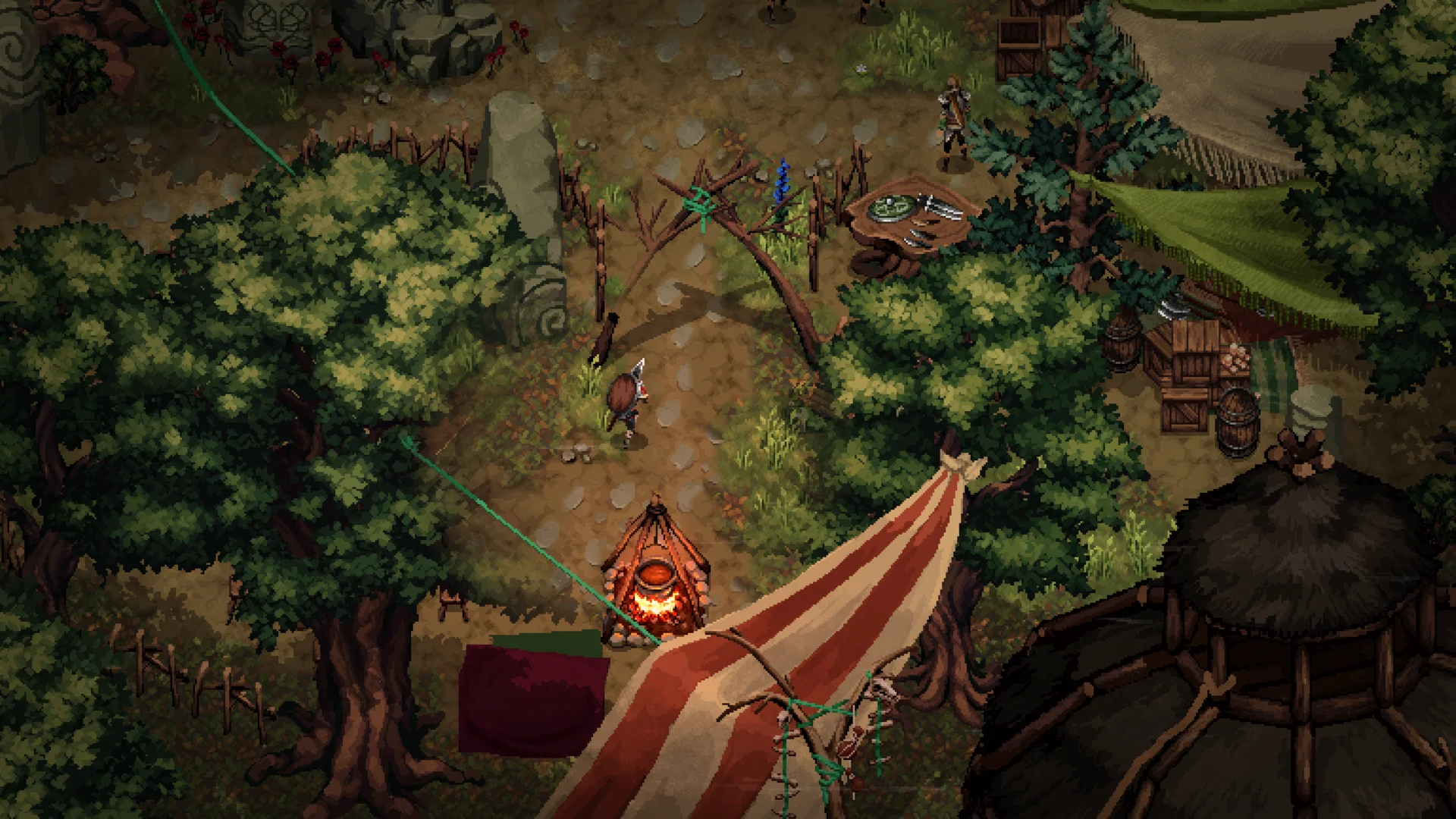
Drova II then delivered me to a forest path where a curmudgeonly guide pointed me towards a nearby farm where I could find work. Along the way I stopped to chat to a merchant who had been chased off that farm for an undisclosed reason, and who offered me the choice of purchasing something from his meagre selection of items. I picked a treasure map, which I never got to the bottom of, unfortunately.
Arriving at the farm, I met the owner, and it soon became apparent to me that much is amiss in the world of Drova II. The farm was experiencing hard times, as a large portion of the crop had failed. The people living there seem to be afflicted by the spread of a drug particularly popular with the younger members of the community. There was also talk of conflict between two major factions in the area: the followers of the Bear Mother and those of the Great Ram. The community I found myself in seemed to be neutral for now though, playing off both sides for survival.
This felt like a gentle start to Drova II, as I was encouraged to wander the farm, addressing the main quest line, or finding some of the many side-quests in the area as I felt best. The first thing I had to get used to was how little hand-holding there is in the game. There is no map automatically made available to you (although you can purchase them), so navigating the environment is principally down to memory. There are also no quest markers or other such modern quality-of-life paraphernalia.
Frankly, I’m all for anything that eases my journey through a game, but this choice is refreshing and works well. It forces you to engage with the world, to pay attention to the conversations you’re having, making you feel like you’re truly living the experience. Drova II acknowledges this potential friction to a degree, as one of your main tasks involves trekking off into the wilderness, for which you are given a set of extremely complicated instructions. If you express confusion about this, you are offered the option of a canine guide to help you find your way.
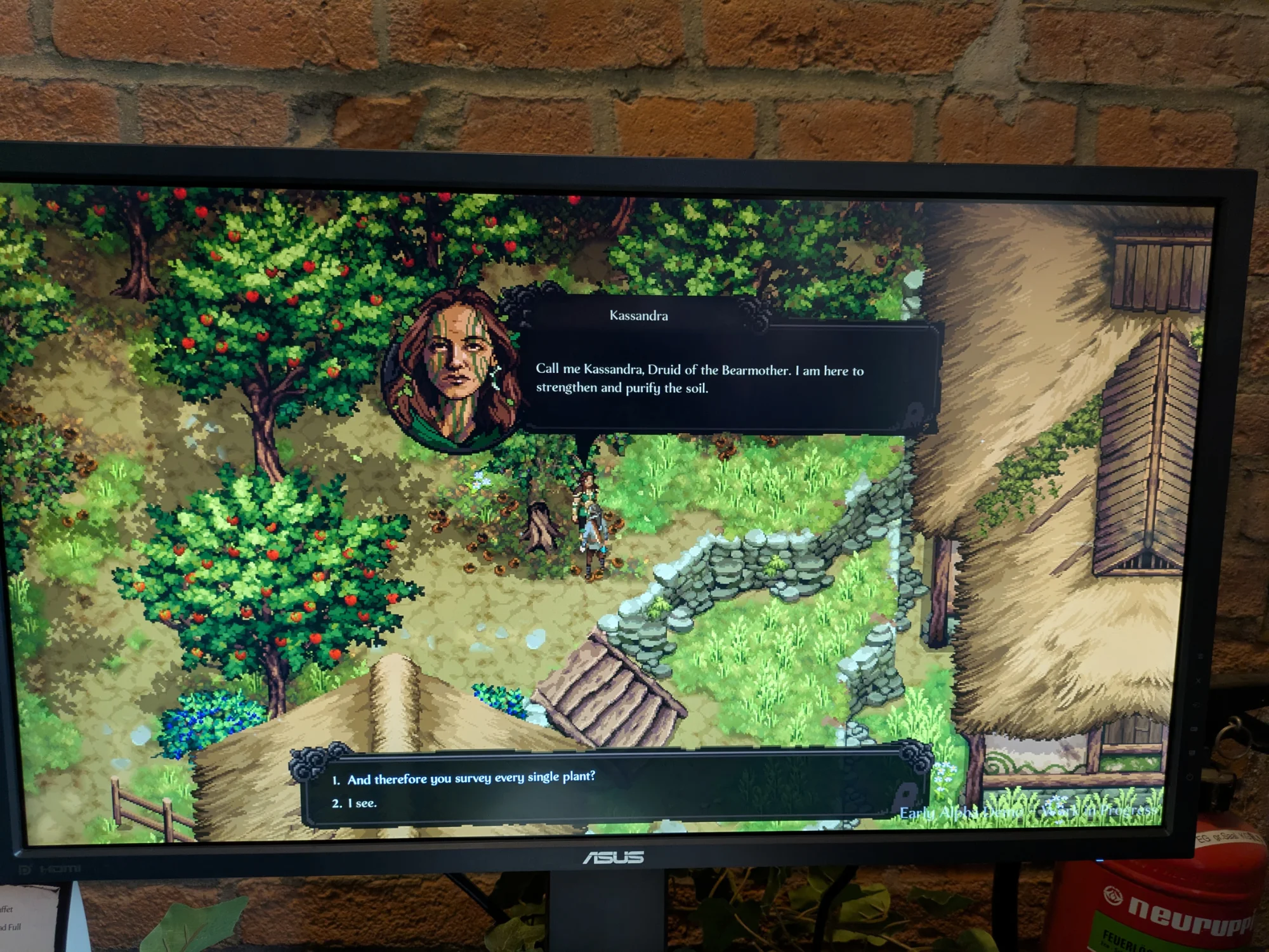
Crafting plays a significant role in the game, but I never felt put off by this, despite crafting not being one of my favourite elements within RPGs. You naturally find materials as you explore, and crafting stations are obvious and well demarcated, without any obtrusive UI elements that might detract from immersion in Drova II.
Whilst collecting your twigs and apples, you also need to be aware of where you’re taking them from. I soon found out that if I took anything with a red outline I risked getting into trouble, as this indicates that the object belongs to someone and therefore this constitutes stealing. Unfortunately, I had pinched a fair amount of items before this discovery hit me, making me feel a little guilty, as the farm owner had asked me to promise not to steal anything. If you enter restricted areas the inhabitants warn you off, and I was fascinated to see even the guard dogs reacting to my actions. Luckily, I was never caught red-handed.
The combat is certainly challenging, with the aforementioned wilderness mission finishing with your dropping into dangerous territory, and your friendly hound not seeming inclined to lead you back to safety. I died multiple times, even whilst running away from every fight I could, but I wasn’t frustrated, feeling rather that this added to the hostile feeling of Drova II’s world. I will be interested to see how the combat evolves as the game progresses, and how your weapon choice influences the kind of journey you will have.
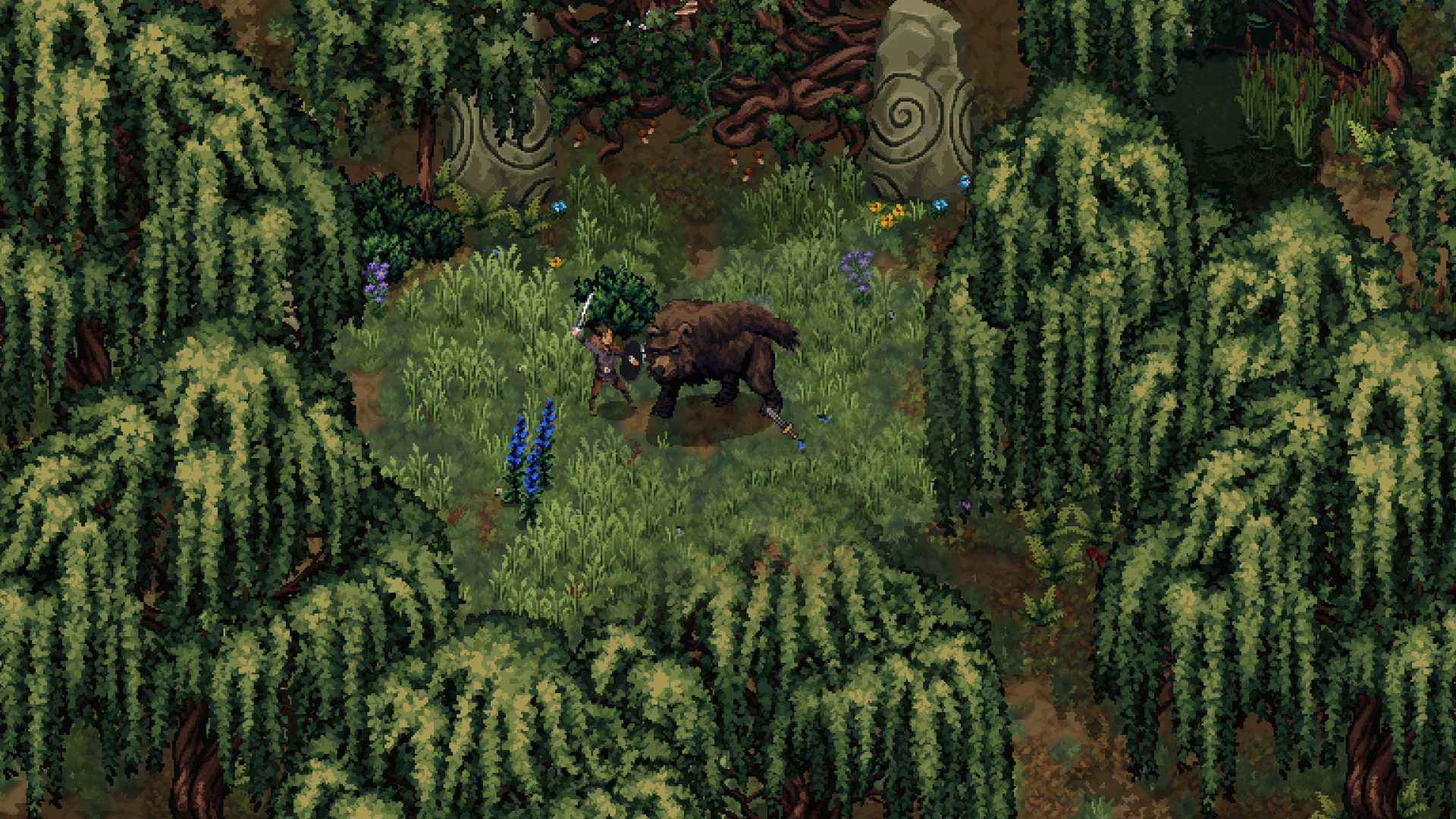
Possibly the most important thing I took from my playtime was the quality of the writing, as expressed through the gritty and realistic characters you encounter. From the desperate farm worker who enlists your aid to make the most of the few measly vegetables she has been able to grow to the young girl oppressed by her situation and looking for a way out of her dreary life, I felt myself becoming involved with their plights and caring for their fates, even after so brief a period. This is reinforced by the well-realised environments that feel drawn out of some Germanic folktale, making me feel the terrors of this tenebrous land, and looking for shadows in the trees.
The only brief frustration I experienced was attempting to figure out how to rest and change the time of day, but this was a simple case of signposting and I got the feeling that the team would look to address this minor quibble in the final build.
I should also mention the music, which reminded me of the music of Heilung, mystical, tribal, and perfectly suited to the gameplay. This hit most in the triumphant conclusion to the demo, where it appeared that my actions leading up to that moment, including how many of the sidequests I had completed, were significant. I was only able to clear a small amount of the content on offer in the time available, but even so I felt the consequences of my choices. The music swelled to apocalyptic levels and a supernatural tragedy occurred, ending on a cliffhanger I am eager to revisit.
I was also able to try some other games, but more on that another time. For now let me say that our night ended with a performance from the German folk band Unvermeydbar, whose energetic performance on traditional medieval instruments formed a capstone on the Drova II experience, perfectly suiting the atmosphere of the upcoming sequel.
There is no exact release date for Drova II yet, which will be releasing on PC and consoles, but if the thought of stepping off the trail into the dark and forbidding woods appeals to you, I advise you to keep your eyes out for more news on this promising title in the future.


Leave a Reply
You must be logged in to post a comment.