
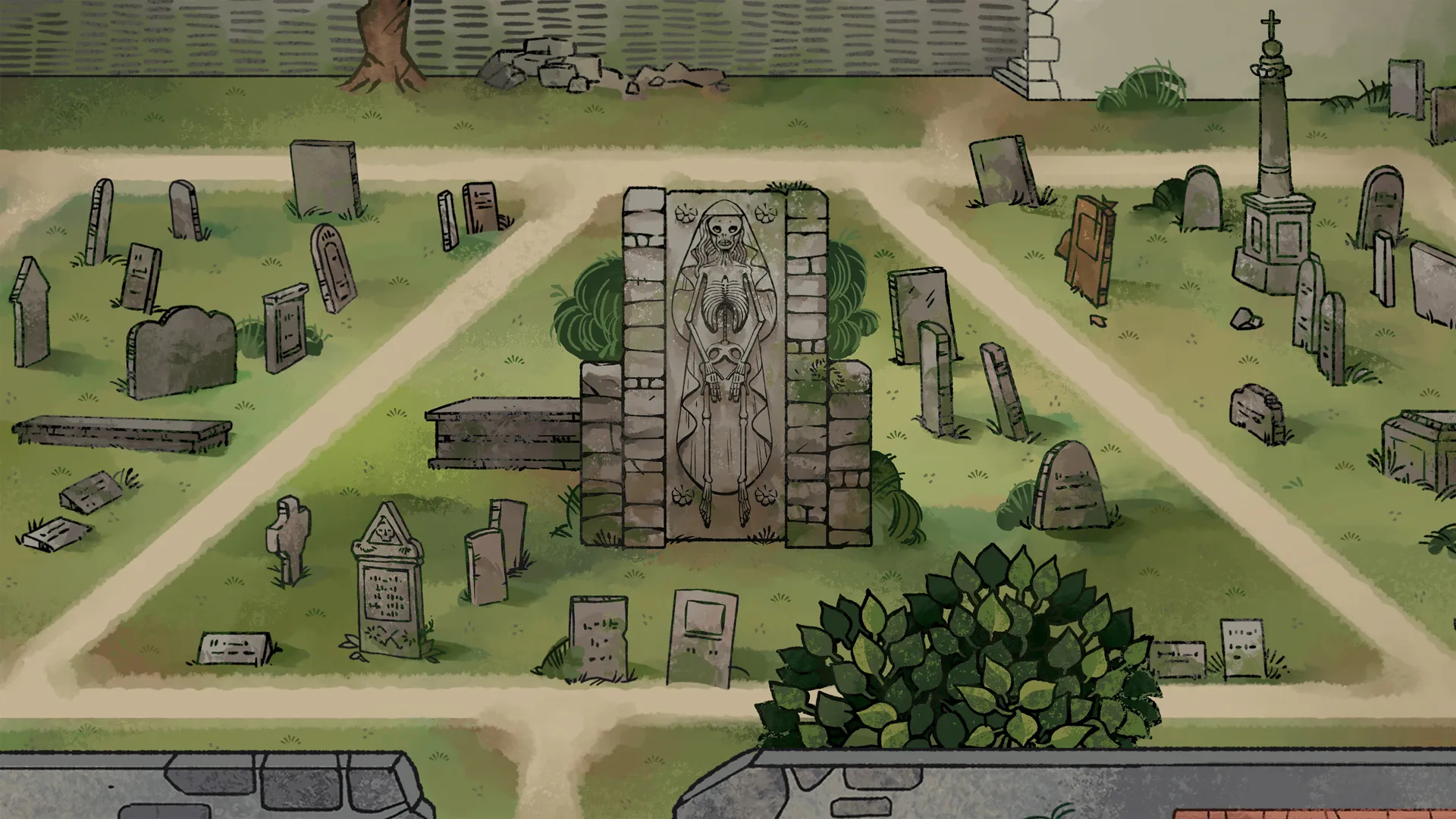
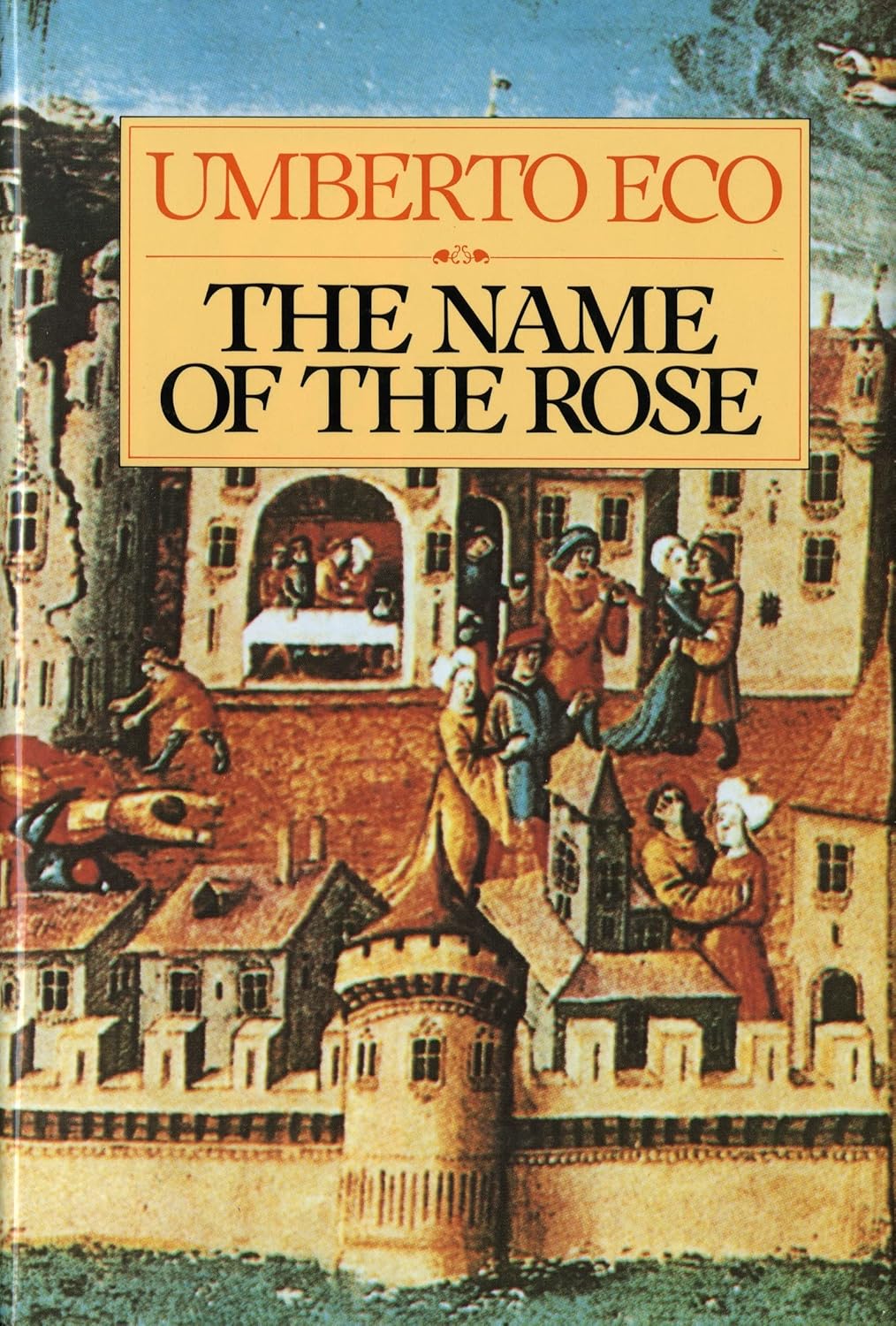
When I joined RPGFan early last year, one of my earliest assignments was to review the Switch release of Obsidian Entertainment’s medieval murder mystery adventure, Pentiment. I loved the game (as did my fellow RPGFan staff), though I thought it would appeal more to readers than to gamers. I remember labouring over the wording of my review, wanting to sound smart about a game that was made by people admittedly smarter than me, like writer/director Josh Sawyer. Pentiment stuck with me long after, and I wondered about the book that Sawyer called the game’s primary inspiration, Umberto Eco’s The Name of the Rose (1980, trans. 1983).
What better way to compare the two side-by-side than by reviving RPGFan Chapters?
Cave argumenti patefactionem, voi ch’intrate—Beware of (light) spoilers, ye who enter here. (I never said I wasn’t still trying to sound smart!)
A Matter of Perspective
The Name of the Rose takes place over one terrible, revelational week in 1327 at an Italian Benedictine abbey. A monk has been murdered! A former inquisitor, the sharp-witted William of Baskerville, comes to investigate alongside his young aide, Adso. Exceedingly observant readers may have already deduced the parallels between the duo of William and Adso and Sherlock Holmes and John Watson. Like Dr. Watson in Holmes’ mysteries, Adso serves as narrator, though he writes of the fateful week decades after the fact. Like Holmes, William (at least at first) makes incredible assumptions about his surroundings based on small clues and seems to be simply confirming his theories for much of the novel.
I was surprised by how much The Name of the Rose frames itself as a classic “whodunnit,” and by how it so readily veers off into high-brow, long-winded treatises on theological rhetoric and the conflicts between Catholic sects. This is a very dense book. Reinforcing this is how all the named characters are lifelong scholars and (mostly) devout believers.
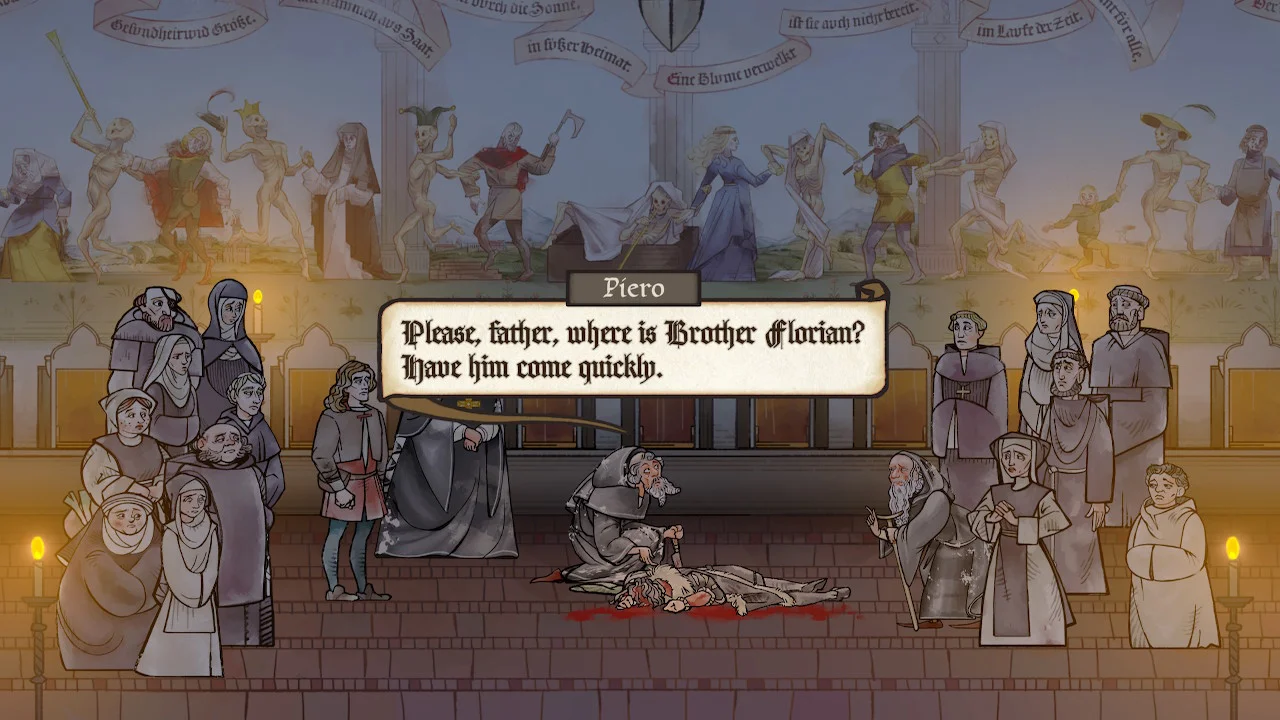
In contrast, Pentiment takes a more middle-of-the-road approach with its narrative perspective and, uh, brow height. Taking place between 1518 and 1543 in the Alpine town of Tassing and neighbouring Kiersau (a Benedictine abbey), the bulk of Pentiment follows Andreas Maler, an artist. When an objectionable patron to the abbey, Baron Rothvogel, comes for a visit, someone decides to crack his head open—the blame falls on an elderly monk.
It’s up to Andreas, ever the middleman, to search for evidence to exonerate the monk and find the real killer before an archdeacon of the church comes to deliver justice by sword. With the game’s light RPG character building, Andreas can be anything from an informed man of faith to a flirtatious, occult-curious rapscallion. Andreas works in the abbey’s scriptorium, but he’s no monk, and his interests lie as much with the townsfolk and peasants of Tassing as with Kiersau.
I found Pentiment to go down far easier than The Name of the Rose, whose purple prose seemed out to impress readers with its floweriness and extensive research. Pentiment, on the other hand, felt much more approachable. Perhaps this was due to its perspective through the lens of a journeyman artist, and half of its cast being common folk.
Whenever Pentiment places a relatively obscure historical event or theological term in its dialogue, it paints it in a selectable red that, when clicked, opens a glossary with a brief description. There is no doubt extensive research went into both Pentiment and The Name of the Rose, though I preferred the more modest (and forgiving) way that research was incorporated into the former.
Both works cast the Catholic Church in a rather unfavourable light, though the faith of the protagonists is never really called into question. In other words, both pieces criticize the human element of the Church. In both pieces, some of the monks have illicit homosexual affairs, practice black magic, or abuse their positions to advance their greed. Both abbeys have secretive, forbidden libraries with secret entranceways, central to both plots. Knowledge is power, and that power is locked away in labyrinthine libraries under the hands of the abbots in charge of their abbeys.
Strangely enough, though I found Pentiment to be more sympathetic towards peasants and other commonfolk caught in Catholicism’s gravity in the 16th century, some benevolence in the abbey remains. There are good, if complicated, people there still, despite the looming influence of the Reformation about to create a world-changing schism. Even the most unlikeable monk, Guy, is revealed to have an understandable motivation for his crimes, should you uncover it. It’s also hard not to feel sympathetic to the monks during the scene where they cower in fear from the rioting peasants.
The Name of the Rose hardly explores the people “beneath” the abbey, beyond a young peasant girl selling her body to a monk before being burned at the stake for witchcraft. A grisly murder occurs every day for a week; dead monks turn up each morning in twisted scenes resembling the Seven Seals signaling the apocalypse in the book of Revelation. Reading it, I was a bit shocked by how calmly the other monks go about their scheduled prayers as their abbey fell into increasingly apocalyptic chaos, though I suppose that was Eco’s intention. Things fall apart; the centre cannot hold. The monks of the book’s abbey seemed only capable of malevolence or apathy.
It’s also important to note the role that women play in Pentiment. The Name of the Rose has no women aside from the tragic, aforementioned girl, while the abbey in Pentiment houses both monks and nuns. There are thoughtful feminist threads throughout the narrative that, unfortunately, still sting today—a nun sexually assaulted by the murdered Baron makes for an understandable culprit; women are trapped in the cracks between the sociopolitical roles reserved for men, such as with the abusive miller’s wife or the old widow Ottilia, whose home is about to be seized from her.
The protagonist of the third act, Magdalene, is a much-needed heroine who exemplifies progress for women. Mags pushes back against Tassing’s all-male council and balances painting the town’s murals with picking up the investigation into the Thread Puller. I will not fault The Name of the Rose for not exploring every political aspect of its setting (not everything must be everything, after all), but women’s roles greatly improve Pentiment and are inseparable from the experience.
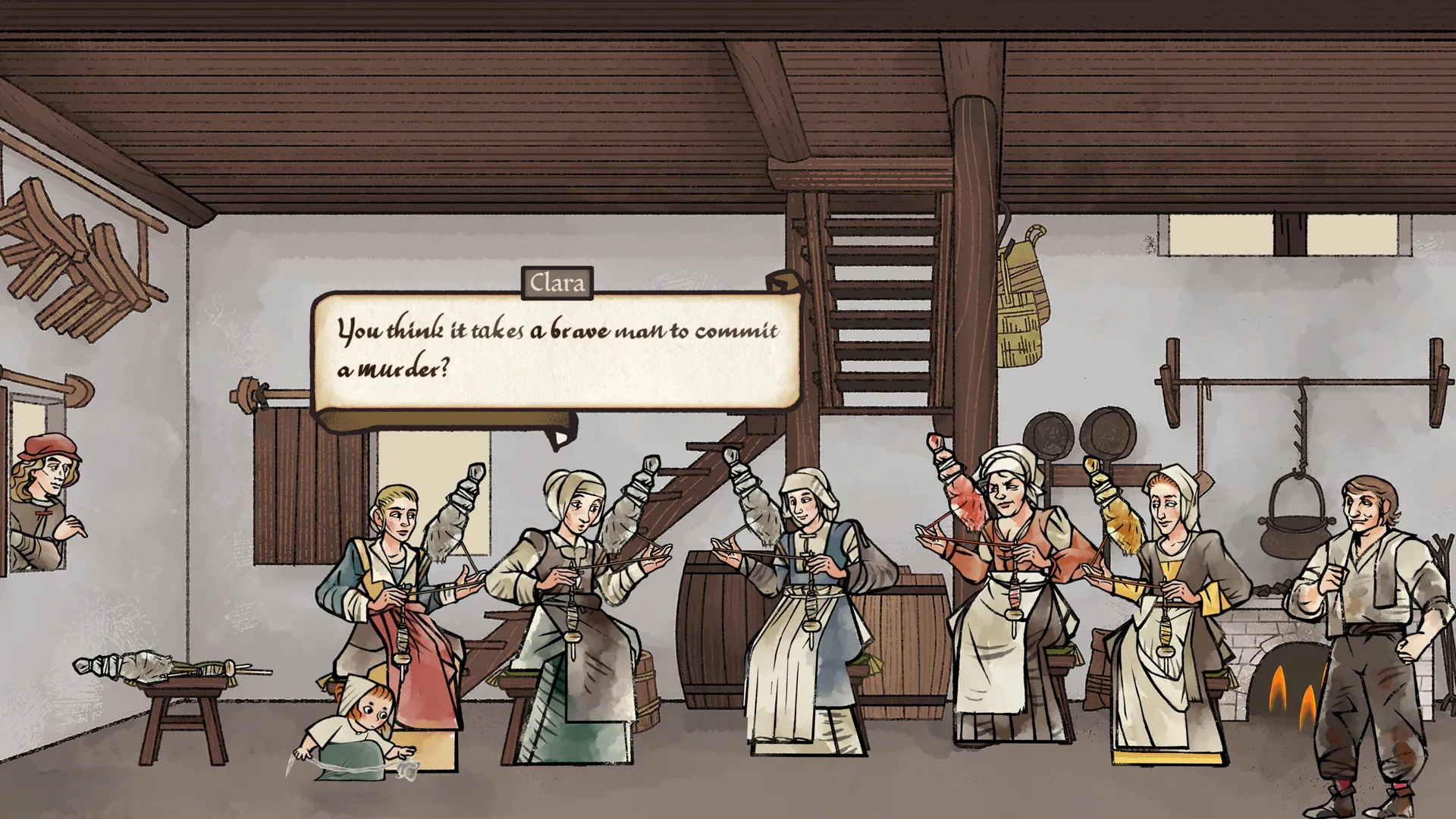
While The Name of the Rose takes place over a week—each “act” represented by a day, each chapter by a chunk of each day as designated on a medieval clock—Pentiment is divided into three acts across decades, linked by three murders orchestrated by a mysterious “Thread Puller,” who coerces others into murder via ornately written, threatening letters.
The game lulls you into a sense of normalcy, or else engrosses you in the daily struggles and sparse joys of its cast, before the murders snap you back into the overarching narrative. It could be seen as a positive or a negative that I was much more invested in the comings and goings of the town of Tassing than in unveiling the Thread Puller. The Name of the Rose, then, feels a bit breathless, like a 14th-century version of 24, with far fewer moments of levity.
Scientia Potentia Est
There are plenty of motifs that Pentiment references or outright lifts from The Name of the Rose, some more consequential to the plot than others. Secret letters written in lemon juice only visible by close candlelight; libraries with hidden entrances; furtive, romantic glances between monks. Act 1 of Pentiment ends with a Church-appointed trial punctuated by an execution; The Name of the Rose has an extended scene of an inquisitor brutally squeezing a “confession” out of a monk, one of the most thrilling and heart-rending chapters I’ve read in a long, long time.
In fact, the very opening moment of Pentiment has you erasing and scraping away the first page of The Name of the Rose’s first page in Latin, and at one point, Andreas finds a manuscript page with a map of The Name of the Rose’s complex library structure.
Beyond all the winking and nodding, the theses of both run parallel. Again, “knowledge is power.” Without outright spoiling the perpetrators, the malevolent crimes in both Pentiment and The Name of the Rose are allegedly carried out toward seemingly benevolent ends, keeping knowledge out of the hands of those who would assumedly misuse it. Truth is subjugated, painted over again and again until it is marred beyond objectivity. What are a few meagre lives when countless eternal souls are at stake?
The Name of the Rose explores this theme of power through knowledge exceedingly well. There is significant depth to its theological debates and pontifications, so much so that I don’t think any number of repeated readings will let me fully grasp it. While I don’t think Pentiment has much to add with its parallel ending decades later, I will say its three-act structure ties themes of class struggle and feminism perfectly into that of power.
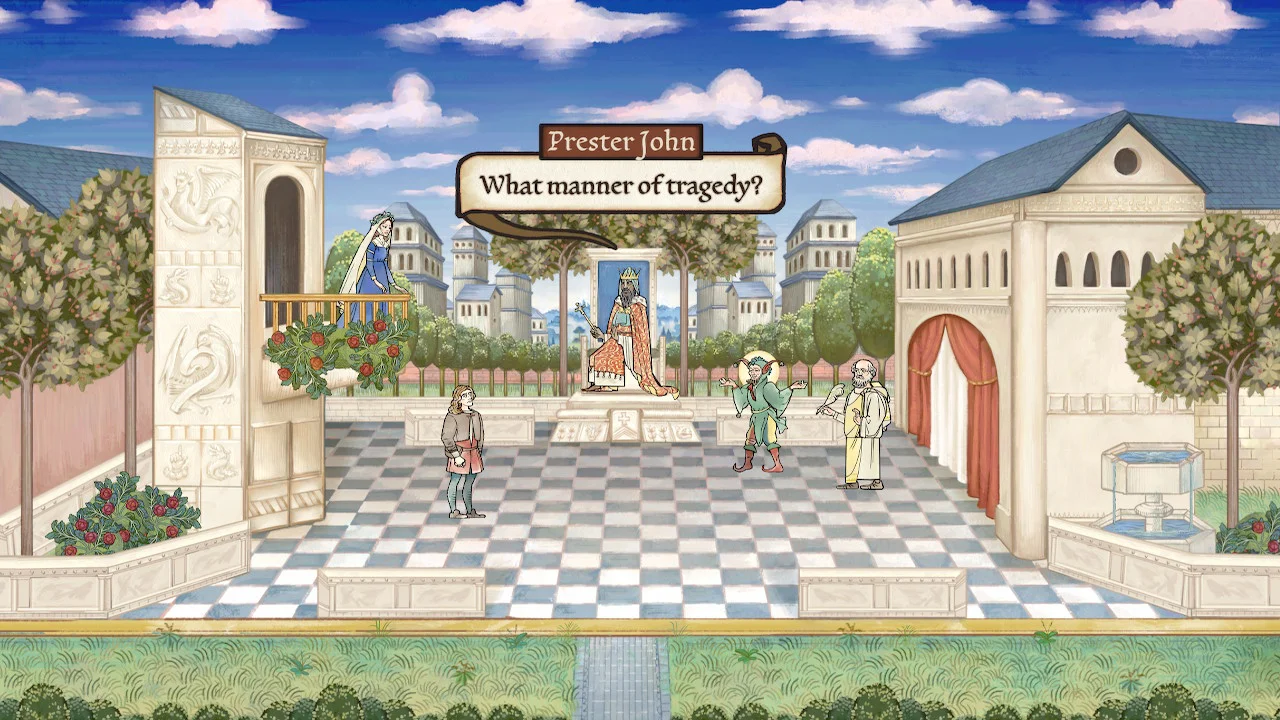
In the afterword of The Name of the Rose, Umberto Eco writes how he deliberately chose a vague title featuring an object rich with varied symbolism: a rose. It will mean something new to every reader. To paraphrase Eco, the author ought to die after writing their book, leaving the interpretation—knowledge, power—to the individual. Pentiment’s title comes from pentimento, the ghostly traces of artwork that remain on a canvas painted over and over. We, as readers and players, take the same canvases and paint over their lines with our own interpretations, colouring in the meaning.
As Adso, the narrator of The Name of the Rose, reflects on the abbey’s library in his old age: “It was then the place of a long, centuries-old murmuring, an imperceptible dialogue between one parchment and another, a living thing, a receptacle of powers not to be ruled by a human mind, a treasure of secrets emanated by many minds, surviving the death of those who had produced them or had been their conveyors.”