
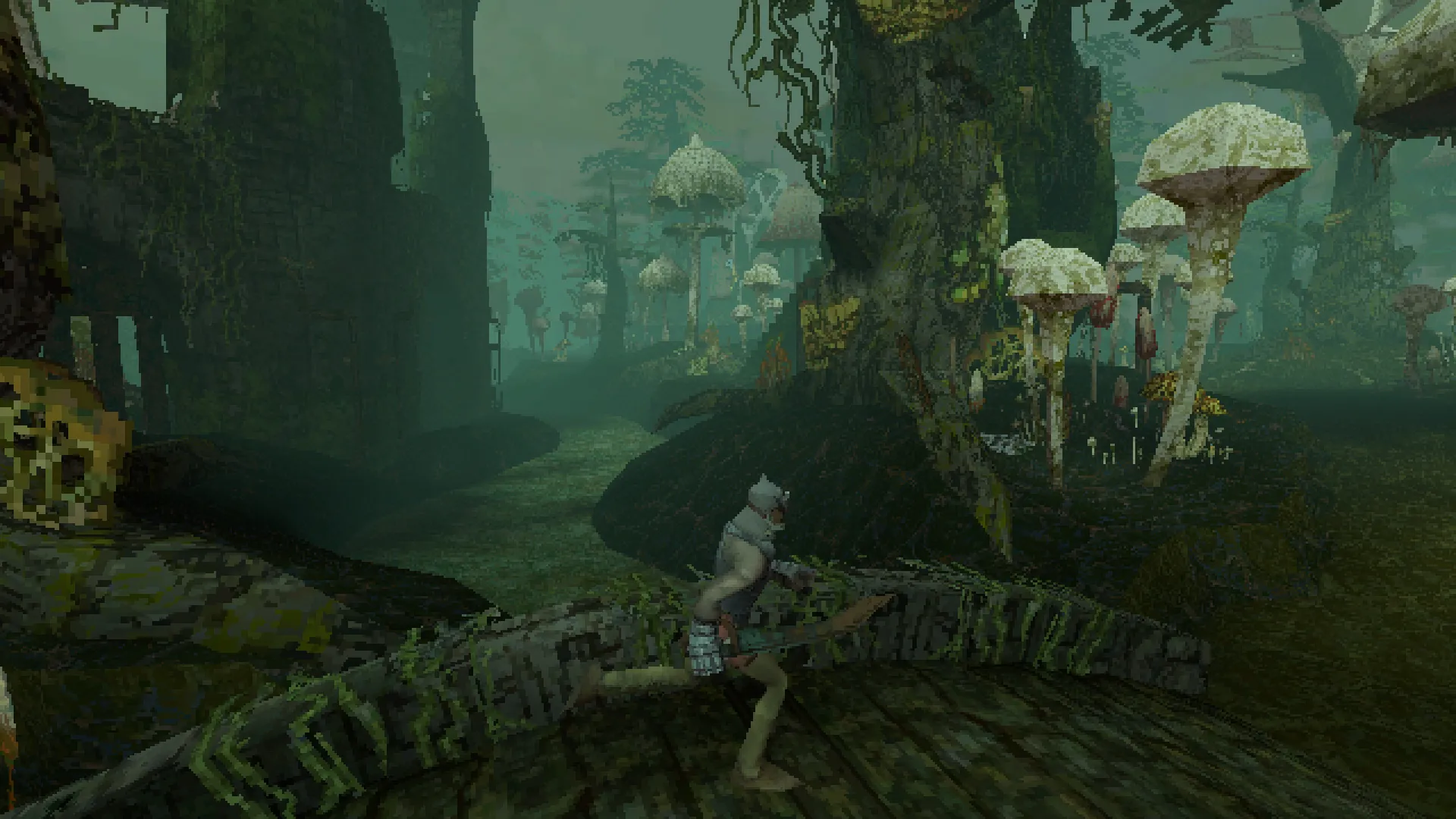
After playing the Steam Next Fest demo for Entropy back in June, the dark fantasy RPG from Dread Delusion developer Lovely Hellplace shot up in my most anticipated list. Between the gothic, grimy, low-poly PlayStation-inspired visuals and the bizarre, off-kilter atmosphere of the Gloaming Isles, I was struck with a thirst that the hour-long demo couldn’t slake. Thankfully, the wait isn’t long, as Entropy releases in Early Access on August 18th, with the entirety of Act I available to play through. After spending six hours exploring every nook and cranny (in a single sitting, no less) of the Gloaming Isles, I left fully immersed in the game’s world and desperate for the next content update to drop.
Entropy begins identically to the previous demo, casting the player as an actor in a theater troupe performing in Draenog Town. After choosing your protagonist’s gender (male, female, or the third gender Aemen) and coming up with a handful of improvised lines on stage (a diegetic quiz that sets your initial stats and equipment), your performance is rudely interrupted by an invading force of demons. The town watch captain enlists your help in fighting back the invading demon hordes… which ends abruptly in death for the town watch, your theater troupe, and you. That is, until a mysterious spirit from beyond the grave resurrects you. Awoken amidst the burning wreckage of Draenog, you must gather what survivors you can and escape the ruins to pass along news of the attack and impending danger to nearby Cuvas (which also happens to be your hometown).
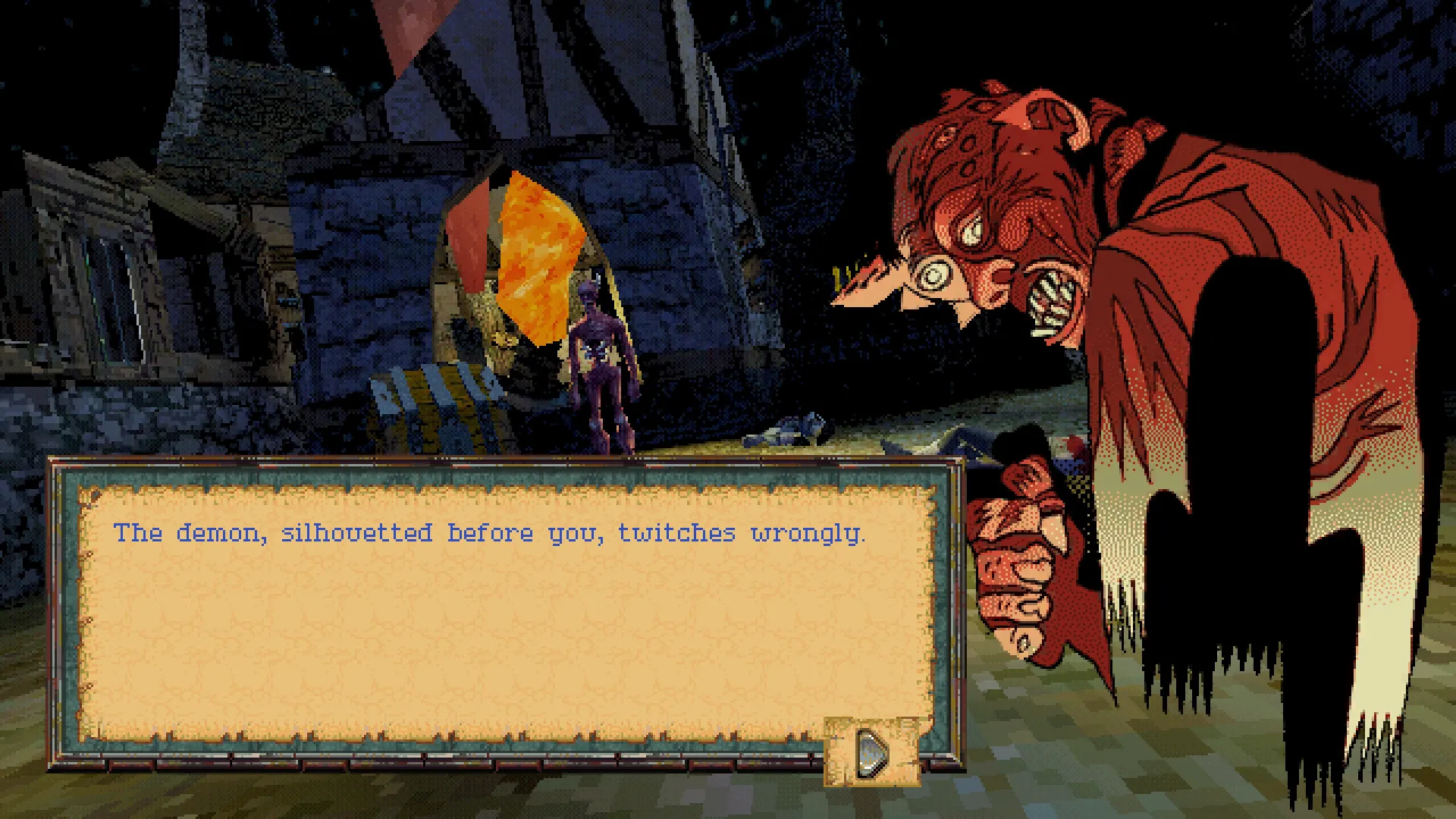
Although I was already familiar with this introduction from the demo, I opted for novel choices and was pleasantly surprised to find significantly different outcomes. In the demo, I chose a melee warrior, and my first companion was Tozeur, a fledgling spellcaster (called a Shaper) suffering from a lack of self-confidence. Since I chose to be a spellcasting Aemen this time around, I instead stumbled upon a middle-aged squire named Shidd, whose knight expired in the demon invasion after the cowardly warrior fled in terror. Eager to regain his honor (and clearly too frightened to escape the town alone), Shidd served as my frontline bulwark as my player character cast spells from the back row.
Furthermore, Draenog had a handful of new alleyways and thoroughfares added since the demo, one of which contained another survivor named Drako, a rogue well-versed in both melee & magical aptitude. That so much has changed even in the starting location between the demo and this Early Access version speaks to Lovely Hellplace’s ability to update the game quickly and incorporate player choices into clever deviations, ensuring that no two players’ introductions to the Gloaming Isles are the same.
After defeating the remaining demons and departing from Draenog, I made my way to the Blind Bat Inn to resupply and fill out my party with mercenaries. The crop of sellswords on offer was distinct from the group from the demo, offering a wide array of specializations (and flaws) to choose from. The Strigoi hunter Selgair was still waiting for me in front of the inn, but the rest of my starting party diverged from my prior group, opening up new strategies and tactical considerations. I wasn’t exactly flush with coin after running for my life, so I had to make do with Kirkha, a ranged attacker missing an eye. Her vision impairment severely reduced her accuracy with ranged weapons, so I stuck her in the back row and had her perform utility functions like using items to heal or support the rest of the party. Once I had leveled up my characters enough to earn perks, I gave Kirkha the Light Fingers perk, allowing her to either use an item or reposition herself in the formation after completing her turn. Now she could use healing items twice in one turn, freeing up my other characters to attack or cast spells. Entropy’s progression loop of assigning stat points on level up and acquiring perks every three levels provides an excellent incentive to engage in combat, opening up impactful new strategies as your characters develop.
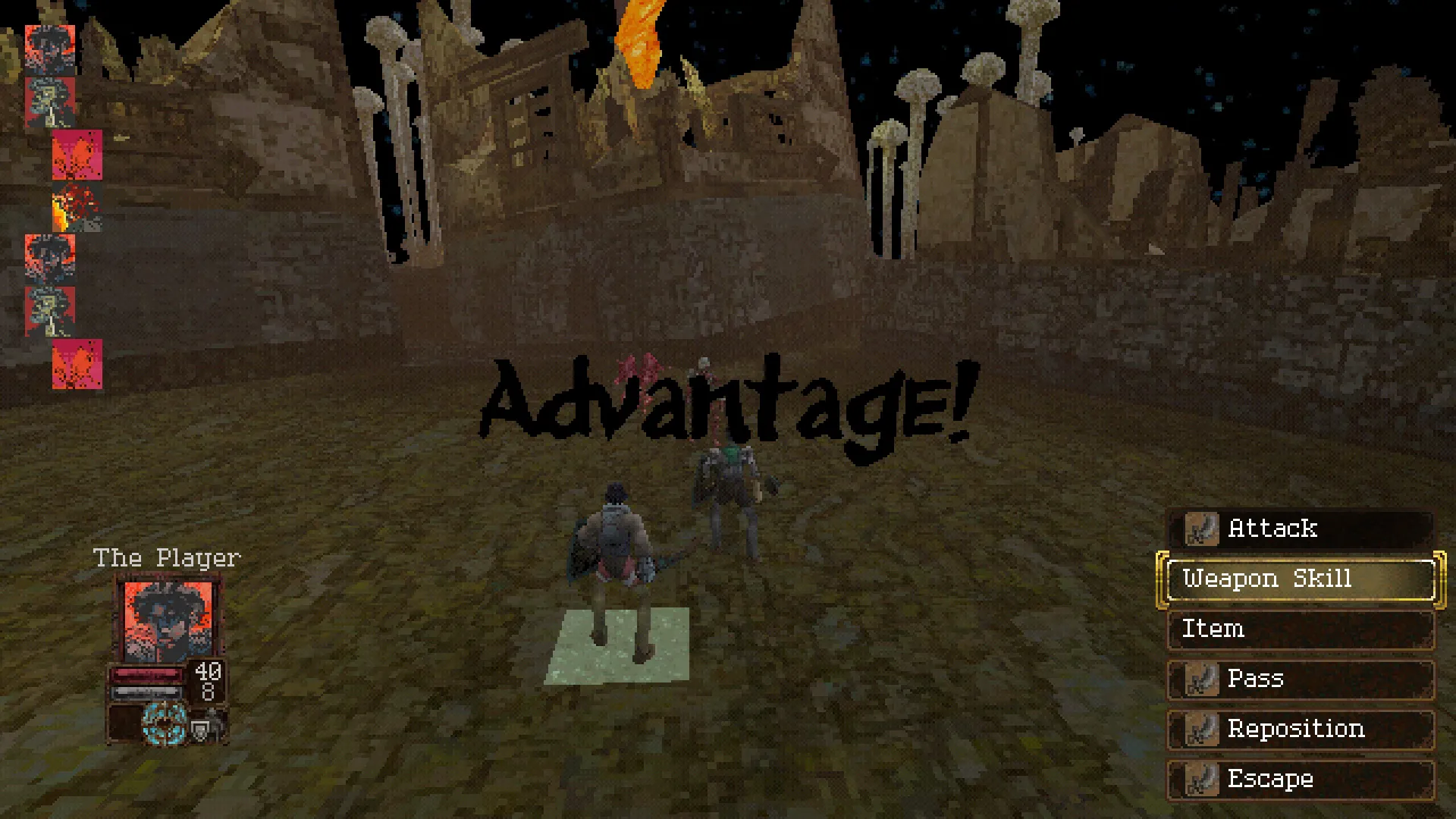
Each recruitable mercenary has unique aptitudes, equipment, and drawbacks that the player must account for when assembling their troupe, establishing Entropy’s potential for diverse approaches. As I progressed through the haunted Cnothag Forest, I came across a Channeler’s anchor, which I promptly equipped to Drako so he could buff allies and hinder foes with Channeling magic, separate from the protagonist’s Shaping magic, for direct damage or healing. I discovered later from an accomplished magician that Shaper magic, guided by an arcane codex, manipulates the very fabric of matter, twisting the world by the Shaper’s will. Channeling magic, on the other hand, opens a line of communication to the Otherworld, offering prayers to spirits in exchange for their power to manipulate living beings. Lovely Hellplace utilizes these mechanical explanations to great effect, distinguishing the Gloaming Isles from other fantasy settings, and these details immersed me in the world beyond mere options in a combat menu or numbers on a stat sheet.
Additionally, Entropy’s injury system forced me to adapt my party composition on the fly. A particularly difficult battle at the end of Act I wiped out my party; thankfully, all my party members survived the ordeal (your mercenaries can die permanently, except the protagonist). However, everyone was sporting one form of serious, debilitating injury or another. A trip to Cuvas’s doctor cleared the minor injuries (concussions, broken bones), but Drako and Kirkha lost limbs in the fight. These permanent disfigurements forced me to rearrange my formation and reassign their roles, sticking formerly frontline fighter Drako in the back row to focus on Channeling buffs and debuffs, and placing Kirkha up front with heavier armor and a pistol since she could no longer wield the two-handed crossbows or muskets on the back line. As the battles become more challenging in later Acts, I anticipate these alterations will become even more frequent, adding a layer of unpredictability to combat that keeps things engaging throughout the journey.
Upon emerging from Cnathog Forest (the endpoint from the demo), I finally made it home to Cuvas, where the worldbuilding and narrative took center stage. I met with the city’s leader, the Peacekeeper, to deliver word of Draenog’s ruin. They abruptly took my troupe ledger (the game’s menu system diegetically represented as a book of accounts and performance schedule) and removed a hidden message from a secret compartment.
It turns out the previous troupe leader was working as a spy for the Peacekeeper, utilizing the troupe as cover to travel between different lands and keep an eye on their leaders (called Warbringers) in the interest of Cuvas’s continued security. Since the entire troupe was wiped out, it falls to the protagonist to continue the espionage work, keeping the other, more militaristic lands at bay while also investigating the source of the demonic incursions. This setup provides the narrative justification for the protagonist’s journey and a compelling foundation that I’m eager to see the developers build upon as Entropy receives further updates. The dark, oppressive world of Entropy appears at first like a rotting corpse: fetid, revolting, and tumorous in its aesthetic presentation. Yet, peel back the layers of tattered clothing and decaying skin, and the pearly, skeletal structure of thoughtful, engrossing lore awaits.
In Cuvas’s town square, a bard plays a somber tune to a sparse crowd. After striking up a conversation with her, she reveals that Cuvas was once the cultural titan in the Gloaming Isles. Utilizing an ancient technology powered by magic mushrooms, the founders of Cuvas developed a vast network of antennae and a transmitter at the city’s center. Towns the world over could connect to this network using delusion discs (similar to a television) to watch shows and music performed by Cuvas’s best and brightest artists. Unfortunately, the cultural exchange was cut short when a rogue spirit hijacked the network and displayed an unfathomable knowledge too terrible for human minds to comprehend, leaving anyone who witnessed the supernatural transmission a drooling husk. The Peacekeeper ordered the transmitter permanently shut down to prevent further harm to the populace, with the tragedy becoming known as the Sudden Silence.
After speaking with Cuvas’s resident technomycologist, the Peacekeeper tasks the player with hunting down the source of this interference in the hopes of restoring Cuvas’s transmissions, or at least preventing further catastrophe. Upon locating the source of the disturbance (another Spirit Gardner named Aeslyn), the player is faced with a choice: repair the transmitter to full capacity with Aeslyn’s fungus and risk another tragedy, use an altered form of fungus provided by the technomycologist that will allow transmission of the vast Cuvas archives but prevent new transmissions, or blow up the transmitter entirely to ensure it may never be misused again.
Each option has its merits and provides food for thought. Is it worth the risk to expand the world’s horizons through Aeslyn’s supernatural transmissions, even if doing so could lead to disaster? Is it enough to resume transmission of the archives, salvaging Cuvas’s glorious past by foreclosing on their artistic future? Or is it best to eliminate the transmission system, exchanging guaranteed security for any hope of future artistic expression? Ultimately, I chose the compromise option, but each outcome carries significant weight and forced me to ponder how much I value preserving the media of the past, arrayed against the inherent hunger for novelty and future creative freedom. This quest sets a high watermark for Entropy’s following acts, but the worldbuilding and storytelling on display in Act I instills confidence that has me eager to witness what moral conundrums await in future updates.


Leave a Reply
You must be logged in to post a comment.