
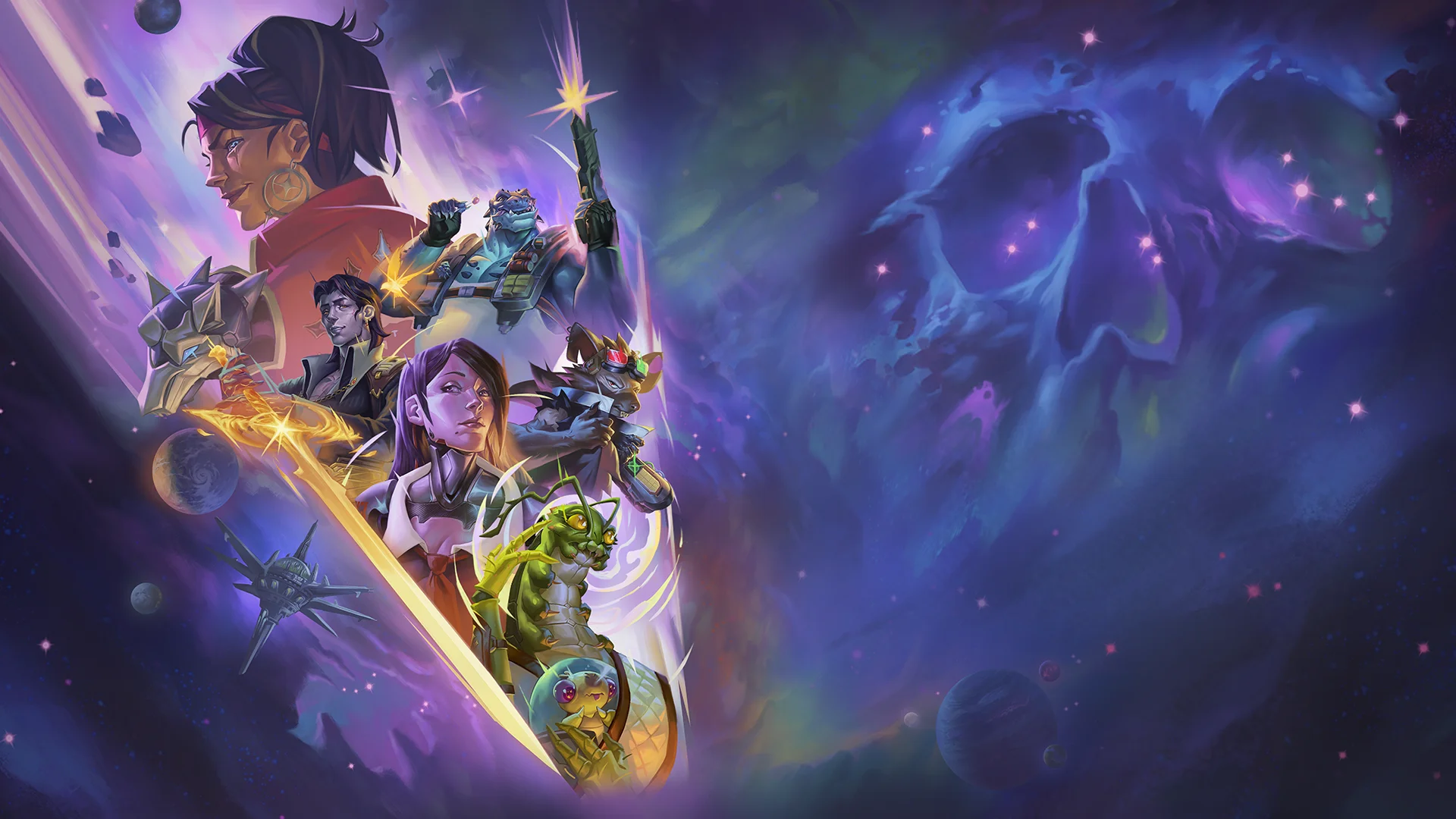
Building on the decent critical and commercial success that Paizo’s rulesets found in digital adaptations like Owlcat Games’ Pathfinder: Kingmaker and Wrath of the Righteous, developer Epictellers Entertainment is taking the tabletop into deep space with Starfinder: Afterlight. Crafted around Starfinder Second Edition’s tactical, action-economy-driven rules, this science-fantasy adventure arrives at a time when the turn-based CRPG renaissance is burning brighter than ever, with several other titles also waiting on the horizon. Currently, Starfinder: Afterlight’s demo shows a decent application of rules and class abilities, although the developer doesn’t really promote the excitement of the setting, both in the low-key locales and simple encounters, in the brief time playable.
Starfinder: Afterlight opens with a fluid, stylishly animated cutscene that captures the pulpy action of its tabletop roots. Your character and their crew aboard the spaceship Moon of Misfortune are attacked by a horrific assailant during a space voyage. It’s possible the attack may be linked to a strange artefact your captain was transporting, but you’re forced to evacuate before you can find out. After crash-landing in the Entertainment District on the backwater world of Akiton, you set off to find out what happened, only to discover a large chunk of time has passed since the original events.
The isometric environments feature plenty of well-designed assets, but they lack a distinctive visual identity in the short opening. The tutorial starship feels generic—packed with inaccessible airlocks, storage crates, and computer terminals—while stark lighting and rough shadows reveal an unoptimized work in progress with no graphics options. Akiton’s Entertainment District is better: the sense of haphazard metal walkways and grimy alleys amid the sordid gaming parlours add scale and variety, even if the zones are very linear and feature little to explore or find off the critical path.
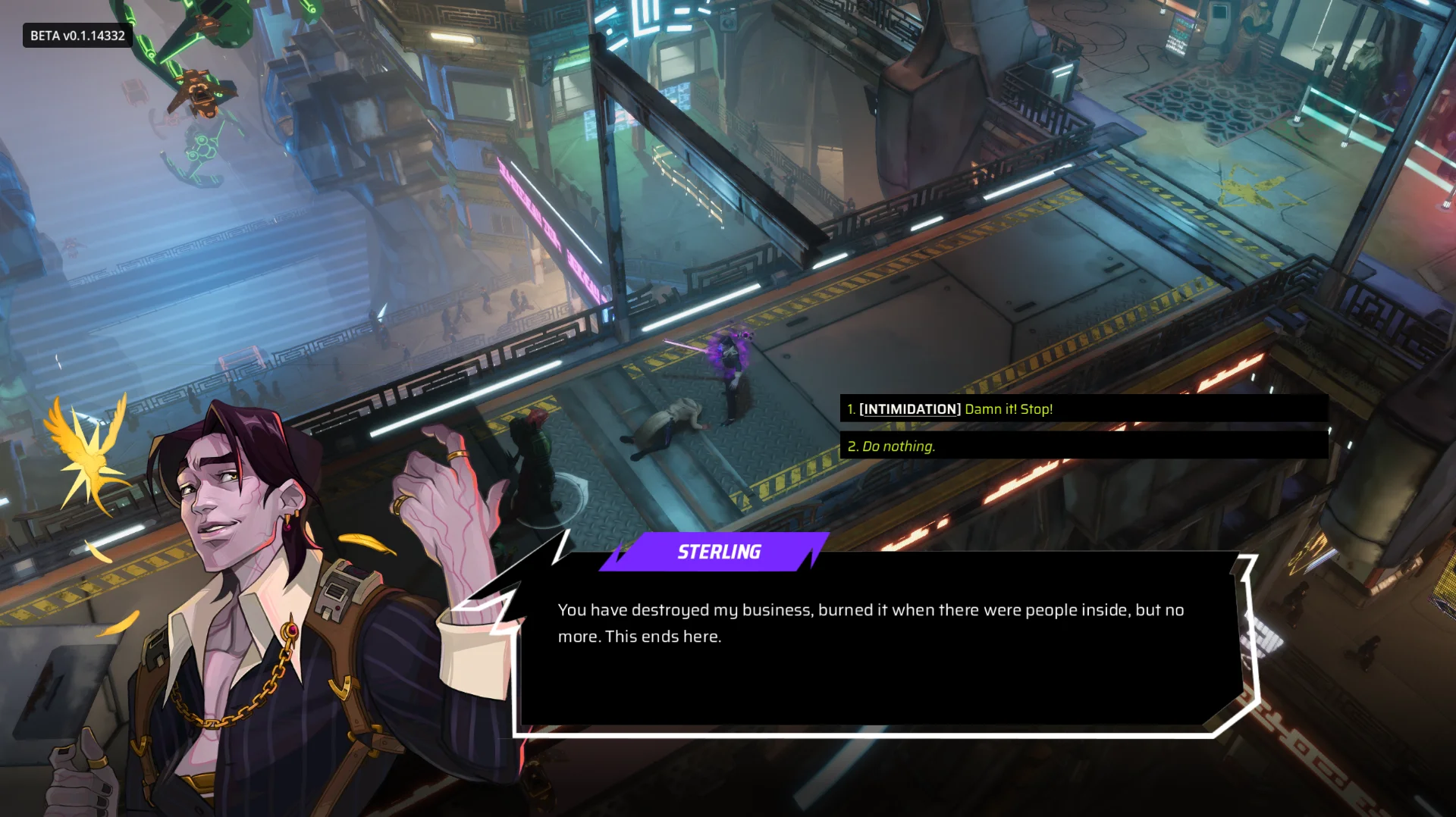
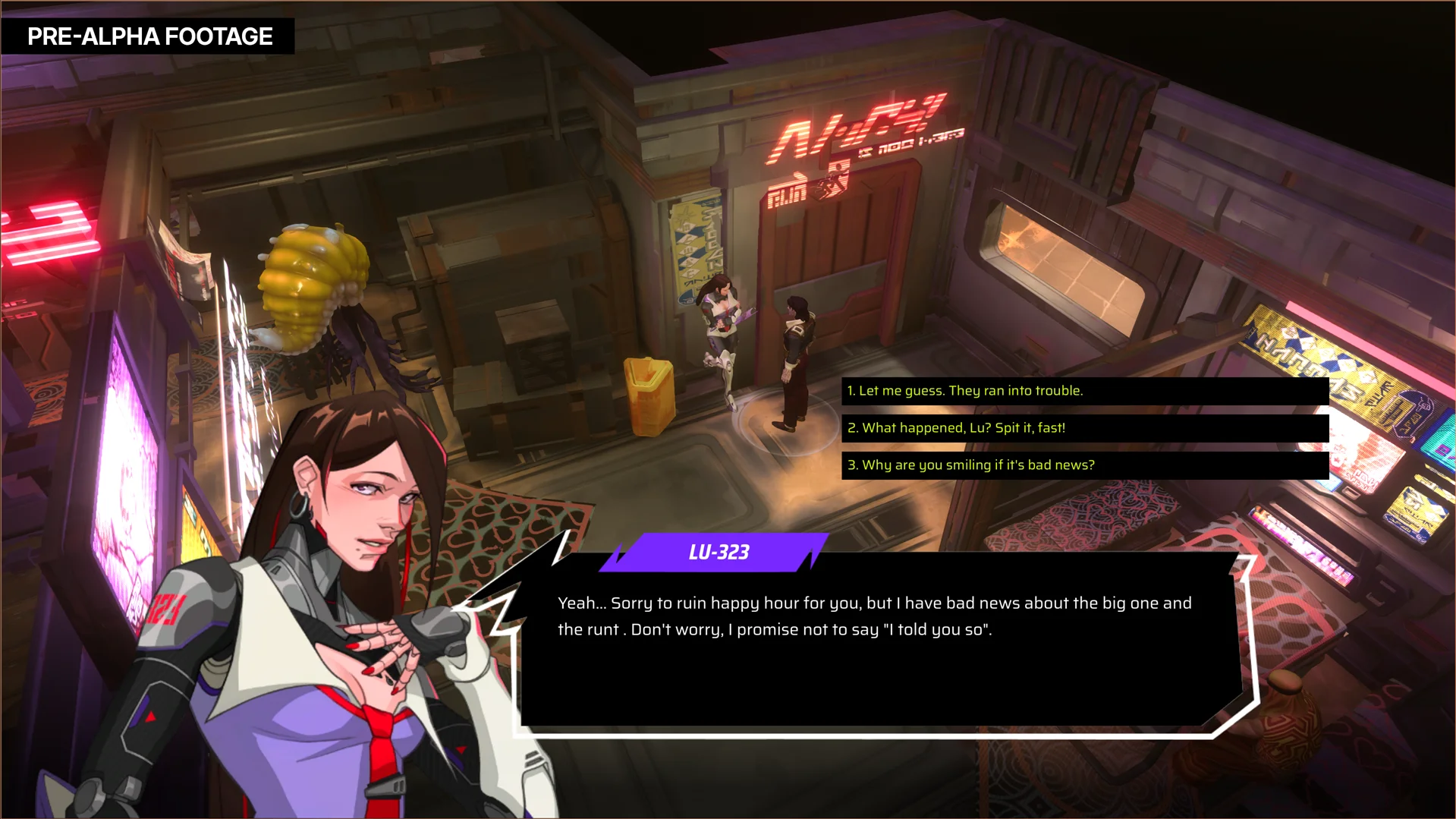
The character design shines in 2D dialogue portraits, contrasting massive, reptilian Vesk with multi-limbed Shirren and with plenty of pulpy colour and individual touches, like the insectoid cleric carrying around a little baby larva in a jar. However, the in-game 3D models remain muted during the tutorial and lack a strong visual identity, a problem compounded by subdued combat and weapon effects. As the game opens up beyond its early stages, hopefully the unique colour and personality of the setting will shine through more in the design work.
The fully voiced dialogue in Starfinder: Afterlight shows promise, with a booming narrator adding a larger-than-life flair that keeps the action moving. Conversations are surprisingly brief, often lasting only a few lines and without many dialogue options present. Frequent, heavy profanity also feels at odds with the narrative’s overall pulpy tone and character dynamics. While it remains to be seen how the full cast connects and how backstories shape dialogue, the demo’s tone feels slightly disjointed—with the f-bombs feeling a bit too forced.
Starfinder: Afterlight’s demo features three pre-built characters, highlighting the frontline Soldier, who excels at raw firepower and heavy armor, and the nimble Operative, a roguish striker who relies on mobility and precision trick attacks to catch targets off guard. The third option, the Envoy—a social support class built around buffing allies and demoralizing foes—doesn’t really have a chance to shine in this combat-heavy early build. Later, a Solarian joins the party, introducing a unique stellar-attunement mechanic where photon and graviton powers charge over rounds to unleash devastating area-of-effect blasts or defensive shields, though not so much at level 1.
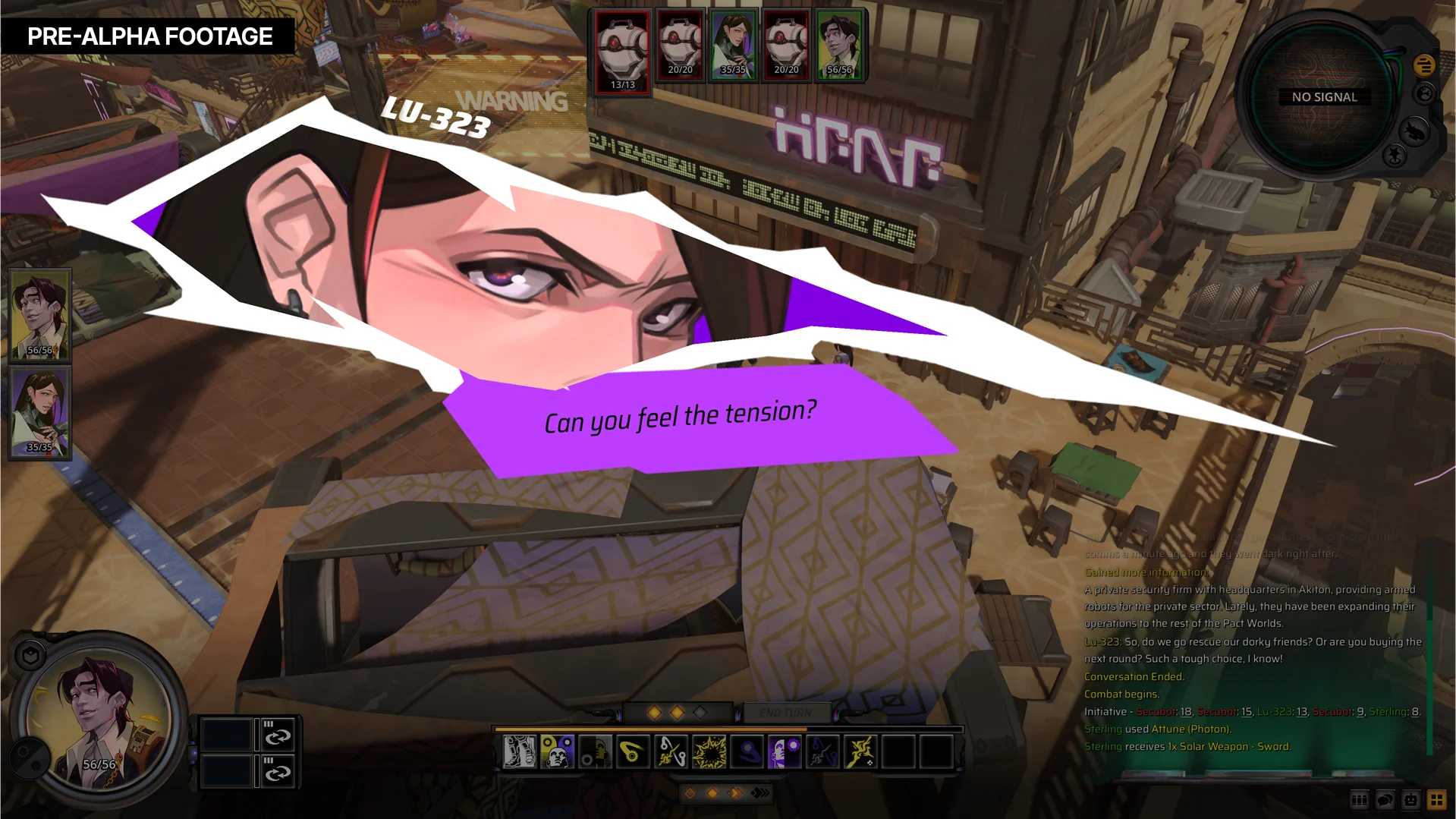
Starfinder Second Edition’s three-action economy translates well to the turn-based combat. Players can string together three consecutive attacks—accepting a classic multiple-attack penalty—or split actions between movement, items, and tactical abilities. Beneath the hood, the familiar clunk of the d20 system drives every action. Despite a lack of tooltips and fiddly ability selection, the core tactics are easy to grasp. Like its tabletop predecessor, Starfinder: Afterlight’s combat revolves a lot around stacking minor bonuses—whether landing a +1 to hit or boosting an ally’s armour class. Because the demo caps characters at level 1, this basic numerical manipulation is most of what there is to evaluate so far.
There was plenty of stuff to collect as I rummaged around containers and debris, and my inventory quickly filled with techno-junk, bits of tubing, and alien liquids that no doubt will be central to crafting or item refinement in the full game. The few limited equipment finds were welcome, insofar as being able to wield a melee weapon as opposed to the ubiquitous laser rifle. As well as modifying armour, equipment can add passive bonuses to other attributes, such as those to check saves against traps or strength, so it looks like there will be cause to mix and match these items beyond making armour values stronger.
The interface looks to be a real work in progress, and has already gone through several changes from alpha to the demo build, albeit with limited tooltips and spotty ability and target selection. But these are all areas I expect to see polished and developed over early access with feedback. It pays to remember Starfinder: Afterlight is not a project on the same scale as Owlcat or Larian, despite the involvement of some well-known figures in the world of voice acting. To be fair, there’s only a half-dozen combat encounters across the one-hour demo, with a few skill checks thrown in for additional information or combat variables, so the glimpses of potential are only glimpses indeed.
If Starfinder: Afterlight can tell an engaging, pulpy story exploring the wild and exotic nature of the setting, there’s certainly a chance that it can bask in the glow of its larger, heavier stablemates, even if it never ascends into their orbit. After all, space is big. And the stars are many.


Leave a Reply
You must be logged in to post a comment.