
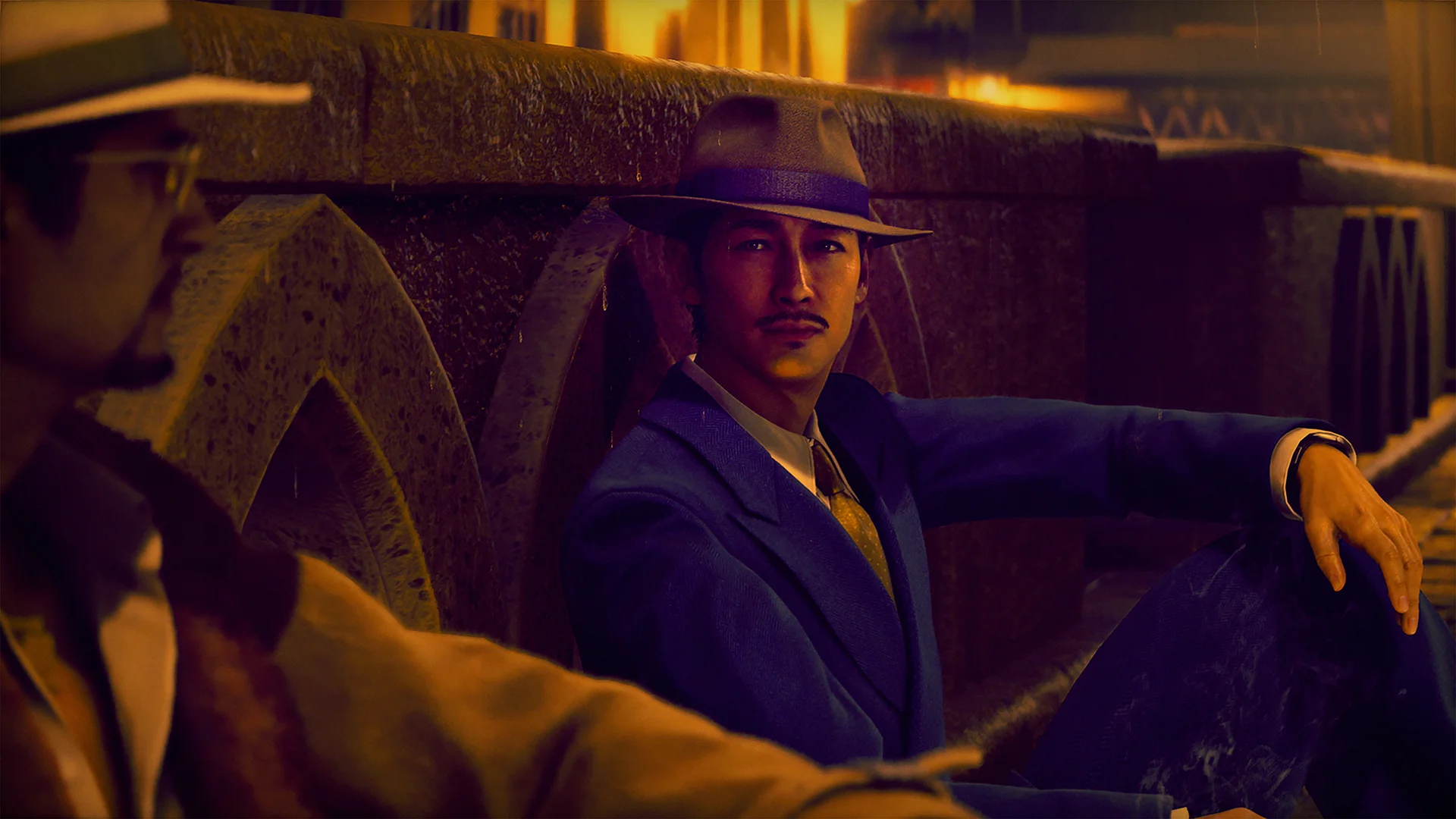
Sometimes a great piece of media has this engrossing hold over you that you can’t explain. You immediately get pulled into the story and world they are trying to tell. RGG Studio has been creating games like this for some time now. Each Yakuza game feels like it builds on the storytelling experience they learned from the last one. And although a bit wacky at times, they create games where the whole is greater than the sum of its parts. And now they stand on the cusp of something truly spectacular with Stranger Than Heaven.
This past week, SEGA and RGG Studio invited me to an event in New York City, where I got to play almost three hours of Stranger Than Heaven. The event focused on five major sections of the game spanning the first three eras: 1915 Kokura, 1929 Kure, and 1943 Minami. At the event, I was also privileged to meet Director Mikinobu Abe and special guest Yu Shirota, who is both the English and Japanese voice actor for the main character, Makoto Daito. I have been a fan of the Yakuza games for some time now, but when they announced Stranger Than Heaven, I was kinda skeptical of the premise. A game set in the early 1900s featuring Snoop Dogg, Tupac, and a few other celebrities? I thought, sure, why not, but I wasn’t entirely sold on the premise. After about an hour of playing the game, I have made a complete 180. Stranger Than Heaven has the potential to be not only the best Yakuza game made, but also one of the best games of the last few years. It truly is a special experience.

So I want to take you on the same experience SEGA and RGG gave me during this event, breaking down each section I played. Stranger Than Heaven‘s major theme and selling point is music, which is often hard to describe in words, but the video preview below helps get the point across, plus it lets you experience the amazing music.
I will give everyone reading this a fair spoiler warning. I usually avoid spoilers in these previews, but for something like this, it’s hard to avoid them. However, the story spoilers are only for Stranger Than Heaven‘s first three sections set in 1915 Kokura. The 1929 Kure and 1943 Minami sections I played were more free-roam gameplay-only sections with sub-stories disabled, so feel free to skip to those sections if you want a more gameplay-focused preview.
Gameplay Section 1 – 1915 Prologue and Combat Tutorial
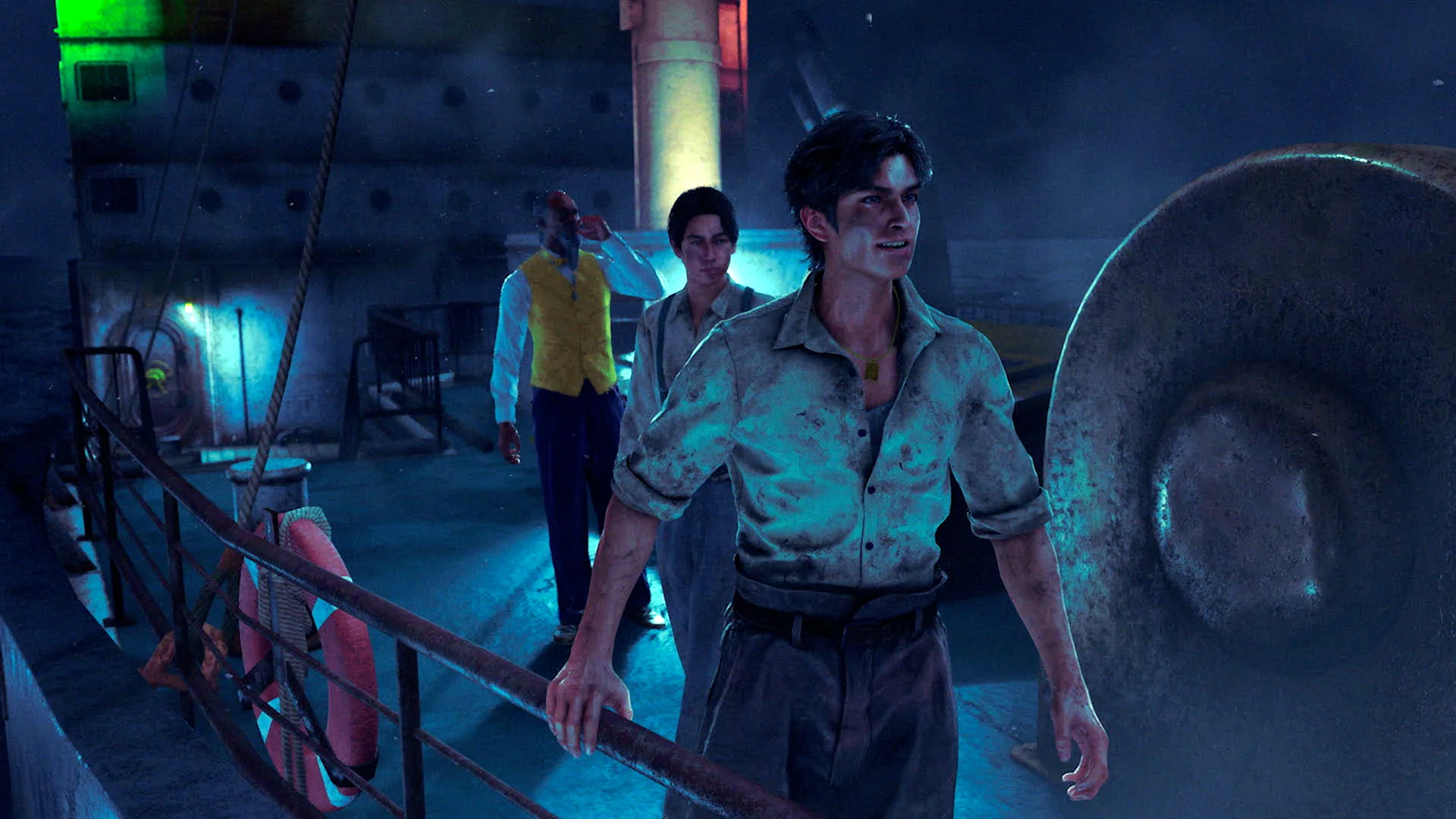
Stranger Than Heaven begins in 1915 with the protagonist, Makoto Daito, a young Japanese American in San Francisco, making his way through alleyways while avoiding the police. Daito has been falsely accused of murder. His dark hair and Japanese facial features make him an easy target for clearly racist cops who don’t care that he may be innocent, just that he fits the description of the murderer. Daito has a ticket to escape on a nearby ship, but as he reaches the docks, he watches his only means of escape sail away. The cops catch up to him, and the combat tutorial begins.
If you haven’t seen anything on combat in Stranger Than Heaven so far (such as our SGF preview and TGS preview), I’ll give a quick breakdown. You control the left and right sides of Daito’s body with the left and right shoulder buttons—R1 for a light right punch, L1 for a light left punch. L2 performs a strong left kick, and R2 performs a strong right punch. This is standard even when Daito is wielding a weapon. Press L2 and R2 together to tackle a dazed enemy, then you can proceed to wail on them and finish them off with another L2+R2 combo. You can block normally with B, but you can block directionally while holding B and pressing L1 or R1. If an attack comes from the left side, press L1; if it comes from the right side, press R1. If you do it correctly, you can then attack from the opposite side for a counterattack.
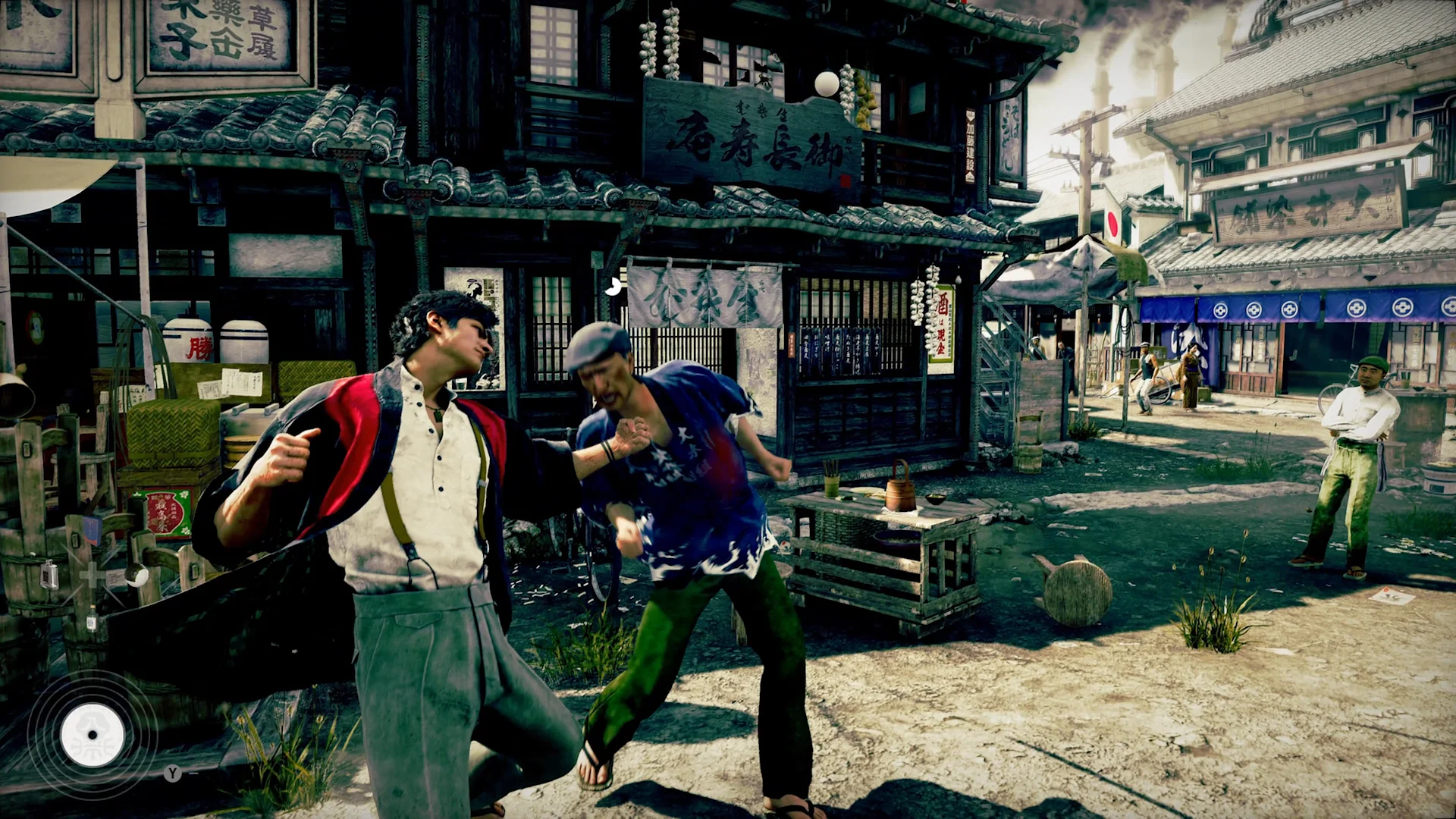
Combat in Stranger Than Heaven is a far cry from the pure brawler of early Yakuza games and nothing like the turn-based combat in Yakuza: Like A Dragon and Infinite Wealth, instead offering something similar to a fighting game. You play a neutral game, with enemies keeping their distance, then decide whether to attack first or wait for them to attack. Play too aggressively, and it’s no longer “your turn,” and the enemy counterattacks. Play too passively, and the enemy switches things up and catches you off guard. But strike a good balance, and you’ll find the combat is super fun and rewarding. For regular thugs and enemies, you can usually get away with doing whatever attacks you want, but for boss fights, this rule of neutral zoning is paramount.
After the tutorial and dealing with the cops, Daito spots another boat in the harbor, ready to sail away. Grabbing the anchor, he stows away in the cargo. The ship, however, belongs to Orpheus, an international smuggler played by Snoop Dogg. Daito is caught along with another stowaway and soon-to-be sworn brother Yu Shinjo after a few more combat tutorials. It ends with Daito and Yu asking Orpheus for help getting to Japan.
Gameplay Section 2 – 1915 Kokura Part 1

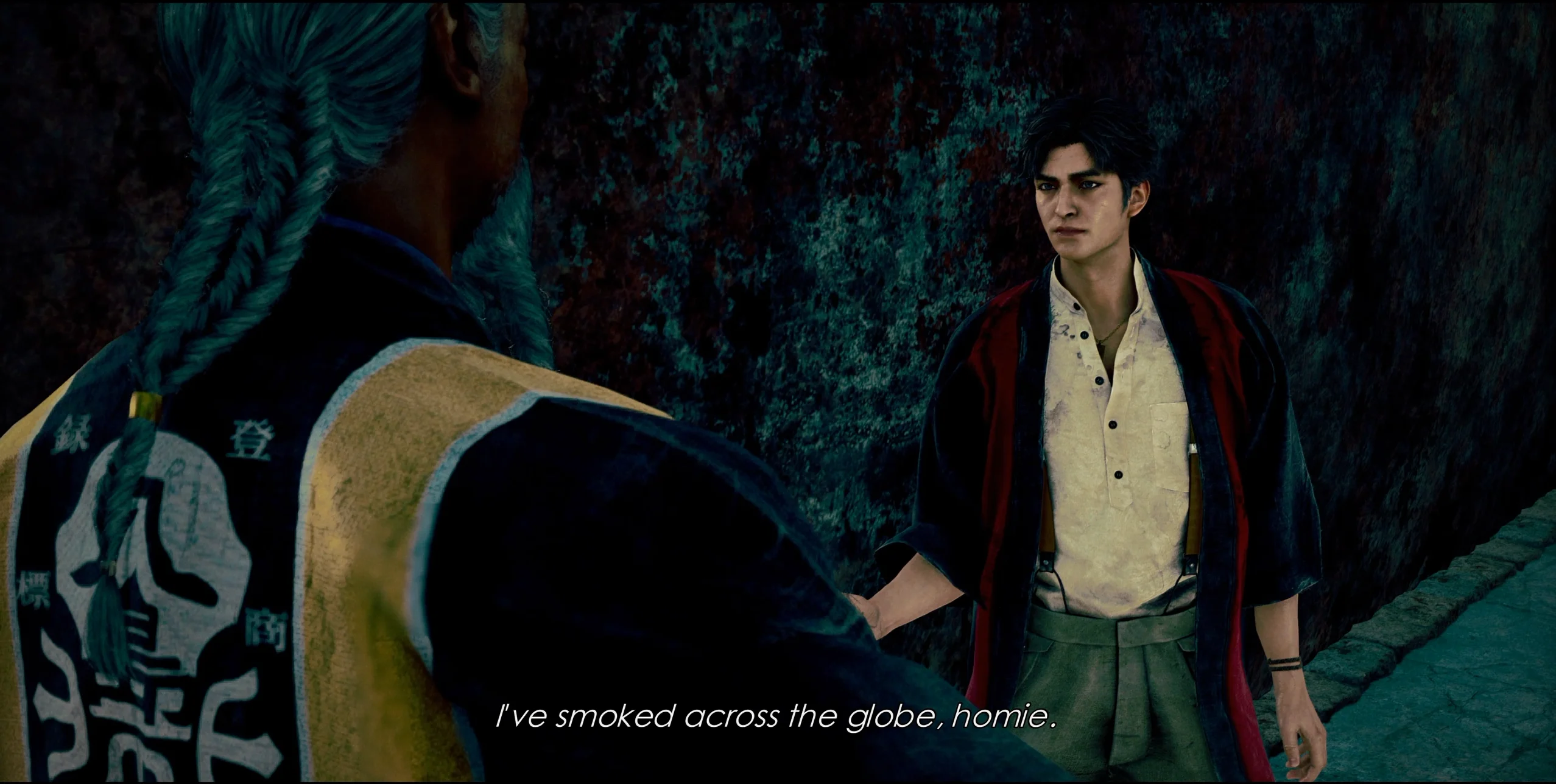
The 1915 Kokura section of our Stranger Than Heaven experience started with Daito in front of a café looking for a woman named Tae. It seems it’s been several months since Daito made it to Japan, and in that time he seems to have joined a local Yakuza clan and now brandishes its colors and robes. At first, the hostesses fear his entry into the café and don’t want to help Daito, but Tae arrives shortly after and has no issue being Daito’s hostess for the evening. After an awkward date, they return to her place, where Daito finally spills his guts and tells Tae the real reason he sought her out and that his boss, Yashima Oyabun, wanted to embarrass another crime boss, Oki, who seems to be involved with Tae. It’s heavily implied that Tae and Daito have fallen for each other. A few days pass, and Tae has presumably left town after Oki was informed of what happened.
The next day, I got free roam of the city, with the main objective of visiting Orpheus and finding work. As with many Yakuza games, there is food to eat, minigames to play, and places to explore, but there was time for that later during the preview, so for the most part, I headed to the objective. Here, I was tasked with protecting the port at night from thieves. Some will try to escape, and you need to be fast to stop them. If too many escape, you’ll be docked pay accordingly.
The next day, as Daito is smoking near the docks, he runs into Orpheus. Orpheus then teaches us one of the game’s main crafting skills: how to roll your own cigarettes. You get a crash course on what makes good tobacco and what is good to mix into it. I can now proudly write that Snoop Dogg taught me how to roll a joint in a video game! Thanks, Snoop Dogg!
This section ends when you return to your boss and learn that Oki has kidnapped Tae and is abusing her for disobeying him. Your boss gives you his approval to go to war with Oki’s clan to win back your girl! This sequence concludes with an awesome scene and battle between your clan and Oki’s clan, but the next section picks up right after.
Gameplay Section 3 – 1915 Kokura Part 2
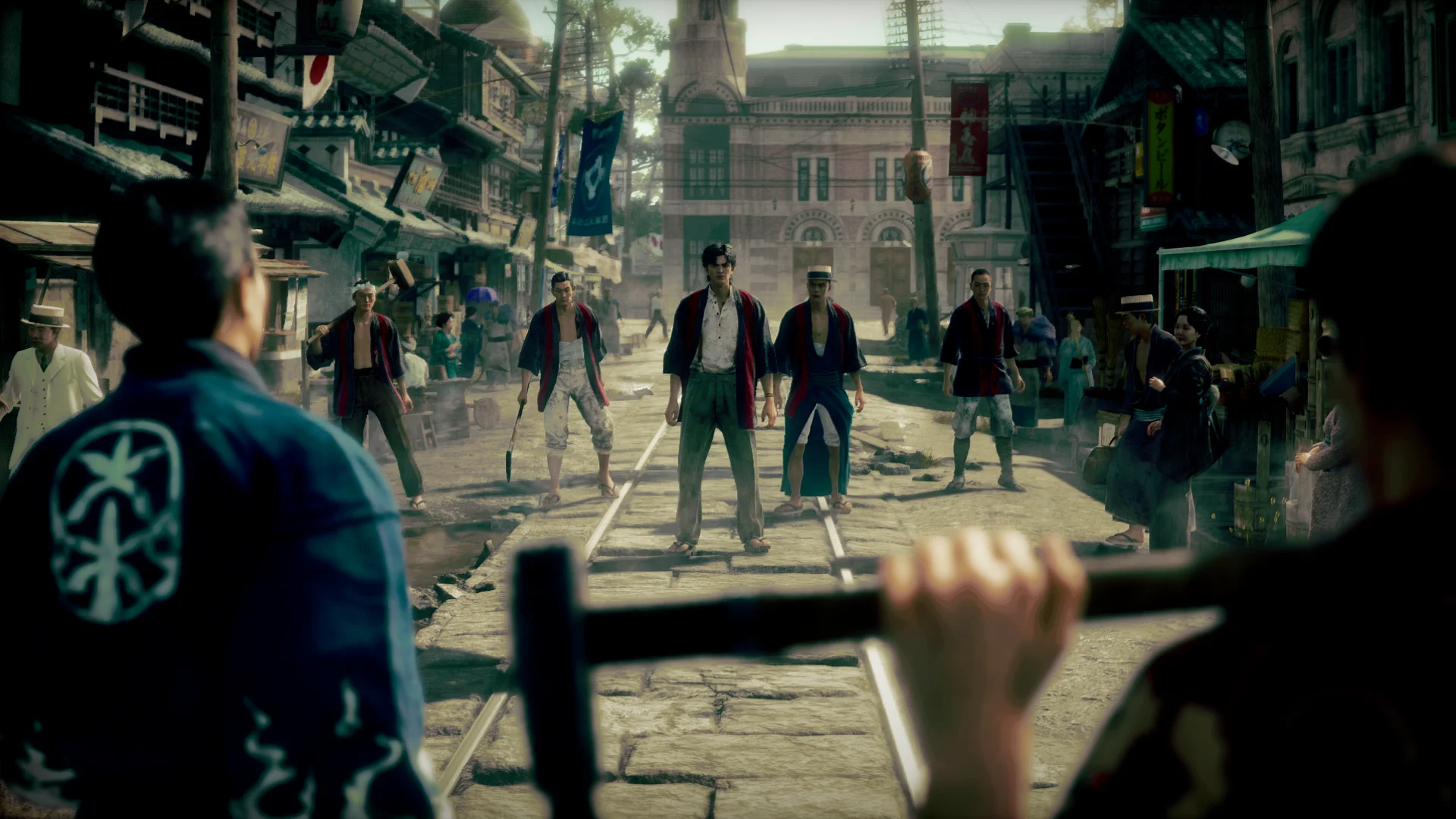
It is now the night after the gang war, and Oki is holding Tae at their local hideout, which also happens to be the town’s ironworks factory. After getting approval for a raid from your boss, Daito, Yu, and the rest of your gang prepare before attempting to save her. You can do a few things in this night section before heading to the ironworks. You can craft some new weapons or make some weapons stronger. There are also black market dealers that deal in rare weapons if you have the money. And finally, there are a few bonus battles in the area against some powerful foes, and these battles emphasize the best of Stranger Than Heaven‘s combat system. One I did was against a samurai on the beach, where I really needed to feel him out and capitalize on blocking and spacing to take him down. He got me a few times before I finally found a good feel for the battle system. A good warm-up for the boss fights ahead.
At the ironworks, Stranger Than Heaven introduces a dungeon-like progression. If you played any Yakuza game, you’ll understand what’s going on. It starts with a gang fight at the front gates before Daito heads inside. After shimmering and crossing some gaps over the molten lead factory, you’ll reach a miniboss. After you dispatch him, you can do a quick interrogation mini-game to get some info out of him. Next, you’ll move through another small section of the ironworks with some quick-time events. This all leads to a boss fight with Oki and his main enforcer, a bald, hulking monster of a man. Like the optional samurai fight, this battle puts your combat skills to the test. But unlike the samurai, who was nimble, this boss loves to overpower you with large sweeping attacks, forcing you on the defensive. After dispatching him, you can then take out the sniveling Oki with ease before rescuing Tae. With that, this section was finished.
Gameplay Open World Sections 4 and 5 – 1929 Kure and 1943 Minami
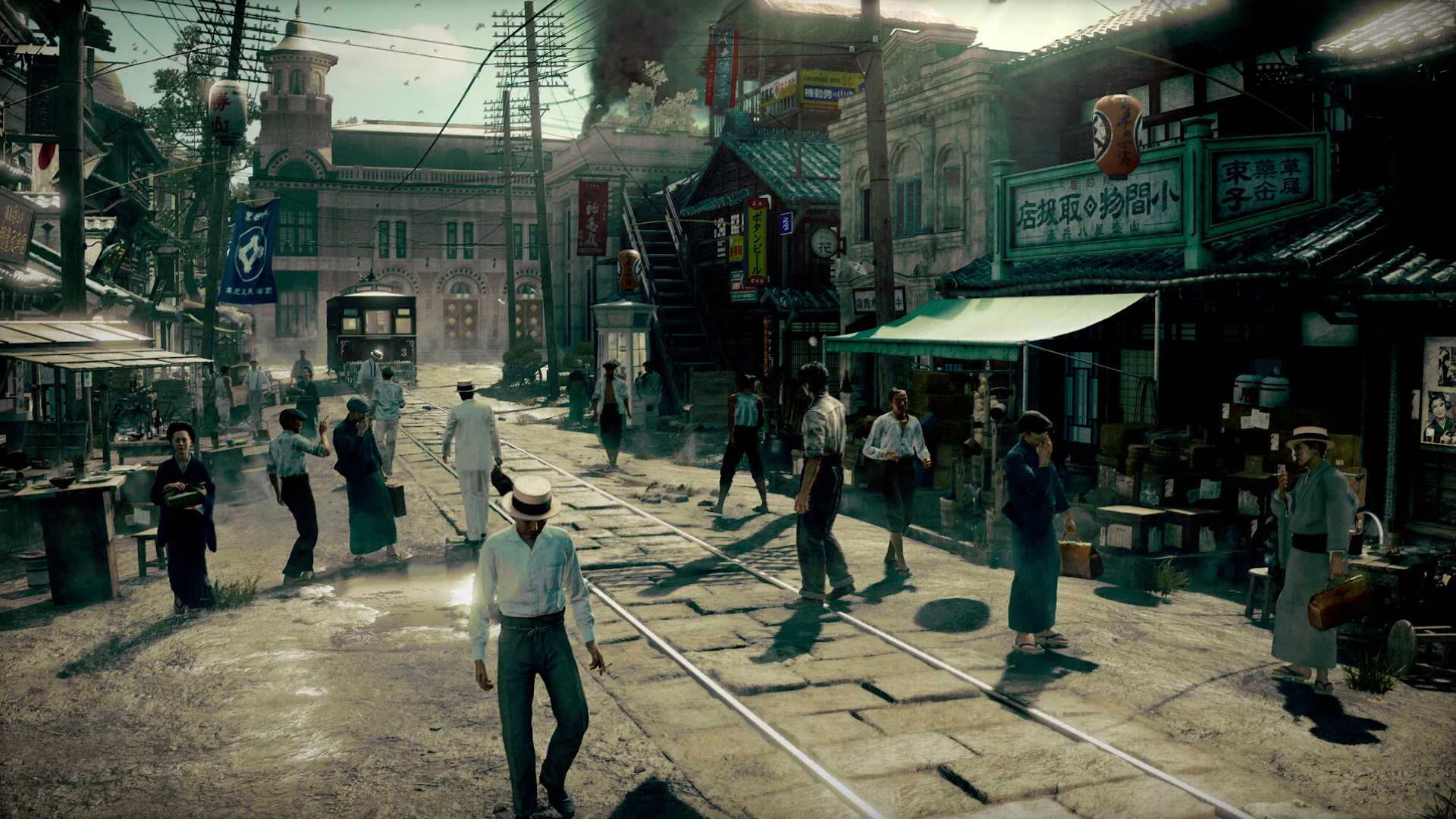
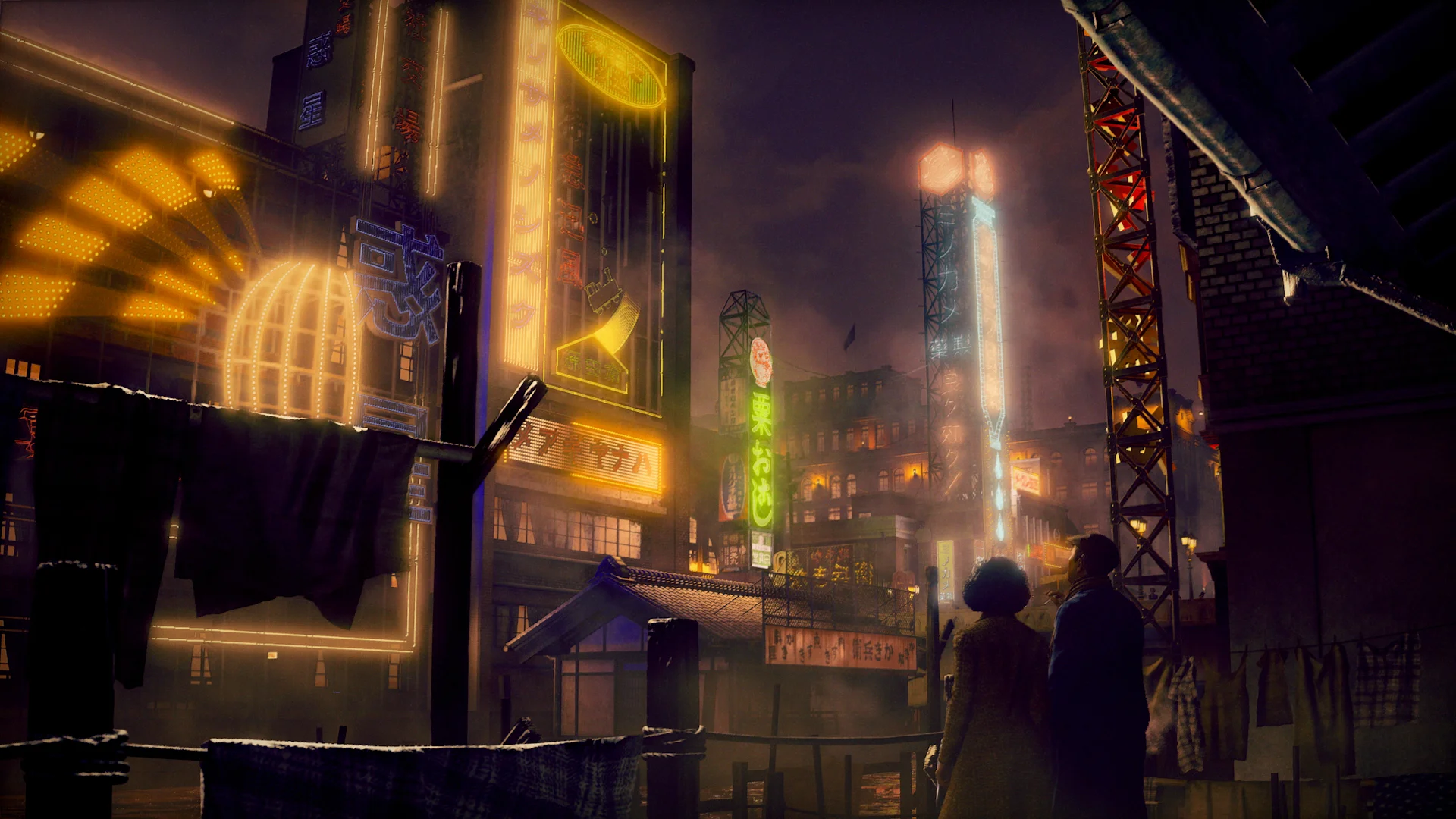
I’ve lumped the last two sections together since they both focus on the open-world gameplay of Stranger Than Heaven instead of the story. In fact, we weren’t allowed to progress the story at all in these sections. Unfortunately, one of the best parts of the Yakuza games, the sub-stories, were disabled for both sections, but there was plenty to do otherwise.
In the 1929 Kure section, Daito is a few years older and has just started his music career as a producer. Modernization is taking over Japan, with many places now having electricity and streetlights. As with many Yakuza games, you can explore the town to engage in a variety of activities, such as minigames, shopping, crafting, eating, and upgrading your equipment. You can also fight optional battles and deal with occasional street thugs that show up. One of Stranger Than Heaven‘s minigames I found fascinating was Tenhonbiki, a game where you try to guess the dealer’s number within four guesses. Thankfully, director Mikinobu Abe personally taught me how to play and gave me a quick history of the game. Thanks to him, I managed to win on my first try.
The 1943 Minami section is set up similarly. Daito is much older now, rocking a few more grey hairs and a kick-ass fedora. His music producing has taken him to the city of Minami, a bright-lights city where people on every corner vie for your attention. It’s also here that you get the most out of the Show Biz mechanic. Throughout the game, you can press the Square button to check your surroundings for sounds, music, and other tidbits that Daito records in his notebook. You can then take these notes to his composer and put on a multitude of productions.
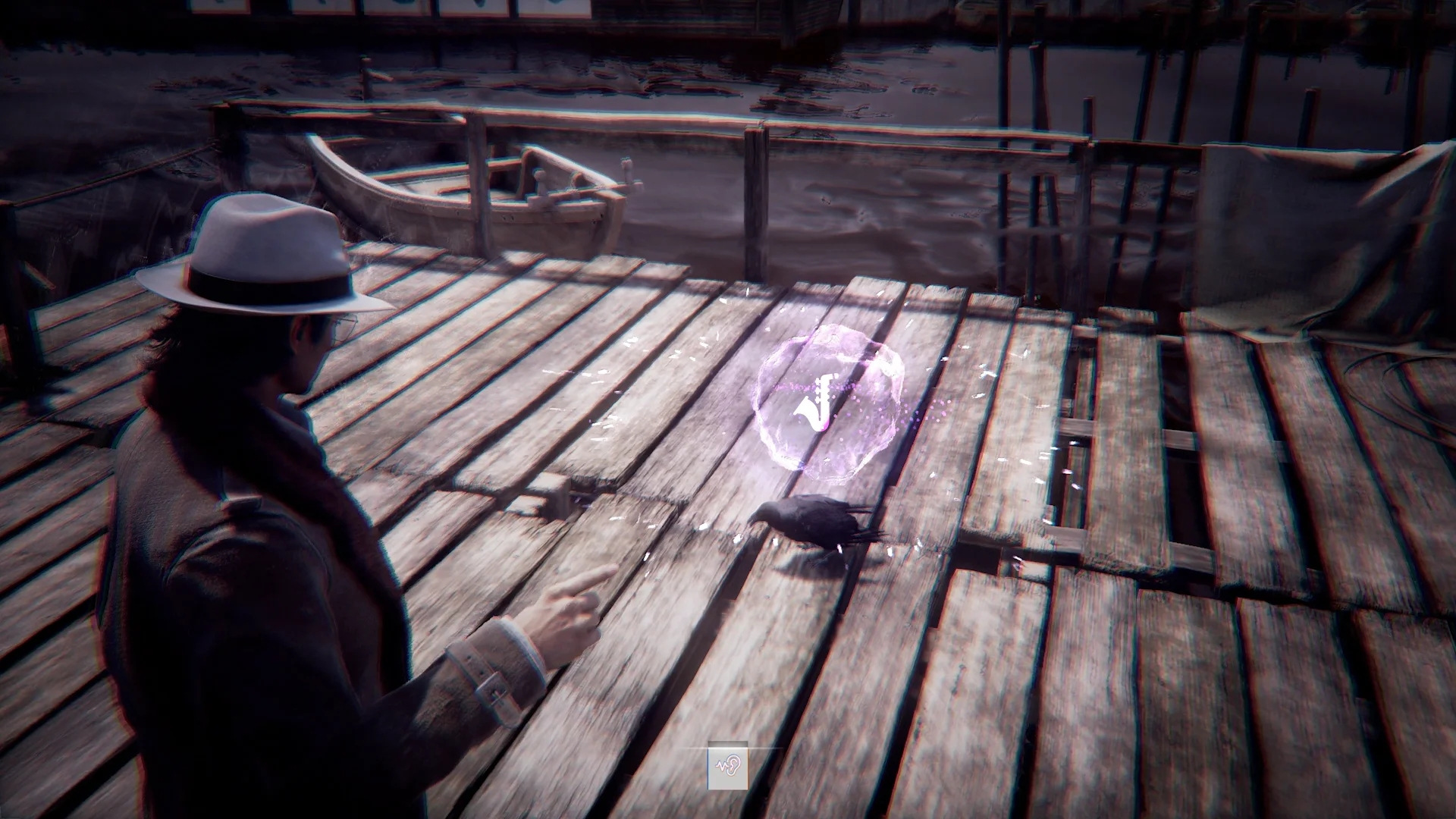
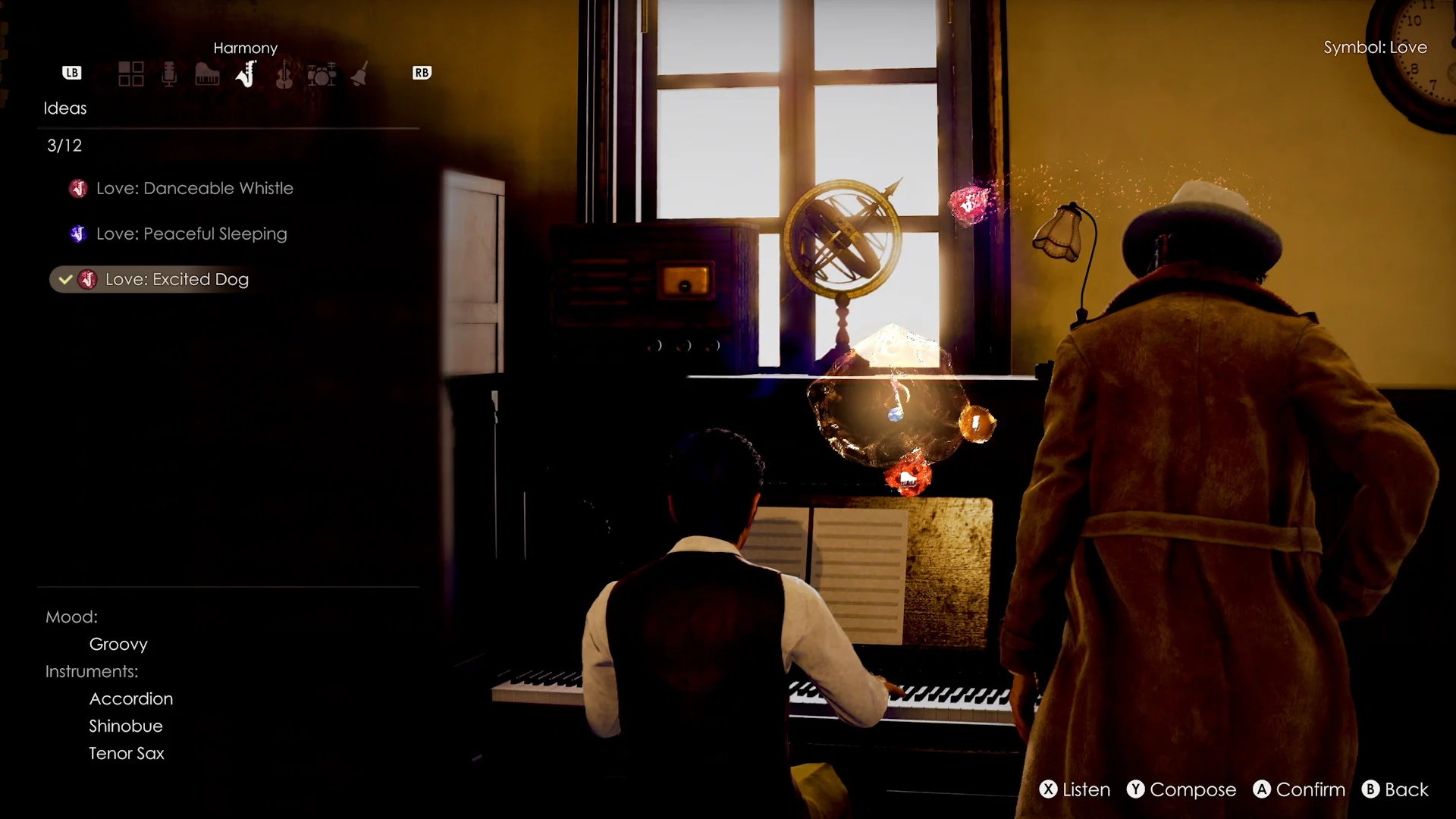
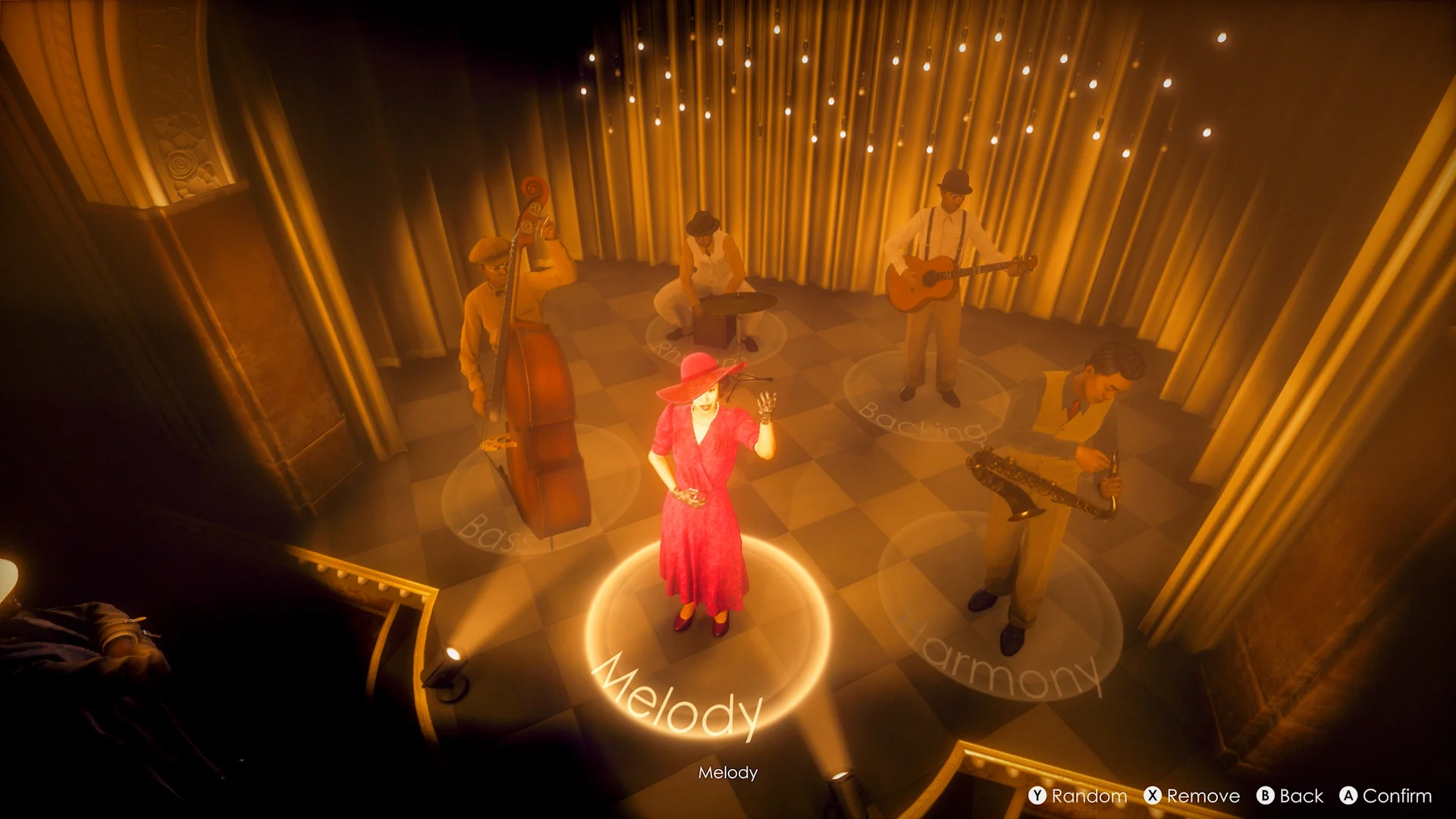
In both of these sections, the big draw is the music production. First, you can arrange different songs from your acquired sounds to change the songs to your liking. Then you can pick the song, singer, stage lights, stage effects, and background musicians, and arrange it as you like. Better performers and effects increase your costs, but it also raises the bar for how much you can charge for attendance. If you go around town, you can also advertise the show to bring in even more attendees. Your objective is to make as much money as you can on the production while keeping costs down so both you and your studio make money.
The shows in Stranger Than Heaven are pretty awesome to watch and are interactive as well. Depending on the stage lighting and effects you choose, you must press buttons on the controller in time with the song to increase your chances of a good production. It’s a great evolution of the karaoke minigame from the Yakuza games and is pretty forgiving on timing, so don’t worry if your musical timing is off. I did a good number of these during these segments because they were very enjoyable to play and watch.
After that section ended, the event was concluded. I wanted so badly to stay for the Q&A with Director Mikinobu Abe, but unfortunately I had other appointments that day. I can’t say enough how much the game blew me away in such a short amount of time. Stranger Than Heaven shot up to possibly number one on my must-play list for 2027 based on this small sample, and rightfully so, because it is a very engaging experience. I also hope you enjoyed this preview experience with me, as I tried my best to give you readers the same experience I had. Stranger Than Heaven launches January 15th, 2027 for PlayStation 5, Xbox Series X|S, and PC.
Huge thanks to RGG Studio and SEGA for inviting us to experience Stranger Than Heaven to put this preview together!


Leave a Reply
You must be logged in to post a comment.