
The first thing we did at PAX East 2026 was chat with some of the devs from Seismic Squirrel about their debut title, the just-released Aether & Iron. We came in loaded with questions from Jerry Williams, based on his time with the game, and thanks to Narrative Director Tyler Whitney and Product Manager Joshua Enz, we had a great conversation about what went into Aether & Iron‘s alternate 1930s New York setting, its characters, gameplay, and music.
Tyler went far more in-depth into Aether & Iron‘s historical influences and nuances than we were prepared for, and it was great to hear and see the passion that went into making this game. We hope you enjoy reading about our chat as much as we enjoyed spending the time with them!
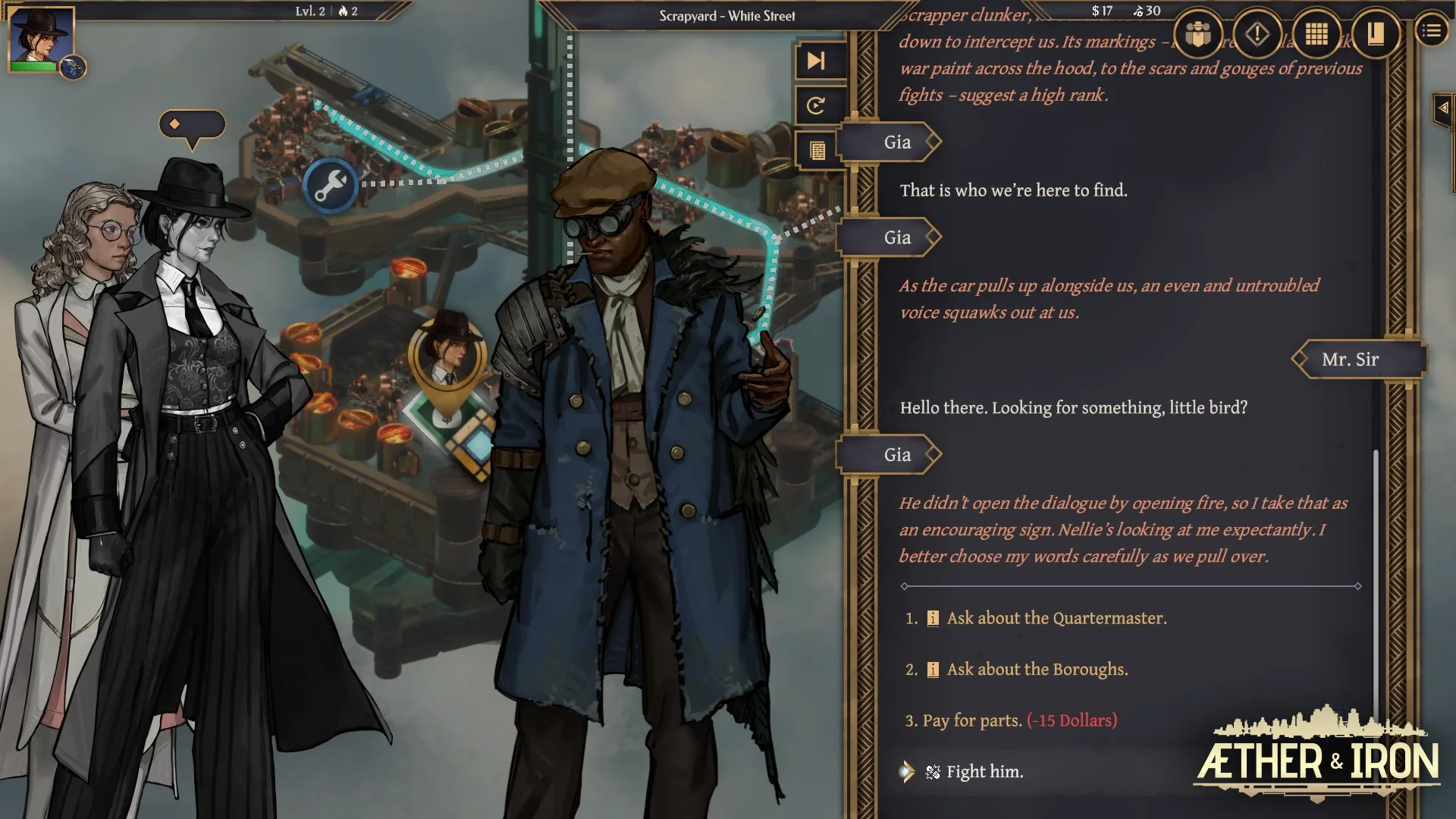
RPGFan: This is clearly a female-heavy cast with strong characters all-around, though at no point does it feel preachy or as if the game is trying to make a statement about women. Was a story featuring such a female-centric cast intentional, and what went into this approach to storytelling?
Tyler Whitney: Yeah, I think there’s a few elements of that. One, since our game is so rooted in history, we were pulling a lot of our characters from historical archetypes or historical characters that we found interesting. And when it came to Gia and the scientist, when you put a bunch of writers in a room and set out to create characters, one of the first things we do is ask, “how can we do something that’s different or interesting,” or “how can we take something that’s loved and put our twist on it?” So one thing, since noir storytelling was so big in our game, we’re like, the male dominated cast and all of this old stuff is like very present. So we thought, how can we play with that and do something interesting? When we first started off, we were going to have male or female, but then we realized voicing all of that was gonna be like… oof. (laughs from the room)
And then localizing all of that because a lot of other languages do male and female voices. It’s so much, and at the time when we were pricing everything out, we had written the female version of the character first because it felt more interesting at the time. And when we realized we can only do one, well, we’ve started with this one. We like this version, so we’ll keep going with Gia. So honestly, we kind of fell into it. And with [building] a lot of the characters, it was us thinking about interesting characters we could throw in, and who we researched recently to pull in, and that’s where a lot of characters come from.
So [back to your question,] it wasn’t intentional. It was just building as we go, and I think that’s why it doesn’t come across preachy because it was never the intention to do, like, any statements politically or otherwise. This just felt interesting and exciting.
Joshua Enz: We didn’t want to go into making the narrative where we’re just like, okay, we’re meant to give a message or make a statement, and that’s why when tying into actual historical characters. It kind of removes that because you’re telling stories of people’s lives, from actual historical events that happened in New York City, and the crossovers. So, yeah, like Tyler said it kind of just happened, and honestly, it wasn’t until, like, a year and a half into development when we realized, oh, wow, there’s a lot of female characters in this game.
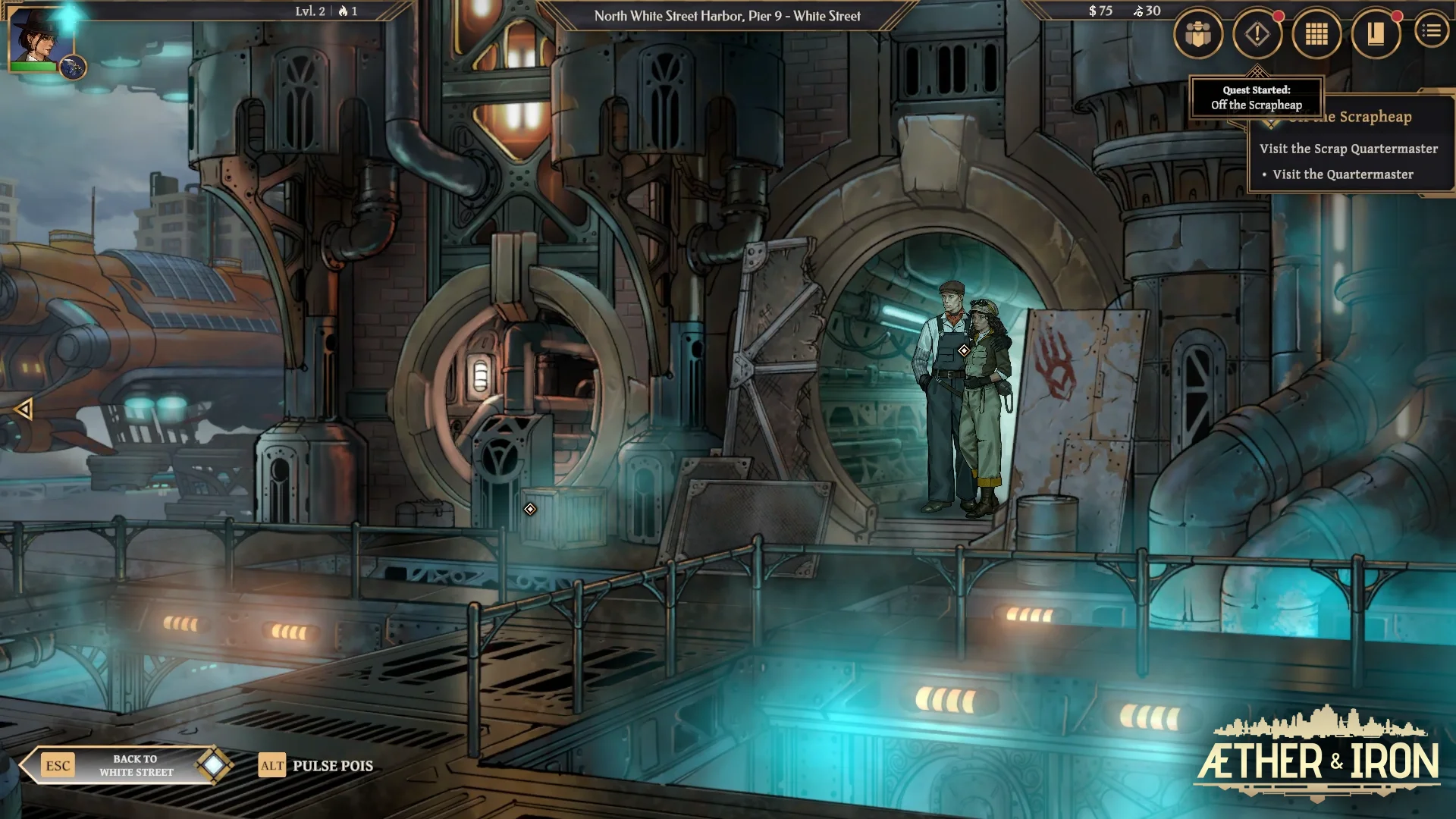
RPGFan: And that’s not a bad thing. I mean, in a game with this kind of setting, you don’t usually get that.
Tyler: I mean, part of it was that it’s something different and exciting. That was important for us too, since we’re focused on history, and a lot of what we do in our game is we try to focus on the lives of real people. Because we have a world that is, could be considered quite oppressive, in that you are stuck in a company town. And you have to live there. I mean, Gia is special because she’s a smuggler. She has this freedom that other people don’t. But people that are stuck on one of these islands, you kind of, you grew up there, you live there, you work there, you die there type of thing. We wanted to feature real life people the best we can, and so diving into the history of real life people, we just fell in love with certain people and certain characters that we wanted to pull out and put in. It just happened to be more than 51% female that we found interesting at the time.
RPGFan: It makes me want to ask about some examples of the historical figures!
Tyler: Oh, absolutely.
RPGFan: Well, If you’re into history.
Tyler: Oh. I feel like you’re baiting me into talking for a very long time. So, one of the heroes that you recruit, her name is Sophie, and she is actually based off a woman known as America’s Greatest Con Woman. So the second region we end up going to, Dreamland, is run by a baron who goes by the name of Marm. And she’s based off of the historical character in 19th century New York known as the Queen of the Underworld. She was a German immigrant who came to the United States when she was younger, and she clawed her way up, through gangs, to the point where she was running her own operation. “Marm” Mandelbaum was her name. She focused primarily on raising up female protégés and so her entire cast of characters were these very high profile female criminals that she raised up, she mentored, and, she sent out.
Sophie Lyons was one of her top protégés. And she would do all sorts of heists, and together, they were really big into stealing textiles and whatnot. Marm was very much into furs, dressing really nice, since she wanted to be part of high society. She got so prominent that she was hosting dinner parties for the city’s elites. However, that prominence kind of nipped her at one point because one of the things she did is, she wanted to give back to her community in Little Germany. And so she created a school for criminality where she would pick orphans and street urchins to be like, “let me give you a better life.” And she enrolled them into this school to teach them criminal acts, right? Like being a con man or con woman, being an impostor, stealing, all that sort of stuff. And she got in trouble because she accidentally enrolled the police commissioner’s son. (laughs from the room)
So she was very prominent, very wealthy. At one point, she got caught, but then she did a midnight prison escape and she fled to Canada where she just lived out the rest of her days based off of the wealth that she’d accumulated. Sophie went on to write a book about her whole thing, and that’s where we get a lot of the stories.
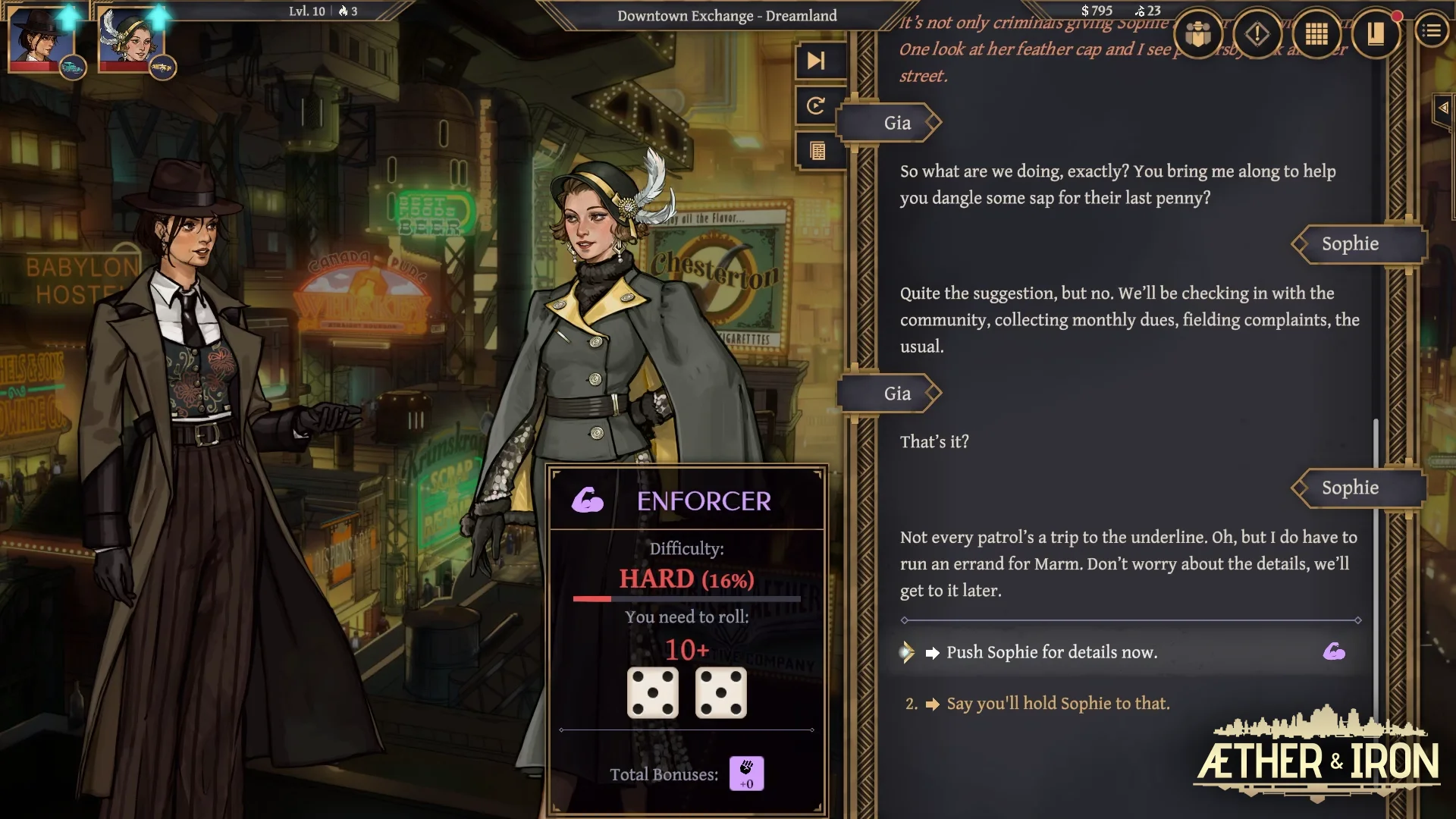
Anyway, those types of things got pulled in, like, holy cow, that is a crazy history. A crazy set of stories that we fell in love with. It’s like larger than life. So then it was like, let’s put those characters into our world, and what would they be like, based off what we have? And so, we took this Queen of the Underworld and we gave her a barony, gave her a society and a small city. How would she run it? What would it look like? In reality, she had a whole bunch of female lieutenants. What would she do in our world? Probably something similar, right? And what would the lieutenants look like in our world? How would they act? How would they run territory? What would be the economic situation there? And so all that to say, that’s an example of pulling history, and we just found these characters and we thought they were extremely interesting.
Oh, and I won’t go into any more stories, but another character that is really fun, and I highly encourage reading on your own, is that the Pirate Queen of New York. She started off as Sadie the Goat, because she would headbutt people, and she fell in love with pirate literature, and started acting like a pirate, and she amassed a massive fortune.
RPGFan: Noir storytelling can feel tropey, but because it’s a style that not many games feature, it never comes off as trite. Did you intentionally lean into the metaphors and tone for Aether & Iron?
Tyler: Yes, we heavily leaned on purpose. We have a team of four writers, and a piece of feedback that I’m sure they all got very sick of was “I need more imagery.” Or, “I need more of the senses,” or “I need more metaphor,” because we really want [you] to feel immersed. We want you to feel a part of it. We want every part of the game to be something that points to this fantasy of being in a sci-fi 1930s world. And so, we leaned heavily into the metaphor, and it is been the entire game. We just thought it was so evocative and interesting and since it was voiced, with the narrator giving her take on the world. She doesn’t have omniscience, an understanding of every situation. It’s her perspective of a thing. And we thought that kind of narration gave fun insight, and also in a world where we can’t do a full 3D game, that narration helps inspire the imagination to feel certain things.
One of my favorite lines, and I don’t remember if you caught it [when you played the game just now] [Editor’s Note: We did!], is “walking a knife’s edge with bare feet.” And, we love that type of stuff because it makes my toes curl every time, but also it kind of helps you understand the situation a little bit better. So we had a lot of fun and there’s some really amazing metaphors. In fact, some of my favorites are actually right after the tutorial when you go to talk to Nelly.
RPGFan: As a follow-up to that question, do you think more games should try to innovate on the formula?
I don’t know. That’s a big question. I feel like what I can say is that I wish games leaned more into that philosophy, making everything immersive in that world. My favorite games are one where they fully buy into their own premise and they lean into it. Because when I play a game, I love the fantasy of being in that game. And so, yeah, if more games started doing that, I’d give two thumbs up. I think it’d be awesome.
RPGFan: Maybe I should have cut down some of Jerry’s questions [to save time], since this next one is both a statement and a question!
Tyler: No, these are great. Look, we’ve been doing so many of these interviews. These are changing things up. I love it. These are awesome. So yeah, go for it.
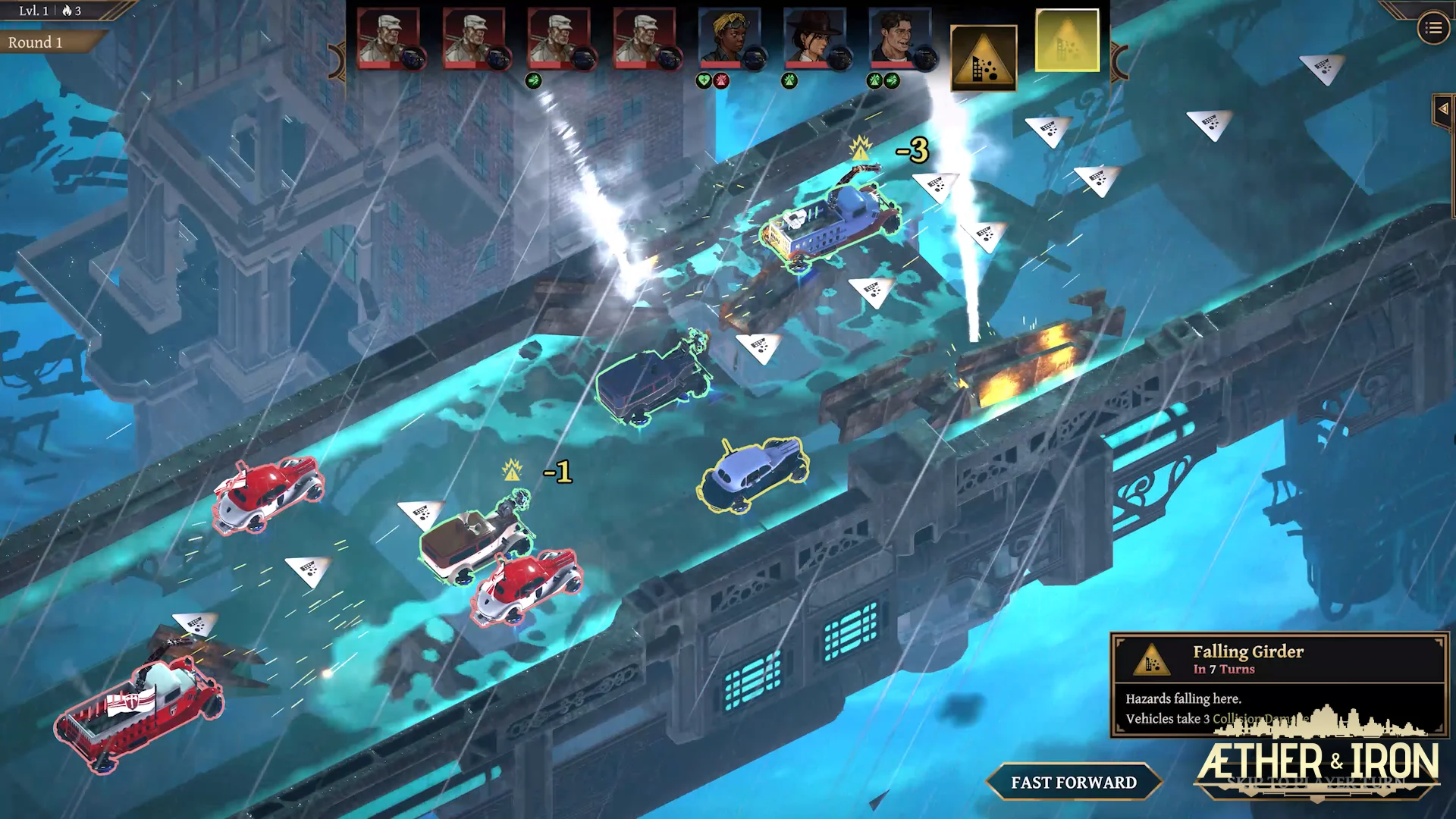
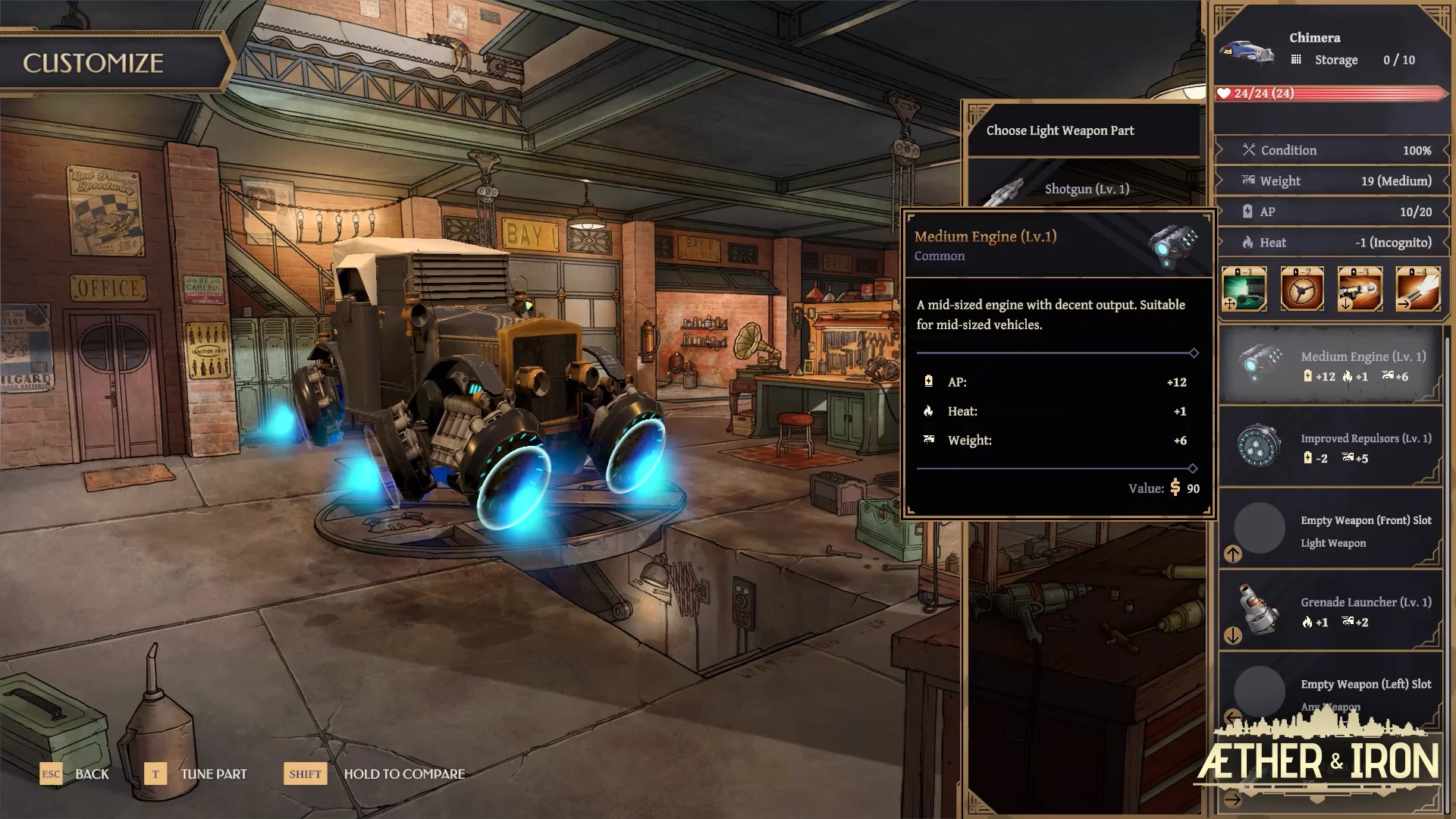
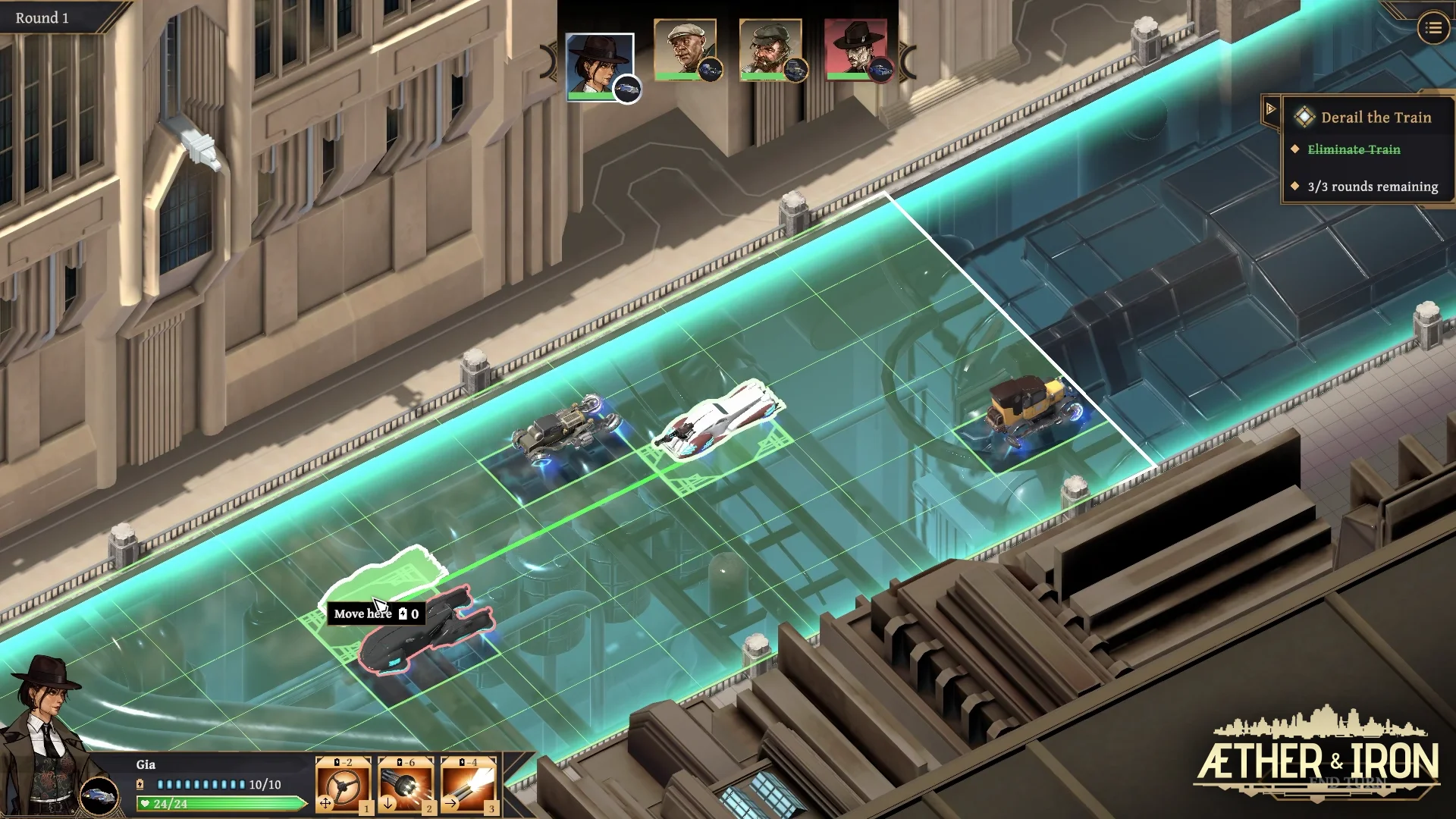
RPGFan: Using cars in place of people for the strategy RPG combat is incredibly refreshing. The combat used this theme effectively to impact movement, direction of shots, and obstacles in traffic. We feel like more could have been done with this, but that might have distracted from the storytelling. Why did you choose to focus on car combat over person combat?
Tyler: I think there’s a couple things we could do. One, there’s so many things that we wanted to do more, right? Like we’re a small team and we were already hitting scope creep with building out the game; that’s why it’s 30 hours, right? We were shooting for smaller and it turned into it because we wanted to build stuff out, and this is how it happened. So stuff left on the cutting room floor I would love to add in later or, you know, if the audience allows, I’d love to do a sequel with more stuff.
But as for why cars over people, a few different things. One is, we started the whole premise, this whole game, because we wanted to do cars and a strategy game. We were loving turn-based at the time. We thought it was cool and fun, and we were really into Into the Breach and Banner Saga, and were like, “we like cars, we like turn-based. What if we could put them together?” And it was my job as the story guy to be like, okay, how can we build off of that? Well, you know, some of the coolest cars are ’30s and ’40s cars. You know what’s even cooler? What if they could fly? And everyone was like, “Yeah!” So I’m like, okay, and I had to go build out a world where that made sense.
What is the timeline where cars could fly in the ’30s? And so building out that world, I built out this massive timeline of events and leading up to it and that led into the world of Aether & Iron. So when we were building out combat, one thing that was important, too, is that we bought our own premise. We didn’t want our combat to be something easily transferred into any other game, [and to be something that] belonged here. So that’s why road conditions can change, why obstacles and civilian vehicles work the way they do. Momentum and speed work the way they do because we want the mechanics to demand the world, and we want the world to demand the mechanics, right? We want them to feel interconnected. The comparison I like to use is, it’s like in the same way if you’re watching a good musical. You know, a song in a musical should be something that you can’t remove. It should feel ingrained in it. And if you can remove a song from a musical, that means that the song doesn’t have a purpose. And so I think it’s the same way that we are approaching things, that they had to feed into each other.
Joshua: For the combat, like you mentioned earlier, it was like, okay, we could do a lot more, but then comes down to scope. What can we focus on, do well? So, yes, there are things that would like to improve in combat and most likely do in updates, just to add that extra depth or complexity. But the initial foundation we found to meet our requirements for having a fast paced yet turn-based combat. Another reason for focusing on vehicle combat was that we didn’t want a game where there was excessive violence, blood, or gore, so doing vehicle combat, it broadens the audience that we can provide this [game] to.
RPGFan: In Jerry’s review, he talked about how there were like some elements of combat that he felt weren’t totally needed, as he still got through battles without engaging with some of it.
Tyler: Oh, yeah. Like I said, we have so much stuff in the game, well, and also something that was really important to us, is that over a very long game, we tried to have new stuff keep popping up as you went through. Combat’s very basic early on, but as you get to build out your party, there’s new mechanics, you can do new things with Aether, there’s new types of cars, new types of enemies, a whole bunch of stuff. It continually progresses into the final combat that we have in the game, which is very different. In fact, if I pulled it up right now, you would be like, “how did we get there from here?” Because we have this constant progression of new elements.
RPGFan: We absolutely fell in love with the cast and crew in Aether & Iron, but we recognize many creators want to move on to new projects. Do you plan on diving deeper into the world of aether, or do you hope to move onto a completely different project next?
Joshua: So it completely depends on player reception. Tyler can attest to just how much effort and work and research has gone into building out the Aether & Iron universe. So there are gobs of Confluence pages (Tyler chimed in here to echo “gobs”) with things that we had to shelve or we weren’t able to put in this game. So if the reception for the game is very positive and people are wanting more, we have more.
Tyler: And in the immediate term, we are planning on supporting [Aether & Iron] after launch. We have the resources to make sure that it’s updated and kept up. But like Josh said, we would love to continue the story of Gia. We have stuff planned out. So if the reception is good, then yeah, people will see more.
RPGFan: It’s great to know you already have a lot to draw from.
Tyler: Yeah, as a writer, I like the phrase, “I have a graveyard of darlings.” So if I have the chance to resurrect any of them, I will be happy.
Joshua: Right now, we’re in discussions on what our next project is, especially since we launch next week. So we have a few things ready to fire up, depending on the reception.
RPGFan: That’s great. I mean, if you’re not tired of working on it and you want to do more, then that’s good. You know, some people might want to be like, “well, we’ve done enough.”
Tyler: Oh, we’re tired and exhausted. Yeah, don’t get me wrong. Make no mistake. But, I mean, we’re excited. Some of the ideas we have for the next project, if we’re able to do it, we’re already excited for it. And, we talked about this a little bit, like when we focused on this project, what was important to us was real life people, right? The people in history that we could represent, but then also the relationships with those people.
And I think the love that we had for the characters is something that makes us want to continue exploring that because we fell in love with the people.
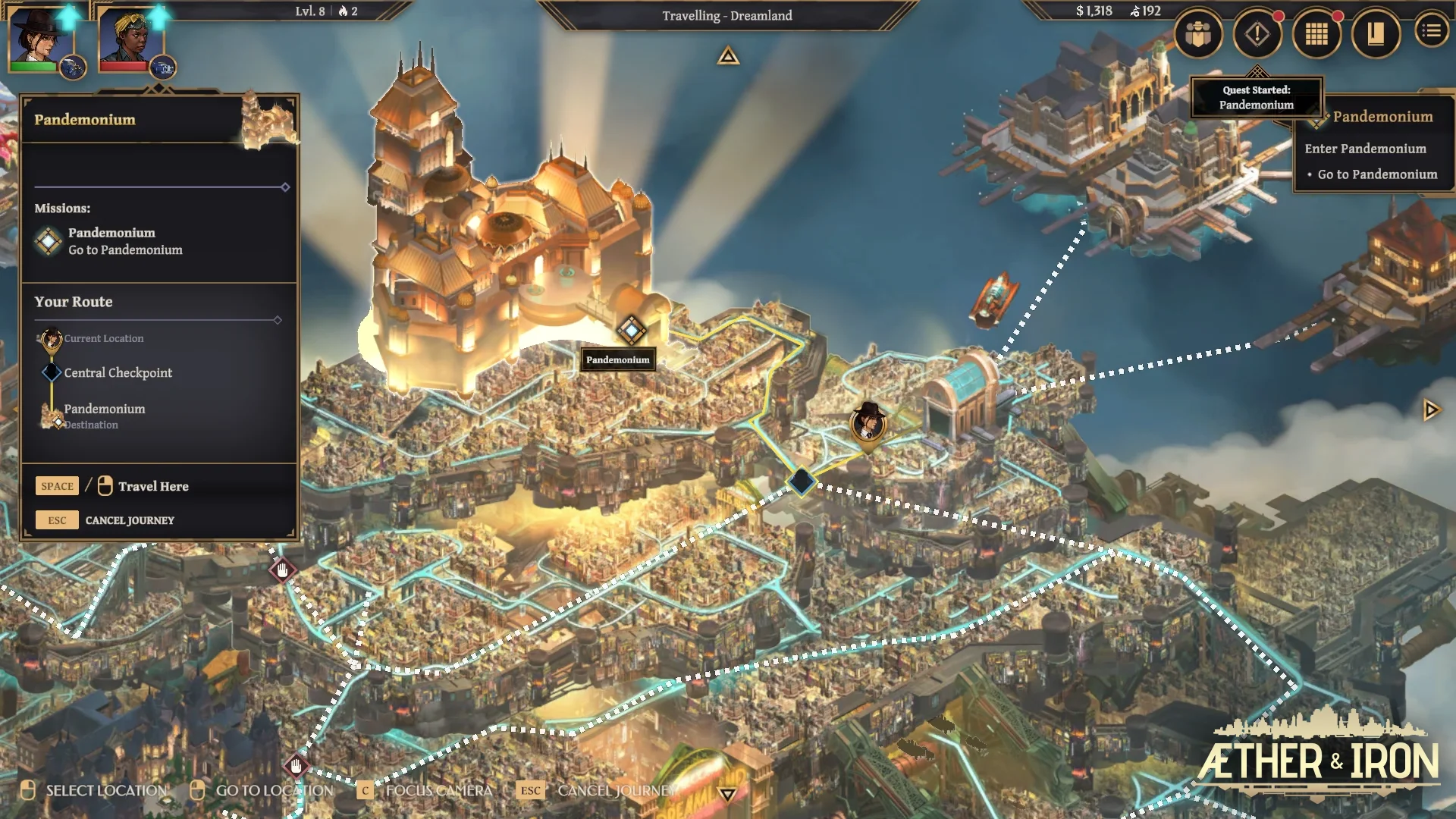
Joshua: And on the [in-game] map, you can see that this game primarily delves into the Lowers. So New York’s divided into the Lowers, the Uppers, the Heights, and then on the ground is the Boroughs. So as far as content or things that we work on, that can feel very different so we [aren’t] just doing the same thing again. There’s so much more that we can look into that will feel very, very different, but still be set in this universe.
Tyler: Yeah, and don’t even get me started on outside of New York because I will talk about 1930s Jakarta for way too long!
RPGFan: Okay, last one. We can’t overlook the Aether & Iron’s great music — what was it like working with Grammy-winning composer Christopher Tin? How did that come together?
Tyler: It was so cool. My creative director made fun of me at the time, so in that first meeting, I was just starstruck a little bit. I was like, “Hi. How are you?”
Joshua: The first game that got me into video games was, uh, Sid Meier’s Civilization IV, and I listened to “Baba Yetu” on repeat when I was 14 years old.
Tyler: So how we met was, I was roommates with a guy at school who was a music journalist, and one of the people he interviewed was Christopher Tin, and I remember being like, “Whoa, that’s crazy, that’s so cool.” Years later, we’re trying to figure out the soundtrack, and I’m like, you know what would be cool? What if? And so I message him, like, “Hey, could you get me in contact?” And so I emailed him out of the blue, and he loved the idea of meeting up. We talked, we hit it off, and we just were extremely fortunate that it turned into something.
So working with him was great. What that looked like was, we’d meet up and I would babble on about the story and like the creative inspirations and be like, “I tracked down this music from here and this music from here,” and as I was telling you about the different factions, I found an archive of snippets of how they made their own music and what it sounded like and… I found a song about, there this song about anchovies that I found this little snippet of and was like, “ All that remains is like 2 lines.” And he would be like, “Alright, okay, thank you. Appreciate it.” Because… I got very excited. My creative director would be like, you gotta tone it down a touch. But he he always listened, he was always very considerate, and he took that into account, and he worked with [Grammy-nominee] Alex Williamson. So the two of them were able to work on stuff and it was just great, because they they loved the history of it, they loved the concept, and it was just a pleasure all around.
Joshua: Actually we have a long form interview video that we’ve posted, which is Alex and Chris talking about the music.
Tyler: And we will have a soundtrack coming out at launch too. And if that goes well enough, we’d love to do a vinyl. Because, I mean, the game just begs for it, right? I did find out a little bit during the creation of this game that vinyl was not used for making records for quite a while, and at the time it was shellac. So, yeah, that was a funny story.
Thank you so much for coming and for your time. Really appreciate it.
RPGFan: Thank you for taking the time as well! We wish you luck with Aether & Iron‘s launch.
Huge thanks to Tyler Whitney and Joshua Enz for spending so much time with us and giving us far more than we could have hoped for with our questions on Aether & Iron. The game is available now on Steam. Look for our review of the soundtrack soon!
This interview was transcribed and edited for clarity and readability.