
In my Early Access review of Entropy, I spoke about how heavily invested I became (even just in chapter one) in the dour world and grim mechanics of the first traditional turn-based RPG from developer Lovely Hellplace. So when they reached out and offered the opportunity to interview Lead Designer James Wragg, I jumped at the chance to delve deeper into the inspirations behind the low-poly dark fantasy title. James seemed equally eager to speak at length on the game, and he provided valuable insights into Entropy‘s primary influences and development process.
RPGFan: It’s great to see the return of retro PSOne-style graphics. What were some of your favorite RPGs from this era?
James: As is probably obvious from Entropy‘s world map, I’m a big fan of the PS1 Final Fantasy games— they were some of my favourite games growing up. I loved the open-world nature of the world map, but how the abstraction of such a zoomed-out perspective allowed you to fill in the gaps of the journey with your imagination. It also helped those games feel like globe-spanning adventures while still fitting into a 60-ish-hour runtime.
Aesthetically, Vagrant Story is a huge inspiration. Being one of the later games released on the platform, it really pushed the PS1 to its limits, and each scene feels like a beautifully rendered diorama. When I was getting into development, I would spend hours in the Vagrant Story model viewer, dissecting its polygonal models and trying to learn its secrets.
RPGFan: In Entropy, The Player is a member of a theater troupe playing a “role” within this role-playing game. I was quite impressed with the way you wove character creation and the broader narrative stakes into this core idea of a traveling theater company. Why did you go this route for the game’s narrative foundation?
James: A key goal of ours for Entropy was always to try and narrativise the end of the human story: to flip to the last chapter of the anthropocene, as it were. Once you put an end on something—whether it’s the death of a loved one or the theoretical death of our entire species—their existence moves into myth, into story. In the end, stories are all we have.
So in this sense, storytelling itself became a key theme of Entropy, as much as anything else. When we were brainstorming the player-character and what kind of role they could play in this world, it felt quite natural to have them be a theatre performer. Also, a few people on the team are English Literature graduates, and it gave us an excuse to show off by constantly quoting Shakespeare.
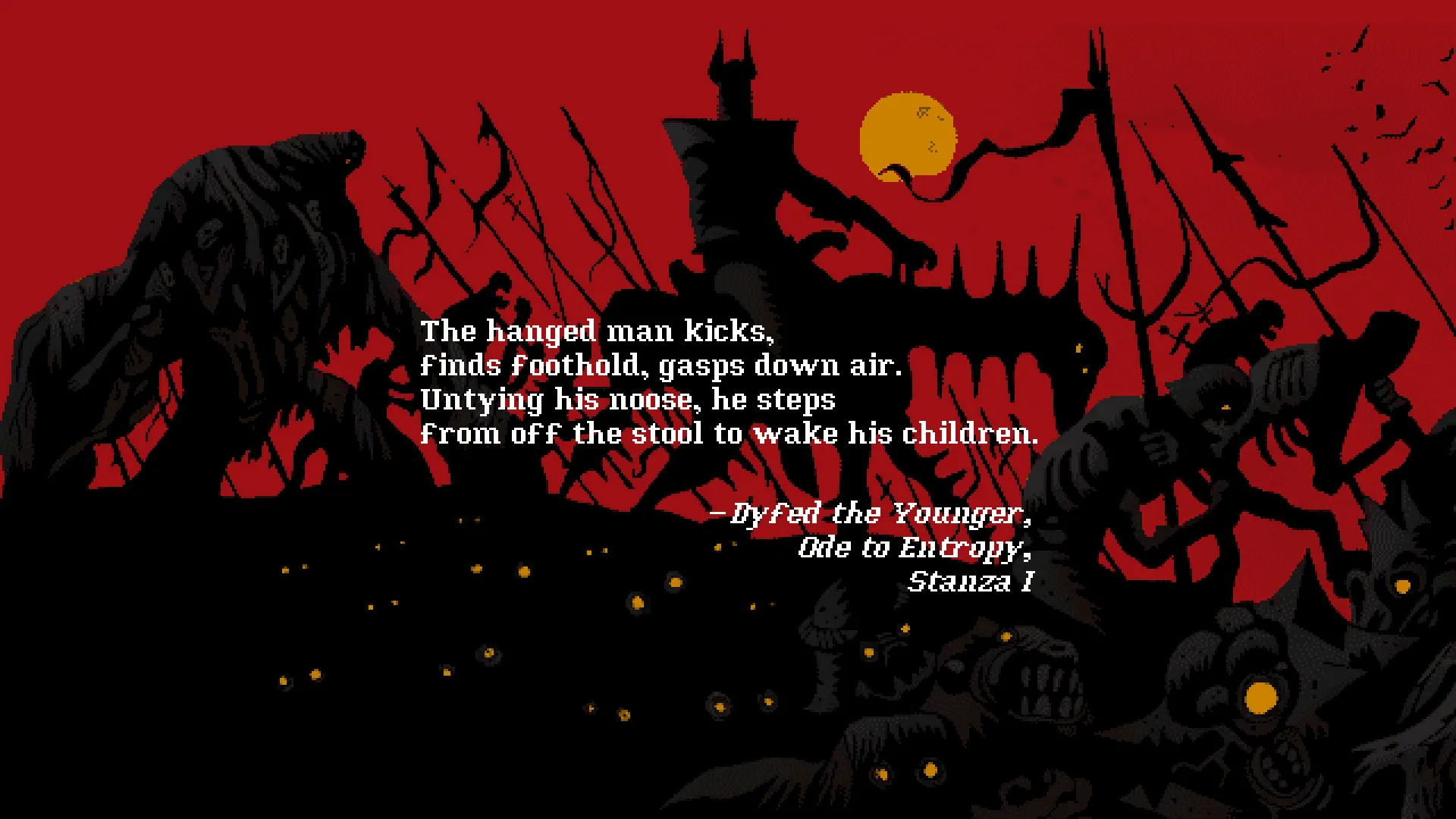
RPGFan: I understand that Entropy is influenced by Gene Wolfe’s Book of the New Sun, an incredible work of classic SF&F. I’m curious when you first became a fan of the series, as well as Dying Earth fiction and classic Sword & Sorcery in general. What drew you to the genre?
I think it was maybe a decade ago that I got into Book of the New Sun? I just love the idea of a story set at the very end of human existence, during the last gasps of our species. There are references in Dread Delusion as well (the greatsword has a flat tip, in a nod to Severian’s executioner’s sword!).
I’ve always been interested in post-apocalypse stories; Fallout 1 was one of my favourite games growing up, and I read a lot of postapoc fiction as a teenager—but Dying Earth fiction is a fun evolution of this idea because it essentially compounds and compresses multiple postapocalypses together. Oh, you just had one measly nuclear apocalypse? We’ve lost count!
But on a more serious note, it also shifts the focus from a specific form of civilisational collapse—nukes, or environmental catastrophe—onto the inevitability of human decline as a whole. There wasn’t just one disaster that we possibly could have avoided; no, in the end it was human nature. This was never going to last.
I actually think it’s important, now more than ever, to consider the human journey as one that will have an ending. I think a lot of science fiction in the middle of the 20th century imagined the human endeavor as potentially endless; we would colonise the stars and last until the heat death of the universe. I think it’s pretty obvious now that this isn’t going to happen. So maybe we should, I don’t know, stop burning through all the world’s resources while speedrunning our own extinction?
RPGFan: One of the elements that stood out to me when playing Entropy is the injury mechanic, which can radically alter members of the party and their suitability for certain combat roles. How did you settle on this unique gameplay concept, and what impact do you see it having on players’ experiences with the game?
James: Both Fallout and Mordheim (the tabletop game) were big inspirations in this regard. Being able to target specific limbs—to do something like preventing an enemy from using a weapon—adds so much depth.
But I suppose it also resonates with the game’s themes. Your characters are transient things, falling apart just as quickly as the world around them…
RPGFan: I enjoyed the main side quest in Act 1 surrounding the transmission network and delusion discs in Cuvas, and the way it framed the inherent conflict between security and artistic freedom, and how you gave players the choice to safeguard Cuvas’s artistic past at the cost of foreclosing on their creative future. What ideas did you want to explore with this concept, and what are other topics you want to explore as the game evolves beyond Act 1?
James: I enjoyed writing that quest. Really, I think I was commenting on the specific political and cultural moment we’re going through right now, specifically how social media is widening the Overton window. In that sense, the Otherworld is kind of playing the role of social media. It opens our experience up to new worlds and new ideas, but there’s a danger to that as well.
Though also, I was just riffing off The Ring / Ringu, because monsters crawling out of your TV is very scary!
RPGFan: Between the recruitable mercenaries, character skills tied to equipment, and the risk of permadeath, these mechanics reminded me first and foremost of the SaGa series. Is SaGa one of your primary inspirations for this project, and what other RPGs did you draw inspiration from during development?
James: Actually, I’ve never played a SaGa game! I get this quite a lot; apparently Entropy is quite similar to Fire Emblem too? But again, I’ve never played it.
I’d say the games that have proven the most influential are Fallout 1, Final Fantasy 7-9, Mordheim, Dark Souls, and Vagrant Story.
The permadeath angle mostly comes from Mordheim and Dark Souls, though in different ways. In Dark Souls, you have this constant tension from possibly losing all your souls if you die on a run; I wanted to recreate that feeling, but within a more traditional JRPG battle system. Mordheim (the old tabletop game) offered a more specific way to do this, as after any battle, your mercenaries have a chance to die or gain injuries if they are struck down in battle. So it was kind of a merging of those two systems.
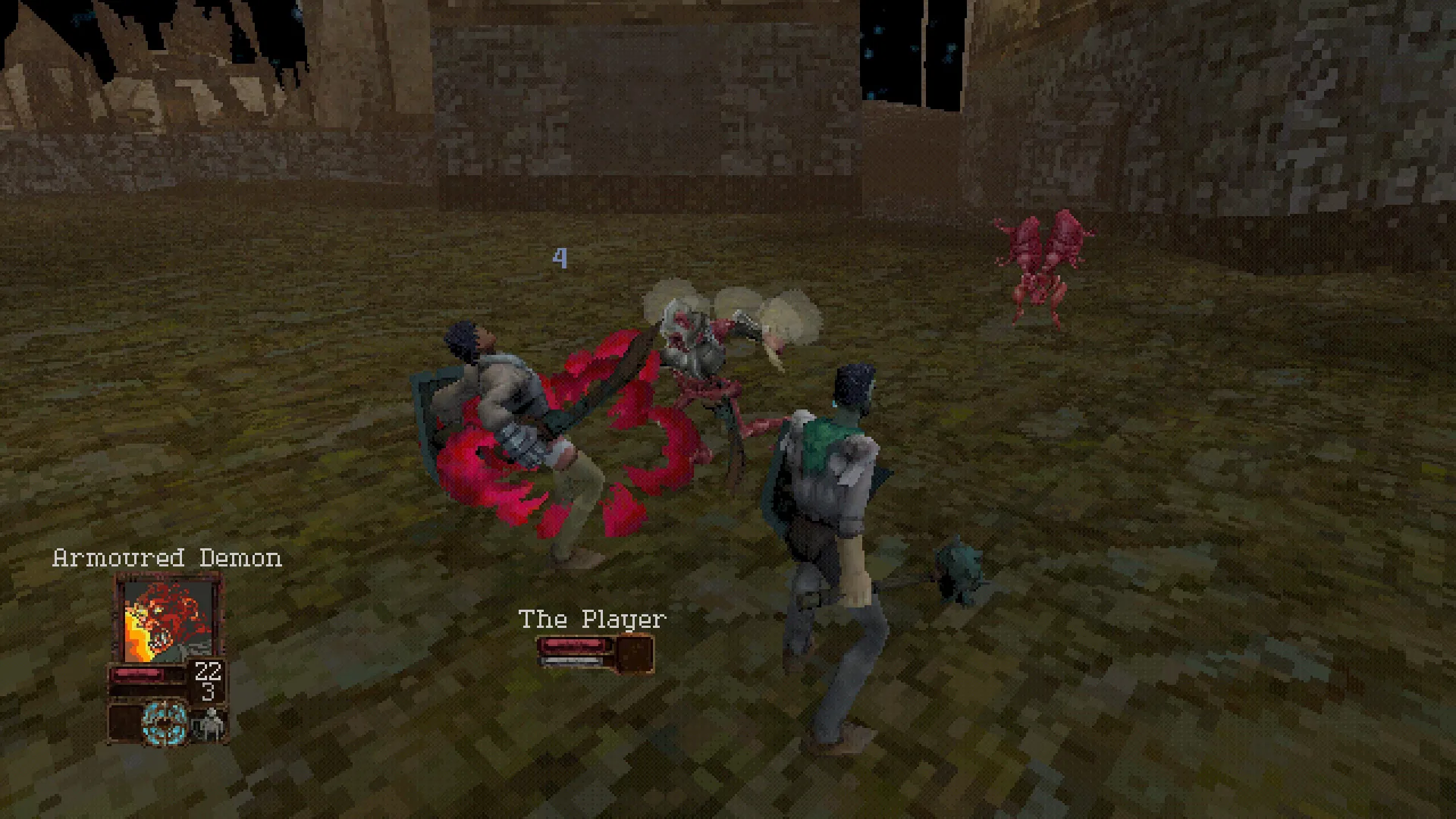
RPGFan: I found the lore behind the competing magic systems (Shaping Magic and Channeling Magic) quite compelling, as well as the lack of a resource for casting spells in favor of spells having the chance to miscast and backfire on the user. What informed Entropy‘s unique approach to magic, and how did you decide to abandon a central resource mechanic like magic points?
James: We wrote the Lore Bible before making almost anything else for the game, and so the idea we had for magic being this really physical, mucky, weird thing had a direct influence on how we designed the systems. It just kind of made sense that it should be more of a gamble with your own safety, rather than just another bar that you can deplete and refill.
RPGFan: The leader of Cuvas is known as the Peacekeeper, yet the leaders of other locations are referred to as Warbringers. At the same time, the world is facing down an invasion by demonic forces. Why is conflict such a defining aspect of the Gloaming Isles setting?
James: Well, as systems fall apart, conflict tends to flow into the void. I guess it’s similar to the fall of the Roman Empire and how the next thousand years of European history was just dominated by constant warring. That’s the kind of thing that’s happening here. Only, even within this hellscape, there are always people like the Peacekeeper who try their best to avoid bloodshed. This decade, it seems like conflicts are once again bubbling up around the world. It seems like a good time to reflect on this, I suppose.
RPGFan: One of my favorite elements in Entropy is the text adventure-style events that pop up as The Player explores the world map. One in particular that stood out to me is a storm that rains down teeth rather than water. What role do these events play in the worldbuilding, and what can players expect from them as the game evolves in Early Access?
James: I really love those story segments. They allow us to tell these quite vibrant and evocative short stories in very compact spaces of time. Not only does it save time for us developers—we don’t have to make all this stuff in 3D, after all—but I think it’s quite enjoyable as a player. You can have this crazy experience in three minutes that teaches you loads about the world you’re exploring, without having to go on a 30-minute fetch quest or whatever. It’s great!
As for what we’re gonna do with them, expect way more in the full release, and as you venture into stranger and more exotic regions in Entropy, expect these stories to go in weirder and wilder directions…
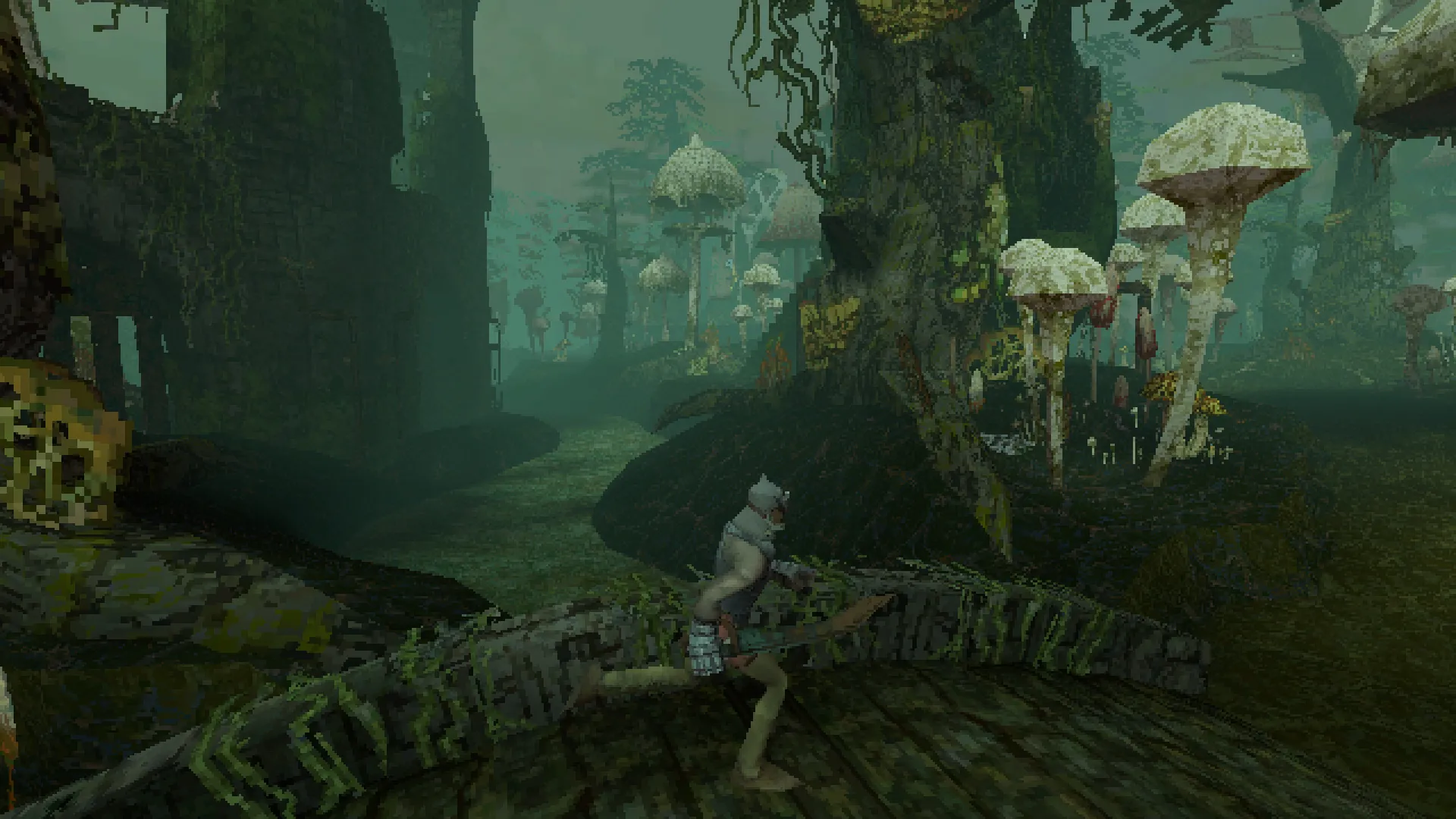
RPGFan: I love the art in this game, particularly the works of Artyom Trakhanov and Linnea Sterte. Any chance we might see a comic book spin-off or (physical) artbook in the future?
James: We have three graphic novelists working on the game: Artyom Trakhanov, our Lead Artist, along with Linnea Sterte and Simon Roy. All of them are absolutely phenomenal artists, but beyond that, they’re all obsessed with the same kind of Dying Earth fiction we’re pulling inspiration from. If you’re even remotely intrigued by Entropy‘s world, I would highly recommend you check out their work!
As for a comic book spin-off? Never say never, but I highly doubt it. From working with comic artists on Entropy, I know what a gruelling and labour-intensive process it is to make graphic novels. I think I’d rather stick to the gruelling and labour intensive process of making video games. The devil you know!
RPGFan: Although Entropy occupies a different setting and gameplay mechanics than your last title, Dread Delusion, there is a lot of presentational and aesthetic DNA shared between the two games. Is there anything in particular you’ve carried over from Dread Delusion to Entropy, and what expectations would you set for fans of Dread Delusion curious about Entropy?
James: I think one thing we’ll always try and do with our games is to tell engaging and evocative stories. That’s the throughline from Dread Delusion to Entropy, really: rich worldbuilding and narrative direction.
If anything, the switch from a first-person open world to more JRPG-style environments was driven by that desire for storytelling, as it allows us to take the player on an even more expansive journey.
RPGFan: How long do you expect the game to remain in Early Access, and what can players expect for the update schedule for Entropy?
James: Entropy will be in Early Access for at least a year. We’re going to be speaking more about our roadmap soon, so keep an eye on DreadXP and Lovely Hellplace socials.
RPGFan would like to thank James Wragg, the rest of the Lovely Hellplace team, and publisher DreadXP for the opportunity to speak at length about Entropy to celebrate the Early Access launch. Entropy is currently available on PC via Steam.