
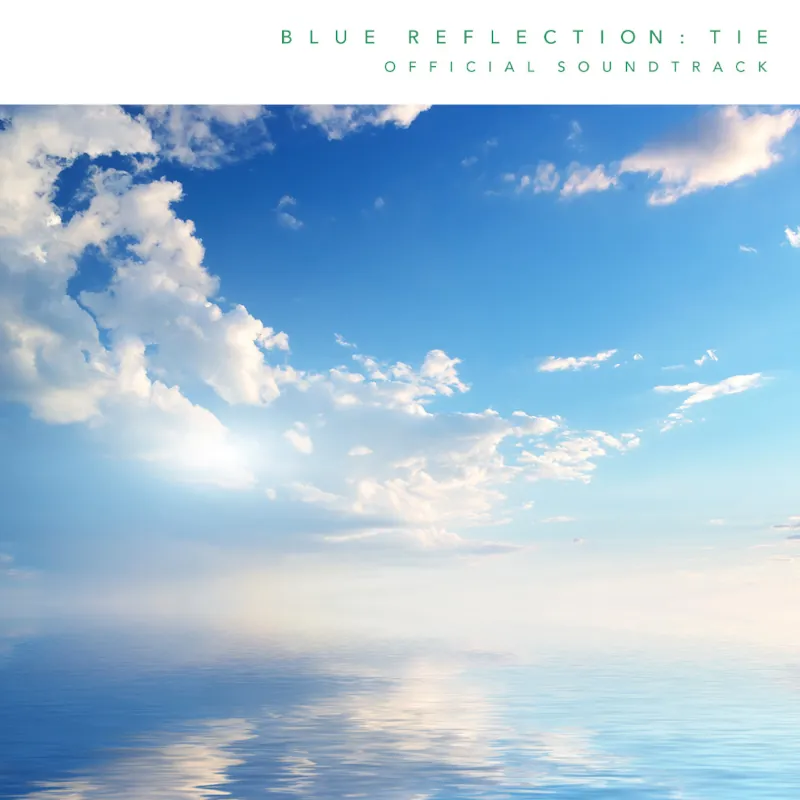


The first Blue Reflection game contains a consistently brilliant OST, full of chilled electronics and a breezy vibe. It’s definitely up there as one of my favourite video game soundtracks despite the game being a very patchy experience. The sequel, Blue Reflection: Second Light (or Blue Reflection: TIE in Japan), shook up some of the formula from the first game, capitalising on some of the features that brought success to the more recent Atelier games (especially Ryza), whilst still retaining that lovely summertime feel that is quintessentially Blue Reflection. The soundtrack brings back composer Hayato Asano and features new collaborator Toshihiko Watanabe, but how does it stack up to the first game?
Things start off very strong with the track “Glitter”—an interesting combination of breathy vocals and a modern take on city pop and jazz. Definitely a change in sound over the first game’s OST, eschewing electronics for soft acoustics and actual drums, but still very fitting for the atmosphere the series is creating. This is followed up by “TIE,” a new version of one of the most iconic and pretty tracks from the original game’s soundtrack, “Blue Reflection,” building upon it and layering more instruments to create a really pleasant, gentle experience.
As track three hits, it becomes apparent that Second Light will be revisiting many of the compositions from its predecessor, but remixing and reimagining them, with “Piercing Blue” being a new version of “I (Sun).” I don’t necessarily have an issue with this, as that feeling of nostalgia is a big part of what makes these games have such a unique emotional quality to them—I just don’t want to hear it overused. Second Light deserves its own identity too.
What this series’ music generally does well is fuse gentle electronics with strings and piano to create music that sounds fresh and contemporary. Blue Reflection: Second Light certainly follows that tradition, though some of the first examples of that here are actually heavier than I was expecting. Tracks like “W-P Neurons,” which introduces big beats that merge nicely with the strings. Then, “My REAL” and “Our REAL” are pounding and feature much more tension in the sound than I’d expect from a Blue Reflection track, which is great to hear.
That newly found tension carries over into “There’s Nothing We Can’t Do, Right,” which has a great build, including glitchy repeating synths over a propulsive beat that sound urgent and yet somehow restrained too. “Daydream” is sleek, shiny and modern and “A Hopeful Astraea” is really beautiful, featuring swelling strings in a lower register that sound so deep and rich over the sparkly electronics—definitely an intriguing listen. These tracks highlight some of the best examples of how the electronic and acoustic combine so well in the OST, a quality I’m glad wasn’t lost between the two games.
The first game’s OST gave glimpses into a more experimental approach on a small handful of tracks, a tantalising moment when the composers tried something different or unexpected in the context of the full body of work. In Blue Reflection: Second Light, that experimental nature is much more present across a higher number of pieces, and it’s one my favourite things about this OST.
“Transparent Shelter” is unsettling with its combination of electronic noise and a strange wobbly synth that sounds straight out of Final Fantasy VII, as Uematsu’s “Listen to the Cries of the Planet” instantly came to mind. “Non-Linear Reliance” features samples from radio chatter and sounds that mimic busy city life to create an experience almost like the music is fading in and out of reality—bizarre but very effective. The rather sinister “Aquarium Brains” uses sounds played in reverse, and an almost industrial bass to give it bite.
On the lighter side there’re tracks like “Milk Coffee on a Rainy Afternoon,” which was such a pleasant surprise with its trip-hop beat and a slight nod to ‘90s RnB. Tracks like these really stand out as something different, whilst the standard breezy electronic pop pieces are great it’s nice to have a wider range of genres and sounds explored in Second Light.
Having these breaks and changes in the track list is very important here, primarily because of my main complaint with the OST for Blue Reflection: Second Light—an abundance of overly long tracks. I think a big part of why the first game’s soundtrack worked so well was that many of the tracks were kept below 3 minutes, giving you short, shimmery bursts that quickly got to the point. Second Light is made up of many four-minute-plus tracks, with some even over five, but the extended length is generally not worth it as the tracks do not evolve much over the duration and lose their impact.
“Bottled Message in the Sky” is too sparse for its length and “Antinomy of the Golden Rule” just feels like it is dragging on. Many of these are piano-led, slow-tempo tracks which overstay their welcome—“A Glum Face on the Water” is almost six minutes long and it just feels unnecessary.
It becomes even more frustrating when a longer track comes along which does use that time really effectively, though this is rare. “Solemn Casket” is a nice example—despite being over five minutes long this piece takes you on a journey full of varied sounds, intrigue, and atmospherics. “Returning Home Without a Key” is another track that gives me Final Fantasy VII vibes (that game is so influential) and it uses its longer run time really well with distinct sections, melodies and instruments coming and going to weave something quite mystical.
As the OST draws to a close, it reveals some of the collection’s best tracks. “Discontinuity of Existence” threatens to explode into an all-out banger but never quite makes it, using that deep beat to build up some anticipation and contrast with the sparer moments between. “Genesis” is loud and abrasive in the best way, and “Afterschool Ariette” closes things with another airy vocal song, full of that nostalgic quality that works so well for this series.
My overall feelings about the soundtrack for Blue Reflection: Second Light are positive. It takes what made the original game’s music so strong and develops it with more experimentation and variety whilst also revisiting some of the compositions from the first game. Its mood is very much one of positivity, lightness and reminiscence—you’d listen to it while taking it easy on a summer evening, reflecting on past memories and enjoying some calm space to yourself.
Whilst some of the tracks definitely could gain from a shorter length, that isn’t enough for me to think too negatively about this collection of songs as a whole. The two mainline/console Blue Reflection games are singular in their ability to create a specific atmosphere, and their accompanying music is a vital component of that.