So, you’ve experienced unnatural encounters. Amidst your fight for survival, you’ve fallen in love, and perhaps even became a ghost to stay with your paranormal paramour—now what? It’s a reasonable question for those who’ve played 9 R.I.P., an otome game themed around the supernatural. The story’s protagonist, default name Misa Isshiki, endured (sometimes literally) hellish circumstances to discover her path in life, and ended up finding who she wanted to walk (or float across) that path with, too. 9 R.I.P. sequel answers the pertinent question of what comes next by providing more ghoulish goodness that builds upon the unnatural frights and mundane delights of its prequel.
True to its name, 9 R.I.P. sequel picks up immediately from where its predecessor left off. While other otome games begin with a lengthy shared route that branches into individual characters’ routes based on the player’s choices, 9 R.I.P. sequel’s “shared route” is a succinct overview of 9 R.I.P.’s plot. Players take this opportunity to choose one of the previous game’s love interests, plus the ending—either Heavenly or Godly—they want to continue from, allowing them to jump into one of the many new narratives without fuss.
In 9 R.I.P., players earn the Heavenly ending for maxing out a love interest’s Affection during their route; otherwise, they unlock the route’s Godly ending. Even for the same character, these endings vary wildly in their outcomes, and 9 R.I.P. sequel doesn’t take this lightly, as the Heavenly and Godly stories for each love interest are vastly different.
Choosing a character’s Heavenly end keeps the story moving, starting from the very next chapter (usually chapter nine, although a few characters had slightly shorter routes in 9 R.I.P.) rather than a new “chapter one.” Progression in the Heavenly routes feels familiar to the prequel’s: throughout the story, certain choices will influence which of the two main endings you unlock. But instead of these choices either raising Affection or not, one choice will always raise “Purity,” while the other will always raise “Depth.”
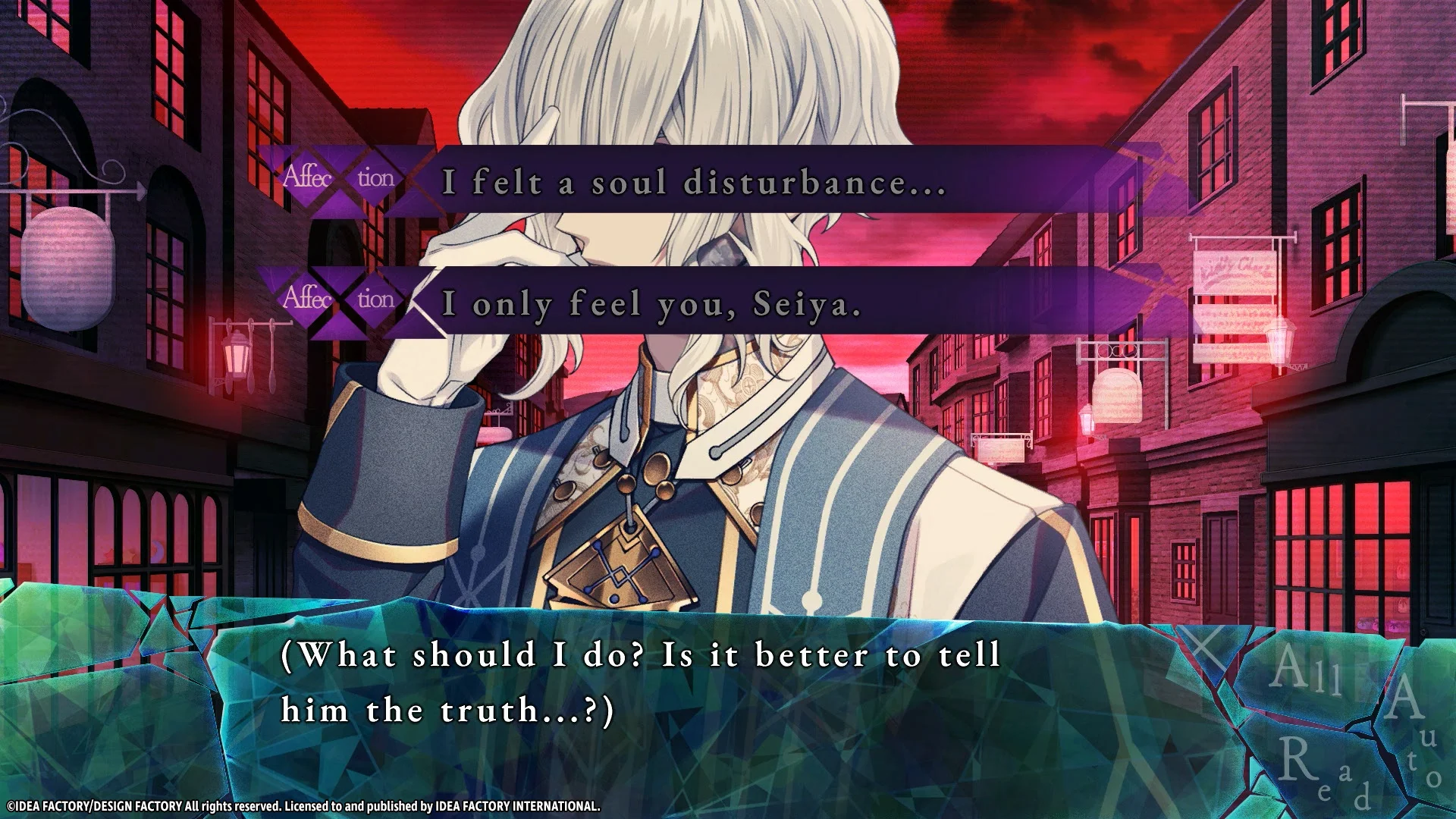
Even in 9 R.I.P., Affection could feel somewhat awkward. Players could have low or even no Affection with the route’s love interest and still get one of the two good endings because the bad endings weren’t based on Affection, but on other decision points. In some cases, the “worse” Godly ending could seem even better than the “perfect” Heavenly ending. 9 R.I.P. sequel’s Pure and Deep endings, on the other hand, serve as different sides of the same favorable coin. This helps both endings feel equally satisfying while also reflecting the choices made to reach said endings.
The Purity and Depth system isn’t different from otome game Affection systems on a technical level, but on a narrative level feels much more natural. The protagonist and love interest are already in a relationship, so there’s no need for the game to track the affection they feel for each other.
Since both endings feel equally supported, each choice along the way maintains a sense of relevance. When decisions either give or don’t give points, they get categorized as “right” or “wrong,” and thus one answer is easy to dismiss. This was especially true in 9 R.I.P., where choosing the Affection-increasing choice would unlock an alternate point of view scene. These brief but enjoyable moments offered more insight into the love interest’s mindset.
In 9 R.I.P. sequel, since each Affection choice raises a stat, they are always accompanied by a point of view swap, each with subtle changes based on the specific choice. As a result, both choices feel rewarding, and players get the most out of their decisions regardless of what the player chooses.

Besides having more chances to see the world from the love interest’s point of view, having story choices associated with either Purity or Depth makes each one feel like a glimpse into the protagonist’s developing personality. Misa felt like a fully realized character in 9 R.I.P. already, but as the protagonist, it’s gratifying to observe her grow even more as a young adult in sequel. Death isn’t the end in the world of 9 R.I.P., and that includes character growth, and sequel gives each cast member a chance to continue maturing.
Sometimes, however, death really is the end. Purity and Depth choices aren’t the only decisions in 9 R.I.P. sequel. Thought choices return from 9 R.I.P., and once again, they may lead to bad endings, which range from general bummers to downright disturbing or gruesome scenarios. 9 R.I.P. sequel also includes a menu that keeps track of every ending the player obtains, including the bad endings, a feature that was sorely missed in the prequel with its copious game overs.
Players won’t have to worry about keeping track of different endings when embarking on Godly routes, which take a different approach than the Heavenly routes. While there are decisions to make in the Godly routes, the most they influence is some follow-up dialogue and sometimes what version of a CG the player unlocks. Otherwise, Godly stories have only one ending and no stats to raise.
Rather than moving forward chronologically, Godly stories take place long after the original 9 R.I.P. During these routes, the protagonist reminisces with her partner, with each chapter focusing on a memory from a different season. Although player interaction is much less relevant, it’s still satisfying to listen in on these follow-up scenarios between the protagonist, her partner, and the other characters she knew from before and those she meets afterward.

Whether playing a Heavenly or Godly route, it’s satisfying to see the 9 R.I.P. cast months and even years later as they overcome new challenges both mundane and otherworldly. While I welcome suspending my disbelief when engaging with romance stories, even I had some moments during 9 R.I.P. where I couldn’t help but remember that the protagonist is a high schooler who decides to commit her entire life (and afterlife) to a man she met a mere nine days ago.
Make no mistake, I am always rooting for Misa, but the crux of the story is that she is experiencing one of the most stressful and impressionable times of her life. Getting to see her relationships months or even years later makes them feel even stronger and more grounded, making sequel a great title for anyone who feels especially connected to the relationships formed in the prequel.
For all the ways sequel builds upon Misa’s relationships, it doesn’t stick solely to the mundane. For all the more lighthearted conflicts she overcomes, such as the best way to celebrate her paranormal partner’s birthday, she also has to confront new unearthly foes, and even some returning enemies from across alternate routes. 9 R.I.P. sequel balances the lighthearted and the dark without feeling flimsy on either end. Just as the narrative balances life and death, 9 R.I.P. is an uncommon example of getting the best of both worlds, and sequel follows suit with the same level of aplomb.
9 R.I.P. sequel also maintains its visual quality with ease. The character designs were already solid; each of the nine love interests sports a stylish and distinct look that feels cohesive and appropriately unnatural. Not only does sequel feature new outfits for the returning love interests, it also fills in the biggest gap from the prequel: certain important characters used generic “shadow” sprites, or lacked sprites altogether. 9 R.I.P. sequel bestows haunting appearances onto these characters, helping the cast feel even more vibrant, even when not alive.
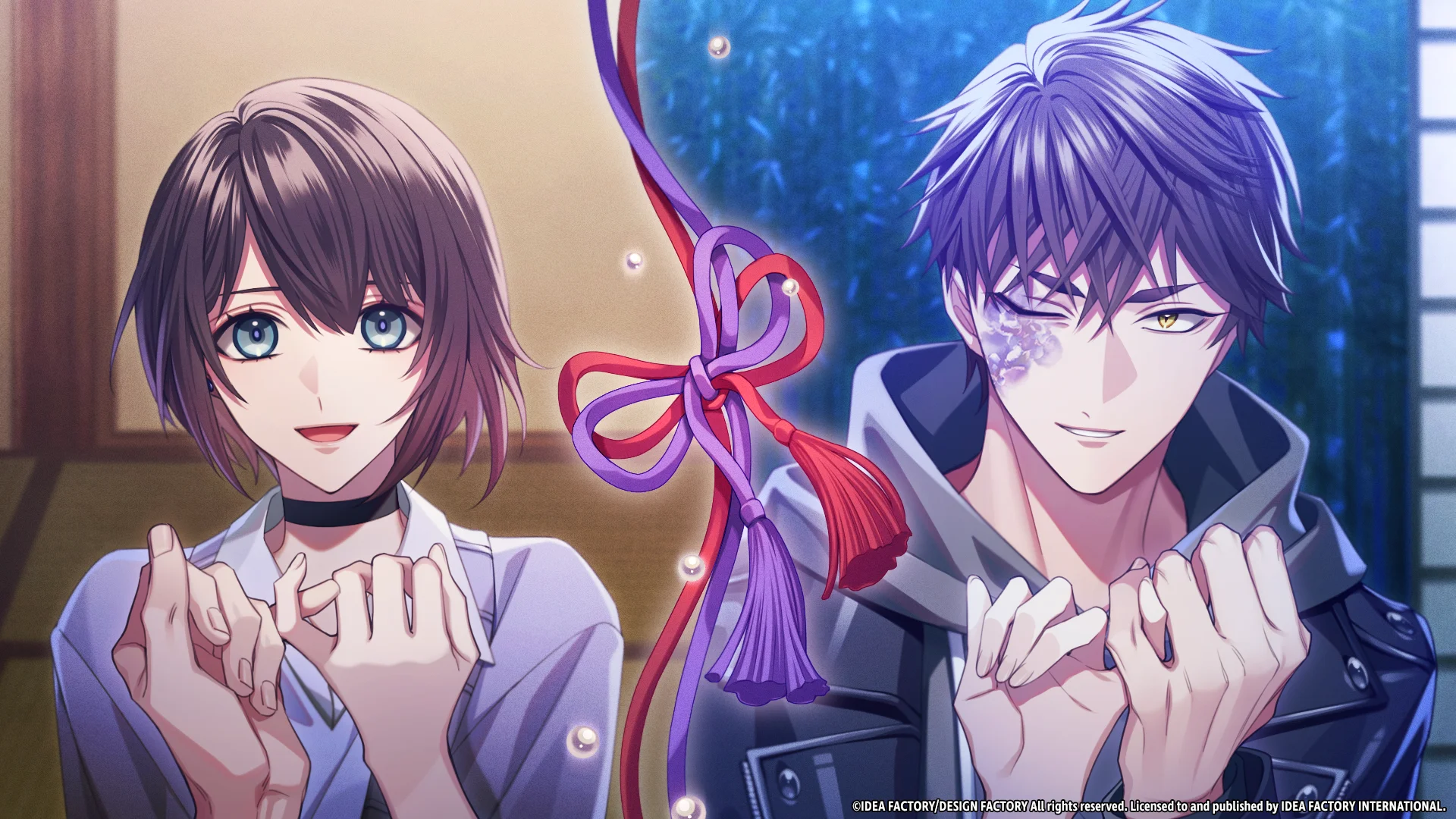
New CGs also enhance certain special scenes. Each character gets between five and nine distinct CGs, and some include subtle variants. While experiencing the different stories is already compelling enough on its own, the CGs further enhance the drive to play through all the routes, even of the player’s least-preferred endings.
Beyond its visuals, 9 R.I.P. sequel also provides great audio to appreciate. With a star-studded cast of seiyuu including KENN (Fogado in Fire Emblem Engage and Jaden Yuki in Yu-Gi-Oh! GX) and Nobuhiko Okamoto (Yang in Piofiore and Zhao in Yakuza: Like a Dragon) among many others, character dialogue is always a joy to listen to.
Voice acting is where most of the audio focus goes in otome games, but 9 R.I.P. sequel also features a charming OST with returning and new songs. One track in particular—Weird Daily Life—stands out as a lighthearted piece for general scenes that still embodies the spooky spirit. From its audio, subject matter, and even neon-colored UI, 9 R.I.P. sequel perfectly embodies the idea of “creepy-cute,” without allowing one side to override the other.
9 R.I.P. has a target audience in mind—otome players who want a story with supernatural love interests who are as sweet as they are scary—and already appeals to it perfectly. 9 R.I.P. sequel is a worthy successor, skillfully embodying the appeal of the otherworldly and urban legends with just enough grounding in reality so the story doesn’t completely lose its footing. Whether it be for the Halloween season or to keep the energy going year-round, 9 R.I.P. sequel is a delightful haunt that adds to the 9 R.I.P. realm.