
Plenty of games have made me cry. It’s usually near the end. Depending on when the “big sad event” happens, it might be somewhat earlier. But it’s never within the first five minutes—until I played and Roger. The game’s promotional materials describe how players assume the role of a young girl who wakes up to find her dad isn’t home. Instead, she’s alone with a man she doesn’t know. The game addresses what could possibly be going on silently and swiftly, as players respond to simple prompts like “How did you learn of this game?” with options such as “User Agreement.” When the girl wakes up and sees a clock with three hands and the wrong numbers. When trying to input her name causes the game to glitch out with visual and audio static.
All inputs and navigation in and Roger work through buttons. Buttons you can click, buttons you can drag. Press the button at the right time to put an object into focus. Drag the button across the screen to move from point A to point B. Hold the button to tiptoe past the scary man guarding the door. It’s as intuitive as walking, as easy as washing your hands. There’s no need for any tutorials because buttons are simple. Except when they aren’t. Buttons that aren’t marked. Buttons that move around. Buttons that don’t do anything. Something as simple as eating is exceedingly frustrating when the buttons aren’t labeled and you have to perform each step—pick up the fork, scoop the food, bring it to your mouth—in the correct order over and over. But in the protagonist’s world, these tasks are aggravating.
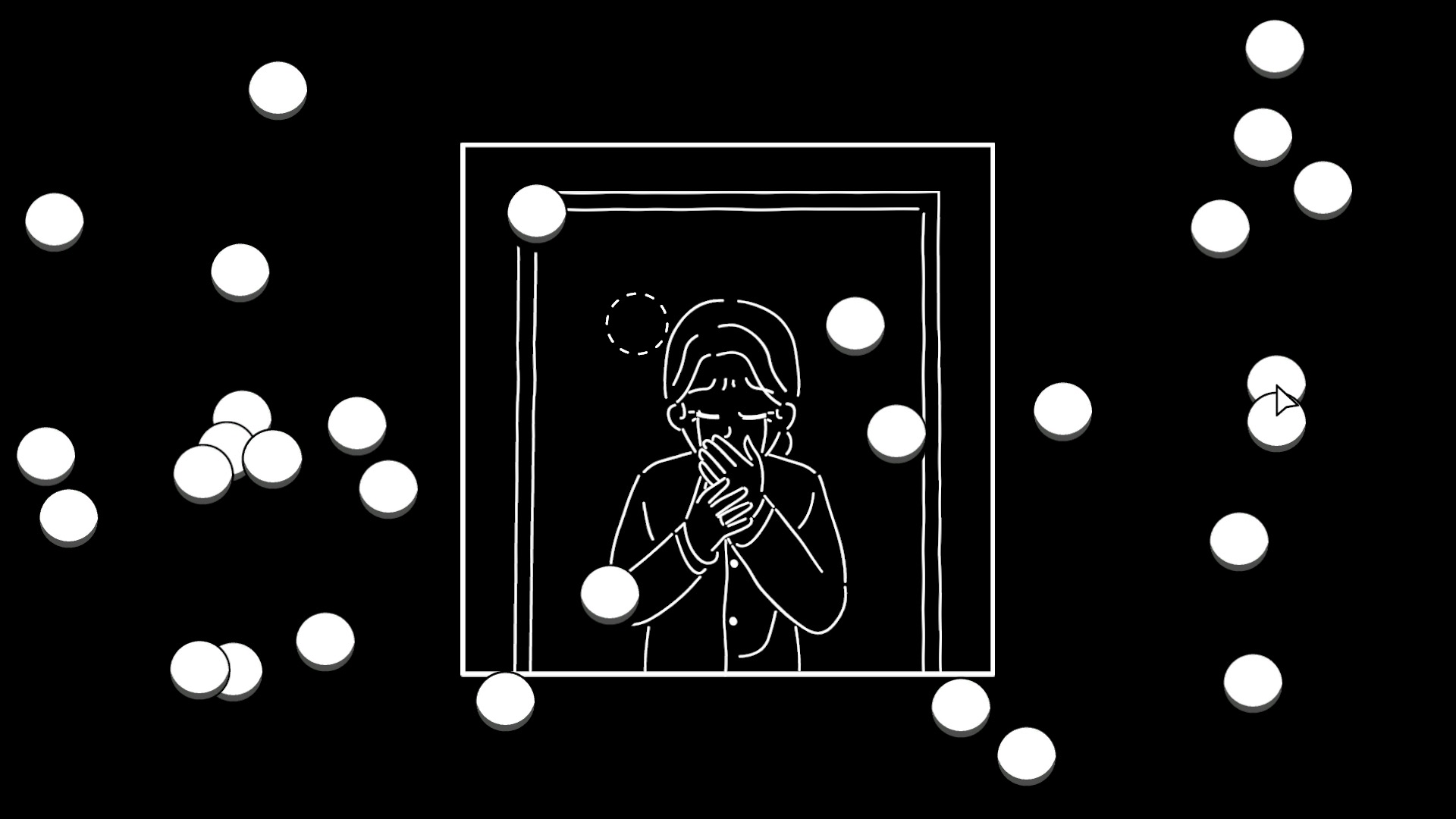
Buttons are how players navigate the world, and line art visuals with flat colors are how the world gets conveyed. Spine-chilling scenes are created with hectic scribbles and dark colors overlaid with visual noise. Cutesy, sweet moments, such as the protagonist meeting her sweetheart Roger as a young adult, are formed with confident lines and delicate hues. A limited color palette of light blues and oranges helps attach concepts to each character. When the protagonist speaks (by dragging the button across the screen in lighthearted swoops and swirls), a blue line remains. Roger speaks in a warm, comforting orange. It isn’t clear exactly how the protagonist’s dad speaks. What he looks like also isn’t clear; the game’s line art style simplifies a lot of character facial details, making it hard to tell the protagonist’s dad apart from Roger. What seems like an oversight turns out to be an intentional design choice, just like simple tasks being challenging to complete.
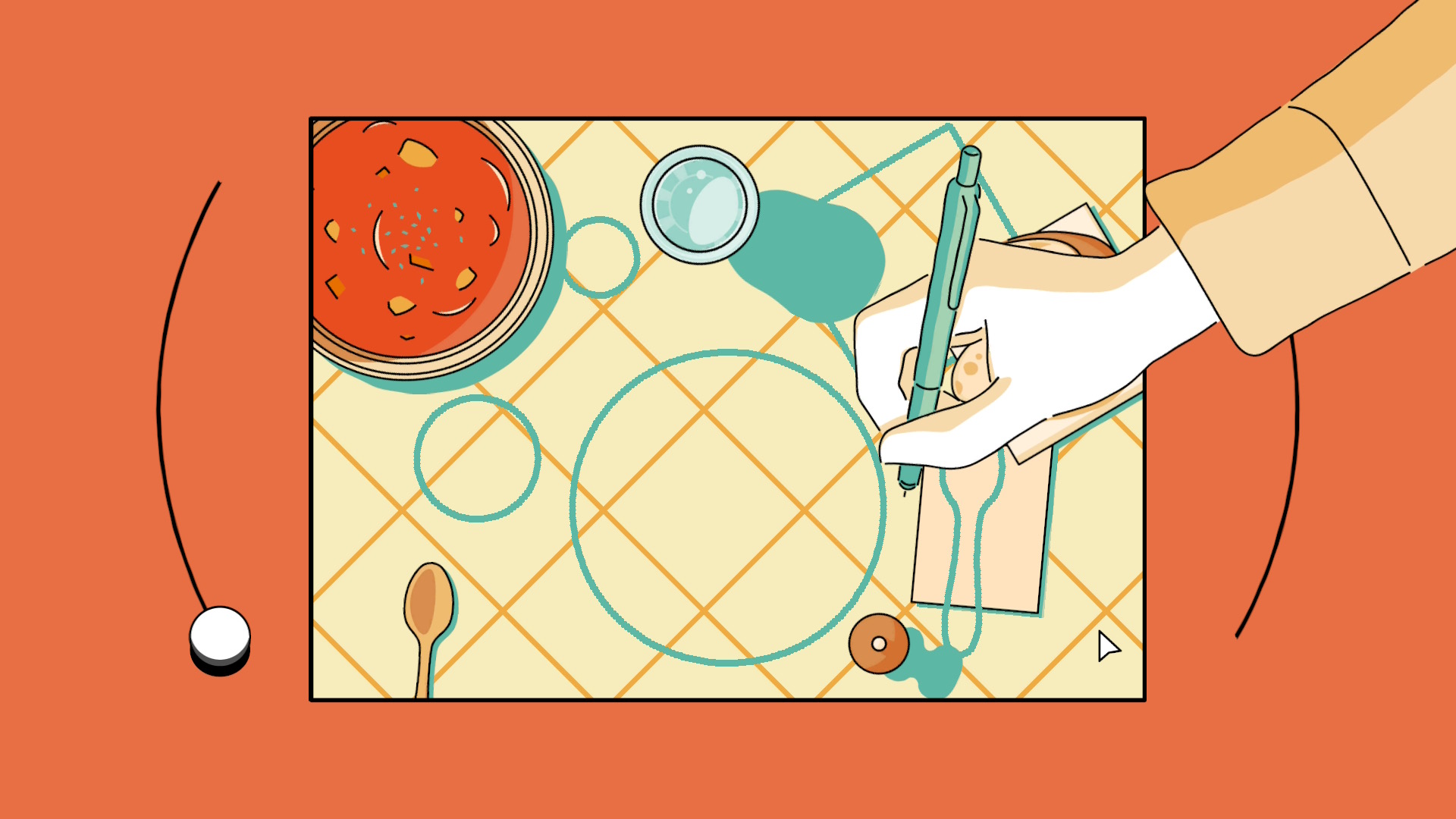
The purposeful integration of frustration and ease, and of gameplay and storytelling, is at its brightest when the protagonist prepares soup with her dad while waiting for Roger to return home. At first, there’s no way to succeed at any of the steps. The oven doesn’t stay on; there’s no place to set the tableware. In a touching sequence of collaboration between the visuals and the interface, her dad fills in the necessary spaces with a pencil as the player navigates the tasks. This particular scene is an especially powerful display of how and Roger effortlessly weaves its simple point-and-click gameplay into its narrative of visuals and character dialogue.
The characters aren’t voiced. Instead, blips of different pitches accompany the game’s written dialogue. The sounds blend in with the overall experience, just like the game’s atmospheric music, so it’s easy to forget it’s even there. Until the sounds of labored breathing are thrown into the mix, ripping you out of the moment to remind you that these parts of and Roger are stressful by design. After the lightness of the soup-preparation scene is darkness similar to the start of the game, with tension-drenched audio tracks and actions that should be simple but aren’t. The protagonist wants to leave a room but can’t open the door. This should take mere moments to complete. But the buttons aren’t marked, and they’re moving around. Only one makes the doorknob appear, and if you don’t turn the knob immediately, it disappears again. Some of the buttons don’t even do anything, adding to the chaos.
The difference between succeeding at inputs when the protagonist is young and when she is older is stark. Walking, putting on different outfits, making decisions, communicating—all of these actions are effortless during and Roger’s flashback chapter. In the game’s present, the difficulty intensifies, resulting in moments that linger for far too long. After cooking the soup, the protagonist sweeps a blanket off of a mirror and sees her aged, wrinkled face. She starts crying. You have to drag a button into the marked space for her to stop, and it should be easy. Countless buttons overwhelm the screen at this point. You’re spoiled for choice. But they all disappear when you click on them. You have to sit for what feels like hours, sit with the grief and discomfort, until finally you find the right button, until Roger arrives to comfort Sofia and try to get her to take her daily medicine.
For as long as it can feel to progress through certain segments, I finished playing the entirety of and Roger in less than an hour: less than the time it takes to prepare a simple soup. The game length itself is another boon, offering a steady pacing and the potential to finish the title in one sitting, further reinforcing its impact. Although I completed and Roger in under an hour, I couldn’t stop thinking about it for days. Almost a week after rolling the credits, it still creeps up at the fringes of my memory, making my eyes water. They grow damp even as I write these words.
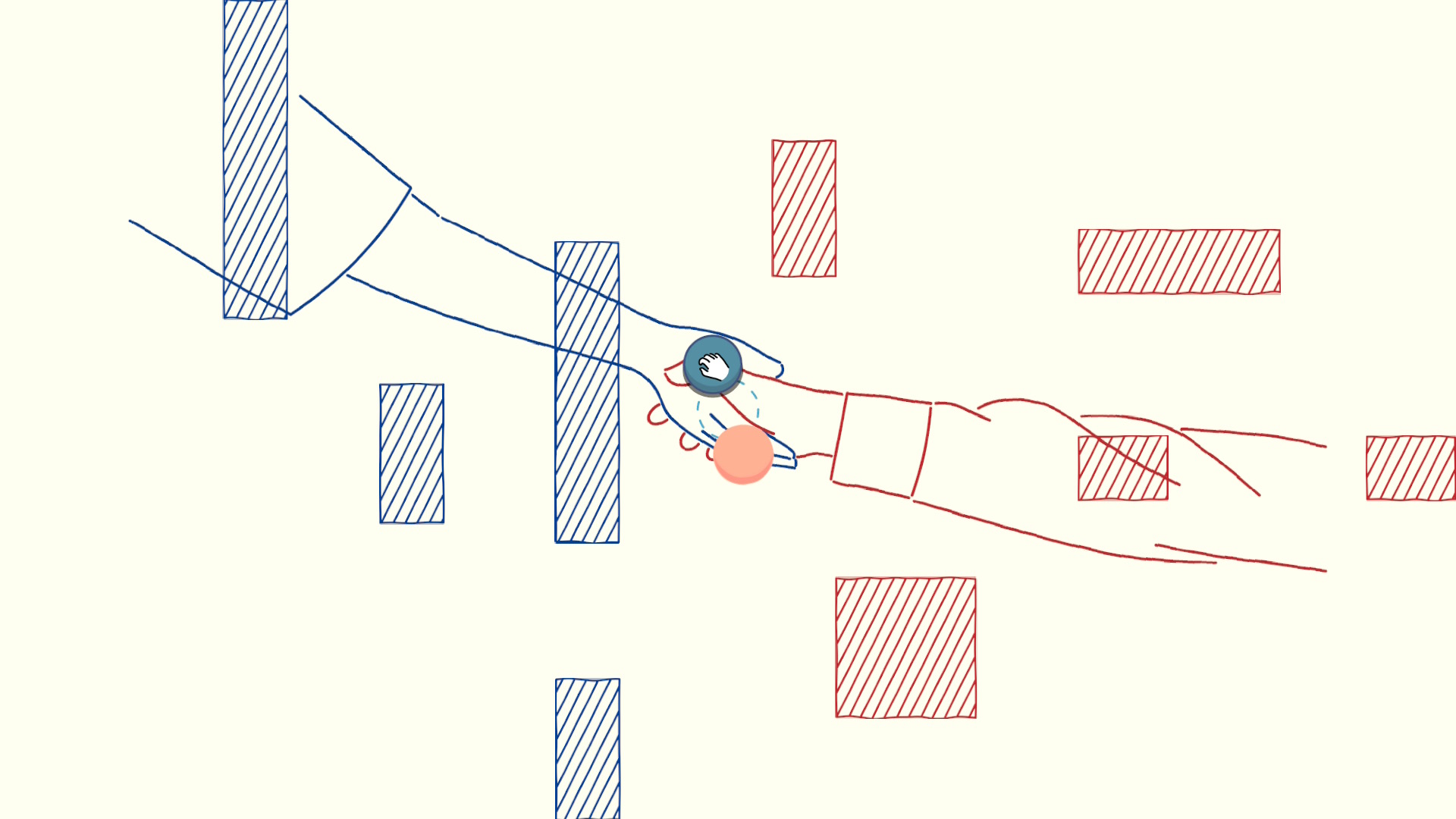
and Roger captures the sum and substance of dementia by centering on the perspective of a character with the condition, unveiling a point of view that is often avoided. Seeing the world through Sofia’s eyes leaves a lasting impact, communicating the symptoms of dementia in an understandable language that doesn’t lose nuance in the translation process from idea to game. In much the same way, moments of hope still peek through all the uncertainty and sorrow: Sofia and Roger speaking in different lines—Roger’s wobbly, Sofia’s blocky—but still managing to connect together after some trial and error. For a game so short, and Roger contains countless instances that resonate, that challenge, that linger, that add together to form one of the strongest showings of video games’ outstanding storytelling capabilities.