
As a longtime fan of the Ys series, I’ve often wondered what Ys would look like had it kept the archaic yet charming bump-combat system that defined Ys Books I&II. This bump combat arose when games were more minimal in their presentation and limited in scope; in adapting to the changing times and advances in action RPG design and technology, it’s possible something integral was lost. Angeline Era seeks to answer this question by adapting and evolving the bump-slash style combat into three-dimensional space with scope and presentation more akin to the golden age PC Ys titles (Ark of Napishtim, Oath in Felghana, Ys Origin, etc.) in a non-linear world that borrows heavily from The Legend of Zelda. The result is not always successful, with the non-linearity and vague world-building impeding the normally impeccable storytelling from developer Analgesic Productions, but the veteran indie duo’s work is nonetheless immensely compelling in its combat system and level design.
Angeline Era follows Tets Kinoshta, a former soldier who comes to the land of Era by boat (not unlike a certain red-haired adventurer), coaxed on his journey by repeated visits from an Angel in his dreams. That angel is named Arkas, and after Tets conveniently rescues him from the minions of the Fae Queen Niamh, he instructs Tets to find the missing Bicones, artifacts of great power necessary to quell the storm surrounding the crashed angel mothership called Throne. Era is a land where Humans, Angels, and Fae creatures coexist and fight amongst one another, and relationships between them (such as the one between Tets and Arkas) provide the foundation for world-building and narrative in Angelina Era.
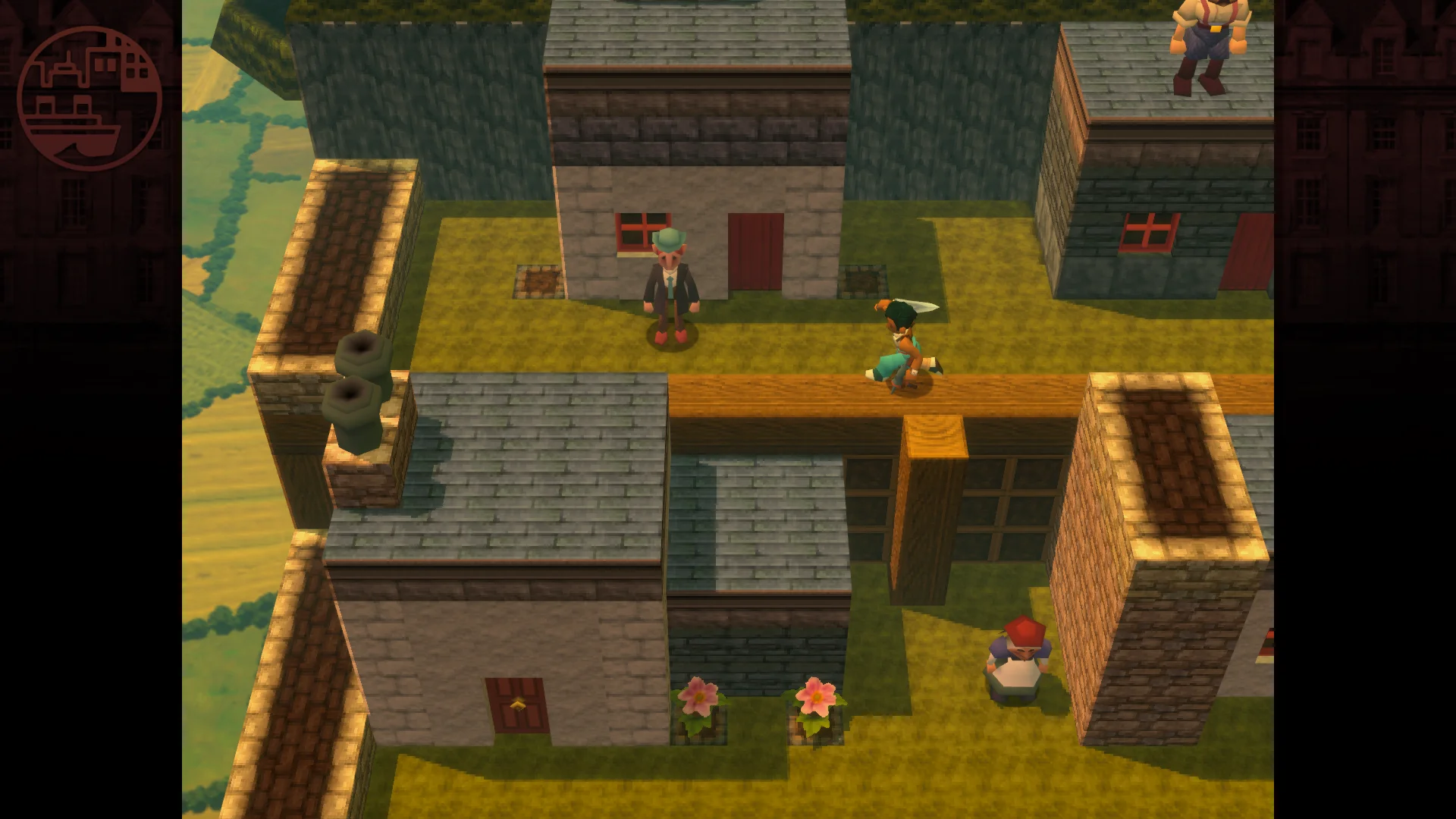
This mix of magical creatures, biblical allusions, and ruminations on the nature of community and mortality is initially quite compelling, and many of the game’s side stories explore intriguing facets of each idea. Fae creatures steal a woman’s child and leave one of their own in its place, raising questions of nature vs. nurture when the human child finally returns home significantly changed. An angel becomes obsessed with his inability to procreate as humans do, leading to grotesque experiments in angel-human hybrids. Unfortunately, the game’s non-linear structure impedes the pacing and delivery of the narrative, leaving the player with many heady concepts to consider without a guiding narrative thread to weave them together in a satisfying way.
I did become invested in the development of Tets and Arkas’s relationship throughout the journey. Still, the antagonists were so remote, and the stakes so unclear during much of my playtime, that reaching the end of the game and having unanswered questions felt unsatisfying. The freedom to go pretty much anywhere from the start and tackle each region and Bicone in whatever order you see fit benefits the gameplay experience, but the doubled-edged sword of that nonlinearity may cause key scenes to be missed or witnessed in an order that fails to benefit the pacing and narrative stakes.
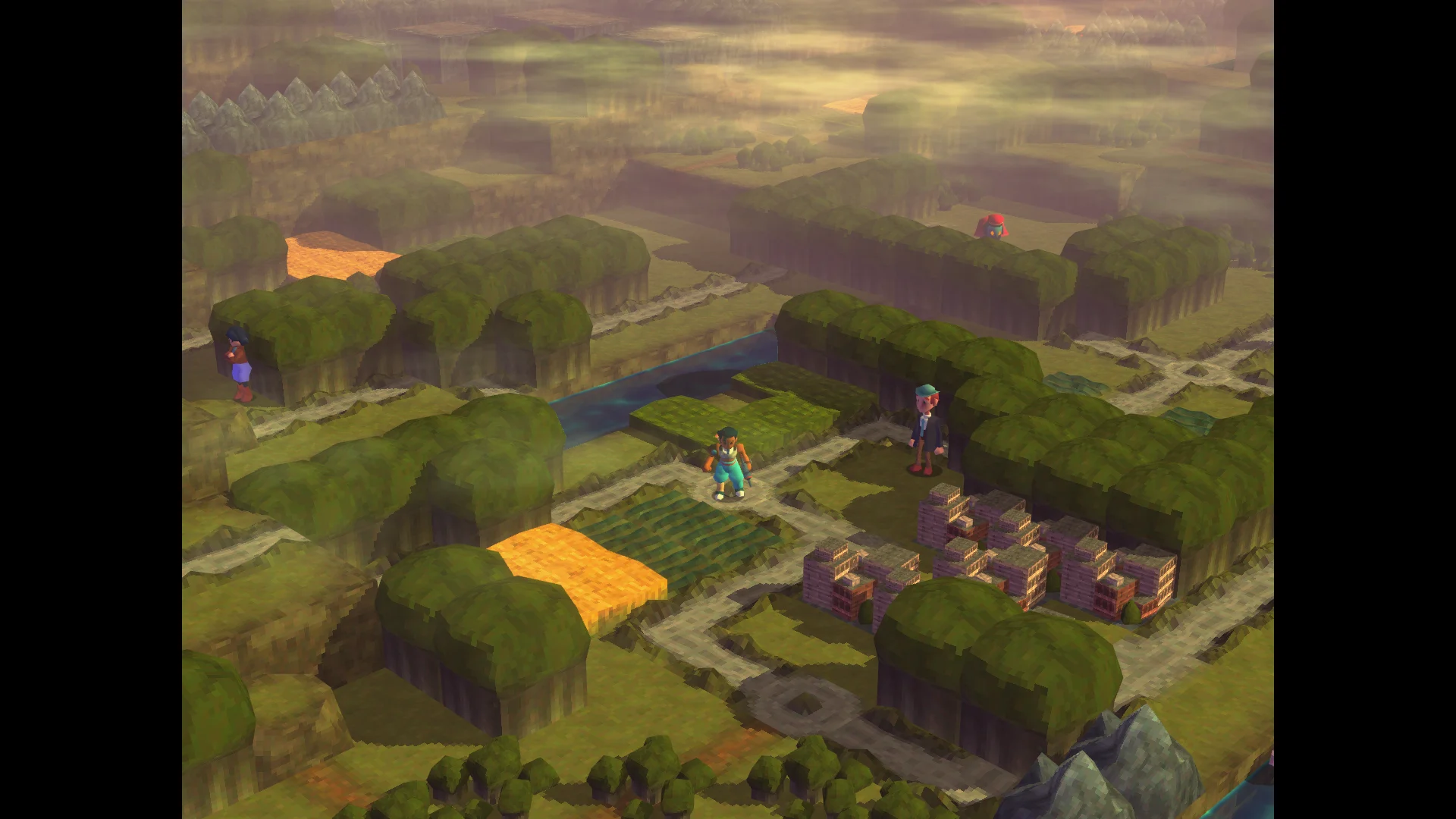
Thankfully, the moment-to-moment gameplay is engaging enough to carry the experience despite the lack of a strong narrative hook. In Angeline Era, you explore a world map similar to Hyrule in the first Legend of Zelda, complete with hidden areas and secrets to find. In fact, pretty much all the levels, dungeons, and towns are hidden from view, requiring Tets to use his “search” command liberally in any conspicuous spot. If you find a hidden area, Angeline Era thrusts you into short first-person segments that evoke early dungeon crawlers, where you have a limited amount of time to dodge obstacles and defeat enemies that bar your path. These segments heighten in complexity as the game progresses, sometimes containing traps, moving obstacles, and occasionally a quiz from an NPC.
Once you get into one of the game’s many bite-sized levels, Angeline Era shines brilliantly. Equal parts action RPG and 3D platformer, each level sees you deftly navigating obstacles with your double jump and fighting off waves of enemies in confined arenas using the bump-slash system. While at its core, the combat consists of simply running into enemies and automatically slashing them with your sword, there is a great deal of strategy and depth to combat encounters. Positioning is critical, as the direction you approach from and the location you make contact with an enemy determine how much damage you do (if any at all) and whether or not you take damage in return.
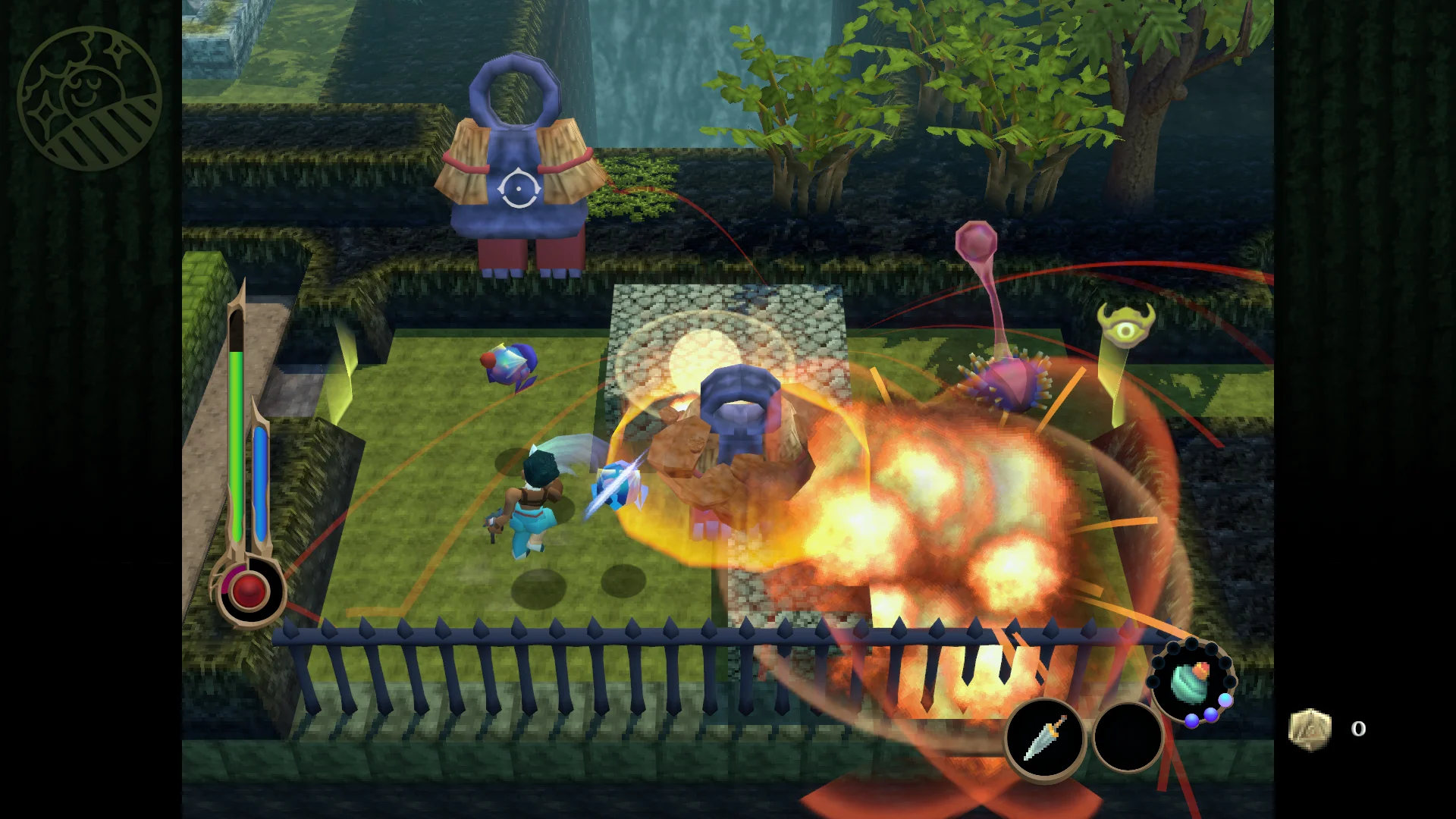
You can dodge or parry enemy attacks, and the game approaches bullet-hell levels of projectiles on screen at times, expecting you to weave between enemies and projectiles deftly. The added third dimension is vital, as jumping avoids many attacks, and several enemy weak spots are elevated or constantly moving. The enemy and encounter design is particularly ingenious, with every enemy having its own attributes and behaviors to counter. Each combat arena has perfectly devilish enemy combinations that keep you on your toes without being insurmountable. The environment itself is equally important to combat, as moving to higher ground or kiting enemies around barriers is often necessary for survival. Hitting an enemy into a wall with your bump-slash causes a critical hit and stuns them, and many scenarios almost require making use of this tactic.
A wide array of artifacts lies tucked away in the dungeons of Era: mysterious items with combat and traversal applications. Some are conventional weaponry, like a gun, grenades, or landmines; others are esoteric and more useful for navigating the environment, like a device that can summon blocks to serve as platforms, or a bubble that limits your maneuverability but enables you to travel across bodies of water for a limited time. These items inject variety into the traversal, and the level design builds upon them well, ensuring there is always some new challenge or obstacle to navigate when you enter a new area.
Tets’ core equipment has a plethora of upgrades that significantly alter their attributes, although typically in a lateral fashion. Each relic or item is powerful, yet also has drawbacks. For example, the gun can hit enemies rapidly from a distance, but can only shoot in one direction (up towards the top of the screen) and must have its ammo replenished through melee attacks. This careful balance prevents Tets from feeling overpowered, while ensuring that victory is always within your grasp. The progression system is similarly balanced, as each level awards you with a scale to level up Tets. After reaching level 11, further character levels have diminishing returns, preventing you from grinding enough to brute force your way through the game. There are a variety of difficulty levels suited to every skill level, and I found normal to be a significant challenge. The higher difficulty levels come with additional modifiers, and a boss rush mode becomes available after completing the game for those who really want to master the combat system.
Perhaps the biggest highlight of Angeline Era is the boss design. Boss fights range from standard duels against an enemy with a similar skillset to massive beasts that require specialized tactics to defeat. Some bosses even make heavy use of the environment, such as a gun-wielding Fae whose arena doubles as a game of Pong. This fight sees you dodging attacks from the boss and returning fire, all while dealing with the minions he summons and bumping into a paddle to bounce bombs back and forth to ensure they explode on his end and not yours. There is immense creativity on display in the boss fights, and my excitement to see the next area and its boss kept me wanting to forge ahead even when the vague story, lack of direction, and occasional bug or glitch stymied my progress.
Overall, Angeline Era is a triumph for Analgesic Productions. It’s by far the biggest game they’ve made, and every inch is packed with secrets and good level design. The combat system reinvents the bump-slash combat of classic Ys for the third dimension expertly, illustrating just how much depth there still is to mine from that style of combat. The narrative is hampered by the non-linear structure and heady concepts that are not fully explored, yet the core gameplay loop of exploring the overworld and uncovering new levels full of inventive platforming and fun combat was enough to keep me forging on through the world of Era.