
In recent years, there’s been an influx of stories across media set in magic academies, where those gifted with magical talent hone their skills. Role-playing visual novel Arcadia Fallen II has players step into the academic shoes of a student in their final year at the fantastical Seven Winds Academy, an institute where mages are ranked by their grades before setting out into the world for the supposed betterment of society. But, in a fantasy realm where captive demons are treated as power sources and magic itself is strictly regulated and monitored, the world is not as peaceful as the students’ isolated upbringing at the academy suggests. With worldwide conflict brewing outside its hallowed halls, it isn’t long before the staff and students of Seven Winds Academy are forced to face it themselves.
Arcadia Fallen II is set seven years after its predecessor. Players with personalized playthroughs of Arcadia Fallen can alter key carryover story data from that game as they wish. The available choices approximate how later Dragon Age titles continue each player’s plot. That’s a nice bonus for returning players, showing how choice-heavy Arcadia Fallen is from the start. At times, the narrative references events in Anemone Valley and features some returning faces. However, it’s equally easy to approach Arcadia Fallen II as a self-contained story. Returning players will love the Easter eggs, but prior knowledge isn’t required to enjoy the game.
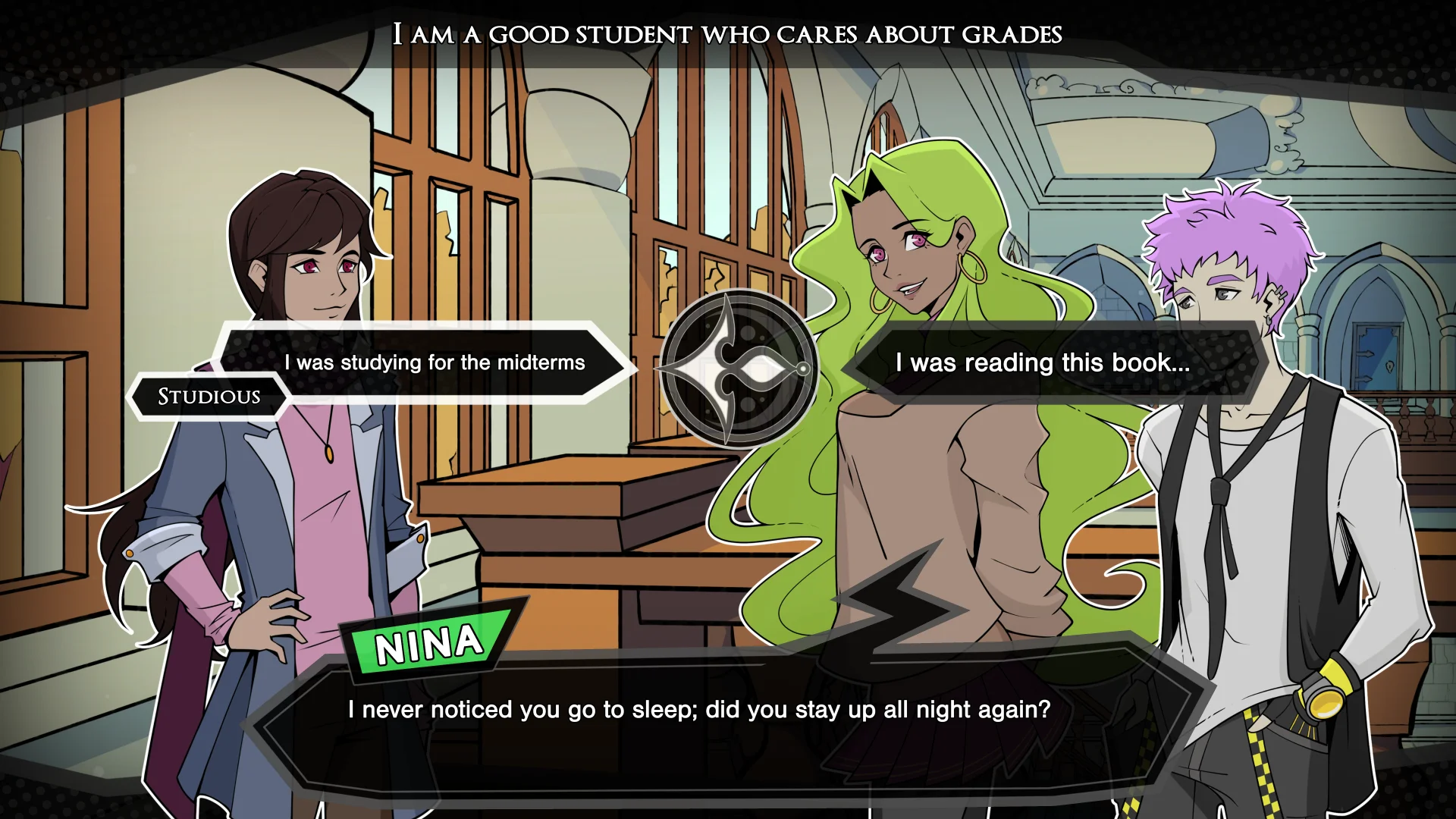
Right from the start, you find detailed customization options for your protagonist. We call them Scarfy in this review, as referenced by a dragon in the game. You select their voice, name, hairstyle, eye color, clothing color, and gender—including a nonbinary option, which reflects the Arcadia Fallen series’ commitment to an inclusive LGBT+ setting. While the character customization is simpler than in games like Code Vein II or Monster Hunter Stories 3: Twisted Reflection, it remains impressive for an indie VN. Next, you select Scarfy’s roommate from two childhood friends: Soren, who is passionate about broadcasting, or Nina, who is interested in journalism. You also pick a magic major for Scarfy. There are four majors in total, but the game offers a choice among three: Tinkers, who invent magical devices; Illusionists, who use magic for creative arts; and Menders, who heal. Scarfy’s chosen major will unlock different dialogue options and branching story paths.
Arcadia Fallen II plays very much like an interactive piece of fiction, with roleplay mechanics and plenty of choices to determine how the narrative unfolds. You often choose where to go from a detailed point-and-click map of the academy, noting the locations of important characters and points of interest. You see a scene play out or talk to characters, and then you choose either specialized reactions to an event (such as attempting to heal someone who is hurt if you’re a Mender) or emotional/personality responses that determine how scenes and potential later events transpire. For example, you can steal an item needed somewhere else in the Academy, or you can come clean about needing it to its owner and why, getting rewarded with very different outcomes.
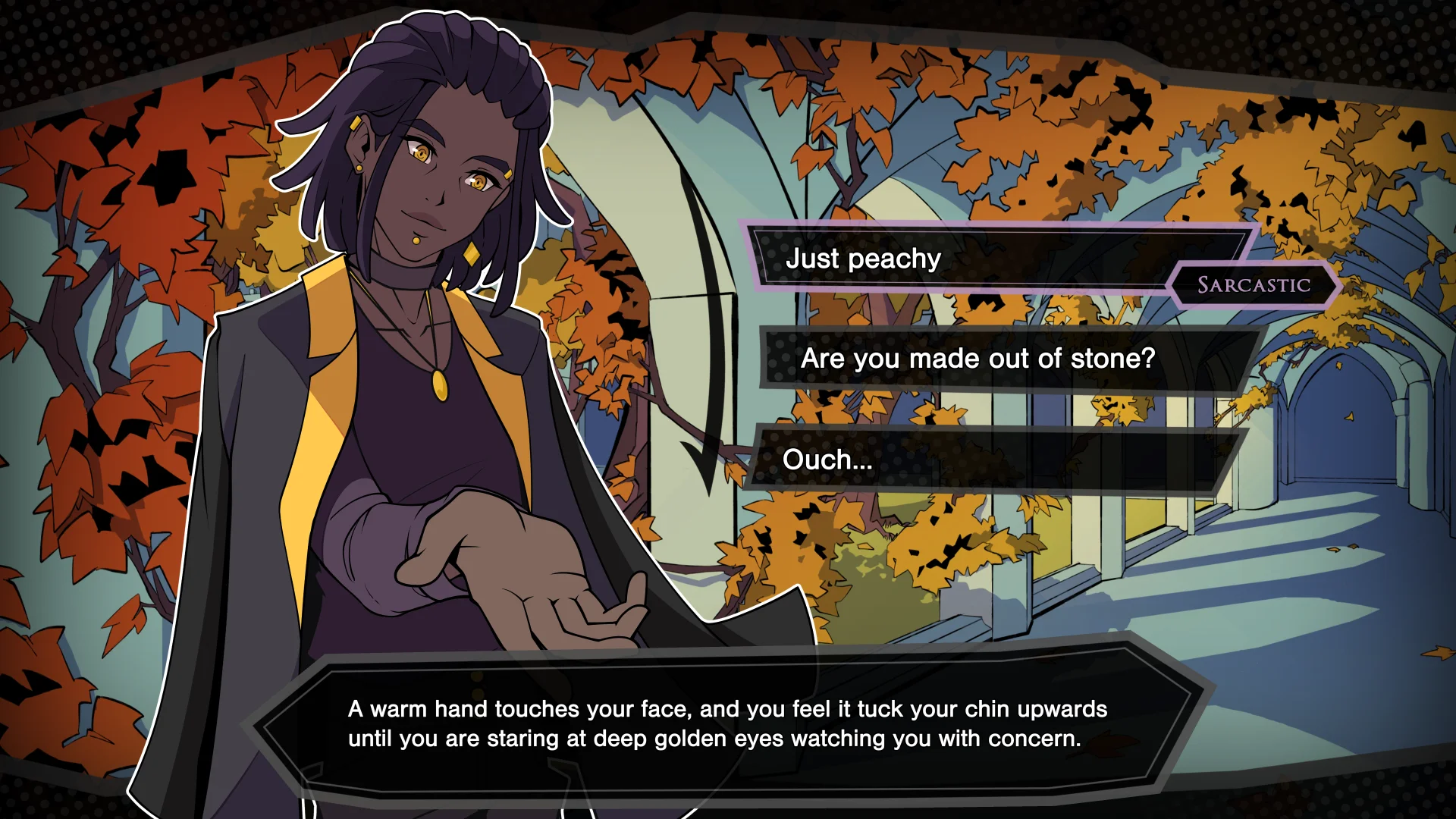
Most dialogue/reaction choices offer multiple options, so it does not feel overly limiting when approaching issues. Binary choices that might set events on a certain path are duly noted and have no clear “right or wrong” answer either, like forgiving someone or not, or nudging another character towards a future goal they might not have thought of before. The sheer number of permutations and outcomes guarantees that no replay will be exactly the same as the one that preceded it. I was honestly astounded by how even some of my earlier, seemingly insignificant decisions could come back in rather meaningful ways, such as my more civil treatment of three haughty noble mage students dead set on being rivals to my friends throughout the plot’s early stages.
The romance and platonic friendships that can develop between Scarfy and some of their closest companions are believably developed, too, with plenty of realistic hurdles to overcome that showcase how the characters grow. I wasn’t sure at first what to make of flirty Mender Elias or the entrepreneurial Tinker Puk, but later story scenes showing how the initially forced-upon-them group dynamic warmed up won me over by the time the credits rolled.
The rapport between Scarfy and company was great to see, but I also enjoyed how their interactions with other characters in the cast also changed in light of everyone else’s personal developments. I ended up developing a romance with the gentle Nature/Spirit Mage Kim, who might be a familiar face to those who played the first game, and was pleasantly surprised by how touchingly sweet and heartwarming their bond was. I appreciate that you can tailor your romance responses to your personal preferences without settling for a right or wrong answer. You can play it cool or joke if you’d like, or blush and be bashful, with any outcome still advancing the romance.
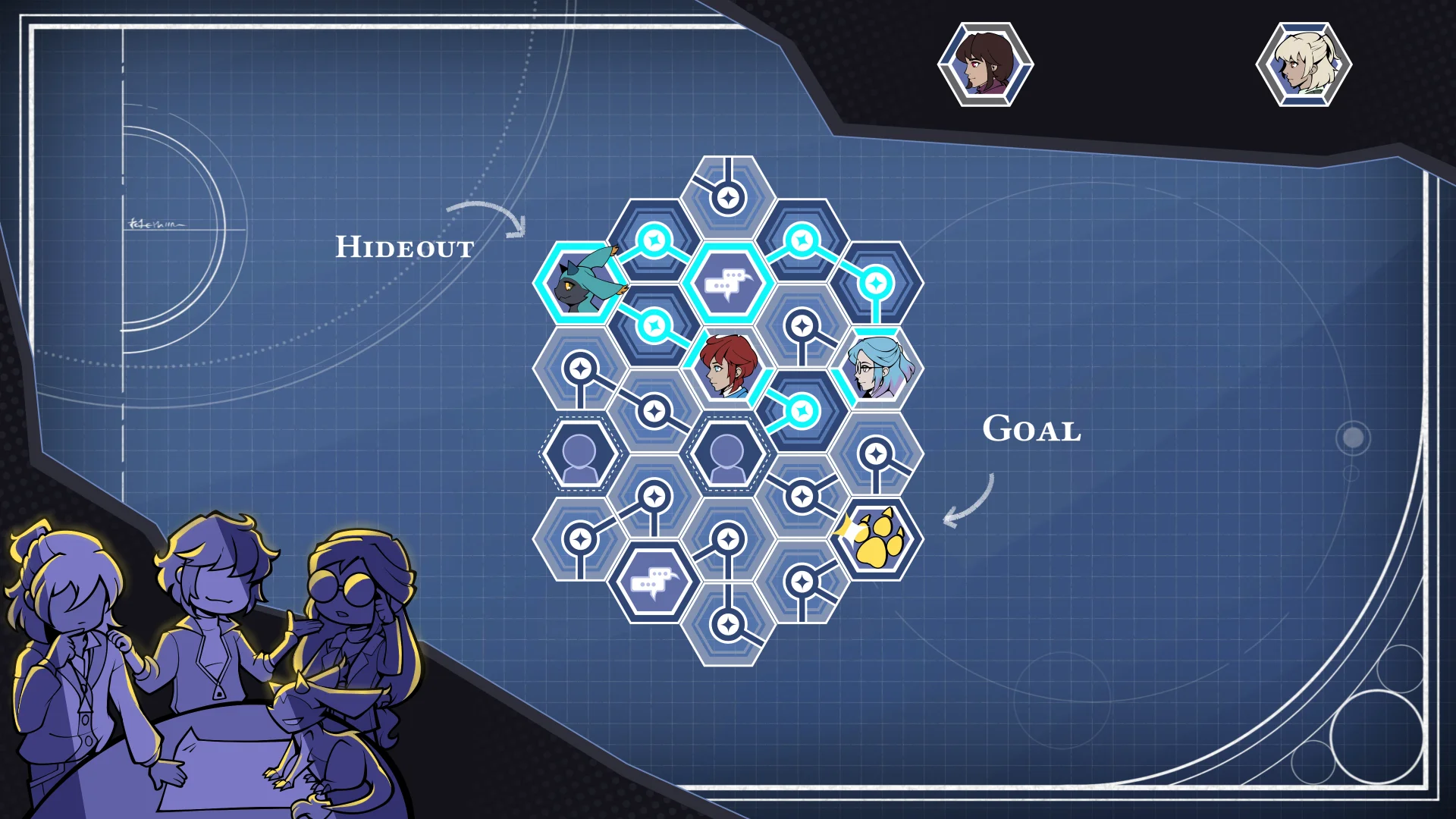
Alongside the ever-present reaction and dialogue choices, there are also simple point-and-click puzzles. For example, one side quest has you gather data about the academy’s feline residents. You can also return lost items to owners, which may reveal plot details or unlock future dialogue options. Due to dragon Ragnar’s chaotic magic, Scarfy and friends traverse school interiors via directional puzzles. In these, you connect a start and endpoint by sliding tiles or having someone, like Illusionist Hannah, stand in as a “connection point.” Hannah can bridge two otherwise unconnected tiles. These puzzles are enjoyable, provide a break from story scenes, and add interactivity without being too challenging or feeling forced.
All in all, the story and characters of Arcadia Fallen II—and the variety in how they develop—are the game’s strongest selling points. If I had a complaint, it’d be that the narrative is slow to hit its stride. Early on, one might think it’s simply teens facing school drama and studying magic. However, familiarity with the previous game or subtle lore points hint at darker aspects beneath the surface. The story doesn’t truly amp up and take an unexpected turn until nearly halfway through, which can make the initial chapters seem deceptively slow and misleading. Once the game reaches that point, though, momentum truly builds!
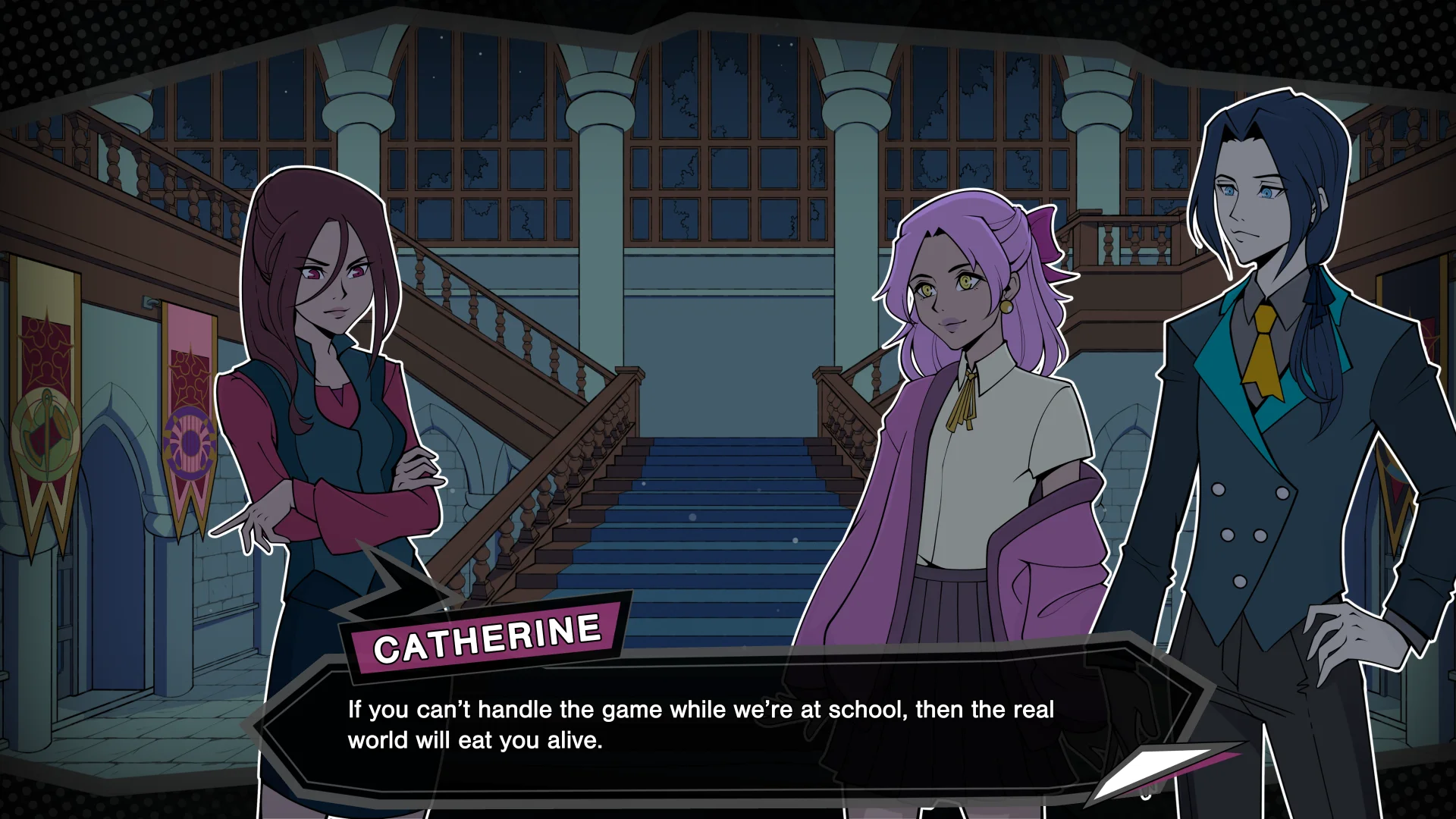
Visually, Arcadia Fallen II stands out with bold lines and vibrant colors, similar to The World Ends With You. Its story is a darker fantasy like Dragon Age, but the comic book-inspired color palette creates a distinct contrast, making the visual novel’s darker elements less apparent at first. I enjoy the character designs, CG illustrations, and UI, although the characters could show more varied expressions. The background music enhances the game’s ambiance. There’s a standout vocal track in one fight scene that I wish I could have heard more of, along with more chances to hear the magical “Stepping Stones.” Voice acting is partial: some important scenes are fully voiced, while others use short soundbites. The performances are generally strong, especially the mechanical Librarian’s, though at times, spoken dialogue is delivered unexpectedly slowly. The script has a handful of minor typos, but given the heavy text and scene variations, this is minimal.
An average playthrough of Arcadia Fallen II takes roughly eleven to twelve hours. I genuinely had a blast with mine. Despite a slow start, I find Arcadia Fallen II to be even stronger than its predecessor. It brings us back into an evolving fantasy world where your choices feel impactful. The ending is satisfyingly conclusive and sets the stage for future adventures in a colorful landscape full of memorable characters and heartfelt bonds. Arcadia Fallen II is sure to delight both visual novel and RPG fans.