If you can believe it, it’s been eighteen years since the last proper 2D Metroidvania-style Castlevania game. While Metroidvanias have been flourishing, especially in the indie space, many younger players might be forgiven for not knowing the “vania” tag’s origins. Well, just in time for the series’ 40th anniversary, Dracula and his wicked, malformed castle have arisen again in Castlevania: Belmont’s Curse—and this game is coming back for its throne.
After a dormant decade for Castlevania, Konami has lent the development reins to French studio Evil Empire, many of whom spun off from Dead Cells’ dev Motion Twin. Evil Empire proved it could handle the job with Dead Cells’ meaty crossover expansion, Return to Castlevania, in 2023. As someone who appreciated the Dead Cells gameplay and the respect Return to Castlevania held for its source material, I was elated to hear Evil Empire would get another opportunity with Castlevania, not as DLC for a roguelite, but as a fully-fledged action-adventure. And boy did they deliver. Castlevania: Belmont’s Curse is not just an excellent game; it excels in every aspect.
Set in 1499, a couple of decades after the events of Castlevania III: Dracula’s Curse (and its PS2 story successor, Curse of Darkness), Belmont’s Curse follows an aged Trevor Belmont, summoned to Paris by a bishop to rid its burning streets of demonic forces. Trevor, once thought to be the last of his vampire-hunting line, is not alone: with him is his daughter, Rose, who bears the same curse as her late mother, Sypha. Rose’s curse manifests as a fuchsia mark that creeps up her arm whenever darkness, frustration, or anger overwhelm her.
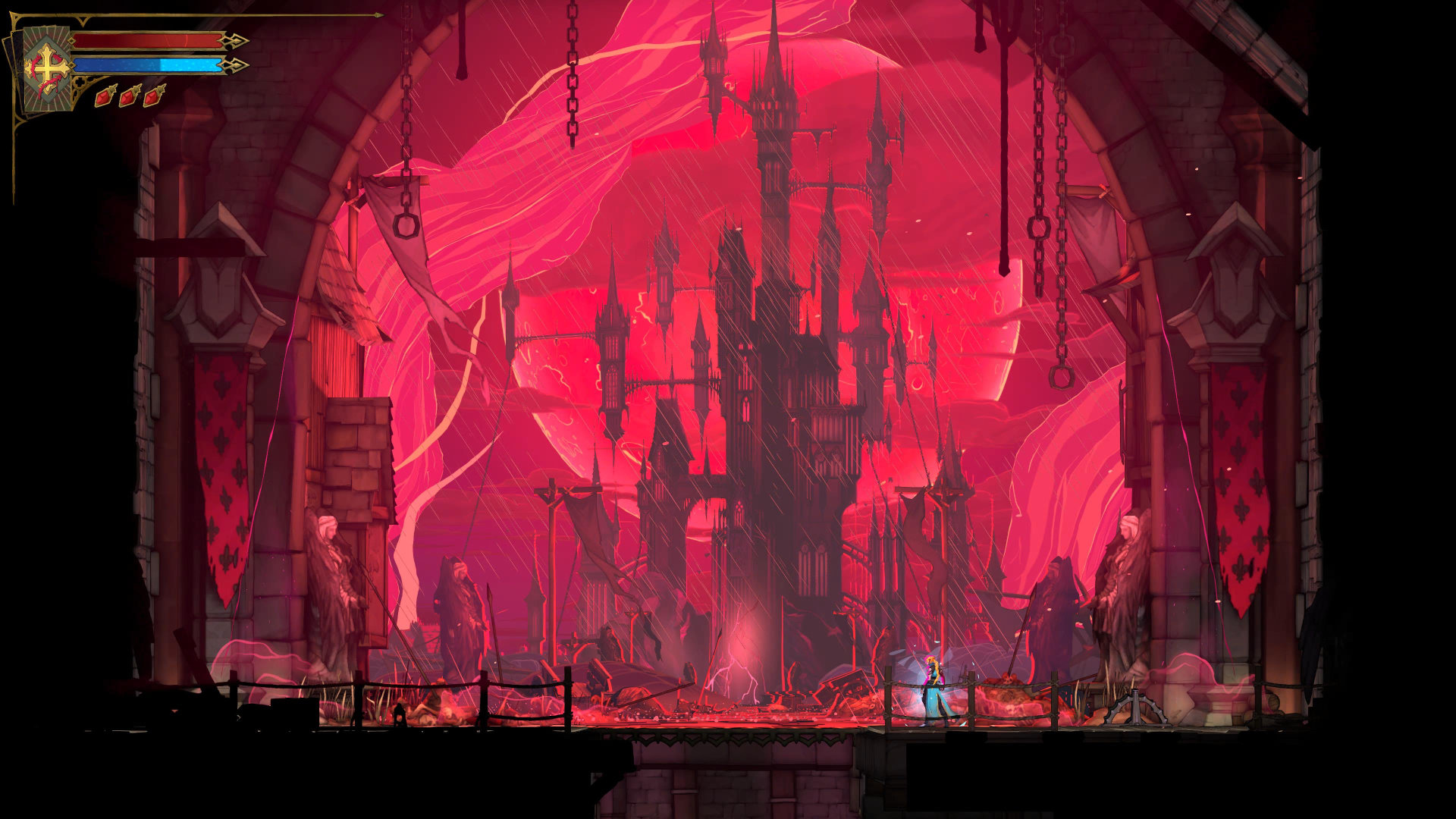
Trevor is hesitant to let Rose go solo, but the two split: Trevor to consult the bishop, and Rose to investigate the disaster striking Paris. Of course, it wouldn’t be Castlevania if the Notre Dame didn’t suddenly disappear, supplanted by Dracula’s castle. With the familiar tower looming over her, Rose must conquer the Lord of Darkness’ forces as well as her own curse if she’s to prevent Dracula’s return.
Normally, Castlevania stories are mere set dressing for the atmosphere and gameplay, but I was surprisingly invested in Rose’s personal journey. As a heroine, she’s coolly confident à la Samus Aran, while keeping a human vulnerability that grounds her as a clear underdog. With her, she carries a deck of tarot cards left by her mother. Much of Belmont’s Curse revolves around exploring huge areas of Paris, the castle, and beyond, and discovering clues that lead to the tarot cards’ owners, the game’s monstrous bosses.
Defeating a boss lets you absorb their essence into a card, acquiring a new magic ability as well as another narrative voice in Rose’s mind. That’s right, you are both supported by uncursed historical figures like Joan of Arc and taunted by vanquished foes like Medusa. All of this serves the story and Rose’s character arc, while also alleviating the loneliness typical of Metroidvanias. I think too many bosses are excluded from dialogue beyond an initial conversation—I would’ve liked to hear more from the arcana The Artist, say. Still, the story we get with the initial few arcana holders is intriguing and, at times, moving.
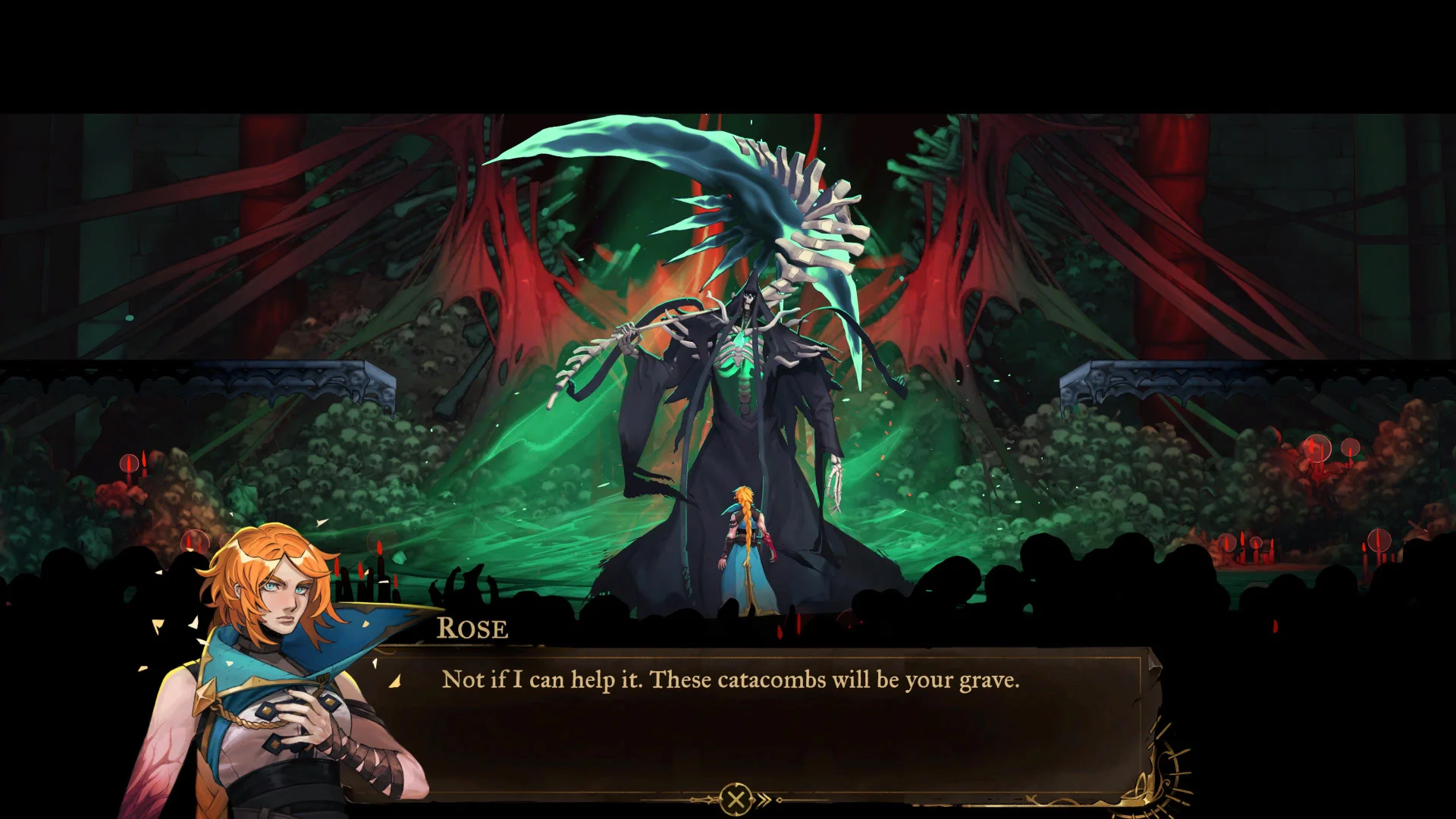
Each boss stands out in personality, aesthetic, and in the epic encounter design. One boss is encased in a massive suit of mechanical armour that players must whittle down from room to puzzling room. Another vampiress boss does little damage, but should her waves of blood-infused attacks hit you, a set number drops, and hitting zero means you succumb to her vampirism.
My favourite boss, and the one I died most on, was the duel with Death, where I had to swing about a huge cathedral to avoid his screen-slashing scythe. There may not be as many bosses as in, say, Hollow Knight, but the hunt for and eventual battle with each boss in Belmont’s Curse is unforgettable.
Castlevania: Belmont’s Curse pays homage to iconic settings and rooms from Castlevania, Castlevania III, and Symphony of the Night, alongside fresh new locations, like the bone-filled catacombs beneath Paris, a royal cemetery, and a labyrinthine Notre Dame. The tone is perfectly macabre without being grotesque; the horrors around you are intimidating, but the rhythm and flow of the game embolden you.
Belmont’s Curse also nails the presentation. The menus are sleek and stylish plays on tarot decks, and the loading screen gradually fills with characters and settings as you encounter them. The music, much of it created by Dead Cells’ composer Yoann Laulan, dynamically changes at set points and with certain combat and puzzle encounters. Bells, organs, and orchestral swells interplay with trap and hip-hop elements befitting the quick platforming. It’s an incredible soundtrack without relying on the iconic themes of the past, though it uses those sparingly and wonderfully. You can hear “Bloody Tears” coming a mile away, and the buildup of the organ, patiently waiting for the right set piece, is fantastic.
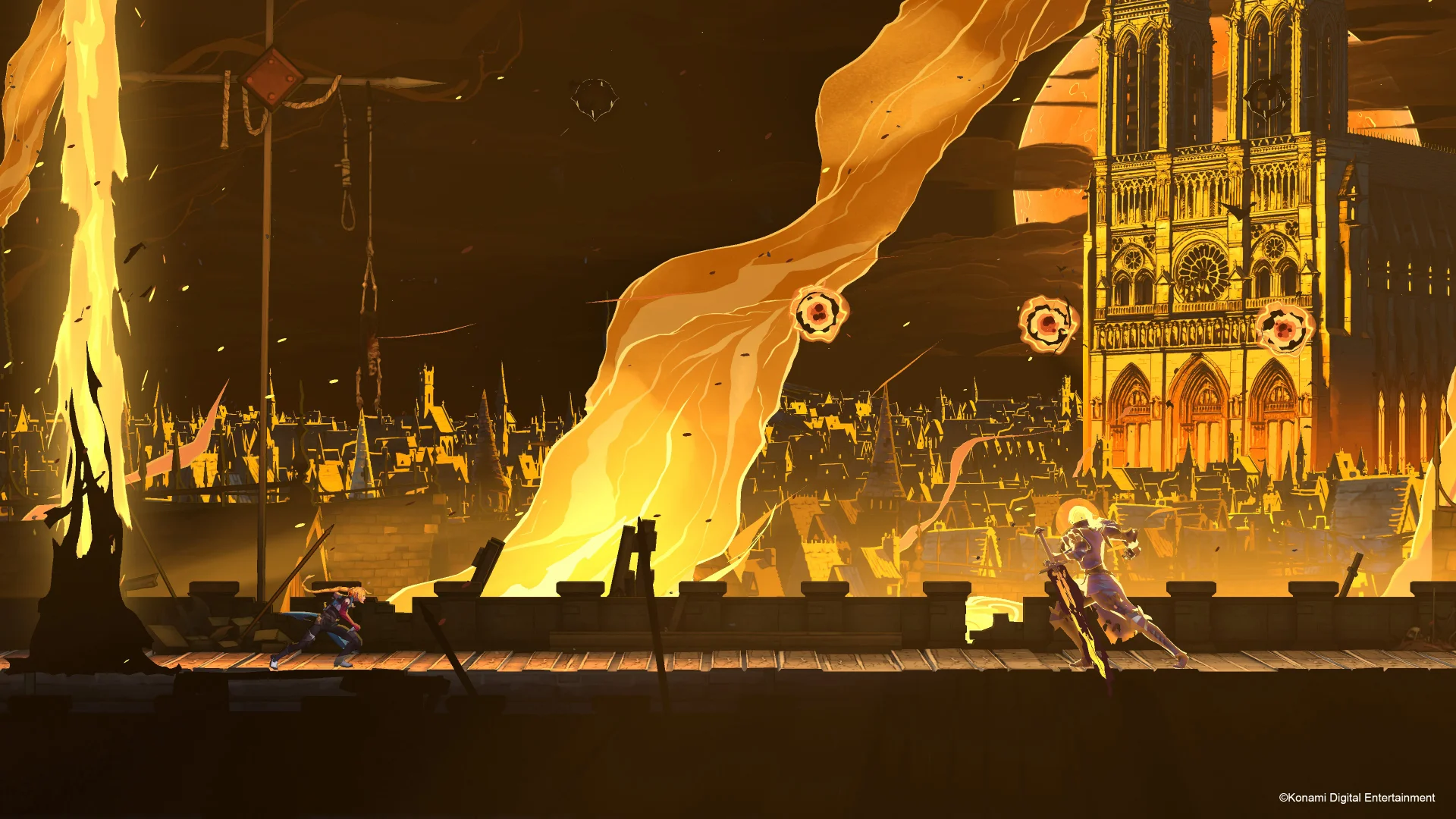
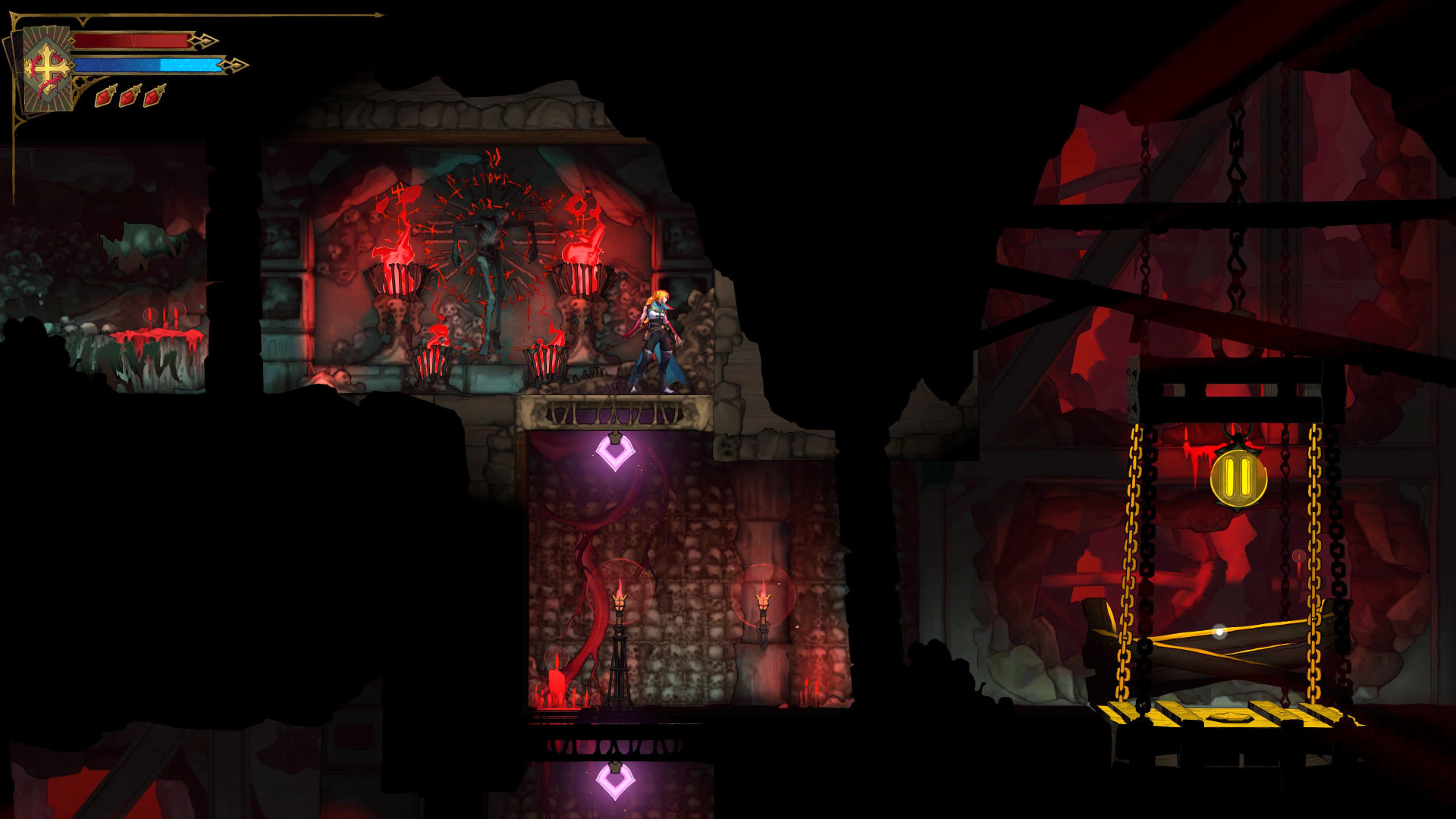
Graphically, this is the best Evil Empire has ever looked. Belmont’s Curse is colourful without breaking its cohesive style, and visually busy without risking clutter or confusion. In certain cutscenes, close-ups can reveal some jagged character models or low-fidelity background elements. Still, the game is gorgeous in motion with the zoomed-out, full-screen camera as intended. Never have I taken so many screenshots as I did of Belmont’s Curse’s layered backdrops and spooky boss arenas, which made my jaw drop time and again.
It took me nearly twenty hours to meet the requirements for the “true” ending, one of three possible endings. For much of that time, my palms were sweating. Belmont’s Curse is a challenging game that tests the extent of your combat, puzzle, and platforming skills (of course, there are plenty of accessibility options for those who want to enjoy the story and world).
I unknowingly mainlined the major bosses and areas because I underestimated the depth of the tarot boss clues. The game is full of secrets and genuinely puzzling segments that require you to keep careful watch of the environment, should you seek that elusive 100%. On the one hand, taking bosses out of order messes with the carefully refined, razor’s edge difficulty scaling. Still, I recommend going in blind, without a guide, as the robust and markable map and clue systems (including sketches and poems to decode) give enough nudge to first confound and then make you feel like a genius.
Seeing the percentage of each explored area helps you know where and when to return when you finally get that slam ability, say. It would be nice if doors locked by out-of-reach levers were marked on the map, but the game gives tools to mark the map with a variety of icons.
Progression, though demanding of mind and skills, saves even when you die, so I never felt frustrated when sent back to checkpoint mirrors. Every death meant a new door opened, a new shortcut, or, at the very least, more experience to bolster my attack and defense.
Of course, there are plenty of vaguely hidden destructible walls, including the return of my beloved floor turkey health pickups. While many exploration elements are inspired by Symphony of the Night, Rose is much more nimble. Like Alucard, she learns to air dash and double jump, sure, but she also slides, wall jumps, and swings via her whip from enemies and embedded hooks at about double the speed of Dracula’s son.
All of the platforming in Belmont’s Curse carries over to its combat, which you can approach from a ton of angles (directionally and in gameplay style). There are seven weapon families, each with four mythological weapons of increasing damage: longsword, dual longswords, gauntlets, sword and shield, spear, greatsword, and whip. Finding the weapons through puzzles and platforming challenges was a blast, and they each feel viable and impactful. Get up close and uppercut a werewolf with cestus gloves or jump and whip in eight directions.
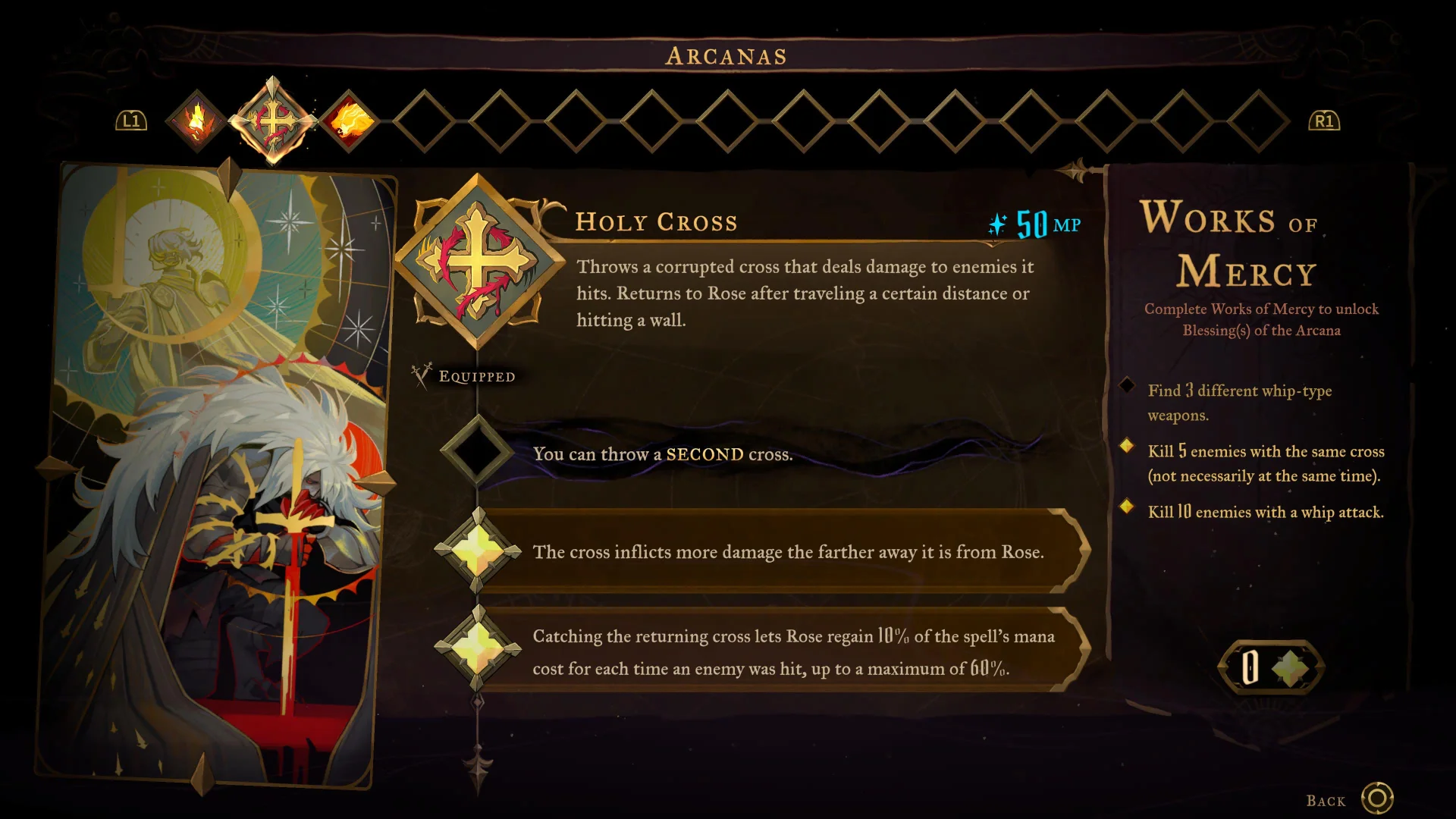
The tarot abilities from bosses include fireballs, holy crosses, shields, and teleportation, to name a few. You can enhance these by fulfilling certain challenges tied to each. This also nets you an interesting conversation with the bosses harnessing that power. Then, killing enemies levels up your general health and defense stats, and you can find HP and MP expansions past very tricky platforming chambers.
The game has a parry system, though I rarely used it beyond blocking projectiles. Thankfully for someone like me who regularly replays Castlevania, Super Castlevania IV, and Symphony of the Night each October, white-knuckle jumping and ducking still go a long way. The many elements of gameplay arrive with perfect pacing, so you have plenty of time to master new movements before you’re required to use another button on your controller. Given how quickly I was moving through once-difficult areas by the game’s end, seeking out every nook and cranny, I felt like my mastery of the game paralleled Rose’s own Jungian journey.
Without revealing details, I was a tad underwhelmed by the final boss and true ending, which felt a little too cheesy compared to the countless hard lines Rose or the many bosses dropped during their banter. It still rises above most games of its ilk, which only speaks to the quality of writing for the rest of the game. Rose’s personal arc, at least, fully delivers. It feels well-written and directed impactfully, and the game’s voice acting is great throughout.
None of the tiny qualms I’ve listed mar the fact that Castlevania: Belmont’s Curse is an incredible experience from start to finish. It looks, sounds, reads, and plays with sleek style, while asking a thoughtfulness of the player not typically seen in this genre. Taken alone in another game, any of this game’s elements would stand out. The fact that every element blends so perfectly here makes me confident to say that Castlevania: Belmont’s Curse is the best Metroidvania I’ve ever experienced. It’s sure to go down as an all-time classic.
Let’s hope more big publishers take a chance and lend their dormant franchises to hungry young developers.
[Disclaimer: Screenshots captured from a build still in development.]