
Truth be told, I don’t have a lot of familiarity with Souls-likes. I can list the number of games in the punishing-yet-ultimately-rewarding genre I’ve played on one hand, but I hold great respect for them and those gamers who strive to master them, even while wholeheartedly admitting they aren’t in my wheelhouse.
Still, I was largely curious about Bandai Namco’s Souls-like series Code Vein because of developer Shift‘s involvement, since they created the action RPG series God Eater that I’m rather fond of. Code Vein II is a fun game if you’re the audience for it and can get past some incredibly frustrating boss fights, but it can also be a massive time commitment and probably isn’t going to compare to the greats of the Souls-like genre or the Souls series’ critically acclaimed Elden Ring.
Code Vein II is set in a world already wrecked by calamity, and mankind’s place on top of the food chain has been replaced by the near-immortal Revenants (vampires, for all intents and purposes). Some Revenants try to live peaceably with humans, while others see humanity’s waning population as nothing more than a walking food supply. To keep both species from dying out entirely, a group of powerful Revenants in the past became part of a living seal to stave off destruction, an act akin to applying a Band-Aid to a stab wound. Now, in the narrative’s current timeline, the heroes’ sacrificial seals have begun to destabilize, bringing the world once more close to ruin.
The player takes on the role of a Revenant Hunter: a human who combats Revenants to protect people. After a horrific attack, the Hunter is saved from certain death by a gentle Revenant with time-traveling abilities named Lou, who volunteers part of her heart to keep them alive. Thanks to their newfound heart connection, she can physically bring the Revenant Hunter back in time. In a last-ditch effort to save the world once more, the duo must go back in time to awaken the sacrificed heroes in the present and destroy them before their seals erode away completely. Since Code Vein II is a Souls-like game, doing so is naturally no easy task, taking extreme physical and emotional tolls.
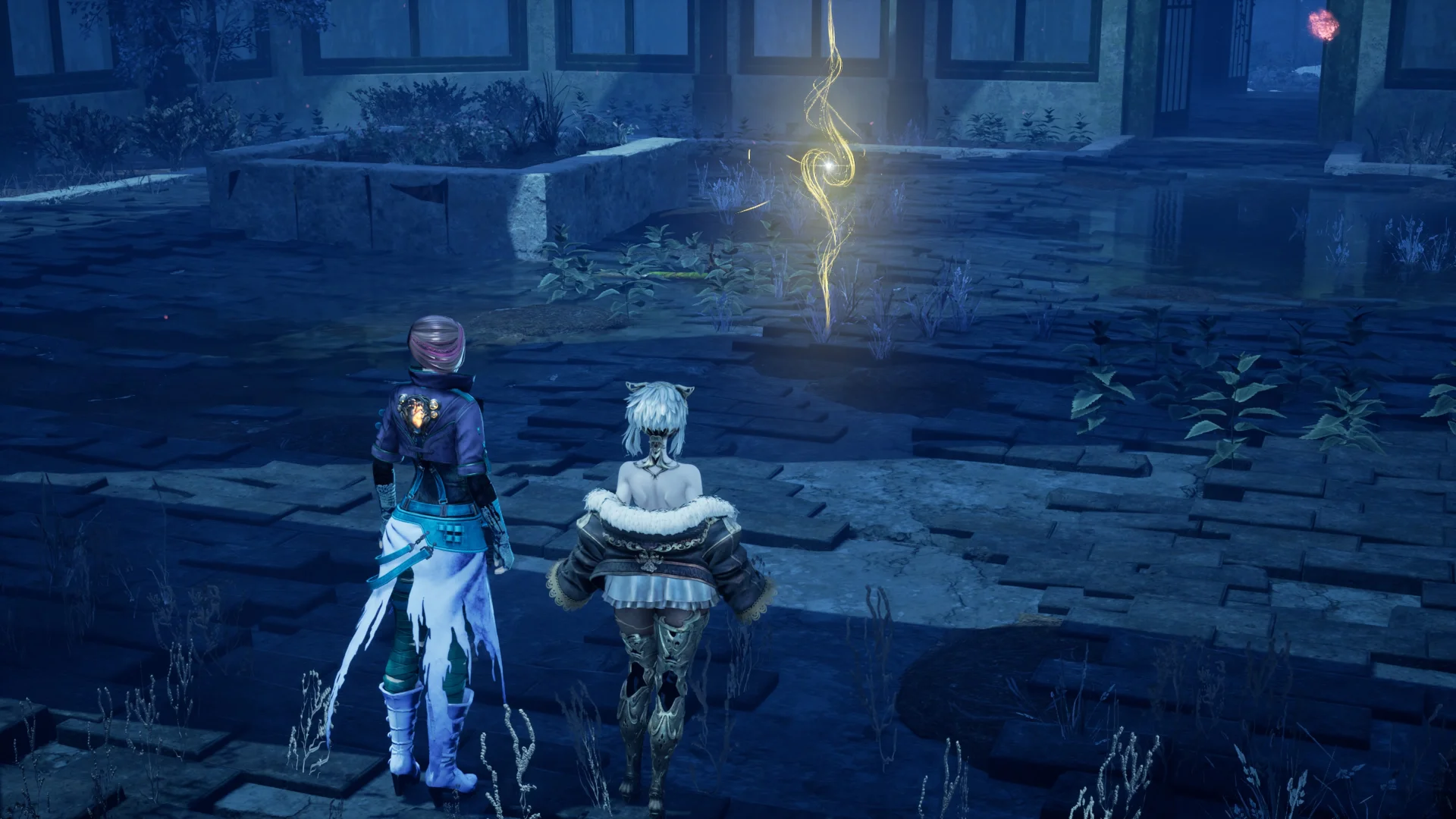
To say more on Code Vein II’s story would be to delve into spoiler territory, something I’m remiss to do because its lore and narrative are actually highlights, so I’ll just say I enjoyed the plot immensely, especially how it handled its time travel aspect and how that ultimately leads to acquiring the game’s “good” ending depending on your actions in both the past and present timelines.
The characters are also quite interesting, with the sacrificed heroes being tragic figures you can’t help but feel for and want to help out, even as you know that it’ll conflict with your Revenant Hunter’s overall goals. Supporting characters in the sacrificed heroes’, as well as Lou and the Revenant Hunter’s, orbits are also nuanced and memorable. Even with the difficulty spikes and sometimes incredibly frustrating fights, I found the plot and its characters provided more than enough motivation to keep plowing ahead. I also appreciate that you don’t need to have familiarity with the first Code Vein to enjoy Code Vein II, as its story is largely standalone.
Gameplay-wise, Code Vein II is incredibly challenging and punishing, tempered somewhat by player freedom through customization choices. You have multiple weapons in your arsenal, each with its own strengths and weaknesses. I gravitated towards the one-handed swords and kept a handful of them sufficiently upgraded at all times, but there are also slower-moving powerhouse weapons like two-handed great swords or long-range ones like bayonets. You can also shortcut and equip different abilities and attacks to weapons for a truly versatile array of moves.
You can optimize defense using shields, increase sprinting speed, or parry, depending on the type of defensive gear you want to wield. Tons of strategic variations help you develop a play style that works best for you, with the game encouraging experimentation.
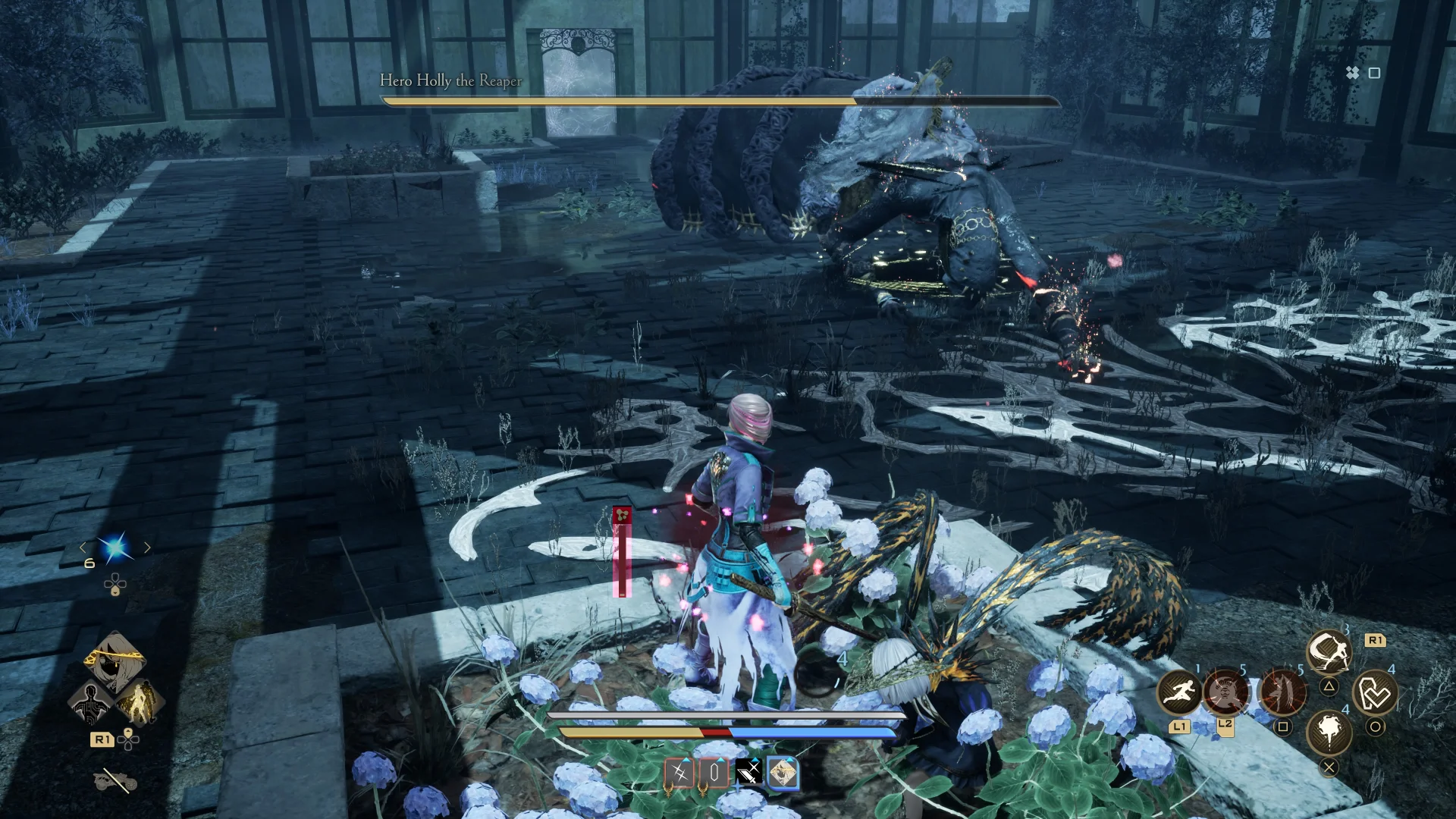
Enemy-dropped Haze counts as your currency, meaning you must choose between leveling up or upgrading gear (provided you have enough crafting materials), further encouraging strategic freedom. Code Vein II also allows you to travel and fight alongside a partner character, who give support or take aggro during fights. They’ll even revive you a set number of times should you fall in battle, though this becomes less helpful the more it occurs, as the health restoration they provide upon revival decreases every time.
Depending on your actions during the main story, you’ll often have choices amongst partner characters, all of whom have different fighting styles of their own. There were three partner characters in particular that I liked to use during fights when given the choice, but only because they balanced out my playstyle. Meeting various Revenants throughout the game awards you with valuable Blood Codes, too, which provide various beneficial stat boosts depending on your playstyle or the abilities of certain enemies.
Of course, the main focus of combat in Code Vein II is its boss fights. While your run-of-the-mill enemy encounters can also prove challenging, it’s the boss fights where you’ll find the most challenge. Boss fights in Souls-likes should be notoriously difficult but also ultimately surmountable, giving you a rush of endorphins once you finally and deservedly triumph. I did find several boss fights in Code Vein II to give me this rush once I found the right rhythm for their specific dance.
Unfortunately, not all of the fights are created equal—some rely on gimmicks to the point where they feel largely unfair and cheap, where I struggled endlessly and only conquered them after I found some previously unviable tactic that I then had to quickly master for that trial alone and with no small measure of luck. I didn’t feel as though I “earned” those victories, so they were both frustrating and hollow. There’s also a lot of repeat boss fights, particularly on the paths to the three endings you can uncover, as they certainly took the “earn your happy ending” sentiment to heart with this game.
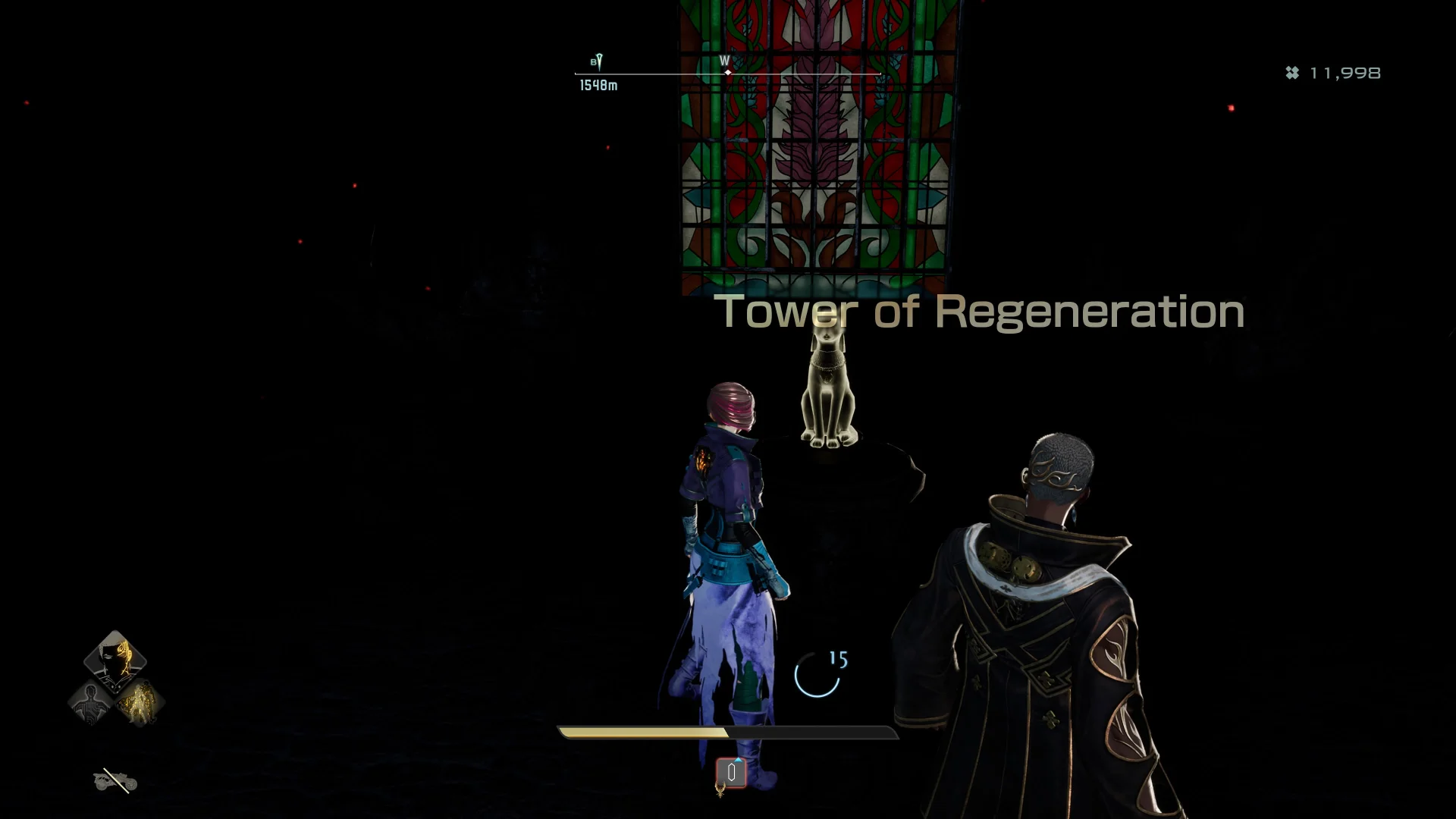
Code Vein II features a large, expansive open world. You can travel on foot or by using a convenient motorcycle, and you can also fast travel between mistle save points once you find them. Mistles are where you level up, change your gear, and replenish healing stock. Save for the small settlements you uncover every so often, the world itself is a largely barren place that feels quite lonely even despite your partner character.
There are some incentives to traveling through the world, mainly to acquire haze and crafting materials or to strengthen and increase the number of heals you can use during fights, but I often fast-traveled to get through it quickly if I wasn’t actively trying to do those things or finish up an ally’s personal quest.
You can also travel to the past at various points on the map, creating pockets of areas that are somewhat different than what you’ll find in the present to travel through. Depending on actions taken in the past areas, you can actually change the terrain or story encounters in the present in pretty interesting ways, illustrated in particular through the evolution of the Sunken City area.
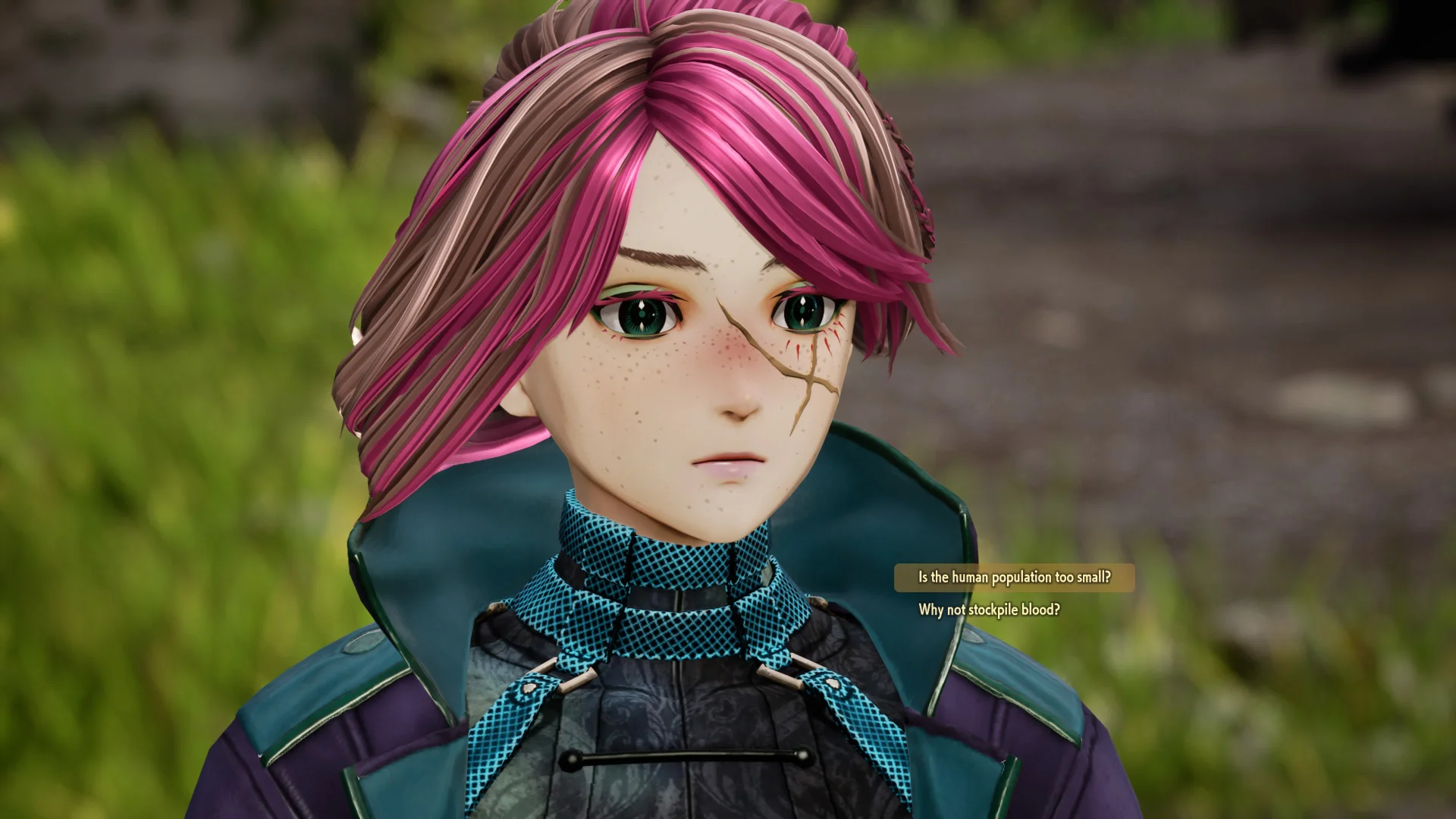
Visually, Code Vein II is good-looking, but it also suffers from severe clipping issues. The character creator for the Revenant Hunter is easily one of the most in-depth I’ve had the pleasure of trying out and I love how unique the character designs are, with Lou in particular sporting a standout design. Sure, you’ll have objects disappear through clothing and the like during cutscenes or someone or something might suddenly pop in and out of view as you’re progressing through the game. The camera could also swivel rather unhelpfully during combat, which isn’t great when you’re struggling to survive a boss fight.
I also had a bizarre glitch late in the game that I was never able to fix, where my second weapon equipment slot became completely unusable and acted as if nothing was equipped to it. Thankfully, my first weapon slot still registered, so I didn’t have to punch my way through the rest of the game, but I had a pretty good panic over that bug when it first happened and became nervous anytime I had to fiddle with equipment afterwards.
Sound-wise, I can’t really complain about the voice direction. I love the game’s English voice acting as everyone does an entertaining job in their roles, though the voice actor for Zenon in particular is a standout. The musical number introduction they do for his character alone is worth playing the game for! The localization is spot-on, too, with nary an error in the script.
Speaking of music, Code Vein II‘s lead composer is the illustrious Go Shiina, a composer I’ve been enamored with ever since my early days of playing God Eater, and the soundtrack is definitely a highlight, full of great atmospheric tracks like the Main Theme as well as memorably haunting boss themes and vocal songs that capture a wide array of emotions depending on the moments when they play.
Code Vein II is a game that’s in equal parts frustrating and entertaining. I spent hours on several challenging boss fights and sometimes, admittedly, wanted to cry from fruitless efforts to beat them, but the compelling narrative and characters kept me invested all the way to the end and even prompted me to take on optional fights to see things through to the fullest.
It’s not perfect by any means, and it certainly isn’t the best Souls-like game out there, but it does show the heart and potential Shift puts into their games and has me hoping once more to hear about their future endeavors. If nothing else, Code Vein II is worth more than a cursory glance if it happens to catch your eye.