
Sometimes, we all need a familiar, safe space. Somewhere that feels as comfortable as home, even when we’re far away from it. A place where we can relax and maybe enjoy a warm and refreshing beverage or two in the company of strangers who may one day become dear friends or family themselves. Such is the setting of the late-night cafes in the video game series Coffee Talk, locales where the mundane and the supernatural are heartwarmingly brought together. Though Coffee Talk Tokyo replaces the first two games‘ rainy Seattle scenes with a sweltering summer in Japan, the experience is no less cathartic.
Coffee Talk Tokyo might be an outing that offers more of the same, but it’s a third sip of pure contentment that both newcomers and fans of the series will enjoy.
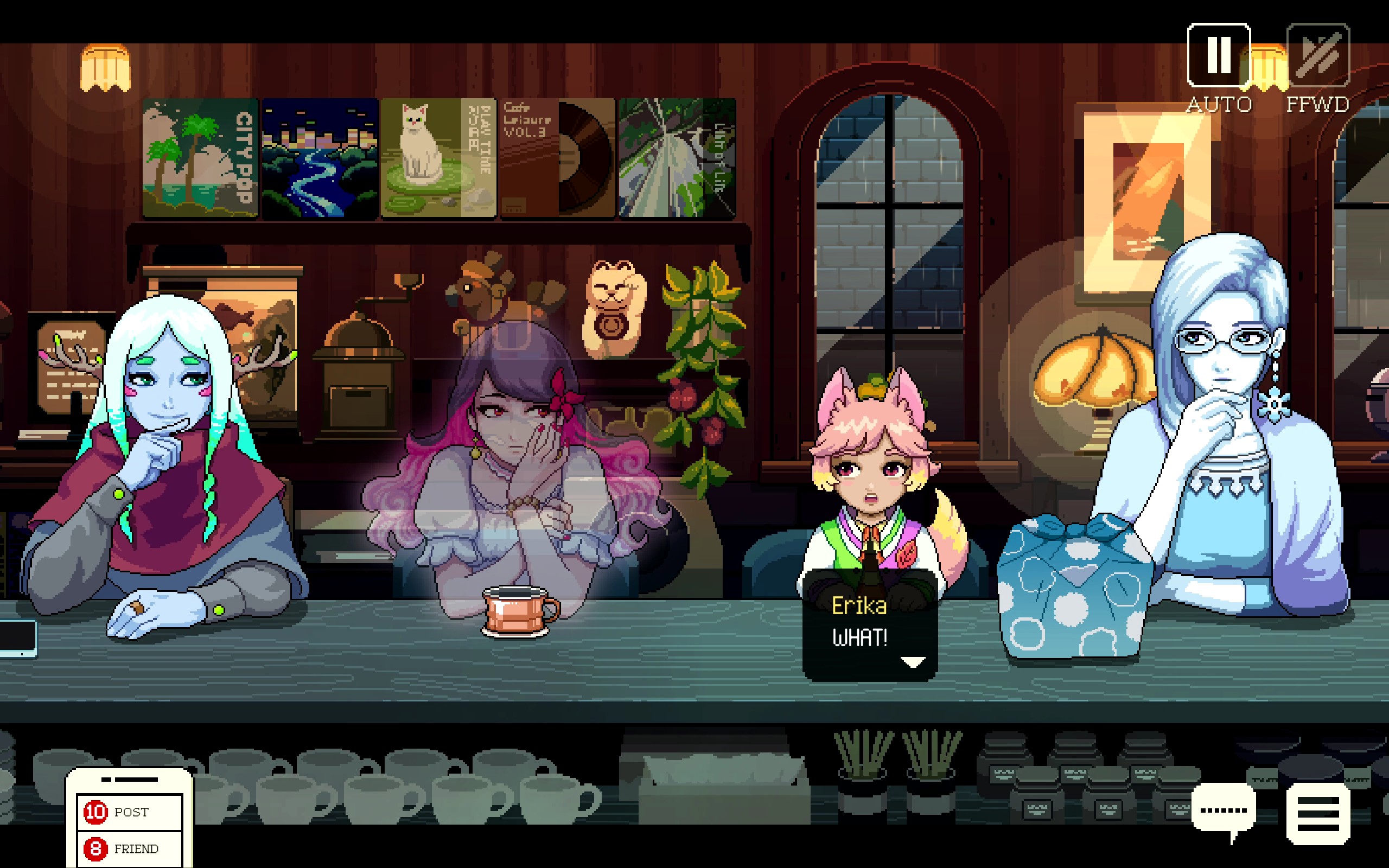
The world of Coffee Talk Tokyo is much like our own, save that the supernatural legends and folklore we all take as fiction are very much real and living equally mundane yet hopefully fulfilling lives amongst everyday humans. The cast includes a Japanese woman who’s her family’s breadwinner, alongside her British expat “house husband,” trying their hardest to supportively raise their Kitsune daughter, who is a young student trying to shield her parents from learning she’s being ostracized by her classmates.
There’s a finally-retired Kappa salaryman struggling to figure out what to do with his life now, as his former Nopperabo junior works to get his own business off the ground after inventing emoting goggles. They’re joined by a Yuki Onna managing her restaurant while coming to terms with personal loss, a Mizuchi who has made a name for himself after losing his river but, as a musician, suffers from creative burnout, and his fan, an overworked conbini clerk struggling to make ends meet.
The characters also include a young person coping with chronic pain after cybernetic prosthetic procedures, an amnesiac ghost who wants to know why she’s still tethered to the mortal realm, and a Death’s Door assistant who has grown exasperated with the inherent bureaucracy of her work. And that’s just some of the colorful characters you get to meet in Coffee Talk Tokyo, all of whom will leave a lasting impression by the time the ending credits roll.
The characters and their developing stories and relationships buoy the game, even with the fun and clever beverage creation and latte art. (But for those in it for the coffee making, the “Endless” Game Mode lets you continue crafting drinks beyond the story.) As you uncover details about the characters through conversations and unlock hidden reveals like social media hashtags—delightfully including Easter Egg cameos of other Coffee Talk characters—you’ll encounter variations in their individual stories, as well as hidden scenes or moments that increase Coffee Talk Tokyo’s replayability. Ultimately, striving for the best possible endings for everyone is certainly satisfying, and reaching that goal is sure to bring a smile to your face.
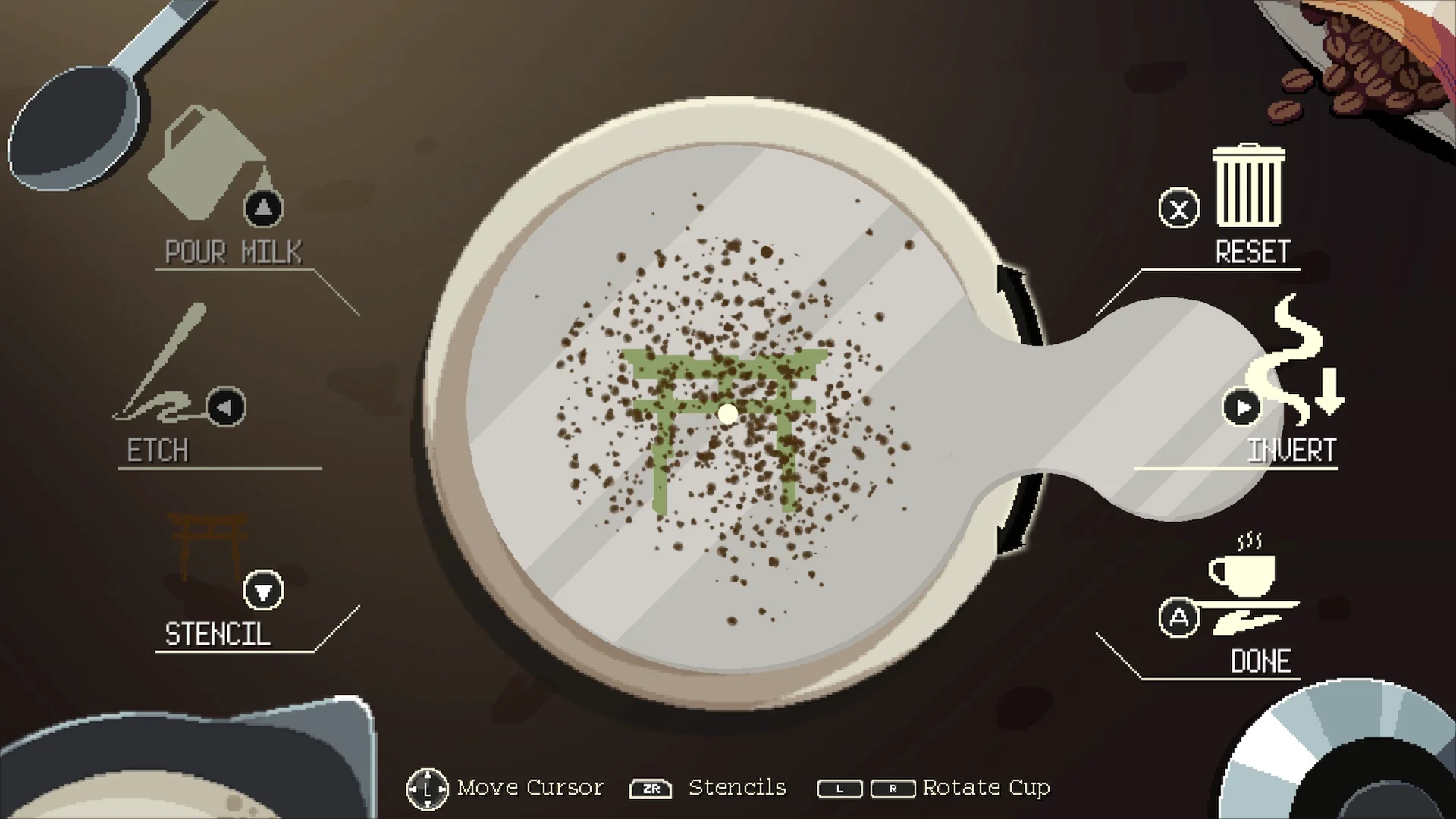
However, Coffee Talk Tokyo quite literally has you being the barista for a cafe, so of course, making beverages of caffeinated and non-caffeinated goodness is also a large part of the equation! When a customer enters the cafe, eventually they’ll request a drink. Sometimes they’re very specific with what they want, and, should you have the recipe on hand, you can make it in no time flat. Other times, they can be more vague, or you’ll lack a recipe and must guess based on their drink description and the type of ingredients you have on hand. You’ll know pretty quickly whether you served them the correct drink!
Experimenting to get the right components down is always enjoyable, especially with Coffee Talk Tokyo‘s added “hot drink” or “cold drink” feature. If you don’t get the order exactly right, fear not: you can trash a drink up to 5 times per game day if it doesn’t meet your expectations. Plus, you can even replay the day itself to try again if you feel you need, with fast-forwarding options for dialogue. There’s a continue feature as well, utilizing a manual save, but you must quit the game directly to use it instead of just loading the save data. The largely successful gameplay is meant to be set at a relaxing, cozy loop that encourages experimentation and creativity.
Those who played either of the first two Coffee Talk games will be able to quickly pick up the gameplay mechanics in Coffee Talk Tokyo, as not much has changed beyond the added ingredients and hot/cold options. Thankfully, though, the systems are intuitive enough that series’ newcomers will also pick it up relatively easily. Beyond drink-making, you can also check social media feeds on your phone, including hashtags and a helpful drink recipe collection. Or you can choose to even shuffle the lo-fi BGM tracks you hear!
Speaking of which, the lo-fi soundtrack, made by returning series’ composer Andrew Jeremy, is a delight to listen to and fits the game’s cozy atmosphere. I especially love the vocal theme that you can unlock depending on the game actions you’ve taken during the end credits. The script is error-free, which is impressive given the many dialogue permutations.
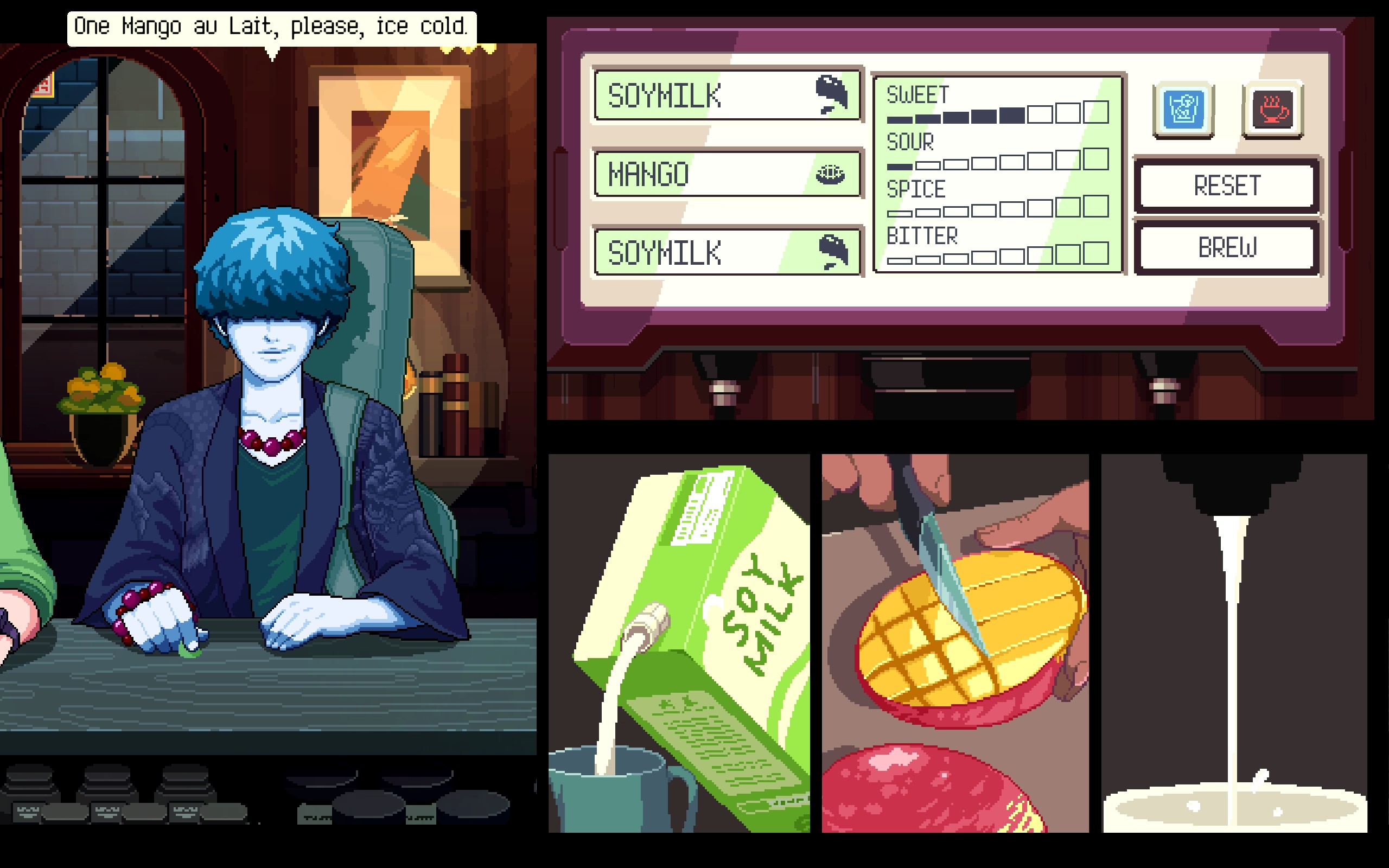
Visually, Coffee Talk Tokyo is easily the best-looking game in the series. This is impressive, given that none of them are bad-looking! In terms of story, the VN presentation is great, and its expressive, colorful pixel sprite work stands out. Furthermore, the cafe drink designs are positively scrumptious. In terms of design and functionality, the game’s UI is clear, easy to read, and intuitive. I played on a docked Steam Deck with no issues.
Coffee Talk Tokyo is a delightful return to form for a heartwarming series, seamlessly celebrating the quiet moments and connections we build in life (and even beyond). The game is relaxing, cozy, and altogether touching—like the third sip of a much-needed cup of coffee, meant to soothe a weary soul. Furthermore, the new setting and characters help make this title approachable for series newcomers, serving as a comfortable home away from home during a video game outing. Coffee Talk Tokyo is one refill you shouldn’t miss!