
In 1996, the gaming world was alive with a future offered exclusively through 3D graphics. Technical geometric concepts like polygons and vertices were entering the gaming lingua franca, and from a mainstream perspective, the world was moving on from 8- and 16-bit games.
At this time, however, a cult horror classic was brewing, and on April 22, 1996, players got their first enticing taste of Corpse Party. Corpse Party is a 2D, 16-bit blend of survival horror and adventure, released for the NEC PC-9801, a Japanese-exclusive computer system. Corpse Party’s reputation as a game exploring darker horror themes slowly grew on the Japanese internet. Remakes of the original game for PC and PSP in the late 2000s and early 2010s cemented this reputation. The PSP version was eventually translated into English in 2011, giving us nihongo numpties (people who don’t know Japanese) our first official chance to experience the fear.
Naturally, there are many versions of Corpse Party to play. For this review, I played through the PS4 version on a PS5. I completed the game twice, once in English and once in Japanese. Today, the world of Corpse Party, with its numerous remakes, sequels, and anime/manga spin-offs, offers an experience quite unlike anything else: clever plot twists, gameplay that lies between obfuscatory and monotonous, dark but oddly familiar environments, and levels of grotesque horror rarely matched across all forms of artistic expression.
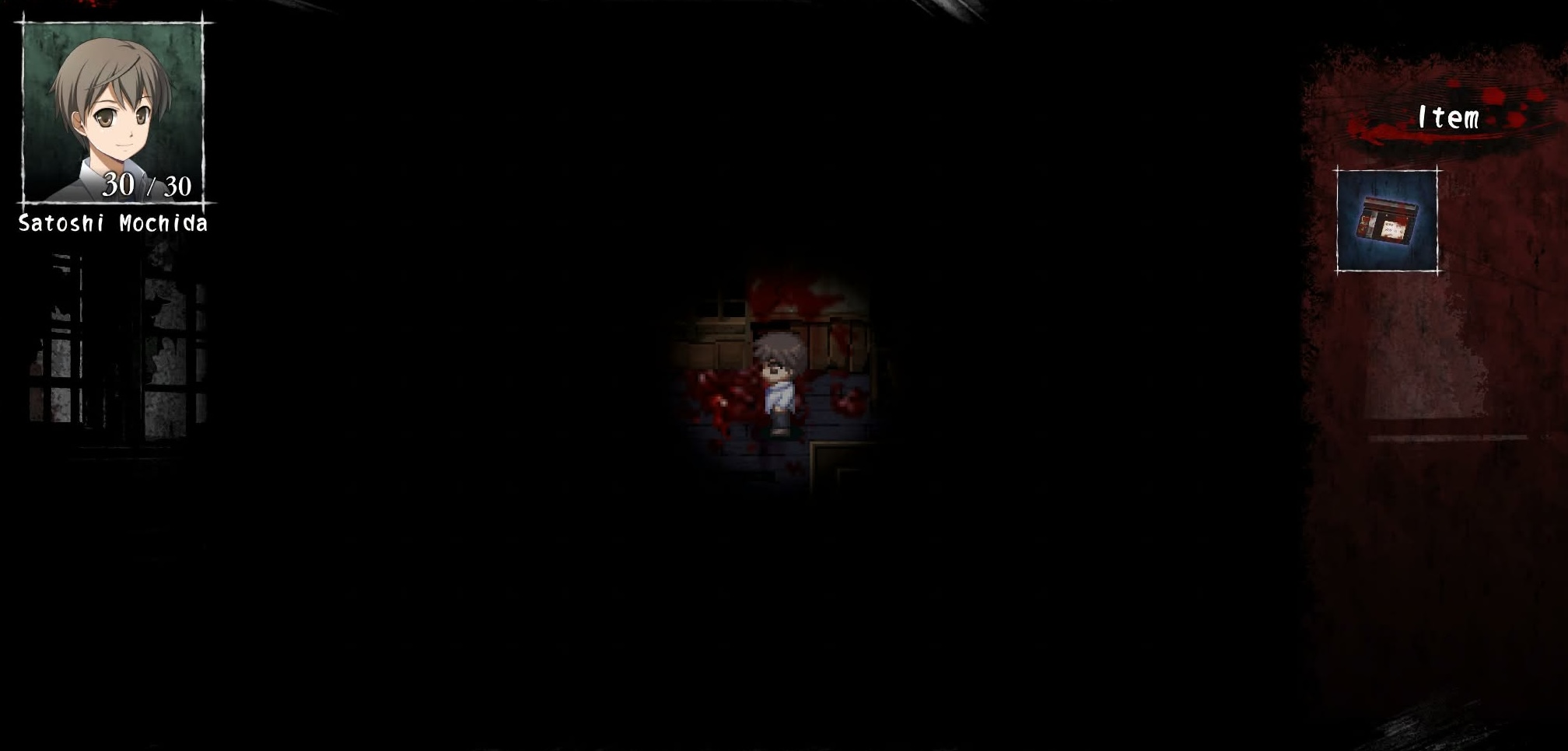
Corpse Party centers around seven high school students (Ayumi, Satoshi, Naomi, Yoshiki, Mayu, Sakutaro, Seiko), one middle school sibling (Yuka, Satoshi’s sister), and a teacher (Yui) at the end of a stormy school day. Mayu will soon be transferring to a new school, so Ayumi suggests they perform a “Sachiko Ever After” ritual to remain connected forever. This uplifting idea soon turns into a torturous nightmare when the ritual goes wrong and everyone is transported to an unfamiliar, dilapidated school called Heavenly Host Elementary School.
Across five chapters, 15 bonus chapters, and something called a “wrong ending,” you explore Heavenly Host Elementary School through student and teacher perspectives. Each chapter has you play through multiple viewpoints, with the students often appearing in pairs. A particular gameplay loop quickly becomes apparent: an initial dialogue exchange between characters, exploration of the school, finding or using an item, and discussing events with your partner or fellow schoolmates who may drop by.
Within this loop is also the wrong-ending mechanic. This game-over system is sometimes triggered by obvious actions and other times by heavily obscured ones. On the positive side, wrong endings can provide additional lore about Heavenly Host Elementary School and the wider world. On the negative side, obscure trigger points are very frustrating and can send you back 30–40 minutes in playtime—RIP my already limited adult gaming time. Overall, the wrong-ending mechanic is a nice “what if” exploration, executed poorly. This is one area where a future remake or sequel could benefit from refinement.
Character, story, and horror elements are strong areas for Corpse Party, though not without some caveats. Most characters are well interconnected (Ayumi–Satoshi–Naomi; Seiko and Naomi), with the full hormonal hues of adolescence on display—angst is fun sometimes. In other moments, however, the characterization falls apart; scenes that could feel genuine, such as Seiko’s romantic feelings, are cheapened by one-dimensional sexual innuendo.
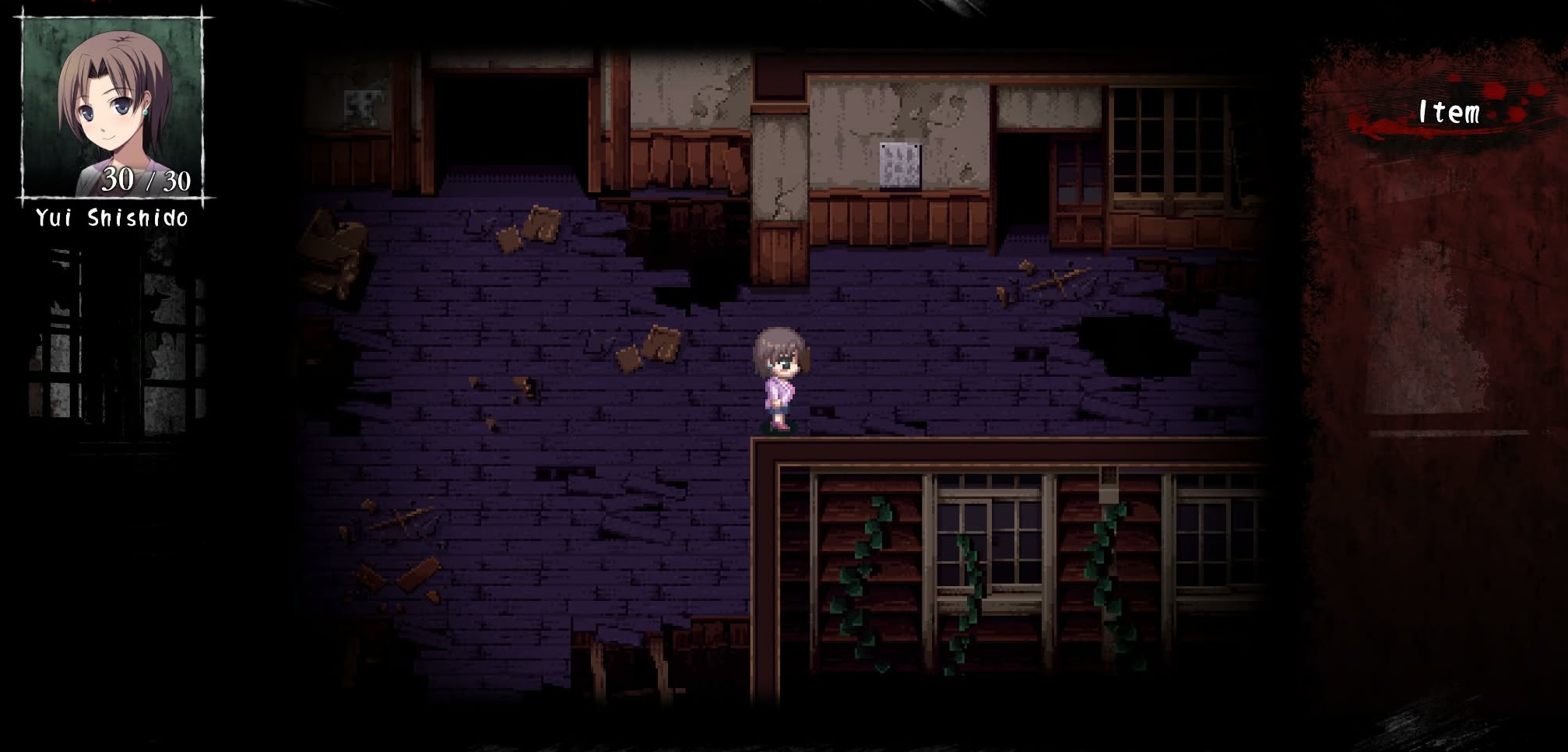
Corpse Party’s story and plot are somewhat perplexing but ultimately very satisfying. The narrative is enticing enough that you naturally feel compelled to uncover more. Each question you raise is thoughtfully answered by the end. Furthermore, the game includes extra chapters unlocked through normal progression or by achieving specific wrong endings, which are then available from the main menu. These chapters provide additional lore about Heavenly Host Elementary School, allow you to explore alternative perspectives of the main story, and even develop connections between other Corpse Party titles (yeah, there’s a lot of these).
The horror elements in this game are truly on another level. I am an avid horror game player, and some of the content—particularly its descriptions of violence, human suffering, and despair—is unmatched. I felt deeply uncomfortable reading about the nuances of starvation and enduring the length of certain violent scenes (5–10+ minutes). Consider this both a warning and a recommendation, depending on your tolerance for these themes. Finally, it is worth mentioning that the treatment and characterization of women feels somewhat outdated. Given the era the game is from, some of this criticism may be moot, but if you are sensitive to gendered violence, you may want to set aside that critical lens while playing.
The graphics and sound are additional strengths. Corpse Party was made in RPG Maker, so the environments, sprites, and interface give off a very specific early-to-mid 2000s vibe, which I personally enjoy. The character and sprite designs are classically anime-like. What elevates the game above most titles created with the engine is its world design. The school’s layout significantly increases emotional tension—long, sweeping, seemingly endless halls contrast with cramped one-way corridors and maintenance rooms.
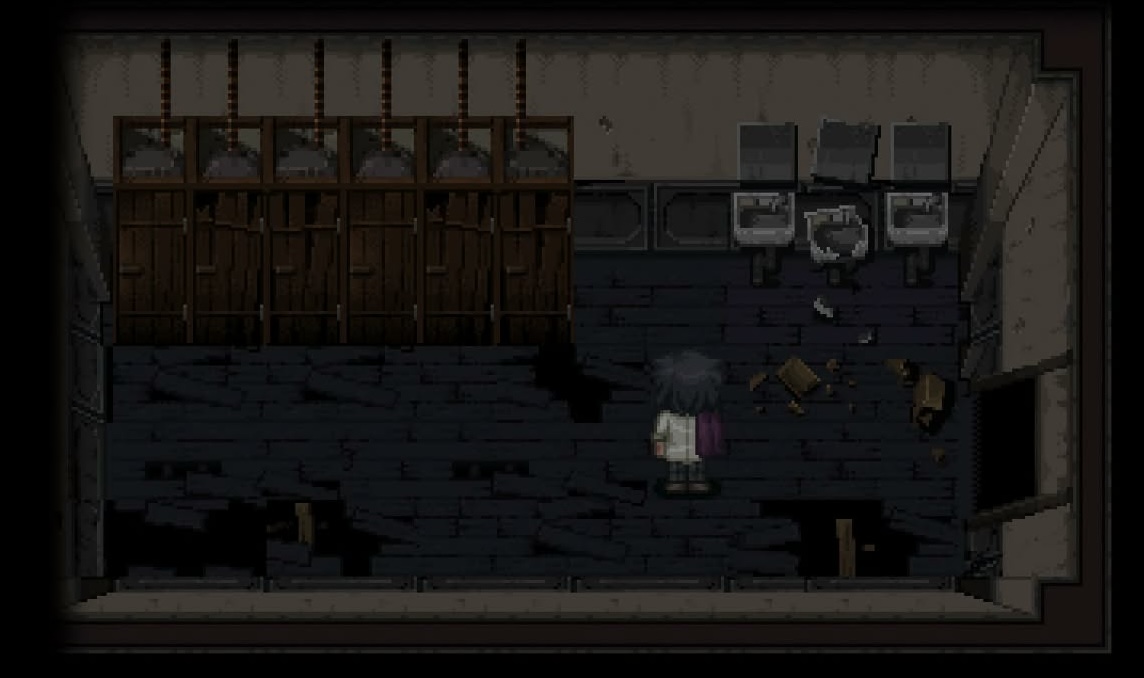
Sound and music also play a crucial role in horror—think of the movie Psycho. Corpse Party delivers well in this area, featuring brooding atmospheric tracks, energetic pieces, and a main theme that lingers in your mind. A few tracks I’d like to highlight are “The Dark Space,” “Health Room,” “Sword of Steal,” and the chapter opening and closing themes. The voice acting is also strong, though somewhat grating for one younger character (YUKA).
After my first playthrough, I switched to the Japanese version of the game. You can do this easily by setting your console’s language settings to Japanese. As a Japanese language learner, I am always looking for good games to play in Japanese, and Corpse Party includes several helpful features: replayable audio (via an audio log), press-to-continue text boxes, and a very readable kanji font. However, the game does require decent kanji knowledge or a good ear to pick up unfamiliar readings. I only encountered around ten “rare” kanji (outside the jōyō kanji set). If you have completed a substantial portion of kanji courses like WaniKani and have an intermediate understanding of grammar, Corpse Party is an excellent game to try — 出来るよ!
Overall, Corpse Party is a wonderful piece of niche horror content. It harkens back to the days of online message boards discussing a cornucopia of J-horror content, once inaccessible due to our inability to master one of the “Super-Hard” Category IV languages. Nearly 30 years after its original release, Corpse Party demonstrates that good horror lies in subverting the mundane and placing ordinary people in extraordinary circumstances. Draw curtains, don headphones, and let this horrific experience draw you in.