
Some of the best and least appreciated games in all of RPGs are what could be called “Eurojank“: Gothic 1 and Gothic 2, STALKER, Greedfall, Arx Fatalis, Kingdom Come: Deliverance, E.Y.E Divine Cybermancy. Many would call these games “so bad they’re good,” while others hold sincere and unironic admiration for them. I’m one of the latter; in fact, I got more joy out of Two Worlds—yes, the first one—than I did out of Skyrim. Keep that in mind for everything I’m about to say about Crimson Desert, a phenomenal game with one significant flaw that it more than earns the right to have.
To my glee, Crimson Desert, the latest open-world RPG by Korean developer Pearl Abyss, carries a lot of that Eurojank DNA with it, and by that I mean the emergent problem-solving within a systems-driven sandbox, something Eurojank games have historically provided uniquely within RPGs.
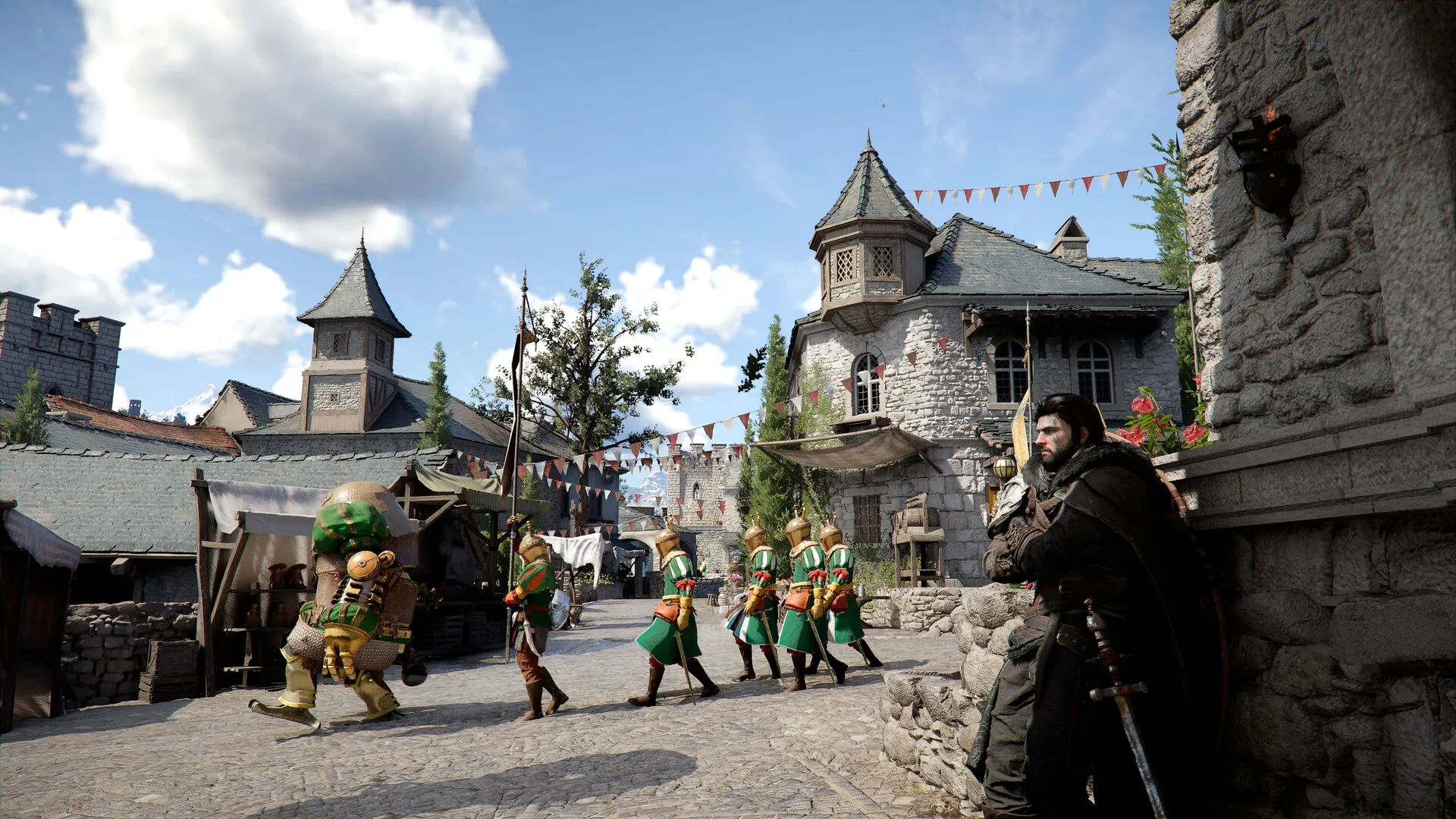
While many games, RPGs increasingly so, are designed around “intended play” where combat is tuned, encounter design is very deliberate, and the AI is behaviorally scripted, Eurojank games are often more loosely designed because small teams were working at the edge of their technical capacity, shouldering massive ambitions.
For example, I love how in Two Worlds many of the encounters would crush you, especially early on. However, because AI pathfinding is genuinely limited in that game, I can find gaps in the simulation, such as exploiting topography or line of sight to whittle down enemies that are far more powerful than I am.
This is not an intended design. While some would call it cheesing the game, I feel as if it just correctly approaches the game on a layer the developers didn’t actually “intend” for. I learned to read the game, and I got massive satisfaction from problem-solving. Crimson Desert is filled with these kinds of interactions, but it often feels like it’s been designed with that philosophy in mind, all backed by an immense roster of connecting and interworking systems.
More than anything else, Crimson Desert made me feel the way Gothic did. That specific sensation of being genuinely small in a world that doesn’t care about you, and then slowly learning to read that world well enough to punch above your weight in ways nobody explicitly taught you.
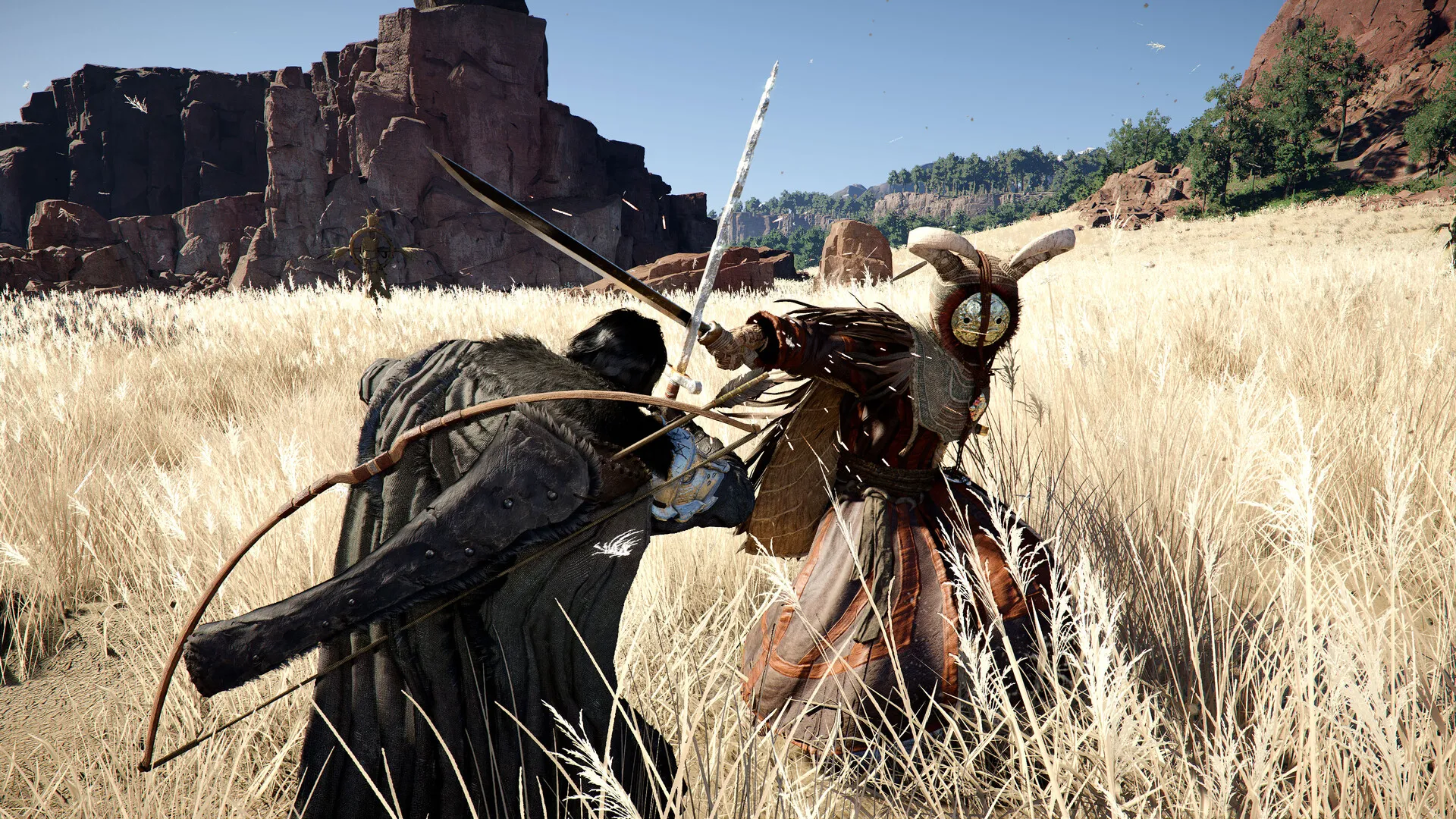
The game starts you weak and keeps you that way longer than most modern RPGs would dare. There’s no scaling, which means wandering too far from the starting area will get you killed quickly and without apology. But the same systems that make you vulnerable also give you tools, and figuring out how those tools interact with the environment and the enemies is where Crimson Desert lives.
Early on, I found I could use Nature’s Grasp to pick up a tree and slam it into a boss, dealing damage I had no business doing at that point in the game. Nobody told me to do that. There was no tutorial prompt, no environmental storytelling nudging me toward the solution. I just understood that the world had physics, that the ability worked on objects, and that a tree is a very large object. That’s the purest expression of player-driven problem-solving, but this time it feels done in a way that bridges that gap between emergence and intention.
That’s what Crimson Desert gets fundamentally right, and why the rougher edges never stopped me from wanting to keep playing. But like many of those other games, Crimson Desert eventually allows you to become extremely powerful. The world is littered with armor, weapons and artifacts that will completely alter your combat abilities and more. Eventually, you’ll be able to mow through hordes of enemies like a musou without needing to resort to the emergent systems, with its massively satisfying power curve.
The world in Crimson Desert is nothing short of staggering. The game started out as an MMORPG before Pearl Abyss shifted it to a single-player experience, but you can absolutely still see that scope. The map is segmented into distinct biomes, including your plains area, the swamp/jungle area, the snowy area, a steampunk world, and the titular Crimson Desert and the wastes beyond it. It’s structured just like an MMO in the sense that biomes have specific enemy levels that will usually signpost to a player where they should be relative to their own level.
Normally, “single-player MMO” is a pejorative for a bloated map stuffed with inane busywork. And while Crimson Desert absolutely has checklist objectives for that particular kind of psychopath, a lot of what’s actually on offer is remarkably bespoke and robust. Systems like camp management, cooking, fishing, gathering, and dispatch missions don’t exist in isolation. They feed into each other in ways that make the experience of Crimson Desert greater than the sum of its parts.
During my first few dozen hours with the game, I spent five straight hours of those fishing, and then another chunk of time I can’t fully account for hunting down ingredients and recipes to cook with what I’d caught. Not because a quest guided me towards that, not because I was grinding toward a specific reward I’d identified, but because one thread kept pulling me toward the next. I’d catch something, realize I didn’t know what to do with it, go looking for a recipe, find an ingredient I needed somewhere out in the world, start gathering that, then stumble onto something else entirely.
The fish fed into cooking, the cooking fed into combat survivability, since there are no healing potions in this game, and food is your only source of recovery, the ingredients pushed me into corners of the map I might not have visited otherwise, and everything fed back into the camp.
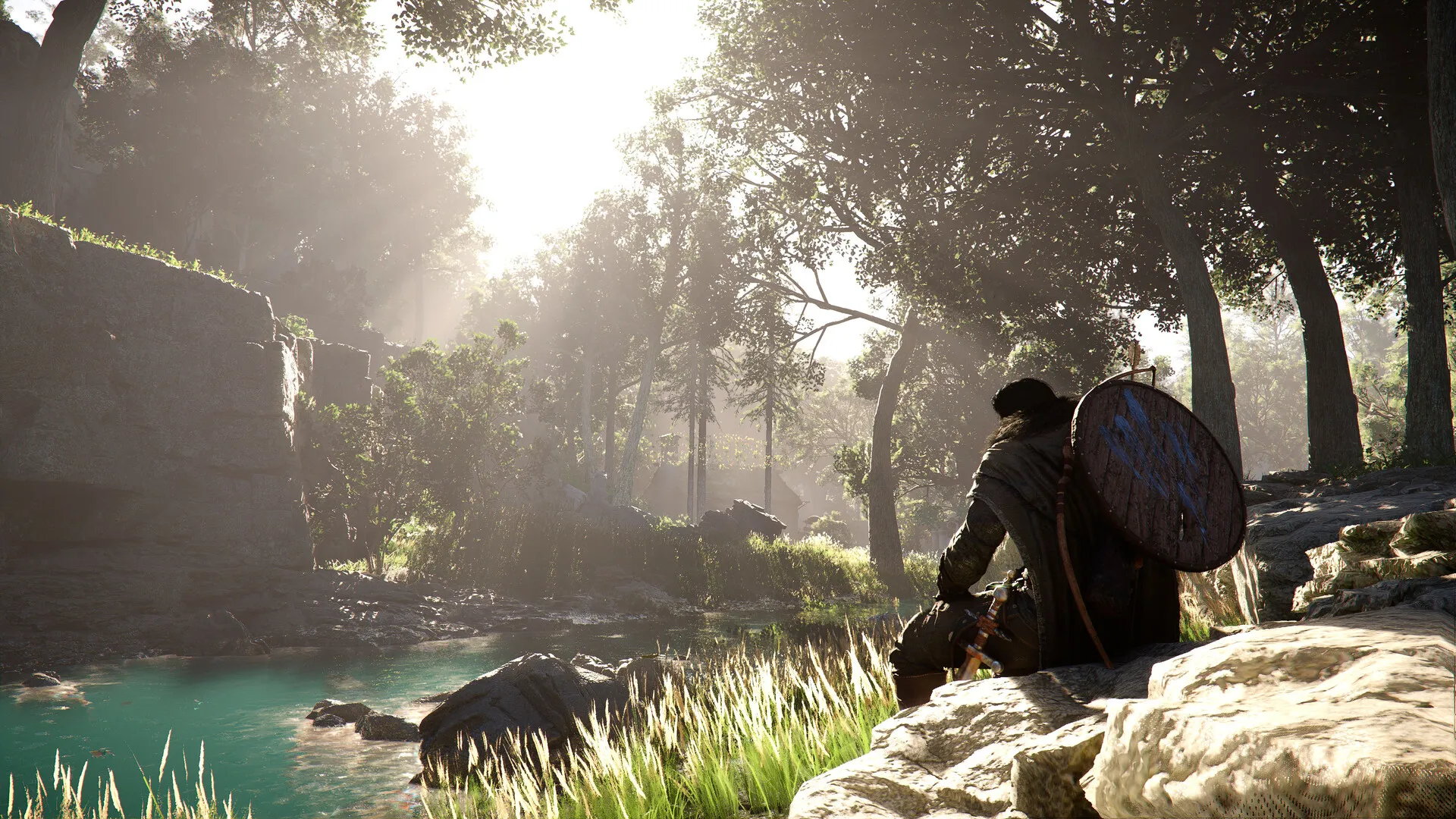
None of that loop was explained to me (at least not at first). I assembled it myself through play, the same way you figure out that a tree can be a weapon or that a rock can save your life against an enemy that should destroy you. That’s what separates Crimson Desert from the MMO busywork people are rightfully skeptical of. It doesn’t feel like a checklist. The open-world RPG scaffolding is almost incidental to what Crimson Desert actually is, which is closer to a life sim with delusions of grandeur, and I mean that as the highest possible compliment.
The world of Pywel is stunningly detailed and dense for its scope. Vines curl around abandoned roadside houses. Muddy trails bear wagon tracks worn into the dirt. Wildflowers scatter through lush rolling meadows while boulders sit with the kind of natural erosion that suggests they’ve been there for centuries. Dozens of farmhands work visible crop rows with functioning windmills turning behind them. Stone fencing crumbles at the edges. The continuity across the landscape creates the sensation of a world that wasn’t built merely for the player, despite how much freedom it offers and the power fantasies you can experience within it.
In many of these ways, Crimson Desert often feels as if Pirhanha Bytes received a massive budget and made their own Breath of the Wild. It even kind of looks like a maximalist 7th-gen title, like the theoretical ceiling of what a 360 or PS3 open-world was aiming for but never had the hardware to reach. It looks expensive without looking sterile.
The exceptional sound design earns equal credit here, grounding the world in a layer of environmental audio that feels genuinely ambient rather than decorative. Wind moves through reeds, distant metal clashes from skirmishes happening without your involvement, and birds shift in the canopy overhead.
It was baffling to me that so many people were talking about how boring Crimson Desert’s opening hours were; even those praising the game would often say something to the tune of “it gets good after a dozen hours.” It made no sense to me because the opening of the game is very concise and thrusts you into the world very quickly. I was having a blast and sucked into this world for around 50 hours before ever touching the main quest.
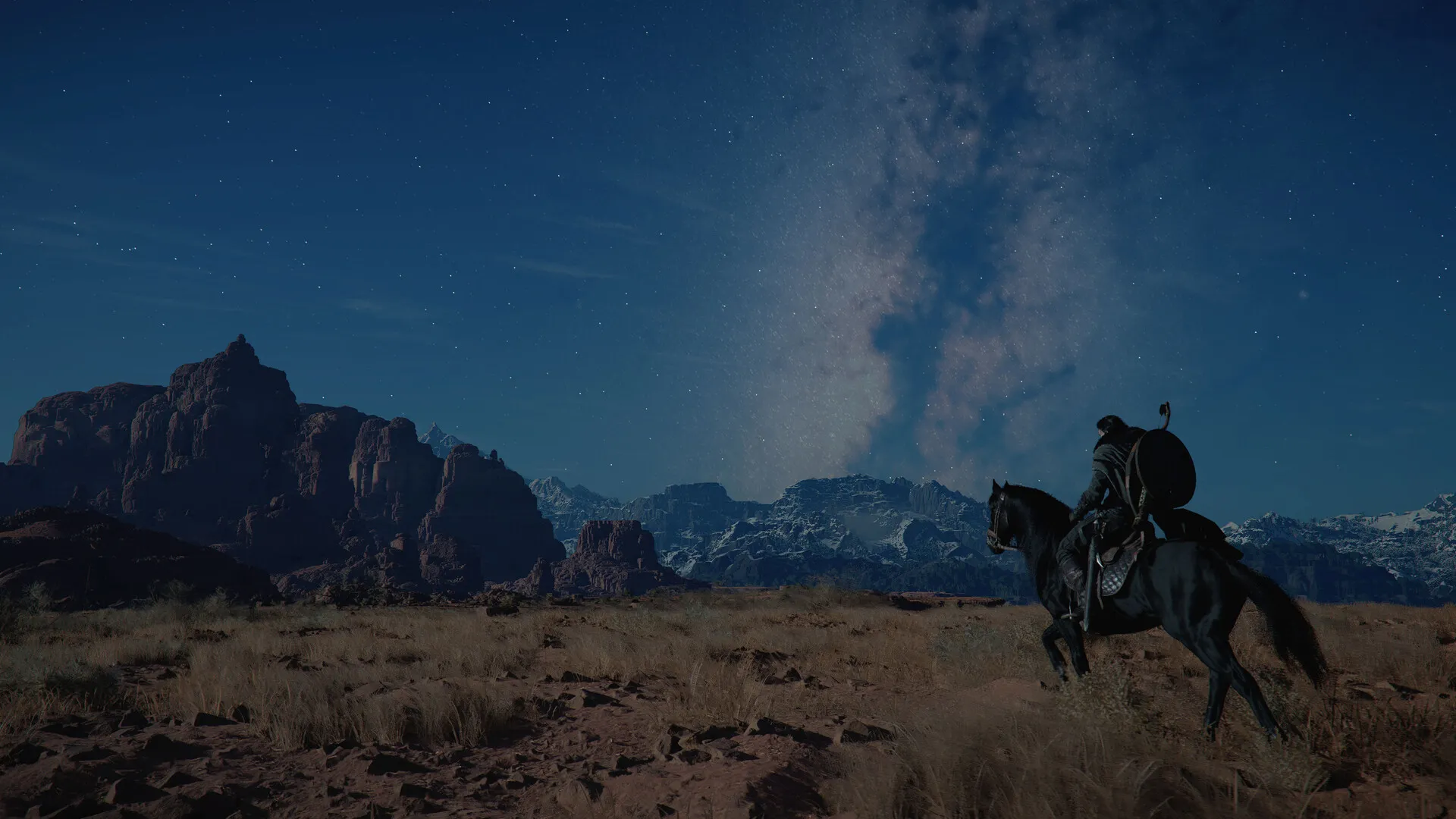
And then I started progressing the main quest and realized why people were saying this. Crimson Desert‘s biggest problem is, and I cannot stress this enough, just how terrible the structure of the main scenario and the narrative itself are. On paper, the premise is fine: Kliff, leader of a mercenary company called the Greymanes, is betrayed and scattered after an attack by a rival faction, the Black Bears. The story follows him as he rebuilds his company, reunites his comrades, and eventually confronts the people responsible.
It’s a workable setup. The execution is where it completely falls apart. In ways not dissimilar from something like Red Dead Redemption 2, Crimson Desert‘s main quests are often completely at odds with the life-sim freedom RPG that you’ll experience in the open world. Instead, you’ll be sitting through long, and I mean long, bouts of some of the most banal, if well-voiced, dialogue I’ve seen in some time, for missions that are often nothing more than getting on your horse and following some guy.
Kliff is little more than John Videogame, with about as much personality as a cornstarch pie, and it was impossible to connect to him, his plight, or anything in the game’s scripted narrative, despite how desperate the game is for you to. Granted, the story does have some insanely good cresendos, such as massive battles where you are given complete freedom as a field general of how to advance through a battlefield and what targets to prioritize before seizing a city and fighting the boss, but those moments are few and far between and the narrative feels like the writers had some cool ideas for set pieces but no clue how to develop the connective tissue between those moments.
This wouldn’t be as bad if I could simply start skipping cutscenes to get through the narrative, since the game does admittedly hide some of its best features behind story progression. But the game unironically insists upon itself, forcing you to experience every second because no scenes are skippable. You can, however, use a 2x speed button to speed through them (they later added a 4x option as well, which is honestly a pretty funny way to troll their audience) and that can often result in some hilarious moments that undercut what is supposed to be a serious narrative.
Given how much of the early to mid-game plot focuses on Kliff bringing the Greymanes back together, it spends shockingly little effort in endearing you to the moments of your gang and creating a bond between Kliff and them or really anyone else.
Despite this significant issue, I still loved Crimson Desert because of the stories it allowed me to create for myself. Like the time I was doing one of the laser puzzles in the environment, and while moving one of the mirrors, the laser was cast over a nearby camp, setting all of its inhabitants on fire.
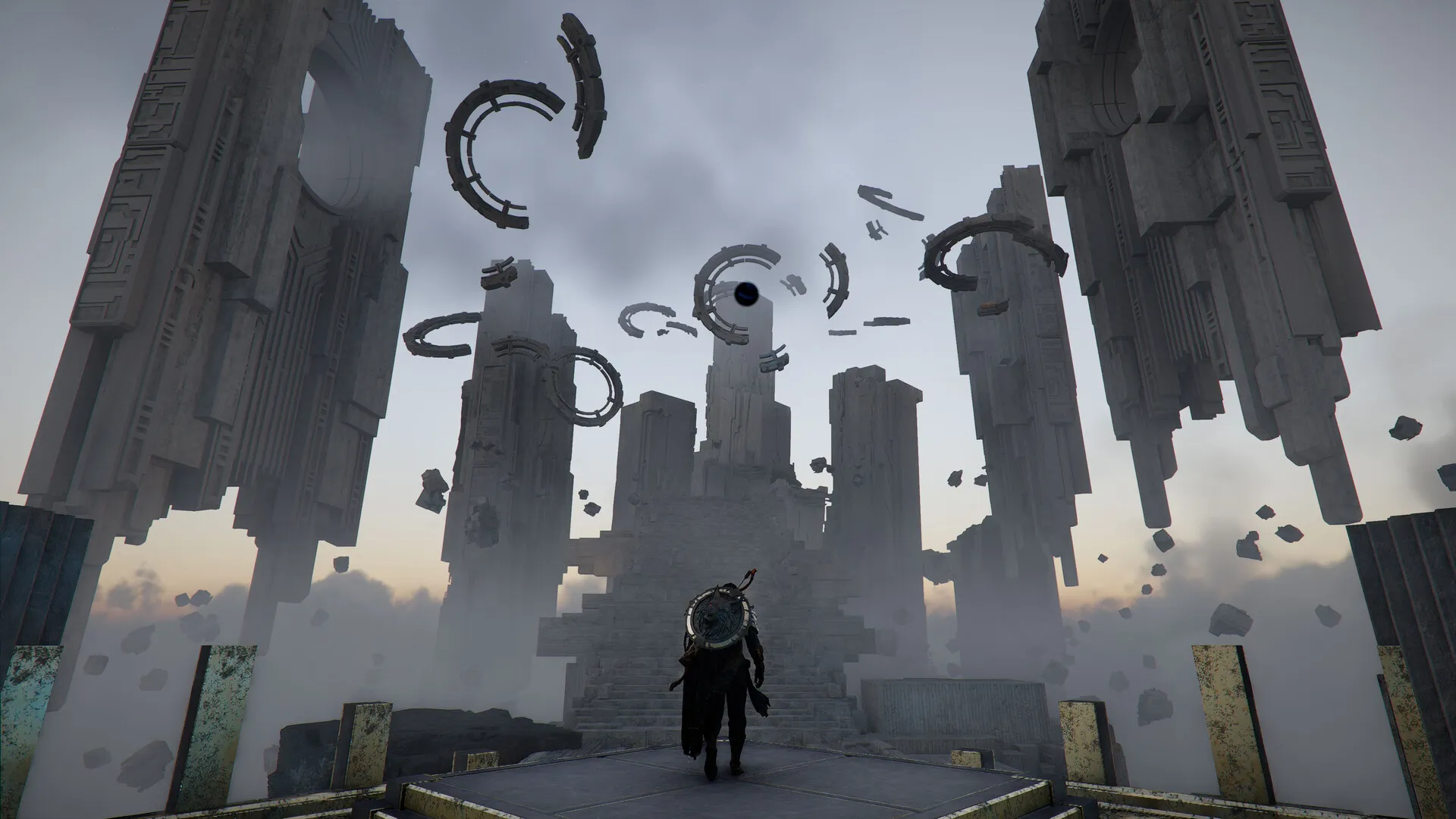
Or when I was in the middle of fighting a boss and fell through the ground, only to discover a massive cavern that led me to a weapon I would use for a decent chunk of time. Or the time I was hunting a bear and was running up to skin it when I thought I had killed it, only to see the game prompting me to hold the A button to “ride” it, and then taking that bear on a spree through some of the Black Bear encampments, watching the grunts run in fear at their rapidly approaching ursine apocalypse.
I spent hundreds of hours in the world of Pywell, dozens of which came after finishing the game, something I find myself unable to do anymore, and it still felt like I had scratched the surface of it. Content Demons? You’ve got a forever game here, and Pearl Abyss has already added loads of free content with a commitment to continue supporting the game for years.
It’s such a dense game that there’s way more than I can realistically fit into a review, but I want anyone reading this to come away knowing that Crimson Desert is a massive game with loads of handcrafted content and systems that will allow you to organically craft a narrative truly unique to you.
The subgenre that gave me some of my favorite RPG experiences has quietly been losing the studios that built it. Just in the last two years, we’ve lost Piranha Bytes and Spiders. The kind of game they made, patient, systemic, built for a specific kind of player willing to meet it on its own terms, has felt increasingly endangered. Crimson Desert, even if it isn’t perfect, carries that torch. And it carries it with a budget that finally matches the ambition.
Just please, for the love of god Pearl Abyss, add the option to skip dialog.