
Some of my fondest childhood memories are with my family, gathered around the table after dinner, playing Monopoly. The push and pull of buying up properties, hoarding money, and trading between each other to stake out your claim on the board was endlessly engaging to me. Another of my childhood favorites was the TCG Yu-Gi-Oh, from the menagerie of intimidating and grotesque monsters to the devious traps and powerful spells, building decks and trying out different combos was always satisfying to me, even if I didn’t have someone else to play with.
It’s no wonder I hold the Culdcept series so dear: the digital board game/collectible card game hybrid marries the game board and property-acquiring mechanics of Monopoly with the strategic deck building of games like Yu-Gi-Oh or Magic: The Gathering. While this may at first seem like an odd pairing, the resulting concoction is impressively dynamic and hopelessly addicting, with the randomness and unpredictability of the board game providing a solid foundation for strategic planning when building out decks and playing cards moment to moment. Culdcept Begins is a reboot of the series, putting a new coat of paint onto a time-tested formula that proves why this turn-based strategy series deserves to live on for the next generation.
Culdcept Begins is set in the kingdom of Bavrashka, where King Dagar has united the four elemental kingdoms (Water, Fire, Air, and Earth) under one banner, posed against the threat of the denizens of the murky, undersea Abyss. His famed general, Rutra, led the charge to bring the kingdoms together and erect a magic barrier to protect the land from incursions by the Abyss, who seek to free their god Baltias from his prison deep below the ground. However, Rutra subsequently disappeared, leaving his son, protagonist Kamru, all alone to follow in his footsteps.
Kamru is a Cepter just like his father, able to wield the powerful magical artifacts known as Culd (the in-game cards) in battle. He hones these skills at the Royal Cepter Academy, alongside his friend Ishara (the princess of the kingdom) and his rival Tarhunt. Kamru advances through the Academy, eventually being appointed to the Royal Cepter Guard, and he and the princess become embroiled in a new conflict with the Abyss while he hunts down the whereabouts of his father.
Culdcept Begins‘ narrative starts out in a rather typical school setting, though quickly morphs into a more interesting, epic tale as the conflict grows in scale and Kamru discovers more about his father. While the characters are mostly one-note, the cosmology of the world is intriguing and provides sufficient motivation to see the storyline through to its end. There are a handful of standout characters, like Kamru’s rival at the academy, Tarhunt, who has his own mysterious connection with Rutra, or Tindalos, the Air Tribe Chieftain, who lords over the Arena and delights in combat above all else, swooping in at the worst possible time to complicate matters for Kamru and Ishara.
The localization is functional, but lacking in personality; while the descriptions of cards and mechanics are clear and concise, the characterization leaves a lot to be desired, and outside a handful of characters, most lack a unique presence or voice in their dialogue. For a game where mechanics are at the forefront, it’s plenty serviceable, but I found myself missing the more inventive narrative premises of past series titles (like the journey from slave to becoming a god in Culdcept Saga, or joining a group of rebels fighting against a tyrant in Culdcept Revolt).
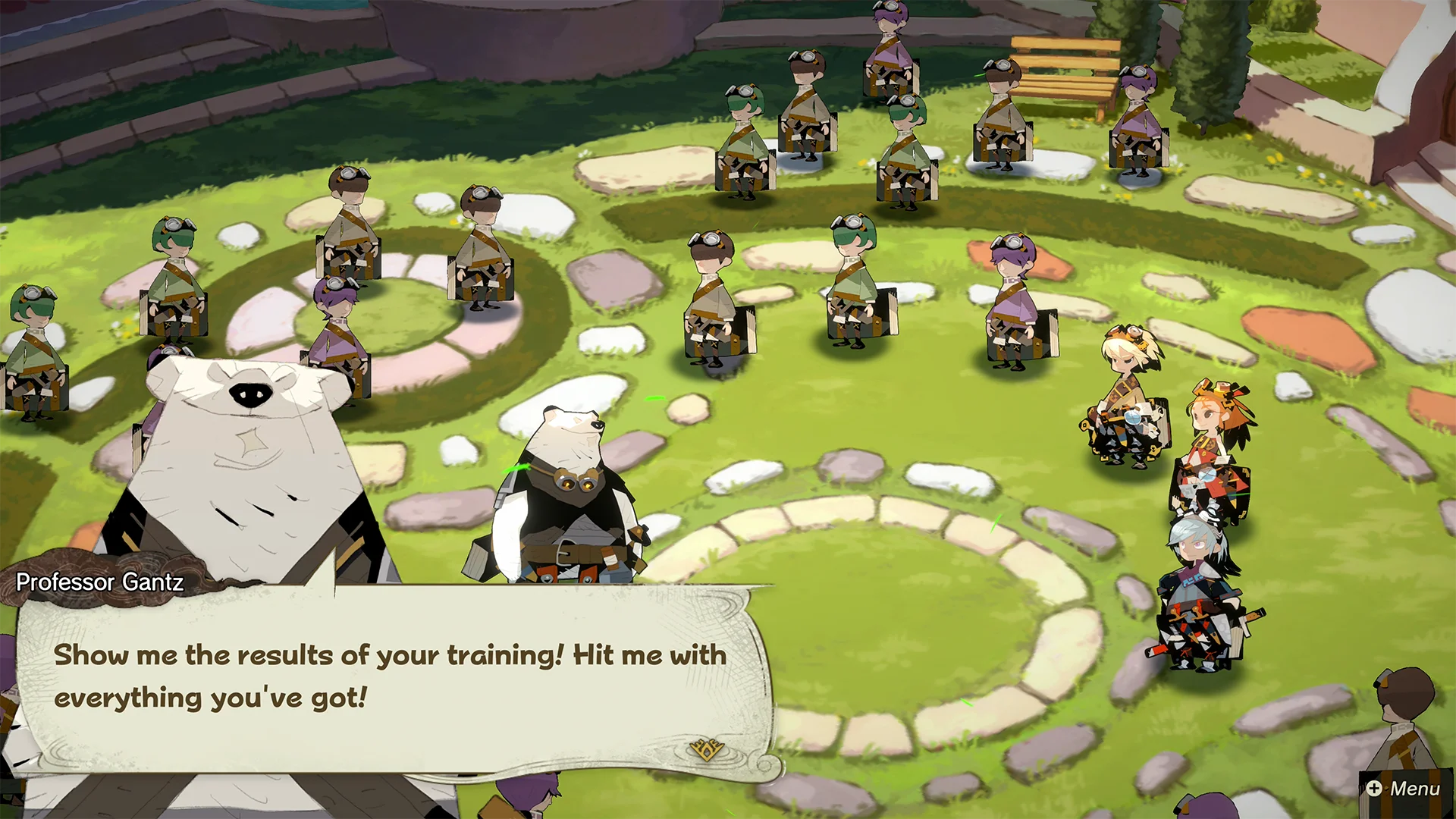
The visual presentation in Culdcept Begins is strong, though a massive departure from past titles. Previous games in the series used different key artists, who all settled on more mature, fantasy-anime influenced designs. The cards themselves have had their designs iterated on throughout the years by many artists with varying styles akin to a physical TCG. Furthermore, Kenji Ito has been the series composer since Culdcept Second, establishing a distinct auditory identity that Ito himself regards as some of his best work.
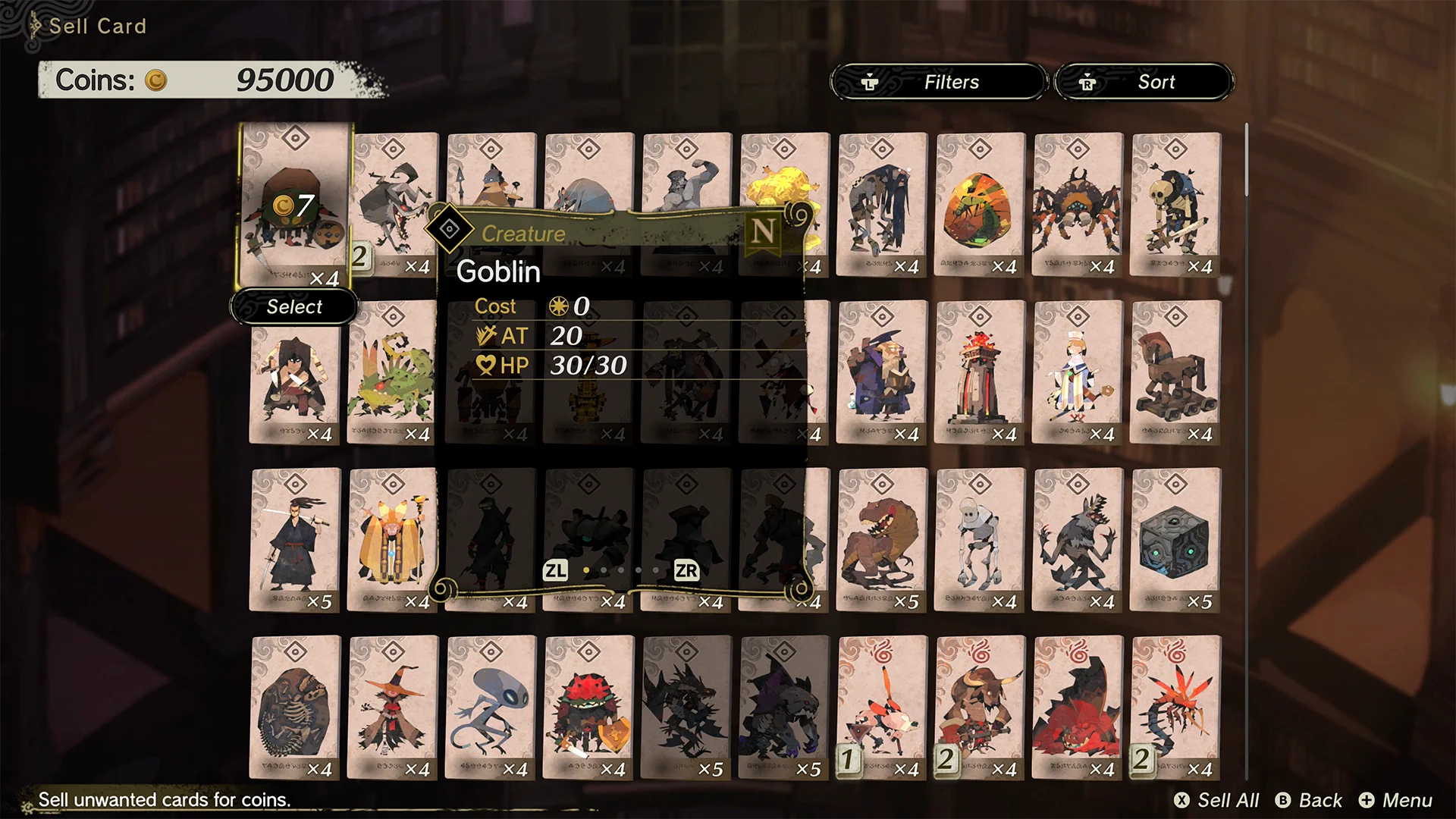
Culdcept Begins does away with all this, instead opting for a more cartoony, colorful, super-deformed style for character designs, and similarly saturated, cave painting/mural style designs for the monster Culd (which are now represented as stone tablets rather than cards). The item and spell Culd vary a little more, with items being heavily detailed and realistic in style, and spells possessing more conceptual, impressionistic designs.
I missed some of the old visual stylings from past titles, yet I have to admit the new art direction ends up feeling a lot more cohesive than in previous games. In the older titles, the contrast between the detailed card art and the simple monster sprite or polygonal model that actually showed up on the board was rather stark. In Culdcept Begins, the representation of the monster on the card and the sprite that appears when it occupies a territory are nearly identical, which ultimately provides a more visually immersive experience.
Similarly, Culdcept Begins‘ UI is the best the series has seen, providing the player with all the complicated information on the board at once yet maintaining readability. Video game music company NoisyCroak handled the music composition, and while it isn’t quite to the level of Ito’s past work, the tracks are still appropriately moody at the start of a match, becoming bombastic as the action heats up, and fitting for the various elemental level themes.
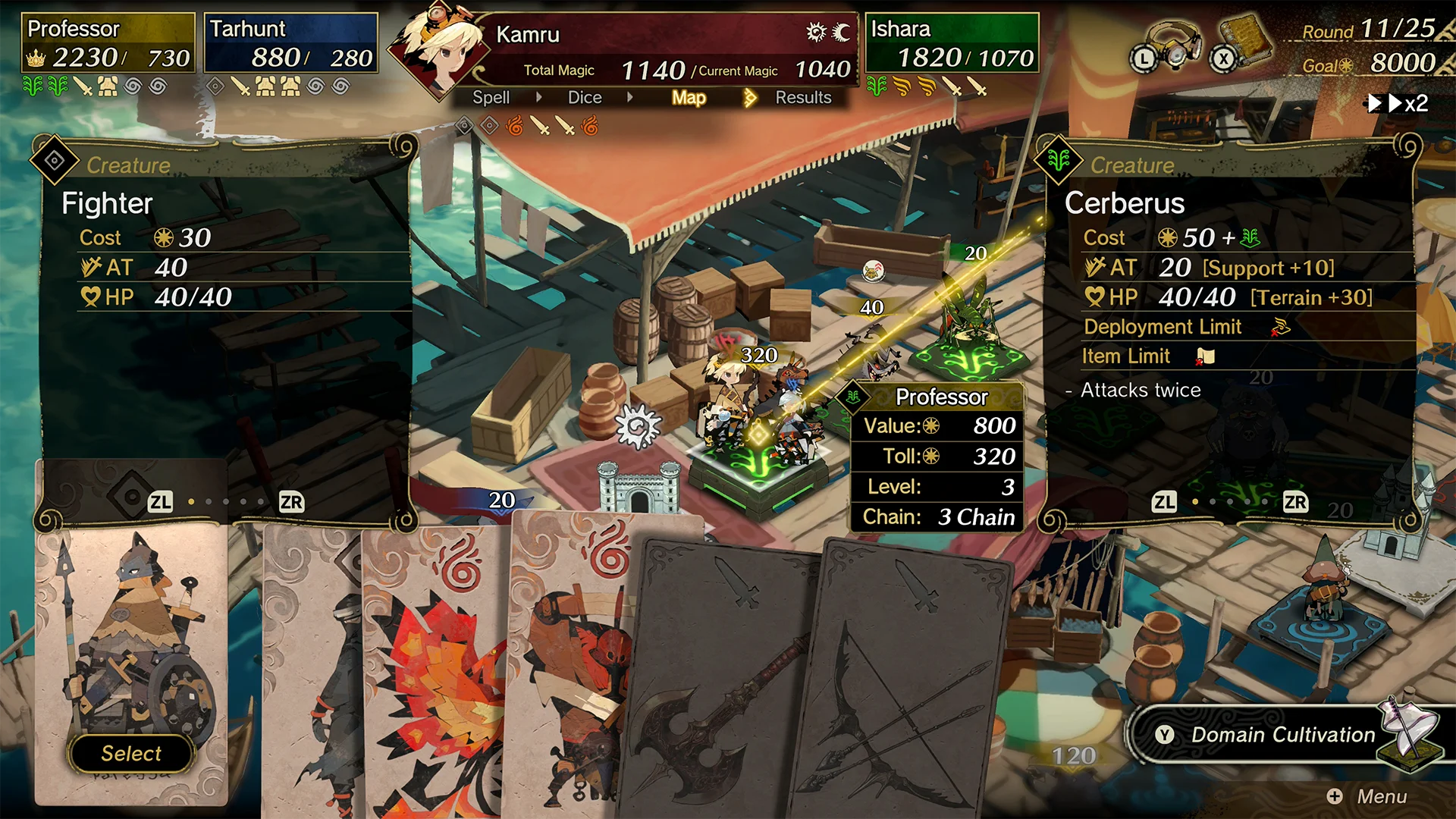
The real meat of any Culdcept title lies within the gameplay mechanics, and Culdcept Begins is no slouch in this department either. The core foundation of traveling along the board, acquiring property/lands, and then developing those lands to charge tolls/rents from opponents and raise your funds while wiping out your opponents adheres pretty closely to the Monopoly format. What makes the series so strategic and interesting across hundreds of matches is the introduction of collectible card game mechanics: to acquire lands, you have to deploy a monster card on that tile with its own stats and abilities.
When you land on an opponent’s land (or they land on yours), you can do battle using one of the monster cards in your hand, supplementing that monster’s power with item cards, in the hopes of both avoiding paying the toll and swiping the land from your opponent if victorious. Spell cards can be played once per turn before you roll the dice to move, and have a wide variety of effects to boost your own parameters or hinder your opponent.
Monsters and tiles all have elemental affinities, and matching up these elements gives your creatures a bigger boost during combat. Own enough lands of a particular element and you can chain their effects together, multiplying the tolls you can charge opponents when they have the misfortune of landing on your spaces. Your ultimate goal in Culdcept Begins is to reach an arbitrary funds goal (your gold/magic) and reach the starting castle.
Every lap you take around the board increases the money you earn when you reach the castle, encouraging you to keep a steady pace lest your enemies amass more wealth and power faster than you can. Matches become a dynamic battle between acquiring and losing properties, praying your dice roll takes you just beyond one of your opponent’s upgraded lands, and devising ways to force them into landing on your own.
Further complicating this core tension between board game randomness and card-based strategy are the boards themselves. Unlike the square board of Monopoly, the boards in Culdcept Begins can vary in shape and elemental tile composition, and even have unique structures that alter the game flow. Some of these structures are simple, like bridges connecting different lanes of tiles or warp tiles that send you off to another side of the map. Others, like shops or fortune tellers, reward you with temporary cards that can give you a boost during the match.
Culdcept Begins‘ most interesting structures are the shrines, which provide a random boon or handicap that can impact the entire board, or the sanctuaries, which sell elemental tokens that will rise and fall in value depending upon the level of property development on tiles of that element. If your deck’s strategy revolves around fire monsters and tiles, you can head to the sanctuary early to buy up fire tokens when they are cheap, then return later in the match and sell them off at five or ten times their original value. Your opponents can also use these facilities, turning each match and each unique board into a careful dance of planning and luck that stays compelling for many hours.
Culdcept is a series that, despite providing a robust single-player campaign and satisfying card pack progression, shines brightest in multiplayer. The AI opponents are quite adept and employ unique strategies of their own, but the real test of skill is against other human players. Unfortunately, I was unable to test Culdcept Begins‘ online multiplayer, which is where most players will spend their time after completing the 20-hour main story and side content.
However, Culdcept Begins takes advantage of Nintendo’s GameShare feature, allowing you to play local multiplayer with anyone who owns a Switch or Switch 2 even if they don’t own their own copy of the game. This worked marvelously, eliminating the awkward controller passing of past titles’ hotseat local multiplayer as each player can have their own screen. The mechanics are a little too complex to pull out for a bunch of newbies at a party, but a dedicated group could get a lot of mileage out of this digital board game, particularly since they can use any decks created by the host. I just hope the online multiplayer community has longevity beyond the first month after release.
Culdcept Begins is a triumphant return for a series that’s been dormant for a decade. The new presentation style may not be to everyone’s taste, but it’s the most cohesive visual design in the franchise, with special attention paid to clarity and consistency in its UI befitting such complex mechanics. The narrative is not the most ambitious in the series, yet it does an admirable job of providing context to the board game matches and the cards you play during them. I’m just glad that such a niche franchise has survived so long, and that I have so many fun & frustrating online matches to look forward to in the future.