
As a 17-year-old, abandonware website-obsessed kid, I played X-Com: UFO Defense while HBO’s Band of Brothers was on the TV in the same room. X-Com‘s early game was all I made it through, since the base-building phase was impossible to wrap my head around, but as I leap-frogged and watched over my little guys across a stretch of farmland in search of aliens, I was mirroring the fix-and-move paratrooper tactics I saw on the TV. Later, XCOM: Enemy Unknown not only revived the dual strategy/turn-based tactics genre I learned to love through its predecessor, but it streamlined and introduced the concept to a wide range of players. Many such great games have been released since, but I can’t think of one as singularly inspiring as developer Trese Brothers’ Cyber Knights: Flashpoint.
In the 23rd century, under the rotting New Boston environmental dome, mega corporations, military security companies, and street gangs are the animating forces of society. A rare type of entrepreneur known as Cyber Knights are the most sought-after couriers, assassins, and saboteurs under the dome. Their unique spinal-implant supercomputers offer them unparalleled tactical advantages and flexibility in any violent situation. They’re also illegal, so their services fetch high prices.
You’re a street-level operator who’s managed to obtain a significant loan from a shadowy syndicate to go under the knife for the highly dangerous and potentially deadly Cyber Knight surgery. The first mission sees your colleagues posted up on the rooftop helipad of a hospital as the unethical surgeon wraps up the operation. The subsequent extraction shines a bright light on how strong the tactical systems are in Cyber Knights: Flashpoint.
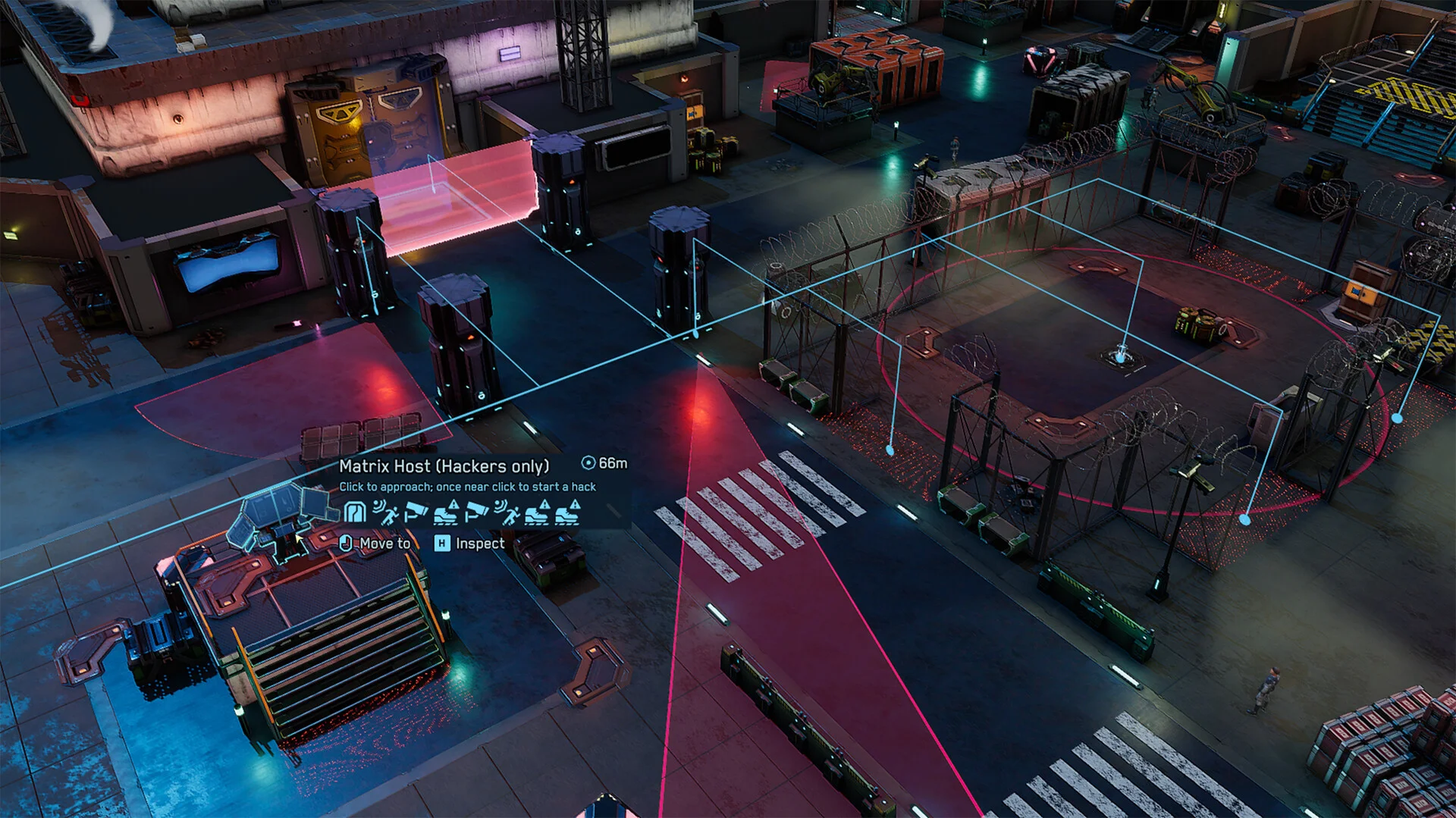
First, stealth. The few guards on the rooftop are unaware of your squad’s activities. Therefore, you may command them to move out of sight, avoiding unwanted attention for as long as possible. The game’s missions usually offer this silent option. The stealth system and enemy behavior model mean that stealth takes on a much more granular and robust role in how you may choose to approach a mission in its entirety. Say you take out a guard while the poor soul’s co-workers are none the wiser. After a couple of turns, the in-game SecAI will alert all guards that one of their vitals handshakes didn’t check in. In this event, the level’s guards will gradually become suspicious and begin to look for their fallen comrade, even if they aren’t necessarily aware of your presence at this point.
On the other hand, an unsilenced weapon (or silenced weapon still within earshot of a guard) or a careless step will cause the guards to begin hunting in the area. In this event, a clever tactician can still silently dispatch all alert parties without other enemies knowing about it right away, though this would be a remarkable achievement. Even in the event of such a successful maneuver, if the tactician then doesn’t move fast to complete their objective, the rest of the guards will eventually notice the absence of their brothers-in-arms. This granularity at once rewards outstanding planning and improvisation, and the depth of features that play into the stealth aspect of Cyber Knights alone make it one of the most dynamic turn-based games I’ve ever encountered.
Second, combat. The first thing I noticed about moving my squad around the map is how scrupulous Cyber Knights: Flashpoint‘s movement and cover systems are. The map is gridless, so you can slide up to any pixel on the floor, with a surprising amount of clutter and environmental detail you can use for full or partial cover. The desk chair in an office? Crouch behind it for some truly pathetic cover. A piece of piping conduit running across the wall? Squeeze up to it and hope the plumbing stops a bullet or two. The downsides are that it lacks the fancy dynamism of the destructible environments in other contemporary (and even older) games of its type, and that finding the spot you want to move your unit to can be a little bit finicky. Still, it’s neat that one pixel could mean having a target in your line of sight or not.
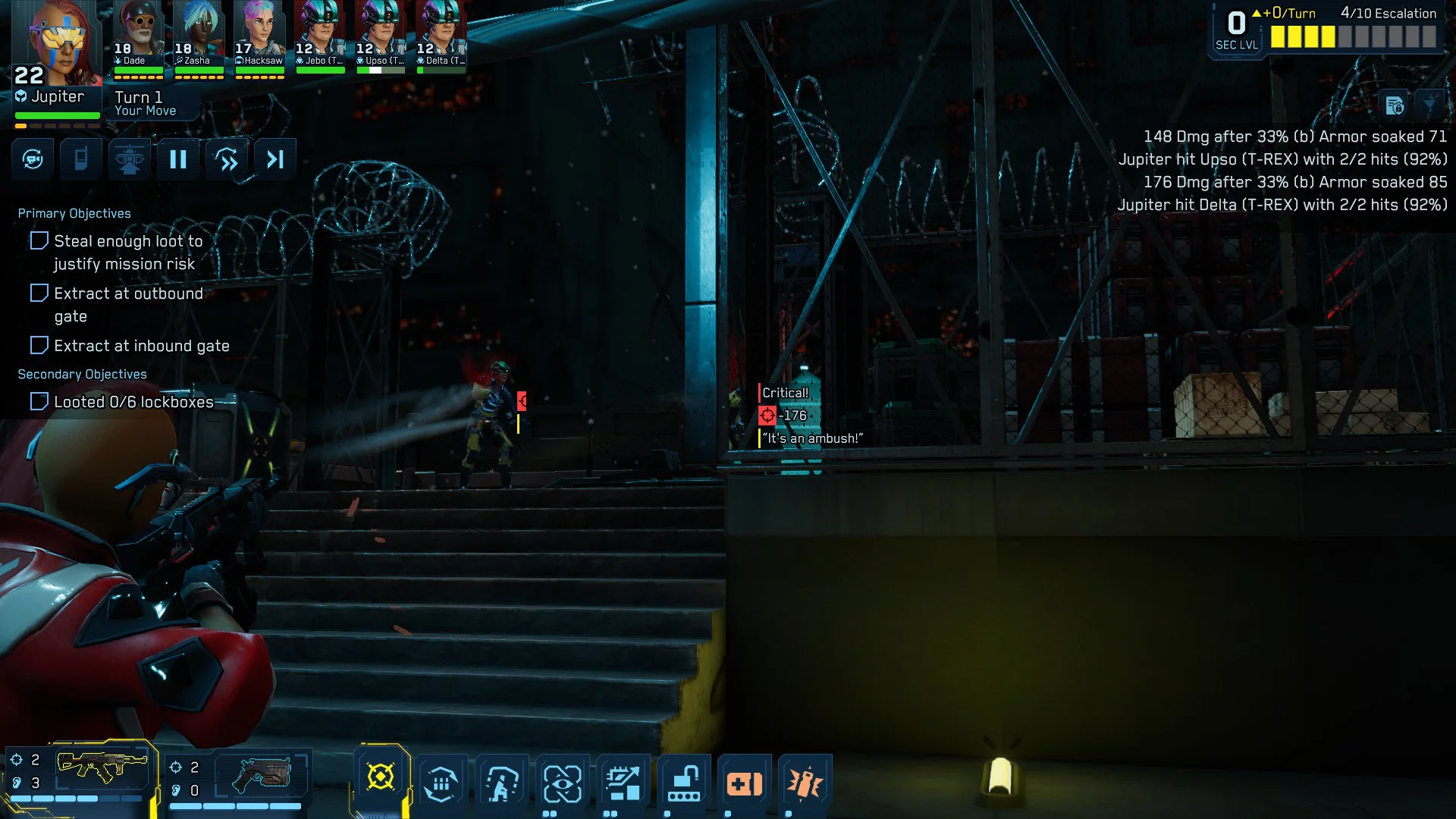
The weapons, weapon mods, cyberware, and skills available to the various operative classes also greatly impact the combat. The class skill trees are vast, and each individual skill can be upgraded several times to reduce cooldown or increase effectiveness. Multiclassing offers some very impressive flexibility in how you build your squad. The skill trees and managing your mercenaries with all their aspects can be daunting, but playing the game is so fun and rewarding that you will eventually learn its intricacies and parse the mountain of information it throws at you.
Third, the objectives. In the middle of this hospital extraction, an enforcer squad touches down on the helipad and begins hunting for you. You then have to quickly run across the map, hack an elevator, and extract while an overwhelming force descends upon you. The stealth and combat systems provide a canvas upon which you paint your successes, but time is almost always of the essence, even as the missions feature a decent variety of objective types. Balancing speed and stealth is one of the most intriguing promises Cyber Knights: Flashpoint makes, and it completely pays off. What pressures you to move has more to do with the awareness of individual guards and the accompanying threat of reinforcements, and nearly never to do with hard “complete x objective in y number of turns” arbitrariness. This design choice alone goes a very long way to allowing the player to buy into the world and short-term stakes of your mission.
Naturally, as a cyberpunk-themed game, there are opportunities to hack terminals. The hacking minigame is like a turn-based version of those in the recent Deus Ex games, with nodes on a web representing different system components all with varying degrees of security you must defeat with programs bought on the marketplace. This hacking minigame could almost be its own game as it provides a tense, deep puzzle which can trap and impede you in surprising ways. When hacking a terminal in a mission, you may find security nodes giving access to locked doors or security systems, or you may find file sets of sensitive (and sellable!) information. Strategic thinkers will consider which of their contacts gets the most valuable data, increasing their influence.
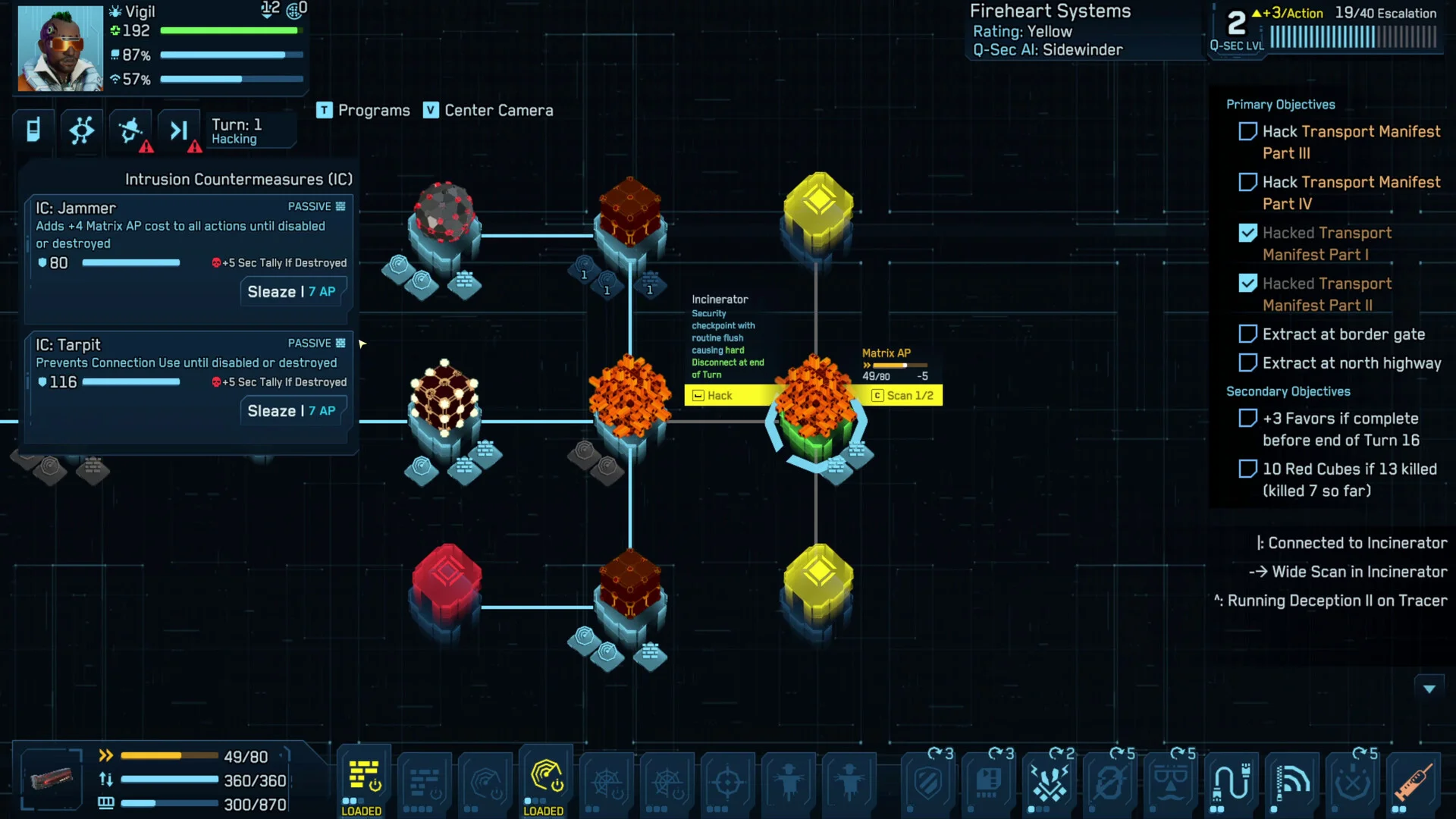
The Wire Ghost character class can hack systems through cameras, laser systems, motion detectors and other such security items to disable other components on the security network. They cannot, however, render systems completely under your control, so this class can take on a wholly different role as a sort of surface-level hacker.
After extracting your newly-minted Cyber Knight, who serves as more or less the player character, the next phase of the game reveals itself: base building, business management, and personnel management. Like many other tactics games, you are tasked with building facilities that may be used for crafting equipment and items, manipulating aspects of your operation like hacking boosts or stress reduction, and other necessities. Here you can also train and outfit your squad members, all of whom have deep backstories and faction relationships you can read about, but rarely pay off in the game itself aside from some cool instances of rescuing a family member and allowing them to join your squad, or a squad member being blacklisted by a faction, blocking you from deploying them in jobs offered by said faction. However, at the time of writing this, Trese Brothers has announced that they will be implementing Mass Effect-style personal missions tied to individuals under your employ. Time will tell if these missions live up to their promise.
One very successful aspect of character building is how you network with various players in the many factions of the New Boston dome. For instance, the exorbitant loan given to your team for Cyber Knight surgery was offered by a syndicate looking to take more control of the dome. You are obligated to take jobs for the syndicate leader until you can pay off your ever-hanging loan. Eventually, a rival leader from within the same syndicate will contact you to offer a forgiveness of your loan if you kill the other leader, allowing him to take her place. You are free to choose to either abandon both of them, which invites hired assassins to potentially interrupt any mission you take, pay off the loan in good faith, or take the man up on his offer.
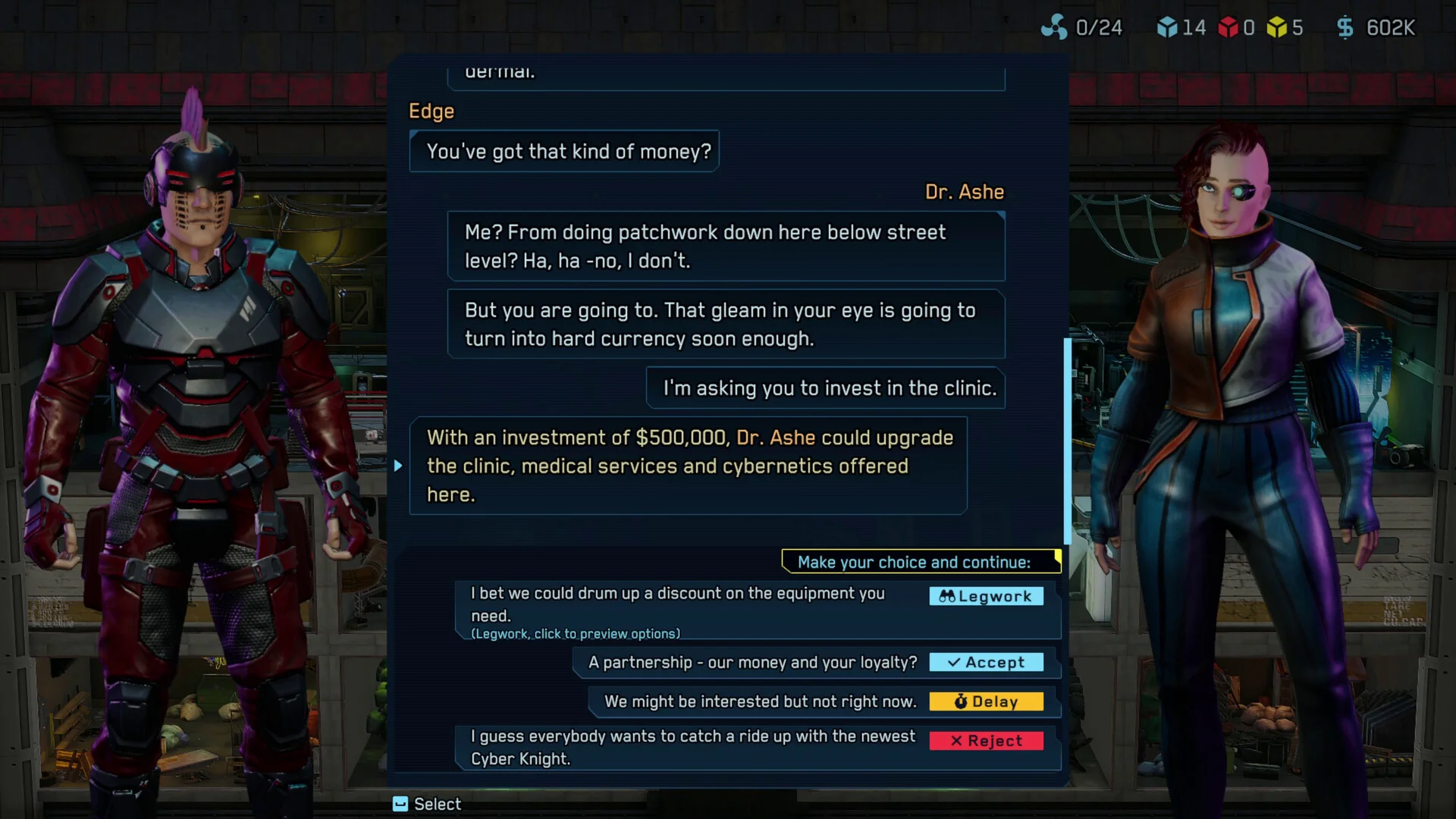
This is the tutorialized way Cyber Knights: Flashpoint introduces critical strategic considerations to the player. Though this first instance is scripted, much of your relationships to the various factions are actually procedural and systematic. As you take missions for individuals, they may rise in the ranks of their faction, be it a dealer of hacking drugs from a street gang, a corporate arms dealer, or a military security firm captain. Depending on the role of these characters, helping them rise in rank unlocks various perks for your team, including better items for sale or favors you can call in before or during a mission, such as cutting all the security cameras off. However, as faction characters rise in influence, they also gain exposure. Influence and exposure are opposing stats applied to characters in your rolodex that, when high enough, can impart positive or negative Limit Breaks. Managing these effects is one of the many considerations you may take into account, although you are not obligated to help anybody.
With so much depth to both phases of Cyber Knights: Flashpoint, the the result is a sprawling, dynamic set of factions and cast of characters that can interact with you and with each other in fascinating ways. This is a base building strategy game and a turn-based tactics game, but even as a role-playing game, there are few modern examples that showcase a similar depth and dynamism.
The cost, of course, is that it is at first a rather overwhelming experience, with lots of stats to consider and bits and bobs to manage, although I never found it as morose as managing the squads and bases in the MS-DOS X-Com games or the inventories of large parties in the most fiddly RPGs. The parts I did understand were so compelling that in time I learned to speak the language of the more mysterious parts, which opened my appreciation of them.
Trese Brothers is a small, boutique RPG studio that is known for their interconnected systems and for building worlds influence by its characters. They are also known as a studio that never seemed to have many resources for art. Most of their games are… charmingly rendered, so to speak. The predecessor to this game, the Android-only Cyber Knights RPG, is one of my favorite open-ended sandbox role playing games, but it is challenging to look at. Their previous game, Star Traders: Frontiers, showed some visual improvement, but Cyber Knights: Flashpoint marks a big jump in graphical quality and sophistication with fully 3D characters and environments that, while they won’t betray it as any AAA offering, are cohesive and attractive, even if some of the more colorful characters look silly. The music is ambient, synthy, and rock influenced. In a cool touch, it kicks up when stealth is broken, but it is little more than very serviceable background music.
Although there are many great examples of hybrid strategy/turn based tactical games out there, Cyber Knights: Flashpoint sets itself apart by offering both a uniquely dynamic and reactive strategic layer and a turn-based tactics layer with nail-bitingly satisfying stealth and great combat. This is one of the most rewarding games of its kind to come out in this generation. It is perhaps one of the best to come out since XCOM: Enemy Unknown revived the genre.