
I didn’t expect running a sushi restaurant would be easy. I just wasn’t expecting raising chickens, appealing to acclaimed movie directors and rap stars, and uncovering and assisting a hidden village of sea people to be part of the process. Just as the glassy surface of the ocean betrays the thriving universe underneath, Dave the Diver is astonishingly vast. Both its gameplay and its world expand far beyond their initial impressions, delightfully surpassing player expectations. The sheer depth present also washes away the game’s few faults, leaving behind an incomparable experience.
For your sushi restaurant, Bancho Sushi, to thrive, you need the freshest ingredients to form the foundation of your menu. As such, you must dive into the Blue Hole’s waters to catch whatever fish you can. In the Blue Hole, Dave the Diver becomes a rougelike, with changing map layouts each time you dive and randomized chest locations. Chests may contain condiments to add to your sushi dishes or weapons. You use your weapons—a harpoon and a gun—to catch all manner of fish for your restaurant. You never run out of new fish to find, as there are well over 100 fish species across six depth zones, all of which make for viable menu items.
Catching fish can range from effortless to onerous, depending on your equipment. Your oxygen tank serves as your health, which depletes naturally over time while also taking a nosedive if any aggressive sea creatures attack you. The diving suit you wear can upgrade to allow you to reach deeper sea levels and your oxygen tank can also upgrade to increase your health. This is hardly the only source of permanent progression in Dave the Diver’s roguelike segments, however. You must also provide upkeep on your weapons, starting with the game’s numerous types of guns. The offensively oriented guns, such as the triple axel and grenade launcher, are great for taking down bigger, fiercer fish such as sharks and marlins. Other gun types, such as the hush dart and net gun, will catch fish without killing them, providing you with more meat at the cost of firepower for defending yourself.
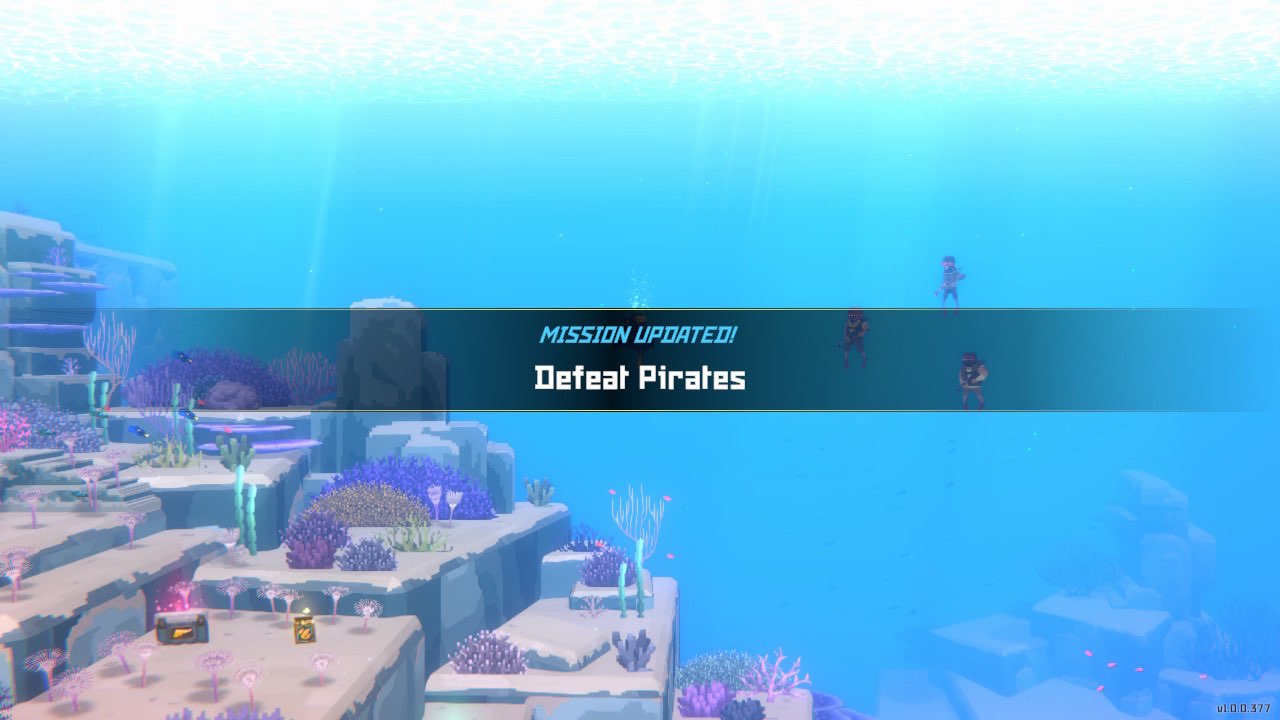
When setting out to dive, you may bring one gun that you’ve crafted using your own money and materials, which you also find underwater. In addition, each of the eight basic gun types has its own tree of permanent upgrade options. The net gun can increase in size and strength, while other guns can be imbued with various properties, including poison, lightning, and even tranquilizing capabilities. Upgrading guns to fit both your play preferences and fish-capturing needs is already an extensive system on its own, one that gives players endless freedom of expression. It’s accompanied by the resource management of found materials and earned money, with resources delicately balanced between upgrading your harpoon, oxygen tank, and countless other gear that you unlock at a steady pace, including a drone to lift heavier fish to the surface and your trusty knife. Once you think you’ve reached the end of an upgrade path, another one opens up before you, deepening the gameplay and ensuring you never grow complacent.
To get the money you need to upgrade your equipment, you need to serve the fish you’ve caught as menu items at Bancho Sushi. Bancho Sushi only opens during the evening, giving you the daylight hours to dive. However, you also unlock night diving relatively early on, leaving you with extra decisions to make. You can use the entire evening for serving sushi and thus potentially earning more money, or you can sacrifice a few dining hours for a dive that will net you more ingredients—provided you don’t meet your end at the fins and fangs of the water’s nocturnal fish, which are more aggressive than their diurnal counterparts.
No matter when you catch your fish, you are in charge of determining what makes it onto that night’s menu. As if catching each fish wasn’t enough of a completionist’s dream, you can also upgrade your available recipes at the cost of an increasing number of ingredients. Upgrading recipes comes with plentiful benefits, both of the gameplay and the character variety, and it’s just one of countless activities that gets its own beautifully animated sprite-based cutscenes—plural—showing off Dave the Diver’s character depth and sense of humor. The restaurant’s namesake chef, Bancho, prepares and garnishes a dish salt bae-style in one animation and sharpens his knife under a cherry blossom tree as a fish looks on in horror in another. The animations are short but hardly simple, and they effectively convey the personalities of the characters involved, helping Dave the Diver’s seemingly tiny world feel that much larger.

Aside from getting to watch a great cutscene, upgrading recipes also comes with the benefit of improving the recipe’s cost and taste. Selling sushi with high tastiness is important because it’s one of the requirements to increase your Cooksta ranking, Cooksta being Dave the Diver’s food-focused social media app. Increasing your Cooksta ranking is crucial because higher rankings unlock additional employee slots and recipes, among other things—and yes, there are animations for when the Cooksta inspectors come to your restaurant. Upgrading menu items is already balanced by the way it encourages you to continue catching fish you’ve already caught, along with how catching a fish alive provides more meat. It also earns you a 3-star Marinca trading card, and yes, there are collectible trading cards in this game, too. Even still, you’ll later unlock a fish farm where you can breed fish you’ve found and send extras off to the restaurant as ingredients. If it feels like all these tools plus increasing the capabilities of your equipment may make selling high-quality sushi too easy, not to worry: you eventually unlock a branch restaurant where you station some of your employees and send extra ingredients to sell.
It can sometimes feel as though Dave the Diver adds a new feature every other moment, but the features feed into each other so seamlessly that the increasing gameplay elements never feel overwhelming. When you get your farm, it’s to send vegetables and eggs to the restaurant to further expand your menu. When you receive a camera, you can start taking photographs of specific marine life, giving you a way to earn extra coin for upgrading your equipment or buying seeds for your farm. Completing enough tasks on the Ecowatcher app, such as sending in different colors of starfish, will reward you with additional helpful diving equipment. Features that don’t provide a direct gameplay benefit, such as feeding the cats at Bancho Sushi in the daytime, instead add depth to the game’s world. Every character feels like their own defined person, thanks in great part to the sheer amount of content in the game.
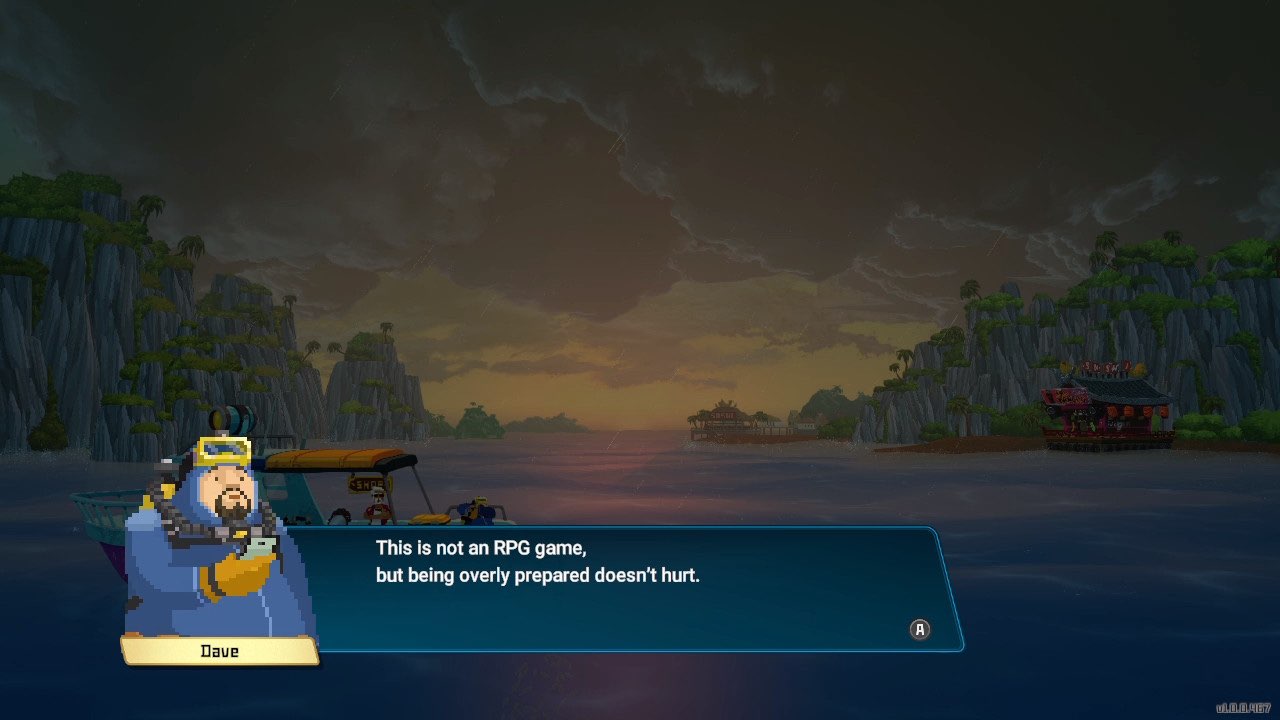
Once you think you’ve reached the very depths of the Blue Hole, Dave the Diver’s content expands even further with the discovery of a hidden village populated by sea people. The sea people swim harmoniously into the game’s overarching plot, as they’re plagued by the same destructive earthquakes felt on the Blue Hole’s surface. All the while, they add a plethora of new features for you to play around with, including—but absolutely not limited to—an entirely new series of sidequests, a seaweed farm, and a dumpling restaurant with food you can eat to temporarily increase your stats while underwater.
The only place where Dave the Diver’s sheer amount of content is a detriment is under the water, where there aren’t enough buttons to accommodate everything you can do. You press and hold Y to disassemble found weapons to collect their materials for upgrading. You also press and hold Y to send incapacitated fish to the surface via a drone. These hardly have the opportunity to overlap, but they can and do overlap with your consumable inventory. Most consumable items activate with Y, so it’s not uncommon to accidentally waste an oxygen tank or trap when trying to perform a completely different task.
Up on dry land, you have even more differing tasks to complete, although the controls are much less conflicted. From serving customers to tending the farm, controls feel responsive and intuitive. The variety of land activities also counterbalances the diving segments, which can last for quite a long while as your skills improve and you continue to upgrade your equipment. It’s highly satisfying to see how far you’ve come as a diver, the sharks you once struggled against now being caught with relative ease. You’ll surprise yourself with how much your restaurant has grown, too, welcoming unanticipated chefs, servers, branch managers, and even menu items. Dave the Diver is chock full of joyous surprises as both you and the game itself grow.
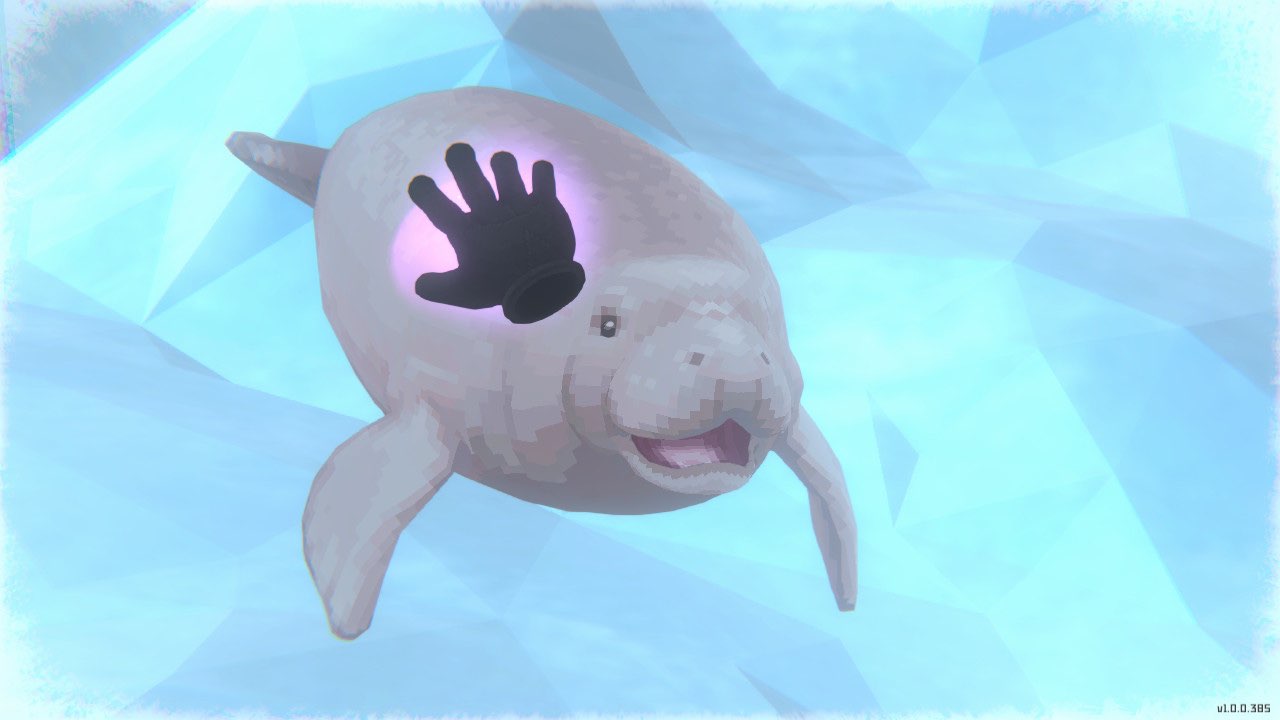
There are, however, some far less joyful surprises that may await you: game crashes. Like Dave the Diver’s intentional penchant for unexpected gameplay additions, it’s difficult to say what causes these crashes, as there seems to be no consistent element behind them. The first two times the game crashed on me, once when shooting a crab with a tranquilizer triple axel and another when using a booster against the currents in Limestone Cave, I lost my entire diving haul. The game’s three separate autosaves ensured that I only lost my most recent run and not any additional progress, but such a solution is a mere bandage over a shark bite wound of a problem. Still, like many whom the sea has wronged, I couldn’t help but dive right back in, discouraged at my lost progress but compelled by the otherwise phenomenal experience to continue forward.
The third time Dave the Diver crashed, I was going to and from the sea people village, and the game froze on the transition screen. After an especially successful run in the newest area I had unlocked, I almost felt like giving up—but because the game autosaves when you move between major regions, I was able to maintain my haul this time and continue as if the crash had never happened. Combined with the fantastic experience I continued to have in spite of the crashes, I couldn’t help but consider the possibility that you can dress a shark bite wound with a bandage after all.
There is so much meat in Dave the Diver that no number of shark bites can truly size it down. Even when the button prompts fail to properly load during a cooking competition, said competition is followed by a scene providing additional character lore and growth, ensuring you don’t stay disappointed for long. It’s very, very hard to overlook such a major, literally gamebreaking factor as crashes, but there’s just so much more to see instead: a music concert mini-game in a literal fever dream; minor characters with major emotional beats in their sidequests; plentiful boss battles against epic deep sea creatures; and still so much more. Just as we haven’t mapped even a fourth of the earth’s seafloor, there is so much more to Dave the Diver than first meets the eye. It’s surprising, it’s expansive, and each of its many segments is equally memorable. Dave the Diver is a game that shines brilliantly, even brighter than the most elusive pearls.