
Sometimes I think I played a different game when people talk about the original Dragon Quest VII. What do you mean it’s too long? You want fewer islands? Okay, sure, I could do with things going a little faster in the beginning, but that’s part of the beauty of Dragon Quest VII—it takes its time.
It delights in the small moments where you help the fallen leader of a town, where you protect a child from a Slime, where you discover yet another piece that lets you (literally) put the puzzle together. It’s still pure in its storytelling without shying away from darkness. Put simply, in the words of my friend Mike Sollosi, it’s the most Dragon Quest game, both thematically and in hours of content, and that’s why I love it so much.
Needless to say, I don’t think Dragon Quest VII needed to be fixed, or even Reimagined. And when I heard Square Enix was cutting islands, the very best part of Dragon Quest VII? Oh no. I want more, not less. Even with the promise of new additions, I was trepidatious that Dragon Quest VII Reimagined might just lose all the, well, imagination.
Luckily, it turned out even better than I imagined. Not only is this my favorite version of Dragon Quest VII, but it’s also one of the best in the series.
So, let’s get one thing out of the way: the islands. For those unfamiliar, Dragon Quest VII has a unique structure. You spend most of your time traveling back in time to restore islands to the current world that you previously believed only had one, and help each island’s people fix their problems, which range from a town where a monster won’t leave a priest’s old home to another where all humans have become animals. Eventually, you return to the present, with the island restored in the current timeline that you can then explore again.
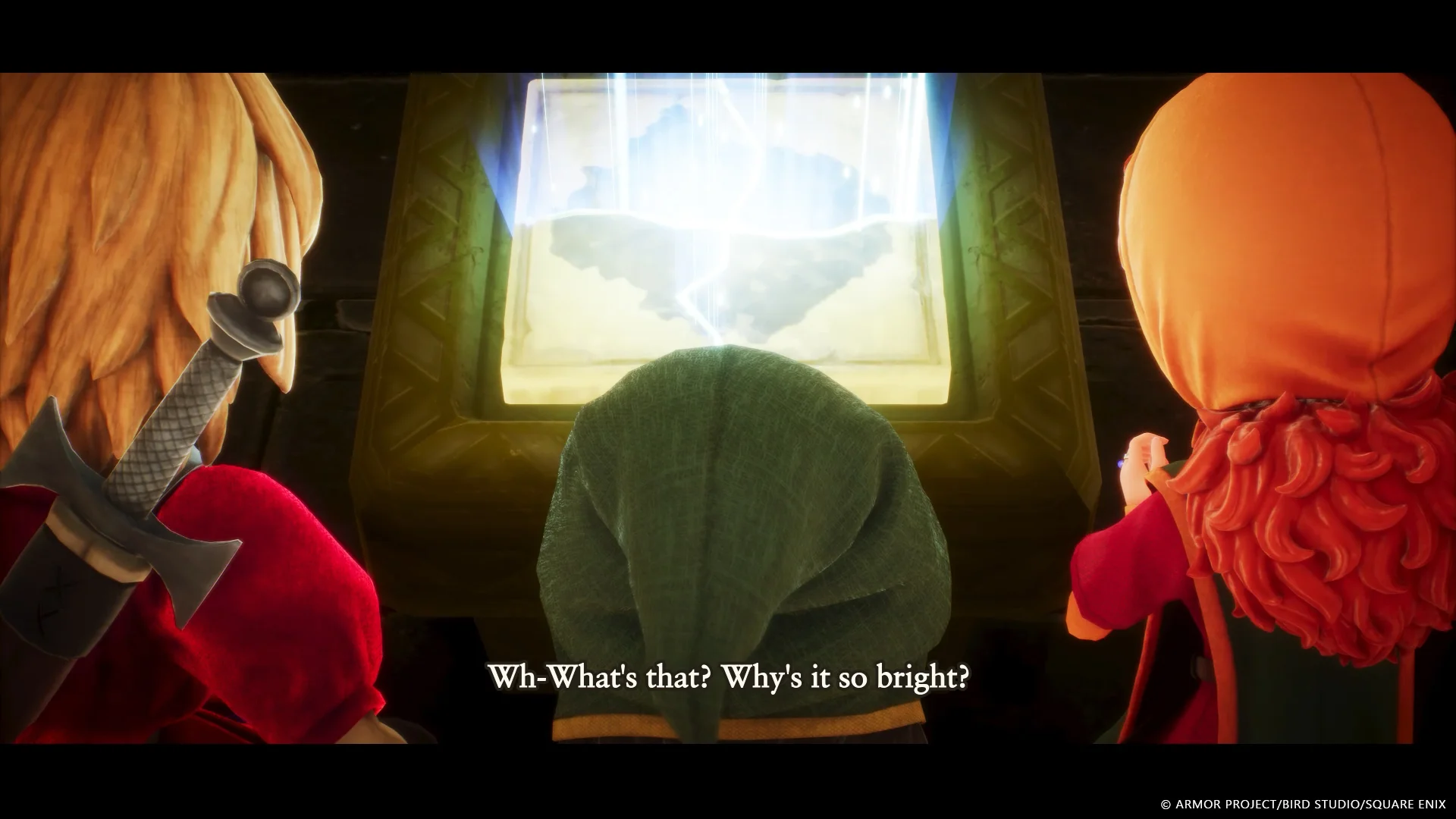
The overarching story takes time to come into focus, but even when it does, it doesn’t overshadow the small, intricate tales on the islands. This really is a game about helping people, about the importance and ramifications of the small things we can do for others.
So, cutting even a few of the islands in Dragon Quest VII Reimagined feels antithetical to the whole point. Granted, four once-required islands are now optional, and you bet your bottom dollar I did them as soon as they were available. Three others are cut entirely (along with some other content, like the casino). But, if I’m being honest, I didn’t miss anything.
There are still almost 20 islands, and the game’s spirit is still here. I’m still helping people, and it still takes up the bulk of the run time. Giving me the option to restore almost every island, but making the game take about 55 hours to clear instead of 80 on the 3DS and 100 or so on the PSX original is a fair trade in my view, but if they added those three islands as DLC, I’d be there faster than you can say Yuji Horii.
In terms of other storytelling changes, they’re mostly for the better. There’s less backtracking in general, and a couple of island vignettes got a few small adjustments to tighten up the story or give you more options. There aren’t many additions, though a favorite character does indeed rejoin you very late in an extended sequence that almost feels like another island. It feels tacked on and like fan service, but luckily I’m a fan so I don’t mind so much. Honestly, this version of Dragon Quest VII is much more true to the previous versions than the recently-released Dragon Quest I & II HD Remake; it still feels like you’re playing the same game.
Do I wish Square Enix had given us the whole package? Maybe a little. Still, everything else the developers have done here more than makes up for it. Especially the combat and the vocation system.
On the mechanics’ surface, things look pretty similar, and I won’t go too in-depth because Scott already did in his excellent preview. To be clear, this is still Dragon Quest through and through. It’s turn-based, and Dragon Quest VII’s vocation system still allows you to be a Pirate or a Dancer while you build up points to unlock more abilities.
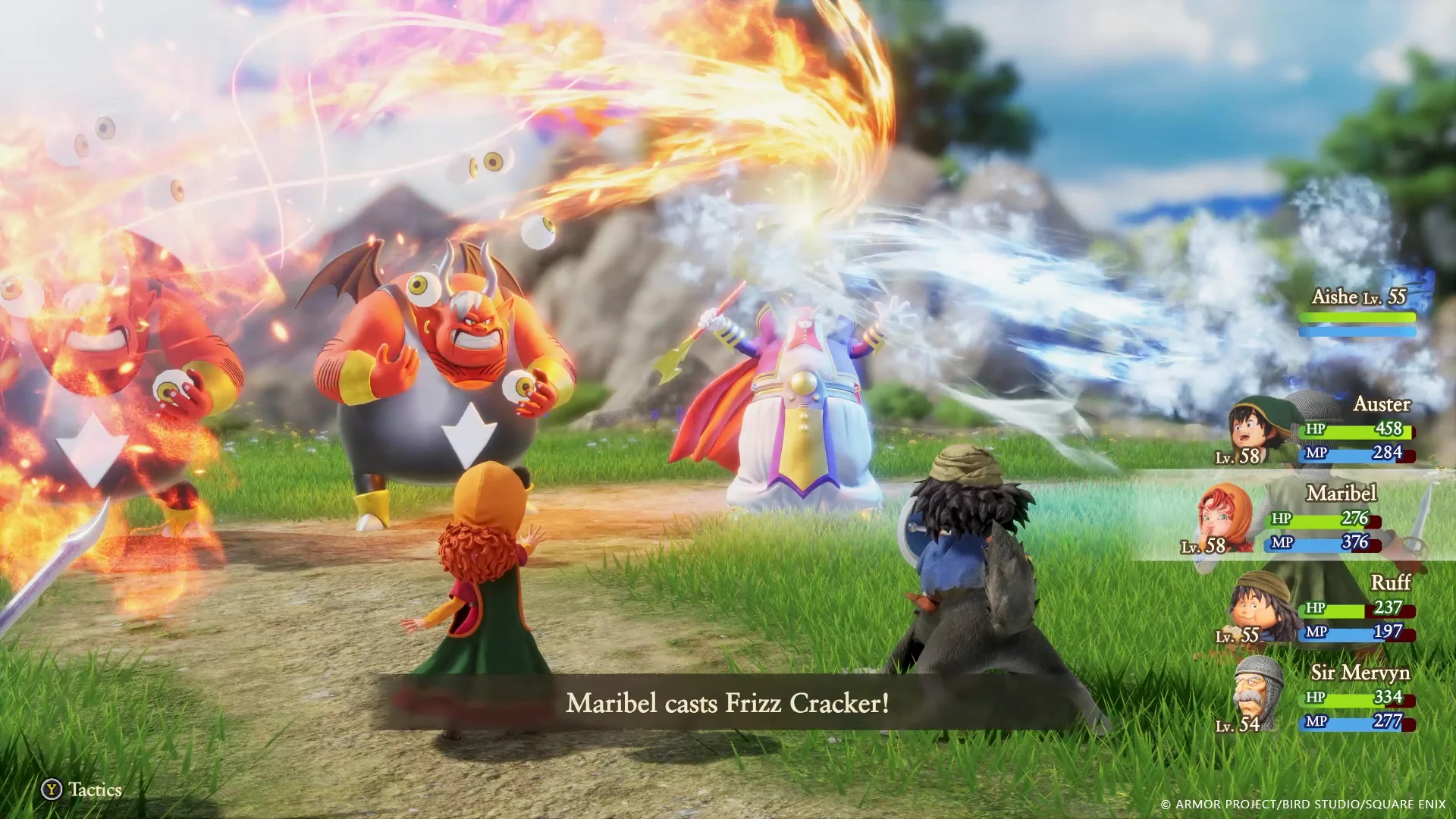
But the adjustments here are key. First, the Moonlighting system allows you to equip two vocations at a time. This is especially nice when you’re trying to level a new vocation and don’t want to feel underpowered. More important is the second adjustment: new “Let Loose” abilities that build up throughout the fight, similar to “Pep-Up” from Dragon Quest XI. Each vocation has a unique one, and I found myself combining a more powerful vocation with another simply for its particularly useful Let Loose attack.
All this, combined with choosing moves as they come up instead of just at the beginning of each shared turn, makes this easily the best Dragon Quest combat system, requiring choice and strategy at every turn. The only major flaw is that even on the hardest difficulty on every setting, Reimagined is a total joke if you know what you’re doing, because yes, Hero and Champion still rule the day.
I don’t mind so much, though. Figuring out the right combinations and firing moves in the right order has never been more fun in this series, and that’s saying something almost 40 years in. Plus, there are some real challenges hanging out in the post-game, and that was enough to sate my need for punishment.
You know where I have absolutely no criticisms? The look. If nothing else, it’s a lesson in “art design is more important than big flashy graphics.” From start to finish, Dragon Quest VII Reimagined is a marvel to behold, combining dioramas in each town and vista, where you can adjust the camera as you search every nook and cranny for that next Mini Medal, with doll-inspired character models that look straight out of a pop-up story book.
This isn’t the first time a game has used dioramas, since Fantasian did it a few years ago, but this looks so much better than that. Add in the always-fantastic monster designs of Akira Toriyama, plus the ability to see character animations in battle, and we’ve got something special here. Sure, the doll-like look mitigates some of the melancholy tone from the original, but it’s no contest for me—this is the way I want Dragon Quest to look.
That even extends to the sound design, which is saying something considering the usually mediocre Sugiyama compositions. But something about the darker mood of the game matches his tone, and it’s brought to life beautifully, similarly to the recent Remasters, with re-recordings of the Tokyo Symphonic Suite versions. The voice acting is also fantastic, combining the British flavors we’ve come to know and love in Dragon Quest with the varied accents and wonderful localization. Simply, Dragon Quest VII Reimagined is a treat to listen to.
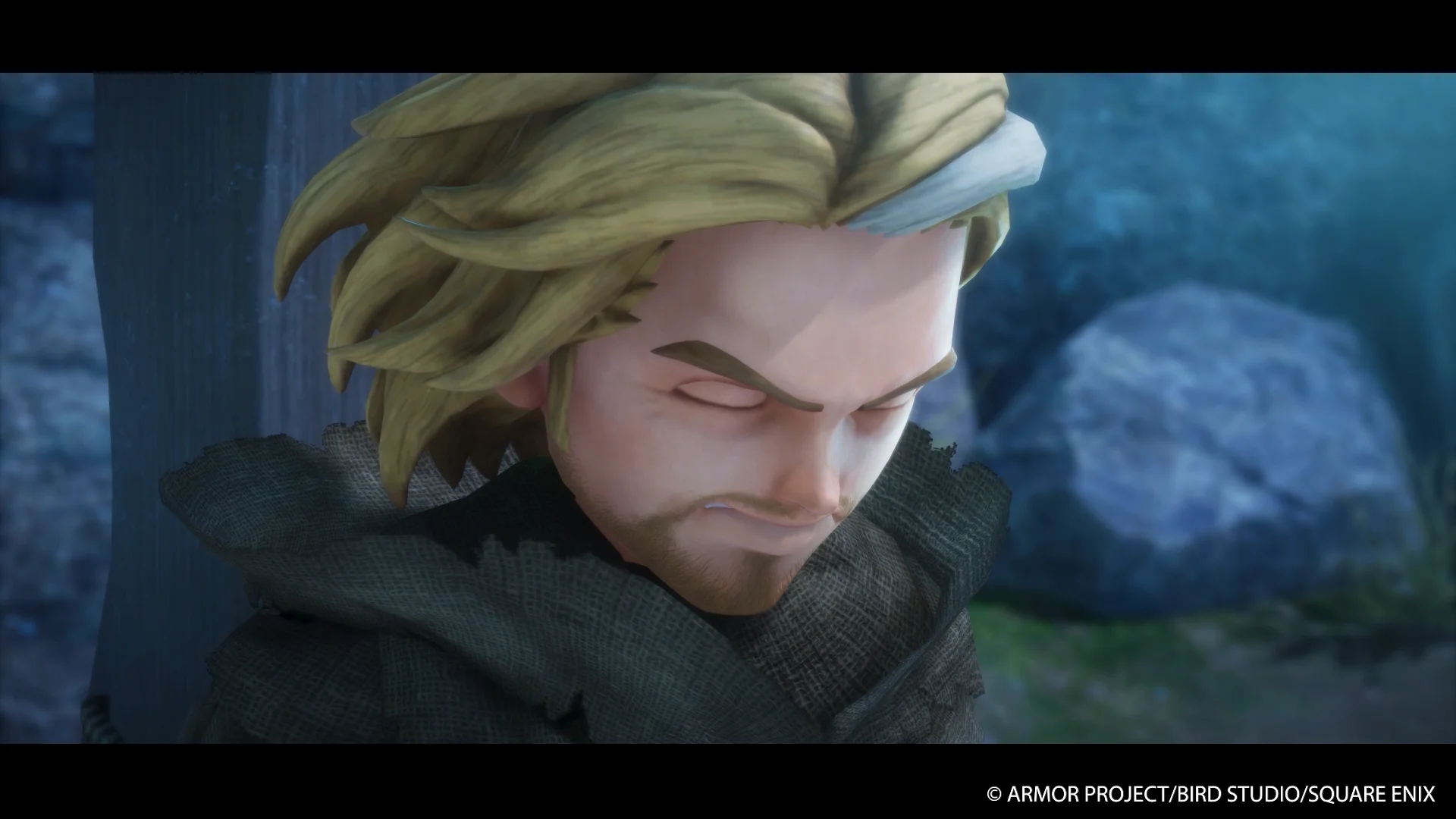
Maybe the only major sore spots for me with Dragon Quest VII Reimagined are the quality-of-life features, which is strange to say because I love them. Not only do you get additional difficulty modifiers, but treasures are marked on maps, there are almost always markers to show you where to go, and Party Chat is always there to remind you what to do next if you’re particularly stuck. There’s even a list of locations for your missing Mini Medals and items (an absolutely godsend). Admittedly, it can be a little weird sometimes to have a marker when you have no idea why you might go there, and the Party Chat is mostly just annoying.
But the problem is quite simple: you can’t turn any of them off. Personally, especially when I’m playing a game for review, I’ll take all the handholding you give me. This game, though, takes it a little far. It’s a little maddening because the HD-2D Remakes of the original trilogy got this part right by allowing you to turn the guideposts off. I’m hopeful they patch it in time, yet if there’s one thing that isn’t true to the spirit of the series, it’s this.
Even so, with Reimagined, it’s time for everyone to finally stand up and agree that Dragon Quest VII is one of the best games in the series. Dragon Quest VII Reimagined cements this by smoothing out some of the rough edges, keeping things moving, and giving us a look and a combat system that are the series’ absolute peak.
Just please, give me all my islands!