
It’s been almost 20 years since The Legend of Zelda: Twilight Princess, still the last traditional 3D Zelda to grace our Nintendos, first arrived in its edgy “T for Teen” glory. While the game has already gotten a proper remaster treatment in 2016 with Twilight Princess HD, it remains solely accessible to the few people out there who own a Wii U. Only the Hylian Goddesses know why. Luckily, fans can do what Nintendon’t: port the game to PC. As someone who’s been eager to replay Twilight Princess for two dang decades, my body was ready to be transformed into a hot wolf once again.
You’ve either clicked this review familiar with The Legend of Zelda: Twilight Princess’ recent fan-made PC port or are wondering what the heck “Dusklight” is. In short, it’s a reverse-engineered decompilation of the game rebuilt using original code. In long, you can read more about the painstaking process here.
Twilight Princess isn’t the first Zelda game to get the decompile/recompile treatment, but considering it’s the only 3D entry in the series still unavailable on Switch, it’s the one that fans have seemed most excited by. Do-gooders may be relieved to hear that downloading Dusklight does not even require donning any pirate gear, so long as you own a copy of the GameCube or Wii versions to rip the ROM file from.
Twilight Princess has been through the wringer in terms of its place in Zelda discourse. When Nintendo announced the game, it felt like an uncharacteristic resignation by the company folding to Ocarina of Time stans put off by Wind Waker’s now verifiably timeless cartoon art style and other departures from “the formula.” So, Nintendo said fine: here’s the closest thing to a pure OoT successor you’re going to get, packaged in more superficially “dark” and “realistic” aesthetics.
The mid-2000s were a time in gaming history when Dark was constantly mistaken for mature and thematically strong. Twilight Princess is Dark in a way that befits the mid-2000s Hot Topic era it hails from. An aesthetic that is perhaps best summed up by the fact that Link turns into a wolf wearing a prison shackle as an anklet. But that’s not to say there’s no bite to go along with all that bark.
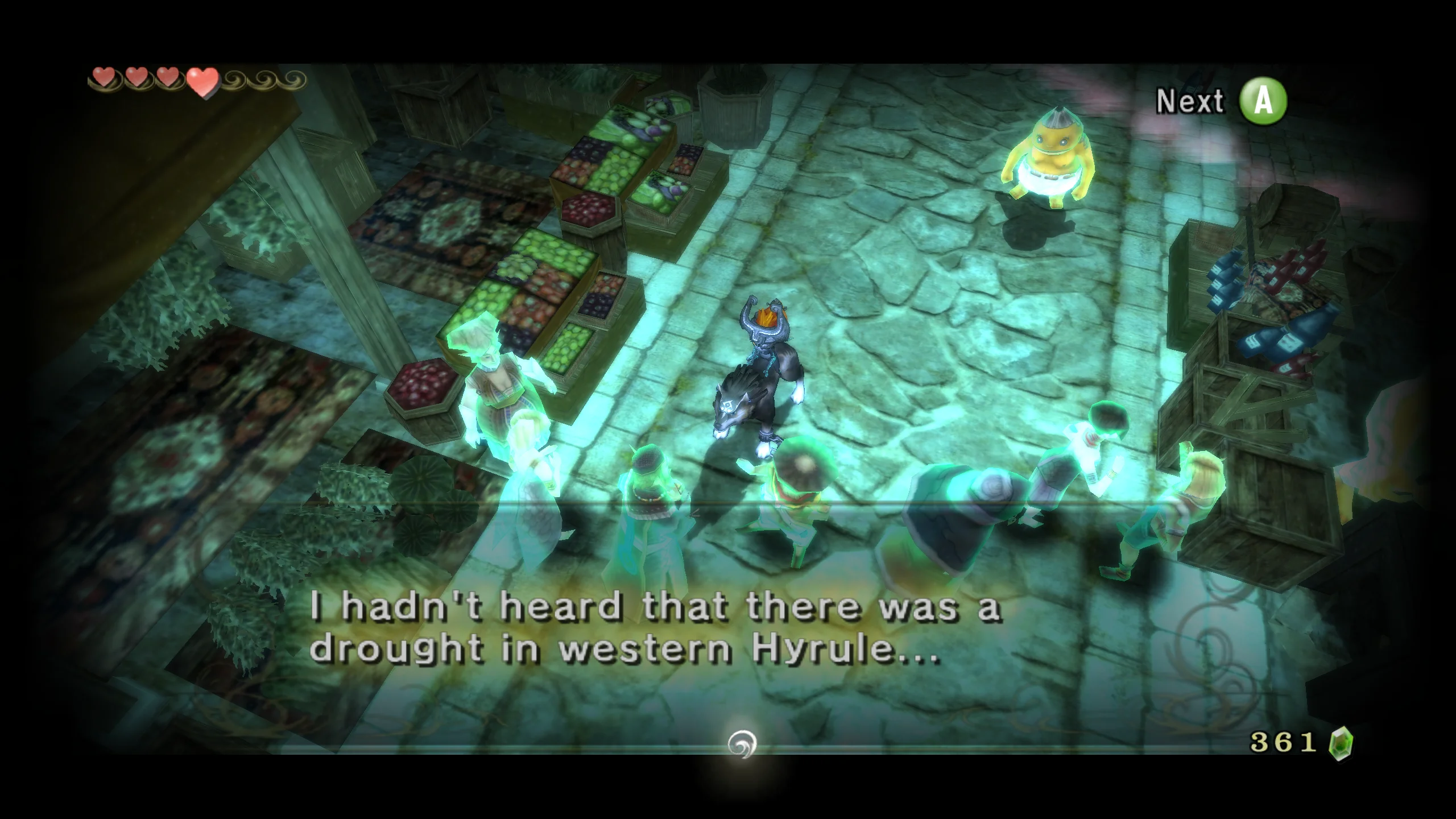
And that bite comes from the new characters who hail from the Twilight Realm, including the genuinely menacing villain, Zant, and our impish companion, Midna. Midna is immediately a compelling presence, and her interruptions are rarely unwelcome, which is honestly a rarity for companion characters of her ilk. Instead, her early-game teasing and gradual character growth make her feel essential. As with its three 3D predecessors, some of Twilight Princess’ most interesting story elements lie in subtext. There’s a general undercurrent of an idea that one person’s balance comes at the cost of another’s suffering. This subtext just doesn’t feel as developed as it could have to really leave a strong impression beyond its admittedly strong vibes.
My time with Dusklight was spent playing the 1.1.1, 1.2.0, and 1.3.0 versions. I didn’t experience any crashes during my playthrough and barely any technical hitches at all. The extent of wonky interactions came from enabling full camera control with the right stick, which, unlike the originals, allows you to move it vertically as well. Then again, it’s not a surprise that unlocking this QoL feature that was never in the original game led to occasional issues. I’m still glad I was able to do so, and it improved the experience overall.
Engaging with Dusklight’s neat and stylized QoL menu feels like an alternate reality where players are trusted with the ability to create an ideal version of a game’s experience for themselves. These options go beyond accessibility, pulling elements from all existing versions of the game and presenting them as toggles alongside a slew of new conveniences, visual polish, and experimental features.
The default selections when you first boot up Dusklight leverage the vast visual and performance upgrades, throw in a few subtle yet game-changing QoL features, while leaving the other settings as close to the GameCube release as possible. New players can opt to leave these settings as is for a relatively “vanilla” experience, while those of us returning to the game can explore ways to make it more appealing for ourselves.
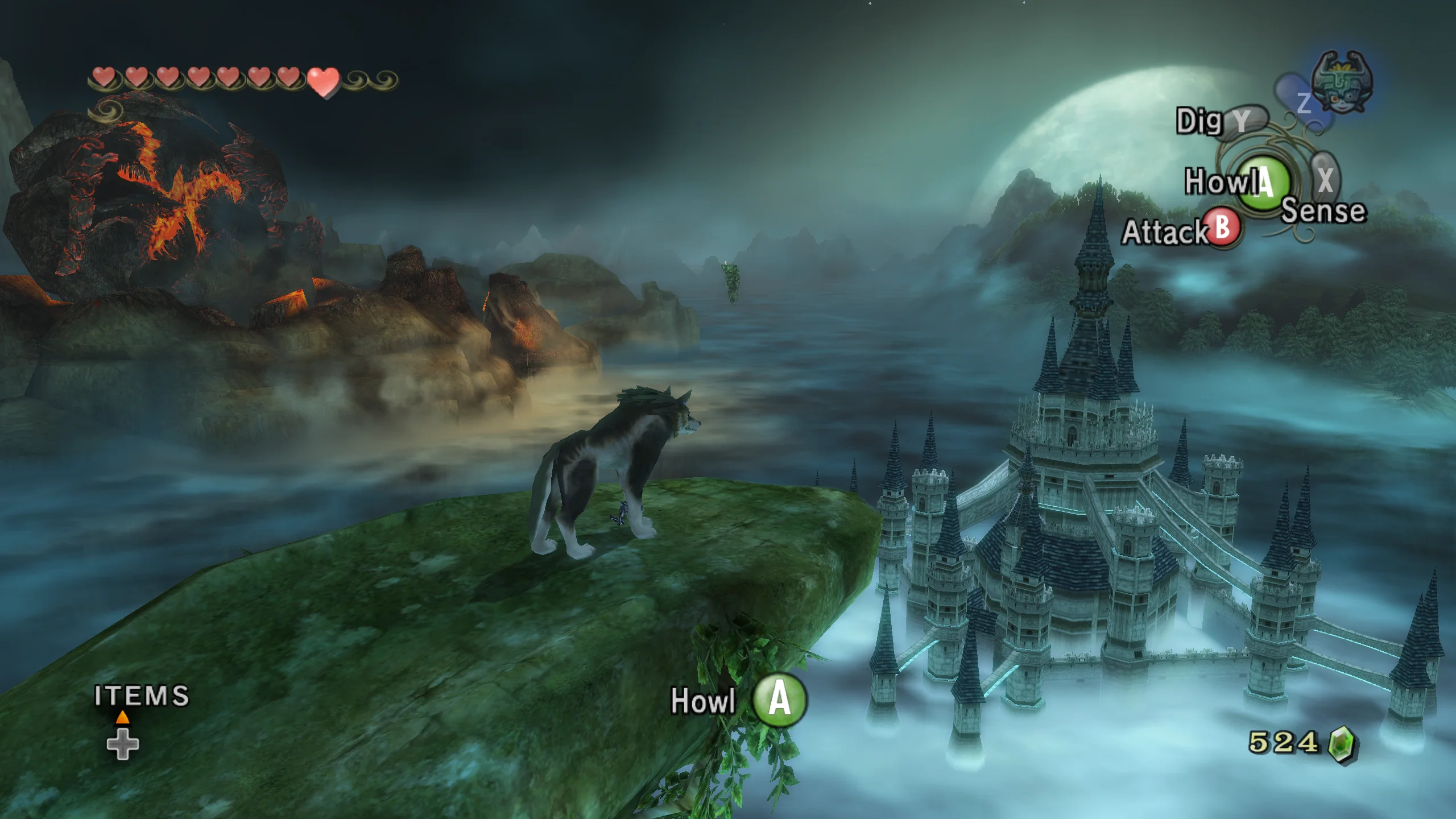
Among Dusklight’s “default” settings are faster climbing animations and button shortcuts for transforming into Wolf Link and playing howling the Sun’s Song to change day to night or vice versa. If you don’t remember Twilight Princess having a Sun’s Song, that’s because it didn’t. And now that it does, I can’t say I understand why it never did. Still, my top pick for new convenience is transforming into Wolf Link seamlessly by pressing R+Y. Transforming in the original game used to require first calling up Midna and selecting the option from a menu—which I’m sure never helped the common criticism around wolf form’s implementation.
If you want something even closer to the vanilla version (i.e., crank down that framerate and crank up the bloom), then go ahead. You can even import other texture packs into Dusklight, like Henriko’s or TrueD-TPHD if you prefer the redone textures in the WiiU version (I don’t). But you can observe the differences for yourself here. There are no cranky game devs trying to force you into a specific kind of experience like you’re a dumb gamer baby who needs to be limited. While this visual customization showcases the flexible beauty of PC ports, the out-of-the-box package Dusklight comes in offers all you really need with its balance of polish and authenticity.
So, yeah, Dusklight allowed me to create the exact version of Twilight Princess I wanted for myself. I enabled double damage from enemies and restricted hearts from appearing in the wild to create the Hero Mode conditions from Twilight Princess HD (without the obligatory mirror world flip in that version). When the game failed to scale enemy damage to a satisfying level in the final stretch, I bumped it up again to triple.
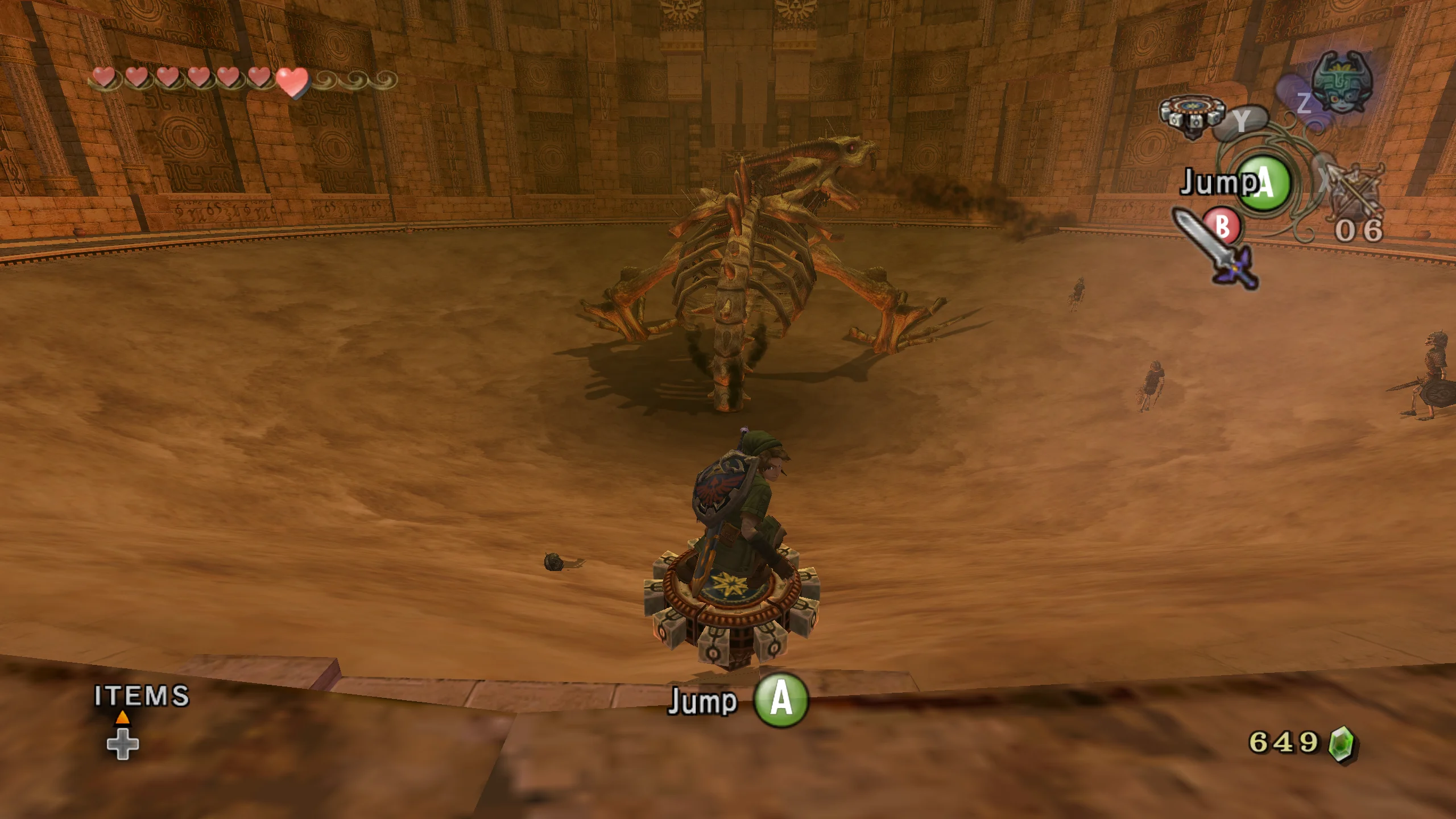
I remember Twilight Princess being easy even as a pre-teen who didn’t love difficult games, so the harsher consequences for getting hit encouraged me to experiment with the game’s large arsenal of tools to limit it as much as possible. A fair complaint against the original game is that many dungeon items and the seven “secret” combat skills Link can learn from an old Hero-turned-Stalfos are underutilized. Challenge breeds creativity, though. In my Dusklight playthrough, I was roll-slashing, shield bashing, and ball-and-chain swinging more than ever before.
Twilight Princess has a solid story and cast of side characters to support its epic scope, but it aims more for mood than cohesion. And yet what a mood it is. Turns out I don’t still need to be 13 years old to enjoy the lite edginess the game runs with. Secondary characters like the capitalist baby boy Malo, the deluded insect “princess” Agitha, and those clowns dressed in drag all help build a world with just the right amount of fantastical offbeat energy. This is unfortunately an element of the series that Nintendo would start to sand down going forward in favor of the clean, Disney-like image they’ve been cultivating lately.
There’s a common discourse out there now that slams Twilight Princess’s more “realistic” art direction as misguided and roughly aged. Realism is a poor word for what’s going on here—something which should be immediately clear upon witnessing the playfully deformed character designs. Twilight Princess’ art direction achieves a fable-like quality colored with sharp earthy tones that Dusklight’s textures and reduced bloom make more palpable than ever.
It’s only the expansively empty Hyrule Field that can feel somewhat drab and underdeveloped, though that’s a natural limitation of creating vast spaces for GameCube hardware. While Wind Waker’s Great Sea may have been a more creative workaround for this limitation, Twilight Princess’s horse combat and many collectibles make the most out of the large overworld space.
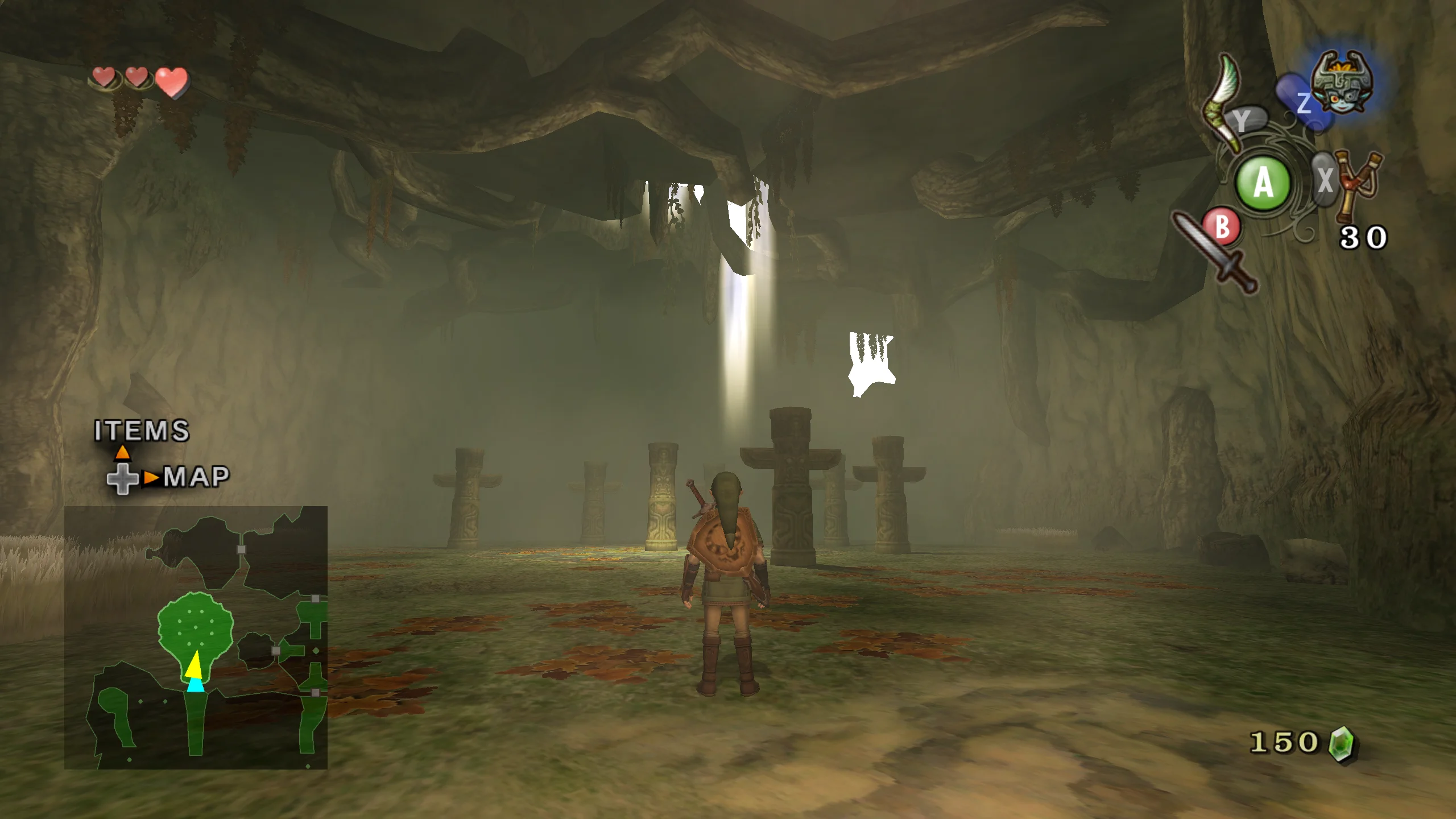
You know what most definitely hasn’t aged poorly? Twilight Princess’ substantial lineup of quality dungeons. The Forest Temple kicks things off even stronger than I remember with its effortful level design and dense atmosphere. No Zelda game has done a better job making its dungeons feel like part of its world rather than abstracted gameplay challenges.
The run from the abandoned prison of Arbiter’s Grounds, the yeti-inhabited Snowpeak Mansion, the Temple of Time, and City in the Sky may be the greatest in the series. At this point of the game, you’ve already unlocked most of the world map and wrapped up Wolf Link’s Twilight Realm segments, so you’re mainly zipping from high point to high point with only some brief exploration and story set pieces separating them.
On that note, I don’t think critics who target Twilight Princess’ “padding” consider how much these small breaks contribute to the game’s epic scope and help make each dungeon feel like a more special location and experience. You don’t have to love the execution of all of these interludes to appreciate the ambitious purpose they serve, and the amount of gameplay variety the developers try to throw in ultimately works to the game’s benefit.
In retrospect, these are the main design elements that meaningfully distinguish Twilight Princess from the 3D titles that came before and after. The “Ocarina of Time 2” moniker fans have stuck on the game (whether used favorably or disparagingly) doesn’t quite tell the full story. If we never get another Zelda game that iterates on it (or even a proper official port of Twilight Princess HD), Dusklight is here to preserve Twilight Princess as an epic worth returning to while offering ways to dispel some of its flaws.