
Even if I wasn’t aware of the background behind Etrange Overlord, I’d still be drawn to its energetic visual style and quirky premise. Knowing that it is the first project from Sōhei Niikawa (legendary creator of the Disgaea series) since he went independent adds an undeniable appeal to the project.
I’m not going to pretend to be a Disgaea expert; indeed, I’ve never touched the property, but I’m well aware of its reputation for bawdy humour and compelling gameplay, featuring explosions of insane numbers to tease the stat fiends among us. You might expect something similar from Etrange Overlord, and if so, you won’t be disappointed.
Etrange Overlord is the story of Etrange Von Rosenburg, a seventeen-year-old noble who suffers an unfortunate fate. After she is accused of plotting against the royal family, she is executed, French Revolution style, getting up close and personal with Madame Guillotine. That bladed maiden usually appears at the end of someone’s tale, but for Etrange, it’s just the beginning.
Waking up in hell, some unpleasant-looking demons confront her, threatening to teach her about what they think is her proper place in the afterlife. Etrange is none too pleased with this and unleashes a torrent of dark magic on the hapless imps, giving them a sound thrashing, whilst immediately establishing herself as a force to be reckoned with in the land of the damned.
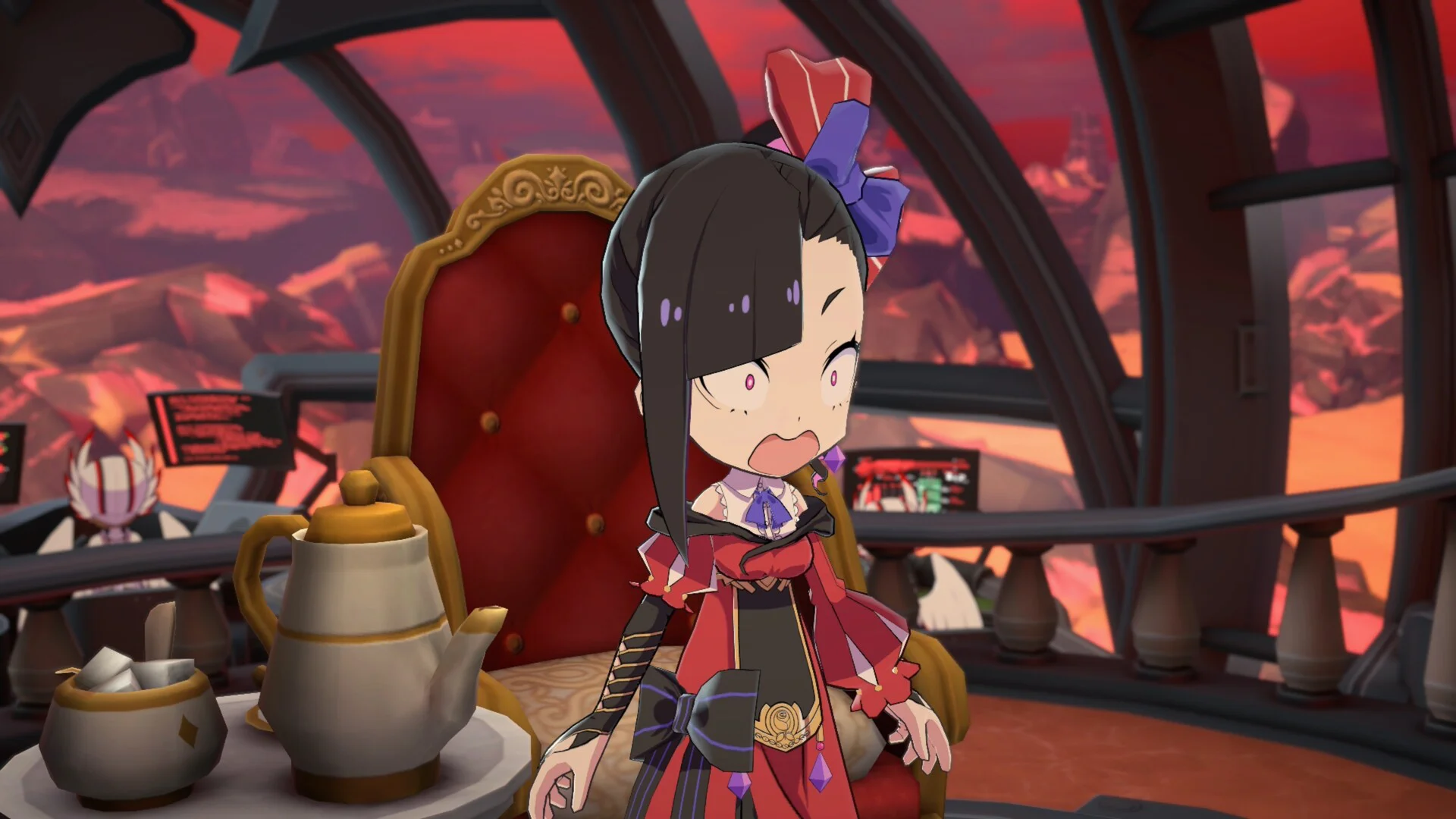
These unfortunates quickly decide to cut their losses and pledge themselves to the new player in town, becoming Etrange’s first companions in her voyage to find her “happy life,” which she’ll achieve by taking over hell for herself.
And what will you be doing to assist Etrange in her quest for infernal glory? You might be surprised to know that you will not be engaging in the sort of strategic, turn-based combat that features in Niikawa’s better-known franchise. Niikawa is not content to rest on tried-and-tested recipes for success, and instead risks the fires of fan disapproval by adopting a more action-based approach for Etrange Overlord, one so full to the brim with invention that it occasionally threatens to spill over, like a bubbling volcano before its fiery eruption.
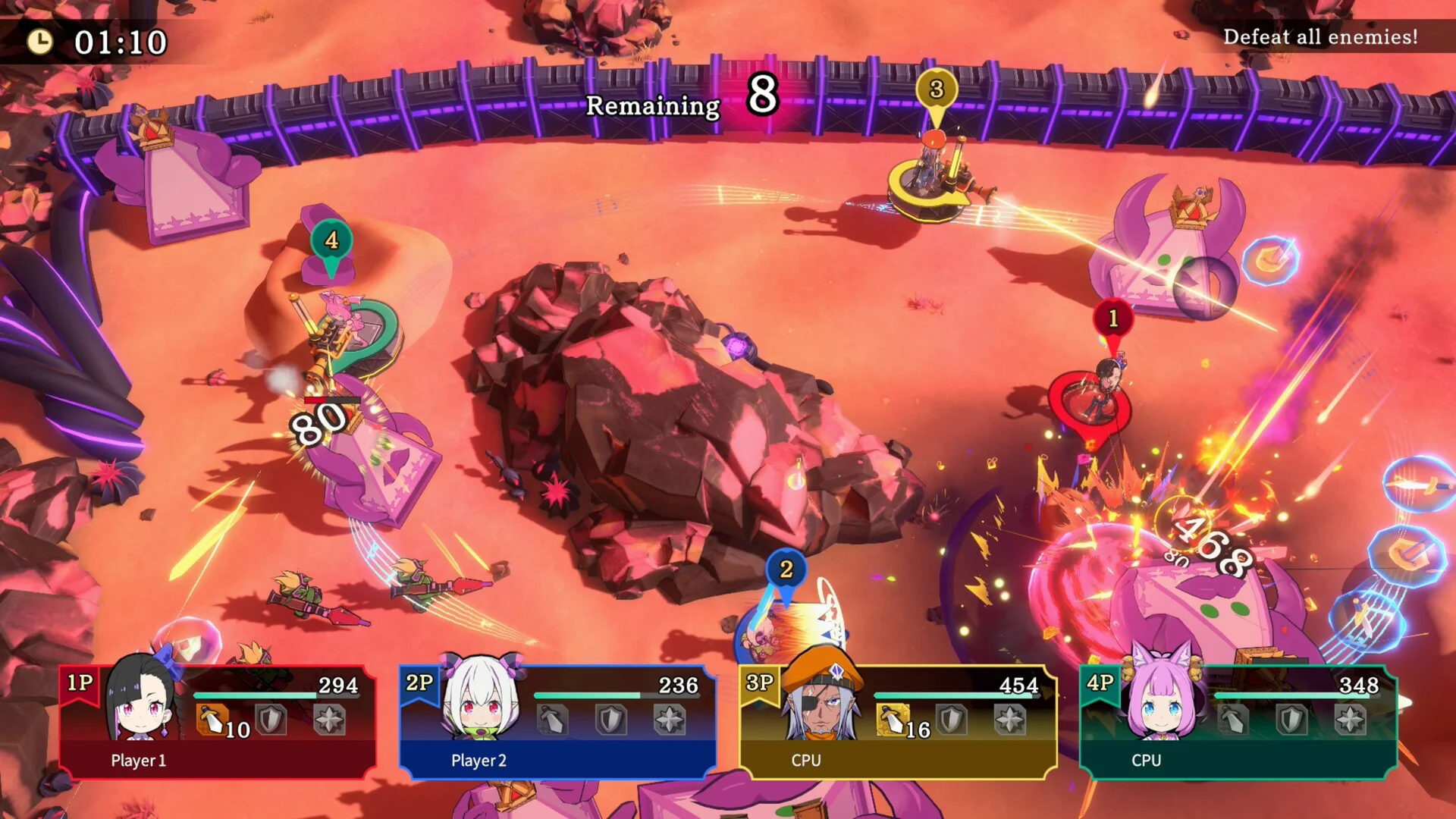
In Etrange Overlord, you control up to four characters at a time, chosen from Etrange’s constantly expanding band of “vassals,” which can include our heroine/villainess. When the screen changes to an appropriately themed arena, don’t wait for a menu to pop up, or Etrange Overlord will incinerate you, as battles consist of fast-paced and frenetic button-mashing. You only have to think about three main inputs: your basic attack, a special attack, and an extremely useful dash button. Each character is designed to fit into one of a few combat styles. For instance, Etrange has balanced abilities while others specialise in ranged attacks or brutal close-quarters combat.
Etrange Overlord then throws its central idea into the mix: the “lanes.” These are curving lines that flow throughout stages, transporting various bonuses around in endless, devilishly looping patterns. These provide extensive boons to the fallen souls that collect them, such as the ability to withstand an attack, increase melee damage, boost hit points, or charge your super move.
This forms the meat of the gameplay of Etrange Overlord, but for the rest of the time, you will watch numerous cutscenes detailing Etrange’s dealings with the dear departed and their tormentors. If you are fond of eccentric, over-the-top comedic anime, with exaggerated characters and equally broad jokes, this will click with you. If not, then Etrange Overlord will torment you like a servant of Satan using a cheese grater on your nether regions.
As for me, I swiftly fell in love with Etrange, a morally grey, raven-haired witch who looks like she has just stepped off stage from a high-end opera production. She doesn’t desire to rule over others for its own sake, but instead wants a happy life for herself, principally to fuel her primary obsession, an all-consuming love of sweet treats and desserts. As a recovering sugar-obsessed treat-adorer, this was my own personal hellish trial in Etrange Overlord. Her complete lack of self-awareness, or the fact that everyone views her as an uncontrollable force of monstrous destruction, is also oddly endearing.
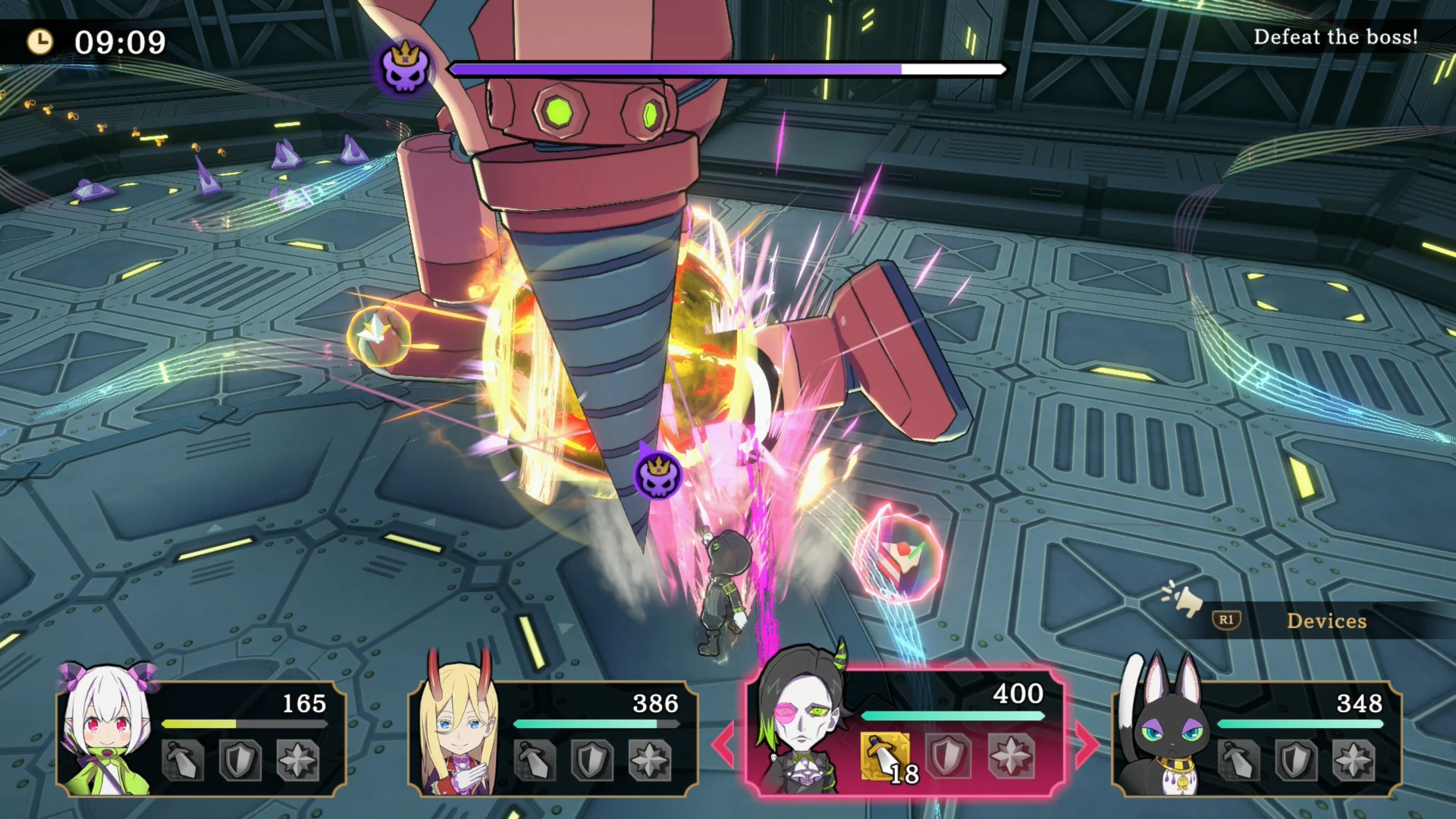
The rest of the playable characters match her idiosyncrasies. The demons that join her initially, Cackie, Chuckie, and Chortie, are each very different in appearance after their initial transformations, with Cackie taking the form of a sophisticated blonde butler, Chuckie adopting the guise of a tattooed, muscle-bound strongman, and Chortie appearing as the sort of neon-clad young girl you might find walking down a geekily fashionable street in Tokyo.
Etrange is also joined by servants from her mortal life, such as the unsubtly named maid “Sweetia,” responsible for keeping Etrange full of cake. The cast is appealing, with some interesting design work, that whilst not always flying to the heights of the best of the genre, still stands well amongst its peers. Etrange Overlord manages to tell some compelling stories for this crew and their antagonists, but it lacks depth. If Etrange Overord’s narrative is the river Styx, like Achilles, you’ll only get your ankle wet.
This trend towards an almost visual novel style is emphasised by the side content, which falls into two categories: side stories that tell little vignettes from the lives of Etrange and her friends and foes, and chef stories that show Etrange delighting in the spicy meals of hell, served to her by the rest of the cast. These episodes are presented in a similar fashion to the skits from the Tales games.
Etrange Overlord‘s side stories are largely essential to the plot, and I would not recommend missing them, even if not all are crucial to developments. The food-focused tales mostly follow the same format: Etrange is reluctantly introduced to a new delicacy before ecstatically rhapsodising over its qualities, like a foodtuber delivering sponsored content. The interludes are enjoyable, although they did occasionally make me drift off mentally, as the “bit” becomes a little wearing over time.
Luckily, the intermittent battles form an otherworldly distraction from these segments. Fun and fast, each has its own objective, whether that be destroying all the enemies on the screen, or delivering items back to a base area: all fairly standard goals familiar to anyone who’s played video games for more than a few minutes. Some objectives, such as holding zones until they are captured, feel like an exercise in patience (it’s a virtue, after all). Bosses provide diversion, as you can only defeat them by figuring out their special weakness in traditional fashion, often using environmental factors to your advantage.
It’s all a bit chaotic, and you’ll find yourself dashing about here and there, as you decide whether to fight your enemy head-on or charge around the lanes, desperately hoping to pick up some worthwhile enhancements. It’s fun, but also imprecise, and I never truly felt that I was in command of a situation, or learning to better use the lanes to my advantage, as the element of random chance is strong.
There are secondary objectives that are revealed after you first conquer a level, adding some replayability and incentive to gather more resources, but I felt little urge to do so for the most part. You can even play them cooperatively with a few friends. I commend the studio for trying something new, but in the end, it didn’t quite send me to the Rapture that some might be hoping for.
Conquering these levels and completing side stories raises Etrange’s Happy Life level. The higher this goes, the more varied the resources she can purchase, and the greater her lane level increases. Lanes are upgradable, so that the bonuses you pick up become more effective in specific ways chosen by you. You can also upgrade weapons for characters. It’s not especially thrilling, but you can choose to engage with it minimally to a certain extent, although doing so can make levels more challenging.
I should also mention the musical element, something that harks back to Niikawa’s early work, Rhapsody: A Musical Adventure. At times, characters in Etrange Overlord break into song, describing current events as if they’re in the West End and time is running short. These little moments are all too brief and infrequently scattered throughout Etrange Overlord.
I would prefer that these were either full-on musical numbers featuring distinctive songwriting or, alternatively, that they kept the operatic nature while leaning into it, with singing much more prevalent. In the end, it feels a little jarring and out of place, even though seeing the spotlight come in to highlight the performers just before they begin warbling is something that always drew a smile from me.
In a way, Etrange Overlord is exactly what many of us hope for from smaller titles. It has flair, it is not some object forced out by cookie-cutter conformism, and most of all, it is experimental, reaching for something larger studios would be afraid to touch. It’s also compact, with play times unlikely to greatly exceed 16 hours, except for the most avid completionists. The end result does not quite achieve celestial perfection, falling some way short of the mark, but as a famous fallen angel once said, “It’s better to reign in Hell than serve in Heaven.”