
The Fallout TV series is currently working its way through its second season, and as a longtime Fallout fan and wintertime couch potato, the show has been a delightful escape for me lately.
The trouble is, the show’s rich themes, worldbuilding, and aesthetic trigger a dark, uncontrollable urge in me to play the Fallout game series. So, after last year’s inaugural season, I played Fallout New Vegas, experimented with Fallout 3 and Fallout 4 mods, tried Fallout London, and even played a couple hours of Fallout 2. But none of these things, it turns out, are quite as saccharine as the sweetroll of a truly new Fallout game.
“What about Fallout 76?” cries the little devil on my shoulder. Yeah, pfft, when flying bananas talk!
No, I can’t; I couldn’t. I wouldn’t. I mean, what would Three Dog do in a moment like this?
Well, I did. I really did. I crushed Fallout 76 like a radroach under the great foot of a towering Super Mutant. I played hundreds of hours across five months and three major title updates: Gone Fission, C.A.M.P. Revamp, and Burning Springs.
The first of these brought fishing to Fallout 76, and it’s surprisingly solid — I’m not sure I appreciate paywalling the better fish behind premium bait, but there have been treasure events, plenty of free season rewards for the premium fish, and, mechanically-speaking, the fishing is awesome (check out my updated fishing feature to see where it falls for me against other RPGs). The second update let players build settlements with much greater freedom of placement and an improved menu, taking camp-building creativity to a whole new level. And the most recent update brings us to gen-α’s favorite state, Ohio, in a much-anticipated collaboration with the TV show’s Walton Goggins as the Ghoul.
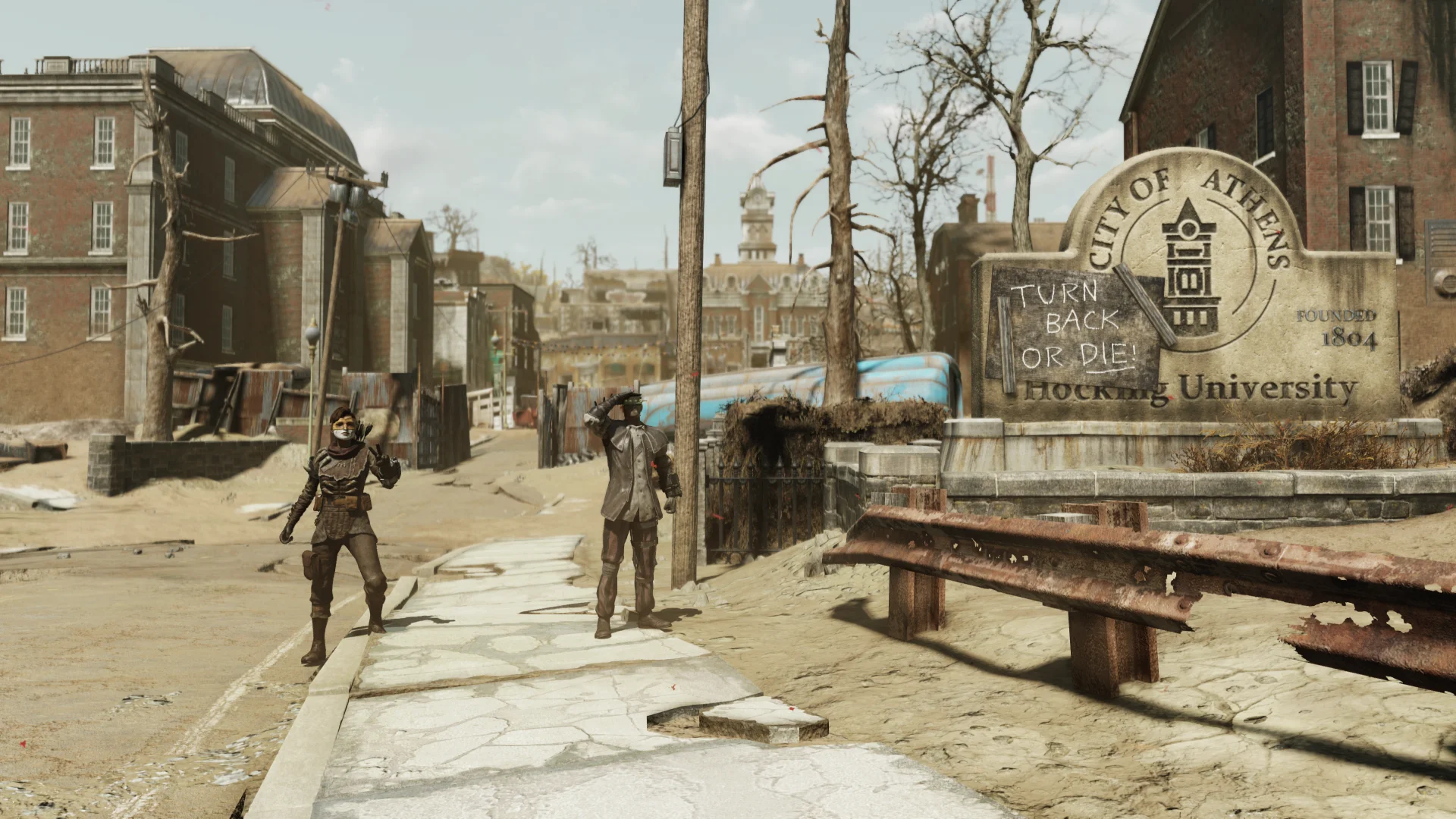
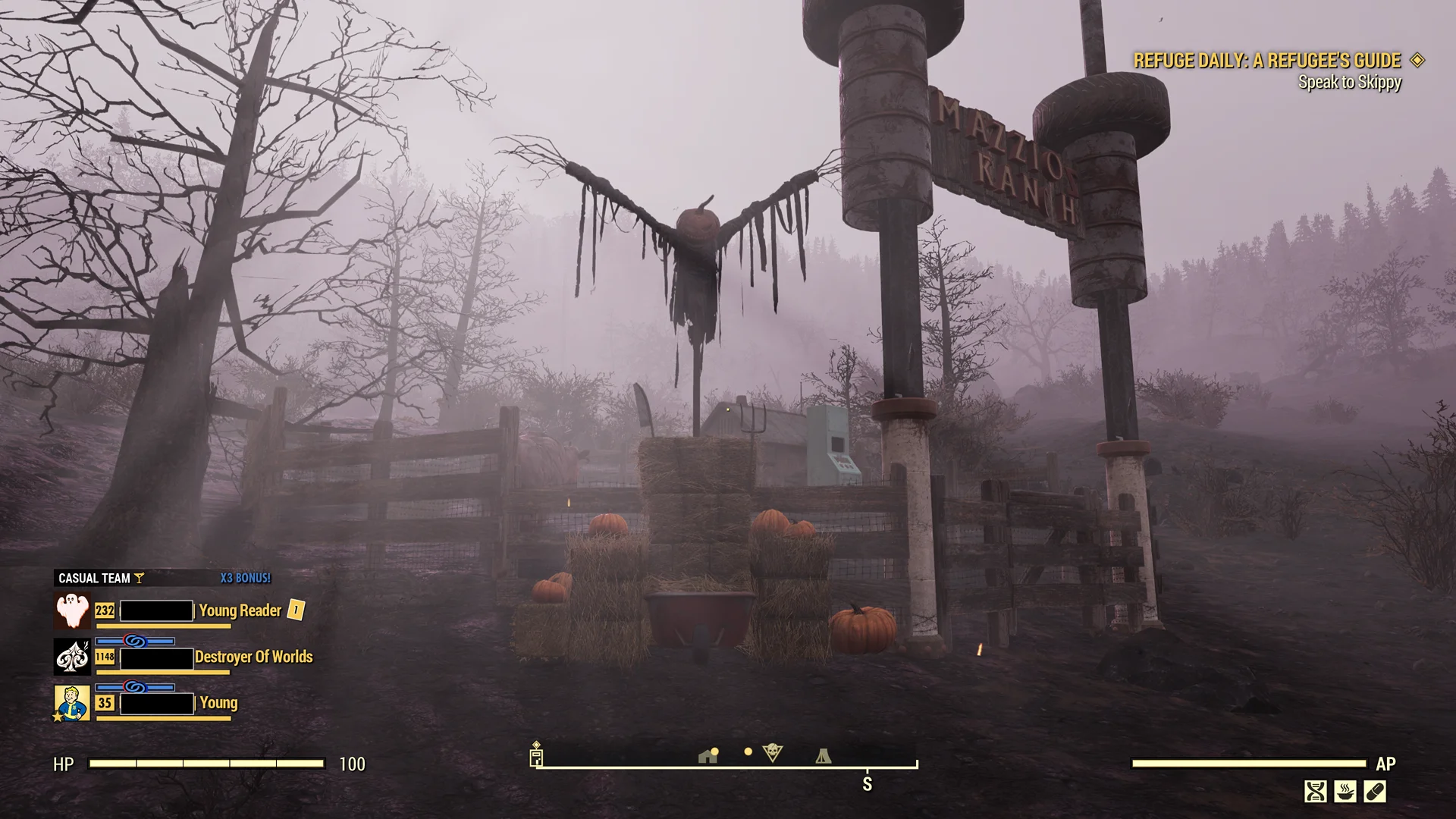
Burning Springs is arguably the most compelling update the game has seen since its rocky launch in 2018. It centers around the Ghoul, who is visiting the ruins of east Ohio with a stack of bounties in hand. These bounties work similarly to public events, where any of the 20-25 players on a given server may join the hunt from the map menu, and they activate through Wanted posters earned from short missions called “grunt hunts.” The posters don’t stack in players’ inventories, but multiple can be stored in stash boxes. When stacked back-to-back in this way, players can run full bounties (“head hunts”) in succession, quickly racking up XP, legendary weapons and armor, and rare items like modules and treasury notes. The new Ohio region is also enormous, similar in look/feel to the desert wastes of New Vegas, and packed with new story missions and side quests. It is a raider’s paradise, and a fun callback for fans of the older Fallout games.
This year’s updates have their fair share of issues, to note: controversial weapon rebalancing, server issues, a continued push of Atomic Shop schlock, raid reward nerfs, and, of course, various bugs and crashes — both new and persistent! There’s plenty of familiar Bethesda jank to go around, mind you.
In spite of this, however, the game is more stable now than it’s ever been, and Bethesda has seemingly grown more generous in its old age. Of course, Fallout 76 presents the classic symptoms of the SaaS disorder, with grindy late-game mechanics, paid level upgrades, and a compulsory premium subscription, but it also has freeform C.A.M.P. building, generous and frequent leveling/XP bonuses, easy free Atomic Shop points earned through standard play, and dozens of compelling single-player and multiplayer quests to satisfy longtime fans of the series — just avoid the pre-Wastelanders quests (i.e. pre-NPCs), as they are tiresome and monotonous.
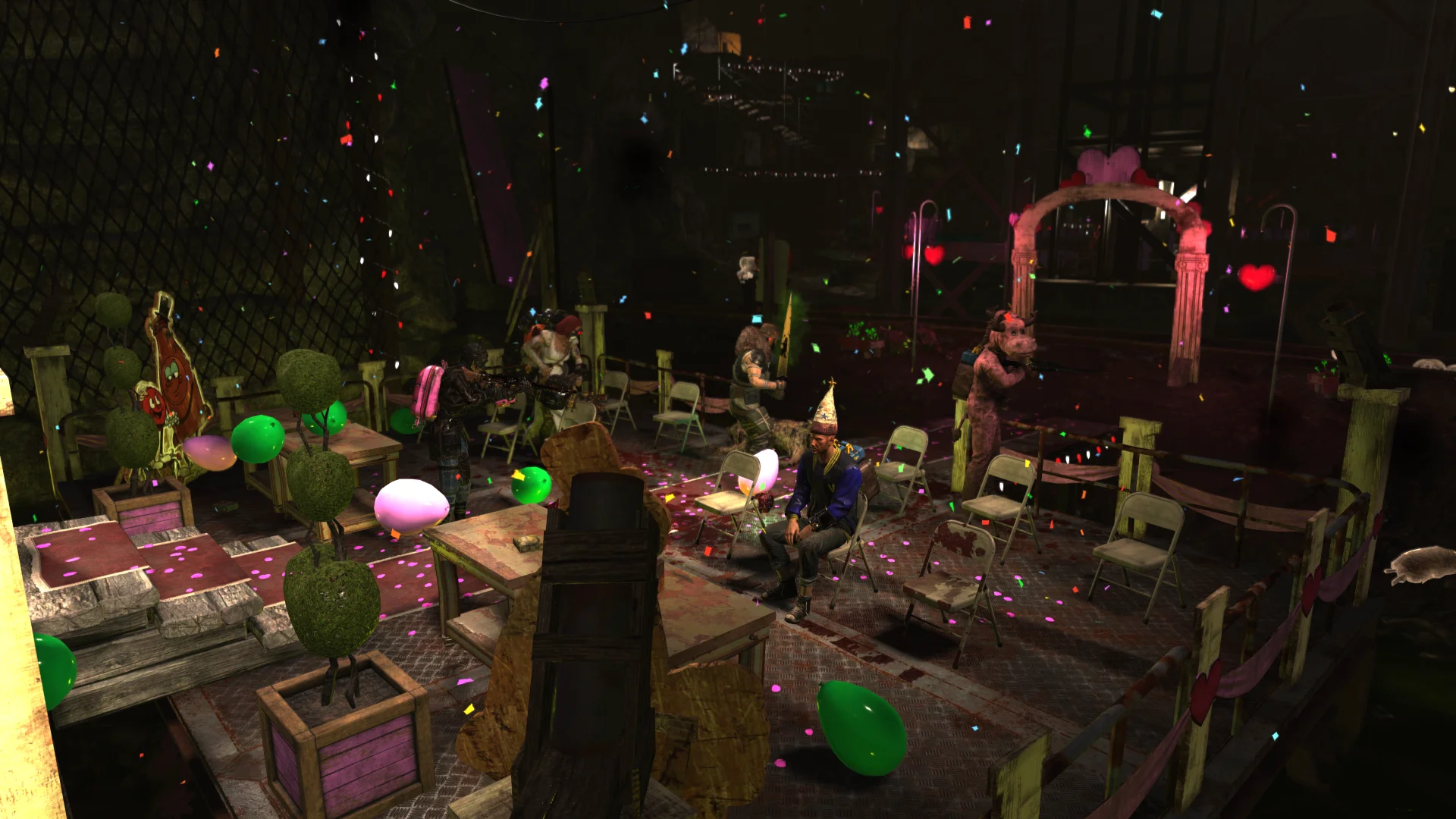
The C.A.M.P. building in particular sets Fallout 76 apart from nearly all others in the live service category. Where most MMOs lock homebuilding behind a paywall, Fallout 76 gives players multiple slots for building bases nearly anywhere on the map, even offering extra slots for free or super cheap (100-200 Atomic Shop points). Players’ builds are creative, interesting, varied, often themed, and players can sell or give away items in the game to other players through their shops — as an early player, I received hundreds of free plans, crafting materials, meds, and ammunition from players at their bases, during events/quests, out in the world, and at the game’s various donation boxes. And that generosity starts with good design; Bethesda has clearly chosen to foster community building in its open-ended and protected (i.e., difficult to grief) C.A.M.P. building.
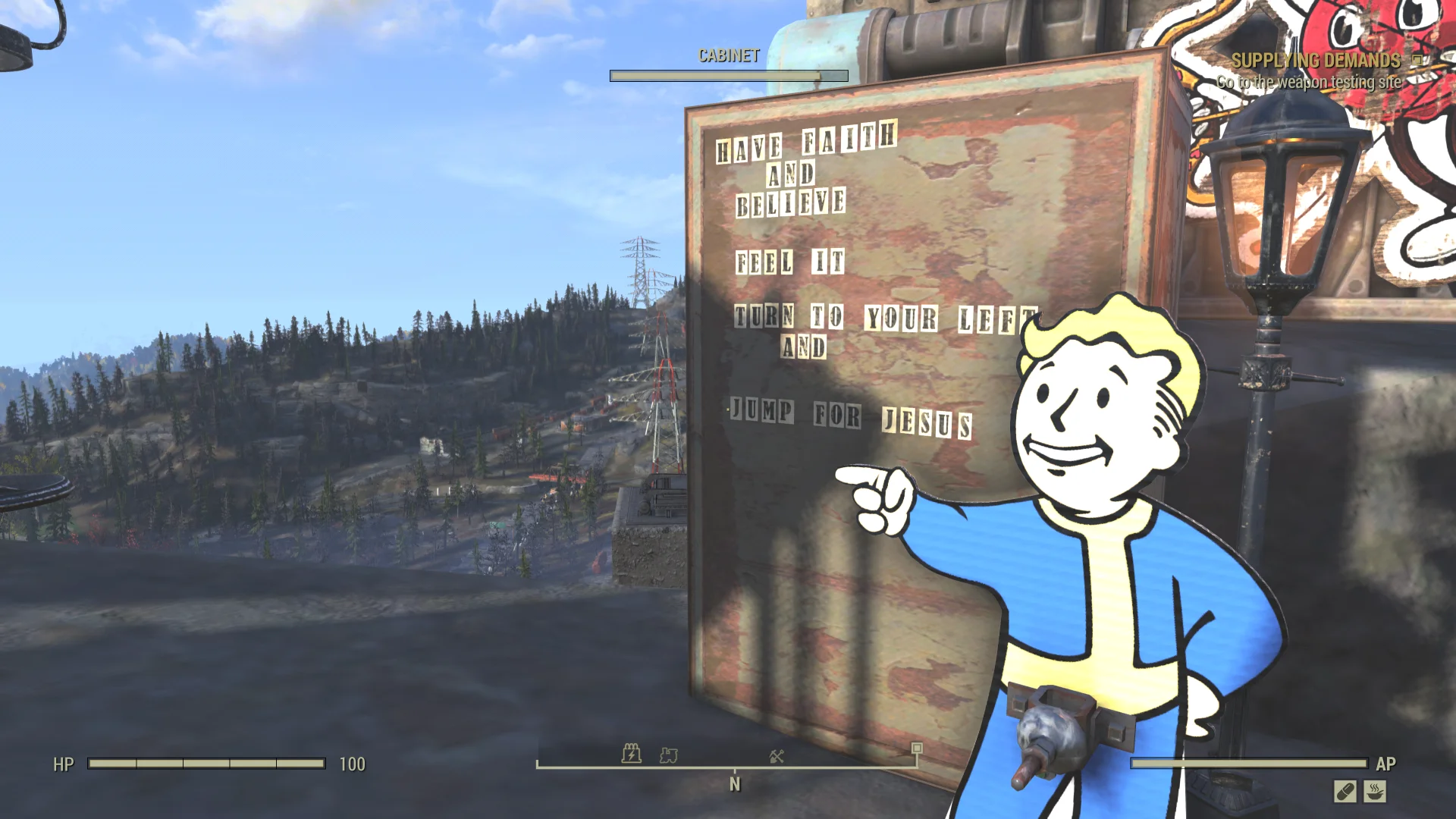
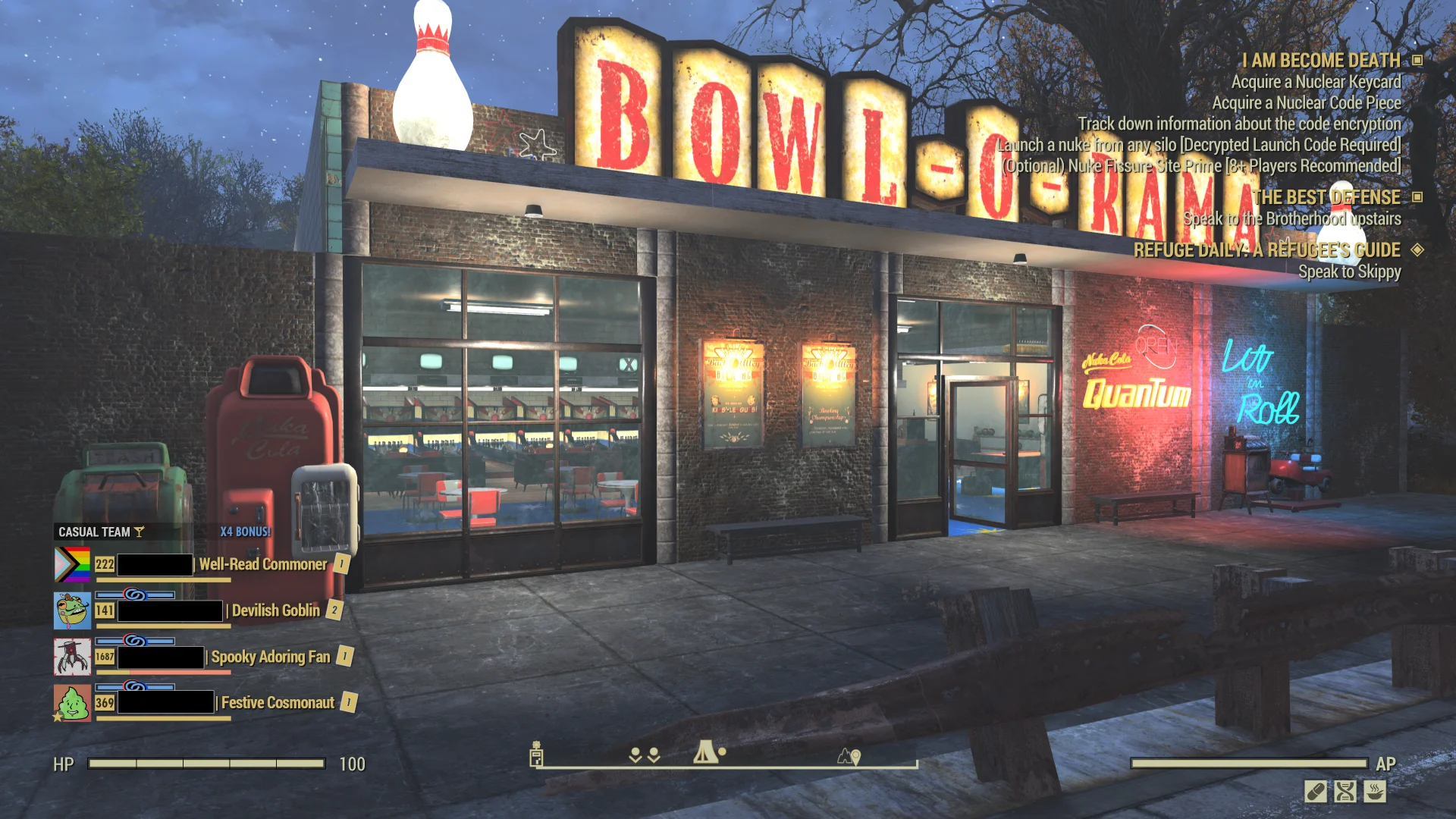
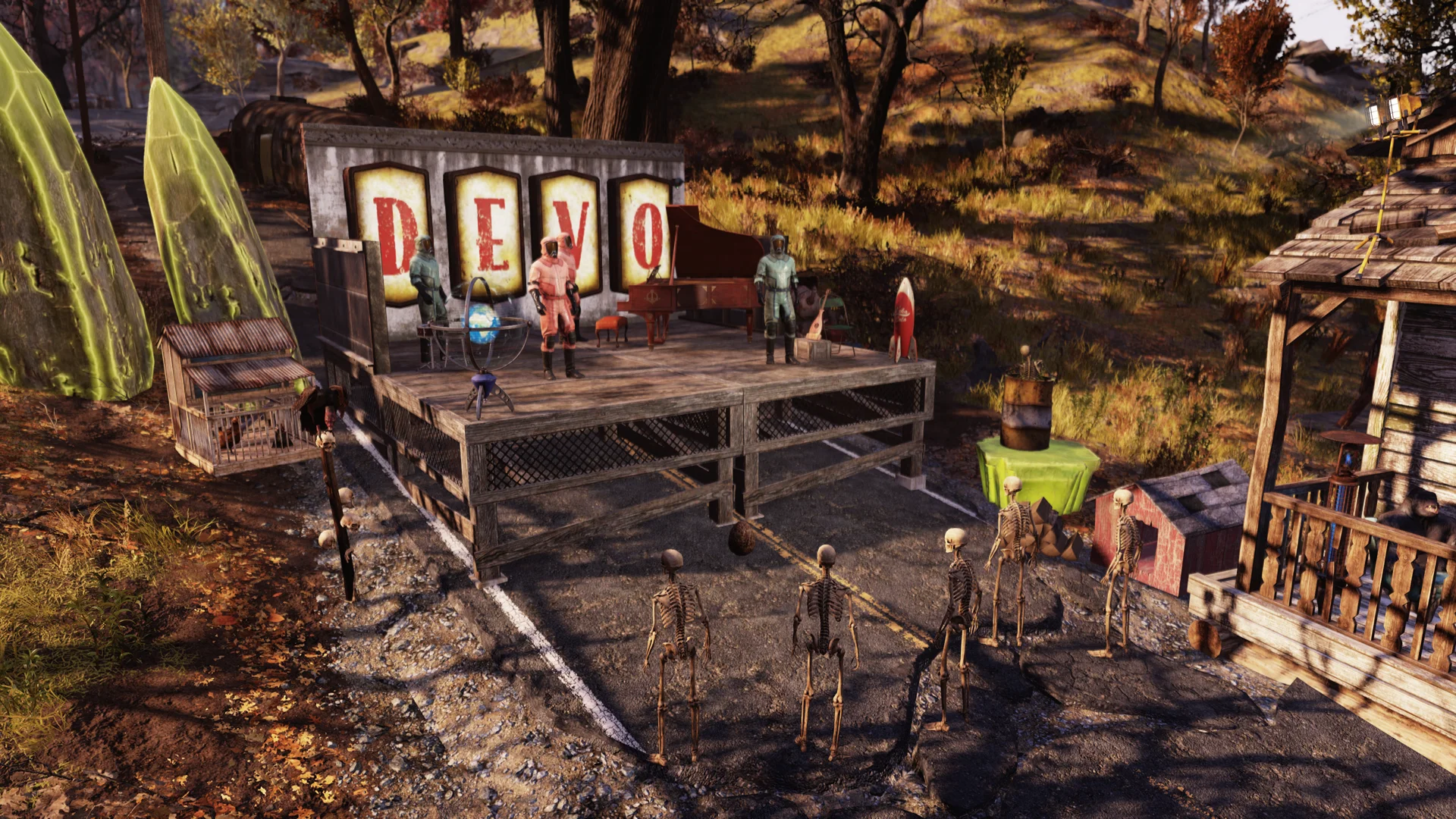
The community focus is interesting for Fallout 76, though, as the game originally started as a PvP-minded post-apocalyptic survival game. Systems were closed off, resources were scarce, and the wasteland of West Virginia felt empty, even when you saw other players. However, after community feedback, Bethesda moved toward more Golden Rule (do unto others, etc.) designs, a far cry from both its former self and other grief-happy MMORPGs and survival multiplayer games. Players can now lock items at C.A.M.P.s, proxy chat is off by default, nukes are easy to spot on the map, pacifist mode is easier to find, stimpacks are more common, and Charisma perks and mutations provide major incentives to play nice.
And the community has taken this and run with it. Nearly everyone on the game’s standard online servers (there are Survival servers for PvP fans) plays with pacifist mode on. Folks mostly stand up for their fellow players, killing bountied gankers and thumbs-down-emoting griefers — for instance, if you mistakenly pick up someone’s dropped junk on death, which I have accidentally done (sorry), you will get the business from your server mates. And people are always ready to help other players, reviving them when they’re down, giving away helpful items, running Daily Ops and quests with them, and so on. As a player of other games in the survival MMO genre, this is a delightful departure from the norm.
They say if the bones are good, the rest doesn’t matter. Well, Fallout 76’s bones are… weird. Like, yeah man, real-time VATS is janky, even if I miss it when I transition to playing other shooter games; The game’s 1200-pound stash cap is ridiculous at this point, whether or not you have premium junk, ammo, and med storage boxes; Shooting does feel better than in previous Fallout games, but a quarter of your shots still won’t register for whatever reason; And yes, there are a million stupid currencies, practically one for every NPC in the land, and some are definitely more valuable than others. Worst of all, though, and this game’s greatest offense: you can not turn off that god awful music in the Whitespring Mall without cutting the game’s sound entirely. Ugh!
But then there’s the majesty and enormity of West Virginia, the charm of Fallout 76’s wacky NPCs, the compelling lore dumps on power armor and folk creatures, and the awesome creativity of the game’s C.A.M.P.s. There are consistent free updates, excellent seasonal rewards, and a bountiful pile of customization options, weapon and armor loadouts, builds, and literal nukes available to players. I could go on, but my point is that, in spite of its issues, Fallout 76 has become a really compelling package for series fans — finally. (Just don’t tell longtime fans of the game I said “finally,” as Fallout 76 has some of gaming’s most devoted holdouts: players like MrWestTek and MrsBlobby who have stuck with the game through thick and thin.) As surprising as it is, people from all walks of life enjoy Fallout 76 at the end of the day, and I am part of that growing community.

As it turns out, there is something for everyone here. For series fans and migrants from the Fallout show, this is a polished-enough Fallout game to quell any dark, uncontrollable urges folks may have to play around in the series’ extended universe. RPG fans looking for a good singleplayer experience can easily play this game that way as well — at the end of 2025, there are practically enough quests for three full Fallout games, though you’ll need a “best Fallout 76 quests” guide handy to find them. Live service, survival multiplayer, and co-op fans will find that Fallout 76 is something respectfully different in those arenas as well, thanks to C.A.M.P.s and a polished focus on PvE content and story missions. Even if Fallout 76 still has the pitfalls of most live service games, there’s so much to chew on for fans of that genre, from frequent, entertaining public events to bounties, raids, daily operations, and expeditions. I believe that practically anyone who likes Fallout can enjoy this game, in theory.
But I can only speak for myself, and after 400 levels and a couple hundred hours of gameplay, Fallout 76 is probably my new favorite Fallout game. Strange as it is, part of me might even rather get more Fallout content in this formula than a full-fledged new single-player game. That said, if you’re reading this, Todd, get back to work on Elder Scrolls VI. And I will readily admit: perhaps the Machine Zone has enraptured me. But somewhere amongst the fog of live service distractions, Fallout 76 still contains some of the best stories in the whole series: from memorable player interactions—like generous early-game gifts, nuke launches, special C.A.M.P. builds, and precarious raid victories—to stimulating story moments like rising through the ranks of the Enclave and Brotherhood factions, braving the trials of the DC DMV, and running bounty hunts with the Ghoul himself, Fallout 76 has proven itself to me. In fact, it kinda rules now.