[Steam page content warning: Fear & Hunger contains scenes of graphic violence and gore, use of drugs and alcohol, nudity and scenes of sexual nature.]
“The dungeons of Fear & Hunger stand in front of you. You hear barking from afar. The barking is getting closer. You step inside the darkness. An unnatural hunger begins draining your strength. A stench of flesh is carried from the darkness. You feel your sanity decline with every passing moment.”
Ah $#!t, here we go again.
Minus that last line, I’ve seen the above text fade in and out from the bottom of my screen with each new playthrough of Fear & Hunger I’ve attempted. A few minutes into the game and it’s instilled a more palpable sense of dread than perhaps any other RPG I’ve played, rivalling survival horror greats like the original Silent Hill trilogy. The fact that it manages this as an RPG Maker game by a solo developer is astonishing. The fact that it feels more distinct and cohesive than most other turn-based RPGs I’ve played in recent memory blows my now slightly traumatized mind.
This is a surprisingly dense RPG Maker game with frequent events, non-linear progression options, and multiple endings that depend on choices you make on your way through its single, ever-descending dungeon. In the world of RPG Maker games there is no shortage of horror-centered aesthetics and stories, but none of them commit nearly as well to being a horror game. Any good survival horror is designed with a degree of player hostility to ensure you don’t ever feel too comfortable. Fear & Hunger has some of the most intense, purposeful hostility I’ve experienced in a piece of media. If there’s one main thing I’d fault it for, it’s that it maybe even goes too far on that front.
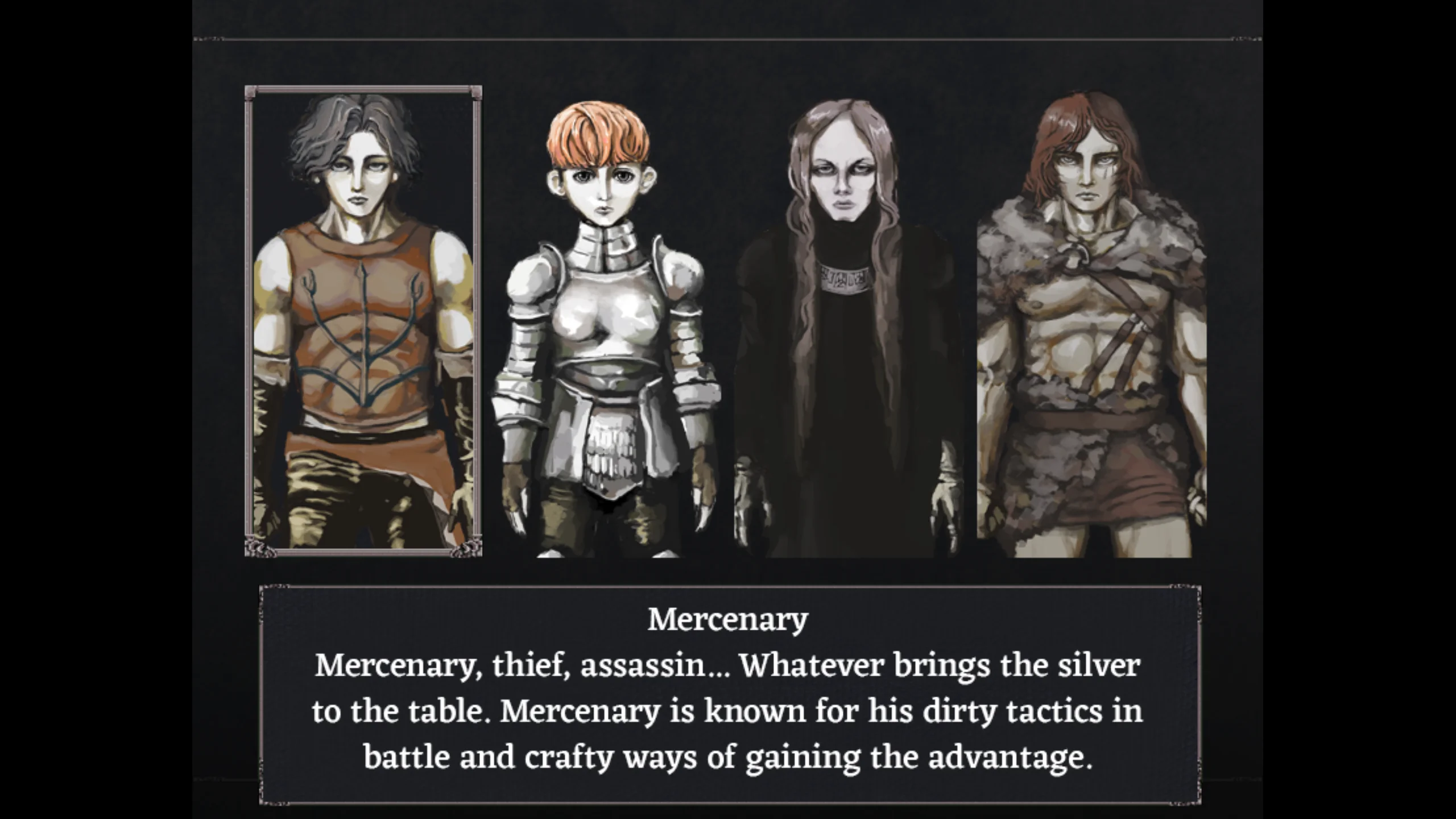
You select one of four protagonists at the start of a playthrough: a dead-eyed mercenary, a proud knight, a sketchy dark mage, and a He-Man-looking outlander. Upon selecting a character, you get a unique text-driven prologue providing some backstory with prompts to make a series of choices. Depending on your answers, you’ll begin the game with certain items or character-specific skills that can drastically boost your chances of survival or even options for progression. The mercenary’s Dash, Lockpicking, and combat-escaping buff are especially helpful skills for beginners. I imagine my first successful playthrough would have taken even longer to achieve without them.
These four aren’t just generic classes, but central characters in Fear & Hunger’s world. Whichever three characters you don’t choose can be encountered and potentially recruited as you progress. I say potentially because the game’s quest progression criteria can have some Soulsborne-level obtuseness. There are quite a few other characters you can find yourself travelling alongside as well. And while character interactions are mostly relegated to situational party chat comments using the “Talk” skill in the overworld, the members of the cast are all fascinating pieces of the game’s tapestry of dark fantasy lore once you start piecing it together.
While Fear & Hunger isn’t technically a roguelike, it certainly wants you to approach it like one. I spent over 20 hours on this game in preparation for the review. My clear time for the file I first completed the game with was less than half of that. The rest of those hours involved poking my head in places where I shouldn’t have out of morbid curiosity and discovering the many punishing tricks and intimidating encounters the dense level design has in store. Both would often result in some cruel and unusual death.
As with any good roguelike, though, deaths almost always feel enlightening. After a few untimely endings, I would find myself marching through an area with emboldened purpose that I had previously tiptoed through with bated breath.
Poor choices in the overworld aren’t the only things to be cautious of; you also have a trifecta of crucial stats to manage. Body (i.e. physical health) recovery is basically impossible without access to rare items or rarer spells. Hunger must be sated regularly with discovered or crafted food to avoid major debuffs. And you must maintain your Mind by slowing its decline with torches or mending it with alcohol or drugs, which, you guessed it, are quite rare. Not to mention the brutal status ailments a single enemy attack can inflict.
The emphasis on death isn’t the only roguelike element here. Fear & Hunger uses a tasteful blend of fixed and procedurally generated level design to prevent you from ever feeling too comfortable with your environment and loot options. You can search almost any container-shaped asset on the map for randomized goods that may include hunger-sating foods, fear-numbing substances, or game-changing items.
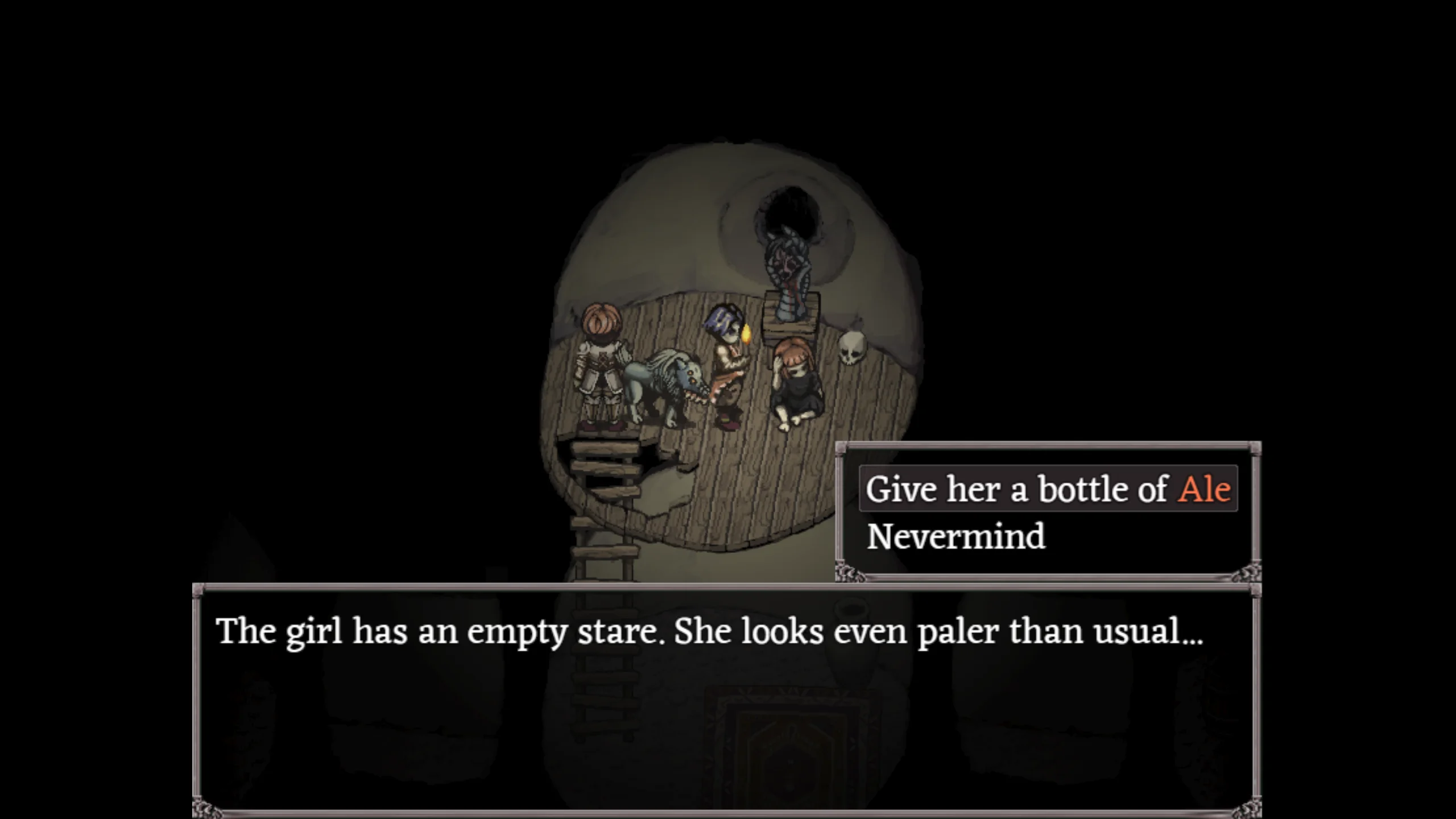
Bookshelves and chests can yield especially valuable items but require a successful coin toss to search successfully. Lucky Coins are one of the best items in Fear & Hunger, as they can be used to double your chances in these searches. Use them sparingly, however, as certain enemy attacks (oh, and saving) also involve coin tosses that can be the difference between survival and death.
There are save points, in the form of beds in locations where you normally would never want to sleep, but they are sparsely placed and usually dangerous should you fail a coin flip upon risking the rest. There are plenty of ways to spoil a run between successful saves, but each time you lock down that progression you can dig deeper into the game’s darkest corners with less fear and more hunger to learn its secrets. As I grew familiar enough to get through a new portion of the dungeons relatively unscathed, my save files became firm flags planted in the descent. It’s infectiously empowering and prevents the required repetition from becoming too tedious.
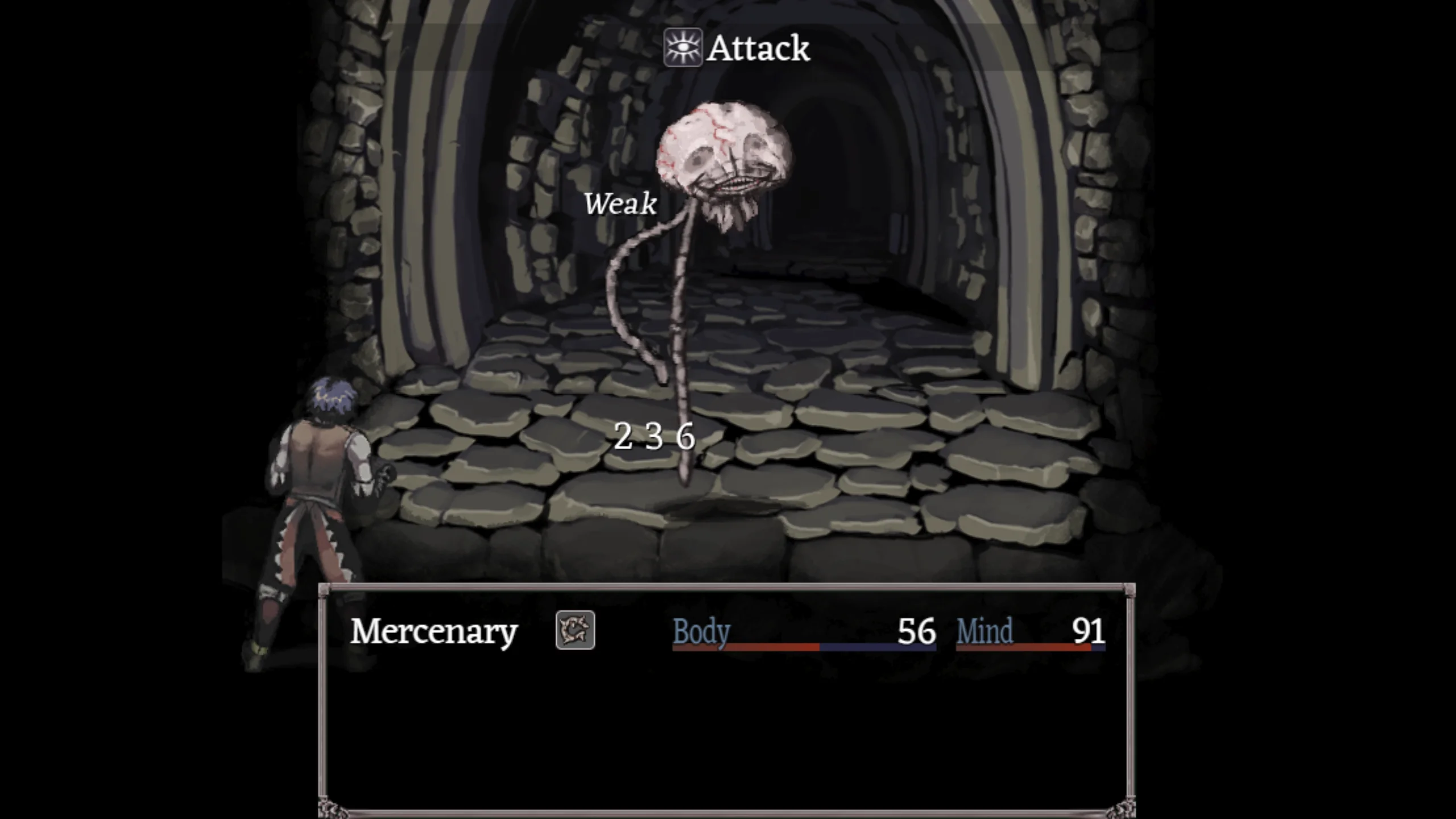
Especially in its opening hours, so many of your choices in Fear & Hunger feel like a gamble. This is apparent in battle as much as it is while traversing the overworld or interacting with NPCs. The game’s Steam page aptly describes the combat as a “Turn-based Strategic Dismember Combat System,” meaning every enemy limb is a separate target. If I dismember the enemy’s weapon arm first, maybe it won’t be able to dismember mine? Or should I try to chop off its legs and make a run for it? Will this enemy respond to an attempt at “Talk” or will that just waste my valuable turn? Gambling with the unknown is an excellent recipe for horror.
Combat in Fear & Hunger is unconventional, unforgiving, and often unrewarding. There are many occasions where you’re better off avoiding an enemy you see on the map, if you can. Part of this is that there’s no leveling system so winning a battle is pointless unless the loot is good, which you can usually intuit by the enemy type. You may come out of a tough encounter with little to show for but lost health, a lost limb, or a status effect you can’t currently treat.
While it may feel counterintuitive for a turn-based RPG, you should approach combat as you would a survival horror game. Only engage as much as you need to, be strategic and conservative, save scum to learn solutions to enemies when you have the luxury, and you (likely) won’t screw up your run.
The densely layered game systems aren’t the only elements here contributing to the horror, though. Despite its RPG Maker limitations, the character/enemy models and painterly backgrounds feel distinct and cohesive. Developer Miro Haverinen also clearly understands how important sound design is. Fear & Hunger gets what works so disturbingly well about Akira Yamaoka’s Silent Hill OSTs, focusing on “music” built around dissonant noise. The ominous ring that plays when entering combat never failed to put me in a state of immediate panic.
While Fear & Hunger isn’t a story-driven game in the sense of extensive plot development or character interactions, it puts immense care into its worldbuilding. Every enemy placement, NPC event, and in-game book is dense with lore implications that give your decisions substantial narrative weight.
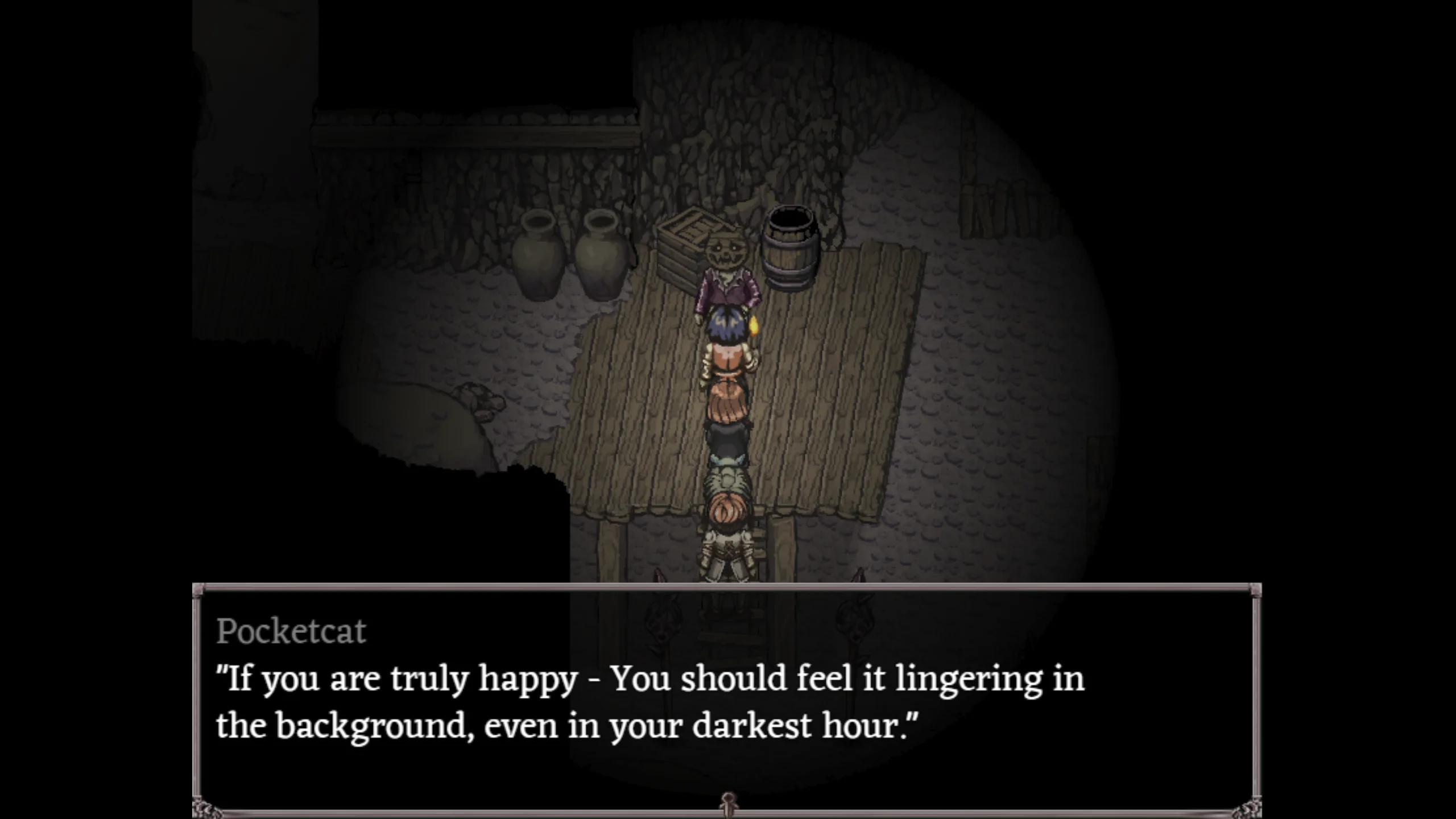
To briefly follow up on that content warning at the start of this review, you should know that Fear & Hunger depicts some disturbing and gruesome stuff. If Darkest Dungeon is the biggest inspiration on the game’s systems, Berserk—a series I love—is clearly the biggest inspiration for its fiction, right down to some overt character analogues; the influence shows from the god-fuelled lore to the depictions of mutilation and perverse sexual content that instill a palpable and inescapable sense of insanity. The dungeon of Fear & Hunger is the source of larger cosmic forces that have the power to mold humanity. The game doesn’t want to just show you that but make you feel it in yourself.
Despite all the artistic care that went into developing Fear & Hunger’s cohesive atmosphere, it does occasionally veer towards indulgent edginess. Enemies described with pulsating phalluses and a related status effect called “anal bleeding” is the worst of this, and it seems like Miro Haverinen is aware that he may have gone unnecessarily far in these cases based on the game’s sequel toning them down. If you’re turned off by a game having this sort of content at all, I don’t recommend it. But if you’re worried that it verges on the kind of shameless torture porn games out there, I would adamantly defend that’s not the case.
Everything about Fear & Hunger’s design and atmosphere feels carefully considered to infest your mind with dread. Its most shocking and sadistic elements are there to support its worldbuilding, and choosing to retain your morals is a viable (and spiritually rewarding) way to play. Beneath all its thick, oppressive darkness and horrific temptations, there is a light, somewhere. The potential perseverance of some humanity—your humanity—is what gives this game its twisted, hard-earned beauty.