
Originally released on the PlayStation Vita in 2018, the historical fantasy otome visual novel Homura: The Crimson Warriors didn’t receive an English localization until 2026 on the Nintendo Switch. Was it worth the wait? Well, despite its somewhat dated visual presentation, Homura: The Crimson Warriors proves that a visual novel lives or dies by the strength of its overall narrative and how compelling its cast is. Fortunately, the title’s overwhelming strengths on both those points make it a standout addition to the Switch’s VN lineup.
Fourteen years after the Battle of Sekigahara, the Tokugawa Shogunate controls Japan but faces opposition from the Toyotomi Clan, who fortify Osaka Castle and call for allies. The plea reaches tactician Nobushige Sanada, under house arrest, who escapes with his ninja allies from Mt. Kudo. They are joined by young shinobi Mutsumi Mochizuki. As the final battle of the Warring States period approaches, Mutsumi must succeed despite the interference of an unknown supernatural force.
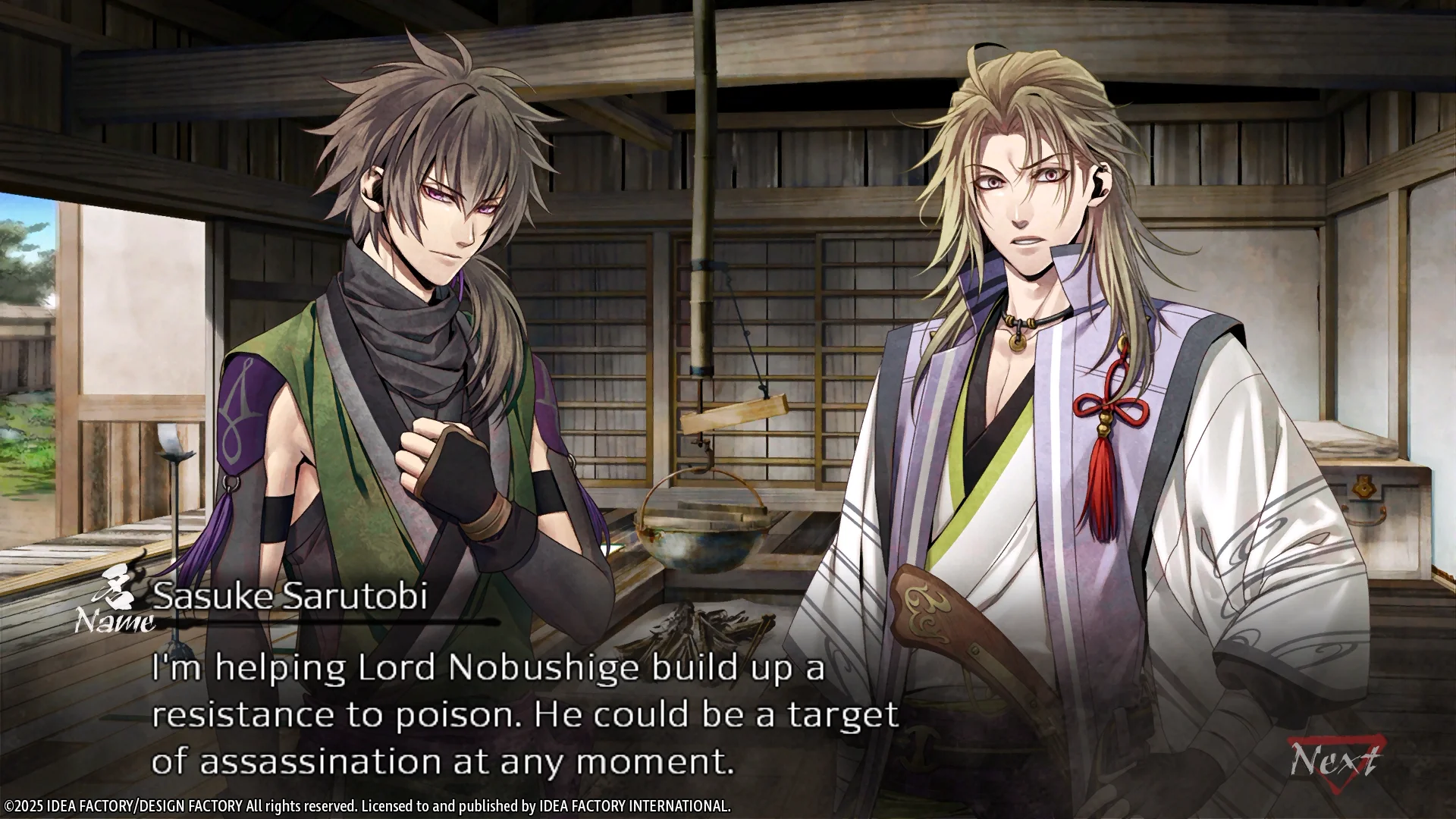
If one examines the premise and visuals of Homura: The Crimson Warriors, they might instantly recall the often-reissued Hakuoki, another renowned supernatural historical otome also illustrated by Shiki Sakigumi. The similarities run deeper than aesthetics—both narratives employ parallel plot points and themes.
Still, this is no criticism of Homura: The Crimson Warriors! Hakuoki is cherished in the otome community for good reason. Homura, in turn, adapts this formula to craft a distinct story set within a reimagined Japanese history. Fans of any Hakuoki version will likely be drawn to Homura. Like Hakuoki, Homura provides an uplifting tale of triumph and tragedy, blending warfare, politics, and fantasy. Both games feature multifaceted, believable characters and unexpected romantic developments. Homura excels at its strengths, echoing its spiritual predecessor, Hakuoki.
Regarding presentation, Homura: The Crimson Warriors is quite a traditional visual novel. Players step into the shoes of earnest shinobi Mutsumi, who struggles to prove herself to Nobushige and his circle. As you sift through text and dialogue, you reach critical decision points. The outcome of these choices shapes how the plot unfolds. Sometimes, affection levels for certain characters rise; in other cases, subsequent narrative scenes change. While an “energy level” meter is present, it still ultimately results in scripted, binary story decisions.
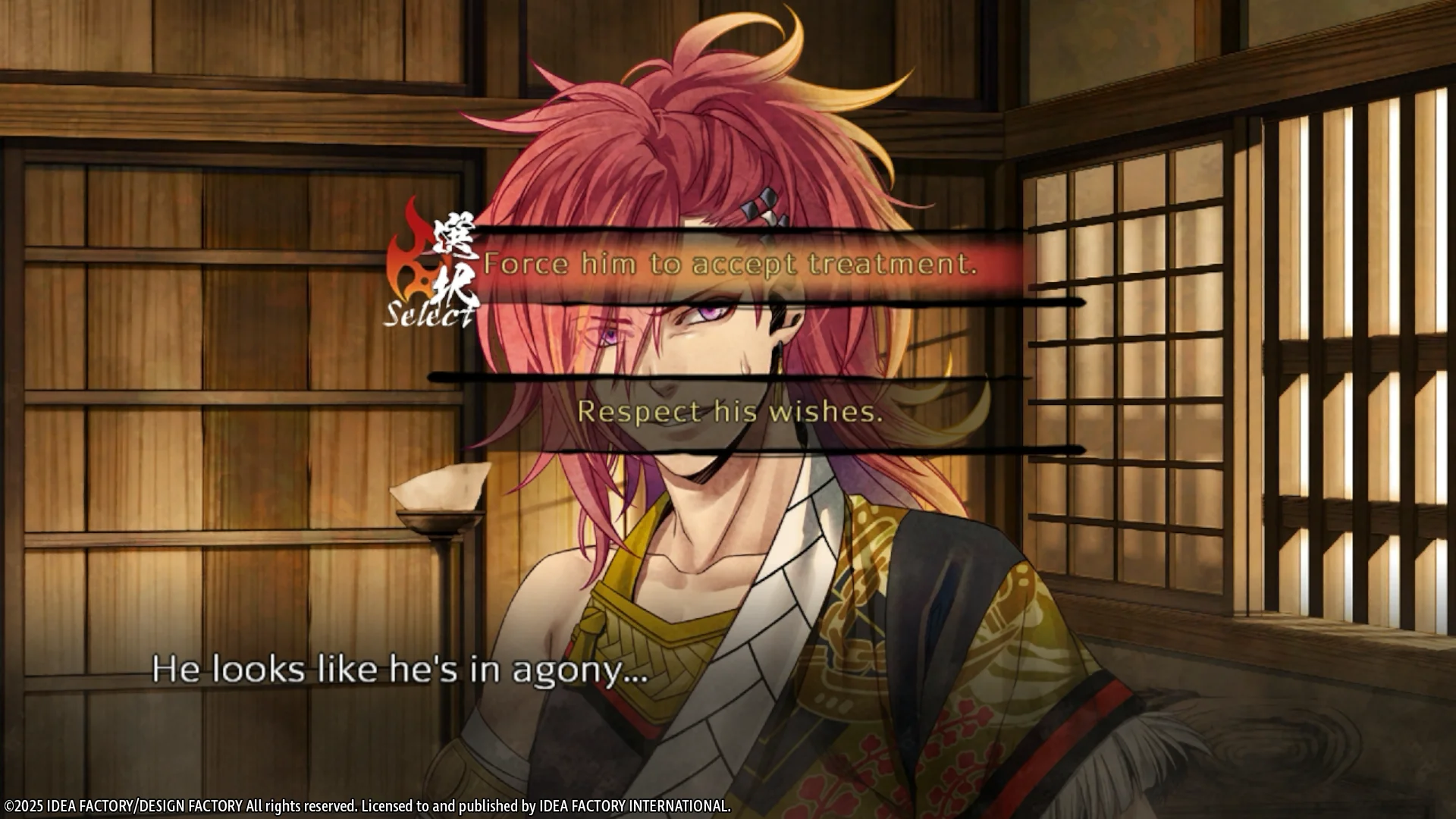
Since Mutsumi is a ninja, certain gameplay features connect to her role. “Mission” segments test your tactical decision-making by having you, as Mutsumi, choose between two options. These segments, graded at a route’s end, mainly influence immediate story scenes rather than the overall game. Those familiar with the genre will catch on quickly enough.
As for extras, Homura: The Crimson Warriors offers what you’d expect from otome titles. There’s a gallery of unlocked CG illustrations and a detailed story map accessible after clearing the game once. This lets you jump to any seen point, pick a character route, and set affection levels for quick replays. You can skip text you’ve already read or leap to the next decision point with a button, and a glossary of important notes is available.
The game’s common route is decently sized, introducing gameplay and characters, while the longer character routes reveal how nuanced the cast and their stories are. With fewer character routes, Homura encourages replayability without being overwhelming. I enjoyed the twists, turns, and character development so much that I eagerly wanted to try every story route!
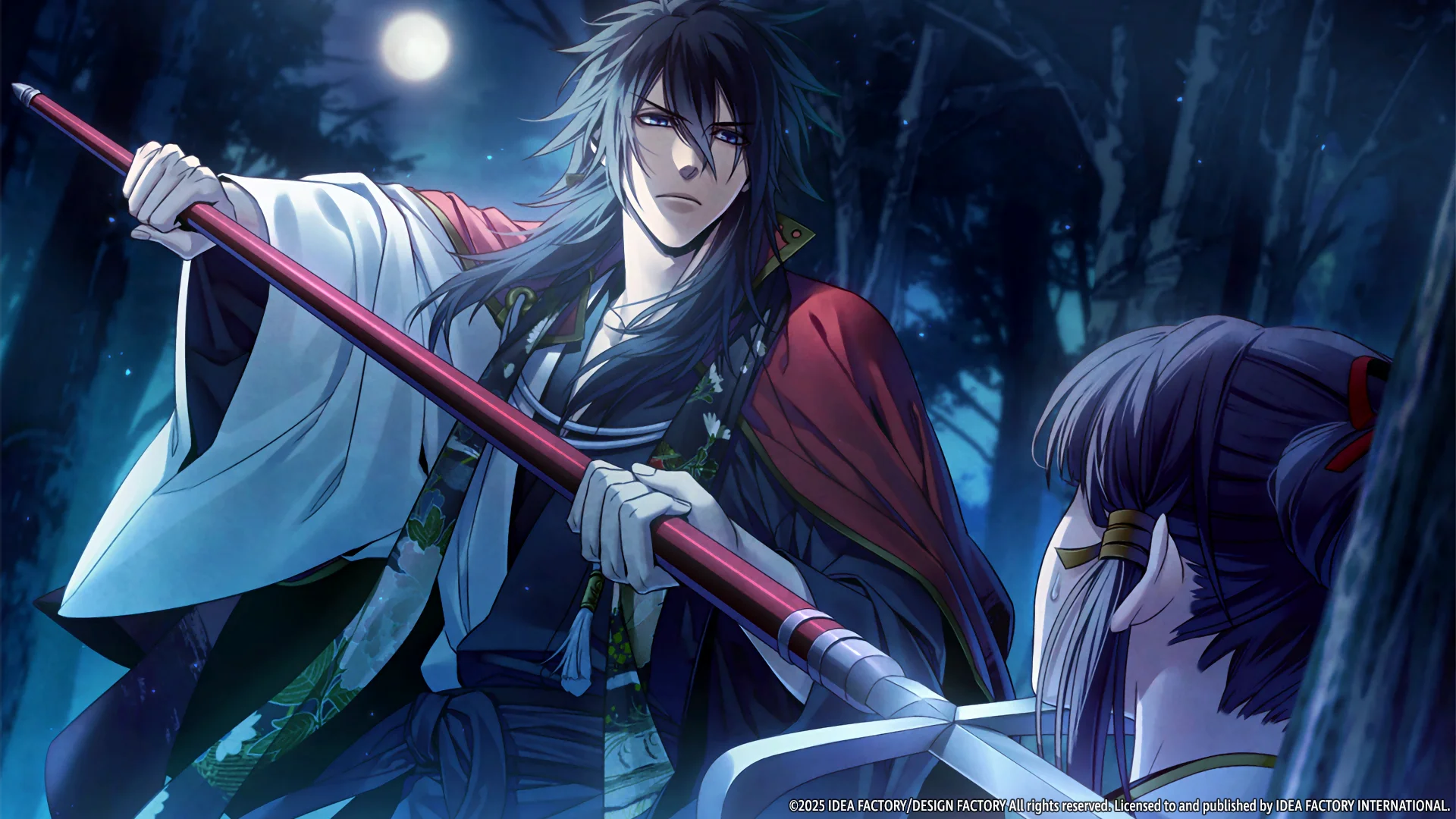
Visually, this port of Homura: The Crimson Warriors doesn’t do much to “enhance” its PlayStation Vita presentation. Character sprites are static but still manage to convey a sense of expression. The UI is decent and easy to read, but nothing particularly detailed or eye-catching. The color scheme is bright, and a blurred background effect is used at times to create the illusion of swift movement. The CG illustrations are gorgeous, and I do rather like Mutsumi’s design as well. The artwork still manages to showcase its beauty without the bells and whistles sometimes added to newer VNs for extra flair.
Sound-wise, some dialogue is muffled by the background music. Still, the voice acting excels, and the performances are polished. The music complements the game’s theme, with standout BGMs and memorable vocals. Sound effects enhance immersion throughout the story. Script localization is nearly flawless, marred only by minor typos.
Homura: The Crimson Warriors is an otome that Western audiences missed at launch, but it shows how timeless a good VN can be. Even without many extras, the game holds its own among the Switch’s strong otome lineup. If you’re a Hakuoki fan, Homura is worth a look, but it’s also a must-buy on its own merits.