Horror and RPG crossovers are in the midst of an incredible resurgence right now. Inspired by genre experimentation from the late ’90s golden age of RPGs (with hits like Parasite Eve and cult classics like Koudelka), a new crop of independent developers are flexing their creative muscles by combining robust survival horror mechanics and atmosphere with tried-and-true RPG design templates. Games like Vultures – Scavengers of Death and Look Outside are prime examples, taking a strong RPG-derived mechanical foundation and infusing it with a healthy dose of foreboding atmosphere, dark settings, and the horrifying narrative context of survival horror. It turns out many underlying similarities exist between the strategy and planning inherent to RPG systems and the resource management that makes survival horror games so compelling. No game exemplifies this mechanical harmony better than 2025’s House of Necrosis, solo-developer Warkus‘s take on Spike Chunsoft’s Mystery Dungeon turn-based roguelike formula by way of Resident Evil‘s setting, tone, and monster roster. As an avid fan of both these inspirations, I never realized that the two could be so symbiotic. House of Necrosis expertly conveys the resource management and accompanying tension of both series, serving as a loving, authentic homage that nevertheless establishes its own identity.
House of Necrosis‘s opening text crawl will be intimately familiar to anyone who’s played Capcom’s 1996 survival horror classic. There is an old, abandoned mansion connected to a string of grisly murders, and a special forces team is dispatched to investigate. That team is completely wiped out save for one: the nameless female protagonist (a mix of capable Jill Valentine and rookie Rebecca Chambers), left to explore the evil mansion on her own. Unlike the Spencer Mansion, this place takes its cues from House of Leaves or The Backrooms, a vast array of ever-shifting corridors and rooms. This provides a fittingly foreboding justification for the procedurally generated dungeon layouts common to roguelikes, as House of Necrosis leans into the natural tension arising from unpredictability to instill dread in the player.
The aesthetics are on point, embracing low-poly character models and environments reminiscent of 32-bit technology. Additional charming presentation flourishes (loading up a save file greets the player with a “do not remove the memory card” warning) evoke classic PlayStation games without the accompanying technical limitations. The hub area and safe areas between dungeon floors utilize fixed camera angles and tank controls, reinforcing the feeling of playing a classic survival horror title without impeding the snappy precision of a good turn-based roguelike within the dungeons.
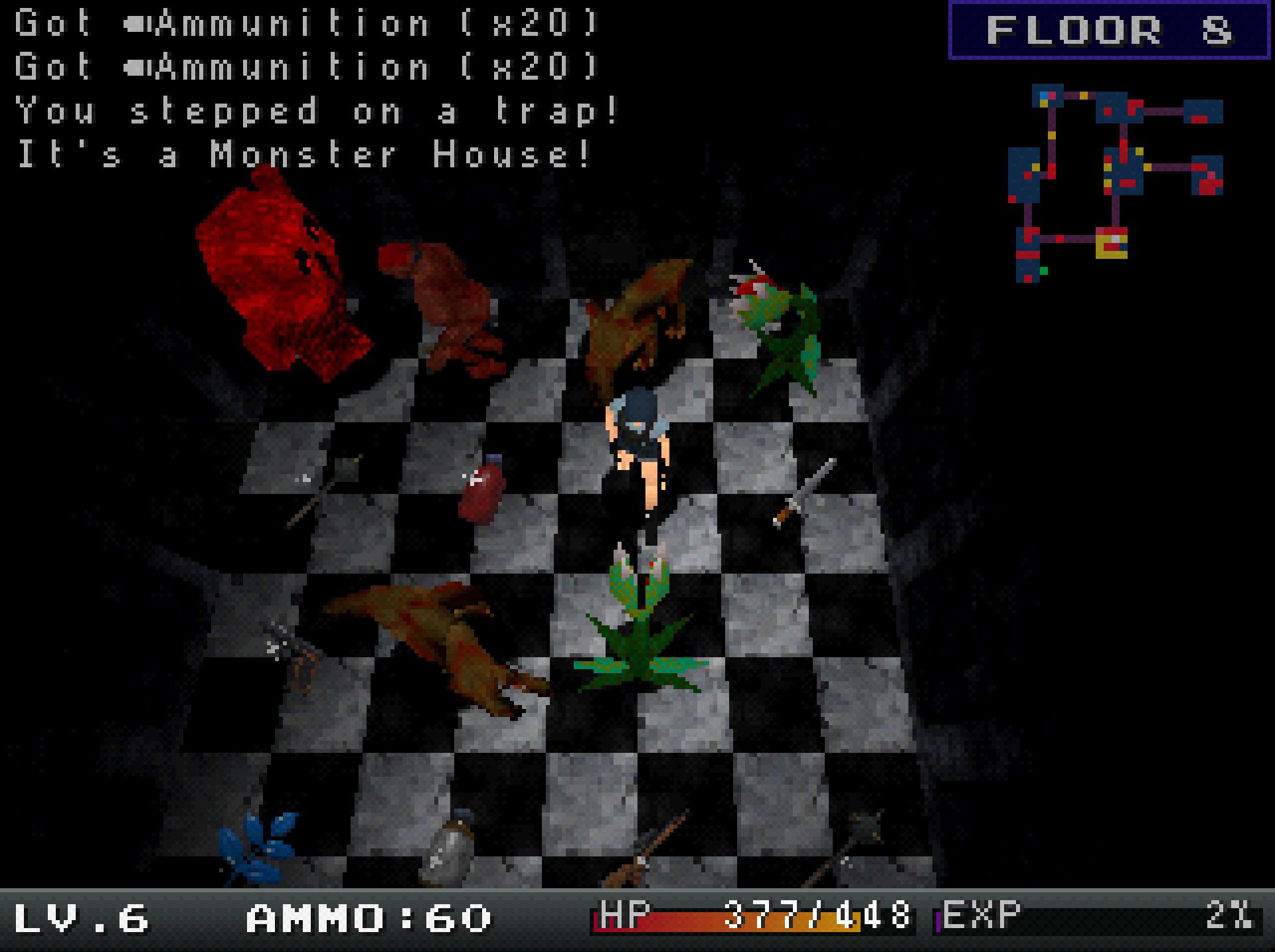
This commitment to survival horror trappings is more than set dressing. While the grid-based, turn-based movement and combat follow the formula set by Chunsoft’s Torneko’s Mystery Dungeon in 1993, House of Necrosis makes slight mechanical adjustments to that formula, better suited to its survival horror design. The player can equip a melee weapon (like a knife, sword, or mace) and a firearm at all times. Firearms require ammunition, introducing a new layer of resource management to your strategy and planning. Inventory slots are extremely limited; at the beginning of the game, you only have a measly ten inventory slots. Pouches that grant the player an additional inventory slot are extremely rare and valuable upgrades, and all loot comes unidentified. This promotes constant decision-making, forcing the player to evaluate their limited inventory and balance the potential of powerful loot with the necessary supplies to make it to the next safe room. This has always been a core tenet of Mystery Dungeon‘s design philosophy, but the added restriction (a typical Shiren game will have 20+ inventory slots from the start, with pots to store more easily accessible within the dungeon) instills a feeling of scarcity more akin to a classic Resident Evil game.
The addition of randomized loot properties and color-coded rarities (following a green/blue/purple hierarchy similar to loot tables in Diablo) provides House of Necrosis with another unique wrinkle, as each item type differs in range, damage, and function, but even items within the same type could differ significantly based on their randomized properties. House of Necrosis also structures its dungeon crawl more like a survival horror title, with the main 20-floor dungeon broken up into five-floor chunks with a different aesthetic theme (mansion, courtyard, underground cave, and lab), each section culminating in a boss fight and leading to a safe room with a shared inventory item box. This creates a more regular build-up and release of tension, as you never spend too much time between safe rooms for the inventory limitations to grow frustrating. On the other hand, you are always only a few floors away from a difficult confrontation that will drain your resources. The boss fights are a particular highlight, as they roam the dungeon floors and the game locks the exit to the safe room until you defeat them. This gives them a feeling similar to Resident Evil‘s infamous pursuer enemies (like Nemesis from Resident Evil 3) as you make your way through their lairs slowly and carefully to avoid an ambush.
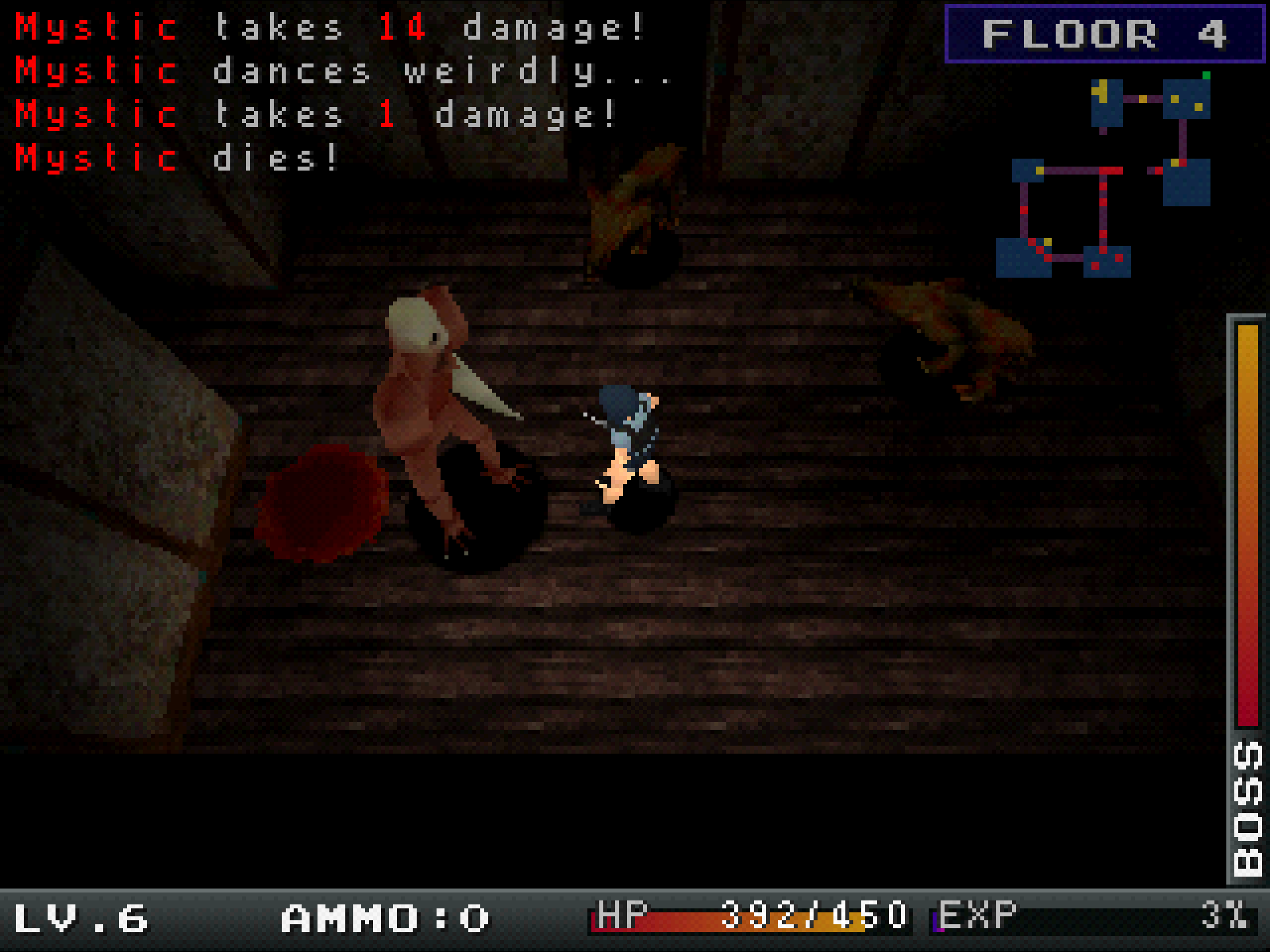
Furthermore, the procedural generation creates tight, cramped spaces, and the grid-based movement only works in the four cardinal directions. In a typical Mystery Dungeon game, moving diagonally is a reliable means to escape being surrounded by monsters. In House of Necrosis, that’s not possible, so it’s much easier to get trapped in a corner by zombies or mutated crows, particularly when the dungeon rooms are much smaller on average than Spike Chunsoft’s standard layouts. The focus on ranged combat using firearms comes in handy as a way to deal with foes before they can reach you. (A handful of foes have ranged attacks, but most of the creeping horrors need to be adjacent to the player to strike.) However, that reliance on ranged damage for survival forces you to manage your limited supply of bullets effectively. Enemies telegraph their more powerful ranged attacks with flashing indicators on the affected tile, giving the player at least one turn to react, but the limited movement and claustrophobic level layouts mean avoiding one attack often places you directly in the path of another.
Any Mystery Dungeon fan knows that two things make or break a turn-based roguelike: the bestiary and the item variety. Warkus clearly understands this, as the macabre menagerie in House of Necrosis is a potent mix of Mystery Dungeon stalwarts and original creations. The mutated Crows are weak individually but call in reinforcements. The Standing Zombies are slow-moving, but kill them with a melee attack, and they might split into a faster Crawling Zombie. Later monsters are even more devious, such as invisible Apparitions you can only spot through the enemy indicator on the mini map, or stationary Sporefiends that don’t attack the player directly, but instead buff other monsters in the room while emitting noxious gas clouds. House of Necrosis even includes a take on the Shiren series’ Mixer, called the Glutton, who swallows any thrown items and renders them inert. Feed him the right combination of items, however, and the Glutton will instantly die, leaving a more powerful combined item behind. Facing each monster requires a unique strategy, and the game adds complexity by combining these fetid foes in novel ways that strain the player’s planning and resourcefulness.
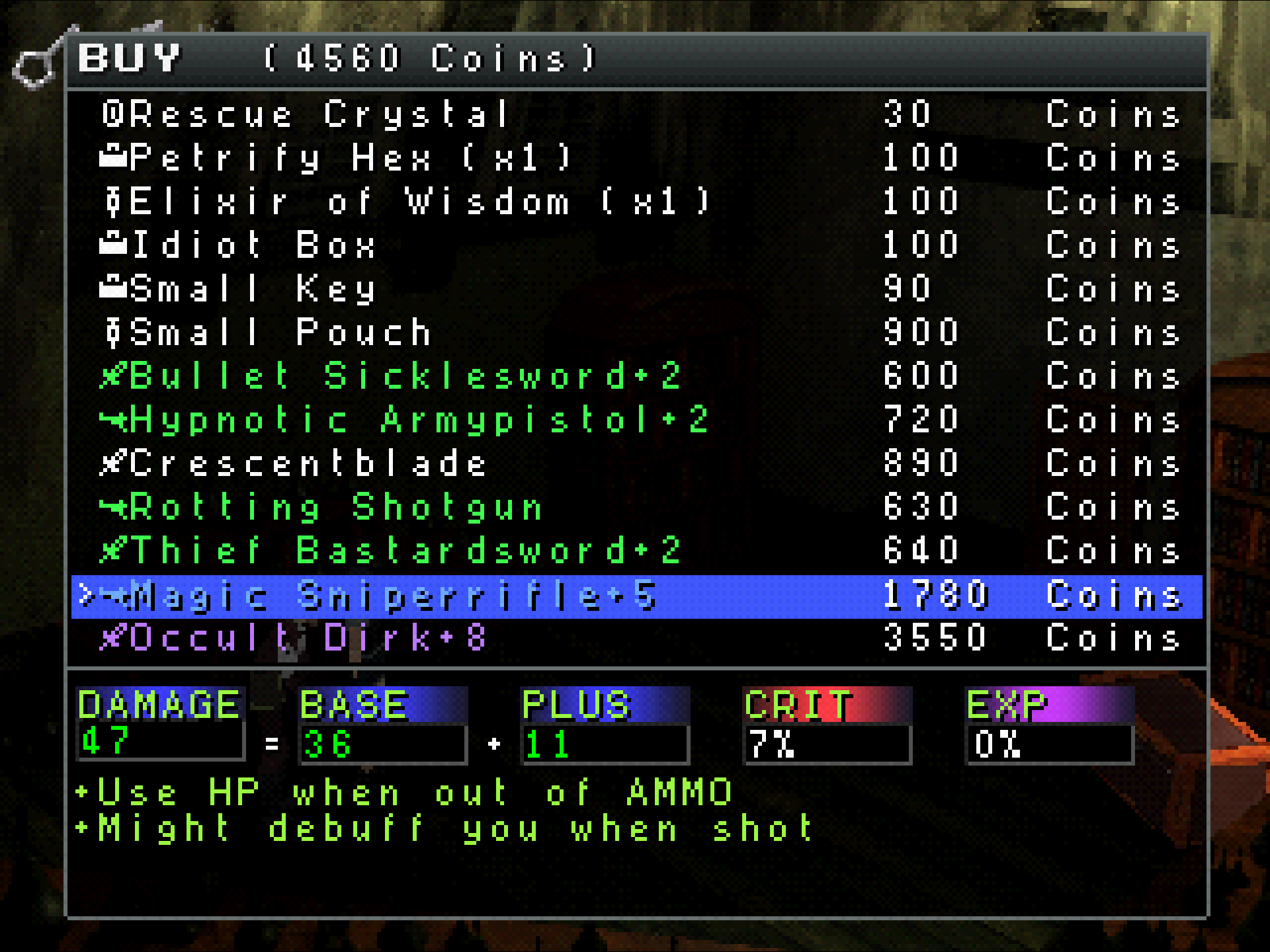
Speaking of throwing items, House of Necrosis has the requisite item variety to keep repeated runs through the randomized dungeons interesting. Wooden effigies called Hexes and mysterious Serums replace grasses and scrolls from Shiren, but offer similar benefits when consumed by the player or debilitating effects when thrown at an enemy. Encyclopedias will identify all items in your inventory, and Floorplans will reveal the current floor’s layout immediately. Grimoires, ancient texts that have a small chance to drop from defeated enemies, are perhaps the most original inclusion. Reading them grants a permanent spell that the player can use once per run, with 37 in total to collect. These spells can be quite impactful, such as fully healing or buffing the player, dealing damage to multiple foes at once, or turning a room of dangerous monsters deep in the dungeon into relatively harmless crows or spiders. These spells are permanently unlocked, so even if you fall in a dungeon and lose your hard-earned inventory, you always have these mystical powers to fall back on.
Although the initial trek through the main dungeon and final boss to roll credits only took me about ten hours and a dozen runs, the true game begins with the post-game. There is a 15-floor postgame dungeon with randomized modifiers per floor once you complete the main dungeon, and after that, two additional dungeons: one that prevents bringing outside equipment and a final 99-floor dungeon challenge. Completing all of these dungeons and mastering the new mechanics introduced within could double or triple your playtime. House of Necrosis easily stands beside the best Mystery Dungeon titles with its wealth of content, and has enough challenge in its later dungeons for hardcore Mystery Dungeon fans, while the initial dungeon remains approachable to a newcomer.
House of Necrosis feels like the long-lost Resident Evil/Mystery Dungeon crossover the PlayStation never received. It embodies the successful formula Spike Chunsoft used to keep the franchise relevant across decades of crossover with other franchises, sticking to the proven Mystery Dungeon formula while including sufficient elements from the collaboration title to feel authentic. I wouldn’t call the game scary, yet it maintains the level of tension and adaptability that I know and love from survival horror games and adapts them incredibly well to a turn-based roguelike, while offering enough rotting flesh on the bone to satisfy a die-hard Mystery Dungeon fan. A triumph of genre fusion that would make the T-Virus jealous.