
Any series builds up expectations by virtue of its existence. The Warriors titles, with their plethora of classic games and cross-franchise spin-offs, have numerous precedents: expansive playable casts that span worlds, decades, and even universes; superficial stories to justify said casts; and straightforward gameplay that often feels like mere button mashing. Hyrule Warriors: Age of Imprisonment, the follow-up to Hyrule Warriors: Age of Calamity and a tie-in to The Legend of Zelda: Tears of the Kingdom, is a solid Warriors title that plays to some of these expectations, but dismisses others in a way that feels surprising, if not exciting.
Like Age of Calamity, Age of Imprisonment can be enjoyed without any prior knowledge of its associated mainline title, Tears of the Kingdom. Those who have experienced Tears of the Kingdom will appreciate the extra depth given to the Six Sages, who are now named and playable. But anyone hoping for an extensive roster of established characters, the norm for Warriors games, might be unpleasantly surprised by Age of Imprisonment. Instead of relying on wacky shenanigans to justify a large cast of fan-favorites, it sticks strictly to a serious story, resulting in noteworthy absences in its character roster.
While some big names are missing from the playable cast, Age of Imprisonment‘s ranks are filled with elevated “generics.” These named side characters are lieutenants or generals of the different Zelda series races—Hylian, Zora, Rito, and Goron—who join King Rauru and Princess Zelda in the war to stop Ganondorf. These characters’ combos aren’t as distinct as the “main” characters’, but they still feel unique enough thanks to them using different weapons.
Not all Rito wield bows, and not all Zora brandish lances. Lago, a Zora, has fast sword strikes that are fun to lash out with. Typhan, a Hylian, has a shield that adds an extra layer of complexity to his moveset. While these sorts of characters don’t make up for the missing key figures, they do help make the setting feel like a true war, where even the “above-average Joe” is participating.
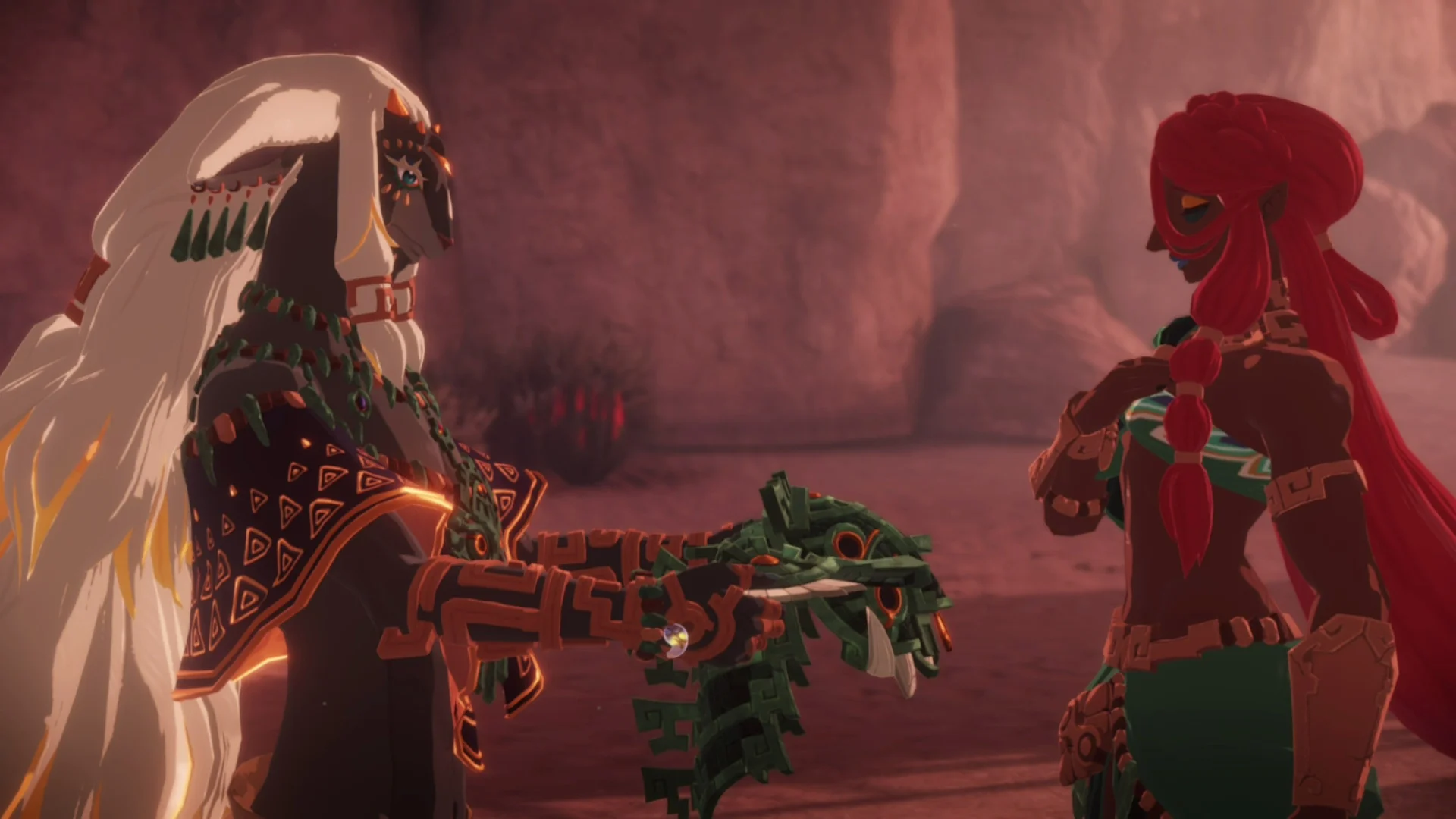
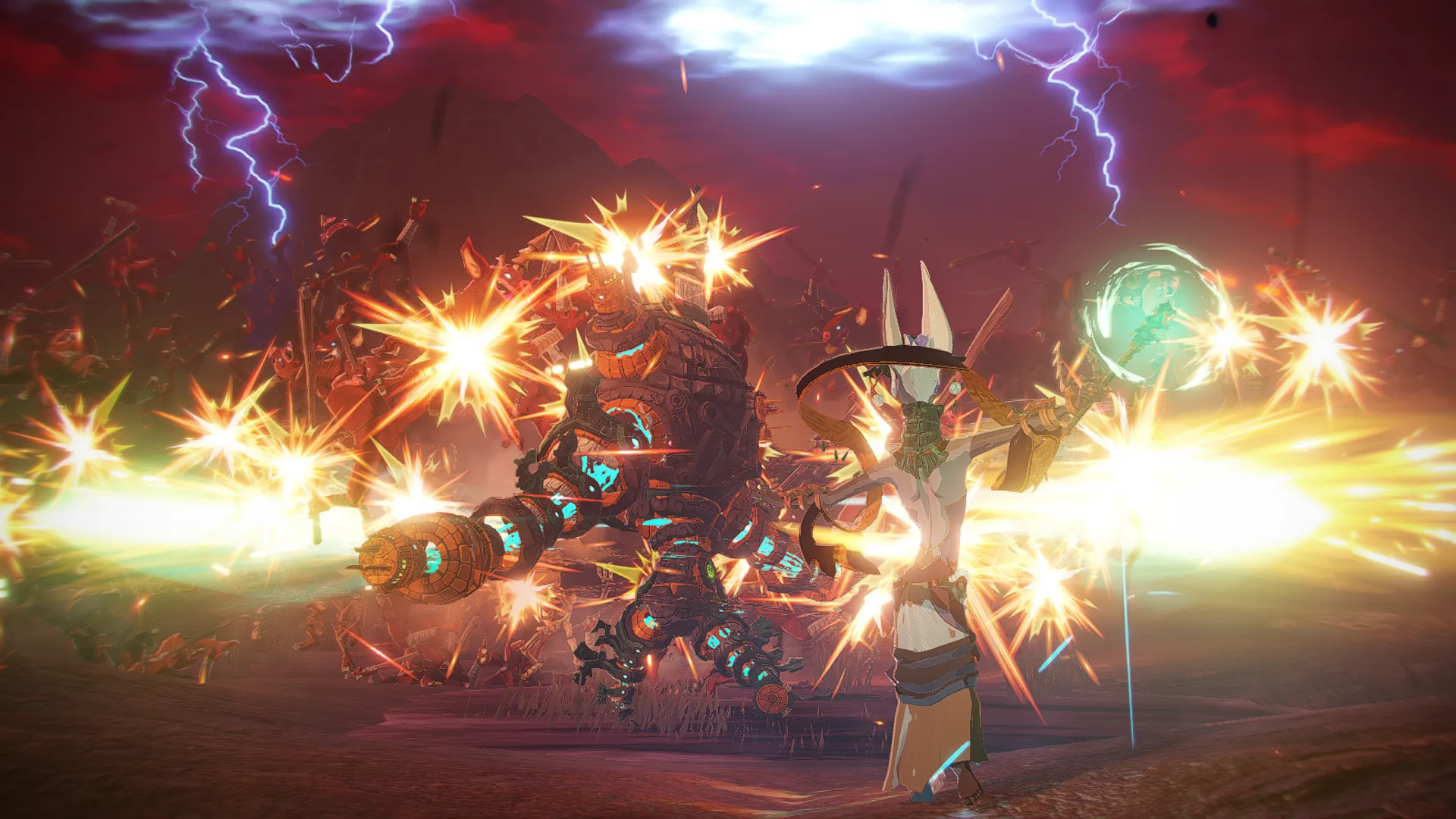
Still, it’s with the established characters where Age of Imprisonment’s gameplay truly shines. Each character has their own approach to wiping out the hordes of enemies placed in their way. Even those who use the same weapon feel notably distinct, making it a fun experience to try them all out and find a favorite. Zelda, for instance, can stop and rewind time to call back projectiles and land extra damage, while Calamo the Korok tosses specialized bombs between sword swings to inflict elemental damage.
This underlying gameplay can feel like simple button mashing due to the way combos are performed. No matter the character, all the player has to do is press the Y button a certain number of times, then hit X to complete the combo. But because each combo plays out differently for each character, memorizing what each one does and when to use them helps alleviate the innate simplicity.
There are also extra garnishes that help add depth to battles. Throughout Age of Imprisonment, players unlock special equipment called Zonai Devices, which can be used at will during battle with all sorts of effects. Some shoot fire, ice, or water, which is helpful when squaring off against enemies with elemental weaknesses. Others can reflect projectile attacks or propel the character forward through swarms of enemies.
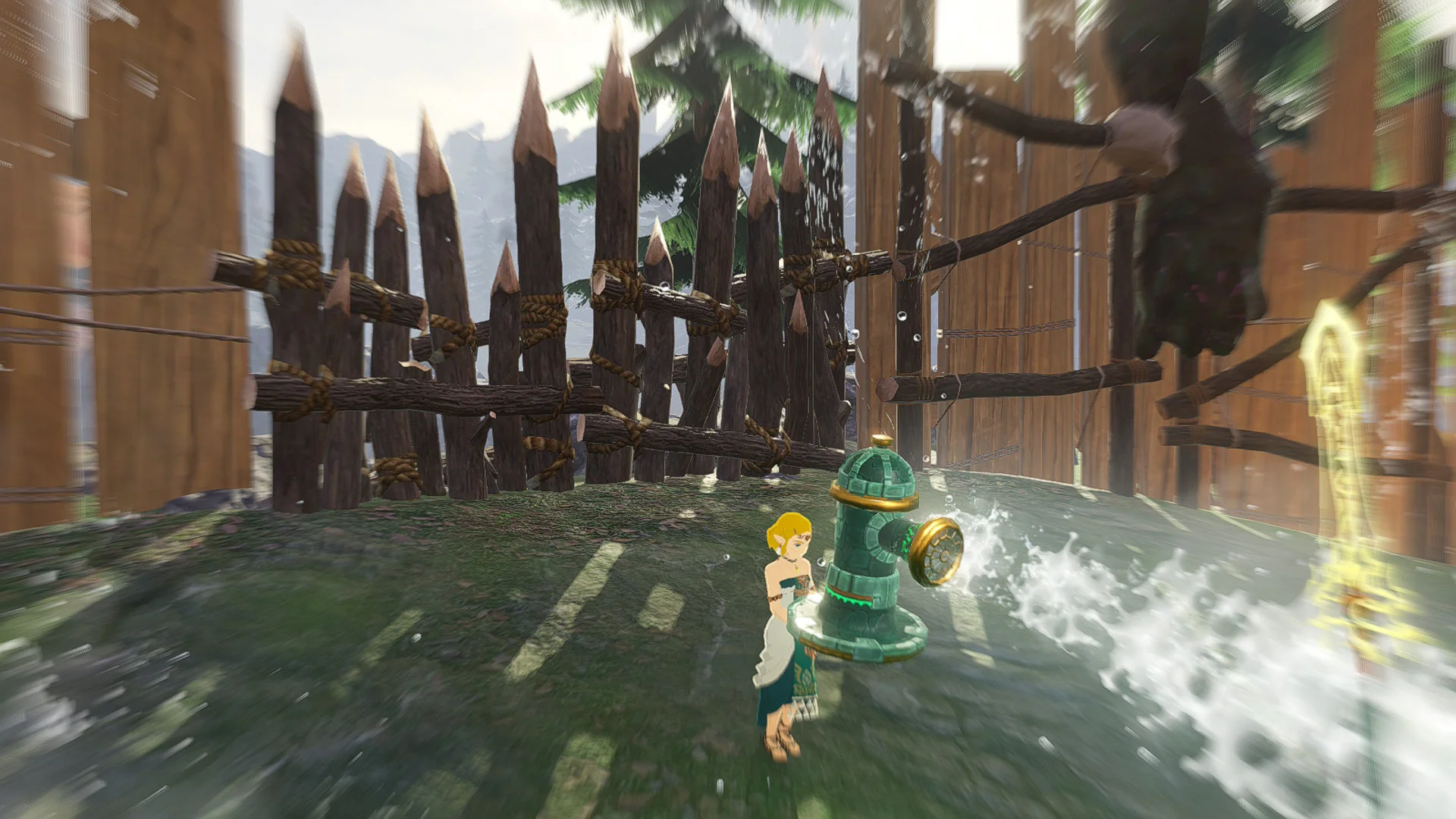
Players can even imbue combo finishers with Zonai Devices for select characters with ties to the technology, such as Mineru and a construct using Link’s visage and temperament, further deepening the game experience with customization. Choosing which Zonai Devices to link up to attacks can be based on personal preference or the map’s needs, such as imbuing an attack with water to target water-weak enemies. These choices add a welcome level of complexity to an otherwise simple set of systems, even if they only apply to a few characters.
Players maintain their army by gaining experience felling monsters in battle, and by improving everyone’s weapons. This is where Age of Imprisonment becomes overwhelming. Weapons require Zonai Steel to upgrade, and they’re split into categories for each type. Players who want to upgrade a one-handed sword need Zonai Steel specifically for one-handed swords—Zonai Steel for two-handed swords just won’t do.
This gets out of hand quite quickly, because not only is the amount of Zonai Steel that can be held at once fairly low, but there are a lot of characters who use the same weapon type. There will be plenty of times when the player is only able to upgrade one character’s sword because of the limited resources. The road to “100% complete” Age of Imprisonment is long and arduous.
There is a silver lining, though: maxing out every weapon isn’t necessary for a run-of-the-mill playthrough. Other character upgrades, however, feel much more pertinent even if they’re technically not required. Each character starts with a limited moveset, and only after completing side quests will their combo tree expand. Side quests involve delivering the noted materials obtained through battle stages and then reaping the rewards. The rewards come in the form of all sorts of upgrades, from the aforementioned combo expansions to permanent health increases, access to stores, and much more. These are simple to ignore, but offer an absurd amount of things to do for those interested in wringing every last drop of unlockables out of Age of Imprisonment.
On top of keeping track of character upgrades, players must also keep track of Hyrule itself, driving Ganondorf’s army out of Hyrule by clearing specific stages in a Nobunaga’s Ambition-inspired manner. Regaining control of an area opens up extra side quests to attempt and grants access to any of its facilities, such as shops and training grounds. Once an area is liberated, enemies may try to retake it, and players have to dispel the attackers in a set amount of time. This back-and-forth gives Age of Imprisonment an intriguing flow, letting players conquer areas at their discretion while also offering some level of structure through timed defenses.
Age of Imprisonment successfully balances player freedom with innate structure. Although trying to keep each character evenly leveled or outfitted with high-level weapons gets overwhelming quickly, there’s a comfortable amount of wiggle room to leave some warriors behind. Many maps allow players to select their characters, so they can focus on leveling up weaker ones or just use their higher-leveled favorites. Certain maps do have required characters who can’t be swapped out due to story involvement, but even when slightly underleveled, the game isn’t too punishing.
There are also bonuses that can make an easy map even easier or help a weaker character stay afloat. There’s the option to eat before each battle, and the ingredients used will offer different benefits. Players wanting to increase character levels quickly can focus on experience bonuses, but if they’re looking for item drops, they can select an increase to that parameter. Anyone worried about battle performance can cook up a meal with a bonus to special attack charge rates or faster unique skill cooldowns, periodic automatic healing, less damage taken from enemies, or even increased damage from Zonai Devices.
The more expansive, main story battlegrounds in Age of Imprisonment also have individual camps spread out that offer even more optional bonuses. These bonuses range from battle-relevant, such as instantly filling attack gauges or reviving once after dying, to exploration-focused, including showing the location of treasure chests and hidden Koroks on the mini map.
To earn these temporary buffs, players exchange tickets, which are earned by performing specific tasks during the map. Tickets are kept between maps, so it isn’t a bad idea to hold onto them until a challenging fight or when intent on scouring the map for its Koroks and treasure chests. Both major story maps and the smaller side quest maps can be replayed if its area in Hyrule is under the player’s control, so nothing is missable and grinding for missing mission requirements is always an option.
Age of Imprisonment’s plethora of options helps elevate it as an enjoyable Warriors experience. On the other hand, it suffers from its notable roster absences, especially for Zelda fans, since it’s common to go to Warriors games not for their canon-compliant stories but for the opportunity to throw fan-favorite characters at floods of enemies. Knowing what to expect helps alleviate the disappointment, and the Warriors format works wonders at conveying Tears of the Kingdom’s Imprisoning War. Hyrule Warriors: Age of Imprisonment’s seriousness and polish help it overcome its shortcomings, making it an overall good time. And like with most Warriors games, a good time is usually good enough.