
The last thing I anticipated playing in the year 2026 was a brand-spanking-new Game Boy Color title. But that’s Infinity for ya!
The history behind this once-scrapped, now-revived GBC RPG is quite the saga, stretching all the way back to 1999 and making Infinity about as old as RPGFan itself. Finally, thanks to a recent successful Kickstarter campaign, Infinity exists as a physical cartridge to plug into your GBC (or GBA, whatever device is compatible from Nintendo). In due time, this 4MB cartridge will be ported to Steam and Nintendo Switch. Until then, Kickstarter backers are currently receiving their materials, and the general public has access to physical and digital editions of the GBC version via publisher Incube8 Games. But you may wonder: could such a game, on such a dated console, actually be worth playing? That’s what I’m here to answer.
Inspirations
Over the decades, the original dev team Affinix have not hidden the fact that Infinity was designed as a love letter to Japanese RPGs. After all, across Nintendo’s lineup of 8-bit platforms (NES, GB, GBC), the vast majority of RPGs on those platforms hail from Japan. Throughout my ten hours playing Infinity, here are some inspirations I noticed.
First and foremost, the tile-based backgrounds and character sprites immediately reminded me of Square’s four Game Boy RPGs: the Final Fantasy Legend trilogy (which are SaGa games) and Final Fantasy Adventure (which is actually a Mana game). These aren’t one-to-one, cookie- cutter clones. I think Infinity has a distinct visual style, and it’s not only due to the addition of color. Even with such a limited number of pixels on the screen, I was impressed at the visuals, which have their own style while hearkening back to some of the best Game Boy RPGs out there.
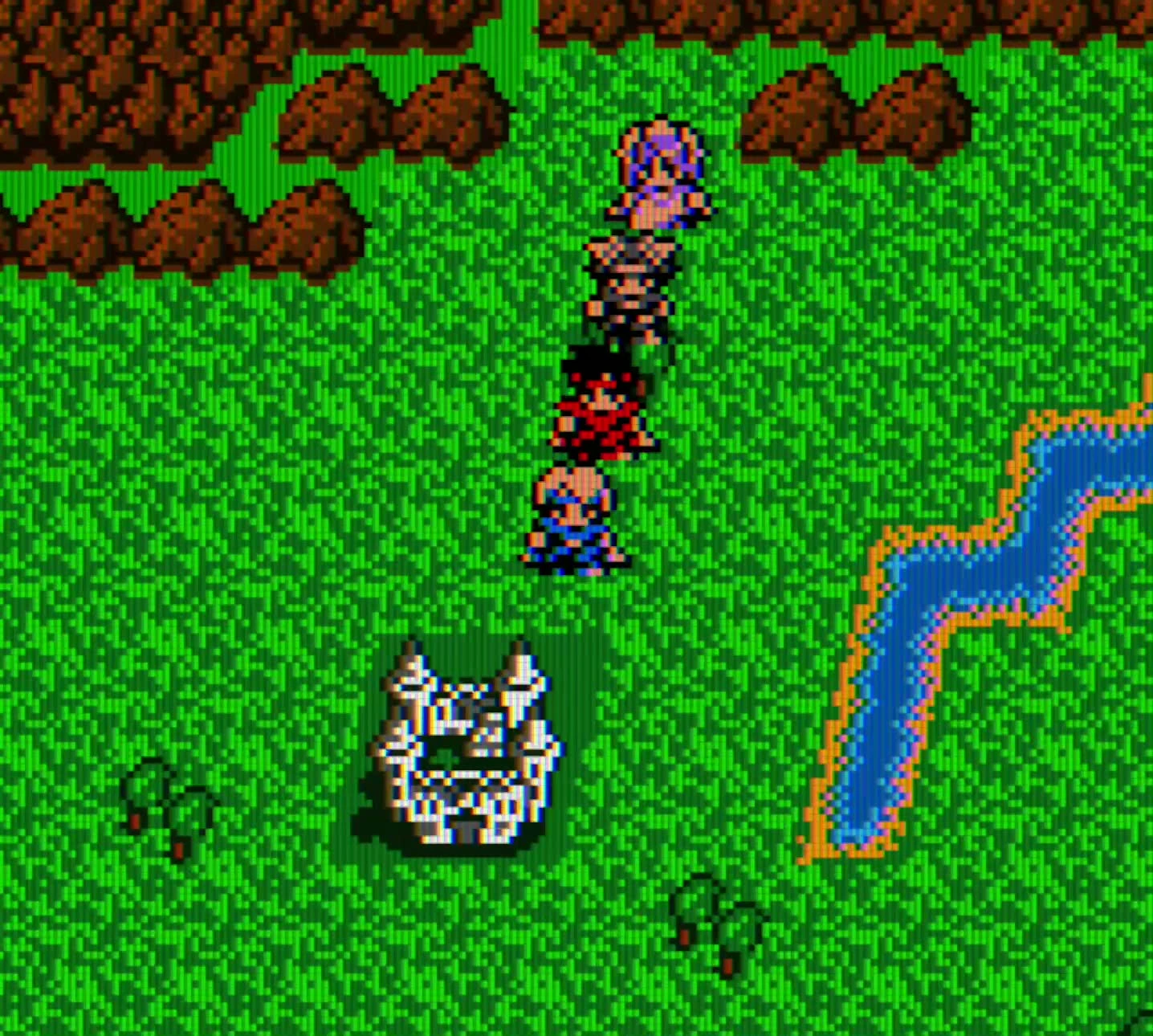
The game offers towns, dungeons, and a relatively small world map that isn’t fully traversable until the last quarter of the game to explore. In this regard, progression feels a lot like Final Fantasy or Dragon Quest. Visually, I do like the added touch of the world map appearing somewhat skewed, to add depth and perspective.
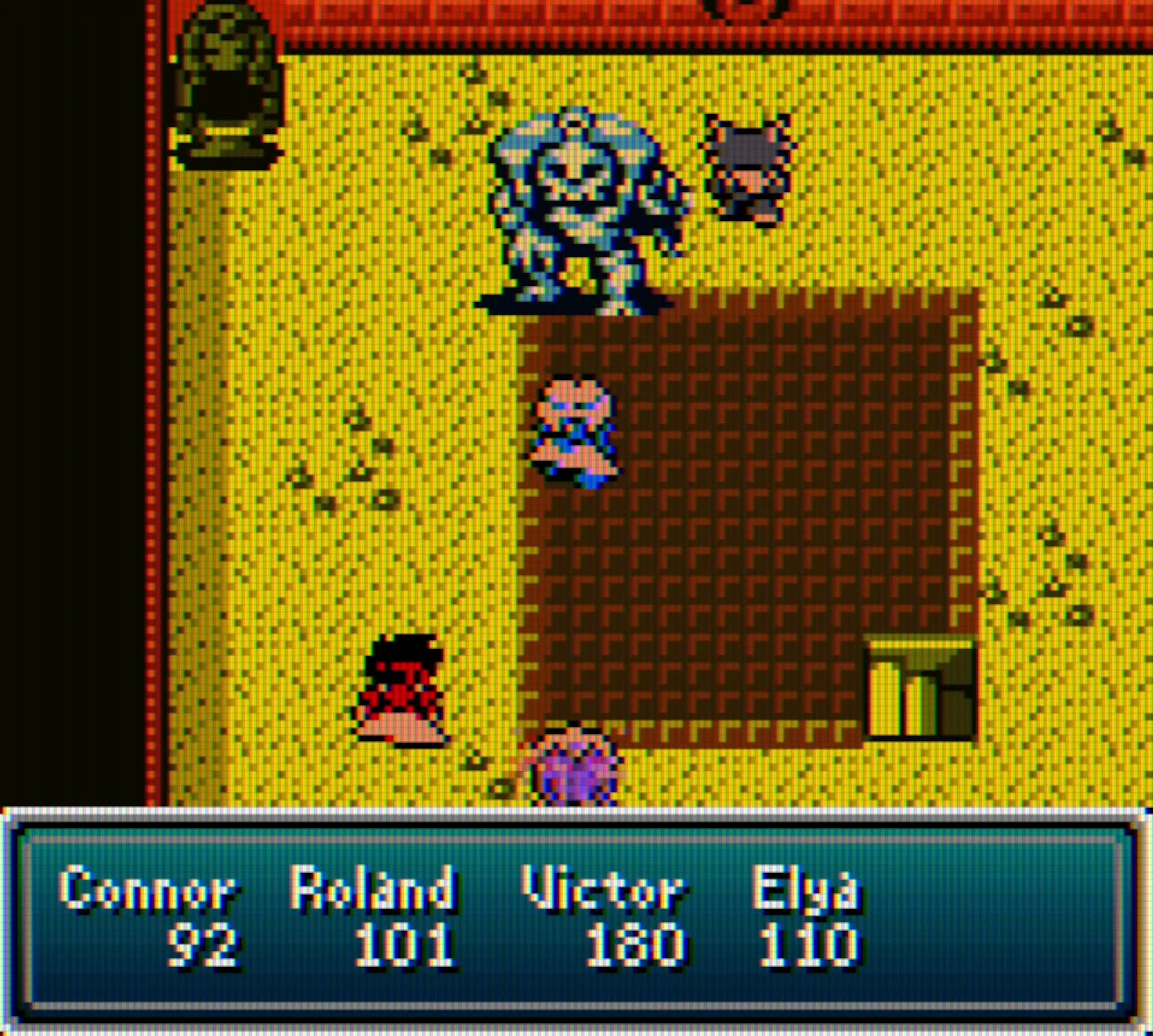
The game’s mechanics contain a hodgepodge of classic RPG inspiration, but once again, the end result is something unique. Your party starts with one player and grows to as many as four. Combat is initiated via random encounter, but the player is actually in a mini-strategy RPG layout once it starts. Without drawing any grids on the screen, the devs laid out a hexagonal grid (years before Wild Arms 4 implemented a similar format). Menu navigation in combat, which can be a bit confusing, is generally laid out with the cardinal directions. Fans of Lufia and Breath of Fire should recognize this model. You have to memorize a lot of icons, as there is precious little on-screen text description for your selections (though the game includes a handy-dandy instruction manual with purchase). The learning curve was a tad steep for this player, but once I got the hang of the menu navigation, I really enjoyed battles. I also appreciated the option to use items to avoid random encounters, as well as the high flee success rate when I didn’t want to be overwhelmed. Keeping my mana at max for potential big boss fights was paramount.
As these battles are tactical in nature, fans of Shining Force and/or Fire Emblem may find themselves most drawn to these short-form tactical battles. Learning to maximize efficiency with certain character-unique skills is a real joy, though I wish there were more variety in this regard.
A Unique Touch
With those inspirations noted, let’s dig into aspects of Infinity for which I couldn’t find an obvious legacy parallel in the massive back catalog of JRPG-dom. Let’s start with the music.
Composer Eric Hache laid down early versions of this music for fans to listen to starting back in 2002. Materia Collective released an updated version of the music in 2016, even while the game remained unfinished. However, that OST appears to have been pulled in anticipation of the complete OST coming this year. There are notable differences between the music in those respective decades, but the key themes (title, world map, standard battle) have maintained their core melodies. The notable difference in the Infinity soundtrack’s evolution is the way it maximizes the Game Boy’s three-channel setup to create chiptunes. Utilizing oscillations to suggest larger chords than would otherwise be possible is a great technique, one that didn’t get nearly enough use throughout the ’90s. Hache nails down this technique in fast and slow songs alike. Hache also makes great use of the noise channel for percussion.
Is there any analogous composer I could tie Hache’s work to? Honestly, not really. This music sounds plenty distinct from Square’s mainstays of the era (Uematsu, Ito, Shimomura, Kikuta). And it definitely doesn’t sound like Pokémon music! If anything, I notice some melodic work that reminds me a bit of Motoi Sakuraba’s work in later Shining Force titles, but that’s in a far more expansive soundscape than pure chiptunes.
To that end, I think Hache might have pulled off the greatest feat here, developing a chiptunes score that functions on a very real, four megabyte cartridge and a Game Boy Color, with techniques that rival what modern chiptune artists can do with a single device. I love this soundtrack’s style, and only wish there was more to love. Unfortunately, there just isn’t enough content in the game to justify an expansive three-hour Game Boy OST.
And that brings us to the story. I found this to be the most unique approach compared to Infinity‘s JRPG predecessors, and it’s also where I found the most frustration. At a high level, this game has an absorbing world. The lore (history and mythology), the larger plot, and the key events are fantastic. When the player learns of a certain weapon called the Geist Cannon, it’s actually a horrifying experience, complete with impressive still images that enhance the moment’s power. This early plot point made me realize just how dark the Infinity devs were willing to go.
What didn’t work, however, was the dialogue. Our protagonist, Connor, is an ultra-jaded former knight forced into an adventure he doesn’t want to take. Early in the game, the player learns why Connor has an axe to grind against his home kingdom of Selera. And, okay, you’re angry. I get it. But when your dialogue is just nonstop brooding and resentment, even toward well-meaning party members and NPCs, it gets old. I haven’t hated a protagonist this much in a long time. And even at the end of the game, after he’s achieved total redemption, I still don’t like Connor.
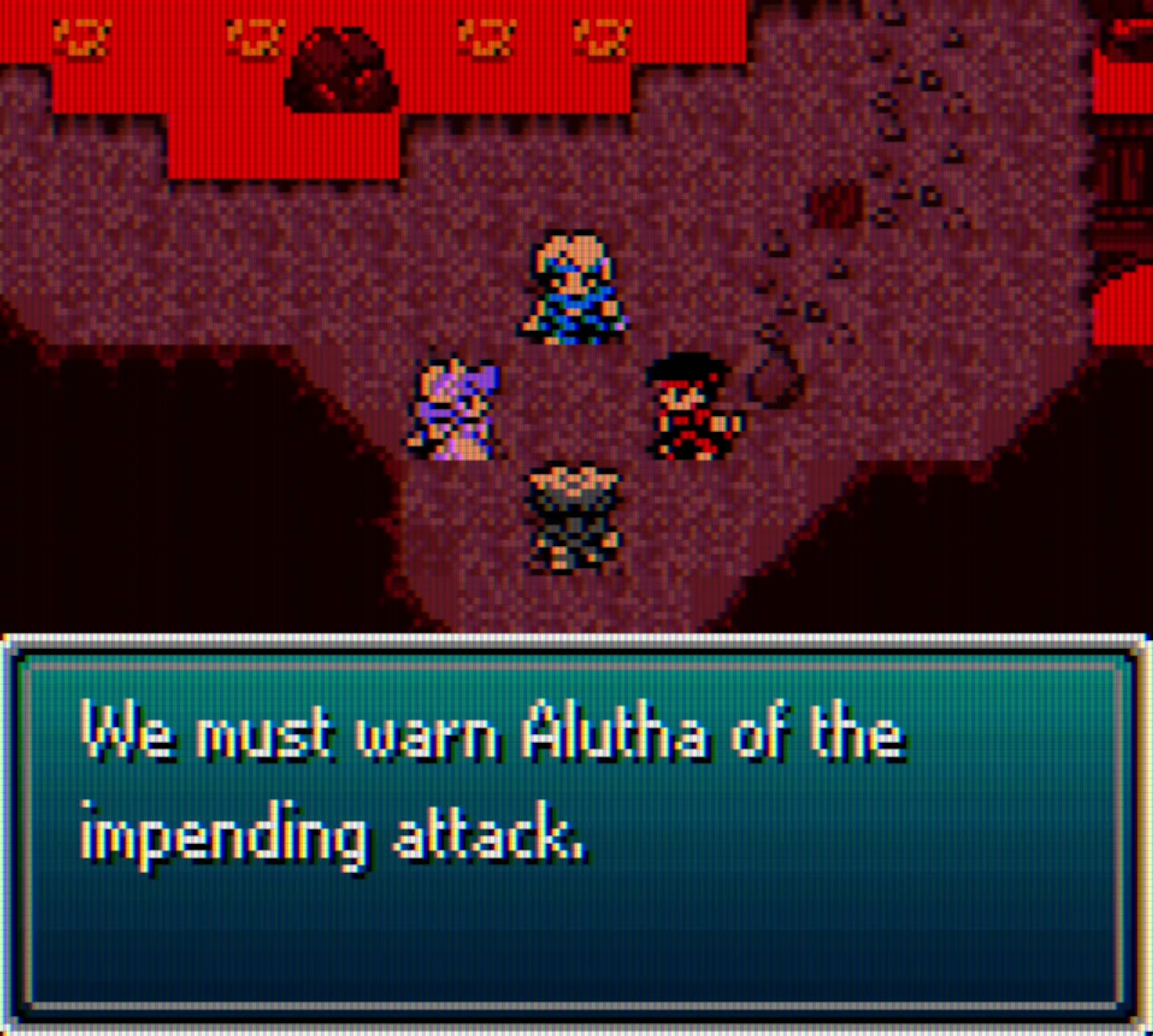
The other major characters are more bearable. The lycanthropic Victor is probably my favorite character, as his aggression starts to tone down to more acceptable banter with the rest of the party near the end of the game. Roland, Connor’s rival in the northern kingdom of Alutha, is every bit as bitter as Connor. And, again, for good reason. The game’s whole story is about the continual failures of humanity and the traps set by evil supernatural entities to accelerate extinction. The few forces for good, like the well-meaning and devout mage Elya, are well overshadowed by the antagonist forces led by Kraith—and, dare I say it, the antipathy of the rest of the playable characters.
I don’t have any complaints about the plot’s pacing, though. While part of me would like some additional/optional content near endgame, I also found myself longing to see how the endgame scenario would play out. The presentation is a bit barebones; more key art throughout the final hour would have been welcome, though I also recognize space limitations. (Again, only four megabytes! That’s madness!)
An RPG For The Ages
Is Infinity the greatest game on the Game Boy Color platform? No. Can it compete with retro-style RPGs that have no actual space limitations? Absolutely. While I have my complaints and would have loved to take a stab at rewriting the dialogue so that the main characters weren’t so curmudgeony, I think Infinity is ultimately an enjoyable retro experience that we’re lucky to see launch decades after its first curtailed development cycle. The visuals are simple yet effective. The music and sound are a wonder to behold. Dungeon exploration and combat are fun, and only run the risk of monotony if the player chooses to take on heavy grinds.
If you pride yourself on having a library of great retro games, here’s a surprising old/new entry just for you! It’s not going to change your life, but it will make for an enjoyable 10-15-hour gaming experience!