
Generally, I’m allergic to roguelites and anime games—the former for needlessly bloating what could be great small experiences and the latter for perpetuating fanservicey tropes. Still, Kernel Hearts‘ aesthetics and concept ensnared me while I was writing a news post about its release, and I felt compelled to give it a shot. What I got was the small experience I was seeking: an experience that, while perhaps not great, does do its lofty premise justice.
In an alternate historical path, the Soviets beat the Western Bloc to the punch by landing on the Moon in 1968. As it turns out, one of the cosmonauts on this mission was pregnant, and when the child was later delivered on Earth, she had striking golden eyes and soon developed special powers in her girlhood. Naturally, the Soviets began developing an army of these nameless girls, Vessels of War, who wiped out the USSR’s enemies—until the world fell into nuclear war and humanity nearly went extinct.
As humanity falls prey to violence and decadence, a massive structure arises from the ground, and ash begins raining from the sky. The remnants of humanity are drawn to this new Tower of Babel, as being in proximity to it seems the only thing preserving their fading memories. As humanity huddles close to Babel and awaits their end, they remember: a select few magical girls had their genetic essences recorded and stored.
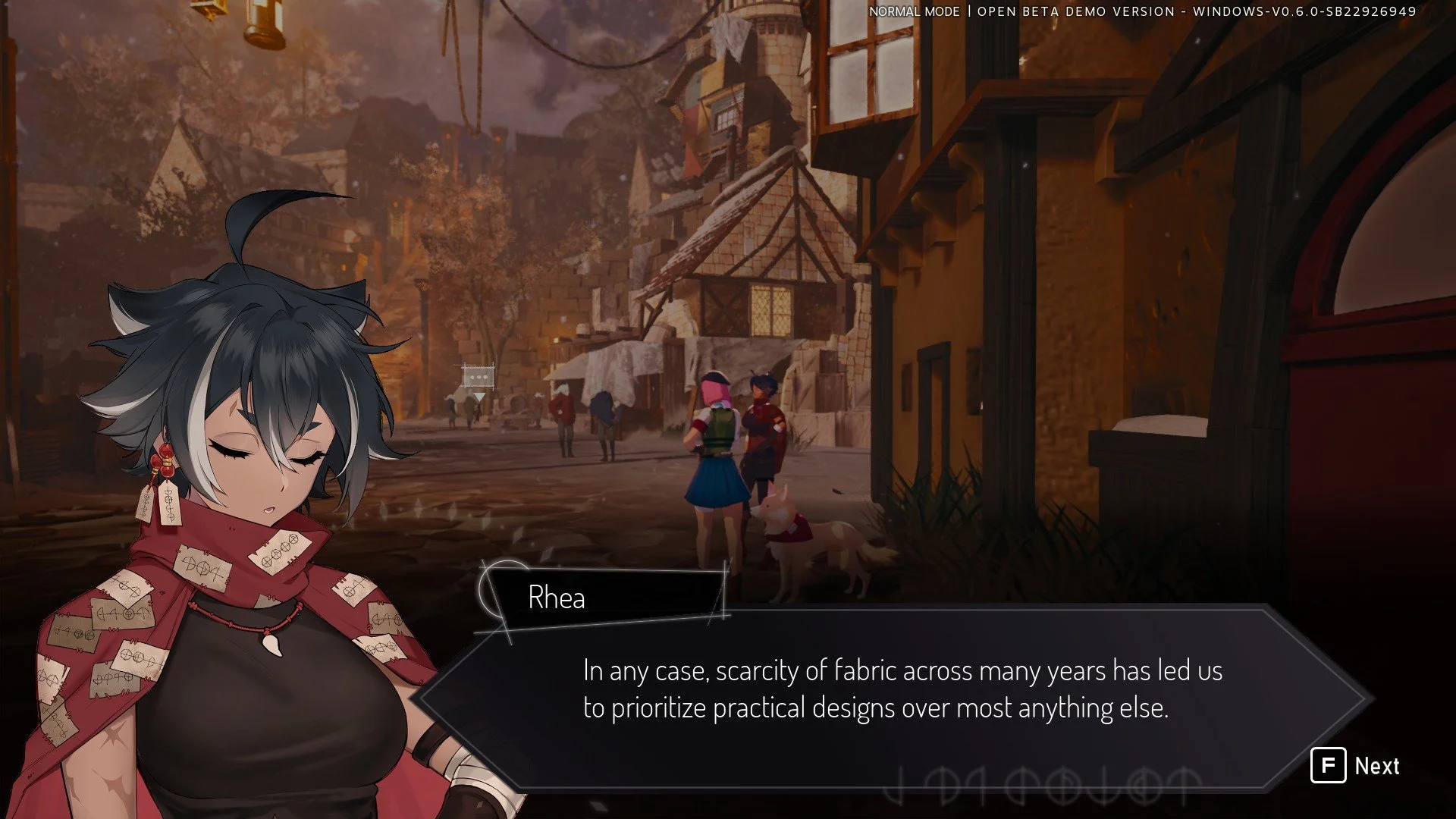
Thus, the player is rebooted in the memory of Fernet, captain of the M.A.H.O.U. (that’s Japanese for “magic,” dummy!) unit of magical girls employed to climb Babel and put a stop to the downpour of ash. Kernel Hearts drops a lot of this exposition via its opening anime cutscene, and it does a good job of keeping the stakes seemingly hopelessly high while also grounding the player with a small collection of NPCs and allies you can bond with to learn more about the lore—a solid motivator for me.
Runs up Babel start in the grassy meadows of Folktale Fields, a large arena of rolling hills and semi-randomly placed structures and encounters. I’ve heard the game branded as a NieR-like, and I can feel that somewhat in the movement and third-person swordplay. Slaying “angels” nets you pink Stray Souls, which you can use to level up at Moon Shrines placed around the map.
Exploring each map, you can find floating Stray Souls, enemies spawning in, chests with collectibles for bonding with NPCs, and destructible flowers to unlock special chambers in each level. The goal is to level up your magical girl while also collecting blue Lost Wishes, which can open ability- and passive-granting coffins around the map.
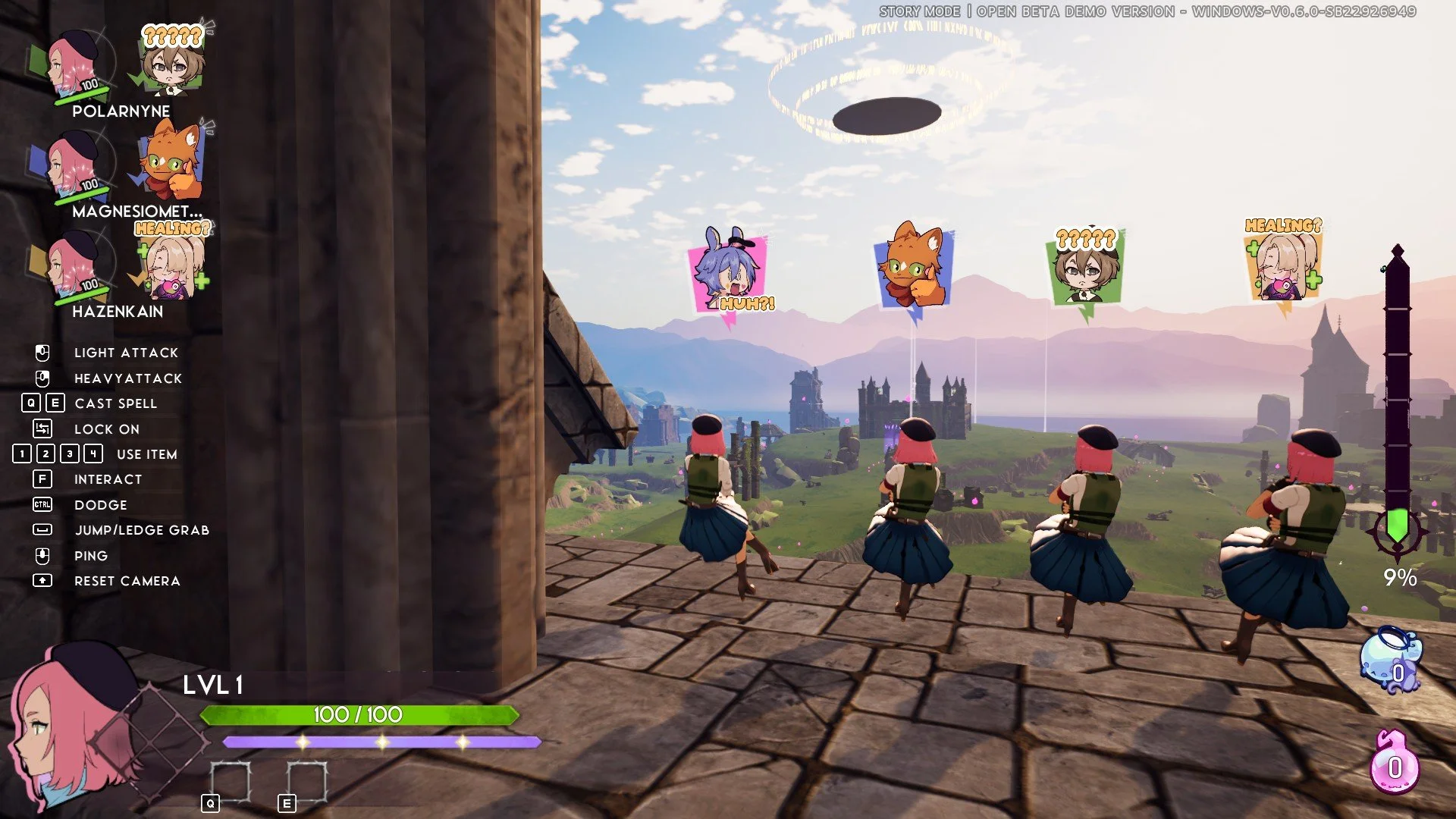
It’s a pretty straightforward gameplay loop, but the pace becomes urgent with the scaling Sin Meter, which amps up enemy levels and introduces various catastrophes to your run, including comets smashing down at you from the heavens and vision-reducing eclipses. At 90% capacity, a biblically accurate angel appears in the sky, telling you it’s time to wrap things up and move up to the next floor by a randomly placed cosmic elevator (complete with a charming bellhop, Daiki), or else face the angel’s wrath.
My first few runs ended because I pushed my luck for one more coffin or one more relic item from chest meteors that rain from the sky at high Sin levels. At 100%, the angel either rains fire on you or saps your meagre life bar.
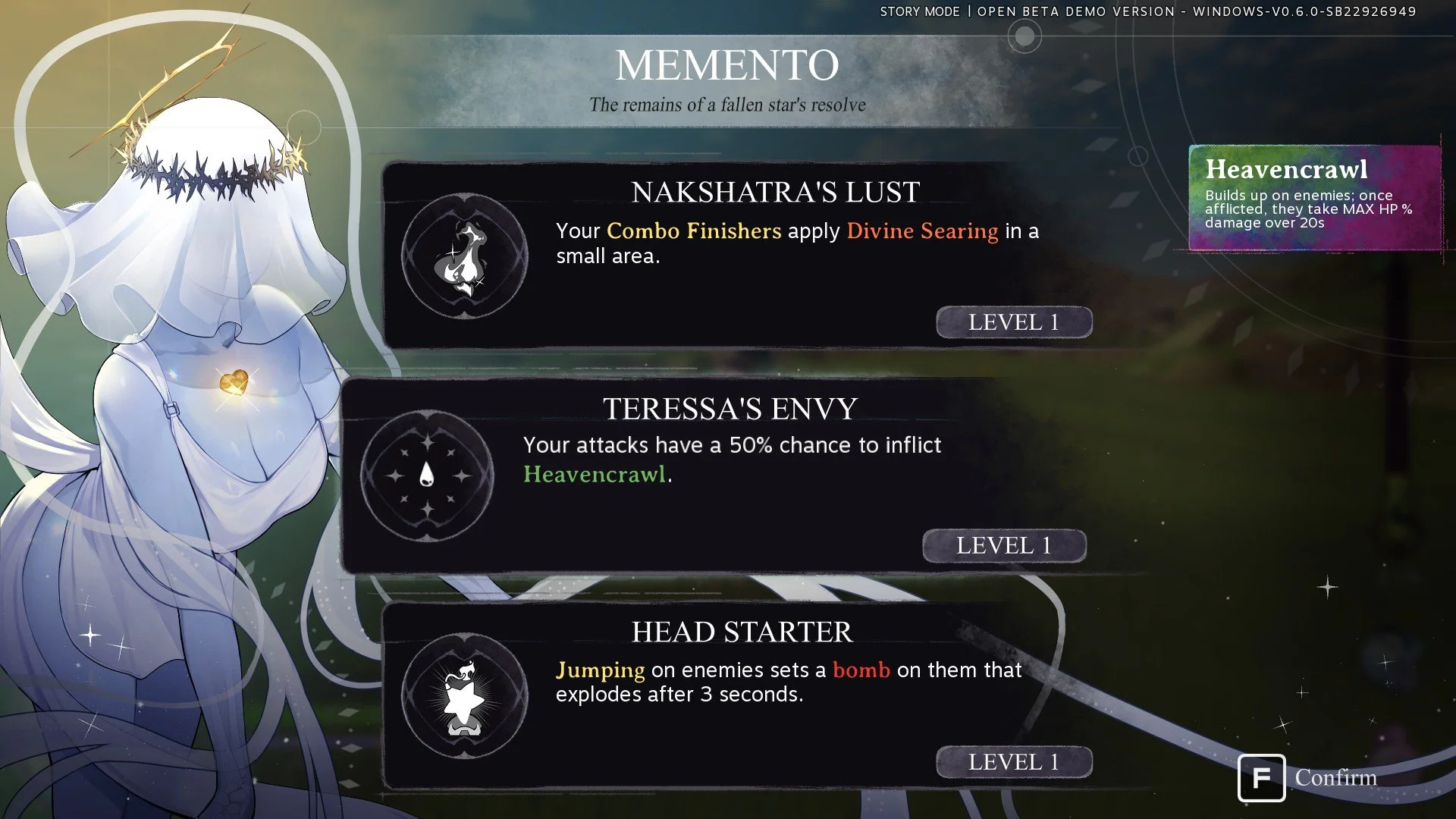
Therein lies my first problem with Kernel Hearts. At Normal difficulty, the Sin Meter climbs all too quickly, and combined with the beefy common enemies, this means I never felt as powerful as I should for later floors. It’s extremely tough to keep pace with the exponentially scaling enemies. The game’s metaprogression—unlockable chips to sort in your magical girl’s robotic OS—grants buffs that are practically negligible.
While combat can be chaotic and overwhelming, I did learn to read the method in the madness. Most enemy attacks have MMO-like red circles and lines that show exactly when and where they will strike, though you may shortly find things getting cluttered beyond what the spotty dodging ability can handle.
Combat can be a bit mashy, platforming is difficult to pull off, and flying enemies can be annoying to hit, but overall things feel smooth. There are five main floors to Babel, not including boss and safe room areas between, where charming NPCs will grant you buffs or new items. Each area of Babel looks vastly different, inspired by Judeo-Christian visions of heaven and hell. The third area sees you platforming up a non-randomly generated series of cloudy temples towards the escape elevator at the top. The fourth sees you falling through a monochromatic purgatory of halls and doors to an elevator at the bottom.
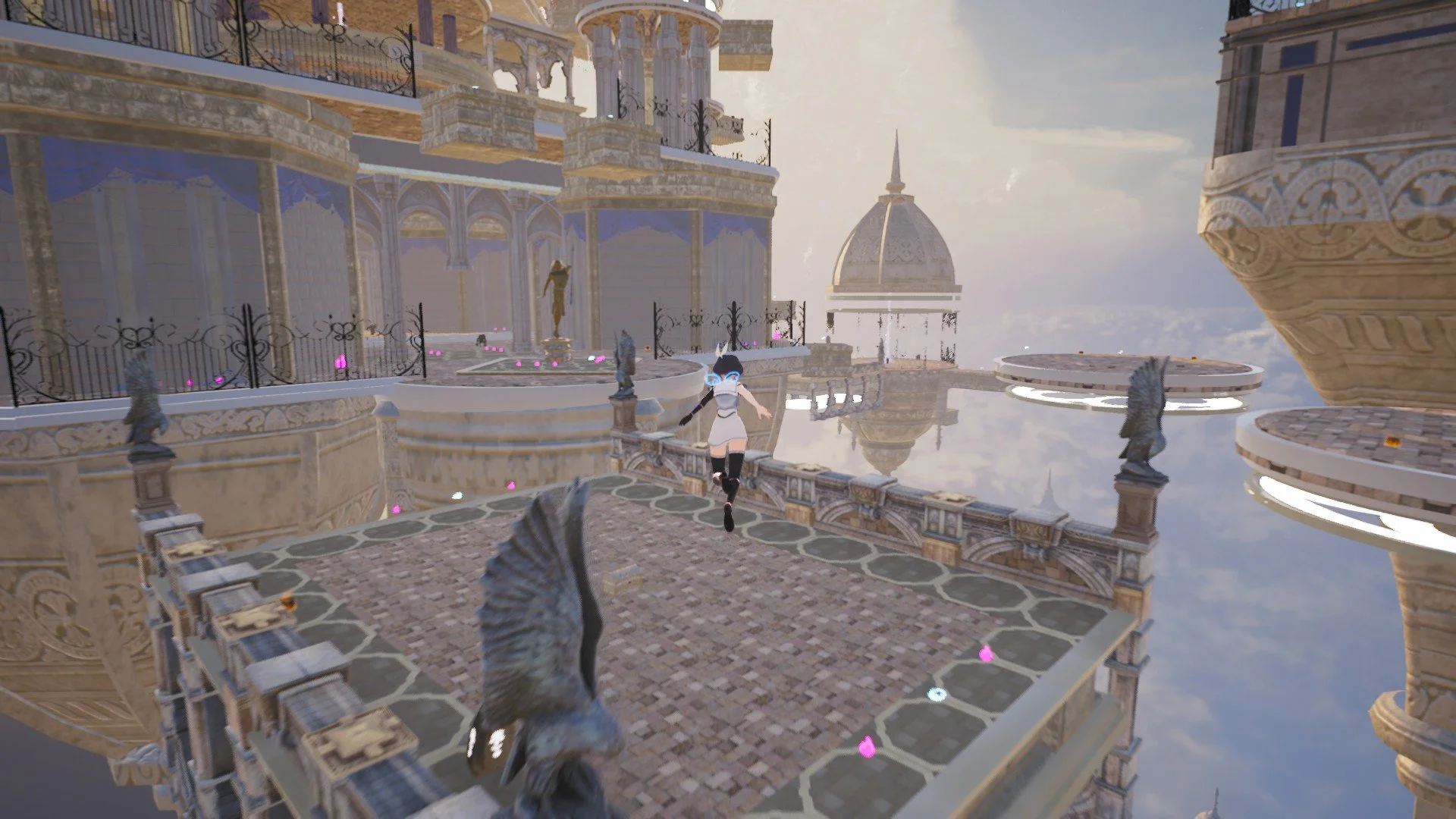
I appreciated how each floor changed in concept. However, the increased emphasis on platforming, one of the game’s weaker elements, meant that later areas become frustrating, especially when falling and missing the elevator can mean failing a run and saying goodbye to half an hour or so of your time. The fifth and final main area, then, is crushingly difficult both in the amount of enemies it throws at you and the speed at which the Sin Meter climbs.
It’s not that Kernel Hearts is all that difficult to control—it’s that the enemies are way overtuned for the short time you’re allowed to improve yourself on each floor. Aesthetically, each area becomes larger and more surreal at the cost of fidelity, to the point where the mazelike fifth area is blotchy and blandly coloured.
In contrast, my favourite part of the game was the stellar boss battles, including several angels and devils of noteworthy name. The number of moves some bosses have up their sleeves, plus the hectic but clearly displayed hitboxes of those moves, made for some very exciting set pieces. I won’t spoil it, but the final boss is truly incredible from a visual and gameplay standpoint. This is an Argentine game, but it’s heavily inspired by anime and JRPG tropes, so I’ll let you guess who that boss is.

Defeating major bosses unlocks new magical girls for your squad. Fernet, the first hero, is an Argentine wielder of summoning magic and a standard sword. Spika is a shy samurai girl from Japan, with quick katana slashes and a daintier defense stat. Laika, a brash Soviet soldier, can chuck her giant sword at enemies and switch from a heavy slasher to a hard-hitting pugilist. Dolce, who only unlocks once you defeat the penultimate boss, is an Italian performer who uses a whip and cloning magic to surround and overwhelm enemies.
The four girls play differently but effectively enough that I could make far progress with each. They share metaprogression chipsets, too, so no need to worry about “leveling” any one girl. At a certain point, you unlock the magical girl transformation ability (think Sailor Moon), a damaging and near-invulnerable form usable after you accumulate enough damage output to angels and demons.
Roguelite die-hards who demand endless hours of replayability may find the game to be very samey between runs—the whole experience lasts ten to fifteen hours, depending on your skills. Given the price of entry, I was very satisfied with my time with the story and how the narrative turns out. I would have gladly played its four-player co-op if I could have found a match. The lack of crossplay between PlayStation 5 (where I played) and, say, Xbox (where the game launched on GamePass), means there’s an unfortunately small pool of people playing this game—something I hope is remedied!
What it may lack in substance, Kernel Hearts makes up for with style. The girls are cool and have charming banter between floors, and the Japanese voice acting is high quality. The soundtrack, composed by Pretty Patterns, mixes airy vocals (including NieR singer Emi Evans for one track!) with acoustic guitars and hip-hop blast beats. The music drives the action forward while providing levity in contrast with the dire rise of the Sin Meter.
I’d be remiss if I didn’t say how often Kernel Hearts reminded me of Neon White. While it may not be as quick or cool as that game, I do think Kernel Hearts follows through on its biblical premise in a more interesting and satisfying way.
Kernel Hearts is best enjoyed for its story. Oddly, there is no possibility to change difficulty at launch without starting afresh and losing metaprogress. But come October, a patch will include multiple save slots alongside the option for English voice acting.
I found the slower Sin Meter and less expensive leveling and upgrades in the easier Story difficulty to make the game too easy, but it did finally let me feel like I was strengthening myself to a point where mowing down enemies became a blast. It’s a shame the game doesn’t have the accessibility options to tinker with its elements. As is, I’d recommend players start on Story difficulty to enjoy the ride, then try out the higher difficulties if the combat and systems gel with you.
Kernel Hearts impressed me with its sense of style and its epic boss fights and narrative scope, though it gets in its own way with poorly tuned enemies and frustrating late-run platforming. If you can persevere, it’s a relatively short experience well worth playing; it just may have been better served as a narrative action-adventure than a roguelite.