
Pokémon’s pull on the monster-collecting genre is absolute. With every successive generation, a new wave of youth falls under its slick spell, constantly expanding the ranks of Pokémaniacs. Yet, as the years march on, some of us elder Pokémaniacs have begun to question the dogma, wondering if the foundation of the series is truly evolving, and asking what a more mature iteration of the genre might look like. Enter LumenTale: Memories of Trey.
Developed by Beehive Studios, the team behind the popular fan game Pokémon Xenoverse, LumenTale positions itself as a more refined, ambitious take on monster collecting. Boasting a deeper narrative, intricate battle mechanics, and more systems than any sane flowchart would dare to map out, LumenTale sounds like a great recipe on paper. But how does that ambition translate to practice? Do we elder Pokémaniacs truly know what we want?
Visually, the presentation is one of LumenTale’s strongest assets. Rather than confining itself to a single nostalgic era, LumenTale tastefully blends graphical histories together. Players are treated to classic pixel art that pays homage to the Game Boy/Game Boy Advance era, paired with a pseudo-3D camera perspective, battle displays, and character movements that evoke the Nintendo DS/3DS generations. Furthermore, clever camera tricks throughout both cutscenes and the overworld constantly manipulate perspective, greatly enhancing the overall visual charm.

The catchable creatures in LumenTale are called animon, and their designs are, for the most part, interesting and visually striking. With over 120 animon in total, of course there were several standouts, but not many made the leap to “I want that on a t-shirt or bath towel” in my opinion. My personal favorites are Anizord, Fulgaze, Obsidedge, Tamboal.
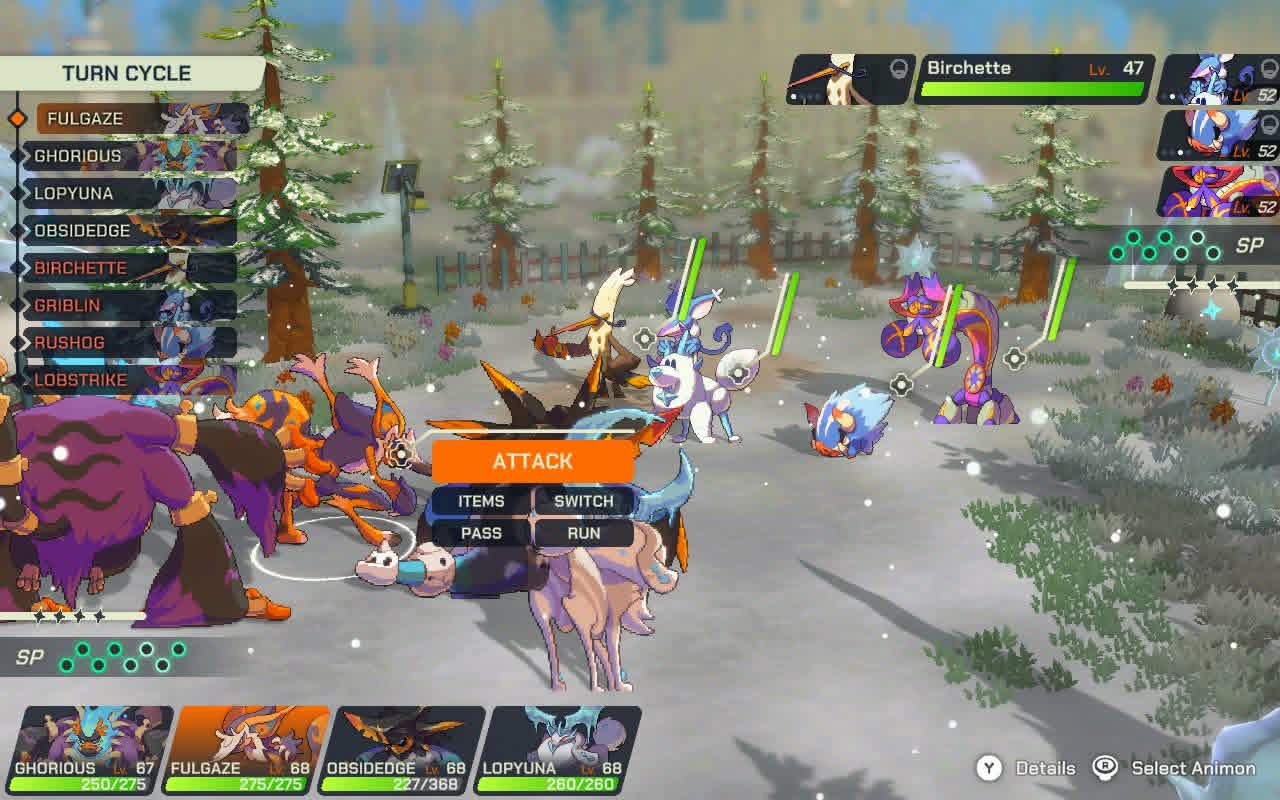
Once you step into combat, LumenTale branches off into a completely new evolutionary path from its source material. The game hybridizes the DNA of Pokémon, Final Fantasy X, and Shin Megami Tensei to create a dense, demanding combat system that heavily punishes intellectual inattention. You will not get far by over-leveling a single starter creature and trying to mindlessly smash your way through every encounter.
While wild and boss encounters are satisfying, the real meat of the game lies within the animon trainer matches. These operate on a tactical 4v4 system, with up to two animons held in reserve. Animon also come with fully customizable base stats (attack, agility, etc.) for extra tactical tinkering. The sheer volume of choices and stat allocations can be intimidating at first, but once the mechanics click, you feel like the greatest armchair general that ever lived. My only minor critique is that the RNG modifier feels noticeably “aggressive” in the current build; critical hits and missed attacks seem to swing the tide of battle a little more often than this armchair general would like.
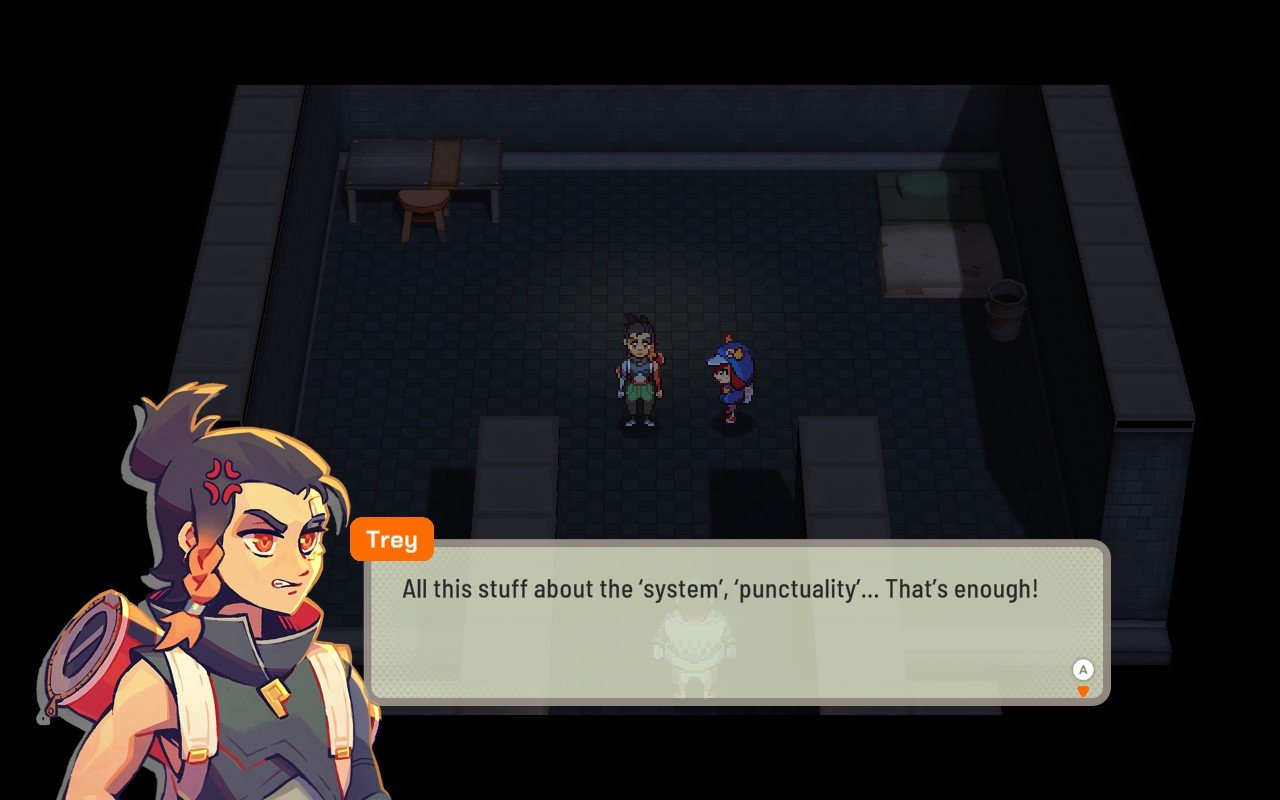
Unfortunately, the depth and nuance found in the battle system don’t quite carry over into the narrative. Without wading into spoilers, the story centers on a philosophical divide between two distinct factions: Mythos, which stubbornly clings to tradition, and Lumos, which relies entirely on technology to solve its woes. While a handful of key characters articulate this conflict well, the broader world fails to meaningfully support it.
Given how deeply our own modern world is currently grappling with tradition and technology, the lack of narrative depth feels like a missed opportunity to tell a truly resonant story. On the flip side, sometimes a simplistic tale is exactly what the doctor ordered for a bit of mental downtime. Or is it the ultimate nod to the simpler Pokémon tales of old?!
Another stumbling block is in LumenTale’s overwhelming mechanical clutter. LumenTale is packed with too many systems, including but not limited to item crafting, cooking, interior housing design, traversal powers, and catching mini-games. Regrettably, the game provides almost no explanation for how these systems work, what they achieve, or why you should care about them. This frustration is compounded by in-game tutorials that excel at obscuring actual instructions.
It is a shame, because underneath the lack of direction lie some genuinely brilliant ideas. The evolution system features wonderfully novel and quirky pre-conditions, and the catching mini-game never loses its charm. But for every mechanical success, there is a half-baked counterpart like cooking or interior decorating that sits largely ignored. Ultimately, LumenTale suffers from a classic case of feature creep; there is simply too much to do, and not enough time asking why?
The music is a major triumph, with nearly all of the town and battle themes establishing themselves as instant classics. It is genuinely difficult to find a track that doesn’t delight, but the evolution theme deserves special praise as the finest song in the game. It has been living rent-free in my head for a week.
That stellar soundtrack is a welcome companion, because LumenTale is a massive commitment. My play time clocked in at around 67 hours, which includes the main quest alongside a handful of side quests and off-the-beaten-path expeditions. The journey wasn’t entirely smooth, as I ran into several visual glitches and a bugged main quest that initially delayed this review. While Beehive Studios has already fixed quite a few bugs, my best advice remains the gaming golden rule—say it with me, gang: “Save often and utilize multiple save slots!” On the performance front, the game maintains a stable framerate with only a few drops in specific zones, though the loading times linger just long enough to test your patience.
Ultimately, LumenTale: Memories of Trey is a fascinating and occasionally frustrating experiment. It represents a bold new evolutionary branch for monster-collecting RPGs. Time will tell whether this specific branch can survive the harsh ecosystem of the genre, but its successful mutations give it some strong fitness factors. A highly commendable first outing for Beehive Studios.