
“The Surrealistic Adventure That Will Become Your World.” That was the promise of the original Myst in 1993. I’ve long been enamoured with the zeitgeist-piercing mystique of Myst, and its legacy of slow-paced, first-person adventure-puzzlers includes some of my favourite games. Still, Cyan Worlds’ PS5 rerelease of the 2021 Unreal Engine/VR version, simply titled Myst, was my first time setting foot on the eponymous shores of the monolithic classic.
When I say I came into Myst blind, I mean I nearly jumped off my sofa when I entered the island’s library and the blue and red books began talking to me. Two feuding and totally sane-sounding brothers, Sirrus and Achenar, are trapped in either book and demand the player gather red and blue pages to ultimately free one of them, while both insist the other brother deserves eternal imprisonment.
Things get more complicated should you stumble upon a hologram message left by their father, Atrus, one of the architects of Myst and the creator of magic books that teleport you to adjacent “ages” (read: worlds) surrounding the island. It’s up to you to uncover the remaining magic books, travel to their puzzle-filled worlds, and retrieve the red and blue pages scattered about them.
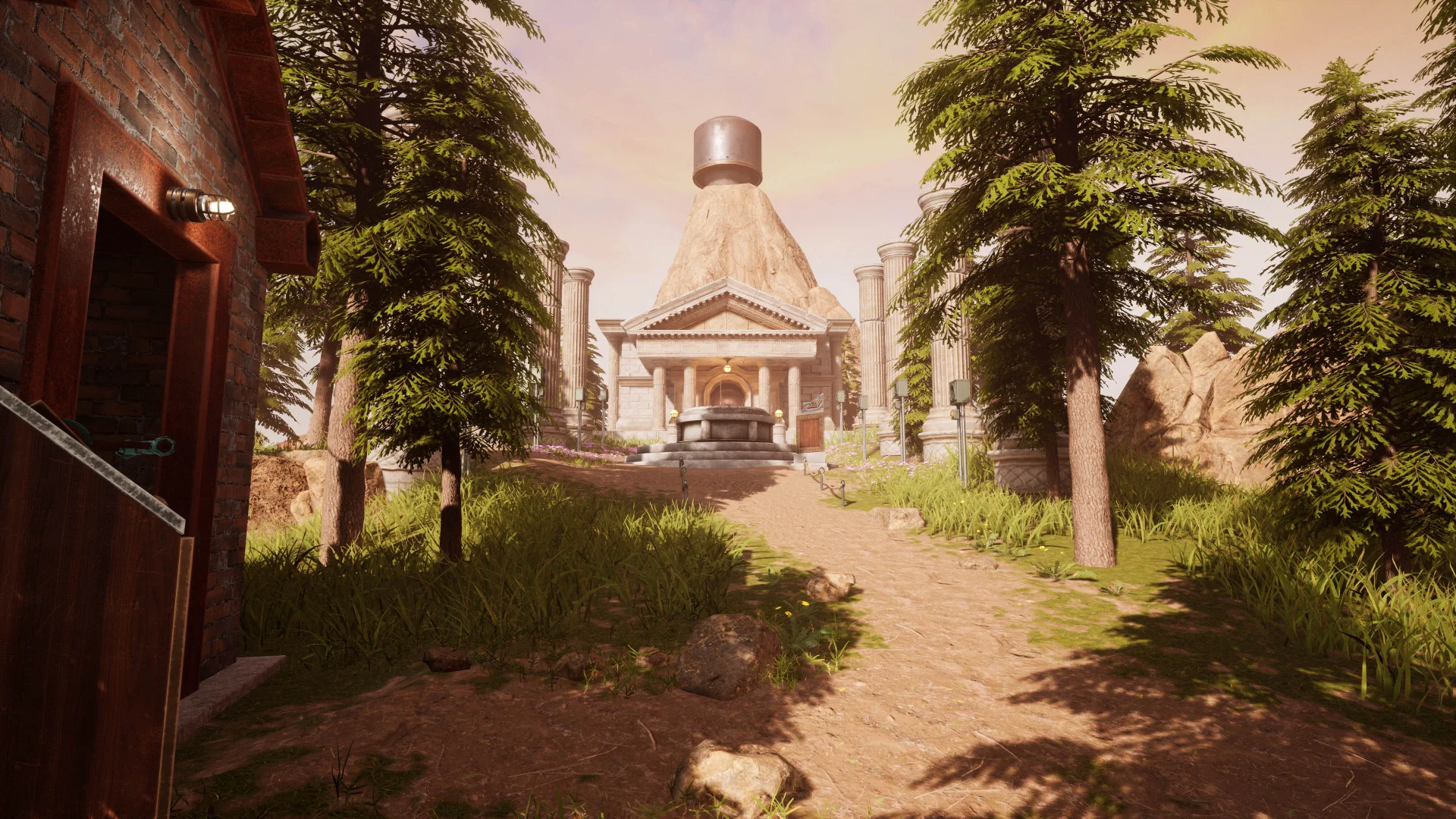
All of this may have taken me an hour or so to clue into. I swore off hints as I took my first walk about the island of Myst, which was surprisingly small but seemed to fit the adage of “an inch long, a mile deep.” Like finding a young photo of a grandparent with a face resembling your own, I could already see how Myst’s genes had passed down over the past three decades.
As in The Witness, I traced the lay of the land, the countless doohickeys, and the wires connecting it all; like with Blue Prince, I jotted important-looking numbers and diagrams in a real notebook and took photos of my TV with my phone’s camera.
So invested was I in looking up at the odd blend of magic and science, low- and high-tech, that it took me forever to notice the scrap of paper affixed to a rock at my feet—my first major clue to uncovering the secret of the island’s tower. Thankfully, Myst’s fully 3D environments look gorgeous, especially with their dynamic lighting, rolling waves, and foliage, so I was very immersed in exploration. It’s not as colourful as the Unity engine-driven realMyst: Masterpiece Edition (2014), but, ironically, this Unreal engine version looks far, uh, realer than realMyst. Really.
There’s no inventory in Myst, no enemies, nor a health bar. Rather, you walk or jog briskly around, interacting with the environment via flip switches, buttons, levers, elevators, turntables, and the like. Clicking on an interactable element of the environment may shift the camera closer, at which point you use face buttons, arrows, triggers, or the right analog to manipulate the puzzle. A diagram for the controls in these situations always hovers in the corner helpfully, but I was annoyed how inconsistent the controls were; nudging the left stick or pushing any of half the buttons on my controller often took me out of the puzzle.
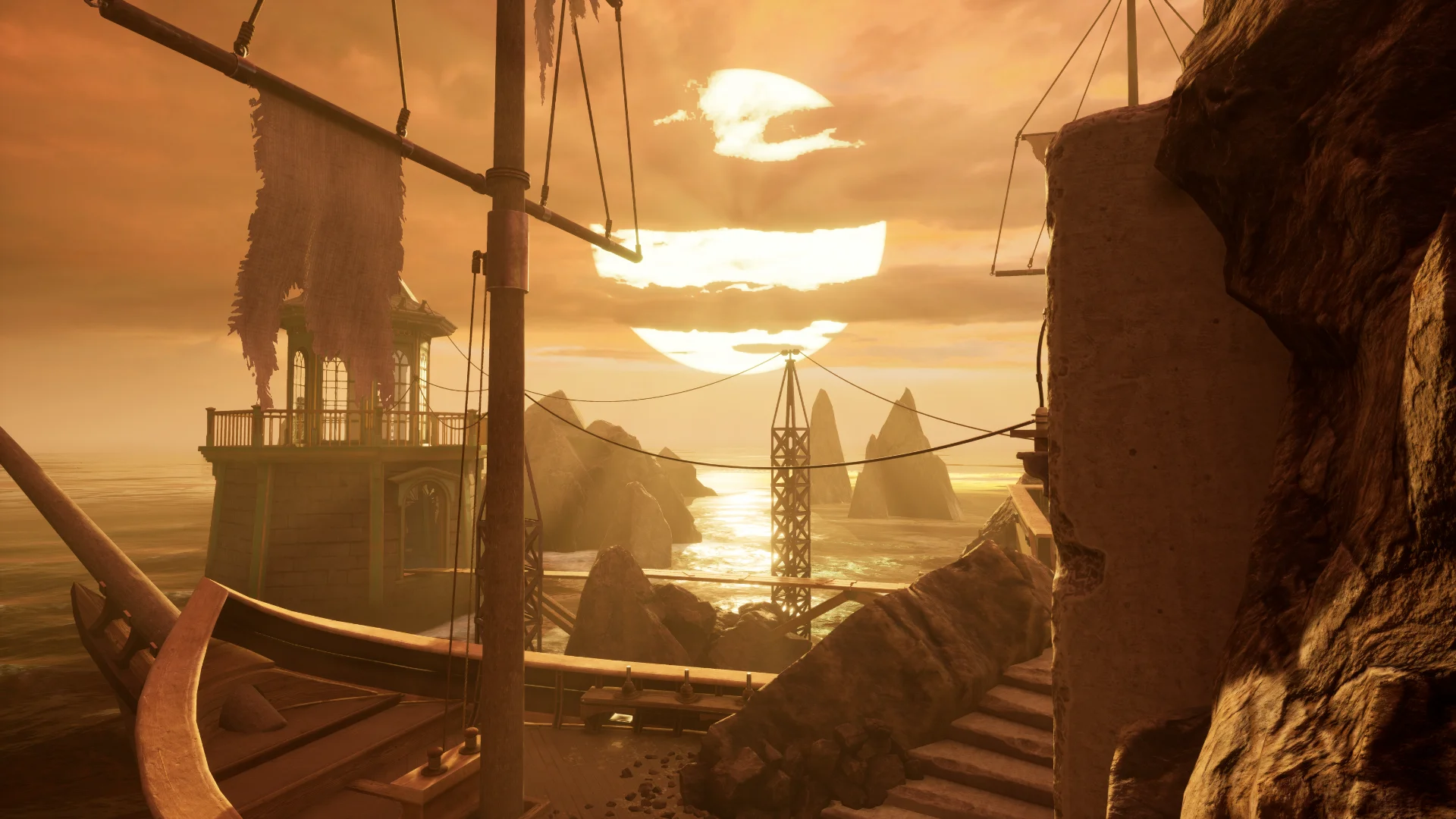
The best news is that all these years after release, Myst’s puzzles don’t feel dated compared to those of Myst’s many descendants and imitators. Puzzles vary richly, weaving logic with environmental observation. There is a fair share of “aha!” breakthrough moments, particularly concerning your ability to interact with the environment. Myst also employs sound in its puzzles in ways you still don’t see often in games.
The 2021 PC release had a built-in “Notebook” for screenshots, though on the PS5, you’re meant to rely on the console’s built-in screen capturing, ostensibly viewing your shots on the XMB. This was a bit cumbersome, so I used my phone in such cases. The opening island’s library contains many enigmatic hints, diagrams, and mysterious numbers you need later. I did think that many of the puzzles in the individual “ages,” cut off from the interwoven puzzles of the main island, were sometimes too easy, relatively.
The Channelwood Age, a murky swamp and suspended village of treehouses, was the shortest and simplest of the four main side-worlds. I imagine navigating the Age in the original Myst’s node-based “slideshow” movement (or as I call it, Google Maps Streetview movement) was part of the original challenge, with players mapping out their location on paper. Here in vivid 3D and with generous draw distance, such effort is needless. There is a submarine/minecart maze exploration puzzle in another Age that relies on a similar physical mapping. It goes on far too long, and I found it to be the only frustrating, dated puzzle in a game that otherwise kept me enraptured for a crisp five or six hours.
What makes Myst so hypnotic is the promised surrealism it fully delivers. Isolated and in near silence, you walk about the remains of small worlds in turns idyllic and ominous, but always enigmatic. While exploring a tightly designed Age, you’re likely to stumble upon scraps of environmental storytelling, often via concealed bedchambers belonging to one of the trapped brothers, Sirrus and Achenar.
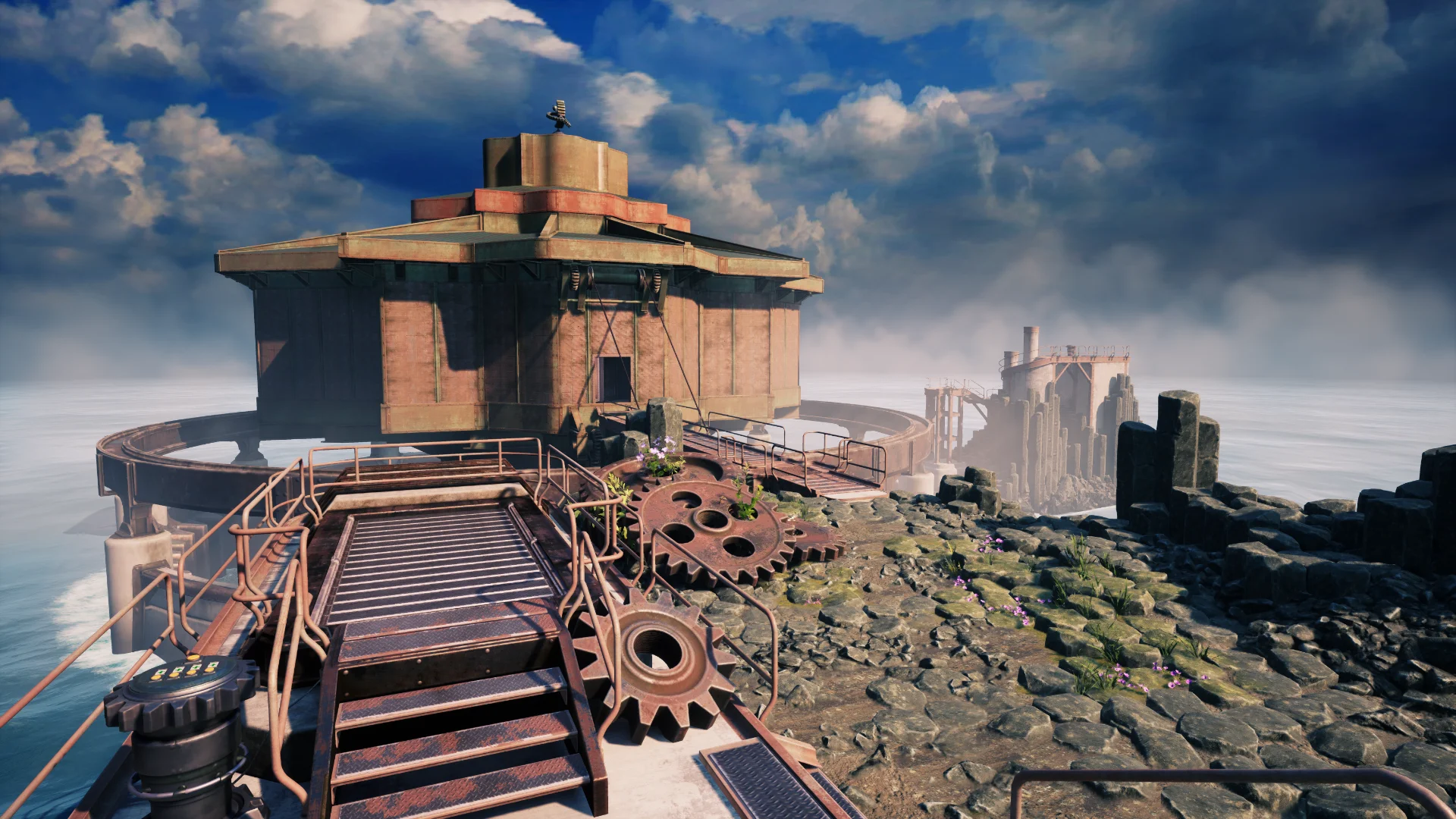
These moments of discovery and progression are usually accompanied by a rare appearance from the soundtrack composed by Robyn Miller. The music in the modern Myst (and the sound effects and voice acting) is remastered but otherwise unchanged from the original, lending to the surrealism. It strikes a chord between elegance and inelegance, ambient and moody in one area and playful and grandiose in the next.
The compositions themselves are rather amateurish, but this lends to the melded aesthetics of the collective islands of Myst. It’s clear to see how the music selectively rearing its head has influenced later sound design in games like Return of the Obra Dinn, What Remains of Edith Finch, and Blue Prince, with their music equating a goosebumps-inducing Pavlovian response in me.
Notably, many complaints from fans and critics during the initial release of the 2021 version of Myst are amended. The “epilogue” world of Rime, first introduced in the original realMyst (2000), is back as of a 2025 update, including some of the best puzzles in the game and the most prescient for where the genre would go. The somewhat ugly CG character models for the trapped brothers and their father, too, can be swapped for the original’s live-action FMVs. For returning fans, the “Randomizer” mode shuffles numbers, codes, melodies, and directions in puzzles to eliminate shortcuts. There is, of course, the VR option, which operates not unlike the original’s slideshow movement, though I can’t speak to its quality myself.
In many ways, this is the ideal way to play Myst, though it’s also worth trying other versions, like realMyst: Masterpiece Edition (2014), for the different visual interpretations. My main takeaway, however, was that aside from the graphical overhauls, Myst has never needed many quality-of-life upgrades to remain a great experience today. It remains a deliberately paced antidote to the modern game design principle of “more is more,” and an experience that I think anyone would benefit from being dropped blindly into.
I fully enjoyed the surrealistic adventure Myst pulled me into, and it did become my world for a blissful weekend. Myst epitomizes how artful, intentional design can make playing a classic fun rather than feeling like video game homework.