
Capturing a moment in a photograph preserves a fleeting glimpse, tangible proof that an event occurred or that someone was present. However, photographs cannot keep what we cherish truly close. Instead, they provide a frozen image of a beloved person or memory, prompting us to reflect on and understand our history. Photographs highlight the impermanence of life, yet gain emotional strength by allowing us to hold onto memories, encouraging personal growth if we recognize their significance. OPUS: Prism Peak is a beautifully heartfelt graphic adventure centered on self-reflection, the attempt to understand others through the lens of the camera, and the dual themes of life’s uncertainty and enduring hope as we grow older.
OPUS: Prism Peak starts with forty-year-old Eugene driving back to his hometown for the funeral of a pivotal figure in his youth, his paternal grandfather. Once a photojournalist, Eugene has suffered a series of setbacks. He even sold his cherished camera before heading home, feeling especially disillusioned. As he drives, the weather worsens. When he enters an underground tunnel, he is involved in a terrible car accident and ends up stranded in peculiar terrain.
It isn’t long before Eugene meets a mysterious girl called Ren. Together, they are drawn deeper into a fantastical world of talking animal spirits and places both alien and eerily similar to the real world. Eugene again receives a camera. Ren is determined to reach her home atop a distant mountain few dare to climb, and Eugene agrees to help while searching for a way home himself. Meanwhile, a supernatural force called the Shade is destroying the world around them and seems strongly tied to Ren. Racing against time and equipped with only a camera to unravel the world’s mysteries, can the pair follow in the footsteps of spiritual guide the Seer to the mountaintop before Ren disappears forever?
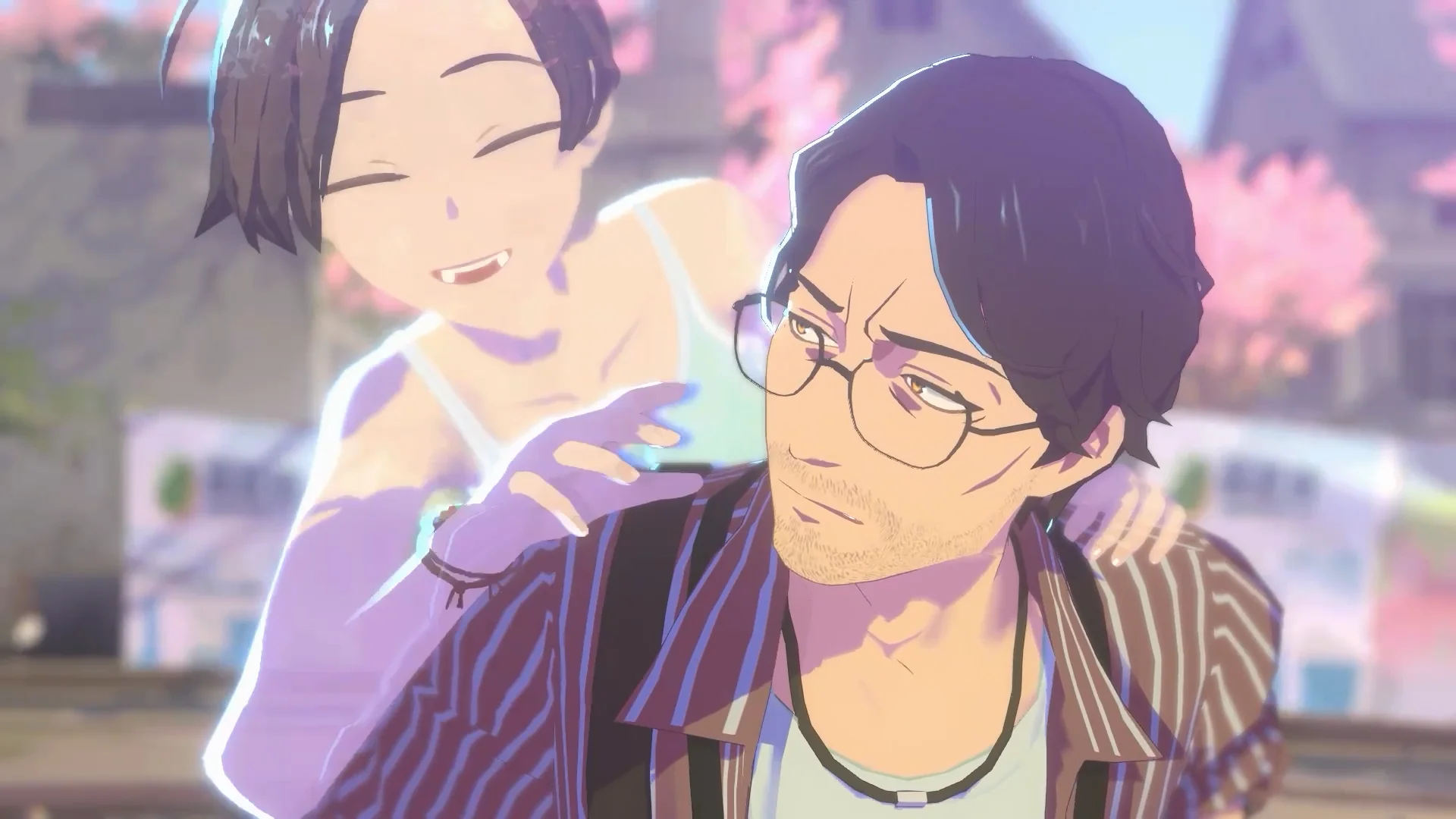
I honestly wish I could talk more about the storyline for OPUS: Prism Peak here, because there are so many insights and plot reveals throughout that I could gush about it for hours, which is saying something given that the game is roughly eleven hours in length. The narrative beautifully weaves flashbacks of Eugene’s life into the present-day journey, with the animal spirits he encounters representing people who have influenced him.
Part of the player’s goal of uncovering the story is determining who each spirit represents and whether Eugene ultimately sees and/or comes to understand them through their current interactions. The memories and emotions these individuals bring up are often messy, reflecting life in general. Sometimes Eugene was inadvertently treated badly by someone in the past; other times, he was the one who failed to be there for someone else. It isn’t so much a harsh critique, but rather a reflection on and an attempt to understand the different ways people perceive things.
The characters have astounding depth and are all too human in their reactions. Eugene starts as an outsider but becomes more involved as events unfold, and his connections grow clearer. Ren is an anomaly, with no memory beyond her drive to return home. She can’t be captured in photographs and faces the threat of fading away, underscoring her fragile existence because she lacks an ‘anchor.’ The bond that develops between her and Eugene is a powerful symbol. I’ll just say I didn’t see many of the later twists involving her, which made the ending of their quest all the more impactful.
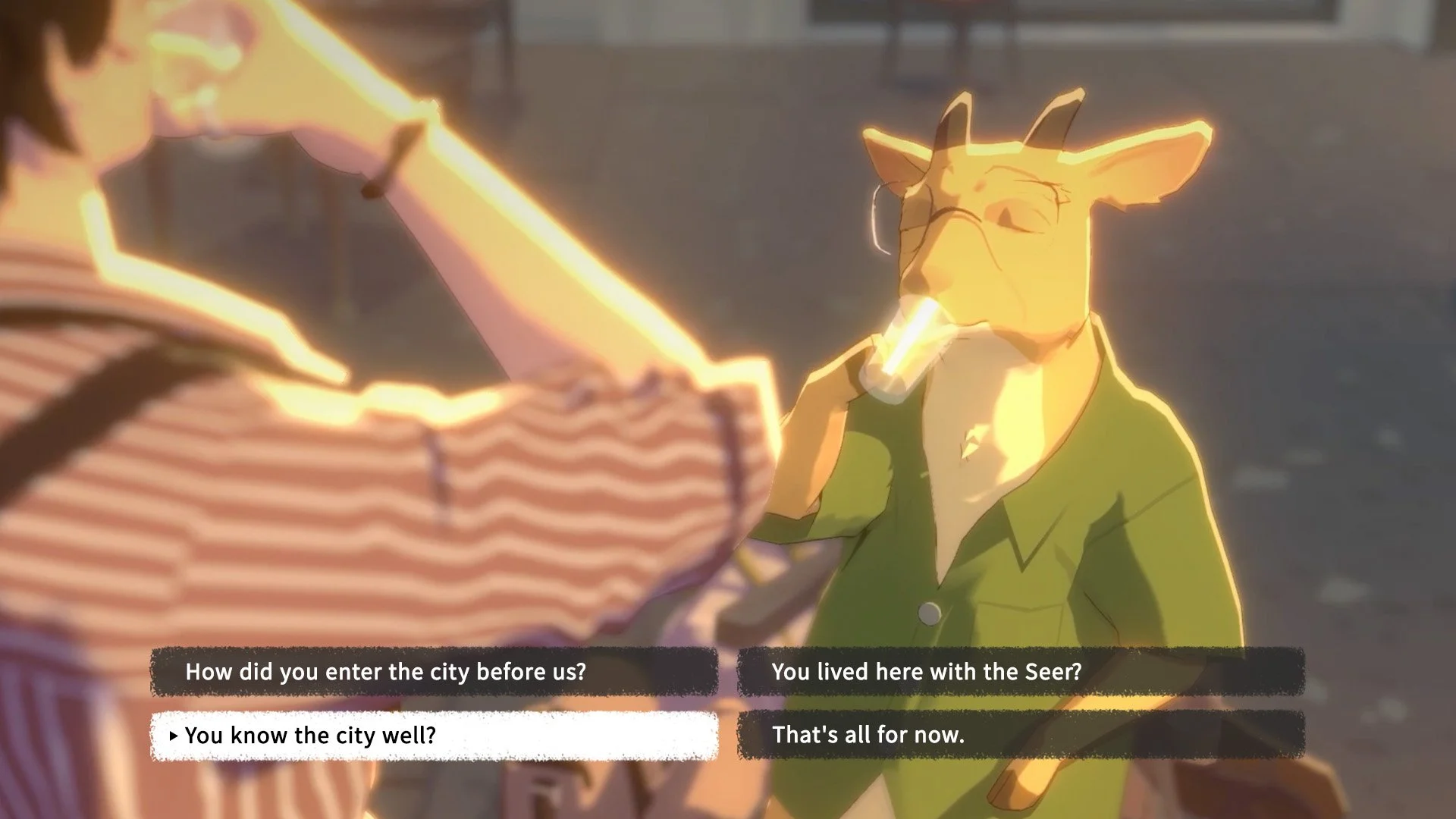
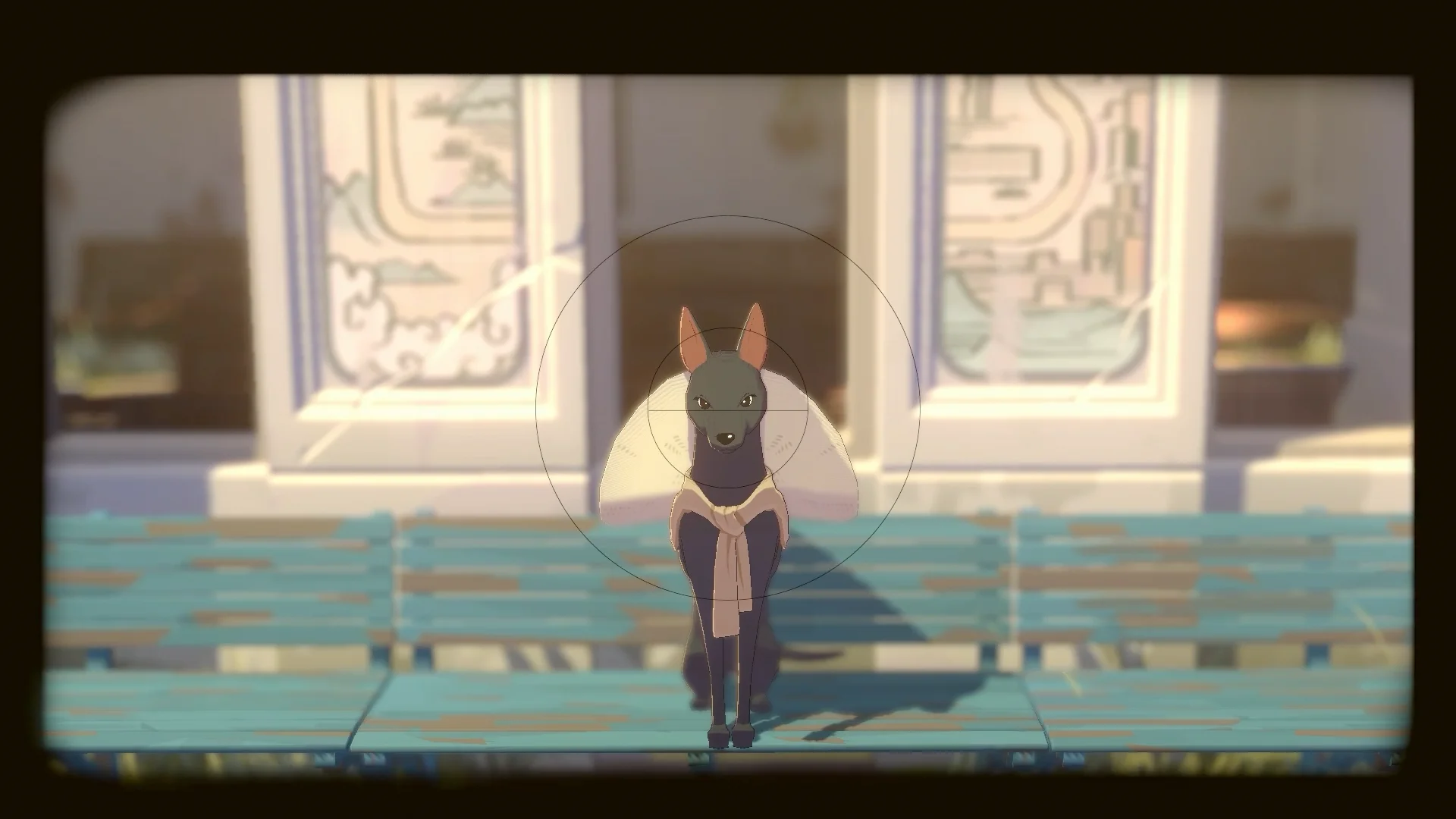
From a gameplay standpoint, OPUS: Prism Peak combines elements of the visual novel and graphic adventure genres. Flashbacks are largely presented in black-and-white VN form, while the exploration and story scenes in the fantasy world are 3D affairs. You control Eugene during these segments as you navigate the terrain, every so often coming across objects or characters of interest to interact with. Eugene can access his camera with a single button press, unless the script dictates otherwise. The game switches to a first-person perspective when he prepares to take a photo, and later, you can adjust settings like focus and shutter speed to get clearer shots.
Once a picture is taken, you often have a variety of things you can do with it: “showing” a photo to a sacred flame to see if it fits an earlier clue, using a photo to fill in sections of a game notebook/log to help you keep track of what you’ve uncovered, or showing a photo that reveals a spirit’s true name. Every once in a while, you have to use cleaning kits to maintain your camera, and you later receive equipable camera filters to help you get different types of shots, such as one that allows you to make out more of the faded murals and decoder stones you find.
The photography is a compelling gameplay mechanic that you’ll use quite often. There are even intense “action” sequences where you have to precisely time taking a photo of the Shade in order to temporarily chase it off.
Taking pictures and using them to advance the game and uncover story points through the notebook is reminiscent of SEASON: A letter to the future. OPUS: Prism Peak even includes a bike sequence. The two games share some thematic elements, but OPUS: Prism Peak feels especially personable, even within its fantastical world. Depending on your choices and discoveries, you can unlock different endings, adding replayability. Players are likely to interpret the game’s events and conclusions differently, which enhances the story’s beauty and thoughtfulness.
I’m hard-pressed to find much to critique in OPUS: Prism Peak. You have to rely on auto-saving instead of a manual option, so you might need to play a bit longer than intended if you can’t trigger an auto-save at a good time. There’s no real “game over” unless you flub an important decision point. Even during the “intense chase” scenes, the game loops to an earlier part if you fail.
Some might find this makes the game too easy, but I prefer it over constantly reloading from the main menu and breaking immersion. Reaching a main ending unlocks extra menus with event logs you’ve found so far. My personal favorite is the “Behind the Scenes” audio logs, where the developer explains the creative thought behind the game’s elements.
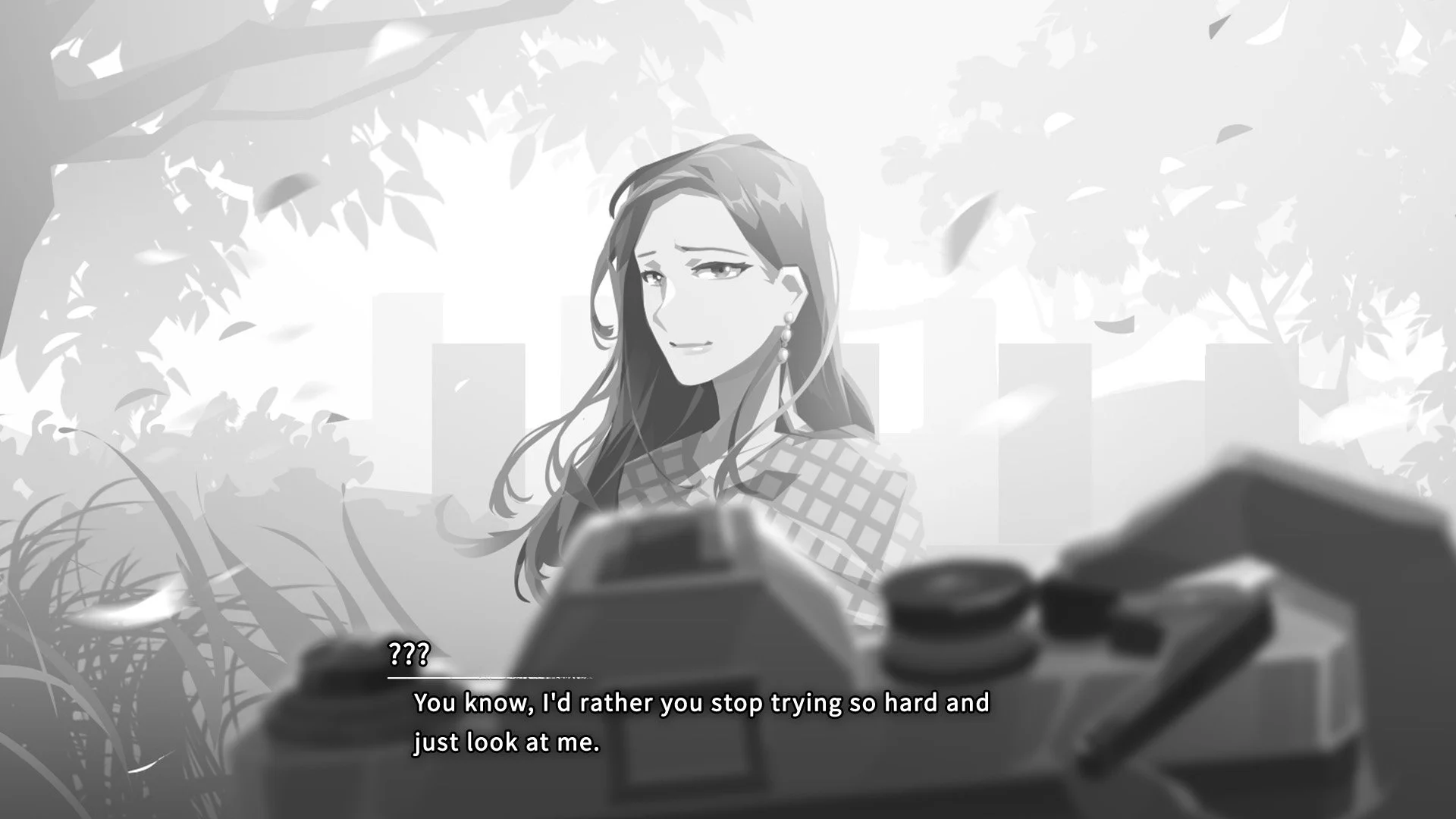
OPUS: Prism Peak is aesthetically gorgeous. The VN sequences and CG illustrations are beautiful. The visual imagery throughout the fantasy world is incredible. Vibrant, colorful settings and expressive, detailed character models permeate much of the 3D graphics. However, darker, more unsettling imagery sometimes appears, depending on the situation or terrain, with the Shade being sufficiently nightmarish. The character designs, visuals, and symbolic storytelling could even draw comparisons to some of Studio Ghibli‘s more fantasy-based works.
The soundtrack is cohesive in its themes and contains moving tracks, as this emotive sample illustrates. The sound effects are realistic, especially those involving the camera and photography elements. I played the game with English voice acting and found the performances strong and fitting for the characters. Both Eugene and Ren’s voice actors deserve special mention for their deliveries. Despite being a fairly text-heavy game with differing dialogue and responses, the script is also wonderfully translated.
OPUS: Prism Peak is an outstanding adventure. Like its spiritual predecessor, OPUS: Echo of Starsong, it pairs a thought-provoking, emotional story with polished gameplay. At times haunting yet hopeful, it reflects life and reminds us how we grow from experience. I teared up often—sometimes from sadness, and sometimes from the bittersweet yearning to reach for something more, no matter the winding paths we take. The open-ended resolution of Eugene’s journey is moving and lingers with me. Developers SIGONO has once again created an artistic video game masterpiece with OPUS: Prism Peak.