
Round one, begin! It’s once again time for the kingdom of Kayu’s Tournament of Valor, in which every participant believes in the motto of might makes right. A young Daoshi-in-training named Shunlin accompanies her grandfather Lihong and childhood friend Haoran to the martial arts spectacle, but the trio is unprepared for the tournament’s shocking events. Will energetic Shunlin discover the truth and defend her country alongside a potential suitor in the romantic visual novel Otome Daoshi -Fighting for Love-?
Otome Daoshi -Fighting for Love- is an otome visual novel loosely inspired by the martial arts fantasy wuxia genre, and it’s visually reminiscent of the classic anime and manga series Fushigi Yuugi. That’s not the only nostalgic nod, though, as one could be forgiven for remembering the several martial arts tournaments that frequent shonen series with Otome Daoshi’s Tournament of Valor plotline. The premise is interesting and has narrative potential, though, sadly, plot reveals and twists lack the necessary gravitas, resulting in glaring narrative dissonance. For example, a martial arts master gets turned into a zombie puppet in one route, and the reaction of those who know him is so much of a “moving on now” vibe that it undermines any potential emotional impact the writers (hopefully) intended. Otome Daoshi -Fighting for Love- isn’t a bad tale by any means, but its depiction certainly leaves something to be desired.
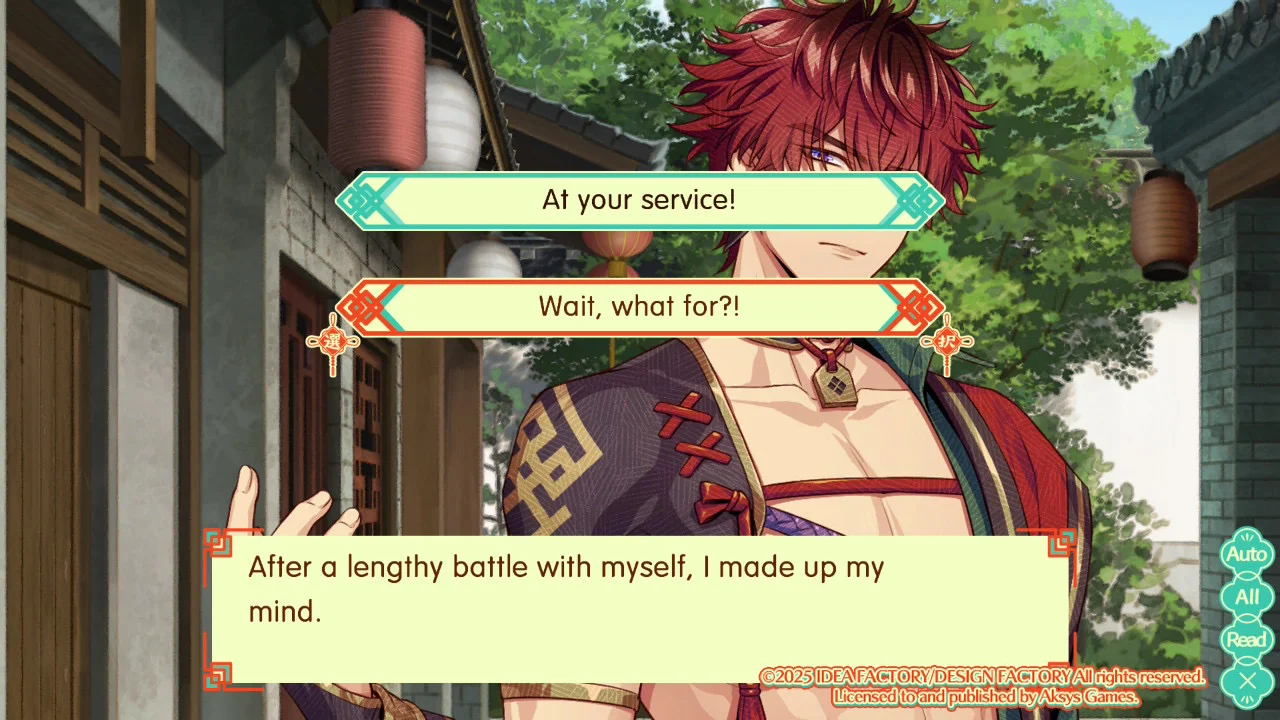
Unfortunately, the game’s characters, while not poorly written or problematic, fail to stand out. Shunlin’s energy could be refreshing, but she often veers into ditzy or nearly blank slate territory, though she typically gains strength by each route’s end. The love interests are pleasant but not especially compelling; Yuhang stands out mainly because his tsundere reactions to Shunlin can be grating. Completing Yuhang’s, Haoran’s, and the abrasive Shaowu’s routes is necessary to unlock royal aide Longli’s and the fifth secret route, but none of these paths distinguish themselves. This is a rare case of all routes being created equal, as I have no strong feelings for or against any of them. In fact, Shunlin’s grandfather is the most memorable character to me because he avoids the tired “perverted old man” trope. Even the panda mascot brings little novelty compared to similar otome VNs. Ultimately, Otome Daoshi’s cast is adequate but unremarkable, which reflects the game’s overall narration.
Gameplay-wise, Otome Daoshi -Fighting for Love- is a traditional VN. Players advance through dialogue until presented with choices that raise either a “Romance” or “True Love” meter. There are no bad endings. The game skips typical worldbuilding features like an in-game glossary to peruse, but still includes text-skip and a CG gallery. Overall, Otome Daoshi feels bare-bones compared to other otome titles, which may explain its shorter playtime of around three to six hours per route.
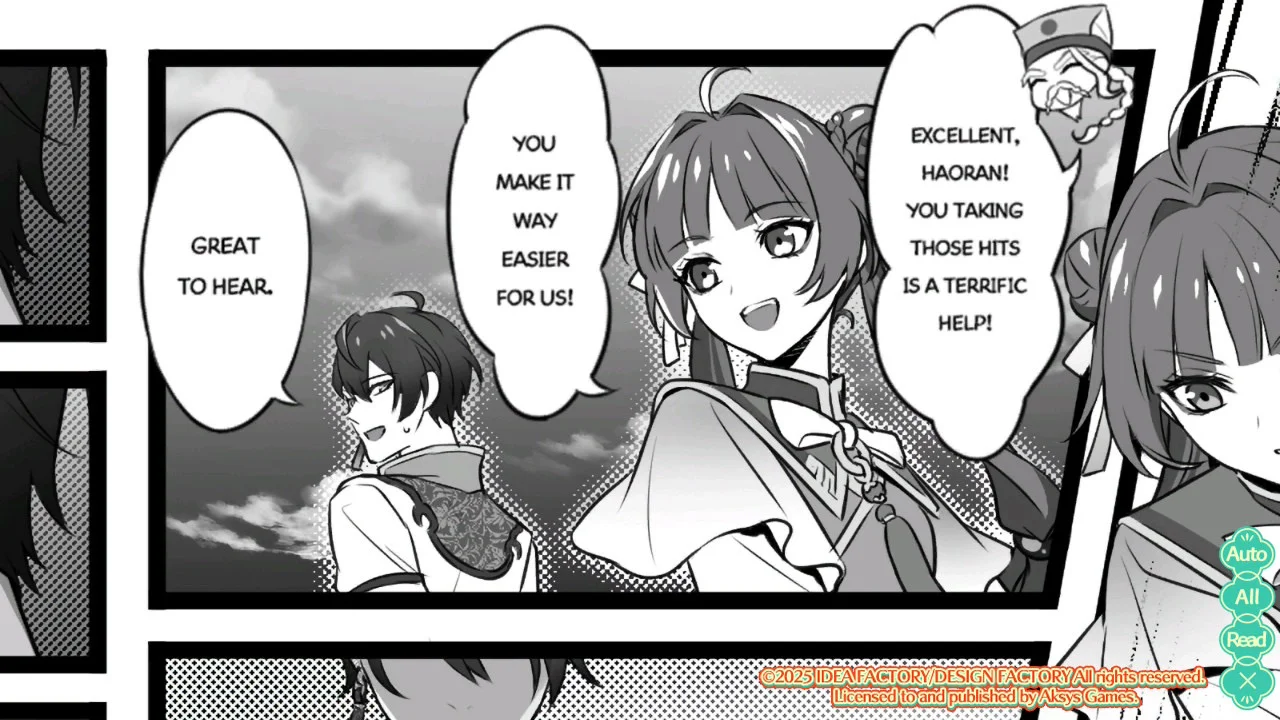
Visuals are where Otome Daoshi -Fighting for Love- stands out most. The game doesn’t include animations compared to many other visual novels, but the character portraits are expressive enough on their own. It bothered me that not every character had a portrait, though, as even recurring characters were sometimes represented only by their voices. The imagery and art are incredibly colorful and vibrant, with gorgeous CGs. The game even creatively uses black-and-white manga/comic-style cutscenes to depict its more action-packed moments, which is fitting for the story’s martial arts focus! Enough so that I wished there were more of them spliced throughout, as I love the artistic presentation overall. It’s a shame Shunlin is only visible in select scenes, though. Also, the UI throughout the game has a flat, colorful, and simplistic style that clashes with the intricate character designs.
Otome Daoshi‘s music is cute and catchy, especially in cases like the game’s opening song. The voice work is also well done, with the voice actors giving their all, even when the story itself rarely leaves the middle ground. As I mentioned, the game is relatively short to play through at around three to six hours per route, and I noticed that the script localization is pretty on-point and error-free. The translators seem to favor a Working Designs-style approach to modern lingo, and it works given the story’s lower stakes.
Otome Daoshi -Fighting for Love- is a visually impressive otome visual novel that, unfortunately, fails to stand out narratively or mechanically in the crowded Switch market. While the artwork is a highlight, and the experience may appeal to those seeking light entertainment, many players may find better value picking the game up on sale versus its standard $49.99 USD price. Given the genre’s high competition, Otome Daoshi is best considered as a secondary choice rather than a must-play title.