
A popstar, a rocker, a DJ, and a rapper walk into a random encounter… No, this is not the start to a terrible joke, but rather the start of the incredible combat system in developer Iridium Studios’ cross-genre RPG musical People of Note. When I demoed the game and met its director, Jason Wishnov, at last year’s Tokyo Game Show, I was enamoured by its concept and was hopeful the full game would be deeper and more complex. Thankfully, People of Note is a virtuosic harmonizing of a whimsical aesthetic with ingenious turn-based mechanics.
Cadence, an aspiring singer in the pop music-infused city of Chordia, is tired of the same old. For years, bland boyband Smolder has won the citywide music competition Noteworthy, defining the prosaic pop that the citizens of Chordia eat up. When a faulty radio gives Cadence her first earful of rock music, she decides to journey out into the world of Note and amass a band that will bring a new sound to Chordia and break the walls separating genres.
The cities and kingdoms of Note represent supergenres of music, such as the rock-wasteland of Durandis, within which are areas for more specific genres—the metal, punk, and grunge districts. The first half of the game sees Cadence on a simple, if selfish, journey collecting a musician each from the Mad Max-ish deserts of Durandis, the EDM cyberpunk city of Lumina, and the rap kingdom of Pyre. All is not hunky dory, however, as Cadence slowly uncovers a looming conspiracy threatening to throw Note into chaotic disharmony.
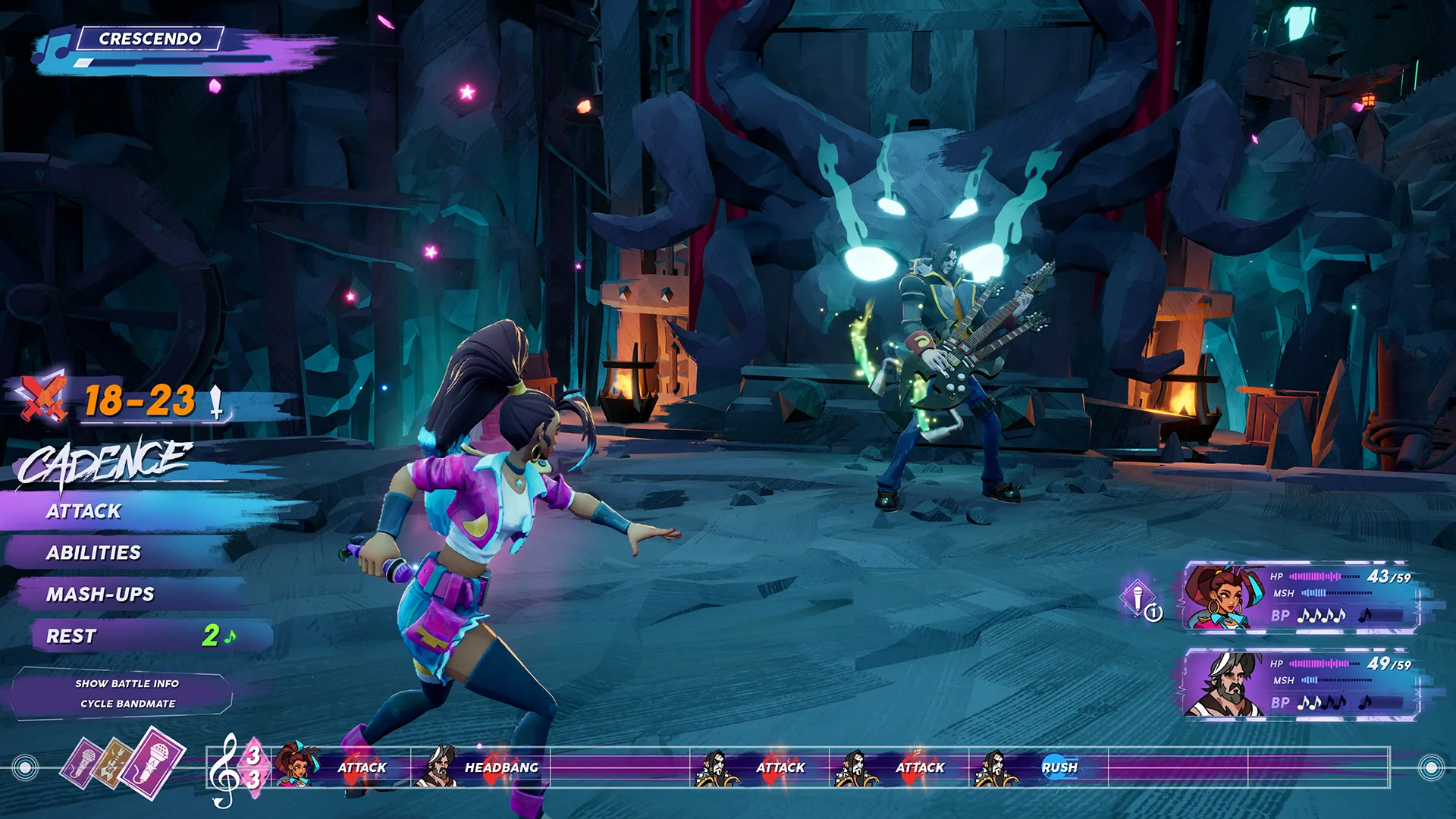
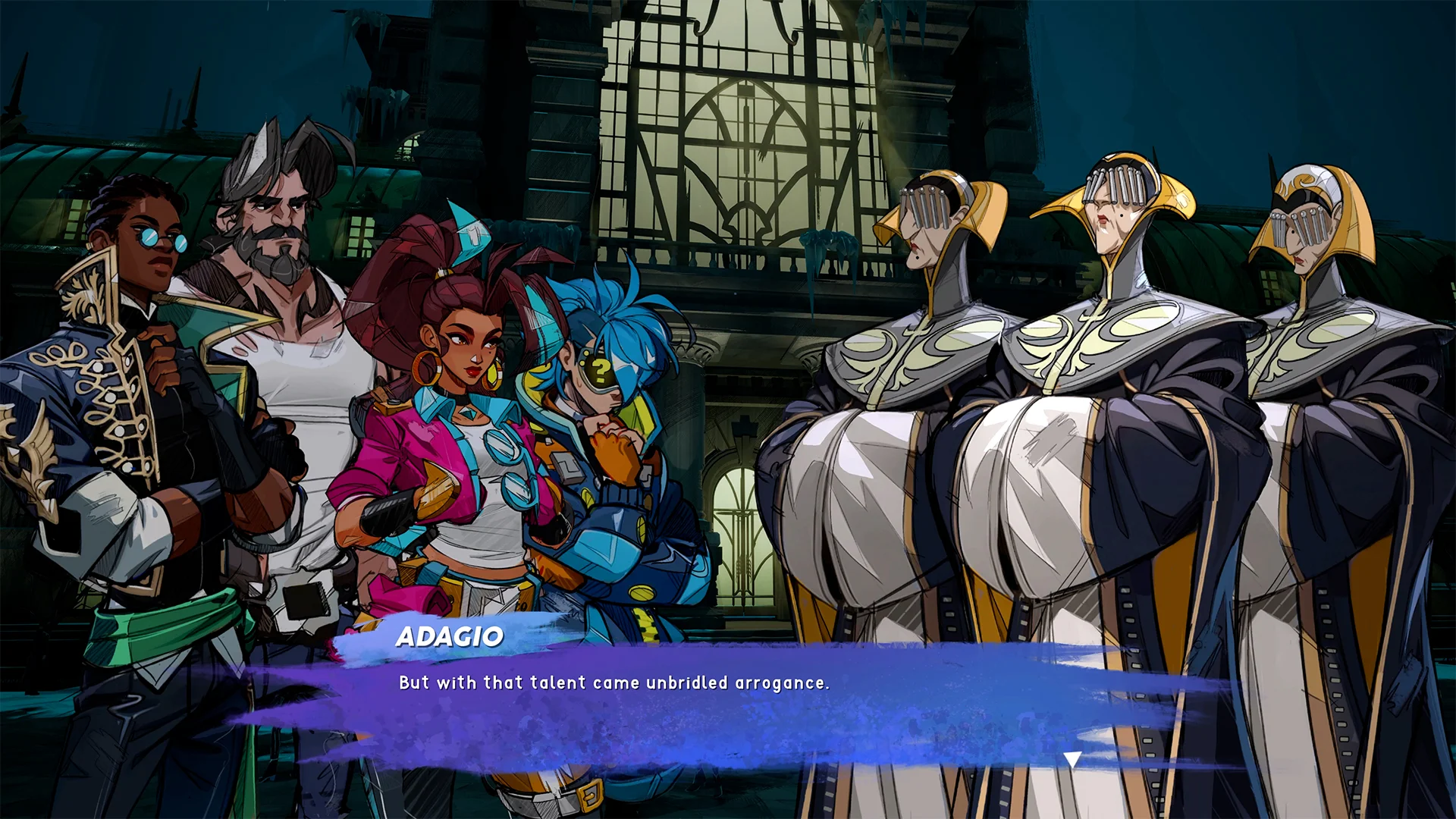
People of Note‘s tone starts somewhere between a Disney film and Kpop Demon Hunters, appropriately shifting into a more mature, introspective mood in the story’s second half. I found the world-threatening stakes a bit too vague in the beginning, though Cadence is an interesting and relatable protagonist who buoys much of the heart. Any creative will empathize with her endeavours towards greatness. The rest of the cast is solid, such as playable rap prince Vox or the periodic boss battles against the four members of Smolder (think airheaded Backstreet Boys), though the highlight for me was the push-and-pull rivalry/romance between Cadence and the furtive violinist Arc.
Dialogue, conveyed through 2D character art, is fully voiced and well-written, striking the right balance between humour and pathos. Some line reads sound a little disjointed between characters, but they hit especially hard towards the game’s coda when the drama matters. Cutscenes in the form of showstopping musical numbers drop in at key moments, with characters belting out their dreams, anxieties, and (my favourite) apologies. These numbers are more theatre-kid approximations of rock, rap, EDM, and the other genres of Note, but there is a string of solid hits here.
The music that soundtracks exploration and combat is consistently catchy for all its eclecticism. A few standouts are the Kpop battle themes in a nightclub in Chordia, the siren-like enemy vocals in Choral Shores, and the bluegrass battle theme of the Homestead, cowboys from the country-country that seem intent on stopping Cadence. Most *ahem* notably, the music in battles shifts and gives buffs to musicians in your band (party) based on genre. Hearing, say, the bluegrass battle tune overlayed with pop vocals or crunchy metal guitars propels each round of battle forward and makes for some very interesting sonic and strategic combinations.
People of Note loves puns, which fits the musical theatre vibe, and I’m here for it. The game’s packed wall-to-wall with winks towards bands, lyrics, and general pop culture, so on-the-nose that it skirts obnoxiousness and goes right to charming. My favourite might be the armour “Simon Cowl,” or the boss battle where a cowboy goes “Super Singin’” and shoots out blasts of “Kamehameyeehaw!” Then, interactions with NPCs during exploration are rife with fourth-wall-breaking jokes poking fun at RPG tropes. People of Note got a lot of laughs out of me, and all of it complemented the musical integrity of its world.
Visually, People of Note imbues each genre with vibrant, painterly colours—you can even see the broad brushstrokes in its environments. Show me a colour and I could probably pin down where in Note it came from. Some side areas, like the woodwind-styled forest, feel a little half-baked, but that’s just a testament to how I want to see more of this beautiful world. Character models in battle jive and bob their head to the beat, though they can look a little stiff in the would-be-epic crossover attacks. Still, the characters look great in their 2D dialogues, and their cartoonish designs convey genre and personality wonderfully.
For all I love in People of Note, the combat takes centre stage. At first, given the Disney vibes, I thought this may be an onboarding RPG for players new to the genre. I had no clue how strategic and challenging the combat would be.
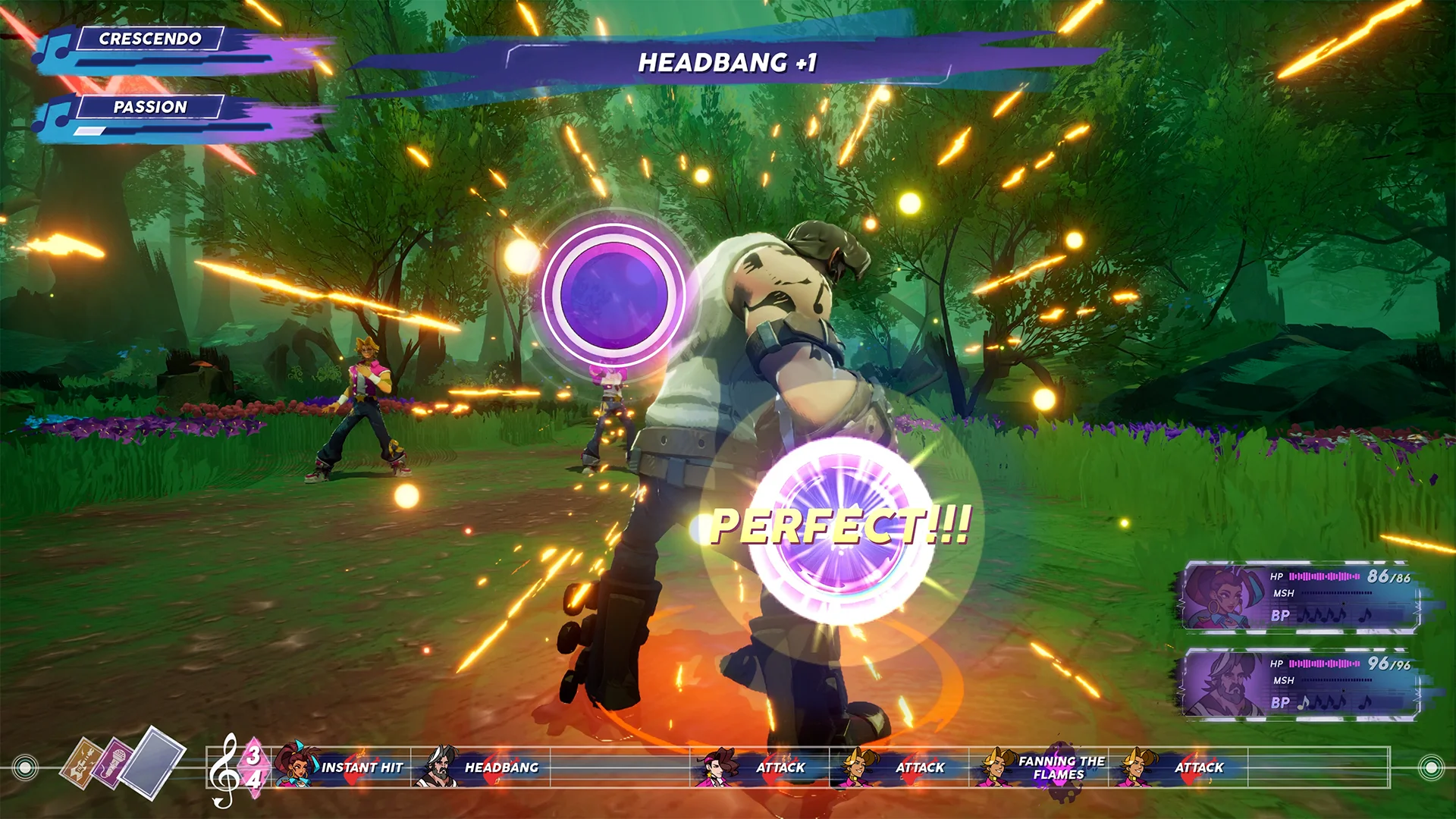
Stanzas (battle rounds) are composed of numbered measures (character moves) clearly labeled on the bottom of the screen. The interface clearly labels enemy attacks, meaning you know whether to attack, heal, debuff, buff, or defend. Players can command their band in any order, provided every member makes a move. As mentioned, each stanza switches the musical genre and boosts one of your bandmates, meaning you’re better off having other members lay buffs on the current star, who can then attack.
In many RPGs, I strive for the quickest, most direct attacks to topple enemies. In People of Note, this gets you nowhere. Rather than have character classes, each of the four members has equippable and upgradable “Songstones,” some exclusive and others, like a simple heal, shareable. Songstone abilities require in-battle BP, which slowly replenishes each stanza, or with the use of certain abilities. Whereas a standard turn-based round in an RPG may look like “Attack, attack, attack, heal,” a late-game stanza in People of Note may include buffing your attacker, filling up their BP, attacking, and expanding the number of measures you can make in the next stanza.
Even random battles (not so random, as they’re accessible by a button push) feel more like precarious puzzles than a fight. Subtle, randomized elements of battles keep them fresh: the genres the stanzas shift through; varying enemy health; the number of measures allies and enemies can take; bosses gradually ramping up their “Crescendo” bar and becoming stronger like a beast at bay. Then, there are the timing-based inputs for each ability that greatly affect their potency. Each new weapon you find or purchase has a completely new overlay, meaning you’ll be continually reconfiguring your Songstones and moves as you get stronger. All of this to say, I absolutely love how engaging People of Note’s combat is.
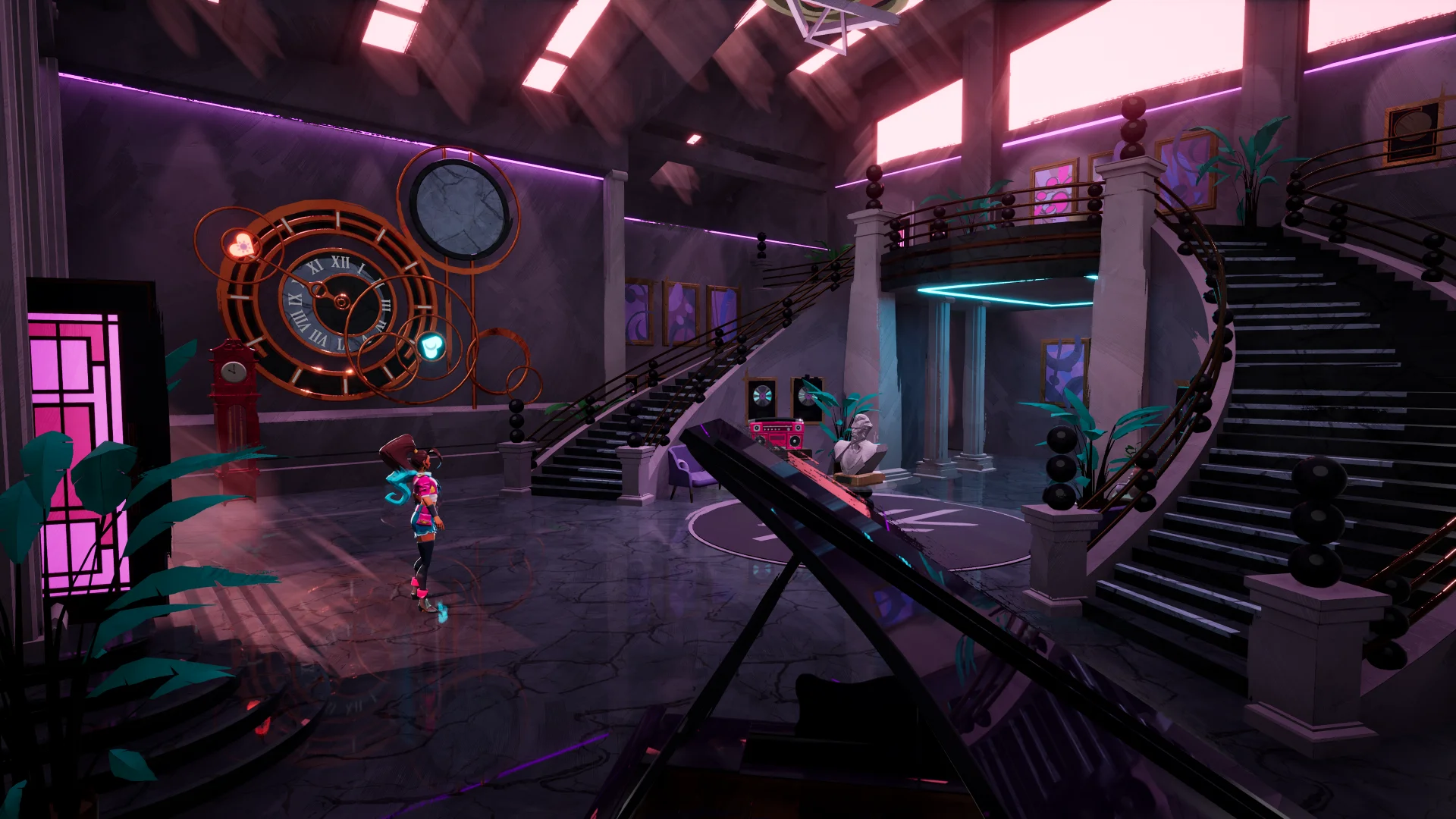
My feelings about the game’s exploration puzzles are more mixed. Each new genre/land Cadence ventures through brings a new type of puzzle, such as pushing bits of the environment to create a walkable path or bouncing music-ray-beams off mirrors and into receptacles. These start simple enough, but I was getting frustrated by some headier stacked mechanics by the game’s end. People of Note’s lands are rather small, meaning the game introduces puzzles too briefly and ramps up their difficulty before they vanish for the rest of the adventure.
One of the People of Note’s many thoughtful accessibility options is the ability to turn off these puzzles. For the sake of the review, I pounded my head against them, though the slog of puzzles towards the game’s final moments did hurt the game’s pacing. More enjoyable, if a bit underutilized, are the “puzzle battles” throughout Note that require certain conditions like defeating enemies in a set number of moves or simply surviving a punishing stanza. All content included, People of Note takes between fifteen and twenty hours; short but incredibly sweet.
Like a great album, People of Note is all killer, no filler. It’s an excellent antidote for RPGFans who may be tired of repetitive, overly long experiences. Don’t be fooled by its puns and Disney-ish charms—People of Note is thoroughly challenging and thought-provoking with its gameplay. I truly hope that when talk comes about for great turn-based combat, this game is in heavy rotation.