The soulslike genre has enjoyed considerable shakeups from several games over the years while the core identity remains the same. Phantom Blade Zero is another shakeup, though it departs from the formula in considerable, meaningful ways. Once again, we venture into mythical China—where Black Myth: Wukong guided us two years ago—and enjoy a slice of a medieval setting with little basis in history.
We play as Soul, a warrior who suffers a mortal wound and must take in an artificial heart to continue protecting his land and its people. Phantom Blade Zero has been heavily marketed as giving Soul sixty-six days to live, but it’s not important unless you’re playing on the hardest difficulty, in which one death means another day gone. Soul has the initial mission of making his way toward Pangzhen, a city that promises to have answers. What awaits him is a journey obscured by soulslike-style storytelling and clarity that hits about fifteen to twenty hours later.
We were instructed by the publisher not to include quite a few elements of the story, so, instead, I will comment that the narrative eventually gets good, but expect to be confused by various names, motivations, and cults via documents scattered about this linear-open world delivered in non-chronological order. If you’re not familiar with Chinese names, that’ll be another barrier. By Phantom Blade Zero‘s end, I had a pretty clear idea of what was going on, why, and what this meant for the world, but some mysteries still remained because of lack of explanation.
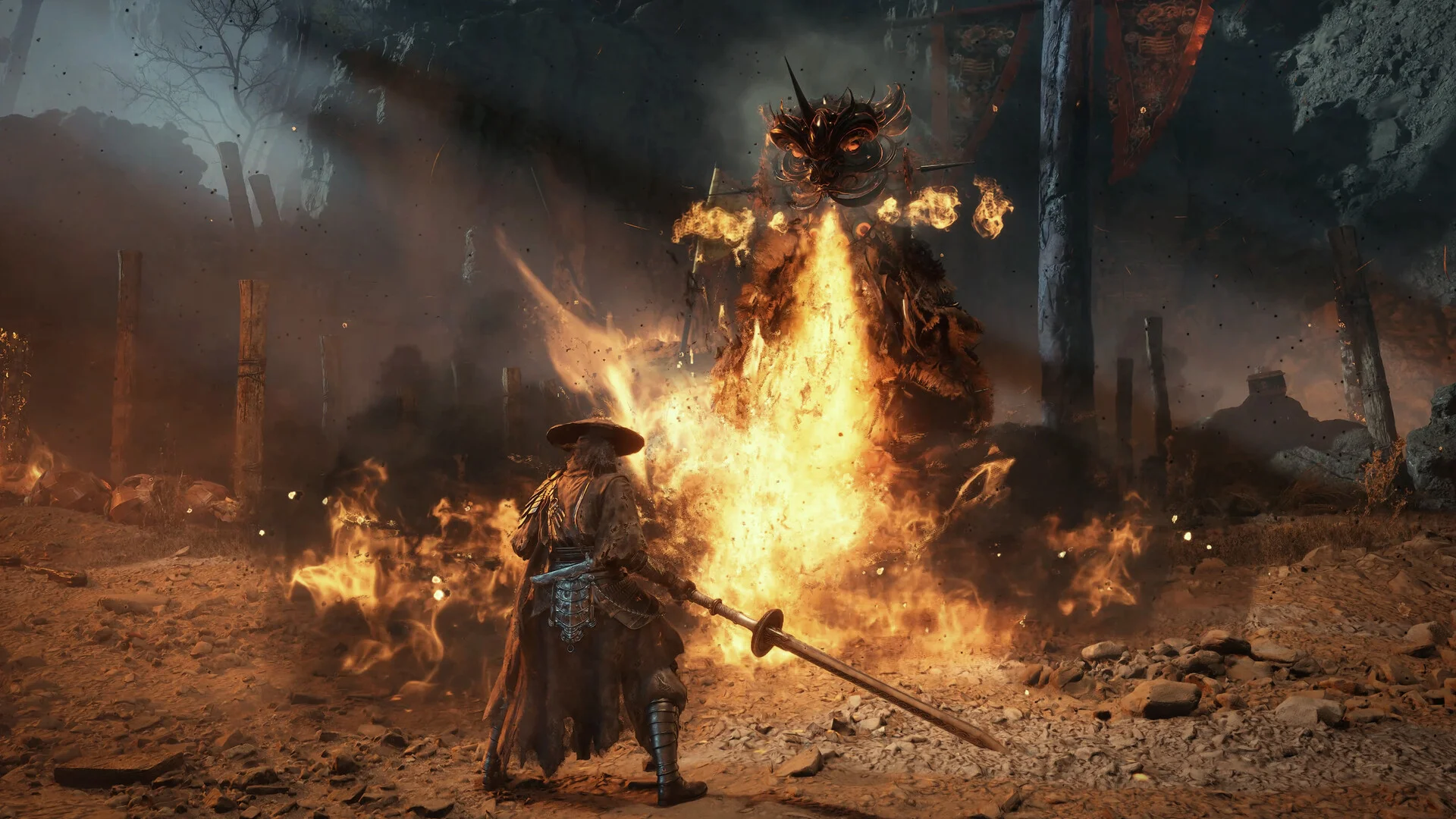
In terms of characters, Soul is a silent protagonist who meets cookie-cutter baddies and NPCs who don’t elevate the storytelling. The best writing and world-building in Phantom Blade Zero occurs in the littered documents that share individual accounts of the hopelessness in the Wulin (region) and cult worship. Motivation by plot is important and certainly assists the experience, but most folks are here for the gameplay.
Here’s where Phantom Blade Zero departs from its ilk: it plays more like a routine, third-person action game rather than a soulslike. What I mean is that while parrying and dodging are important elements in combat, players can navigate most battles—peons or bosses alike—by spamming block, running out the enemy’s stamina bar, and laying into them mashing triangle over and over again until the bar fills back up. Rinse and repeat. Timing a block into a perfect parry is obviously better, but unnecessary. The only time a well-timed block or dodge matters is when the enemy flashes red or blue, which can be challenging to execute, but yields significant combat advantages. Well, some of the time.
Most of the enemies and bosses take on human form, so expect a significant amount of redundancy in enemy type and combat style. Phantom Blade Zero throws a dump truck of unique weapons at you, but sticking with what you know can be incredibly tempting as the combat is not only simple, but easy. I was able to seamlessly kill most bosses on the first attempt with a few healing medicines left over.
The trash mobs between bells (bonfires) almost never offer a challenge, and the bells are placed with such frequency that even if mobs wear you down, you can heal up and get medicine charges replenished without worry. Also, enemies don’t respawn. All this to say that Phantom Blade Zero on standard difficulty is a breezy—albeit long—affair.
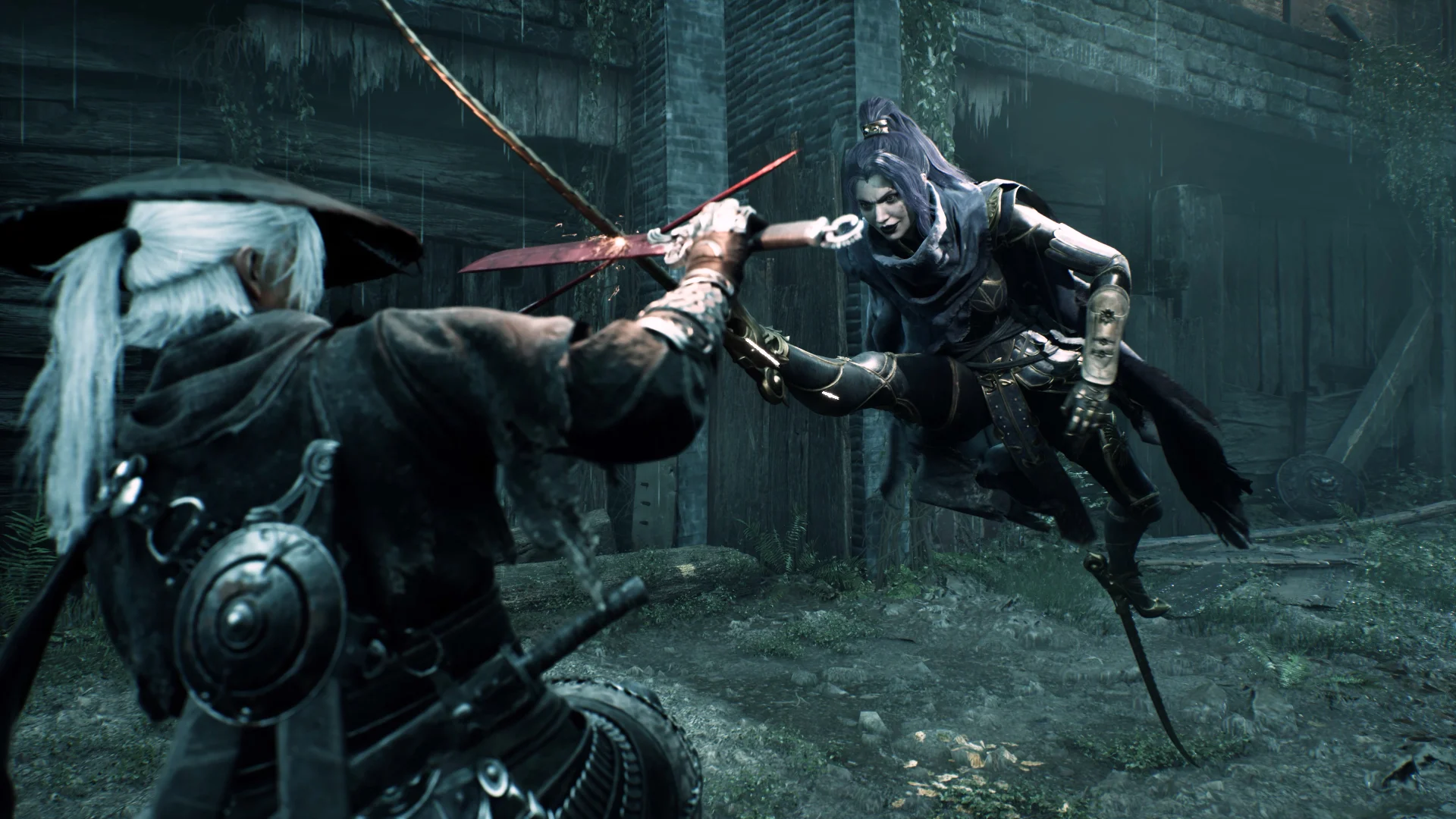
But is it enjoyable? Easy does not mean boring. Despite the significant dumbing down of combat, Phantom Blade Zero is still engrossing. Would I rather have a tough-as-nails romp through fictional medieval China? Yes, definitely, but that certainly isn’t necessary. I enjoyed Phantom Blade Zero for what it is, which is an action game spectacle with maybe the best visuals I’ve encountered in a game to date.
I mean no hyperbole here: Phantom Blade Zero is drop-dead gorgeous both up close and from a distance. Soul has several opportunities to gaze across a landscape at a mountain range, desolate city, or farm all cast under the brilliance of the moon or setting sun. A player on a mission may not stop to smell the flowers, but that would be a mistake; please, have the wisdom and patience to slow down and take in this masterpiece. I played on a standard PS5 and was blown away—I can only imagine what more enhanced visuals look like.
The details in home design, temple layout, villages, and so on are even more impressive. When I wasn’t jumping across entire rooms to slay my foes, I was slowing down to look at the tactfully placed incense holders, wall scrolls, and ornamentation painstakingly arranged in seemingly benign areas. Now, doing this, I realized that several assets were repeated, but this wasn’t done with the frequency we see in most other games; however, some homes and buildings were strangely barren and didn’t even boast disheveled furniture when it would have been appropriate. All this is nit-picking, though, considering the marvel that Phantom Blade Zero is to the eyes.

While I find the storytelling serviceable if a touch lacking and the combat kind of mindless, it’s the first time in recent memory a game has won me over with its visuals. I typically view artistic direction as an accent to an experience where writing and game design take center stage, but Phantom Blade Zero has turned that on its head. I’m not even talking about the alleged “kungfupunk” that so many others—the publisher, S-Game, included—have talked up. To me, the air dancing fighting does not even come close to surpassing the environmental beauty.
For the most part, the controls serve their purpose with only occasional frustration. Of course, in a game like this, I have had “I definitely dodged that, game!” moments. On the other hand, basic principles like tethering to a ledge were a touch frustrating at times as I couldn’t get the R2 prompt to show up unless I was looking at cliff from just the right angle and distance, and then the prompt would miraculously disappear when I went to hit R2, wasting some of my special power charges.
Getting stuck in the floor wasn’t common, but it wasn’t rare, either. I had a few cases in which I spent nearly a full minute just trying to get out of some craggy terrain or lifted floorboards. Invisible walls rear their ugly head all over the place with little or no justification. Granted, Phantom Blade Zero is a giant game and an incredibly detailed world, so my heart goes out to the developer, but still.
If I wasn’t so focused on the world around me, I could probably have enjoyed the music more, but expect traditional Chinese strings, drumming, and various other instrumentation to appropriately enhance the visual experience. The English voice acting was hit-or-miss with my wife, who’s from Singapore. She was frequently criticizing the pronunciation of Chinese names, cringing at times, while I found some of the tertiary characters almost Dynasty Warrior 3 levels of bad. I dabbled with the Chinese voice acting initially, but with fights being so frenetic, I couldn’t focus on the subtitles, so I opted for English.
Phantom Blade Zero ballroom dances in some ways and does a merry little jig in others. Neither of the dances are bad, but one is far more spectacular than the other. For as epic and culturally significant as the visual design is, I wish we had a little more of the traditional soulslike formula embedded in the combat, but I won’t try to claim I didn’t enjoy the entire experience. This is likely an issue of unrealized expectation and a heaping dose of repetition. As far as AAA titles are concerned, this is definitely one of the better ones with few technical issues and a budget spent on the right qualities.