
,Pokémon spin-off games are as broad-ranging and varied as the colorful creatures that populate their digital worlds. From puzzle games to pinball, from roguelike dungeon crawlers to photography simulations, it’s practically a law of nature that if you can picture a game concept, you can probably put Pokémon into it, and it works. Yet, after all these many genre experiments and 30 years of the franchise among the largest media properties on the planet, somehow it took until now to throw Animal Crossing, Minecraft, and Pokémon into a blender.
Taking a kitchen-sink approach to game design can often spell disaster, as various disparate parts muddle together into a bland mess or conflict with one another, especially when each major inspiration has such a well-defined identity. Luckily, Omega Force and GameFreak had the solid foundation of previous Dragon Quest Builders games to build upon. The Pokémon Pokopia team constructed an architectural masterpiece of game design that lifts exactly what it needs from its myriad inspirations, simultaneously nailing an experience that feels unique yet remains true to the core ethos (Gotta Catch ’em All) that’s cemented Pokémon’s popularity and dominance over three decades.
Pokémon Pokopia begins with Ditto, transformation pokémon extraordinaire, waking up in a cave all alone. Unsure of their circumstances, with only an old photo of their human trainer indicating their origins, Ditto adopts a facsimile of their trainer’s appearance and wanders off, quickly stumbling across a Tangrowth suffering from a similar predicament. The Pokémon world experienced an ecological disaster that razed human civilization, disrupted the symbiotic relationship between humans and Pokémon, and led to the disappearance of all human life under mysterious circumstances. A dark premise for a cute life-sim game, to be sure, yet also a wonderful creative opportunity for both our Pokémon protagonists and the player.
This state of nature serves as a blank slate, and responsibility for rebuilding society rests with Ditto and Tangrowth. Our unlikely pair remains hopeful that revitalizing the environment may bring the humans back home. Breadcrumbs in the form of text logs left by humans offer snippets of insight into the central mystery of what happened to the world, yet the bleak subtext is fittingly obscured by the hopeful optimism inherent in creating a utopia for Pokémon. Each major leg of the journey sees Ditto and Tangrowth traveling to a new area reclaimed by nature, gathering up a wide variety of Pokémon inhabitants, and rebuilding a new world atop the ruins left behind by humanity.
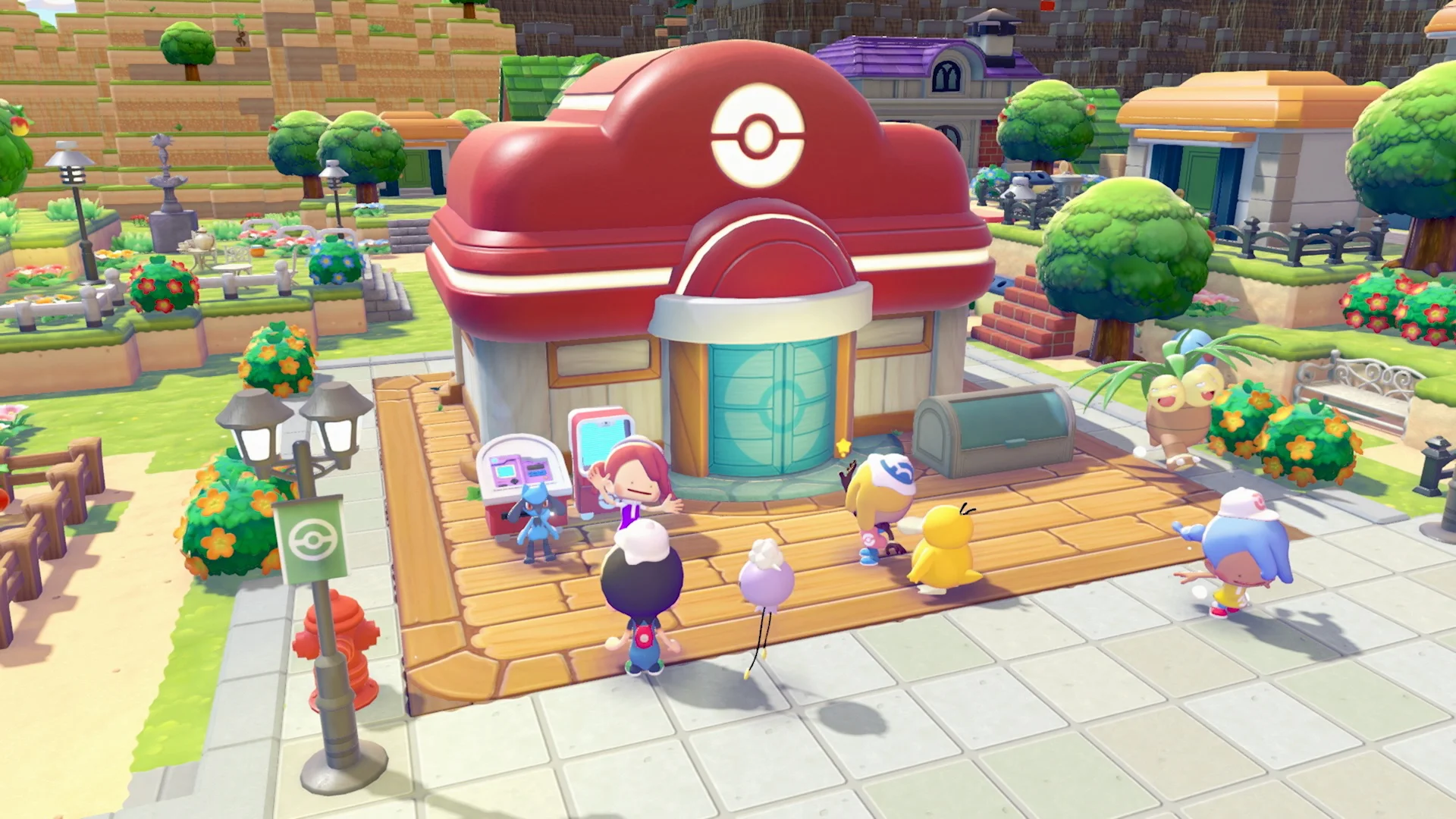
How do you even begin to undertake this monumental task? By building habitats for Pokémon, of course! Creating hospitable locations to lure scattered creatures back forms the core gameplay loop here, and it’s endlessly creative in execution. Pokopia posits that through the power of community, it is possible to rebuild what was lost, but better than before. Casting the player as a Ditto proves genius because Ditto’s unique power is one of mimicry; he molds his gooey form into a dopey-faced facsimile of any object or Pokémon he sees and replicates their abilities. Making friends with a wandering Bulbasaur grants Ditto the ability to cultivate tall grasses, and luring a Hitmonchan back to town with a rudimentary training gym allows him to pass on his Rock Smashing fists.
Connection by connection, Ditto’s repertoire of abilities grows, enabling him to cut wood like Scyther, shoot water like Squirtle, surf the waves like Lapras, and eventually even fly like Dragonite. You use these abilities constantly, guided by the Pokedex dropping hints about which habitats attract which species of Pokémon to your location. Things start small, initially just patches of tall grass, fields of flowers, and positioning various odds and ends left behind by humanity. Eventually, as the population of Pokémon expands and their demands for comfort and fulfillment grow more complex, entire housing structures and utilities, such as electricity generation, farming, and resource refinement, become necessary.
Pokopia doles out these concepts piecemeal at a steady pace, ensuring that completion of one task leads effortlessly into the pursuit of another. While no individual system is particularly deep, the way these systems work in concert ensures each one feels impactful. There are only a handful of crops to farm and cooking recipes, yet cooking and eating meals temporarily upgrades Ditto’s abilities and allows you to farm and mine more efficiently, so engaging in these systems is always worthwhile. There are only three power-generative structures you can build, but establishing an electric grid powers homes, decorative elements, and useful structures like shops and vending machines. Herein lies the masterful design philosophy of Pokopia: never overload the player with too many options, but make sure each option serves multiple functions. Many simulation titles get bogged down in complexity, minutiae, and repetition. Pokopia largely avoids those pitfalls through its clever minimalism, giving the player tools just sufficient to exercise their creative muscles, but not so many that they get lost in the weeds.
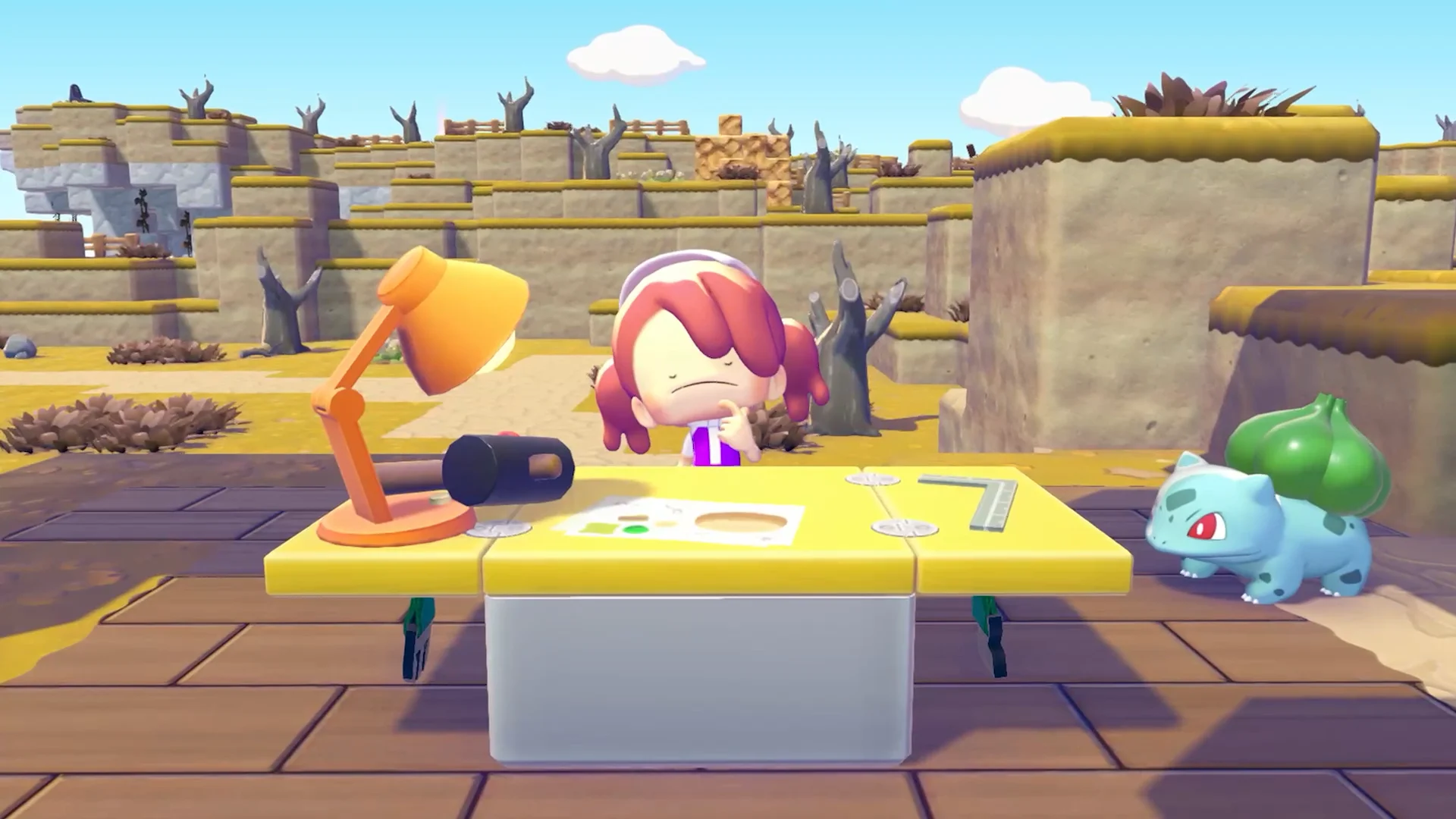
The core progression structure is integral to this careful balance of managed simplicity. Pokémon will often make requests of Ditto, things to improve their living space, or new ideas they’ve come up with to address low-stakes communal problems. Fulfilling these requests may prompt a Pokémon to teach Ditto a new ability, remind them of a crafting recipe, or increase their overall happiness. As the happiness of your inhabitants rises, so does the overall quality of your community and the number of Pokecenter PC-based challenges you can complete with their own rewards. Major story events lead you through all the various aspects of establishing and managing a thriving community. Fundamentally, these tasks are a form of tutorialization for what will be possible in the endgame. However, you are granted so much freedom in how to approach them that every lesson feels like a satisfying step forward on your journey of discovery. The real-time clock system can occasionally stymie progress (any large prefabricated structure requires a full real day to complete), but there are always meaningful tasks to accomplish while waiting. I found that after the initial frustration wore off, an occasional construction roadblock simply shifted my focus elsewhere.
The boldest step Pokopia takes compared to its predecessors is the lack of combat. The combat in the Dragon Quest Builders titles was functional, but easily the least robust aspect of the game design. Pokopia replaces violence with the social simulation aspects of Animal Crossing, but without many of the structural limitations that plague the recent entries in that series. Many Animal Crossing fans lament how Nintendo sanded down villager personalities into a handful of inoffensive typecasts, eliminating opportunities for interpersonal conflict. Pokopia, by contrast, has a much wider variety of Pokémon personality types. More alien or mechanical Pokémon like Vibrava or Magneton speak with a robotic diction, brawny Pokémon like Machoke or Gurdurr carry a sense of self-confident exuberance, and mystical Pokémon like Alakazam or Gardevoir convey a haughty, regal air in their sophisticated manner of speech. There is no evolution system here, so each evolutionary stage of a species gets its own chance to shine, and members of an evolutionary line can be as different in personality as they are in physical appearance.
While all Pokémon treat Ditto with respect (he is their leader, after all), the social interactions between Pokémon often exhibit interpersonal conflict. One memorable example I witnessed involved rivals Heracross and Pinsir arguing over who was stronger than Graveler. The heated exchange ended with Pinsir expressing gratitude that I had put their habitats on opposite ends of town, so they could stay out of each other’s sights! Another memorable exchange involved Flygon and Ninetails, who are each too prim and proper to engage in base verbal mudslinging, yet would give each other duplicitous compliments while passive-aggressively muttering under their breath their true feelings. This willingness to introduce low-stakes interpersonal conflict grants Pokopia a level of character authenticity that many cozy games lack. Residents aren’t shy about letting Ditto know when they are unhappy with their living arrangements, and making too many rapid changes to their environment can cause the overall happiness of your community to drop precipitously if you’re not careful. These small-scale social conflicts and consequences help Pokopia avoid the artificiality that pervades Animal Crossing: New Horizons; each resident comes across as a unique individual with preferences and personality, not just palette swaps.
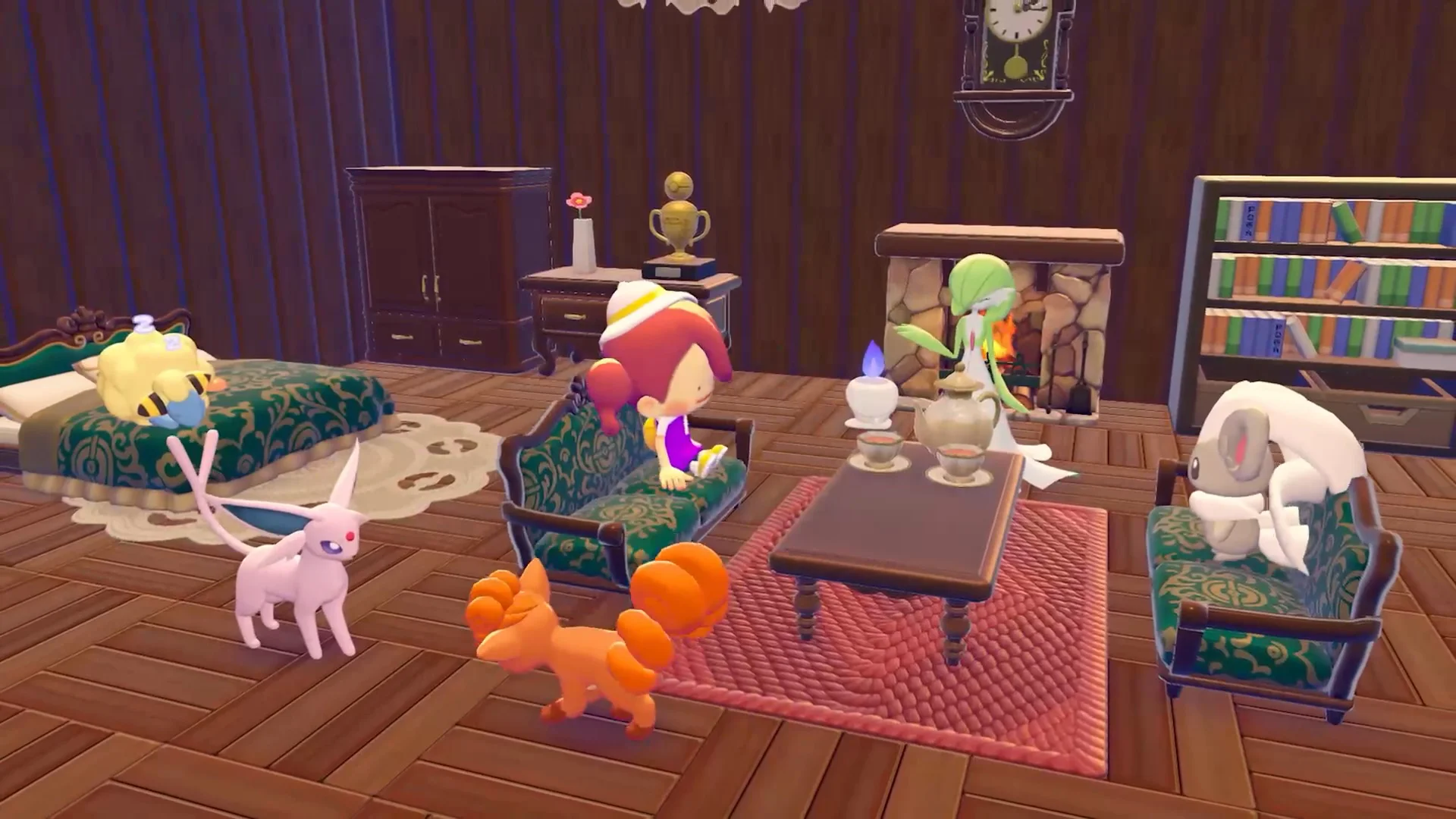
Although the core storyline is important, any good sim game thrives on delivering more to do long after the credits roll. Pokopia doesn’t disappoint here either, with an entire sandbox location (Palette Town) that incorporates all previous biomes into one big playground. This is the main multiplayer playspace; you can invite players to visit any of the five major areas and marvel at your creations, but Palette Town is the only location where friends can also build and harvest resources. Pokémon residents can move between every location, and while only 30 residents can wander around the field at any one time, you can swap them out or summon them at will so long as they have appropriate housing. The town accommodates potentially hundreds of NPCs, plus other players, into a single location, which is where you really feel the subtle impact of the Switch 2 hardware.
Another meaningful innovation is the ability to take a picture of any object out in the world (or in another player’s world) and replicate a copy using the 3D printer in any Pokémon Center. No more waiting days or weeks for a particular item to show up in the shop, or reliance on a kind friend to drop the item for you, which is a godsend and provides additional incentive to visit with friends to marvel at their creations.
Pokopia is a rare example of a game that takes inspiration from as many genre juggernauts as possible, yet ultimately exceeds them all. The building mechanics may not be quite as expansive as Minecraft, and not all of the 1000+ Pokémon creatures feature here (though weekly events are scheduled to add more). Yet, by combining the strongest core elements of city builders, social simulations, and creature-raising RPGs, Pokopia emerges from the rubble as a monumentally addictive achievement in game design that millions of players will enjoy for years to come.