
Shadows twist, often hiding unknowable dangers from those in their direct path. The edges of said shadows and reality get muddied in the post-apocalyptic sci-fi urban fantasy RPG/visual novel hybrid, Qliphah in Providence’s Shadow. Billed as a uniquely “tactical counter-timeline RPG,” the game puts you in the shoes of two maybe-technically-not-altogether-human-anymore protagonists as they race to save the world from unraveling. For the most part, Qliphah in Providence’s Shadow showcases a compelling story built around a truly clever battle mechanic, though that doesn’t keep it from hitting a few snags.
At the start of Qliphah in Providence’s Shadow, Uniber delivery guy Soma Hoshigami has not been having a great day. After the world has already suffered a near-total reality collapse that causes nightmarish entities once existing only in horror stories to come crawling out of the woodwork, Soma’s attacked while on the clock and left in a half-transformed state between man and monster. Police investigator Rena Hizuki, a peacekeeper-of-sorts for the out of the ordinary currently seeping into all facets of everyday life, finds Soma, only to claim him as newfound property of her agency. Rena herself isn’t fully human either, and the duo initially forms a reluctant partnership that grows into something more as they try to keep reality from further collapse. The two outcasts might have the fate of the world resting on their shoulders, but they’re facing the harsh question of whether or not it is even worth saving now.
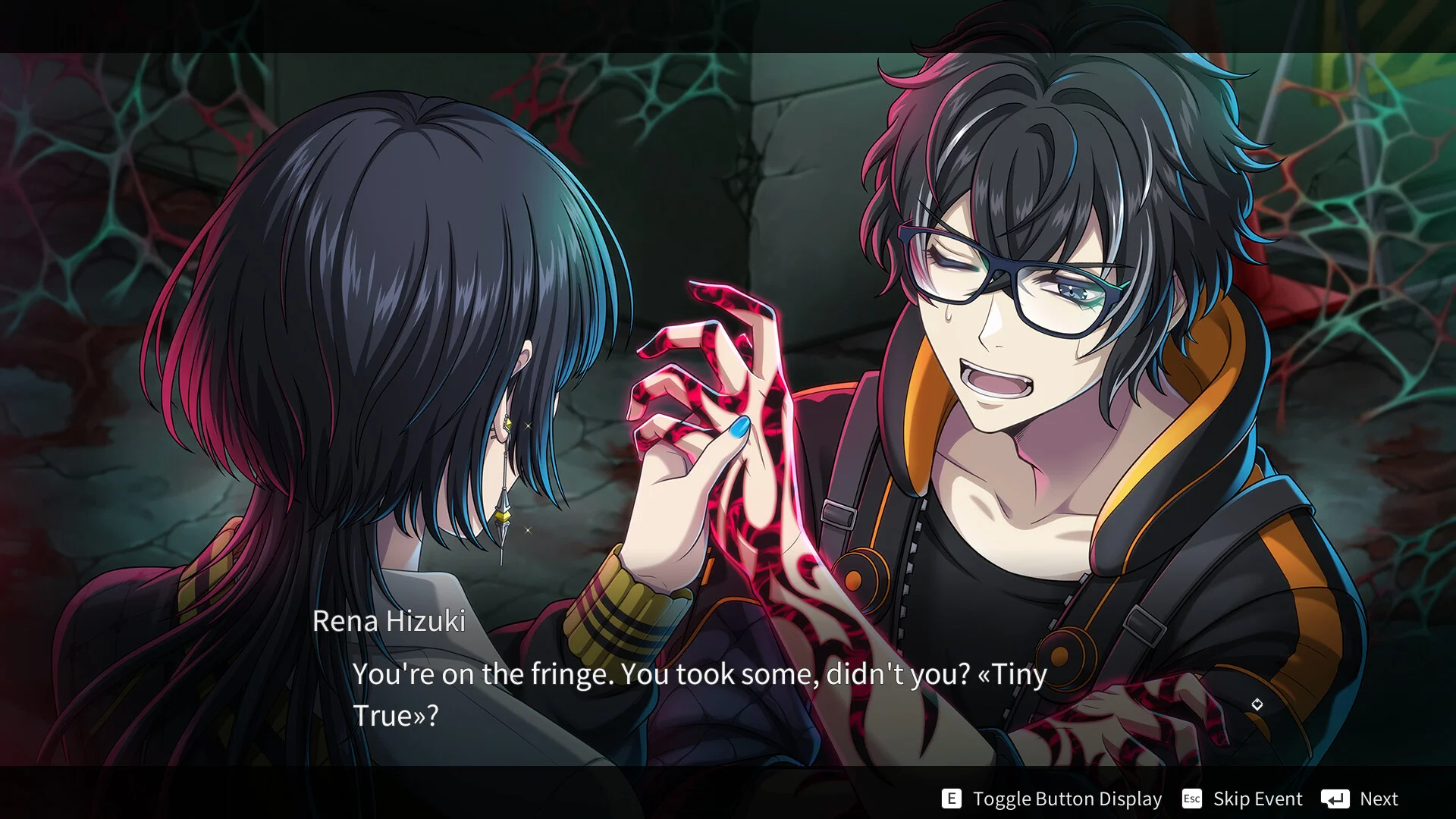
Qliphah in Providence’s Shadow’s overall plot is a compelling atmospheric blend of horror, sci-fi, and urban fantasy. It features astounding narrative worldbuilding as Soma and Rena investigate and uncover new intel collected in their evidence records as you progress. The game puts a lot of detail and clear care into fleshing out this nightmarish version of the world. The game illustrates its text-heavy cutscenes further through a visual-novel-style presentation, giving the plot a literature-esque depth. Rena and Soma are also wonderfully memorable characters. Not only do they have individual character arcs that believably develop over the course of the narrative, but their evolving partnership into a more found-family dynamic is surprisingly touching. Unfortunately, the same cannot be said for others in the cast, as they’re either irredeemable villains or exist as sounding boards to the point where they’re not memorable. If you find yourself interested in Qliphah in Providence’s Shadow’s plot, it’s going to be due to the lore and narrative buildup alongside the two main protagonists’ growth rather than anything else.
Of course, you don’t describe something with a descriptor like “tactical counter-timeline” without expecting a battle system discussion. Combat takes shape through the intuitive, real-time partnership battle mechanic between Rena and Soma. Each character has equippable skills, three of which are color-coded attacks of varying strength. As you progress, you also gain access to support, buff, and debuff skills that you can add to a secondary skill wheel, alongside the guard function you can access with a simple button press.
The three color-coded attacks comprise your main skill wheel alongside a “stop time” skill. Since battles take place in real time and can be hectic, the stop time feature is easy to understand. Need a breather or to plan your next attack string? A pause is in order! If you feel the skill string you’re creating won’t cut it for the fight’s next phase, you can purge it during the pause segment so that you can enter commands fresh.
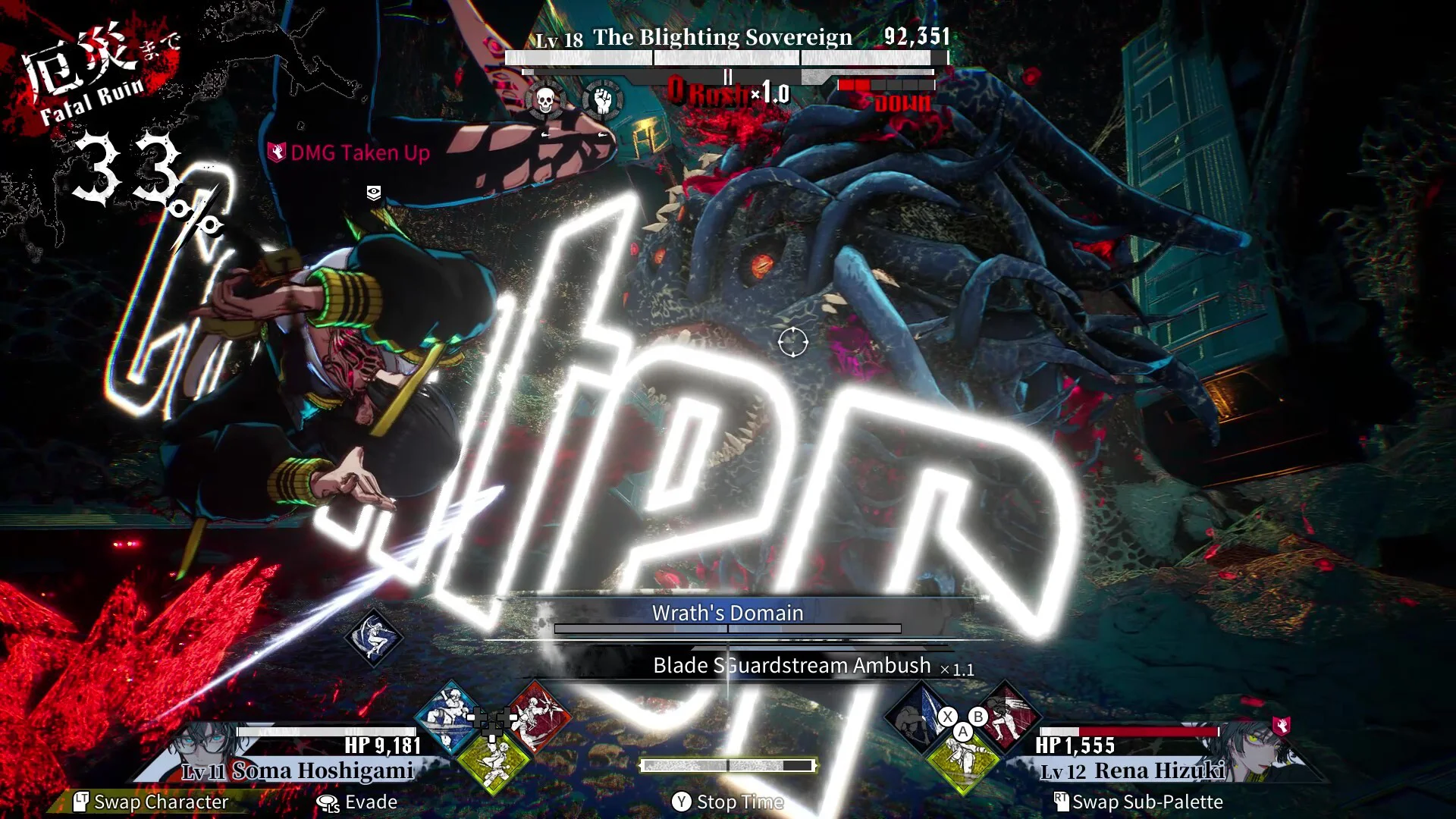
As the enemy makes a move, a blue, red, or yellow inner circle emanating from them starts to spiral out into a matching outer circle. In this limited time frame, you try to enter a matching colored attack from your characters’ repertoire. The attack still does minimal damage if you don’t succeed, as does the enemy’s, but the key is to set up a successful counter move. Counters set an opponent up for some truly punishing assaults, especially if you and your partner can perform a Buddy Counter. Not only are you directly controlling your primary character using the button side of the controller, you also have to keep in mind and input commands for the other using the directional buttons.
Perfectly timing counters and knowing when to use additional skills or attacks creates a frantic, intensely action-focused feel to combat while still offering a hefty dose of strategy. It’s chaotic and creative in equal measure, bringing to mind an action RPG or a fighting game while still maintaining more of a turn-based sentimentality. The enemy’s predicted move pattern might even scroll across the side of the screen too, helping you figure out which moves are likely to cause counters if you happen to catch wind of them. Battles get progressively harder as the enemies’ levels increase, especially when fighting the impressive final bosses of the chapters, or when you have groups comprised of three foes.
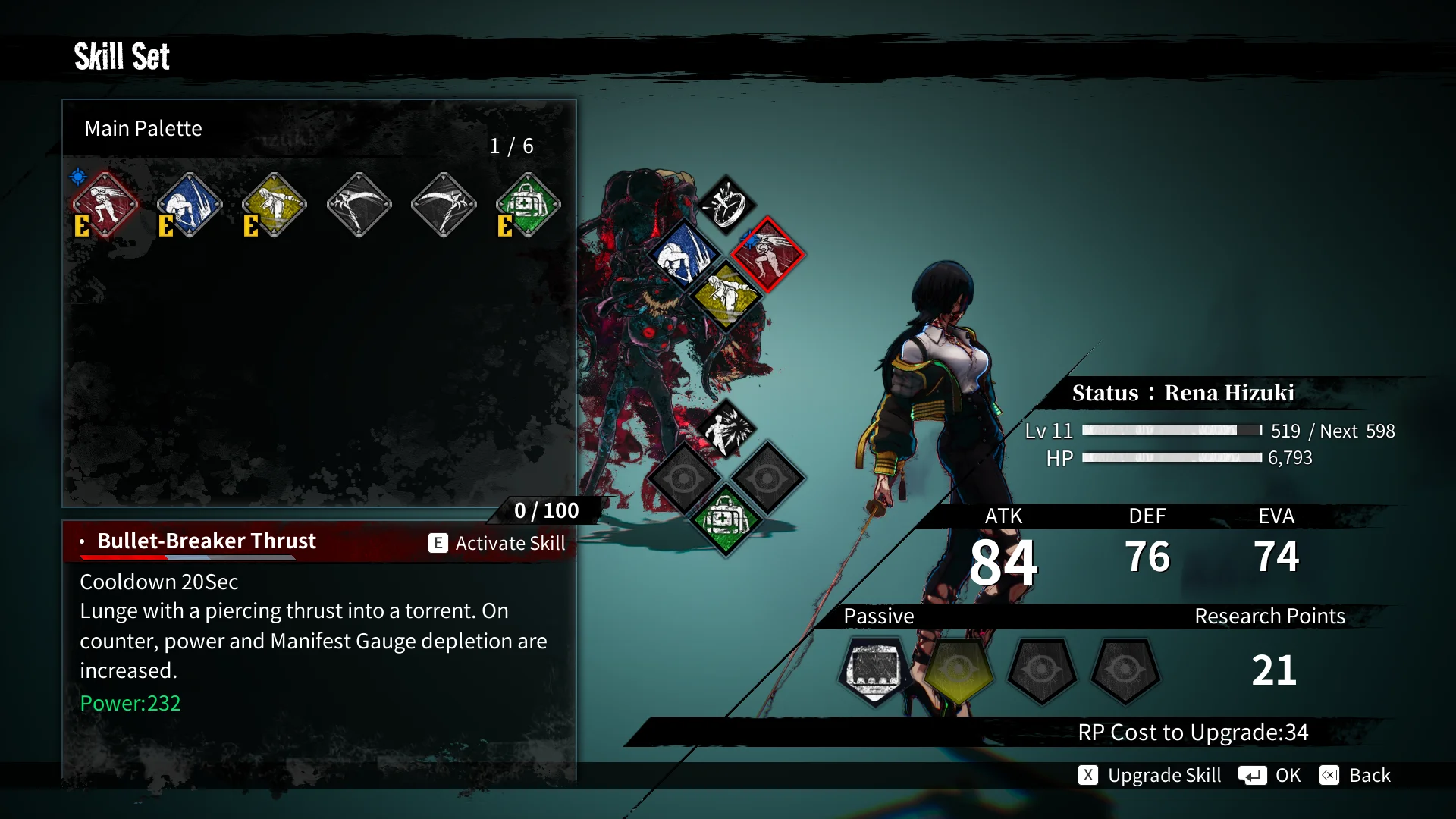
As you progress in Qliphah in Providence’s Shadow through investigating new areas of interest on the story map or through combat, you can acquire Research Points, which you can then use to purchase new skills or upgrade/strengthen the effects of ones already equipped. The skills you can equip initially are limited, since you can only equip a handful at a time, but they become surprisingly versatile and potent as you progress.
The story map for all five chapters can become fairly huge, with multiple areas of interest to visit to help your evidence record grow or to discover enemies to fight for leveling purposes. However, each chapter has a time limit of game days, with each day split into a day and night category, something you’d do well to remember, as once that time limit hits, enemies become all the deadlier at an accelerated pace for every day you happen to be over the limit. You need to carefully follow clues provided on the map or on the in-game social media feed to know which areas you should prioritize and at what times, as certain areas are not reachable at night or have different events play out depending on time of day. The completionist in me wanted to explore every section as it opened up on the map, but you really don’t have that luxury when actually playing.
Qliphah in Providence’s Shadow is very much a visual novel/RPG hybrid in terms of presentation. The story, cutscenes, and map displays are akin to what you’d find in a VN, while battles and how you prepare for them remain rooted in RPG tradition. This hybrid presentation might be offputting to fans of either genre who may prefer it to be more VN or more RPG, though I personally liked it. Because the storyline can get quite dark and gruesome, Qliphah in Providence’s Shadow mostly relies on descriptive writing instead of graphic imagery to convey what’s happening. Those who don’t mind a good scare or gory visuals might be disappointed, though personally this was an instance where I didn’t mind a “tell don’t show” presentation, given some of the stuff that did get described.
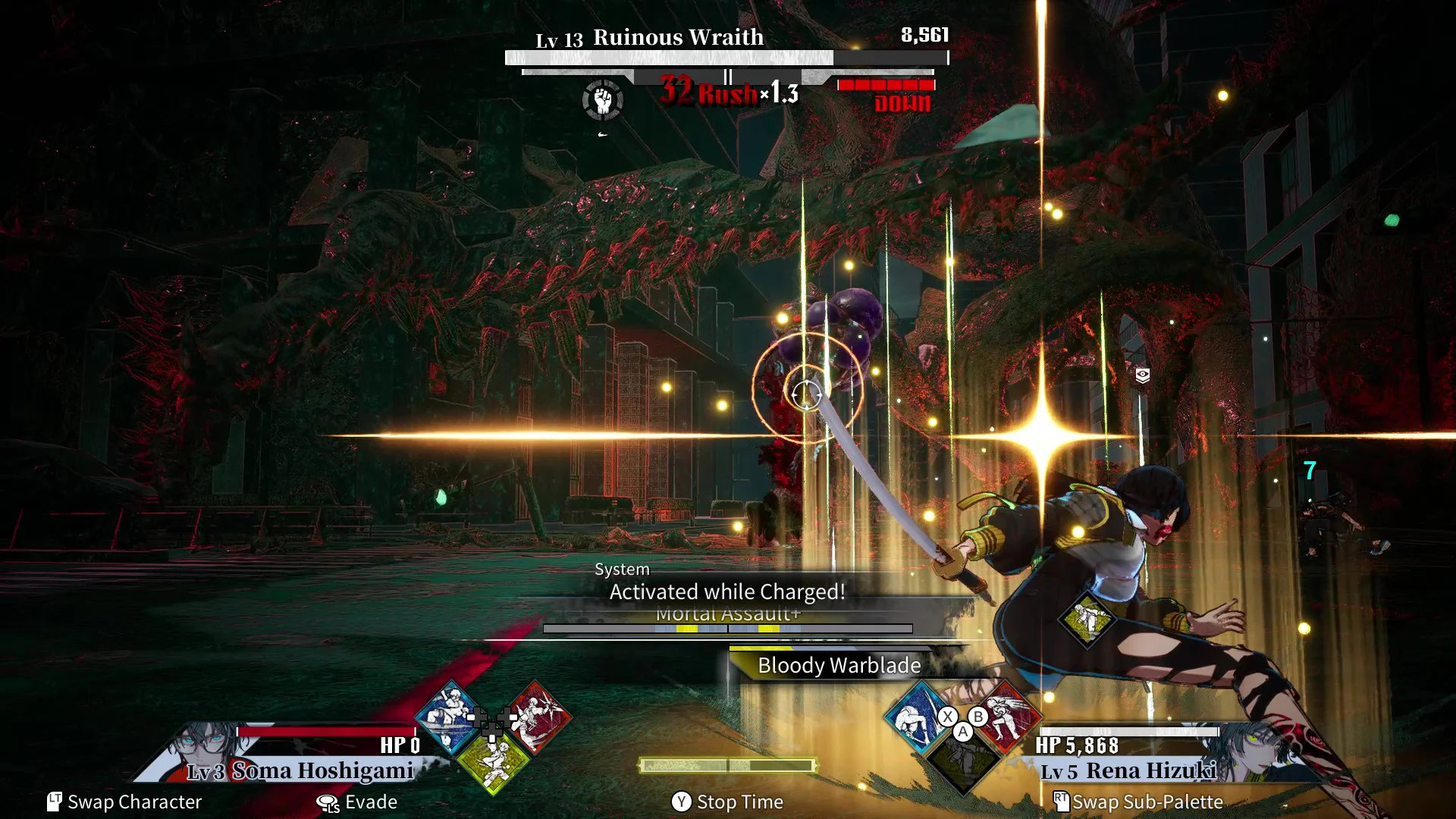
Which leads me to visual presentation. Graphically, Qliphah in Providence’s Shadow‘s VN presentation does the trick well enough. However, it feels as if the game was maybe budgeted, given that some background illustrations are reused throughout and there’s an obvious lack of character art for most of the cast. I did like how the darkened graphics fit the game’s overall aesthetic and atmosphere, and I thought the 3D character models for Rena and Soma were quite good and expressive. However, many of the enemy designs didn’t look fundamentally different from one another, a critique I could also throw at the battlegrounds themselves. The UI can get extremely busy, but it still manages to stand out and stay atmospherically fitting. The combat UI has a certain artistic style that’s a delight to behold, though the dialogue boxes during cutscenes border on basic. I really liked how the splotches of green for support/healing skills, mixed with the red, blue, and yellow moves against a dark backdrop, really stood out.
The sound effects successfully conveyed even when something truly gross was supposed to be happening in the narrative. I also enjoyed the voice acting throughout Qliphah in Providence’s Shadow, with the voice actors for Soma and Rena—Itsuki Tousi and Ikumi Hasegawa, respectively—being standouts. The soundtrack is fitting, too, and I especially like the three vocal songs that appear at different points in the story. The localization is fairly decent, given how much text there was throughout the script.
It took me roughly sixteen hours to finish my Qliphah in Providence’s Shadow playthrough, though I imagine it might be a shorter turnaround for those who can master countering quickly. While I do feel the game pads some fights to make them last longer, such as including multiple phases or bosses with huge health pools, they feel brief enough due to how quickly combat flies once you’re used to gameplay. I give Qliphah in Providence’s Shadow credit that I didn’t feel like it was rushed or condensed, as the overall ending felt pretty satisfying for our two protagonists, at least. Adding in a New Game + mode for extra replayability, I could easily imagine being tempted to take a return trip to this post-apocalyptic world, especially if I want to test out my abilities against even stronger foes in its really satisfying and compelling combat style. I think those who appreciate a mixture of VN and RPG, as well as those who might want to try action-oriented combat that’s slightly different than your average RPG, could give Qliphah in Providence’s Shadow a chance to step out from the shadows.