
At the crossroads between cyberpunk and fantasy exists Shadowrun. Originally a tabletop RPG from 1989 (currently on its sixth edition, as of 2019), it’s now a franchise sporting multiple campaigns, novels, and video games. The first of which was Shadowrun for the SNES in 1993, a moderately well-received isometric RPG/adventure game. However, it would be 20 years before fans saw another game of its calibre and ambition again: 2013’s Shadowrun Returns, a successfully Kickstarter-backed isometric RPG from indie studio Harebrained Schemes, founded by one of the original creators of the tabletop, that took direct inspiration from the 1993 classic (and even features that game’s protagonist, Jake Armitage, as a key player in its plot).
Following its success, it received a standalone expansion called Shadowrun: Dragonfall in 2014, with a full-fledged sequel Shadowrun: Hong Kong in 2015. Almost a decade later, the Shadowrun Trilogy has at long last received a console port on modern systems; an endeavour that’s equal parts satisfying and deeply frustrating.
In the spirit of fairness, however, I will be breaking down each of the three games and how they fare against each other, before tackling the trilogy port as a whole, detailing its myriad problems.
Shadowrun Returns
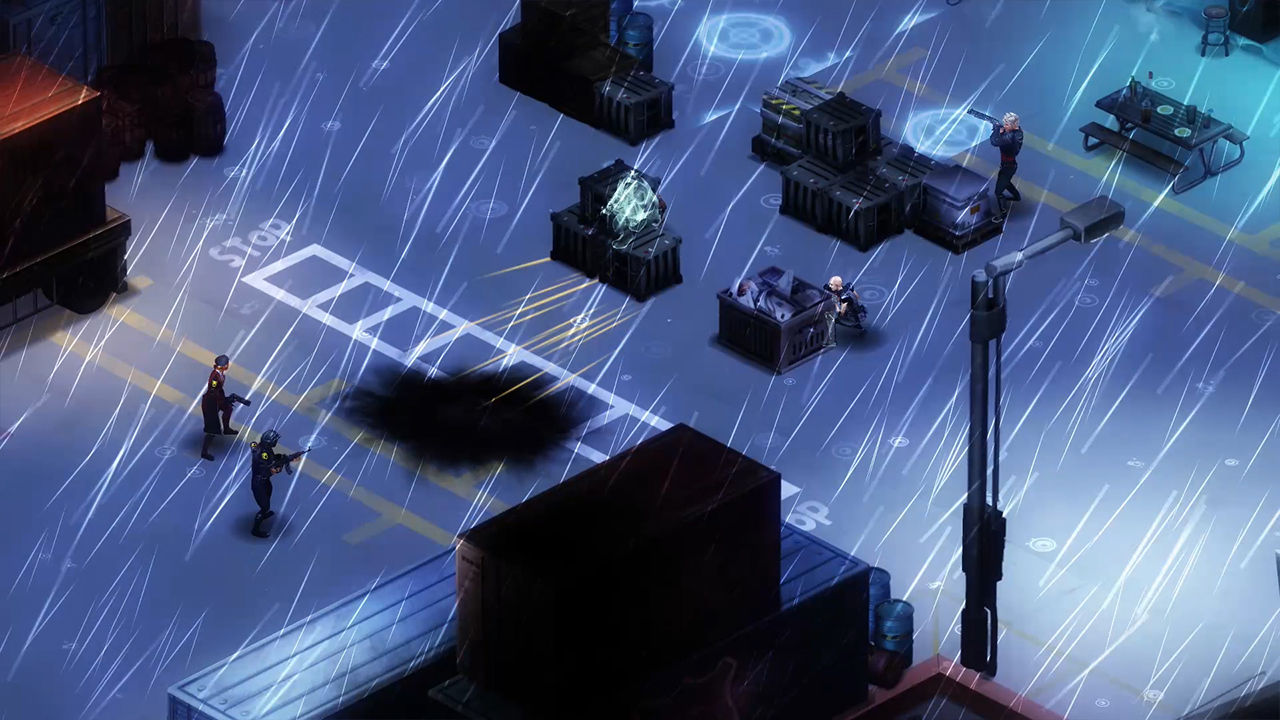
Truthfully, despite it being the “least-good” entry in the trilogy, Shadowrun Returns is of particular significance to me, since it was the first party-based isometric RPG of its kind that I’d ever played, and really the only RPG outside of the triple-A mainstream that I’d played up to that point. Its premise and the broad strokes of its world intrigued me enough to sink my teeth in. Based on that, I can attest to this game being an excellent entry point into both the Shadowrun universe and isometric RPGs as a whole.
Its mechanics are easy to pick up and parse, and you’re never locked into one particular playstyle or class. So no worries about decision paralysis when it comes to building your character; you can always adjust as you play when it comes time to level up. I started as a Street Samurai (your basic gun-toting mercenary class), hoping to spec into melee builds so I can live my katana-wielding cyberpunk fantasies, but drifted more towards ranged skills after playing around with the weapons and my other fellow gun-toting companions’ abilities when controlling them in combat.
The combat in Shadowrun Returns is an approachable facsimile of XCOM‘s: turn-based and with hit percentages that differ based on various factors, including distance from the enemy, the type of weapon that you’re using, and any active buffs, either passive or player-activated, that may affect you. Unfortunately, much like XCOM, there are times when you’ll have to contend with the possibility of an attack with a 99% hit chance that misses completely. It’s an issue that arises across all three games, and while there are ways around it, such as any aforementioned buffs or abilities you may pick up, it doesn’t become any less frustrating.
Really, there’s not much to say about Shadowrun Returns‘ gameplay. It’s all relatively simple, especially when it comes to RPGs of its ilk. That may sound like a major mark against it, but it’s actually quite a boon for the game’s approachability. All told, it’s only 8–10 hours, including its side content. The story is relatively straightforward (at least structurally), and there’s little-to-no deviation outside of it. Though veterans of the genre will no doubt be left wanting with the scraps they’re given here, for newcomers like I was, Shadowrun Returns serves as the perfect entry point into the wider medium.
That being said, where Shadowrun Returns may lack in gameplay depth, it more than makes up for it with its setting and script, both of which drew me in immediately when I first played.
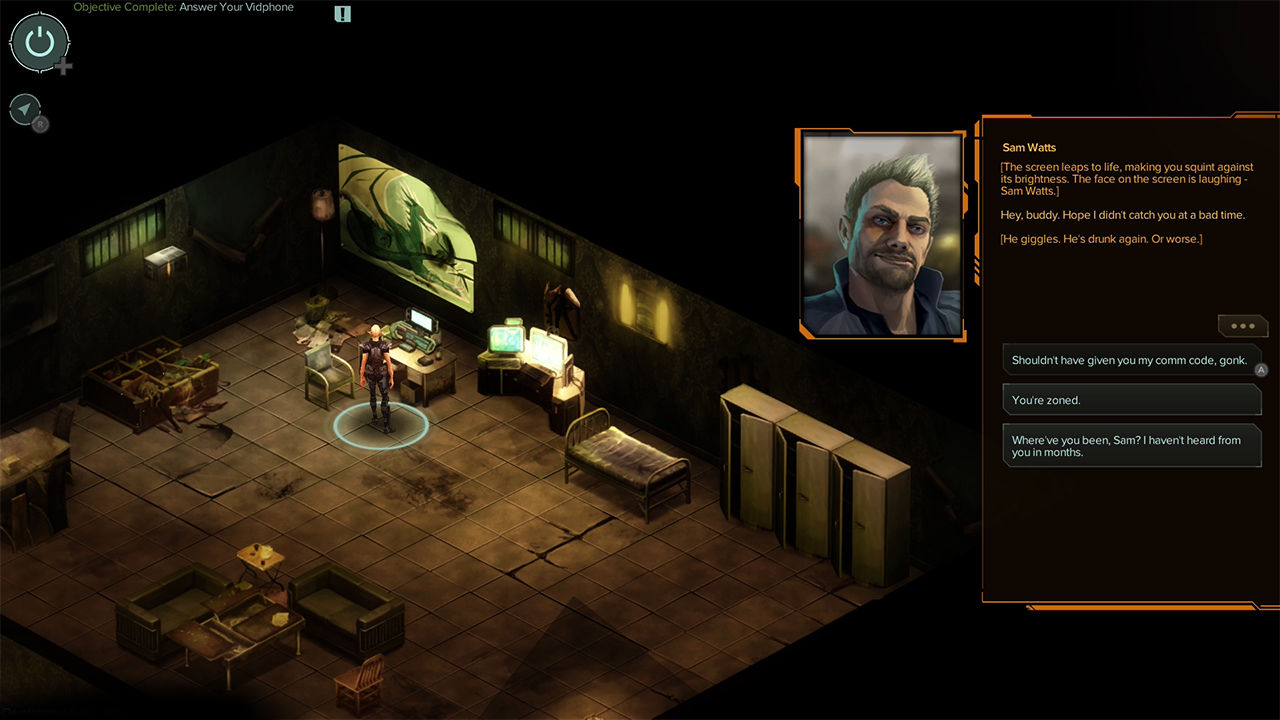
Though I stated at the top that Shadowrun exists at the crossroads between cyberpunk and fantasy, Shadowrun Returns is much more the former, with its cyberpunk world and technology serving as the bulk of the setting and the traditional fantasy elements, like the existence of magic, serving as flavour on top. Your standard fantasy races are here: elves, dwarves, orcs, and trolls, known as “metahumans” in this setting. They look and function the same as they do in D&D and many fantasy stories, with the caveat that every one of them is descended from humans, after a universe-redefining event called “the Awakening” caused mutations in human DNA decades before the events of the main story.
The story of Shadowrun Returns begins when your character inexplicably receives a message from an old friend and partner-in-crime of yours named Sam Watts, who delivers a shocking revelation: he is dead. He explains that the transmission of his message is thanks to a contingency called a “dead man’s switch” sent in the event of his death, along with a sincere plea to help solve his murder (at least that’s his working theory of what happened to him). Though your relationship with him wasn’t the best and you certainly didn’t leave things with him on the best of terms, you’re nevertheless resolute to find out what happened to him. To do that, you venture to his stomping grounds of Seattle.
It’s an intriguing premise; one that certainly caught my attention and had me glued to my PC for the next day or two to see how it would all play out.
What follows from this prologue is a murder mystery that starts grounded and charged with deception and intrigue as you interview every person who had anything whatsoever to do with your old pal Sam. Soon, things spirals into a wider conspiracy that threatens the entire world. Thanks to the relatively short length of the story, the escalation of the mystery can be something of a mixed bag. It really isn’t long before the story goes from grounded cyberpunk thriller into a more fantastical realm, and that shift may be quite jarring depending on how you gel with the story’s setting and themes.
This sci-fi/fantasy tonal balance is something that carries forward with the latter two games, and is handled better with each entry, so even if the execution doesn’t work for you here, don’t write off the rest of the trilogy just yet.
Shadowrun: Dragonfall – Director’s Cut
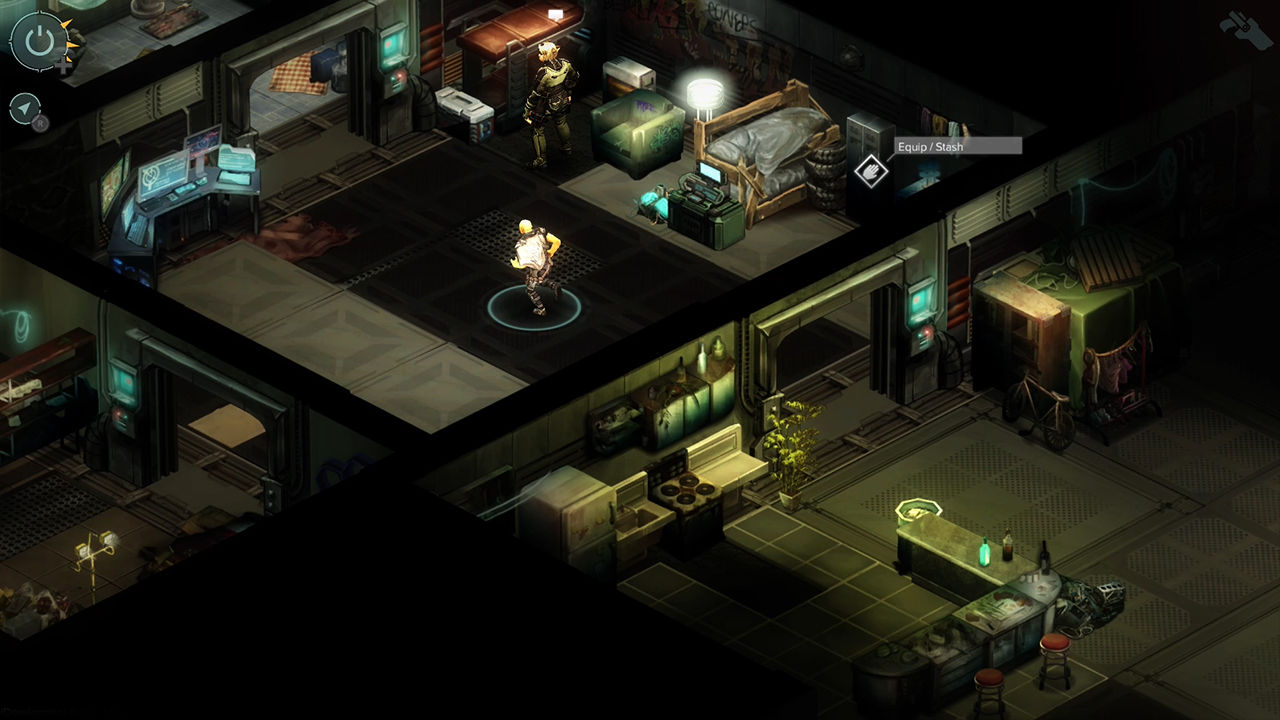
Originally released as a DLC campaign for Returns, Shadowrun: Dragonfall received a standalone release in late 2014 with a bevy of improvements to the base game, as well as five new missions. Though it started out as DLC, Dragonfall is certainly not lacking in content compared to Returns. In fact, it runs at more than double the length of the first game, thanks in part to the fact that Dragonfall has fully-fledged side content now, with extra missions that you and your crew can undertake outside the main story.
Speaking of your crew, among Dragonfall‘s many improvements over the first game is that your companions are static and tied to the story now. You can still hire mercenaries the same way you could in the first game, but the optimal experience is to take the same core 4 companions all the way through to the end, hone their abilities along the way, and figure out what configuration works best with your own.
It’s not just how companions are handled that makes Shadowrun: Dragonfall better. Almost every single aspect of the first game is improved here. The story and writing are tighter and better realised—both the scope and stakes are raised in a way that narratively flows better. There are also a lot more skill checks involved in the gameplay now, both in dialogue and when interacting with the environment. Plus smaller, but no less vital quality-of-life additions like the fact that you can manually input codes now, instead of having to hunt down the specific ones.
Really, that’s Dragonfall‘s core strength. Though it’s more of an expansion than a sequel to Returns, the sheer amount of improvements or tweaks that it makes to the base game make all the difference and elevate Dragonfall well above its predecessor. Frankly, it’s to the point where I’d consider suggesting that you skip over Returns and just go to this one, much as I do love the first game all told.
Dragonfall‘s story follows a crack team of mercenaries, led by skilled decker Monika Schäfer, who operate within the free state of Berlin, colloquially known as the “Flux State.” Your character is the team’s newest member: a former colleague of Monika’s, hired for your unique set of skills. You have a lot to prove, and the other members are hesitant to trust you. On your third run with them, while on a routine hacking job at Harfield Mansion, you stumble upon a hidden military compound and are left with a chilling consequence: Monika is dead, killed by the facility’s incredibly advanced cybersecurity.
Before being killed, Monika utters a single word: “Feuerschwinge” (German for Firewing). Armed with this information, you escape and debrief with your handler, Paul Amsel, and after a lengthy argument and much hesitation, it’s decreed that you will now be leading this team. Together, you must investigate exactly what happened at Harfield Mansion, why and how Monika was killed, and just who or what the “Firewing” even is.
The answers to these questions take you all across Berlin, executing dicier and dicier operations, and gradually building up a rapport with your team, along the way uncovering a conspiracy that threatens the entire world and maybe even the one(s) beyond it.
In Dragonfall, I elected to play as a Decker, the Shadowrun universe’s term for a master hacker who has command of “the Matrix,” essentially a worldwide computer network that you can visit in cyberspace by jacking into a nearby port stationed in more or less every level of the game. From here, you’re transported into the Matrix directly, with you now controlling your cyber avatar and navigating the narrow corridors of cyberspace, avoiding or defeating computer programs, and hacking into local systems.
This enables you to access hidden data like passcodes, or even lets you hack nearby turrets and turn them on your enemies. It’s less involved and frankly less cool than it sounds, but it’s a neat alternate avenue of gameplay to pursue if you’re tired of running and gunning and want something a little different for this game’s playthrough (as I certainly did).
As I’ve said, Shadowrun: Dragonfall‘s narrative is fantastic, and by far my favourite of the trilogy, and given the improvements over the already solid Returns, Dragonfall might also feature my favourite gameplay of the trilogy. Still, the next and final game could give it a run for its money.
Shadowrun: Hong Kong – Extended Edition
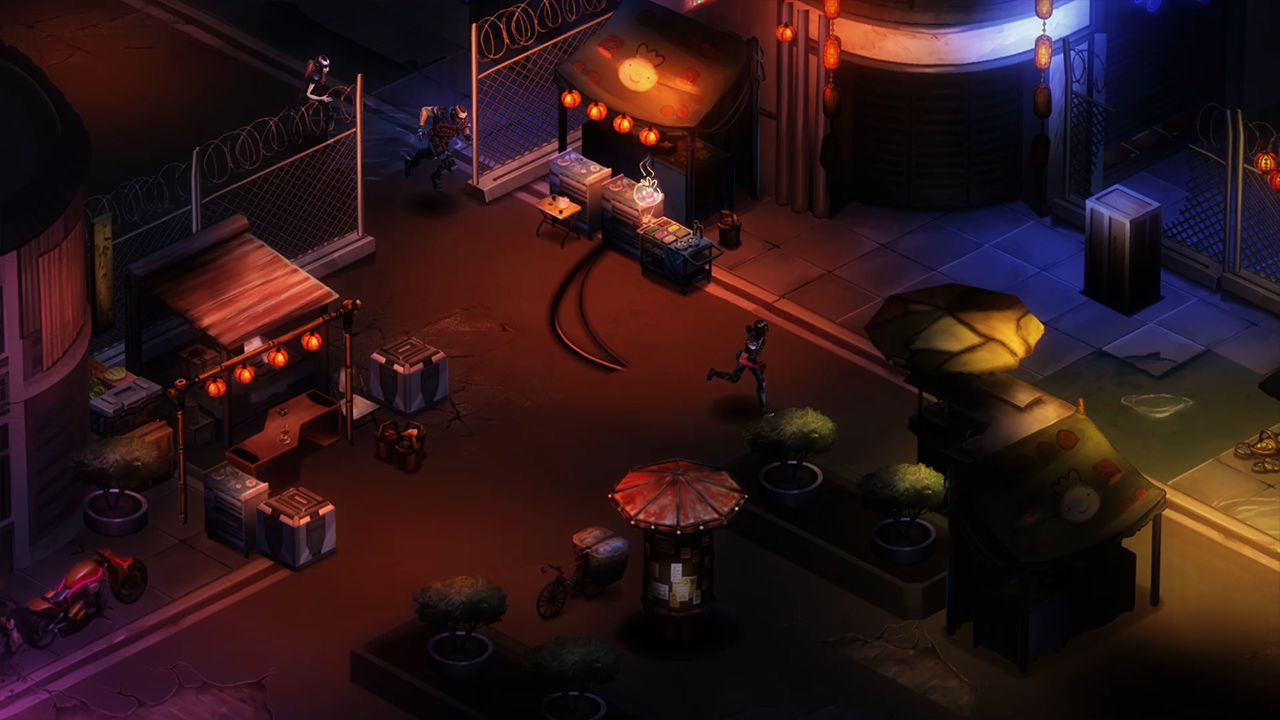
Truthfully, I may have oversold Shadowrun: Hong Kong‘s importance. While, unlike Dragonfall, it is a fully fledged sequel to Returns, signified by its own separate Kickstarter campaign being launched in 2015 to help fund its development and release, it’s more of a side-grade from the first two. Like Dragonfall, smaller but no less vital quality-of-life changes can be seen throughout Hong Kong‘s gameplay that help it stand out and feel overall better to play than its predecessors, but you’re still functionally playing the same game again.
To be clear, I’m not noting that as a mark against it; after all, the consistency and familiarity throughout Shadowrun Trilogy‘s engine, asset, and gameplay reuse is more of a boon than anything. It’s just important that expectations are kept in check here. The changes from game to game are more often narrative and mechanical than technical, and even then, as I’ve said, they’re ancillary.
That said, there are two vital improvements that Shadowrun: Hong Kong introduces that, to me, make it the best in the trilogy to play.
First is the fact that you now have a holster button. Previously, there were instances where the combat state would linger even though all visible enemies had been taken care of, instead of going back into the exploration mode. This proved especially problematic in the (albeit few) instances where the games encouraged stealth. There would always be a narrow window outside of the enemies’ visibility when you could actually slip by them; otherwise you’re launched right into combat.
In Hong Kong, however, you can manually launch into and out of combat whenever you’re exploring, making stealth a viable option. While I still preferred to handle things directly, it was always appreciated to have the option to manually unholster my weapons leading up to an encounter, eliminating a layer of unnecessary jank to the gameplay.
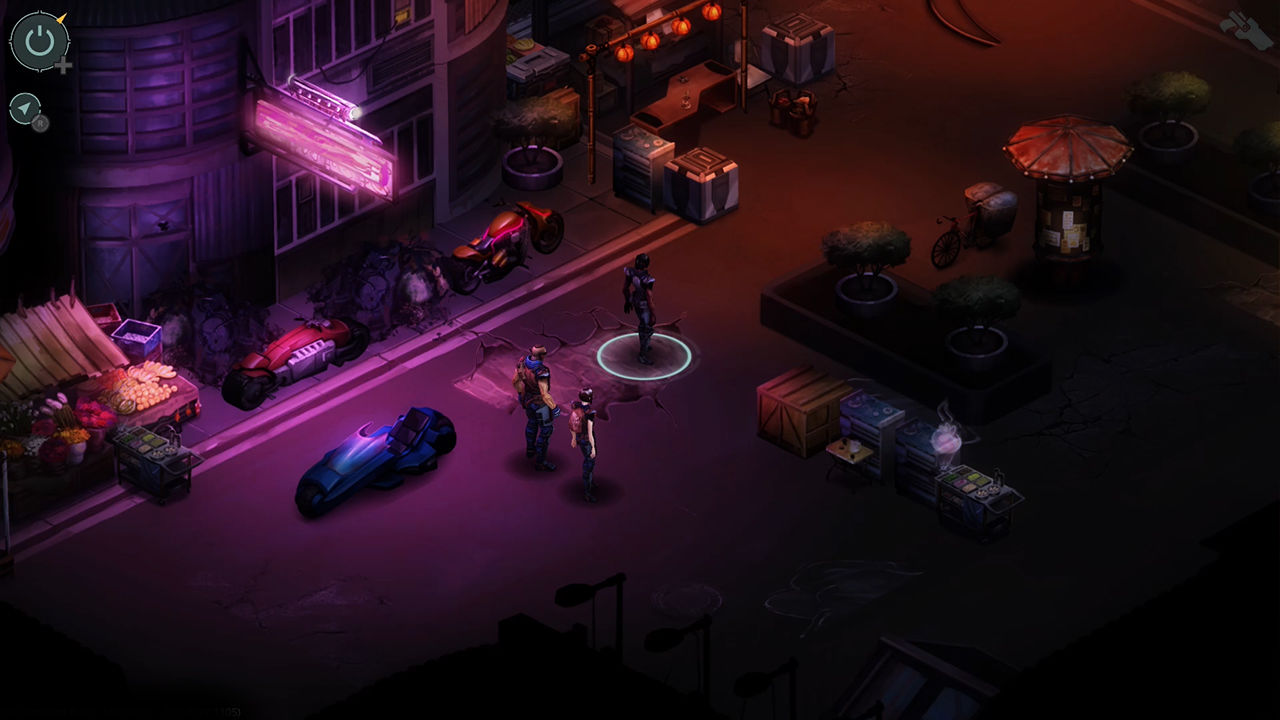
The second most important improvement in Shadowrun: Hong Kong is how Decking works now. In both this game and the Shadowrun universe writ large, the hacker underworld of the Matrix, where the information superhighway resides, is a world unto itself that you can freely visit for business or pleasure. In the previous two games, its depiction and implementation were basic, but effective. You, as your avatar, would explore confined spaces and activate any nodes you see. In Hong Kong, however, you’re given free rein to explore, and are not just restricted to turn-based movement anymore.
There are also pseudo-stealth mechanics involving security drones that roam around the areas, with a visible cone of vision that you must avoid. You also now have to complete puzzle minigames in order to successfully activate any nodes you come across. These involve a sort of number-based Simon Says, followed by a symbol-matching game. Nothing revolutionary, but they do help keep things moderately more interesting while you’re switching back and forth between combat in the real world and your or your Decker companion’s adventures in cyberspace.
As an additional note, I did feel like the way that the hit rates worked in combat were more forgiving overall compared to the previous two games, though this may well have been the placebo effect, as I was unable to find any corroborating information on that in either direction.
For Hong Kong, I elected to build a Phys Adept/monk character. I specialised in melee attacks, particularly cybernetics-based weaponry like the incredibly effective hand razors. I also mixed in magic abilities, mainly of the defensive and support-based variety. I can say that it was a lot more interesting playing that way compared to the previous two games, which were based more in ranged weaponry. I felt like I had more options and versatility to work with in any given encounter and at least had the option to support my team rather than go on an offensive front the entire time.
So yeah, Shadowrun: Hong Kong‘s gameplay is, in many ways, the trilogy at its best to play. But what about the story?
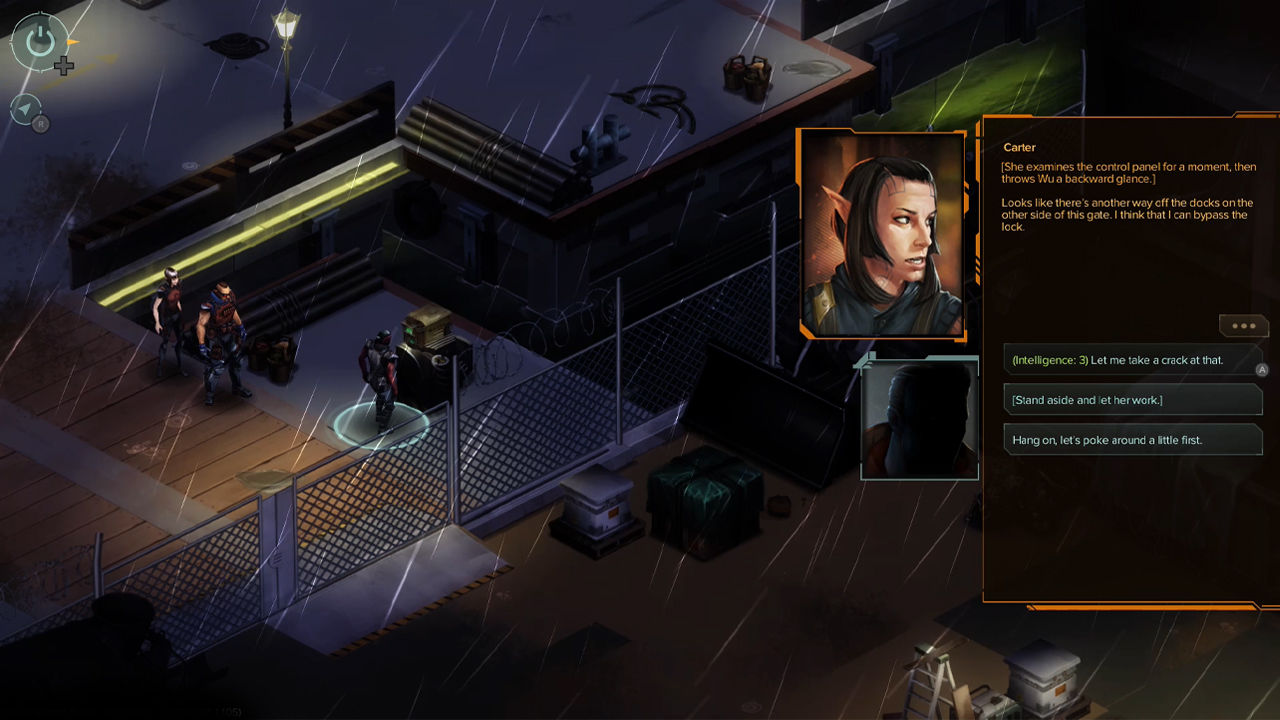
Shadowrun: Hong Kong‘s story begins with your character returning to Hong Kong at the request of your estranged foster father, Raymond Black, who summons both you and your equally estranged foster brother, Duncan, back with an urgent yet cryptic message. You’ve been away from them and your hometown for eight years, having spent time in a corporate prison for an undetermined crime, so naturally, tensions are high and relations are less than cordial.
However, after arriving and meeting with your foster brother Duncan (now a police officer for a private peacekeeping organization) and his superior officer, Carter, your rendezvous is ambushed by Hong Kong Police, and a few of your contacts (including Carter) are killed. Now wanted, shell-shocked, and on the run, you must venture deep into Hong Kong’s seedy and dangerous underworld to clear your name and establish yourself as a mercenary, while figuring out just what the heck is going on and why exactly you were summoned back after all these years.
The story that follows from here, and the answers that lie within it, are equal parts gritty and grounded in its urban cyberpunk fantasy, while dipping a toe or two into the mystical, with you crossing paths with the concept of qi and beings of the astral plane like the demonic forces of the Yama Kings. It’s a compelling mixture, although quite overstuffed conceptually compared to the leaner, more linear plot of Shadowrun: Dragonfall.
I will say that a huge advantage that Hong Kong has over its predecessor is that your character is far more connected to the narrative this time around. With your foster father and brother being key players in the plot and your choices in dialogue informing your previous relationship with them, the plot is a lot more personally impactful. Your character feels less of a blank canvas or avatar and more of an active contributor to the central plot and backstory.
While I maintain that I preferred the story of Dragonfall, I cannot deny that your character’s personal connection to the people and events of Hong Kong‘s story makes it all the more compelling to play out. Ultimately, it’s a matter of personal preference whether you prefer this game’s narrative to the previous, or even the one before it. They all have separately appealing strengths that are hard to argue, and I truly understand whichever game you prefer.
Shadowrun Trilogy
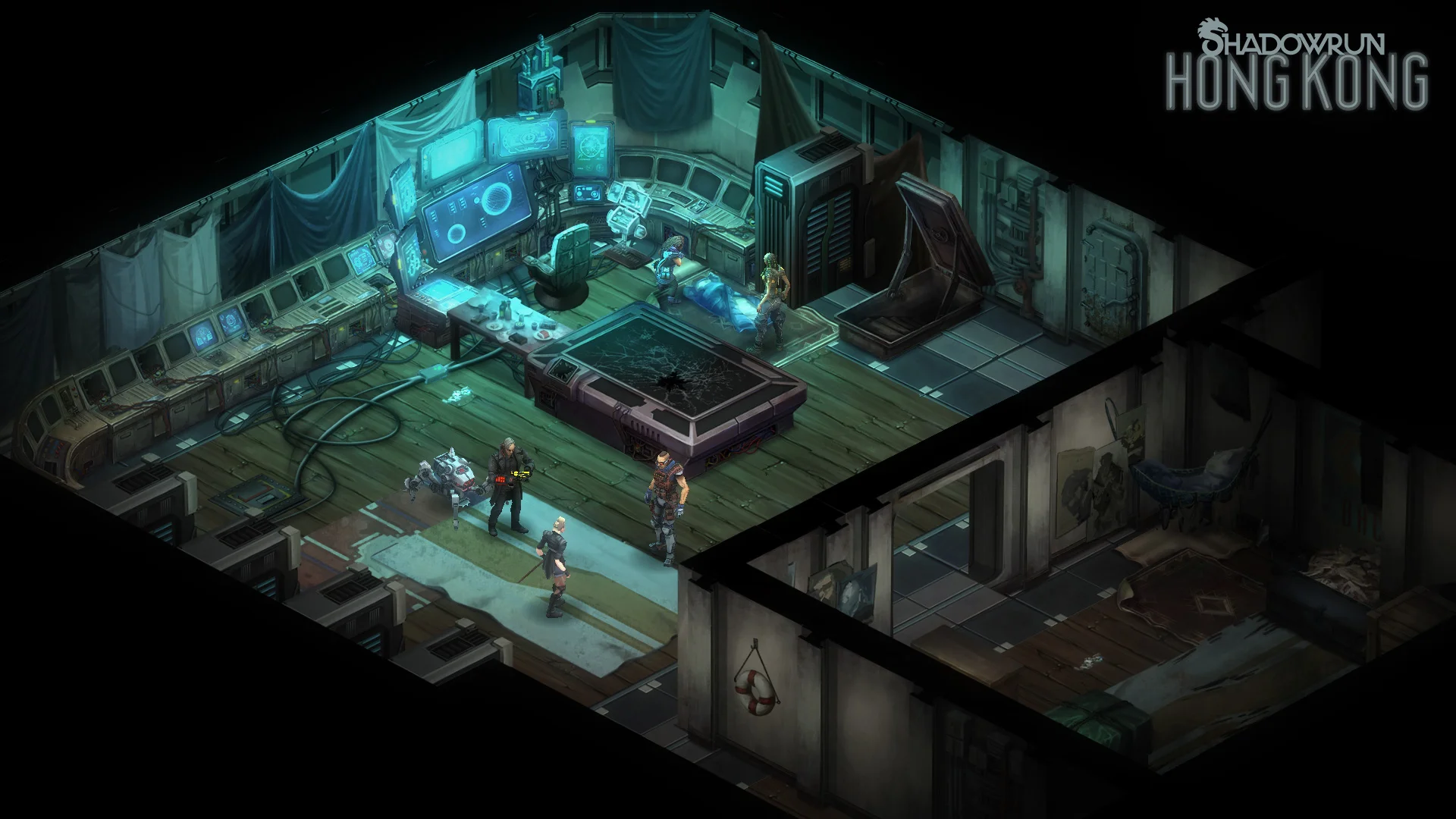
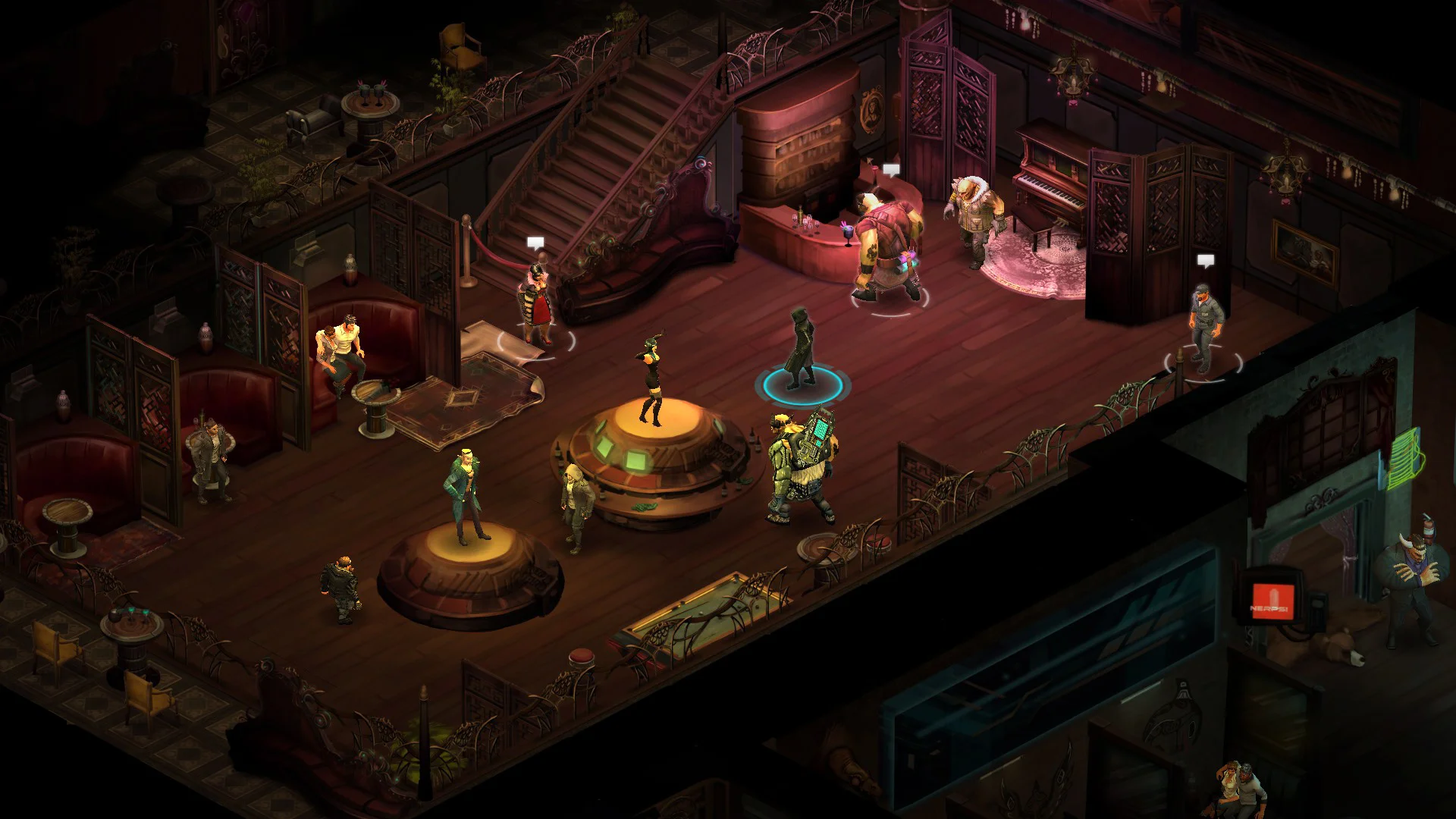
As complimentary as both my praise and criticisms of each of the games in the Shadowrun Trilogy have been up to now, that unfortunately does not stand when discussing the Shadowrun Trilogy console ports in totality.
You may have noticed that I have yet to talk about the music in the Shadowrun Trilogy, and that’s because I unfortunately scarcely heard it throughout my playthroughs. That’s thanks to a very unfortunate bug of the console version that causes two songs on the soundtrack to play over each other at once, with no way of fixing it outside of loading your most recent save (and even then that’s only until you reach a new area and the next song plays over the previous one).
It’s truly a shame because the scores by Gavin Parker, Marshall Parker, Sam Powell, and Jon Everist are very well done, providing a great dark synthwave soundscape to the gritty world and events of each game. The soundtracks are definitely worth a listen on their own (and are available with the deluxe versions of the trilogy on Steam). It just would have been really nice to hear them when playing their actual games.
The games will also softlock every now and then for no apparent reason. Usually it was at the end of a combat encounter, and while some of the time I was able to save my progress, other times I had to re-do certain sections and hope that it didn’t happen again (which, thankfully, it did not, most of the time anyhow). While the PC versions of each game can softlock on occasion, it’s seemingly exacerbated in the console ports of the trilogy, perhaps due to its unified console UI.
Speaking of the UI, it really is a shame about the ports’ myriad issues, since they’re not without areas to praise. The translation of the UI from the PC versions over to controller is overall solid. It all functions relatively well (when it wants to, anyway), and there was never a moment where I considered that I’d rather be playing it on mouse and keyboard. That may well be the optimal experience for a lot of people, but playing with a controller is still a decent way to play these games.
It’s especially a shame since, due to these ports being developed by Dutch studio Codeglue (now called Behaviour Rotterdam) on behalf of the original developers Harebrained Schemes, the controller UI was never backported over to the PC versions, meaning that if you wish to play the Shadowrun Trilogy with a controller, you’re stuck with the console ports.
The Shadowrun Trilogy console ports are certainly not the optimal way to experience these great games. Don’t get me wrong, they function well enough. They’re still fundamentally the same underneath the hood. But if you lack the tolerance to deal with these ports’ problems as they come, your enjoyment of these great RPGs will be severely neutered.