
With Starfield finally landing on PlayStation 5, I came into it as a first-time player who had spent the last few years watching the discourse unfold from a distance. Few modern RPGs have been picked apart quite like this, with some calling it a triumph and others treating it like a cautionary tale. It’s been praised, dismissed, defended, and hotly debated to the point where the conversation around it almost feels bigger than the game itself. That kind of split reception makes it difficult to avoid forming expectations, even when you try. Going in, I was mostly interested in seeing where I’d land on it myself.
There’s a version of Starfield that exists entirely in your head. It’s the one where you chart your own course through the stars, seamlessly traveling between planets, uncovering truly unknown mysteries, and crafting an adventure that feels entirely your own. It’s a powerful fantasy. Reality, of course, can be humbling; Starfield isn’t really a space exploration game in the way I expected. It’s a Bethesda RPG that happens to take place in space, and this is a subtle yet critical distinction.
If you’ve spent time with Bethesda’s previous RPGs, the structure here will feel familiar, sometimes to a fault. You pick a direction, find a quest, and inevitably get pulled into three more along the way. You loot everything that isn’t nailed down, upgrade your gear, and tell yourself you’ll stop soon before immediately doing the opposite. The loop is somewhat intact, but it takes some time to settle in. The opening hours are slow, filled with exposition and overlapping systems that don’t come together right away.
Sadly, even once it gets going, the experience doesn’t feel rewarding. The main story following Constellation, a group of explorers searching for mysterious artifacts, never feels essential and doesn’t have the pull you might expect from a game of this scale. Instead, like so many Bethesda RPGs before it, the better moments are found off the beaten path. They’re few and far between. The faction questlines, for example, are more memorable, though that’s not saying much. They give you a slightly stronger sense of purpose, even if the broader world fails to react in meaningful ways to what you do.
The lack of reactivity reveals itself gradually. Starfield gives you a lot of freedom in how you approach situations, but that freedom rarely leads to significantly different outcomes. Dialogue choices often converge into similar results, and key characters remain firmly protected from your decisions. It creates a sense that you’re shaping your own story, right up until the game reminds you where the boundaries are.
If you try to go beyond those boundaries and visit other planets, you’re met with dreadful procedural generation that makes its thousand worlds feel far less vast than they sound. The scale is undeniably impressive, but it’s also inconsistent. Some locations feel carefully designed, with distinct layouts and interesting encounters. Others feel like soulless filler, recycled across different environments. It doesn’t take long before those patterns become predictable. You can tell which planets are hand-crafted and which are procedurally generated, as the latter are some of the most uninspired worlds I’ve ever seen.
On the other hand, customization goes a long way in establishing a sense of ownership. Shipbuilding is easily one of the strongest systems here. It strikes a good balance between depth and accessibility, letting you experiment without feeling overwhelmed. You can build ships that feel uniquely yours, and end up spending far longer than you planned just adjusting things that were already fine. Outposts and skill progression add to that, giving you multiple ways to define your playstyle. This is where Starfield feels the most flexible.
The problem is that all of this exists within a structure that fails to support the immersion it’s trying to sell. For a game about exploring space, Starfield is surprisingly reliant on menus. Traveling between planets, systems, and even points within those systems often involves selecting a destination and watching a brief transition. You’re not flying through space so much as navigating a series of interconnected hubs. It’s efficient at the cost of immersion. The illusion of being a space explorer starts to fade when you realize how little time you actually spend moving through space.
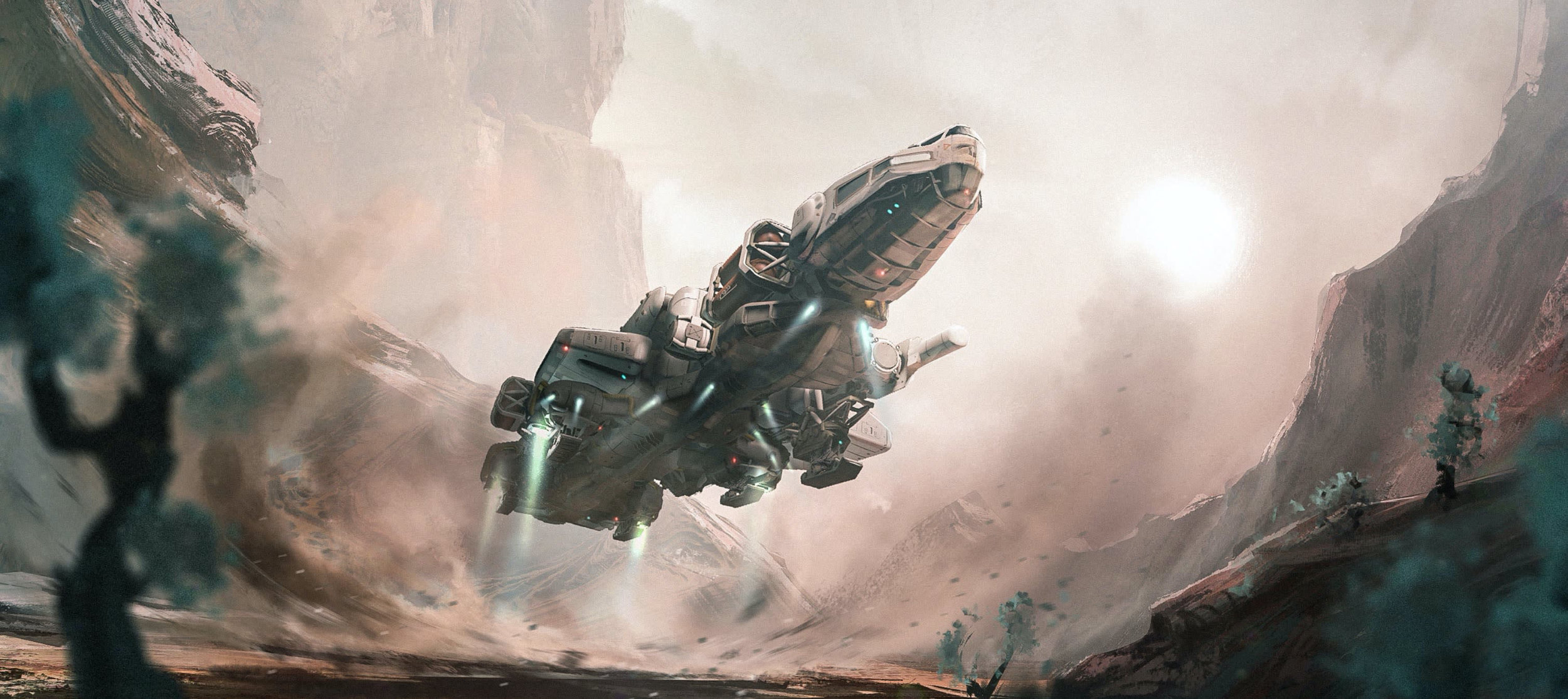
The PlayStation 5 version also includes the Free Lanes update, which introduces a new Cruise Mode aimed at improving space travel. It’s a step in the right direction, letting you talk with your companions and use workbenches while on autopilot. Still, it doesn’t fundamentally change how Starfield approaches exploration. Travel remains largely about selecting destinations and jumping between them, rather than anything you discover along the way. As I’ve never played the original version, it’s hard to say how significant the improvement is, but even here, space mostly feels like something you pass through on the way to the next objective.
Unfortunately, the update also comes with some significant technical issues. I ran into multiple crashes over the course of my time with the PlayStation 5 version, enough that it became a constant concern. In fact, the crashes were so bad that I had to load significantly earlier saves multiple times. Others have reported even worse problems, where the game is almost completely unplayable. It got to the point where loading into each new area felt like a gamble. Bethesda is aware of the issue and plans to release patches, but I can’t overlook how much it gets in the way of the experience.
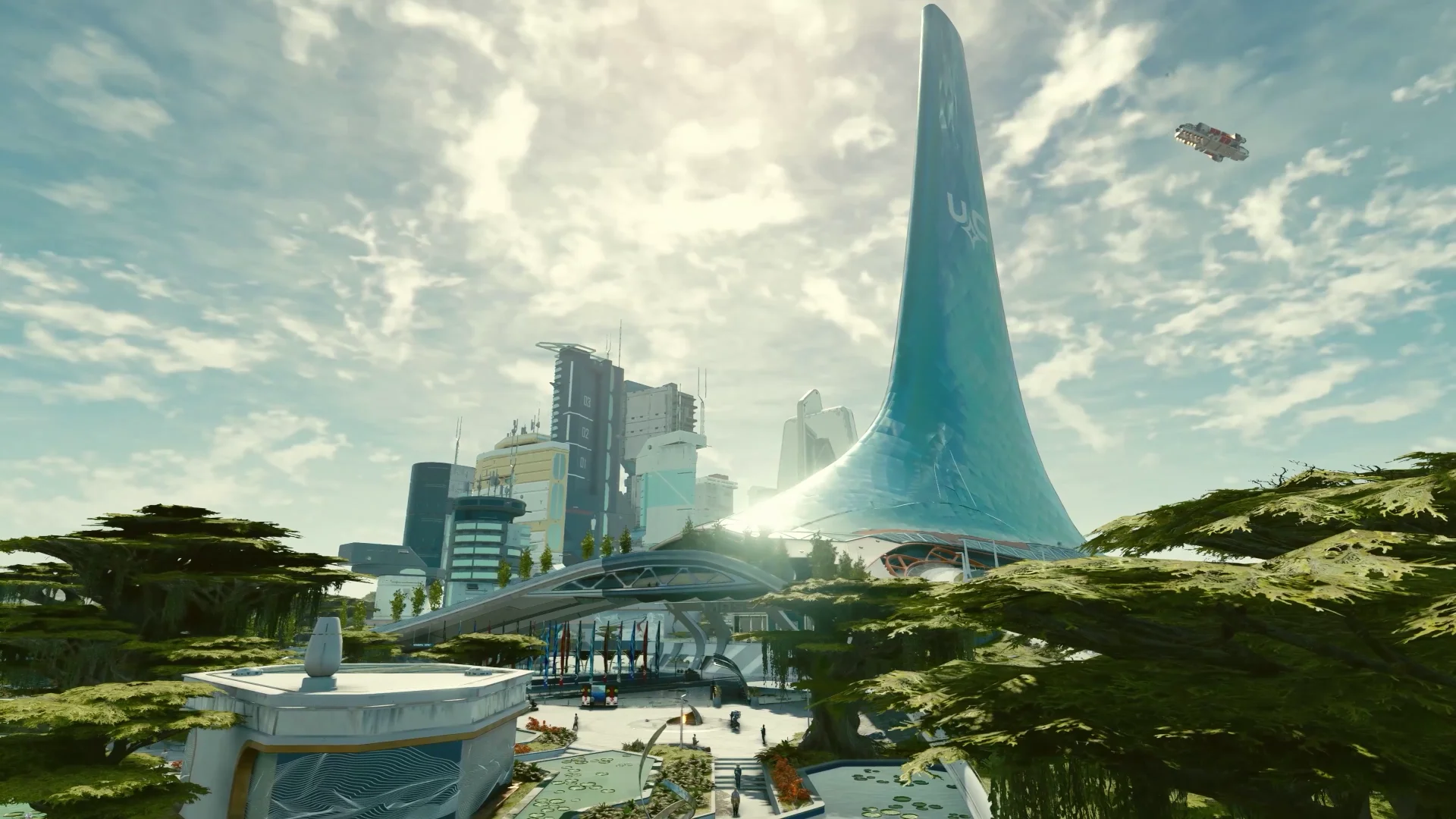
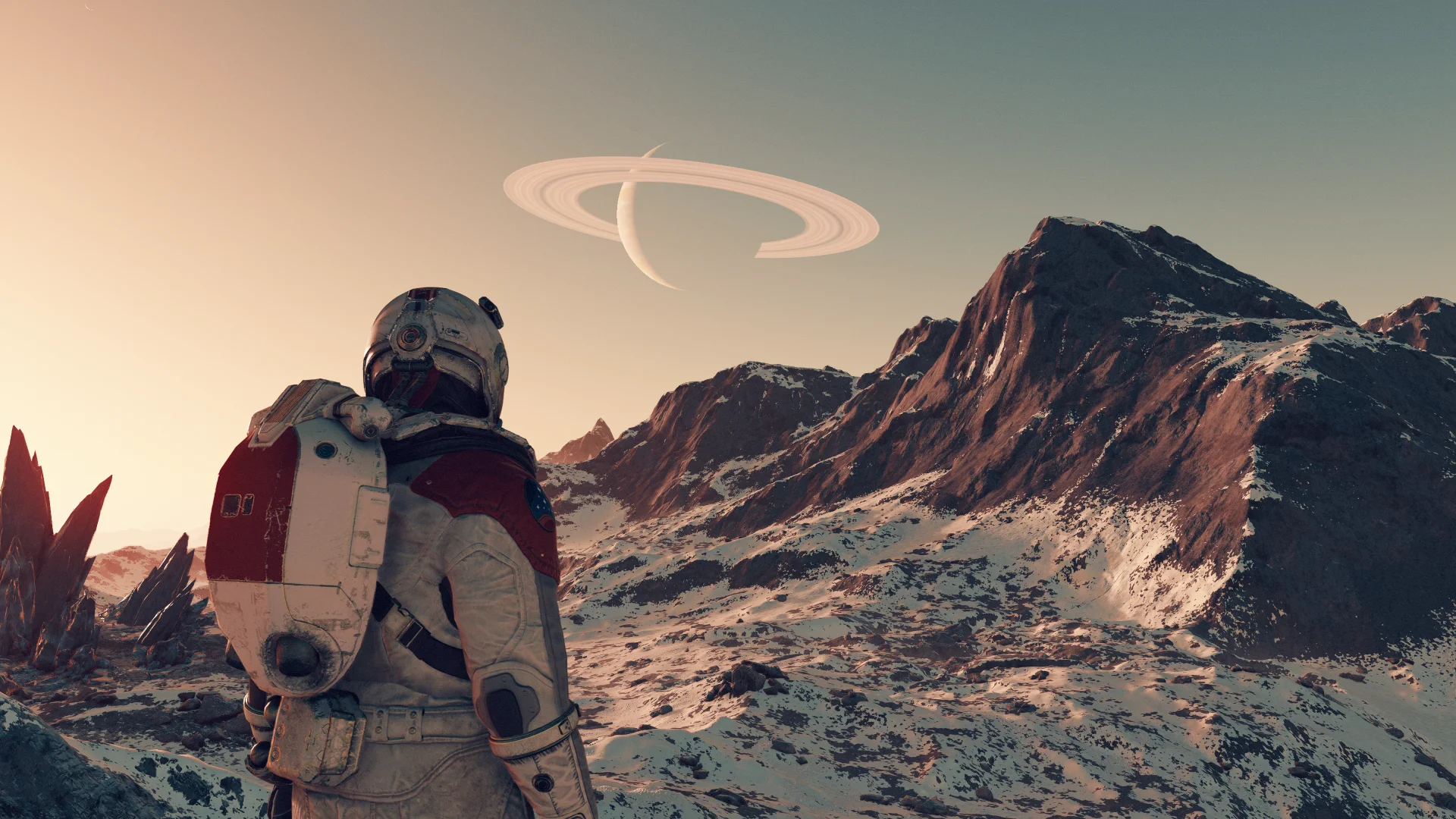
Visually, Starfield comes closer to selling its fantasy. There are moments where it genuinely looks the part: stark planetary horizons, dense cityscapes, and the quiet emptiness of space all come together in a way that feels convincing at a glance. Lighting does a lot of the heavy lifting here, especially during sunsets or when you’re staring out across a barren landscape that feels just distant enough to be unknowable. But like everything else, that impression isn’t always consistent. The more time you spend with it, especially on the procedurally generated planets, the more you notice how often those elements repeat.
The music follows a similar pattern. Composed by Inon Zur, the score leans into that sense of scale and wonder, with sweeping orchestral tracks designed to capture the vastness and mystery of space. It works well in the moment, especially when you first arrive somewhere new, but it rarely lingers. It’s doing exactly what it needs to, but not quite memorable enough to stand out.
There’s also a pacing issue tied to how exploration works. Starfield encourages you to jump between locations quickly, which can make everything feel a bit disjointed. You’re constantly arriving, doing something, and leaving again before anything has time to settle. It keeps things moving, at the cost of making the world feel more fragmented. In other words, you’re passing through the cosmos rather than inhabiting it.
Some of the more familiar Bethesda quirks don’t help in this regard. The interface can be cumbersome, especially when managing inventory across multiple systems. NPC interactions feel stiff, both in terms of animation and presentation, and their behavior occasionally fails to keep up with what’s happening around it. Combat follows a similar pattern. It’s improved, certainly, with more responsive gunplay and a better sense of feedback than previous Bethesda titles, but it never evolves beyond being serviceable. Encounters can feel repetitive, and there’s only so much variety in how they play out.
What holds Starfield together is how all of these systems fit, messy as they are. Like with other Bethesda games, there’s a momentum to the experience. You might set out to complete a single objective and end up experiencing an entire chain of quests along the way. A sense of freedom remains, though its world doesn’t support it.
At the same time, it’s difficult to ignore how often Starfield gets in its own way. It builds up the idea of boundless exploration, then filters it through layers of menus and repeated content. It offers choice but rarely consequence. It presents a massive universe that feels smaller the more time you spend in it. There’s a constant tension between what Starfield promises and what it actually delivers.
So would I recommend Starfield? It depends on what you want out of it. If you’re chasing that perfect, seamless space fantasy, the kind where you lose yourself in the stars and never see the boundaries, this won’t get you there. If you’re here for the Bethesda loop, the busywork, the side quests that turn into five more, the slow creep of “one more thing” turning into another hour, this might help pass the time, though there are far better games for it. It barely gives me enough reason to keep going. It almost works, and then it crashes again.