
I love indies because they can do almost anything, any way. Triple-A titles can break from the pack, but most of their qualities are time-tested and safe; after all, there is investors’ money on the line. Indies come with dreams, vision, and minimal worries about risk. That’s how we get titles like Steel Century Groove, which, while rough around the edges, introduces some fascinating ideas about storytelling and attempts to build on the small rhythm RPG subgenre.
Steel Century Groove’s speechless protagonist grows up in a peaceful world obsessed with Tenzerk dance battles and official competitions. Tenzerk are giant, piloted mechs capable of sick dance moves. Our hero, joined by childhood friend Seny, goes from a hand-me-down, damaged Tenzerk to a world-class model early on with help from a neighborhood shut-in professor. Modest beginnings gradually escalate to high-stakes dancing as winning a tournament becomes more a matter of access to world-defining decisions rather than bragging rights.
Bragging rights still take center stage, though, as Rhymerie—this world’s social media app—demands our constant attention. After every single battle, our hero must post a picture and caption to earn cred from the masses—likes and comments. This is where Steel Century Groove’s narrative spiders out all over the place.
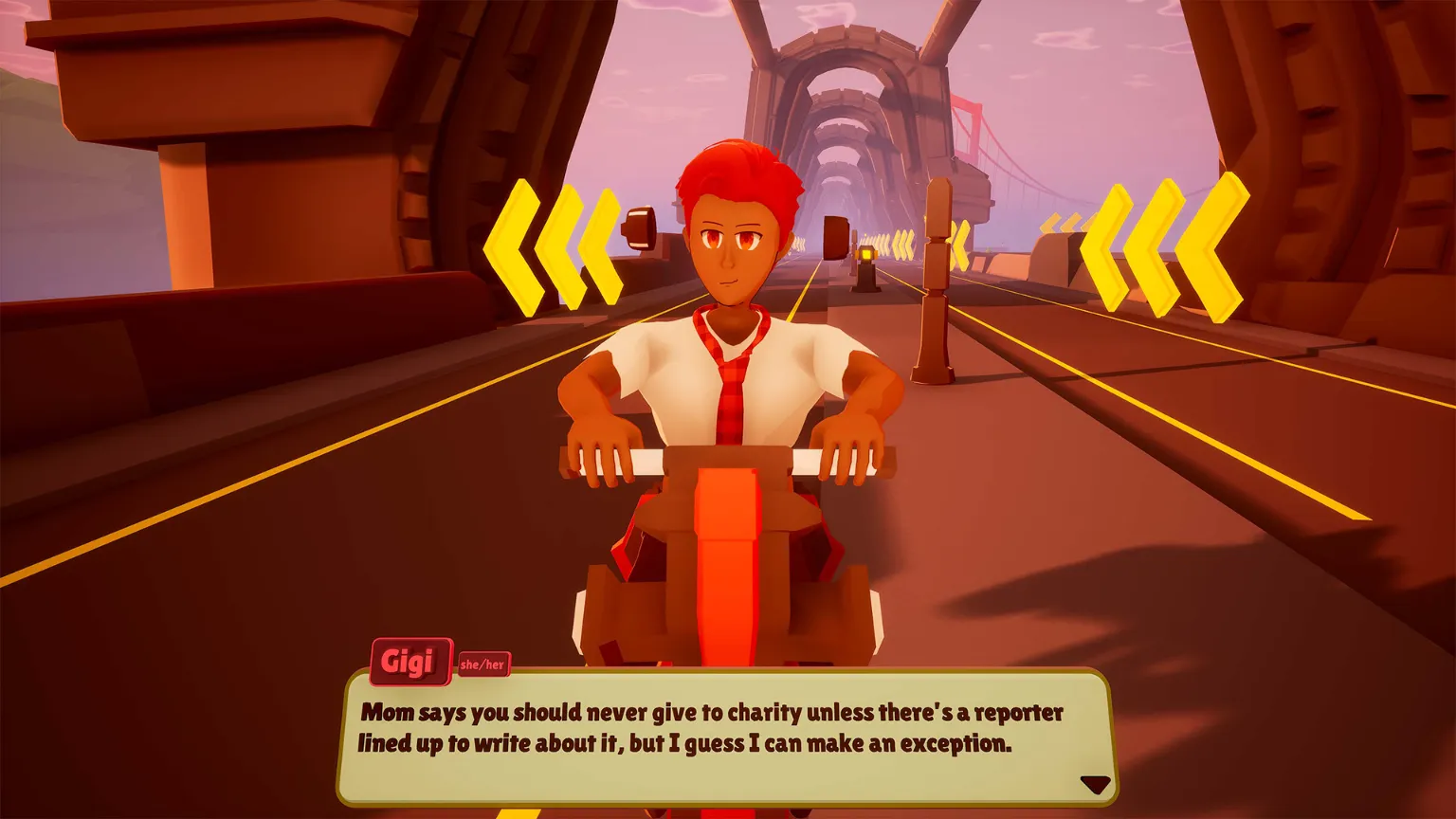
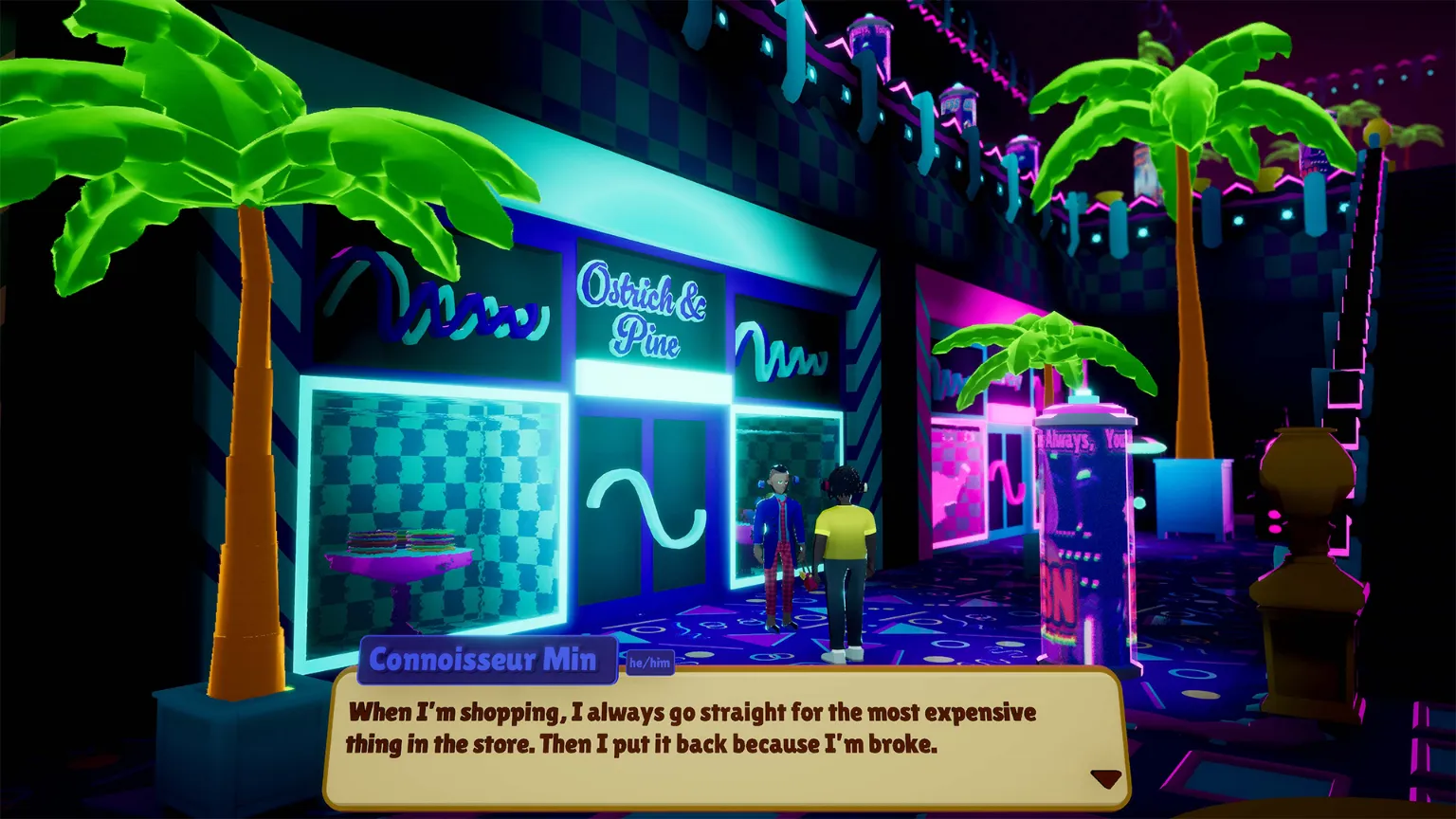
We navigate small maps and locations, running into opponents Pokémon-style as they run into us when we cross their paths. The dialogue ranges from shallow to existential. A few simultaneous yet distinct talking points and themes weave together. Comments about social media’s necessity despite its vapid qualities constantly draw our attention, yet we also get comments about capitalism, work-life balance, war, history, and the mega-rich, all while the script teeters between childish banter or deep, relatable notes about adulthood.
Steel Century Groove is all over the place. Several famous characters enter our circle as we gain prominence in the Tenzerk world, all with their own drama, history, and squabbles. I was repeatedly drawn into their issues while trying to save the world, gain fame, and learn about the millennia of human civilization’s history. The writing’s as wanton as the mechs, and while I appreciated several of the themes discussed, I wish it had been more focused, or at least had a more uniform tone. Is this meant for kids or adults?
For those concerned about social justice, Steel Century Groove prominently and constantly draws attention to who’s gay, bi, cisgender, or transgender. Characters change identity over time, and most of the core cast seem to be queer. What I appreciate about this aspect of the game is that it never overtly talks the need to accept people for who they are, but comments on the topic almost passively without coming off as preachy. Granted, several of the characters speak about who they’re attracted to or who they were in a relationship with so frequently that it can feel a little forced.
This is a rhythm game with level-ups, skills to learn, items to spec Tenzerk with, and surprisingly diverse playstyles across mechs. At Steel Century Groove‘s heart, we are timing button presses when the circle overlaps the other circle on the squiggly line. Nothing new there. What changes up the formula are the Tenzerk abilities.
When selecting one of three starting Tenzerks—and you’ll accrue about five throughout Steel Century Groove—the summary clearly indicates what players can expect, and the complexity levels, ranging from low to high, are accurate. Low complexity isn’t necessarily worse, but it may rely on more skillfully timed presses and careful customization to earn victory depending on the difficulty level. High-complexity Tenzerks boast immense power and leave more room for error, but you have to invest the time in learning the more involved design that borders on convoluted.
For example, a low-complexity Tenzerk might build up electricity over time with one key press, and then other key presses will expend the battery. Players will have to alternate button presses, but all you have to do is keep the battery up to use the powerful abilities allotted to the other three buttons. Conversely, a high-complexity Tenzerk spawns two floppy disks during each eight to twelve beat leg of the song (about eight to twelve beats), which are low-level to start.
Careful planning allows players to upgrade the disks over time, generate new ones, and decide which ones to delete from the deck for that song. In this way, the complex Tenzerk starts slow and allows the enemy to get a strong start, but careful planning will slingshot the player rapidly ahead of the opponent, making for some dramatic battles.
Each Tenzerk can be customized with unique mods. Initially, they have only one mod slot, but over time, they gain a mod slot after defeating each of the four gym leaders. The mods are genuinely interesting, and one is not necessarily better than another. Steel Century Groove once again proves that it can be taken more seriously with authentically difficult choices and high-demand gameplay if that’s what a player wants. This makes the uneven storytelling even harder to accept, because I felt like I was playing a children’s game at times. The visuals don’t help.
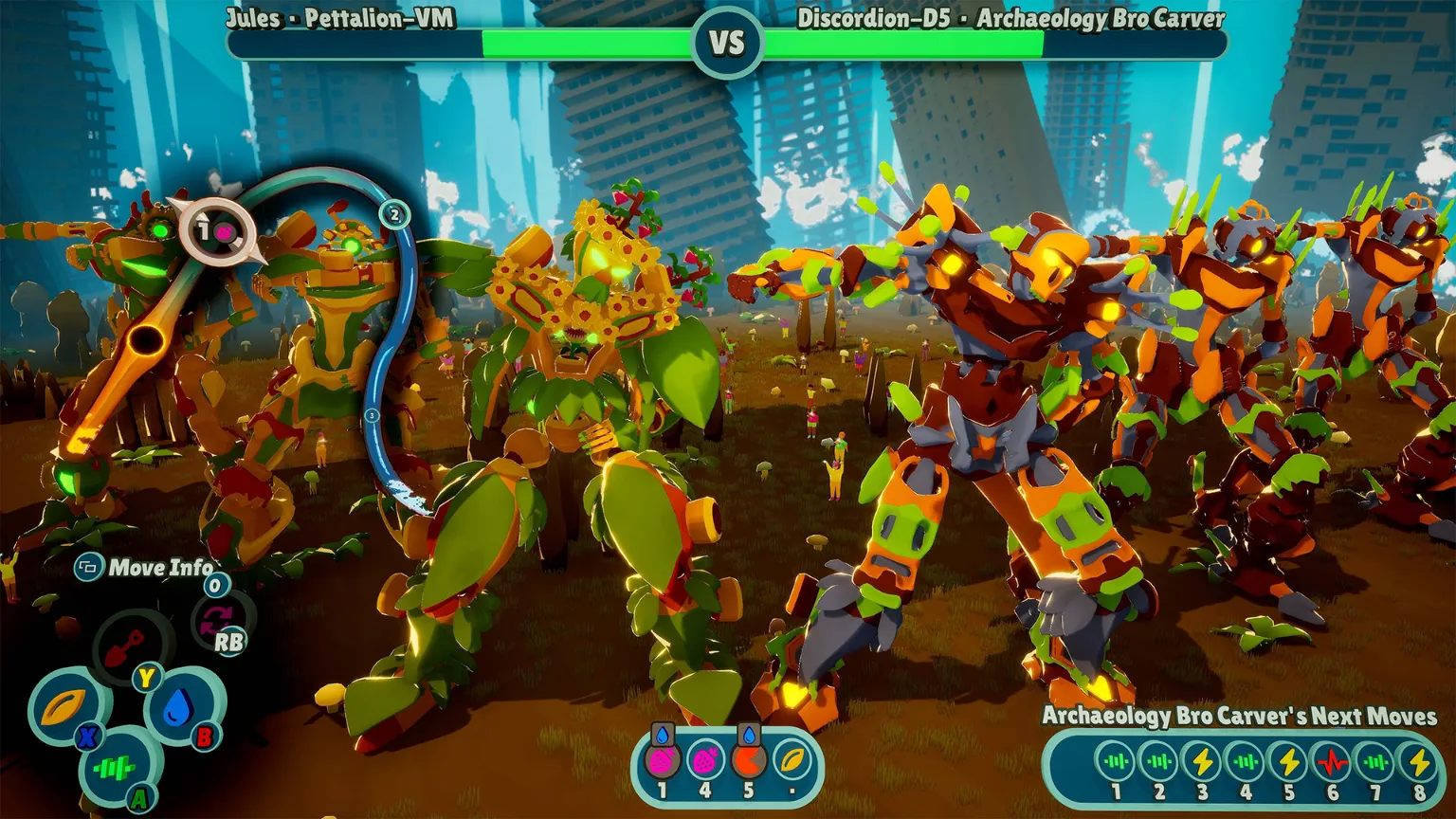
At first, I think most people will dismiss Steel Century Groove for the visuals alone. This is by no means a high-end title, but like most things, you get used to it eventually. Steel Century Groove looks like a kids’ game, and maybe that’s what they’re going for.
What I will say is that despite its blocky, plainly colored exterior, the style is unmistakable. If I weren’t so focused on winning battles and watching the circle move on the line on my screen, I’d probably love watching the robots battle. What I always get a kick out of is how when the battles start, the robots land, decimating the environment around them—trees, buildings, or whatever else is in the way.
What’s a rhythm game without a stellar soundtrack? Good question! Steel Century Groove doesn’t have bad music, but I’m in no way ever going to listen to any of these songs outside of this game. At first, I thought the soundtrack was vast and varied, but at a certain point it all runs together and nothing stands out. A couple tracks caught my attention, like a heavy metal song, but most of what’s here is poppy, saccharine nonsense that sounds like Top 40 stuff. Not my thing, maybe it’s yours, but even then—nothing stands out. Don’t expect Crypt of the NecroDancer or Metronomicon.
Steel Century Groove is classic indie game fare: new ideas all over the place. I applaud the unique storytelling and incredible design behind the Tenzerks in terms of the rhythm game, but there’s simply nothing here to make me fall in love.
I don’t think any of the themes really landed, because there were just too many to tackle in a twelve-hour jaunt, and the song selection made the best part of the game a chore to embrace. The Tenzerk have bold, imaginative design, but after learning a Tenzerk, timing notes and falling into a pattern happens too quickly. For its novelty, I can recommend Steel Century Groove, but as a lasting, packaged deal, I am not sure I would suggest anyone grab this.