
Stray Children is a deceptively simple game at first glance, but when you actually sit down and parse it, it reveals not only elegant mechanical systems but also an astonishing amount of thematic depth. For those familiar with Onion Games, Love-de-Lic, and the work of Yoshiro Kimura, this will not come as a surprise. While the mechanical systems in those games are straightforward, how those systems manifest and the manner in which you can interact with the studio’s crafted worlds feel immediately familiar.
Stray Children begins with late-night transport from your uncle. You haven’t seen your father for an extended period, and your uncle takes you to a secret location, Dad’s office, where he worked as a video game designer. After failing to follow instructions in your father’s workshop and touching something you shouldn’t have, you and your uncle are thrust into the RPG world of Crescent Moon. This world eerily mirrors the setting of 1997’s Moon: Remix RPG Adventure. This is one of Kimura’s previous titles, where you play as someone assisting people left in a hero’s destructive wake, dealing with the collateral damage of a world where the traditional RPG narrative has already fallen apart.
The game speed-runs the main narrative beats of Moon before collapsing around the player and casting them into another world where children have created their own Lord of the Flies society, isolated from adults. This is where the true adventure begins. As you venture outward, warned of the threat posed by the “Olders,” you traverse various environments, engaging strange creatures while searching for your father, who was presumably also consumed by the game world. Your journey encompasses diverse locales, including a prison run by child inmates, a frog-run fantasy kingdom, a hallucinogenic mushroom realm, a haunted house, and more. What makes Stray Children exceptional is the sheer creativity, ambition, and triumphant execution of both.
If that sounds convoluted, rest assured, it’s far simpler than my explanation suggests. Stray Children isn’t actually a complex game, but it is a profoundly deep one and a beautiful adventure unlike anything we’ve seen since Undertale.
It’s worth noting that while Toby Fox has stated Moon was a massive influence on Undertale (despite never actually playing it), Kimura reciprocates by citing Undertale as a substantial influence on Stray Children, bringing this creative admiration full circle. The parallels are evident: both are top-down, pixel-art RPGs featuring a single protagonist, with turn-based combat that incorporates bullet-hell elements and seamless mid-bossfight minigames. In both, you converse with enemies. In this case, it’s the Olders as you attempt to pacify rather than kill them.
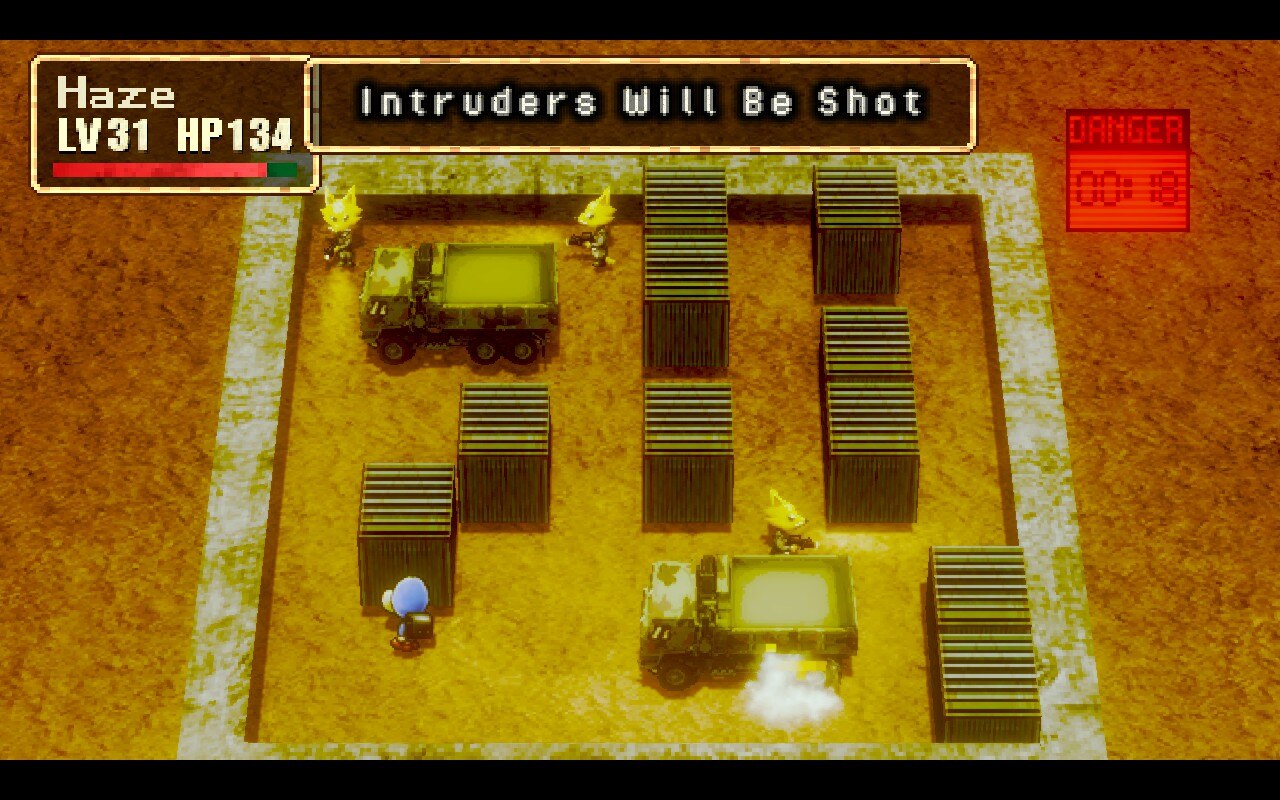
The gameplay should feel familiar to anyone who has played Undertale, EarthBound, or OFF, but Stray Children injects some distinguishing factors that set it apart. The sheer volume of minigames is staggering, and the puzzle-solving required to successfully pacify and “save” Olders ranges from ingenious to intentionally opaque. The minigames themselves are entirely bespoke to each Older. Whether you’re batting at a baseball field, playing Space Invaders, or being forced into a Metal Gear stealth scenario, there are dozens upon dozens of unique minigames woven into the otherwise straightforward turn-based combat framework.
Conversely, progressing through dialogue requires either brute-force trial and error or careful attention to signposting, character dialogue, and environmental details to discern how to appeal to the remaining humanity in the Olders.
The Olders themselves, without spoiling too much, are essentially adults who succumbed to specific obsessions that triggered their destruction and presumed death, now trapped in this world as miserable, hostile specters. This could be someone consumed by phone addiction who became a sloth, a man who hoarded treasure and forgot where it was, driving him to madness, or a judge incapable of enjoying life’s smaller moments. They range from mundane adult anxieties to fundamental aspects of human suffering.
Stray Children ultimately reveals itself as a meditation on grief, suffering, and the impossibility of returning to what has passed. The game reinforces this thematically through its single save file that updates whenever you rest at a campfire, combined with the inability to revisit previous areas to retrieve missed items. This design (particularly with boss encounters) can frustrate some players, as pacifying certain Olders requires key items obtained hours earlier. However, you only have one life, and many choices cannot be undone or revisited.
These Olders cannot be “fixed.” They can only be made to accept what they’ve become and reckon with their culpability in their own dissolution. Similarly, Stray Children rarely warns you and offers minimal assistance. Like the broken adults inhabiting it, you must live with the consequences of incomplete knowledge or become meticulous regarding item collection and contextual awareness.
Mercifully, missing content won’t alter the narrative; it exists purely as thematic reinforcement. I recommend approaching this title without a completionist mindset. You will miss things, and that is precisely the point. I honestly wish more developers trusted players enough to allow meaningful missable content. Playing Stray Children can often feel like an exercise in patience, but that’s entirely intentional. Yet, it rarely feels tedious because it brims with creativity in its approach to world and combat design.
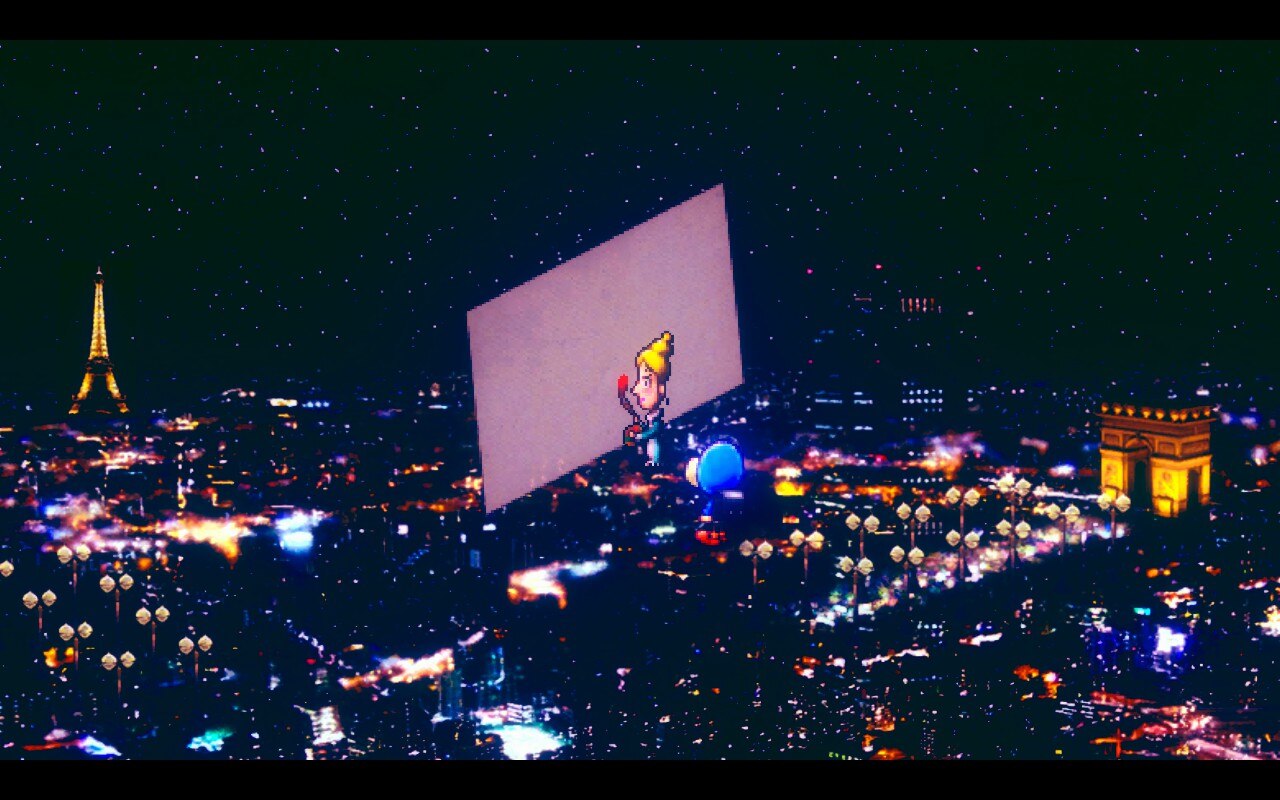
Visually, it’s stunning and arguably one of the best-looking pixel-art games ever created. Onion Games’ signature aesthetic carries the Love-de-Lic lineage through intensely detailed sprite work rendered in sepia tones, contrasted against backgrounds that are as grotesque as they are gorgeous. While characters possess warm, nostalgic coloration, the environments often burst with an intensely distorted Ghibli-meets-Tim-Burton macabre sensibility. This visual dichotomy demonstrates how loss has warped the world around you; the innocent children inhabit spaces deformed by the presence of twisted adults.
I found myself repeatedly awestruck by Stray Children’s visual presentation, a rarity as I’ve grown older and graphical fidelity has become less surprising, art styles increasingly homogenized across the industry.
Narratively, Stray Children is equally sharp. While there’s no conventional voice acting, characters deliver dialogue in the same remixed gibberish as Moon and other Love-de-Lic titles, yet the writing is extremely intelligent and witty, often darkly comedic while remaining genuinely charming. This tonal balance mirrors the visual presentation. The soundtrack matches this dichotomy, weaving whimsical melodies through genuinely unsettling arrangements, creating an emotional dissonance that reinforces the game’s visual split between innocence and deformity.
Standout tracks like the prison’s spy music, which has an oddly icy tinge; the frog kingdom’s almost nauseatingly bubbly levity; and a battle theme so infectious it haunted my mind days after completion each exemplify how meticulously the soundtrack has been composed to reinforce the game’s tonal dissonance.
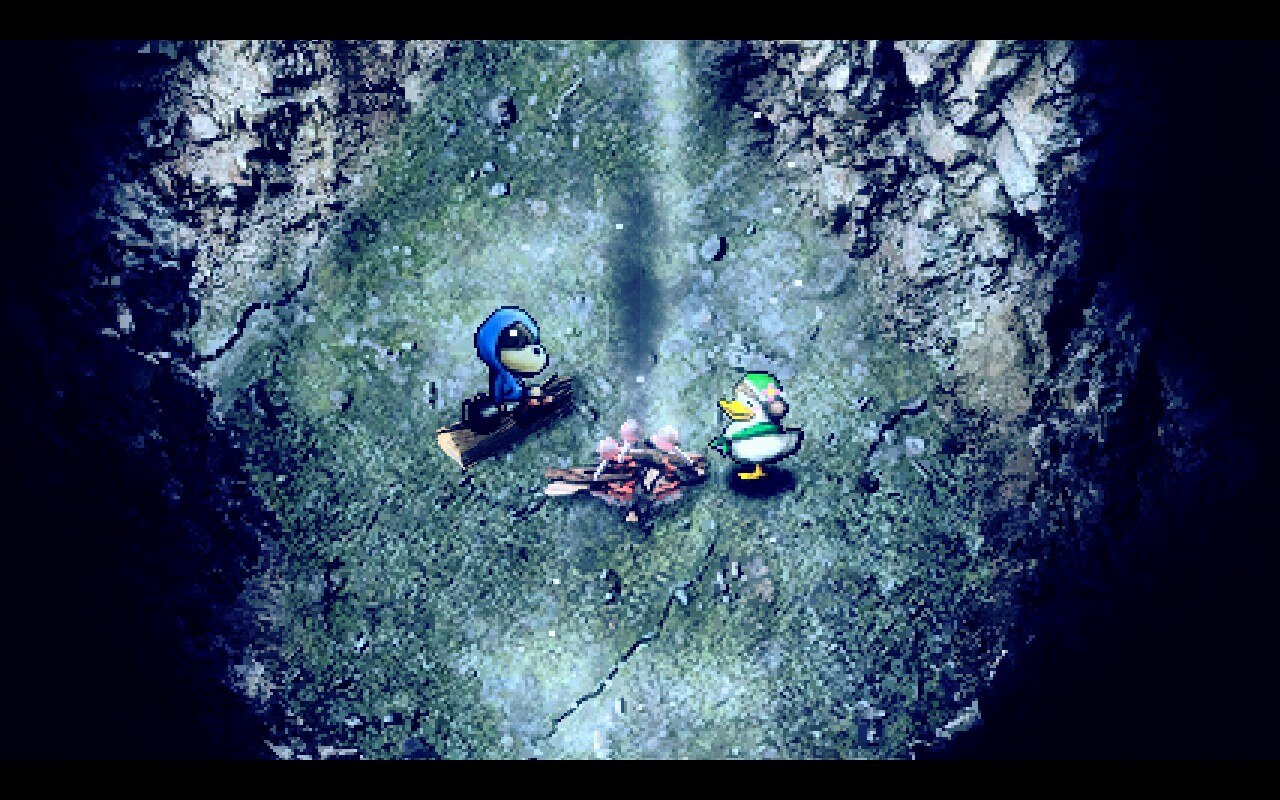
What Kimura and his team have created is a work about how growth is inherently predicated on loss. Loss of innocence. Loss of time. Loss of loved ones and the self. While this isn’t a novel thematic premise, Stray Children approaches it with remarkable specificity. All of us begin as children with unlimited potential. As we age and accumulate trauma, disappointment, and damage, those wounds harden. In this world, such people become adults consumed by their obsessions, calcified within their dysfunction, and weaponizing their pain.
But Stray Children never moralizes. It diagnoses. Adults aren’t villainous; we are all casualties of existence. However, we can also be dangerous, not necessarily through malice, but because our accumulated wounds radiate outward, harming the innocent around us.
Each area reflects how the Olders have corrupted their domains. Treehouses, castles, submarines, and prisons all deteriorate because adults have constructed barriers against genuine connection. This manifests mechanically and in the “riddles” you solve to pacify Olders, which are as much attempts to rationalize the damage as they are traditional wordplay and contextual puzzles.
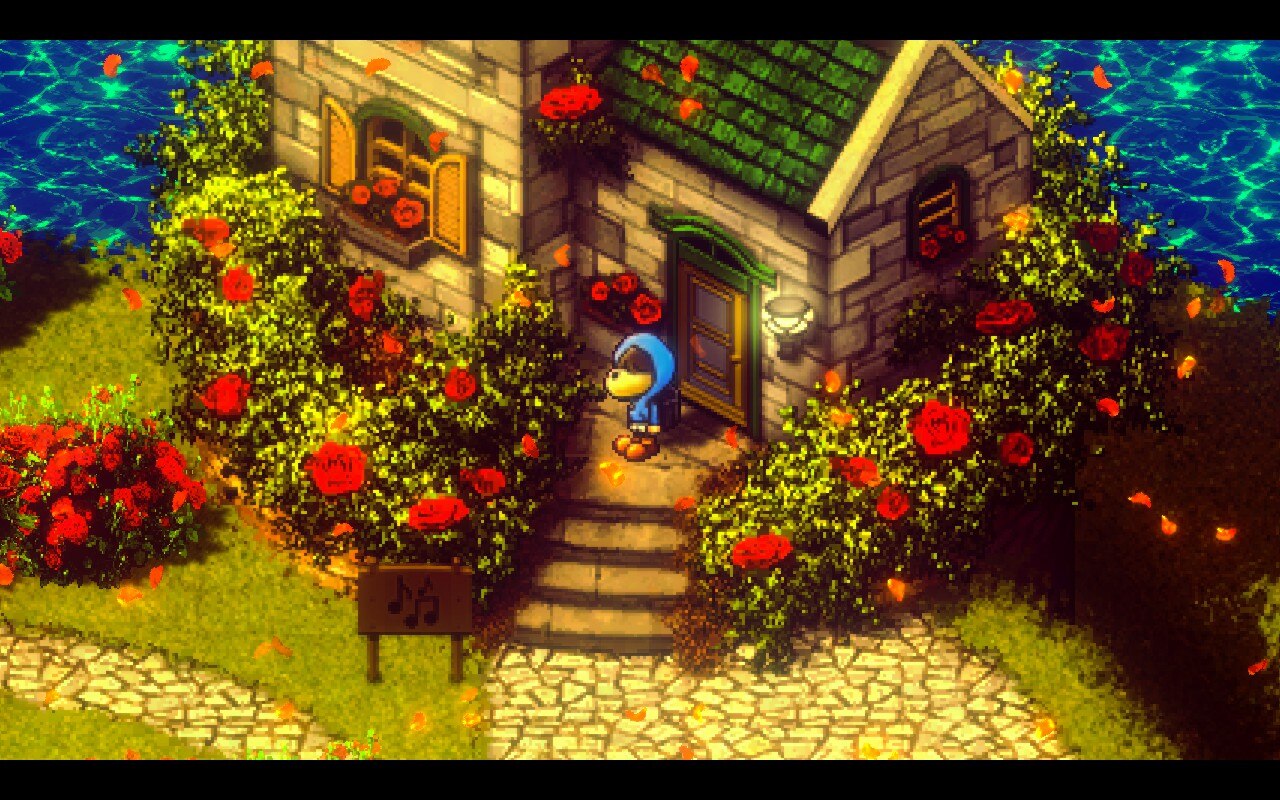
All of these elements culminate in a game that’s a joy to inhabit, a world that’s intriguing and immersive, and a narrative that burrows into your heart, exploring real vulnerabilities and the human condition itself. I have much more to articulate regarding why Stray Children’s ending absolutely devastated me, despite offering a glimmer of hope, but that would spoil the journey.
If you consider yourself a fan of Love-de-Lic games or RPGs like Earthbound, Undertale, OFF, and Hylics, play this game. Stray Children is nothing short of a masterpiece, and while it won’t appeal to everyone, it’s essential for its intended audience.
The only tip I’ll offer: follow the train tracks when you think it’s over.