
Tales of Xillia was first released on PlayStation 3 in 2011 in Japan and 2013 internationally as the series’s 15th anniversary title. Tales of Xillia Remastered adds quality-of-life features to make the experience as seamless as possible for both newcomers and veterans. While some remaining quirks expose the original’s age, it’s still a solid entry in the ongoing Tales of remastered projects.
In the world of Rieze Maxia, humans call forth magic, called Artes, by channeling spirits with mana from their minds’ mana lobe. Powered by this mana, spirits live symbiotically with humans and enrich Rieze Maxia’s diverse biomes. But political tensions rise as two nations vie for a weapon that can utterly annihilate the other at the cost of the lives of the spirits it’s powered by. Tales of Xillia follows the group that hopes to destroy the weapon and protect the lives of both humans and spirits alike.
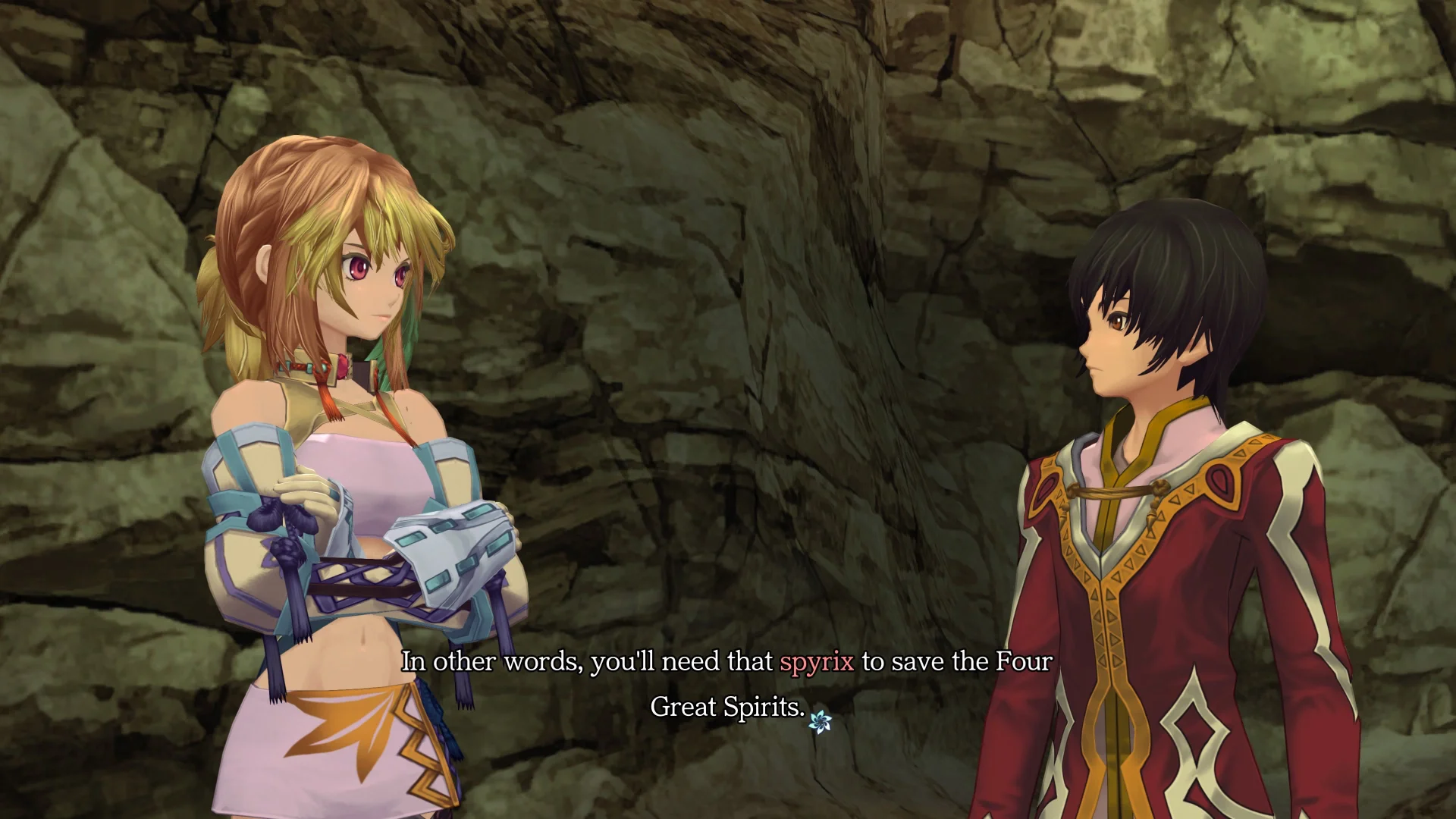
The party is led by dual protagonists Jude and Milla. Tales of Xillia Remastered’s most defining feature is that players get to choose one of the two protagonists at the start of each playthrough. While most of the game remains unchanged, whenever the group splits up, the story will follow the chosen character. This doesn’t occur so frequently for it to feel like multiple playthroughs are required to get the “full experience,” but when it does, it helps Xillia feel distinct in the Tales of oeuvre.
Those who want to try to tackle both “storylines” may be intimidated by Tales of Xillia Remastered’s length (approximately 35 hours) and the fact that Tales of games tend to drag on as they near their ends. Remastered alleviates replay agonies with the Grade Shop, a store players access at the start of each new game. Here, they spend points on upgrades that make the game easier or more convenient, such as multiplying experience gain, running faster than usual on the overworld, and increasing the maximum number of most held items to 99. As a bonus, some of these features can be toggled on and off freely during the game, adding extra flexibility. In the original, grade points are awarded based on achievements earned in previous playthroughs, but in Tales of Xillia Remastered, all players start with 5000 points even the first time around. These 5000 points are exactly enough to buy each upgrade, so players are free to customize their experience however they please, whether it’s to align with a particular playstyle or to make repeat playthroughs simpler.
Beyond the Grade Shop, there’s a tab in the item menu dedicated to bonus content. In addition to the original game’s costume DLC, there are also extra items to further alter the game experience. This includes multiple bundles of cash and sets of permanent stat-raising items. Players can ignore these bonuses or use them freely, further customizing their game as they see fit.
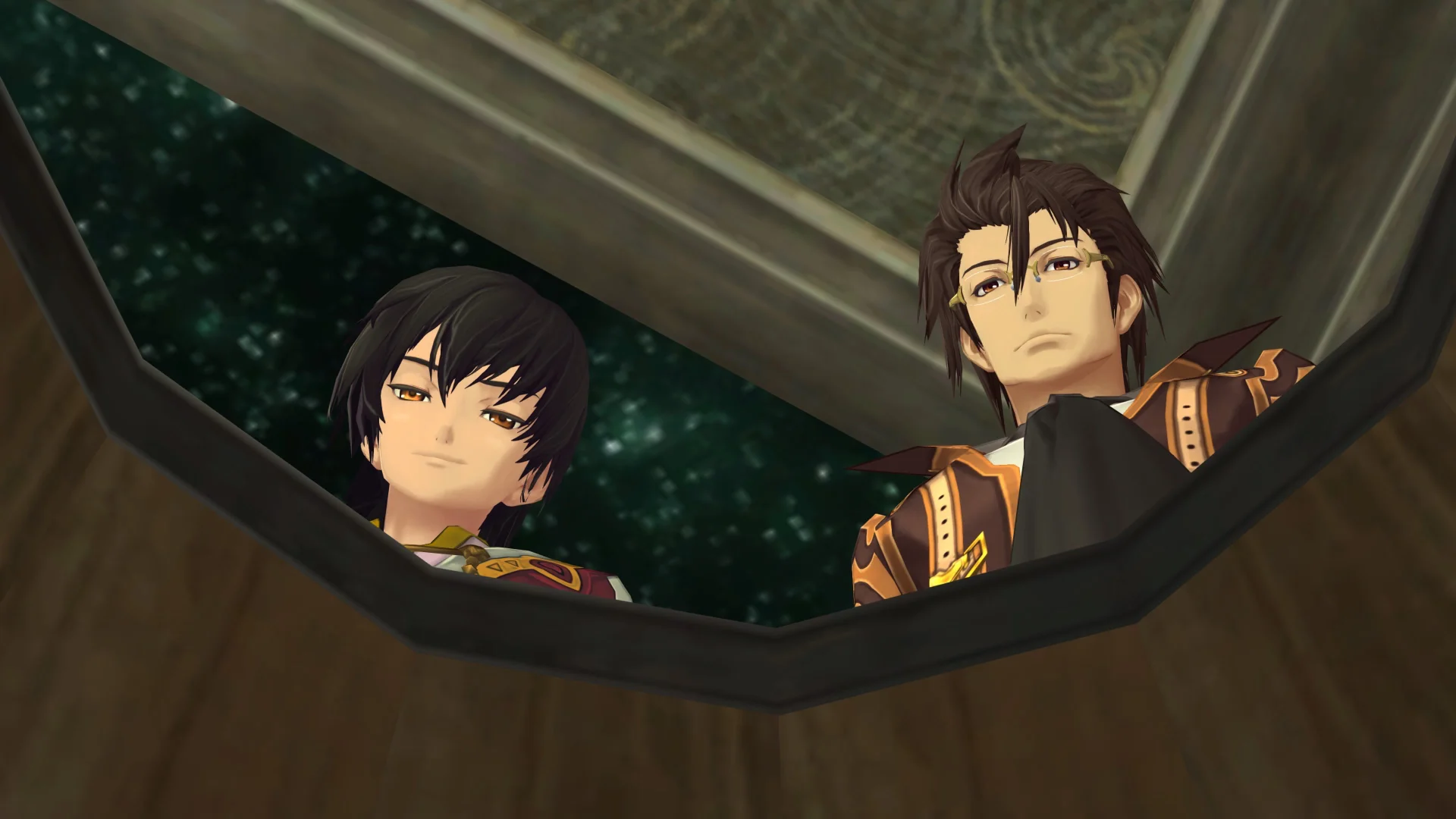
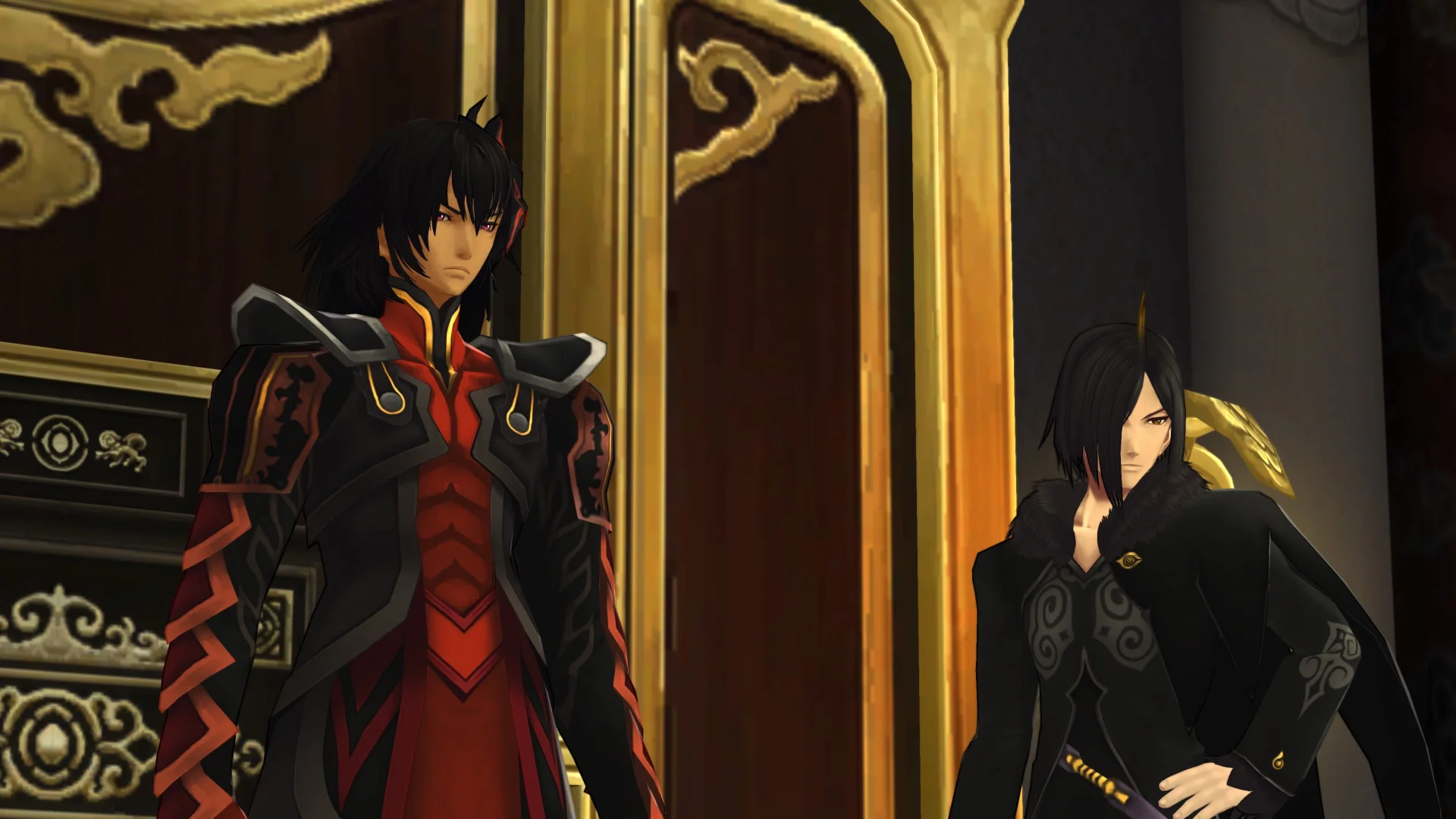
The game itself is a solid Tales of experience. Players control one of the six party members in real-time battles, stringing together basic moves and interweaving special Artes when possible. There are four characters in battle at a time, and they can link with one other character to utilize exclusive special Artes based on the combo. The six main characters each play differently enough from each other that it’s easy to find a personal favorite playstyle. At certain points in the story, characters come and go, so it’s best to get acquainted with the chosen protagonist as a backup. Thankfully, they’re straightforward to learn yet satisfying to master.
Players battle through Tales of Xillia Remastered’s many dungeons that, thanks to their bright and distinct visuals, elevate the world’s uniqueness. Mechanically, however, they aren’t much to write home about. They’re incredibly linear, and the few locations with any sort of “gimmick,” such as mining or climbing branches, aren’t much different. The linearity makes the dungeons feel streamlined; they aren’t insultingly mindless, but they aren’t particularly engaging, either. What’s more egregious is the way the game’s map handles different floors of each dungeon. Instead of flipping from floor to floor, players use a sliding scale to adjust the shown elevation. This process gets tedious over time, and becomes worse when incorporating the map’s icons.
The map helpfully marks treasure chests and even hidden items. Optional story events and the location of the next required story event are also marked, but with a little too much consideration. Their icons appear across all elevations, helping prevent players from accidentally missing them. However, as the game progresses, more and more locations have overlapping floors, making it unclear exactly where these events are located. There are also occasional instances of event icons appearing before the event in question can be accessed, which can cause confusion. In very rare cases, the markers for accessible events won’t appear on the map until the player enters the very room where the event takes place. This can be especially frustrating when the event in question is time-sensitive, leading to accidental mission failures.
Players can check the status of their ongoing missions in the main menu. But, like the map, sometimes the mission information is written in a way that makes it seem like the quest can be progressed, when in reality, the player isn’t far enough along in the story for it to happen. Skits are a much more trustworthy way to determine when a mission is ready to be completed. In addition to traditional Tales of skits, in which the party members chat with each other about a particular topic, Xillia includes extra skits in which the characters proclaim when a mission is ready to be completed, or a story quest can be continued, and where the player should go to progress.
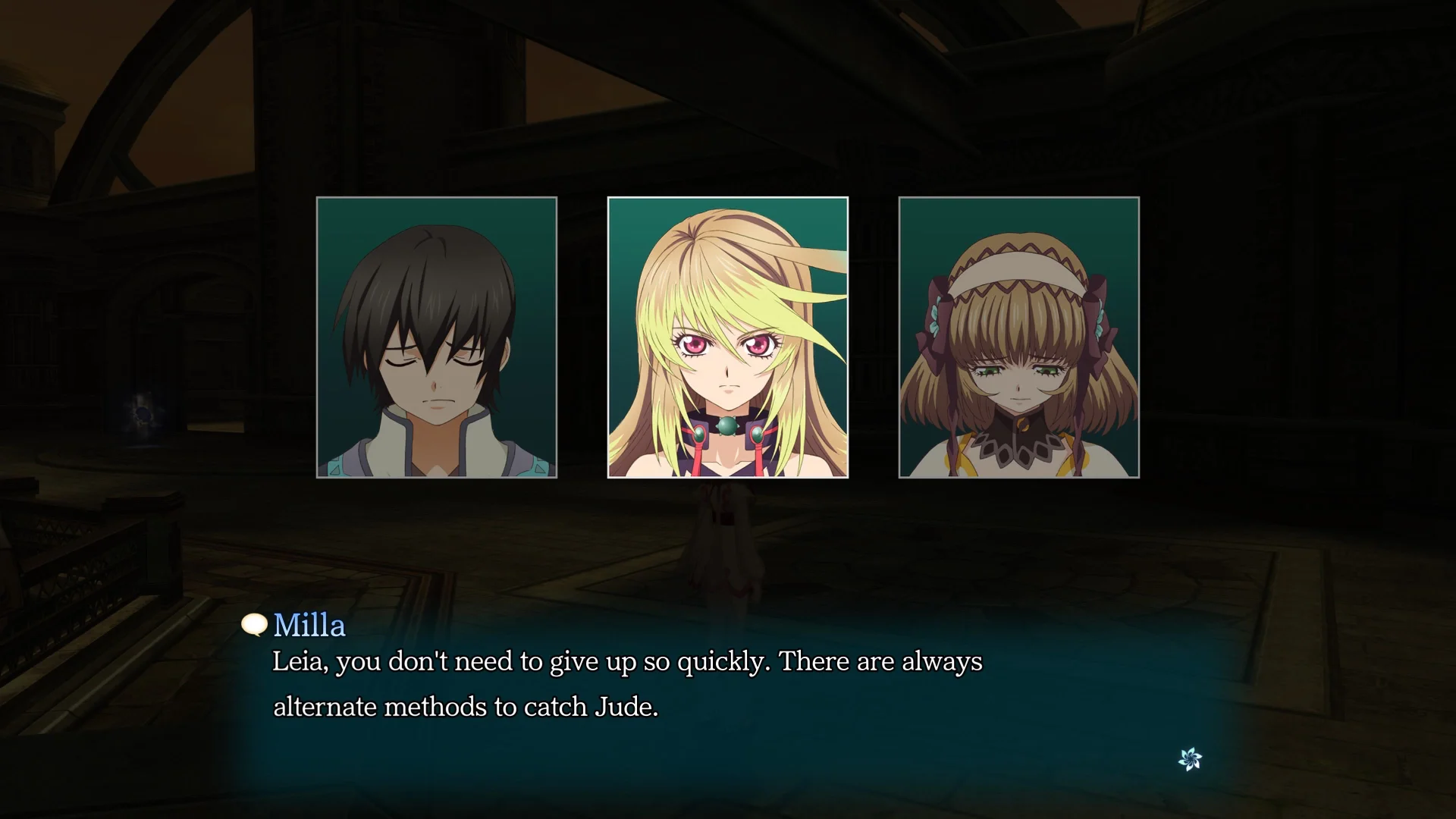
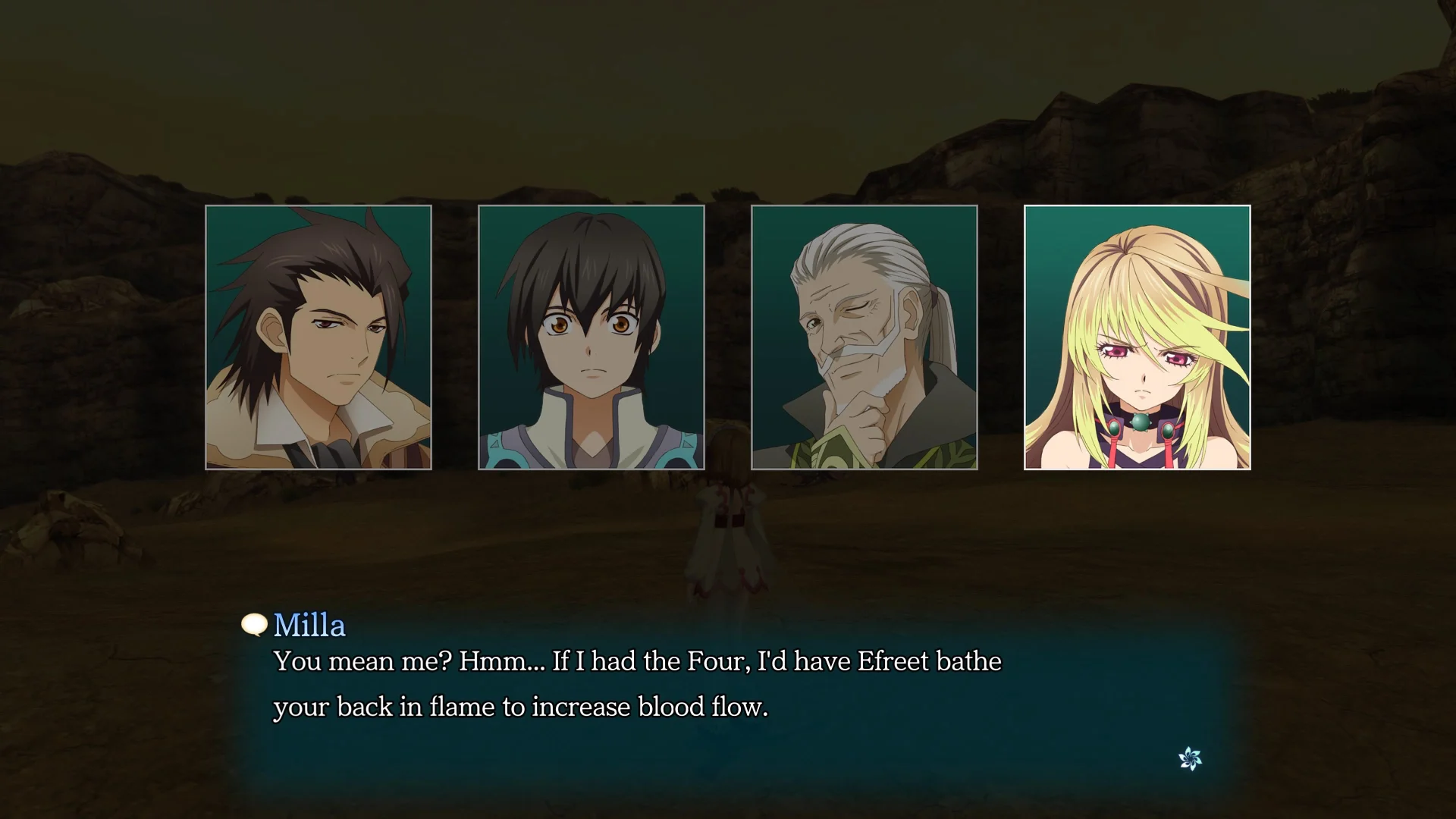
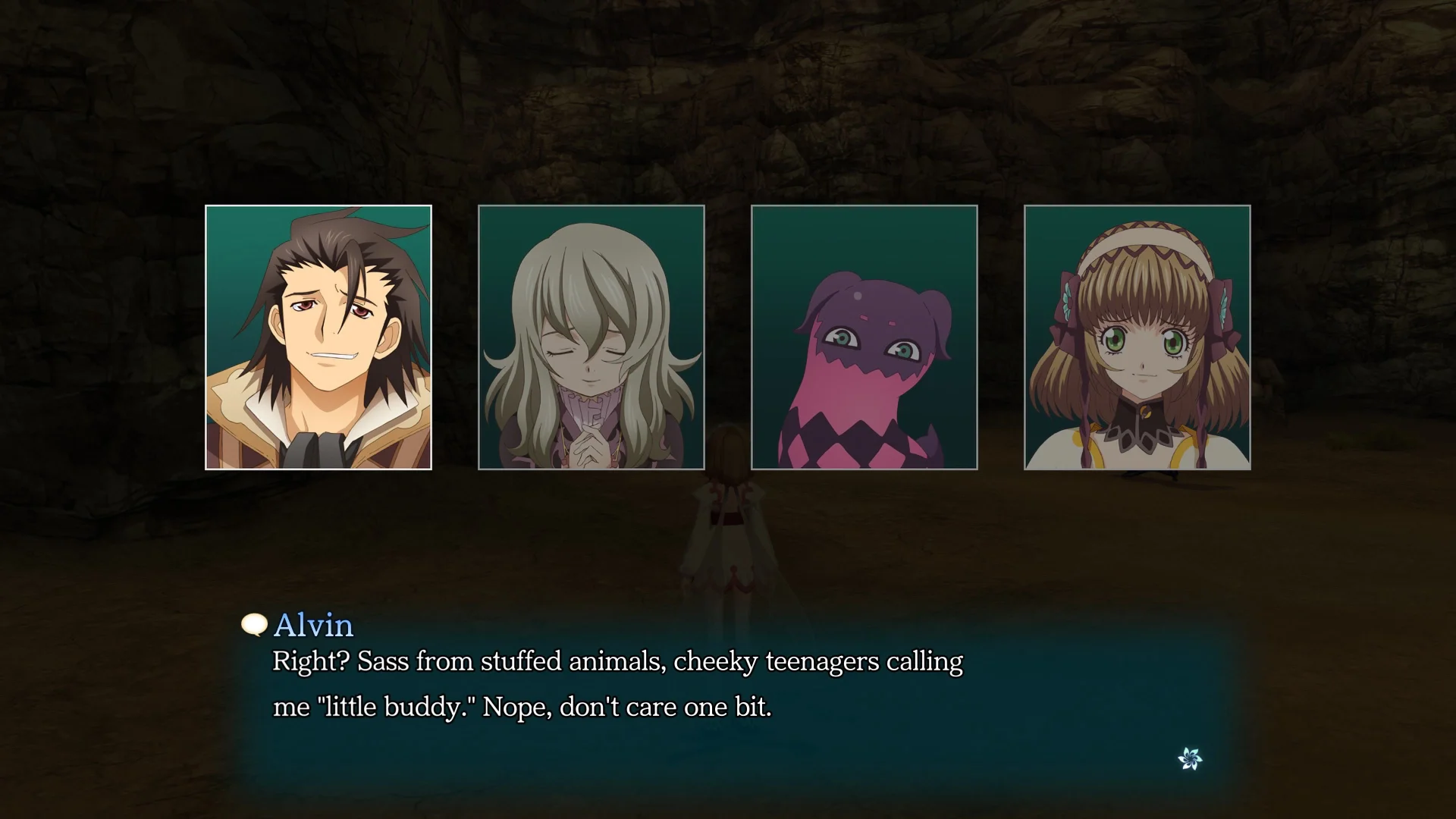
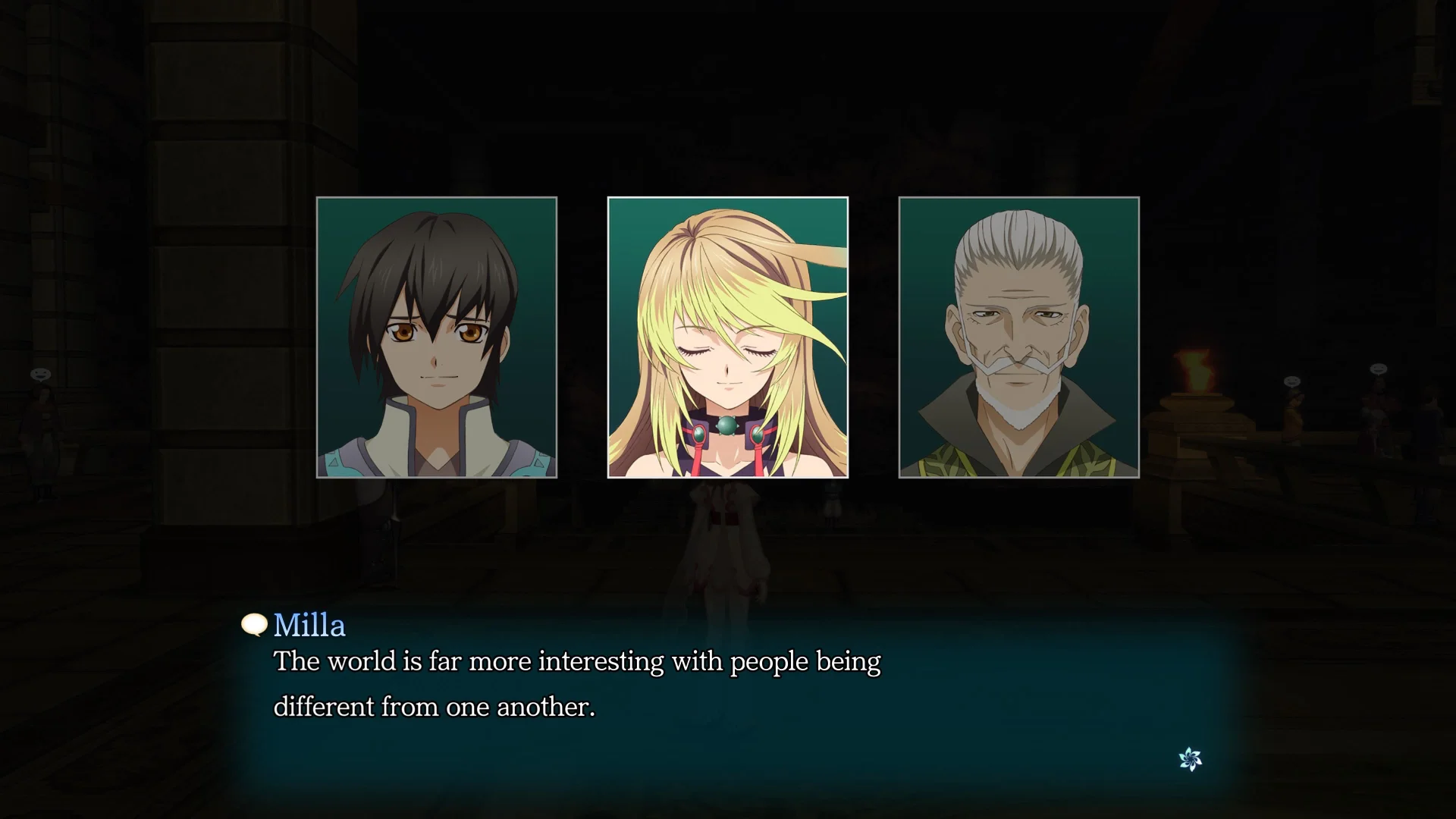
Besides in skits, characters will also make quips during and outside of battle based on choices the player makes. If the party doesn’t have a passive buff from eating food, a character may complain about being hungry. A character who hasn’t participated in battle for a while may make a remark about wanting to join the fray. It’s nice to get extra examples of the characters’ personalities, but sometimes the same remark gets repeated multiple times within a few minutes, which is annoying rather than charming.
Other Tales of traditions have been altered in Xillia to questionable outcomes. While party members will ask to have food prepared, there’s no cooking mechanic. Players instead buy prepared food from vendors, removing one of the series’s original collectibles. There are no hidden foods to add to the feel of filling out a cookbook, either, only the ones that are available from vendors.
Vendors are unique in Tales of Xillia Remastered. Instead of each location having its own inventory, the available items are the same everywhere, and change only after the player increases the shop’s level. To increase shop levels, players can donate gald or materials, which are found all over the world. This encourages players to pick up everything they come across and travel by foot to each location rather than always fast traveling. But this comes at the cost of shopping being too streamlined. The enjoyment of perusing the wares of a new location’s stores to see what’s available is gone. If a player doesn’t have the materials or gald to donate, they have no reason to even check the stores when arriving somewhere new.
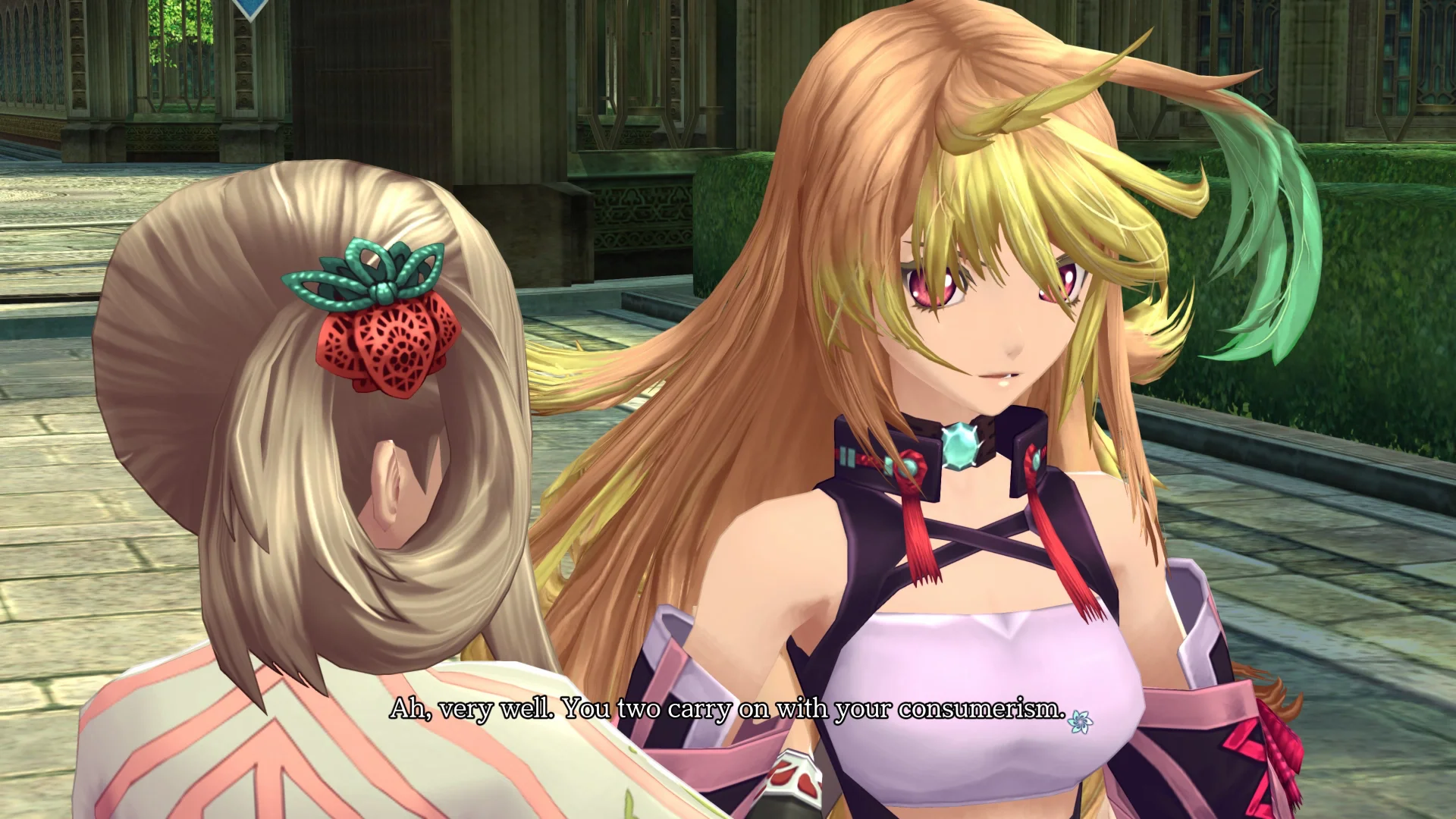
Tales of Xillia Remastered also alters titles. They act more like achievements, with no way to equip them to characters. This change makes them feel incredibly generic compared to the titles of past Tales of games, which felt more meaningfully relevant to each character. The titles that exemplify this the most are the “[Person 1] <3 [Person 2]” titles, which all share the description “[Person 1] and [Person 2] have spent so much time linked together that people are beginning to gossip.” This feels strange for duos such as Jude and Leia, where Leia has an admitted unrequited crush on Jude, and downright inappropriate for any combo including Elize, who is a child. Instead of personalizing the titles, such as “Childhood Friends” for Jude and Leia and “Grandfather Figure” for the elderly Rowen and Elize, they all feel sterile and uninspired, adding nothing to the world of Xillia and its characters.
Xillia’s characters, rather than its overarching narrative, are the most interesting part of the game. The six party members are all likable, with their own internal conflicts to explore, and their differences play off each other well throughout the story and in optional skits. Getting to know the group and seeing them through their trials and tribulations helps make up for the game’s rougher aspects that weren’t tweaked in Remastered.
Anyone who already played Xillia when it first released can access Remastered’s quality-of-life features to make replays as convenient as they’d like. For first-time players, Tales of Xillia Remastered is still a great way to experience this Tales of classic, as there’s currently no other official way to play it on current-generation consoles, and no system is backward-compatible with PS3. While the original may not be the absolute brightest in the series, Tales of Xillia Remastered is a solid way to play a solid Tales of title that hasn’t had a chance to shine in a while.