
Time is the one thing none of us can ever get back. We waste it freely when there is nothing to lose, only to realize its value when it runs out. In The Blood of Dawnwalker, time is constantly working against you. It is the most valuable resource, and every moment forces you to decide where it is worth spending.
The protagonist, Coen, has only 30 days and nights to save his family from the vampire lord Brencis, but there is no way to see everything or save everyone along the way. Quests can continue without you, and characters can die while you pursue other goals. Every hour spent helping one person is an hour you can no longer spend somewhere else. For a game where time is running out, The Blood of Dawnwalker asks a deceptively simple question: what are you willing to sacrifice when you know you can never have it all?
I was initially skeptical of The Blood of Dawnwalker’s time mechanic because I tend to explore everything an open-world RPG has to offer. The concept becomes apparent almost immediately in the prologue, where Coen has only a single day to find medicine for his mother. Activities are scattered across the map, but pursuing them quickly eats into that limited time, forcing you to make difficult choices about what is worth doing. You have to pick and choose what you want to do, which completely turns the open-world RPG formula on its head. I am used to completing everything I can find, but The Blood of Dawnwalker forces me to let some things go.
Nearly everything you do in The Blood of Dawnwalker costs time. Side quests and smaller activities all take a portion of your limited days and nights, but even things you would normally think of as part of your character progression can eat into the clock. Spending Skill Points after leveling up, for example, also costs time. This makes the gameplay feel very different from games like The Legend of Zelda: Majora’s Mask or Lightning Returns: Final Fantasy XIII, where time continuously passes as you play. Here, time is deducted only when you perform an activity, and the game clearly tells you exactly how much it will cost. Every action has a price.
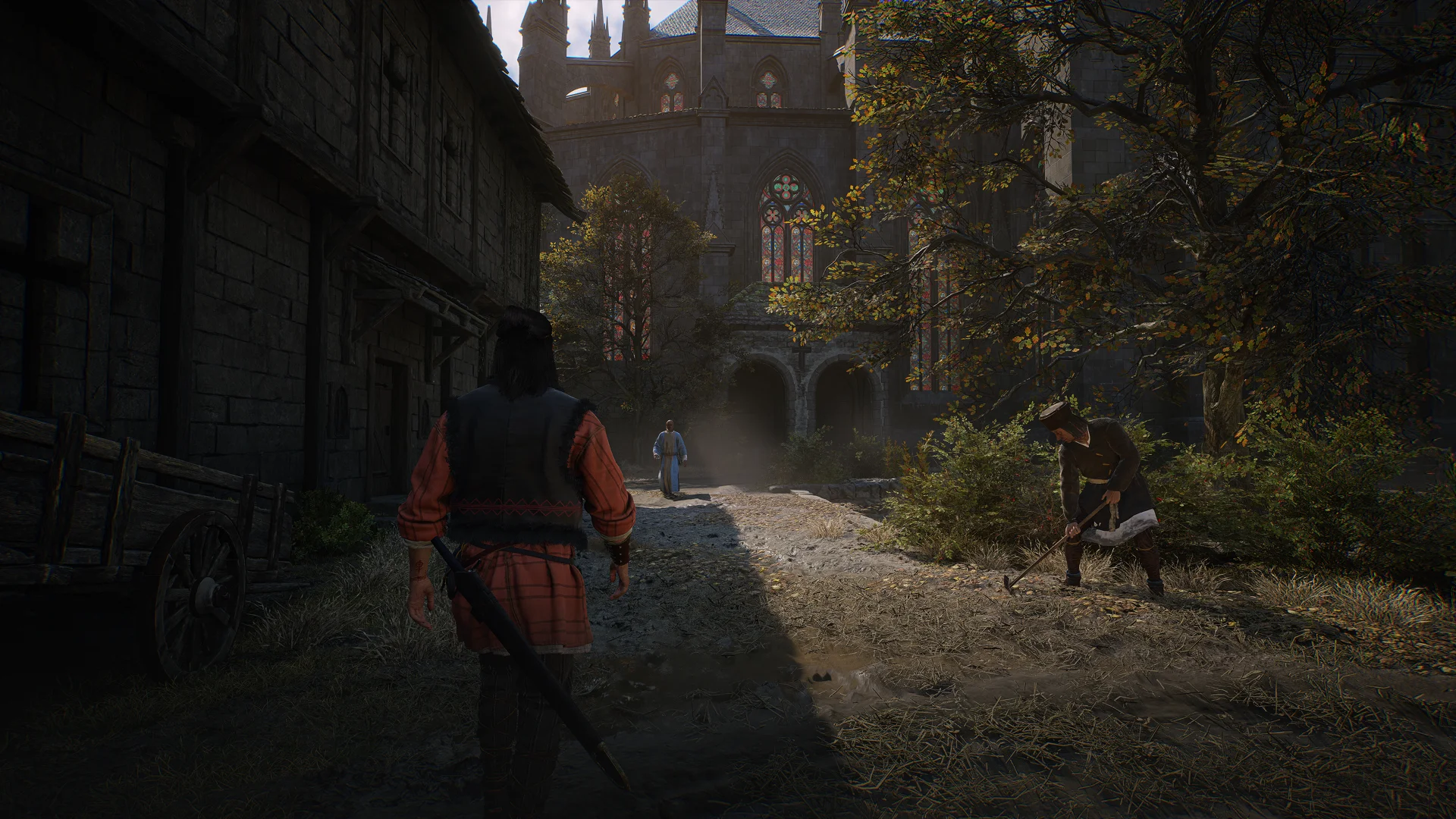
In contrast, traditional resources like money feel surprisingly insignificant in The Blood of Dawnwalker. You can play through almost the entire game without giving much thought to how much money you have, as weapons and armor found throughout the world quickly outclass what merchants have to offer. The strongest equipment is tied to optional quests, but those quests come with a much more important cost because they require your time. Money is almost never something you need to worry about.
The battle system in The Blood of Dawnwalker is serviceable, but it is clearly not the highlight of the game. The swordplay is basic and similar to Kingdom Come: Deliverance II, with directional blocks and attacks, though it is far less satisfying. You can also equip abilities tied to cooldowns that give you more options during combat. With few exceptions, bosses mostly rely on the same few attack patterns, and the enemy variety is disappointing. There is nothing particularly wrong with the battle system, and it gets the job done, but it never reaches the same level as the game’s other mechanics. I never found myself particularly enjoying any of the fights.
What is more interesting, however, is Coen’s nature as a Dawnwalker, meaning he is human by day and a vampire by night. The activities available to you can change depending on the time of day, which means you need to plan around when certain things are possible. If you need to meet someone at a specific time, for example, you have to think about how to spend the hours in between. In most other games, you could simply wait until the appointed time, but that is not really an option here. Just like in real life, waiting means wasting time, and there is always something else you could be doing instead.
Set in 1347 during the height of the Black Death, The Blood of Dawnwalker takes place in the fictional Vale Sangora in the Carpathian Mountains. The story itself is absolutely phenomenal, with some of the best writing I have ever seen in Western RPGs. In your quest to defeat Brencis and save your family, you have to find allies along the way, but there is never an easy distinction between friend and enemy. Almost everyone has their own motivations, and even the characters you come to trust do things you may not agree with. In fact, there are no purely good or evil characters here.
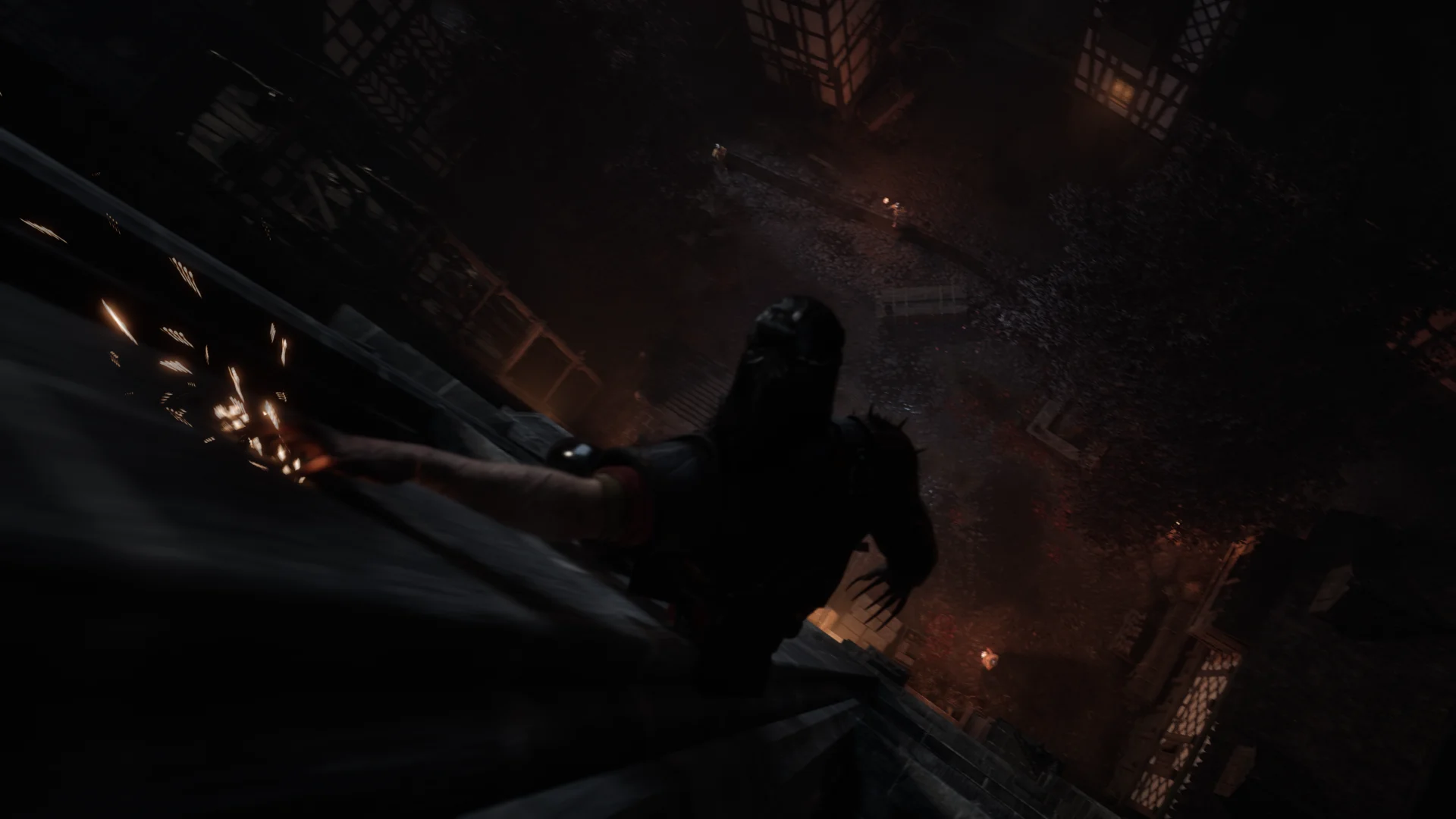
The quests themselves are absolutely fantastic and represent the very best of the genre. You meet some unforgettable characters along the way, and you can shape what happens to them. Unlike many Western RPGs, there are very few essential characters, meaning you can potentially take out almost anyone if you choose to. Coen can even lose control of himself as a vampire and instantly kill someone if he speaks to them at night while his health is low, including characters that are important to the main story. I avoided doing this whenever I could, but knowing I could accidentally kill someone gave my interactions with these characters more impact.
I wish I could say the same about the open world itself, but I found it extremely stale and bland. It follows the checklist-style structure seen in many Ubisoft games, with random activities scattered across the map that don’t give you much reason to seek them out. You are often just clearing forts or taking on elite enemies that quickly become repetitive, and the battle system is not interesting enough to make these encounters enjoyable. I found myself skipping many of the random activities as I played because they simply were not worth the time.
Perhaps some of this is by design, though. Why spend your limited time on mindless activities when there are far more exciting things to do? The game encourages you to focus on what actually matters to you, which ties back into how exploration works. When you discover new areas through quests, they can be incredible, and I found them far more enjoyable than simply chasing random icons on the map. In that sense, The Blood of Dawnwalker feels almost like an anti-open-world game. It gives you a beautiful world to explore, but it does not expect you to do everything in it.
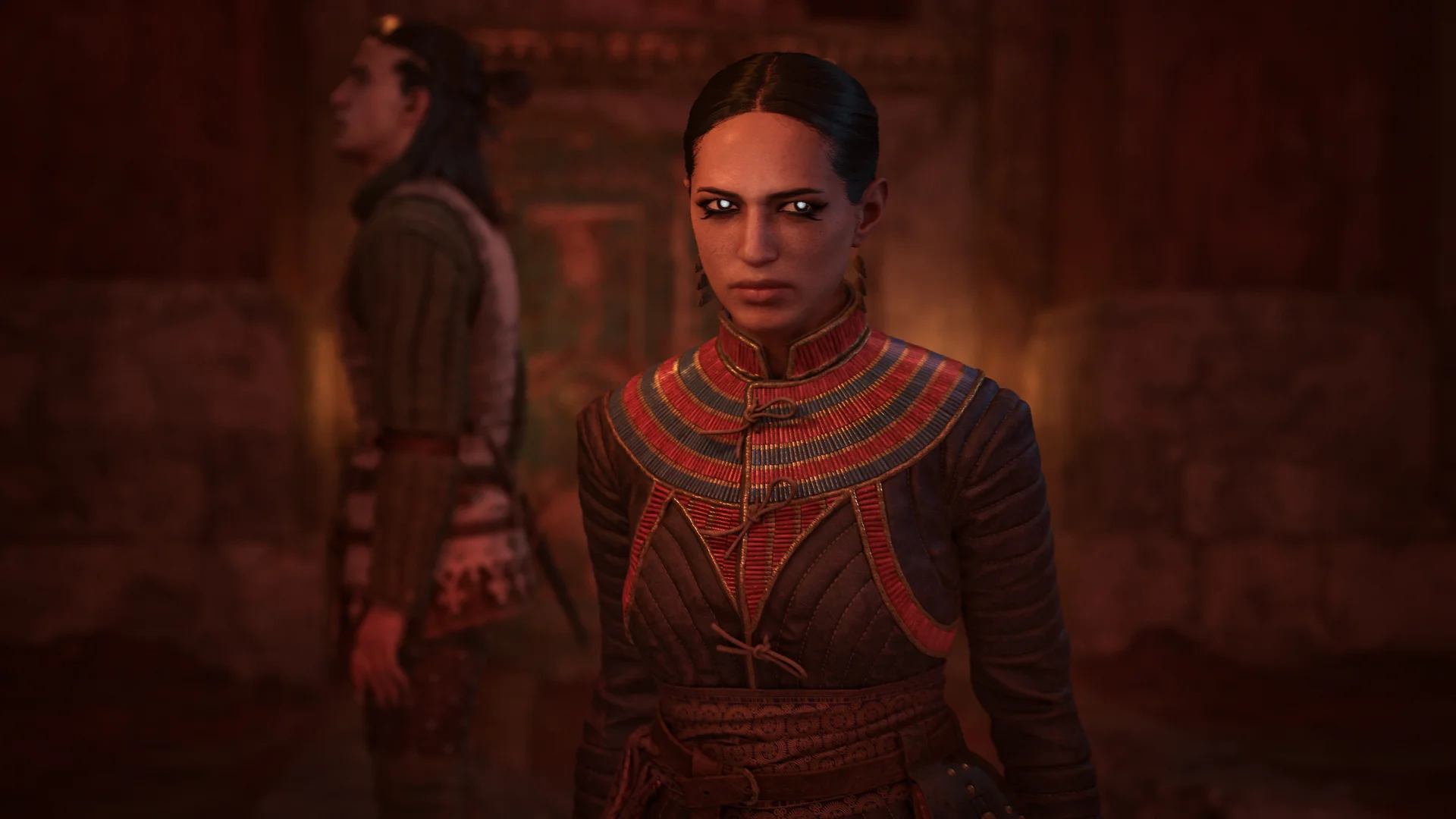
The Blood of Dawnwalker is already an extremely polished game, and it runs very well on PS5 Pro. I played in Balanced mode, and the game looks very clear, with detailed foliage and impressive architecture. I only encountered a few minor hiccups during battles with a large number of enemies on screen, but these were rare and never caused any serious problems. It certainly holds up better than most Western RPGs at launch. A performance mode is also coming with the day-one patch, which should make an already smooth experience even better.
The soundtrack is also fantastic, with a haunting score that makes excellent use of strings to enhance the atmosphere. The music changes depending on whether it is day or night, and I found the nighttime tracks even better, especially when you are in town. Walking through a town at night feels appropriately unsettling while the strings play in the background, and it fits the darker side of Coen’s story perfectly. The music helps sell the transition between day and night even further, giving both sides of the world their own distinct atmosphere.
The Blood of Dawnwalker understands something that most open-world RPGs seem to forget. You cannot experience everything. Time is always moving forward, and how you spend it is important. Having to make those sacrifices initially frustrated me because I wanted to see everything the game had to offer, but eventually it became the reason I enjoyed the journey so much. It also makes The Blood of Dawnwalker highly replayable, because there will always be things you left behind to discover on another playthrough. And with that, I am off to play it all again.