
A dark, stormy night. An old plantation house sequestered in a dark swamp. A wheelchair bound colonel sitting on a fortune and hosting a visiting family of opportunistic gamblers, alcoholics, and profligates. Though this could very well be the setup to an Agatha Christie novel, this is how the classic murder-mystery graphic adventure The Colonel’s Bequest opens. And based on that premise, it’s likely that whatever bequest the colonel is bequeathing will not be of his own accord.
As a person who was not yet alive for the 1989 release of Sierra On-Line’s The Colonel’s Bequest and the point-and-click adventure boom surrounding it, I’ve been having a blast learning about games from the likes of Sierra and LucasArts—and, erm, having a slightly less explosive blast actually playing many of them.
At the top, I’ll say that The Colonel’s Bequest fits in that category; the way it fulfils the puzzle, narrative, and conceptual promise introduced in director-designer (and underappreciated auteur) Roberta Williams’ 1980 debut Mystery House is very impressive. It surprised me with its clever and detailed design even thirty-six years on. However, the way the game’s plot progresses, or, more accurately, grinds to halting stops, tested my patience rather than my deduction skills.
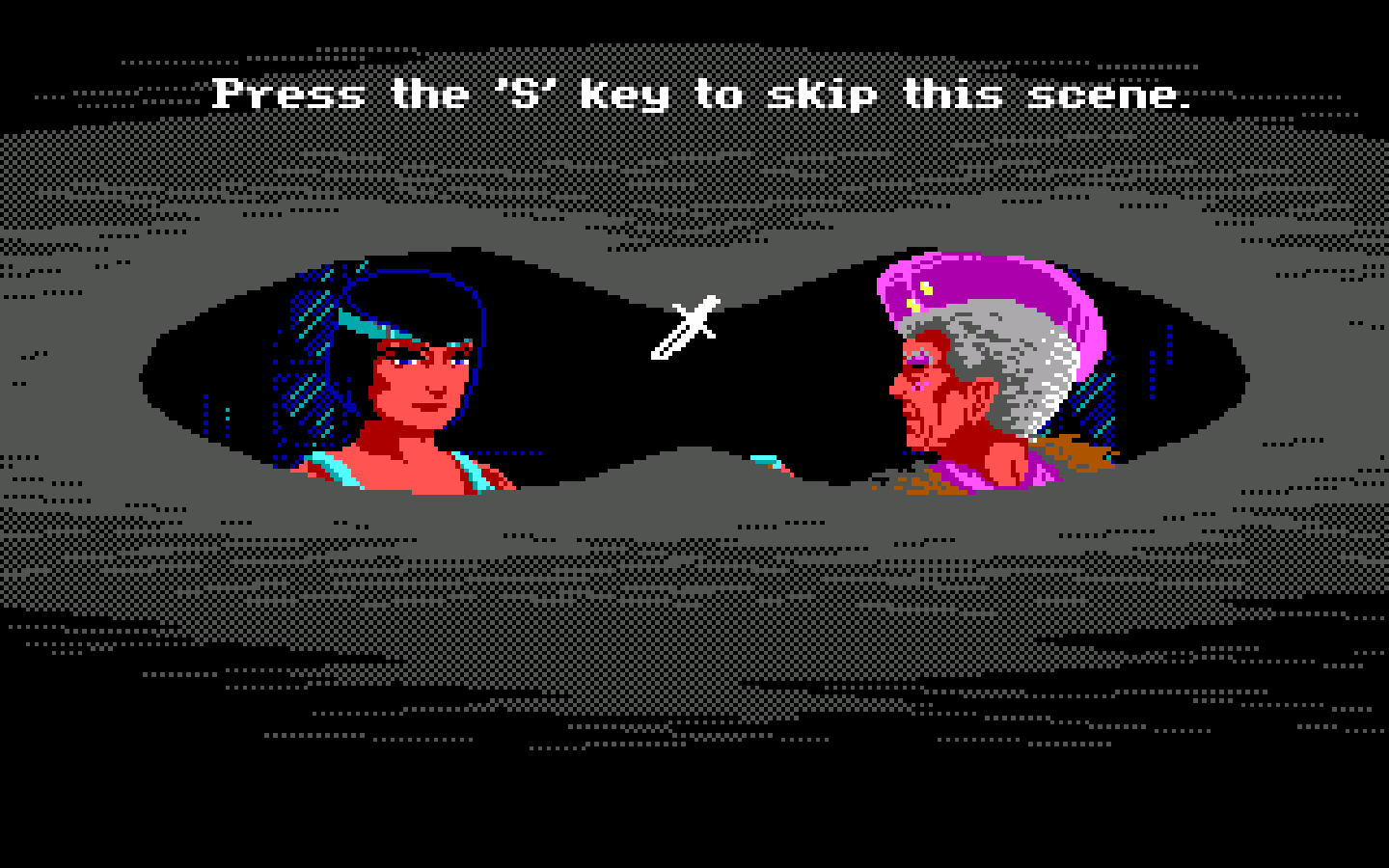
Players control Laura Bow, a twenty-year-old detective and journalist in training. Laura is a guest of her friend Lillian, niece to the curmudgeonly colonel (because who wouldn’t invite their college buddy for the reading of their uncle’s will?). Laura has nearly free rein to explore the mansion and its surrounding grounds, interacting with and eavesdropping on the colonel’s relatives and, soon thereafter, witnessing them mysteriously die one by one.
What surprised me was the clock-based structure of The Colonel’s Bequest. Finding clues and having or witnessing certain conversations trigger the clock to move forward in fifteen-minute spurts, occasionally progressing to the next act, wherein another body is likely to turn up and the cast of characters will shift around locations. In this way, the world and characters of The Colonel’s Bequest felt shockingly alive. Everyone seems absorbed in their own agendas, be it conniving, surviving, or *bites pinky* murdering, perhaps.
There are a handful of frustrating combinations of time progressions that may softlock progression towards getting certain items and clues, such as my endlessly frustrating attempts to befriend the cook to get a bloody carrot (bloody in the cursing sense, mind you). Ultimately, nothing will lock you out of the two possible endings, either of which comes down to a split-second decision involving a loaded gun.
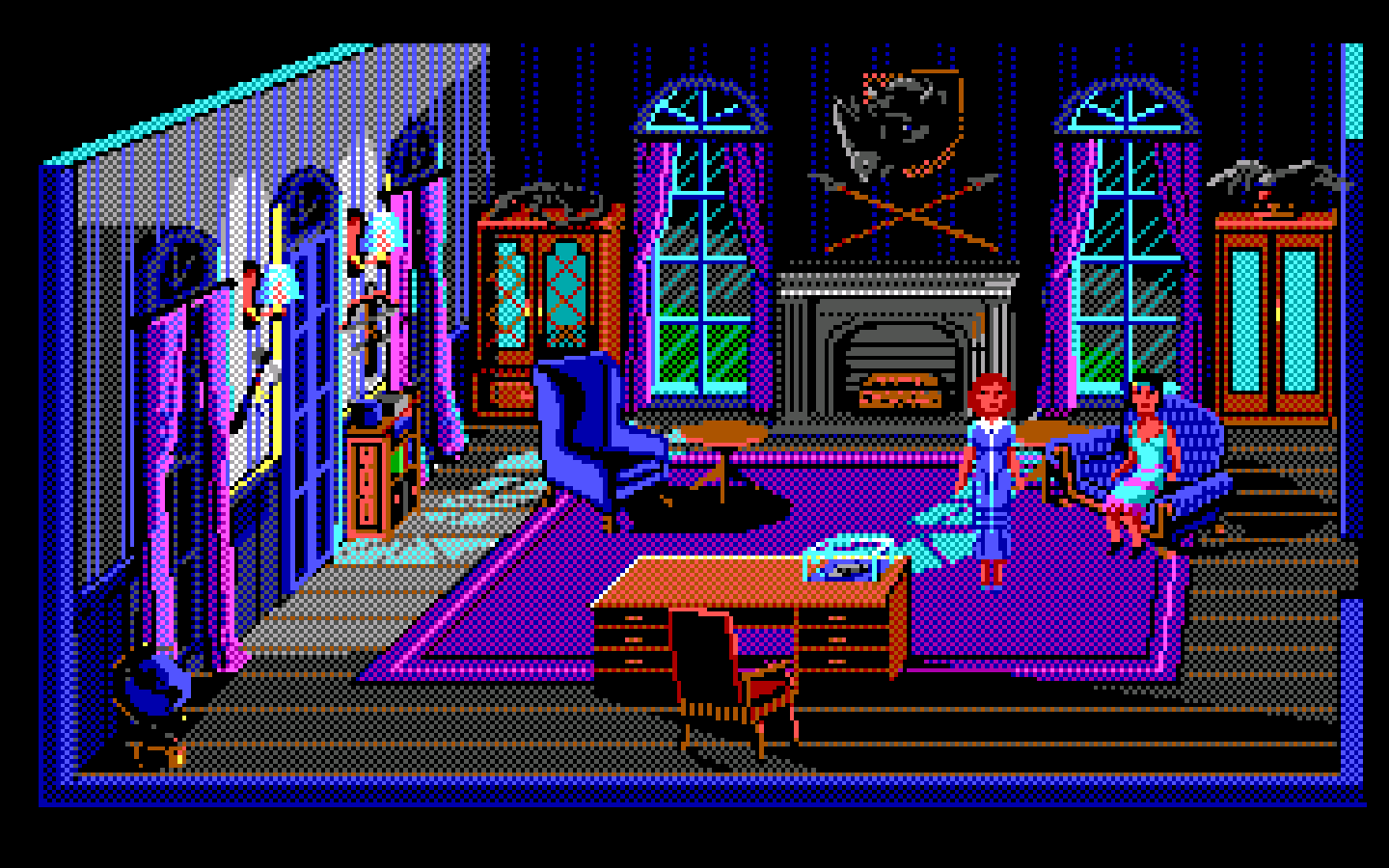
My main gripe with The Colonel’s Bequest’s structure is that much of the game requires semi-aimless wandering and retreading of the mansion and its secret passages, at first thrilling and soon tiresome. There’s no sense of pathing when you click a spot for Laura to move to. She’ll move straight towards her destination and get stuck on the smallest of furniture or foliage, requiring lots of clicking and repositioning in order to interact with items or navigate screens.
Though there is a certain logic to some of the characters’ movements between acts, The Colonel’s Bequest‘s trim three-hours-or-so runtime can become bloated due to slow, choppy navigation. Sure, you may laugh the first time you get a silly and mostly random Sierra death scene like falling through a rickety balustrade or getting snapped up by an alligator, but as soon as you realize you forgot to save for the past fifteen minutes, hoo boy.
To interact with characters, items, and the environment, players must type verb-dependent phrases like “talk colonel,” “ask ethel about colonel,” and sometimes even “smell colonel.” In a way, I wish these text-parser commands (a remnant of text-adventures) could be used for easier navigation. Half the time, typing “open door” earns a a sassy “Do it yourself!” response, and yet at other times it’s required, provided you’re in the pixel-perfect correct spot.
Generally, though, the logical text parsing was my favourite aspect of The Colonel’s Bequest, with plenty of detail and funny rewards for verbal exploration. Insisting on taking a shower late in the game is met with a death scene referencing the iconic shower scene in Psycho. Then, there are lots of “Chekhov’s Gun” moments of setup and eventual payoff for those who keenly scan each room. Then, too, there are some slightly randomized elements, like multiple possible locations to find certain mutilated bodies. Fun!
The graphics also still impress today, thanks to a colourful palette of greens, purples, and oranges. Small touches, like mysterious silhouettes passing through background windows, add to the chilling atmosphere, and the various screens in and outside the plantation skillfully establish scale and location. Audio touches like bug chirruping, ticking clocks, and thunderclaps maintain the eerie tone, and the soundtrack (however farty-sounding) is used sparingly but effectively to enhance key discoveries. A part of me wishes I could have been a twelve-year-old terrified by this ominous and at first glance impenetrable game.
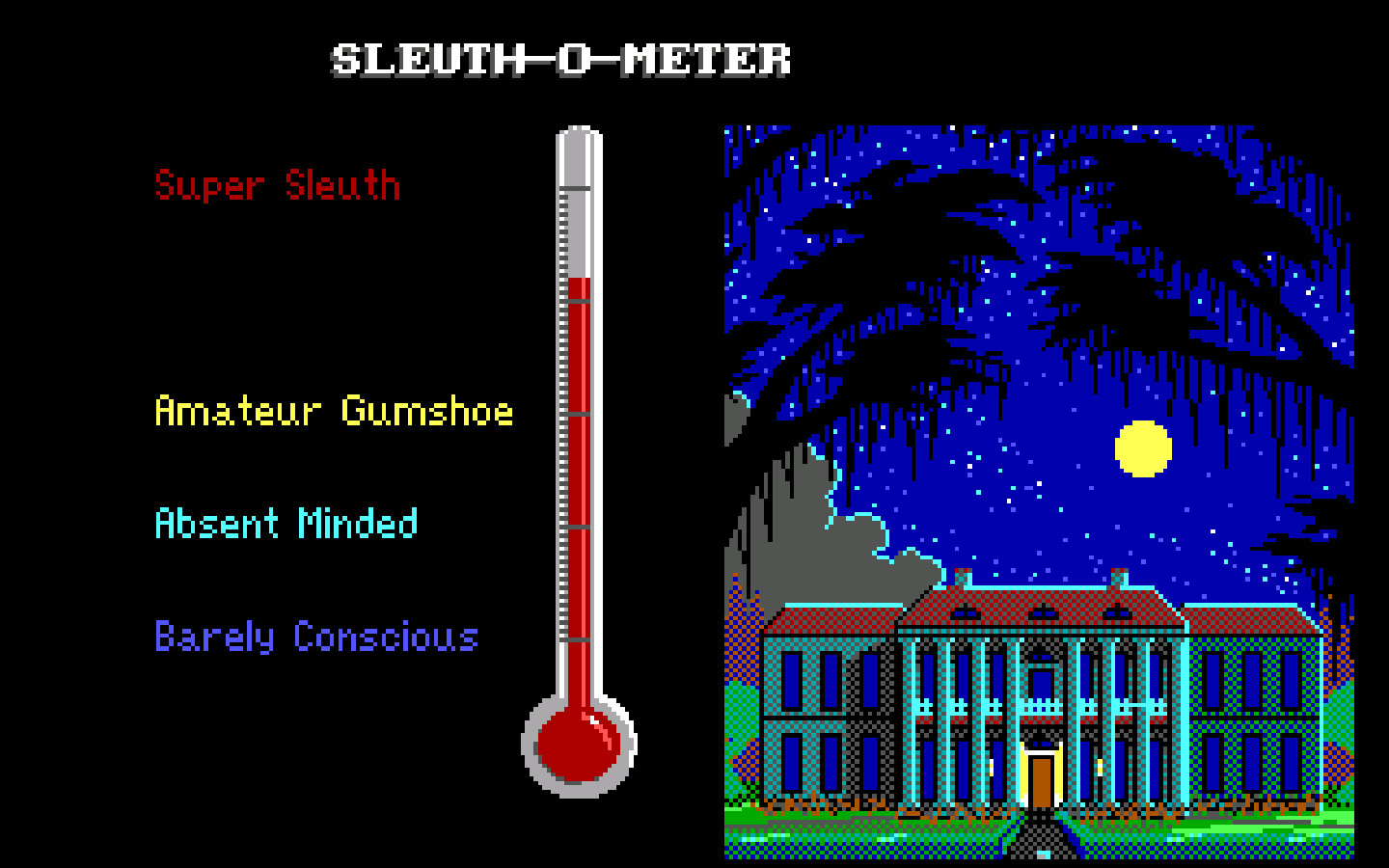
For those willing to stick through the dated and often aimless pace, The Colonel’s Bequest offers a delightfully hackneyed 1920s murder mystery that continually impresses with its deep interactivity. Rolling credits and seeing the game hint towards its yet unfound “Super Sleuth” requirements really made me appreciate the experience’s longevity. Whether you pick up the magnifying glass yourself or watch someone else’s playthrough, The Colonel’s Bequest is a significant keystone in PC adventure game history that deserves preservation and play.