
I was almost hesitant to dive into Tears of the Kingdom.
I’ll be quite honest: I hold Breath of the Wild on a bit of a pedestal. As a long-time Zelda fan, it switched up the formula in a way I didn’t know I wanted, and I absolutely adored it. Its release was a formative moment in my life as a Nintendo fan and an impossible to replicate experience. The game’s opening sequence still lives rent-free in my head, and the feeling of exploration that followed has yet to be matched.
Consequently, I knew I’d be inherently biased towards its predecessor in a way that would unfairly colour my opinion of Tears of the Kingdom. And so, silly as it sounds, Tears of the Kingdom remained unplayed on my Switch for two whole years.
With the release of the Switch 2 and the title’s enticing new update pack, I decided it was finally time to change that. I’d feared that Nintendo had given itself an impossible challenge with this one. How could they possibly improve upon what I already felt was one of the greatest games of all time? Well, I was wrong.
Tears of the Kingdom takes place a few years following the events of Breath of the Wild, and it’s clear the kingdom of Hyrule is quickly bouncing back to life. The game’s overworld feels far more lively than its predecessor, with far more NPCs, enemy variety and, most notably, landmasses to interact with and explore.
Locations such as towns, villages and stables feel far more important to the core experience this time around. No longer do they serve mainly as shop locations but feature an expanse of side quests, making Hyrule feel lived in and bustling with the excitement of a civilisation intent on reclaiming what was previously taken from them. This provides a distinctly welcoming overworld—one which encourages you to explore what the world has to offer and aid its citizens in Hyrule’s return to glory.
The introduction of the Zonai tribe and their sky islands, alongside the depths nestled below Hyrule’s grassy plains, provides players with one of the most expansive maps I’ve ever encountered. To some, this may sound daunting and overwhelming, and I’ll admit I felt the same at first. Open-world fatigue is real, and sometimes you can have too much of a good thing. That said, Nintendo have once again done a fantastic job at ensuring that’s not the case. A perfect balance of shrines, overworld puzzles, enemy encampments, treasure-ridden caves, korok seed encounters, and more ensures continued engagement. You constantly experience those aha moments we all know and love, and it’s always exciting to see what’s over the horizon. The world feels completely focused on putting player exploration at the forefront.

Similar to its predecessor, Tears of the Kingdom starts the player off in a tutorial section of the map on the sky islands high above the kingdom of Hyrule. It cleverly guides the player through new abilities without it feeling overbearing. This allows Nintendo to show off what’s new about Tears of the Kingdom all in one go: a whole new set of abilities (we’ll get back to them later) and a stunning new area to explore.
Just like the overworld below, these islands are teeming with puzzles and shrines to keep the player occupied. Interestingly, however, the world above has a very different feeling from the rest of Hyrule. These islands give off a far more tranquil, isolated vibe that is more akin to Breath of the Wild. It’s a contrast that I adore and makes the different levels of the kingdom feel unique.
Switching focus to what lies below Hyrule, the depths themselves feel somewhat underwhelming in comparison to the rest of the map. They play an important role in the main quest, but outside of that, I found them to be uninviting and a little uninspired. One area felt like another, and next to the overworld and sky islands, the depths felt lacking in content and far larger than necessary.
To go alongside its vastly expanded map, Tears of the Kingdom features a whole host of new enemies, breathing fresh air into the world and bringing a bit more excitement to everyday encounters. I wouldn’t say it’s game-changing, but it’s a welcome touch that helps to make the world feel more natural and less like a Bokoblin factory. Oh, and no matter how many times you do it, you’ll never not feel like a badass when you shoot an Aerocuda out of the sky.

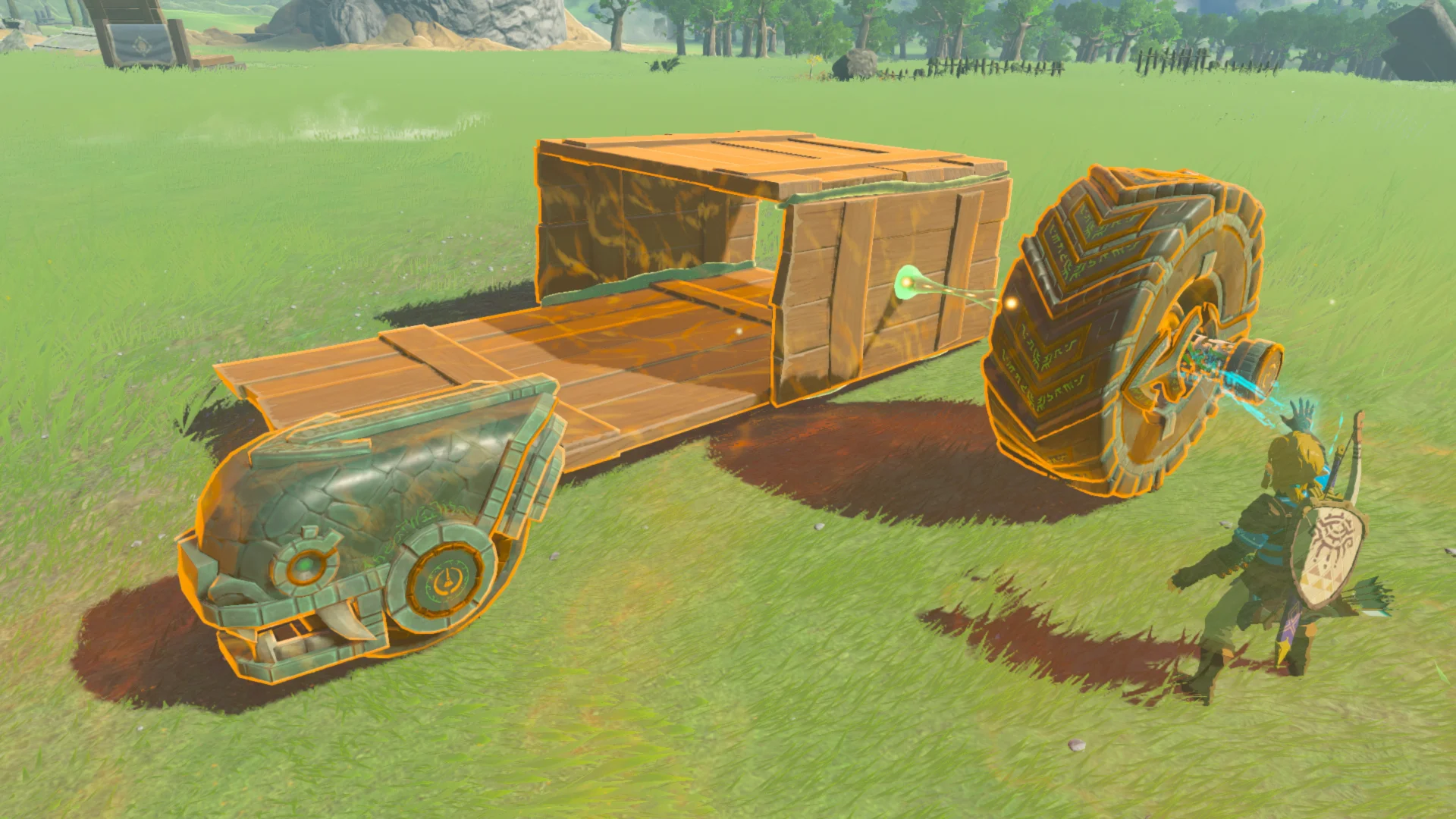
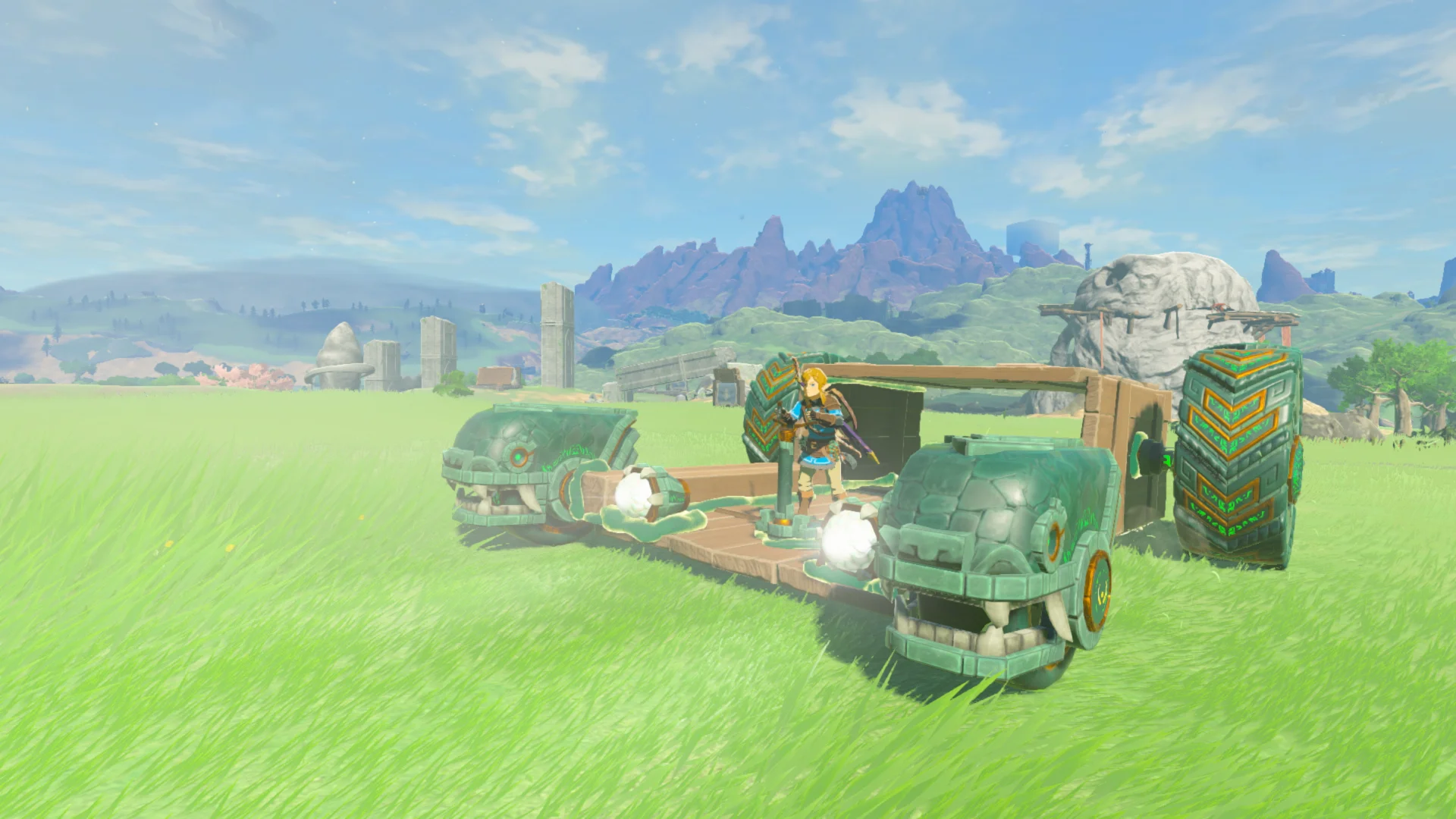
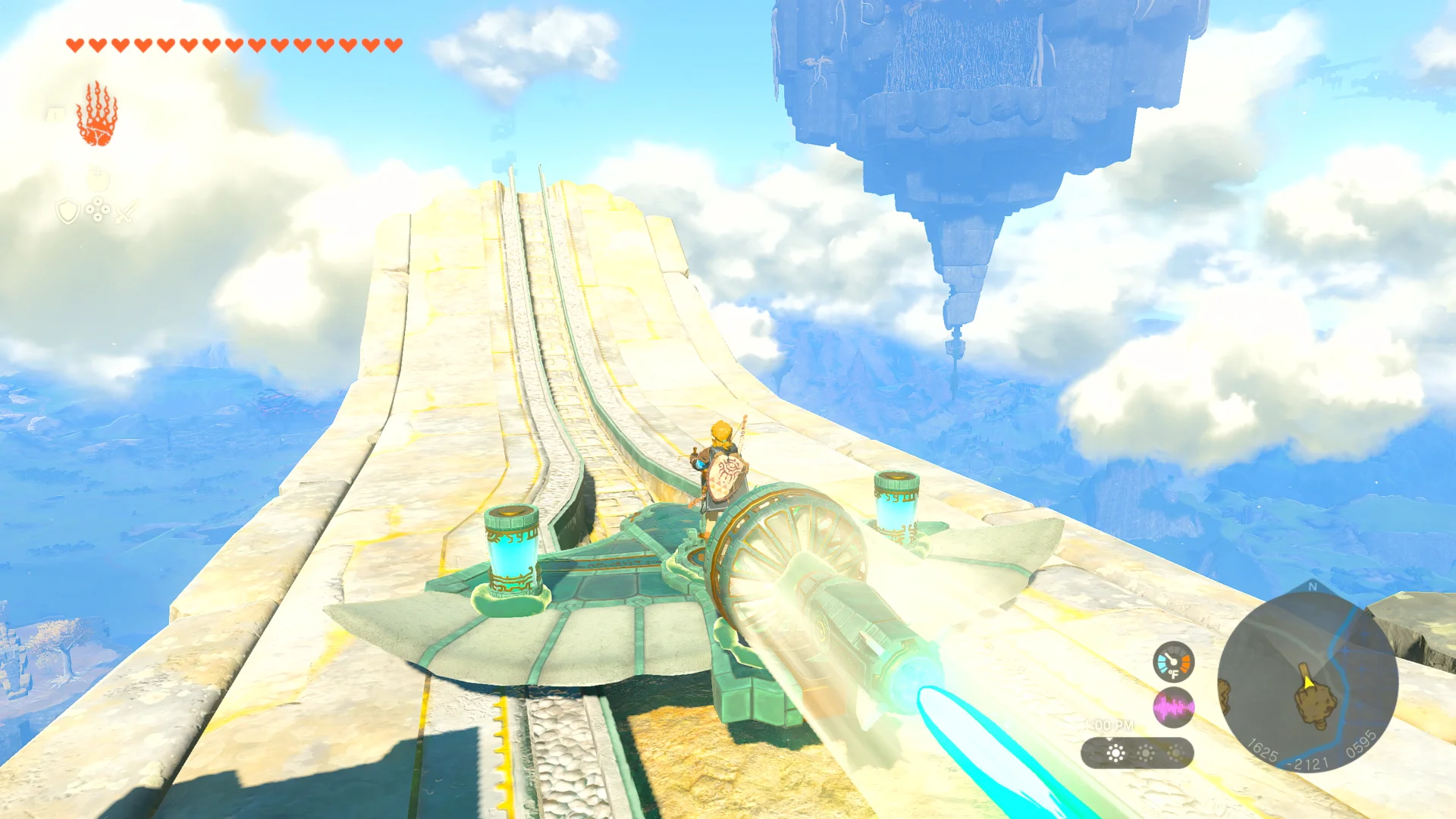
Tears of the Kingdom brings a brand new set of abilities to the Zelda universe: the four you obtain in the tutorial section—Recall, Fuse, Ascend and Ultrahand—alongside the camera and one other, which I’ll avoid talking about for spoilers’ sake. Recall essentially allows players to rewind time, Ultrahand acts rather like Breath of the Wild’s telekinesis, and Ascend allows players to travel upwards through obstacles and land mass, making traversal much easier. Fuse is where the excitement lies, however.
The Fuse ability is core to the game’s very identity, allowing you to combine pretty much any item with your weapons and shields, increasing their power and durability and completely changing how they function, their effects, and even their elemental affinities. It’s not quite on the level of Borderlands, for example, but if you think you can fuse it, you probably can.
Ultrahand is essentially an iterative version of telekinesis, allowing players to manipulate the environment, similar to how Fuse lets you manipulate items. For the average player (myself included), this will amount to building towers and sailboats; however, the more creative among us will find fun in this ability. From basic cars to Gundams, there’s a lot of flexibility and potential.

Shrines make a welcome return, totalling 152 across both the mainland and sky islands. These bite-sized puzzles are still an absolute highlight of the game for me and seemingly offer a bit more challenge than their predecessors. I certainly found myself scratching my head more often, and I always enjoyed the process of trial and error when a difficult puzzle arose.
One complaint many long-term Zelda fans had with BotW was its lack of traditional-style dungeons. Nintendo clearly took these concerns to heart, and I’m pleased to say that you can find a total of four uniquely themed dungeons within TotK. While they won’t set records for being the series’ most difficult or extravagant, they’re still an enjoyable experience that only adds to the vast amount of content on offer. They certainly feel like a step up from the Divine Beasts and are an equally core component of the story. Where these dungeons really excel, however, is their boss fights. Particularly with the Switch 2’s additional power, each one felt like a real spectacle and has me particularly excited for future Zelda titles on the system.
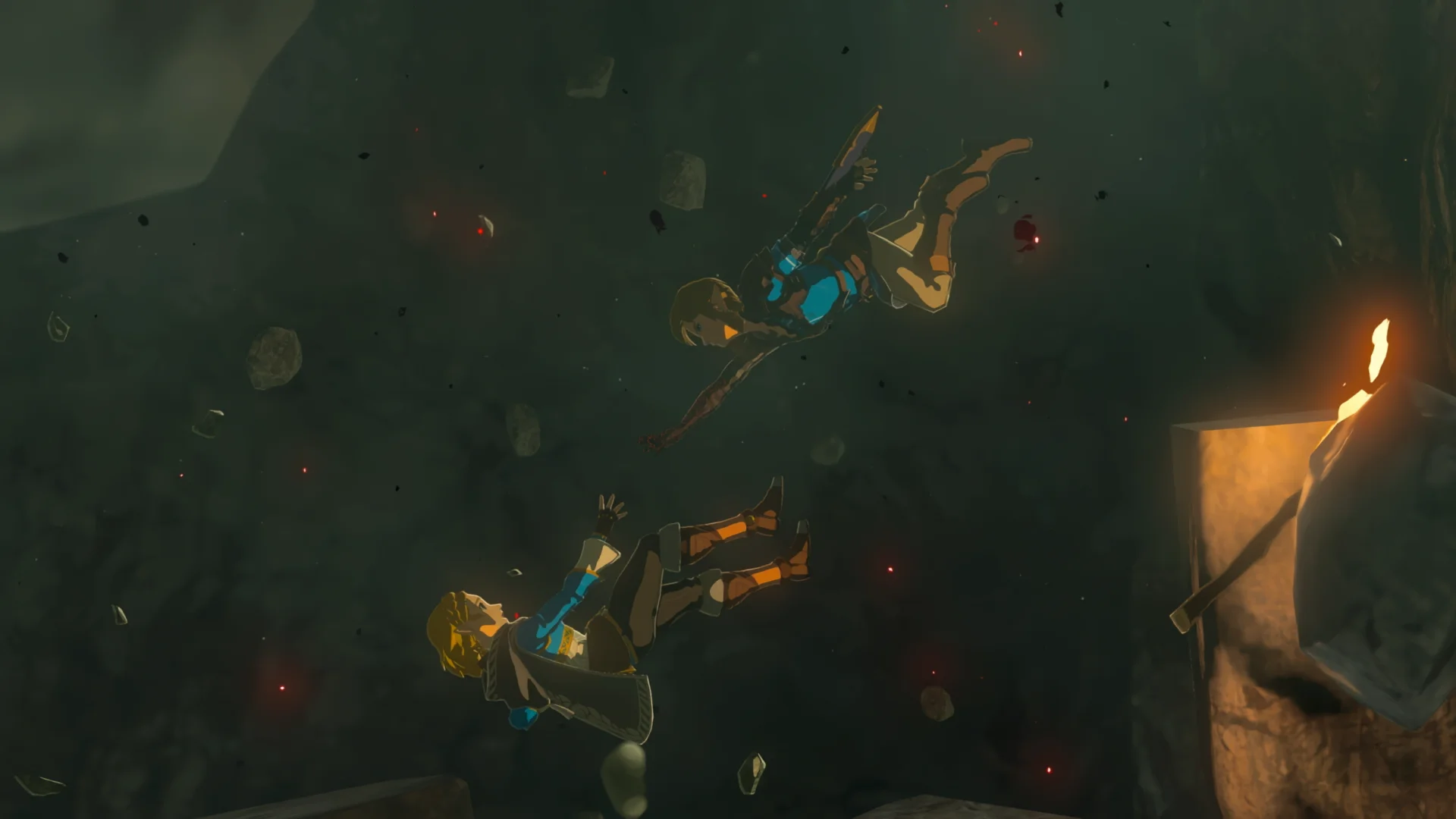
To keep this review as spoiler-free as possible, I’m not going to go into any details regarding the story. I can say that Tears of the Kingdom has what I believe is the best narrative in the franchise’s history. It’s a huge step up from anything we’ve seen before and delivers a compelling tale that had me genuinely intrigued throughout. The only downside is that the game once again uses a series of non-linear flashbacks activated by interacting with different geoglyphs across the map. This makes you likely to experience plot points out of order, which can be somewhat confusing. This was less of an issue in Breath of the Wild, where the narrative took a back seat, but this time around, I think the story would’ve been better told linearly.
Once you’ve collected all the memories, my advice is to go back and watch them all in order. Otherwise, you’re missing out on something quite special. The final boss battle against Ganondorf (Spoiler! Who’d have guessed you fight Ganon in a Zelda game?) is truly a sight to behold. It perfectly encapsulates the magic of the Zelda franchise and looks absolutely jaw-dropping on Nintendo’s latest hardware.
When it comes to music, Nintendo never phones it in, and Tears of the Kingdom is certainly no exception. From traversing the fields of Hyrule to the dungeons and set pieces, every track feels tailored to perfection. Zelda wouldn’t be Zelda without its music, and you can rest assured that Tears of the Kingdom achieves the high bar all its predecessors have set.
Rather like its soundtrack, Tears of the Kingdom is no slouch when it comes to graphical fidelity. The Switch 2 turns this game into what can only be described as a Ghibli-like experience. Traversing the world in 4K at 60fps is an experience like nothing else, with the sky islands as a particular highlight. Load times are also considerably better on the new hardware, with instantaneous transitions between the different planes of Hyrule.
For comparison’s sake, I played through part of the game on the original Switch, and the difference in textures, framerates, and load times is night and day. The experience on the Switch 2 is on an entirely different level from the original hardware. Even as someone who transitioned from an OLED model, I still think the colours are more vibrant on the new console, thanks to the HDR implementation. It really feels like you’re experiencing the pinnacle of Nintendo’s development expertise when you play this title in all its glory.
The Legend of Zelda: Tears of the Kingdom sets a new standard for the open-world Zelda formula. It’s a truly unforgettable experience that manages to encapsulate everything good about its predecessor while setting itself apart from what came before. When combined with the power of the newly released Switch 2, it truly comes into its own and exemplifies exactly why Zelda is so revered within the gaming landscape.